







English version of the interview here.
One Hundred Thousand Swallows
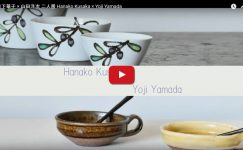
Hanada: When did you first paint the swallow motif?
Hanako Kusaka: I think it was around my first or second year after joining Kutani Seiyo.
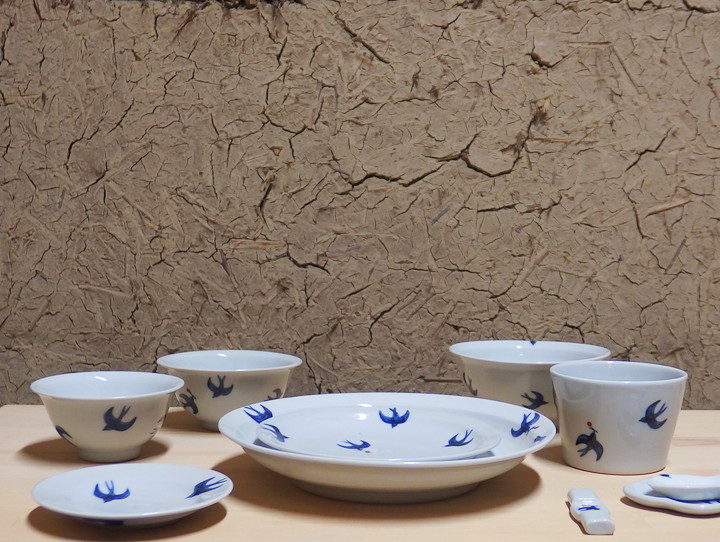
Hanada: So you’ve been painting them for about thirteen or fourteen years now. Why swallows?
Hanako Kusaka: I wanted to paint an animal with a sense of movement.
I considered various ideas, and when I tried painting swallows, I thought, “This is it.”
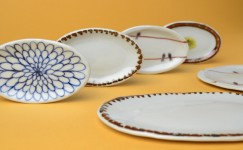
It started with this 15cm plate. I arranged them as if they were happily playing around.
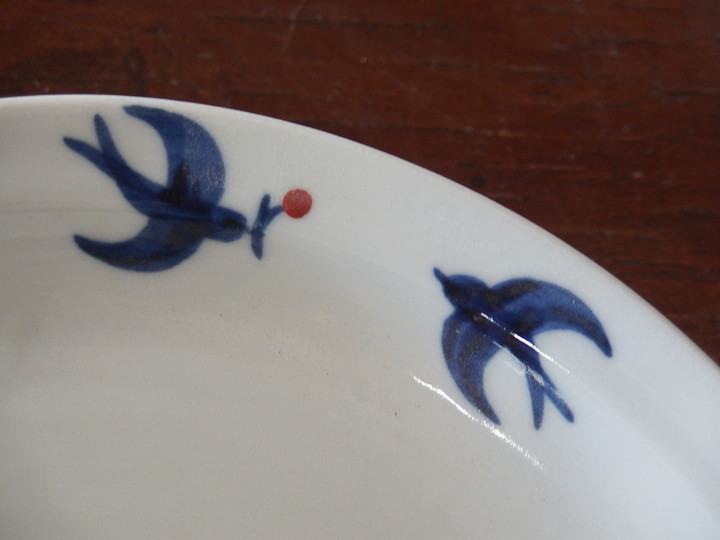
I added red-painted berries on the branches, imagining the swallows playing while aiming for the fruit, but Mr. Hata (head of Kutani Seiyo) said, “Swallows are carnivorous—they don’t eat fruit” (laughs).
Hanada: That sounds exactly like something Mr. Hata would say. What did you do then?
Hanako Kusaka: I replied, “That’s fine—they’re just playing with the fruit. They’re not eating it.”
Hanada: (laughs). When you paint them, do you focus most on the placement?
Hanako Kusaka: Yes. I think about how the swallows will come alive once food is served. I also pay attention to the number, since overdoing it wouldn’t work.
Hanada: Is the idea of them flying around meant to avoid giving the vessel a fixed direction?
Hanako Kusaka: That may have been part of it.
Hanada: Swallows in flight do give off this kind of impression, don’t they? The red berries really work nicely. Just for that single red dot, you’re firing an extra kiln.
Hanako Kusaka: Recently, there are underglaze reds with better color development, so I tried them, but the atmosphere still felt different.
Hanada: You’ve made countless swallow pieces by now. You must have painted around one hundred thousand swallows. Are each of those swallows different to you?
Hanako Kusaka: They are. The balance between the body and the head, or thinking, “The wings turned out a bit too thick,” or “The head’s a little too big” (laughs).
Hanada: I see (laughs). From now on, I’ll try to look at each swallow a bit more carefully. That sounds fun.
Thoughts Behind the Olive Motif
Hanada: Next, olives. If I remember correctly, it started when a friend was changing career paths…
Hanako Kusaka: Yes. It began as a gift, with the wish for “a fruitful life.” At first, instead of two shades of green, I used yellow and green, but it ended up looking like dead leaves and didn’t feel suitable for a new beginning (laughs). So I settled on two greens.
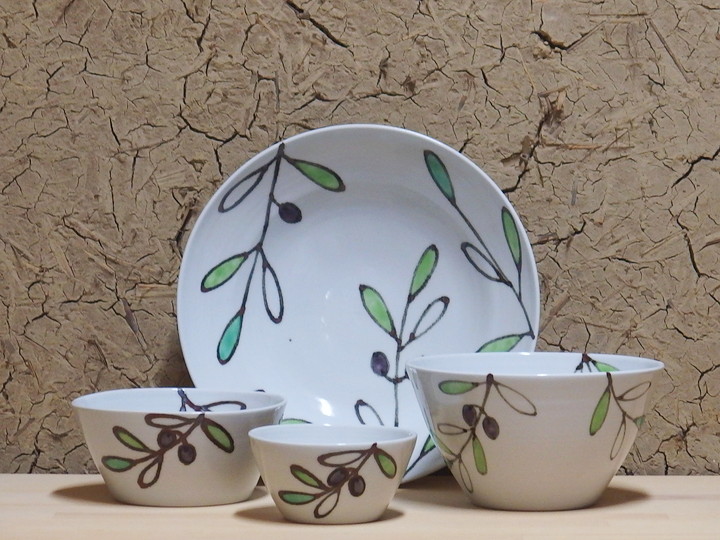
Hanada: Among so many fruit-bearing plants, why did you choose olives?
Hanako Kusaka: You occasionally see olive trees planted around, don’t you? I’d always thought they were nice when I saw them.
Hanada: The motif itself is very charming, and the way it’s stylized feels very much like your work. When it comes to details like the shading of the leaves or the color of the fruit, was there anything you paid special attention to?
Hanako Kusaka: Even with overglaze decoration, I’m not very good at using too many colors.
Hanada: At most, about three colors.
Hanako Kusaka: Even three feels like a lot to me when I’m painting. It’s probably just my preference, but I try to limit the number of colors as much as possible…
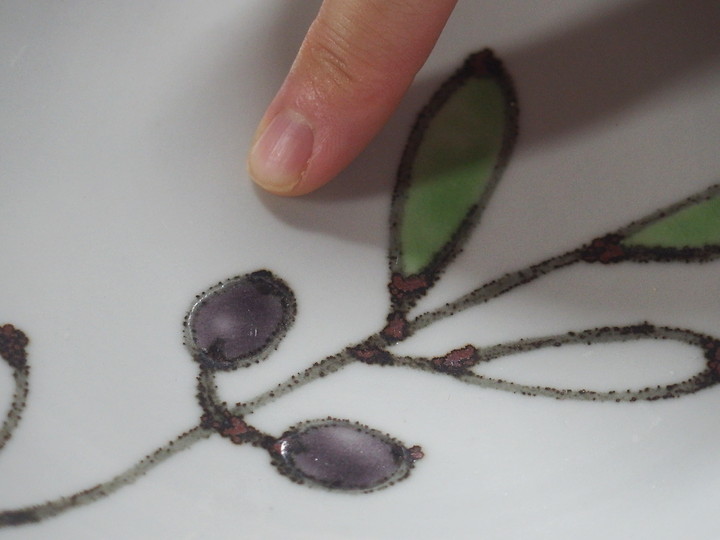
Hanada: The composition is also very appealing. It’s interesting from every angle, and even the inside is decorated so nicely. Do you first look at the form and build an image in your mind?
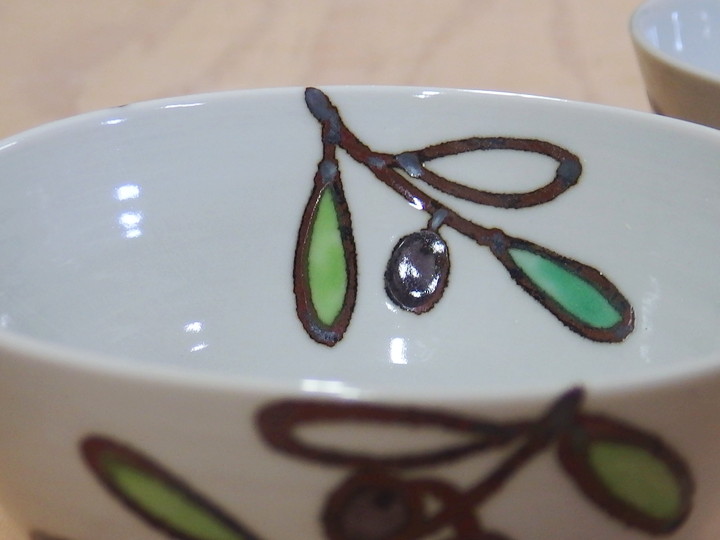
Hanako Kusaka: Ideas for painting plates usually come to me quite quickly, but arranging motifs on bowls takes time. With olives, though, it went smoothly.
Hanada: Which do you personally use most often?
Hanako Kusaka: I use the medium deep bowl all the time. For salads, hearty soups…
Foliated Rim
Hanada: Next, let’s talk about the rinka(foliated rim) pieces. About two years ago, I remember suggesting European black lacquer plates as a reference. At first, they were in red and blue.
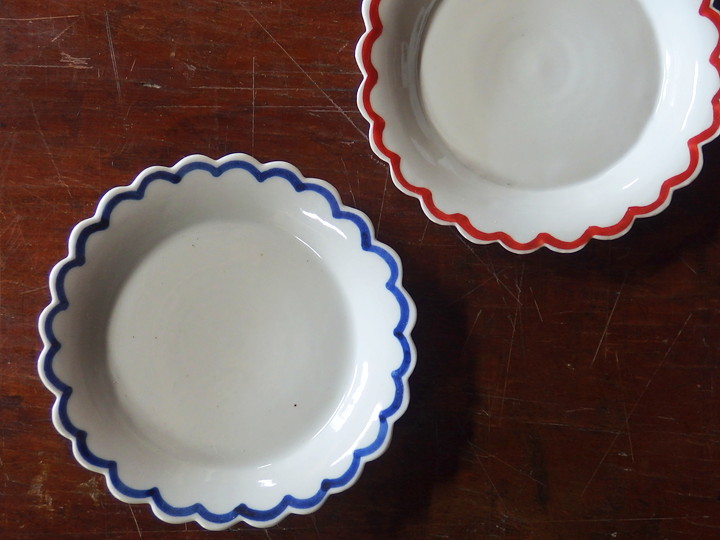
Hanako Kusaka: I felt that just a rim line wasn’t interesting enough, so I added versions with floral motifs.
Hanada: Did you choose this particular flower motif from many options?
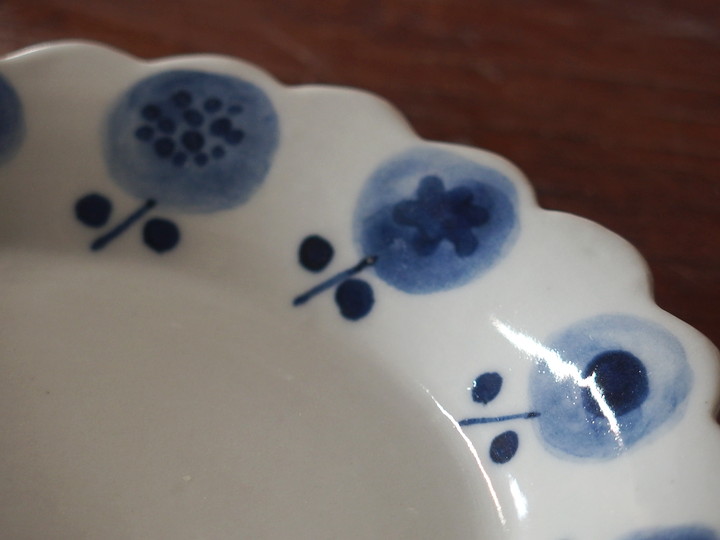
Hanako Kusaka: I don’t really select from a stockpile of ideas. In my case, I’m always scraping the bottom of the barrel (laughs).
Hanada: You’re being modest (laughs). That flower comes in various versions, doesn’t it?
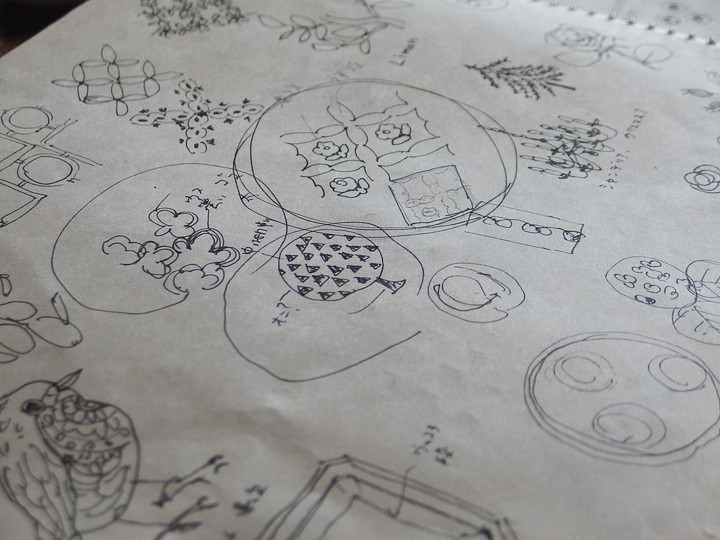
Hanako Kusaka: At first, it was just a simple round center, but it felt monotonous, so I made three variations. I also tilted the stems instead of keeping them straight, to add movement.
Hanada: Is that process—adjusting and refining as you paint—something you enjoy? Gradually correcting things until you reach the goal.
Hanako Kusaka: When I finally arrive, I’m honestly happy, and the path leading up to that point is very important to me.
When a Pattern Fits the Form
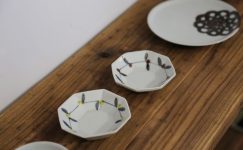
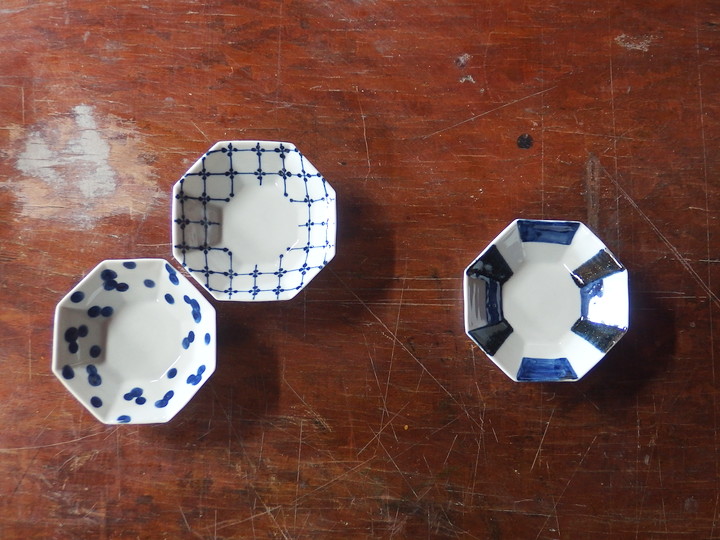
Hanada: The octagonal small bowl is a new piece this time.
Hanako Kusaka: I started by making the form, then thought about a pattern that would suit it. I had plenty of small plates, but not small bowls—more like condiment bowls—so I decided to make one. Something compact but with depth.
Hanada: Do you like octagonal shapes?
Hanako Kusaka: I do. Now that you mention it, I really do make a lot of octagons (laughs). I wonder why eight and not six.
Hanada: Come to think of it, you don’t have any hexagons.
Hanako Kusaka: Just hexagonal feet, maybe (laughs).
Hanada: (laughs)
Hanako Kusaka: I never noticed until now. I’ll try making a hexagon next!
Hanada: The pattern fits beautifully as well.
Hanako Kusaka: I thought it might be interesting when food is served—the slight mismatch between the gosu blue and the negative space.
Hanada: There’s a sense of order, yet at first glance it almost feels irregular—that’s nice.

Hanako Kusaka: I felt relieved when the pattern settled perfectly into the form.
Hanada: Settled into the form…
Hanako Kusaka: When the painting clicks perfectly with the shape. A combination where you feel, “This couldn’t be anything else.” Whether it’s the motif itself or the placement… Do you know what I mean?
Hanada: Ah… yes, I do. I’m listening (laughs). This one is clearly a confident piece for you.
Hanako Kusaka: And then, the hydrangeas.
Hanada: You seem eager to talk about the hydrangeas (laughs).
I Love Hydrangeas
Hanada: All right, let’s talk about hydrangeas.
Hanako Kusaka: Sorry about that! I really love them.
Hanada: It’s rare for you—who are usually so modest—to recommend something with such confidence.
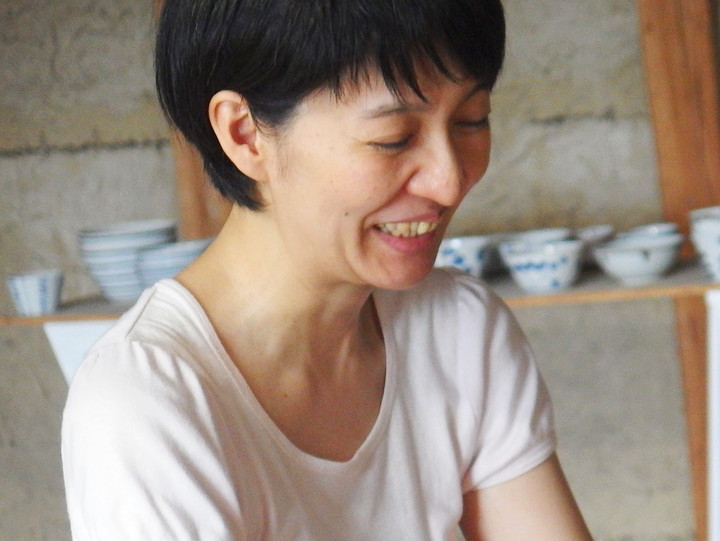
Hanako Kusaka: I actually had this out as a sample last time, but you completely passed it by. You even said, “This one’s fine,” and moved on.
I remember thinking, “Oh, it didn’t make the cut” (laughs).
Hanada: You remember being passed over, don’t you… (laughs). Sorry about that.
Hanako Kusaka: You really did just glide right past it.
Hanada: Why did you choose hydrangeas?
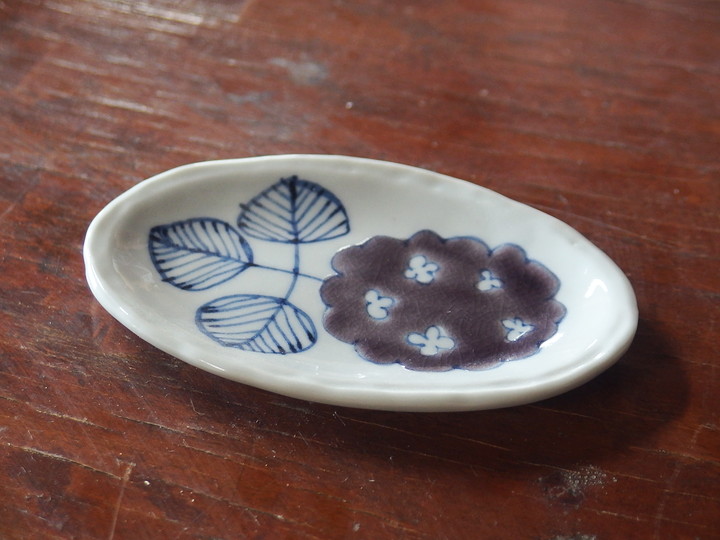
Hanako Kusaka: We have hydrangeas blooming at home, and they feel so refreshing.
With their gradients, they contain many colors, yet even though they’re large, they’re not overwhelming.
It took time to turn them into a motif. This combination of deep violet and gosu blue was new for me, and although I hadn’t used it much before, I feel it worked out well.
Hanada: Did you consider doing them purely in blue-and-white?
Hanako Kusaka: I did, but I felt it would become too monotonous. I find the subtle difference between gosu and deep violet quite interesting.
Hanada: Thank you very much for sharing all of this. Looking back, it’s clear how much your range of patterns and forms has expanded. I’m really looking forward to the exhibition. Thank you in advance.
Hanako Kusaka: Thank you very much!
≪ END ≫
100,000羽のつばめ
花田: 初めてつばめの文様を描いたのはいつですか。(以下 花田-)
日下: 青窯に入って、1年目か2年目くらいだったと思います。
-: 13、4年描いていることになりますね。
なぜ、ツバメだったのですか。
日下: 何か、動きのある動物を描きたいと思っていました。
色々考えて、ツバメを描いてみたら「これだ!」と思えたので。
最初はこの5寸皿です。
楽しく、遊んでいるような感じで、配置しました。
で、枝に赤絵の実を入れて、実を狙って遊んでいる、という感じで描いたら、秦さん(九谷青窯主宰)が「ツバメは肉食だから、実は食べないぞ」って(笑)。
-: 秦さんぽい、一言ですね。
日下さん、どうしたんですか。
日下: 「いいんです、実で遊んでいるんです。食べているわけじゃありません」と、お答えしました。
-: (笑)。
描くときに気にするのは配置ですか。
日下: そうです。
料理を盛って、つばめが活きるように。
描き過ぎてもいけないので、数にも気を使いました。
-: 飛び交っているというのは、うつわに方向を作らないように、ということでしょうか。
日下: それもあったかもしれません。
-: つばめって、飛んでいる時、こういう印象でもありますよね。
赤い実も効いています。
この赤い点一つのために、ひと窯余計に焚いているわけです。
日下: 最近は下絵の赤も発色がいいのが出てきているので、試してみたのですが、やはり、雰囲気が違うんです。
-: つばめのうつわ、数え切れないくらい、作っていますね。
つばめも、10万羽は描いているでしょう。
それらのつばめは、日下さんにとって、一羽一羽違いますか?
日下: 違います。
全部の胴体と頭のバランスとか、羽がちょっと太すぎたな、とか。
頭が大きすぎたな、とか(笑)。
-: そうだったのですね(笑)。
これからは、一羽ずつもう少し注意深く見てみますね。
楽しそうです。
オリーブに込めた思い
-: 続いて、オリーブ。
確か、お友達の進路変更の際に・・・。
日下: そうです。
「実り多き人生を」という気持ちをこめてプレゼントしたのがきっかけです。
最初は二色の緑ではなく、黄色と緑にしたら、枯葉みたいになってしまって、門出らしくならなかったんです(笑)。
で、緑を二色に。
-: 実をつける植物が色々ある中で、なぜオリーブだったのですか。
日下: たまにオリーブの木って植えられているじゃないですか。
そういうものを見ていて「良いな」と思っていたんです。
-: 文様自体とても可愛いし、デフォルメの仕方も日下さんらしいのですが、例えば、この葉っぱの濃淡や、実の色など、気を使われたこと、何かありますか。
日下: 私は色絵でも、あまりいっぱい色を使うのは苦手なんです。
-: せいぜい3色くらいですね。
日下: 3色でも「多いなあ」と思いながら描いています。
好みだとは思うのですが、なるべく色の数を絞りたいと思っていまして・・・。
-: 構図も魅力的です。
どこから見ても面白いし、内側にも可愛く絵付けもしてある。
まずうつわの形を見て、頭の中でイメージを作るのですか。
日下: 私は、お皿への絵付けのアイデアはサッと当てられるんですけど、鉢に配置するのは時間が掛かってしまうんです。
でも、オリーブはスムーズにいけました。
-: ご自身で普段、よく使われているのはどちらですか?
日下: 深鉢(中)は愛用中です。
サラダ、具沢山のスープ・・・。
輪花
-: 続いて輪花をお願いします。
2年くらい前に、ヨーロッパの漆の黒いお皿を参考にしてもらった覚えがあります。
最初はこの赤と青でした。
日下: 渕線だけじゃ面白くないなと思って、花文様のものも加えました。
-: 数ある文様の中からこの花の文様を選んだのですか。
日下: 絵付けのアイデア・・・数ある中から選ぶことはありません。
私の場合、いつもネタはカツカツですから(笑)。
-: ご謙遜を(笑)。
その花、色々ありますよね。
日下: 最初は、普通の丸い花芯だけだったのですが、単調だったので、3種類にしてみました。
あと、軸をまっすぐにしないで、ナナメにして動きを出しました。
-: そうやって描きながら直していくのは、日下さんにとって楽しい作業ですか。
徐々に修正しながら、ゴールに到着するわけです。
日下: 到着した時は素直に嬉しいですし、自分にとって、そこに至るまでの道のりはとても大切です。
文様が、カタチにはまる時
-: 八角小鉢は今回の新作です。
日下: まず形を作って、それに合う文様を考えました。
それまで、小皿は結構あったのですが、小鉢・・・というか豆鉢がなかったので、作ってみました。
小ぶりで深さがあるもの。
-: 八角、好きですか?
日下: 八角、好きです。
言われてみれば、私、八角多いですね(笑)。
なんで六角じゃなくて八角なんだろう。
-: そういえば、六角ないですね。
日下: 六角高台くらいですね(笑)
-: (笑)
日下: 今まで気が付きませんでした。
次、六角作ってみます!
-: 文様もうまく、はまりました。
日下: 料理を盛ったときに、ゴスと余白のチグハグが面白いかなと思いました。
-: 規則性はありますが、一瞬不規則に見える感じがよいですね。
日下: 文様が形にちゃんとはまってくれて、ホッとしました。
-: かたちに、はまる・・・
日下: 絵付けがかたちにピタっと。
「これにはこれしかないよな」という組み合わせ。
絵付けにしても、配置にしてもそうだし・・・。
話し、わかりますか?
-: あ・・・、はい。分かります。聞いていますよ(笑)。
今回、これは自信作ですね。
日下: あと、アジサイ。
-: 早く、アジサイの話したそうですね(笑)。
アジサイが好き
-: じゃあ、アジサイ、行きましょう。
日下: スミマセンね! とても気に入っているのです。
-: 謙遜ばかりする日下さんが自信を持って薦めてくれるなんて、珍しいです。
日下: これ前回も見本で出しておいたんですけど、普通に松井さんスルーしていましたよ。
「これはいいです」とか言っていた。
「あ、通らなかった」とか思って・・・(笑)。
-: スルーされた方は覚えていますね・・・(笑)。
スミマセンでした。
日下: そうですよー。サーって。
-: アジサイを選んだのは?
日下: アジサイはうちにも咲いていますし、爽やかですよね。
グラデーションで、色味もいっぱい入っているし、大きいけど、うるさくないというか。
文様にするのには時間が掛かりました。
この紫紺とゴスは初めての色使いで、あまりやったことなかったのですが、自分ではうまく行ったなと思っています。
-: 染付にすることは考えませんでしたか。
日下: 考えましたが、単調な感じになるなと思って。
このゴスと紫紺の微妙な違いが面白いな、と思っています。
-: 色々なお話有難うございました。
こうしてみると、随分と文様やかたちのバリエーションは広がってきたのですね。
企画展が楽しみになりました。
宜しくお願いします。
日下: 宜しくお願いします!
≫日下華子さんのうつわはこちらから≪
関連記事はこちら