








English version of the interview here.
I Knew Nothing and Could Barely Do Anything, but It Was Pure Joy
Hanada: How did you find your path into making ceramics as a profession?
Atsunobu Koizumi : It wasn’t as though I had a clear path ahead of me. It feels more like I simply drifted along and eventually arrived here.
Hanada: So you drifted your way into it. How did you first encounter ceramics?
Atsunobu Koizumi : It was through the university’s ceramic arts club. Even that was purely by chance. Right after starting college, I was walking around campus when I heard lively laughter coming from a room. It sounded like fun, so I looked into it and found out it was the clubhouse for the ceramic arts group. I went back to visit a few days later and ended up joining.
Hanada: Do you remember any of your very early creations from when you started out?
Atsunobu Koizumi : A large 30-centimeter platter using a neriage technique with red and white clay. You combine two different types of clay and throw them together on the wheel to create a swirl pattern. I believe that was around the summer of my freshman year. It brings back memories.
Hanada: Starting off with a 30-centimeter platter is impressive. Did it turn out well?
Atsunobu Koizumi : No, not at all. I couldn’t do it at all. I would throw on the wheel and fail, throw and fail, throw and fail… and in the end, I was just utterly exhausted.
Hanada: And you spent all four years active in the club.
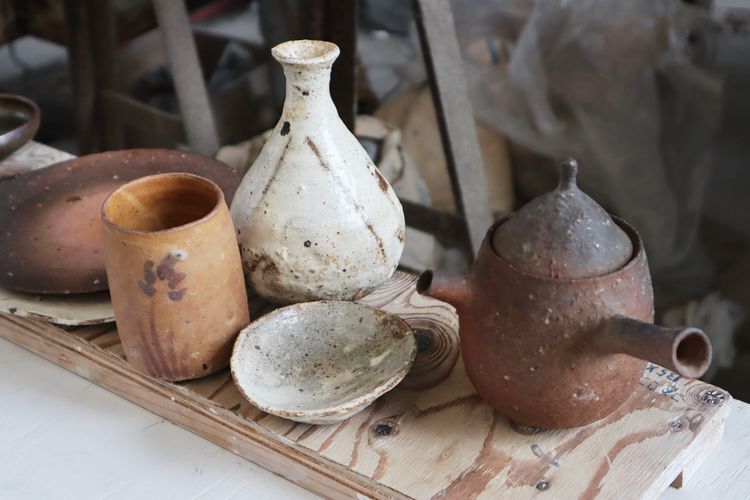
Atsunobu Koizumi : It was so much fun—just simple, pure enjoyment. Because I knew nothing and couldn’t do anything properly yet, I would just try whatever came to mind, which meant a lot of failures. I made teapots with spouts so small that water wouldn’t pour, incredibly heavy plates, and tableware with terribly bumpy surfaces from messing up the glaze recipe. Oh, and we even had a wood-firing kiln.
Hanada: Was that on the university grounds?
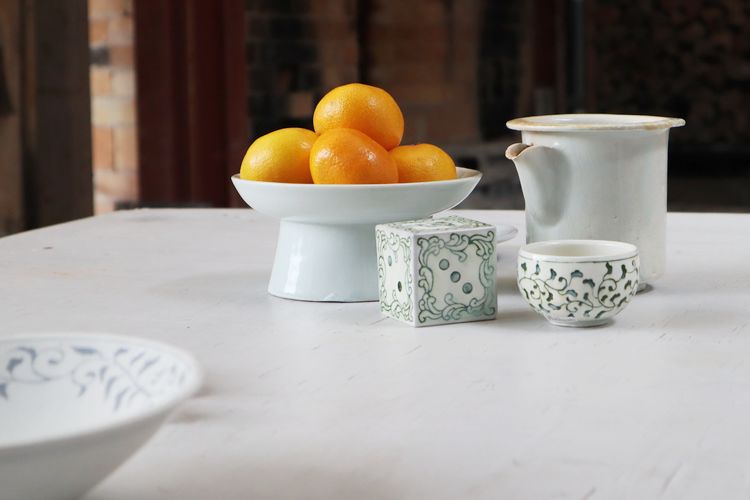
Atsunobu Koizumi : Yes, it was right behind our clubroom, so everyone called it the “back kiln.” This piece here was actually made in that kiln.
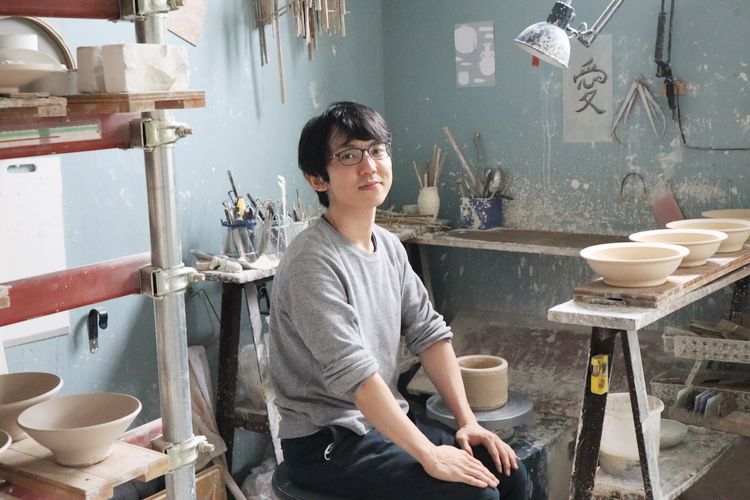
A Year Spent in Karatsu
Hanada: What did you do after graduating from university?
Atsunobu Koizumi : I had a deep admiration for antique Karatsu ware, so I apprenticed under Yasumoto Kajihara in Karatsu for a year. I prepared firewood and clay, helped out in the rice fields, and gained all sorts of experiences. It was a year where I learned truly vital things about clay.
Hanada: Those experiences form the actual foundation of your creative process today.
Atsunobu Koizumi : Mr. Kajihara began his clay preparation by crushing sandstone, which was a method I had never heard of at the time. It seemed that the clay minerals contained in that sandstone were remarkably close to those of antique Karatsu ware, and it resulted in textures that felt very faithful to the originals.
Hanada: Because of your admiration for antique Karatsu ware.
Atsunobu Koizumi : Right. But even though I had gone to work with Mr. Kajihara out of that admiration, along the way I began to question why I loved Karatsu so much. I started wondering if I had just influenced myself into believing I liked antique Karatsu ware because of external impressions. You see it featured so beautifully in ceramics magazines like Honoh-Geijutsu. I started to think I was merely swayed by that image.
Hanada: It sounds like an insight you could only gain by actually taking action. Still, it is fascinating. You went all the way to Karatsu out of admiration, only to return thinking, “Maybe Karatsu isn’t quite right for me after all.”
Atsunobu Koizumi : It isn’t that I grew to dislike antique Karatsu ware, but that year helped me clarify exactly what it was about it that appealed to me, rather than just liking it simply because it was Karatsu. I am still drawn to the straightforward forms and the simple painted designs of early and mid-period pieces, and above all, I love that quiet, deeply comforting quality of the clay texture.
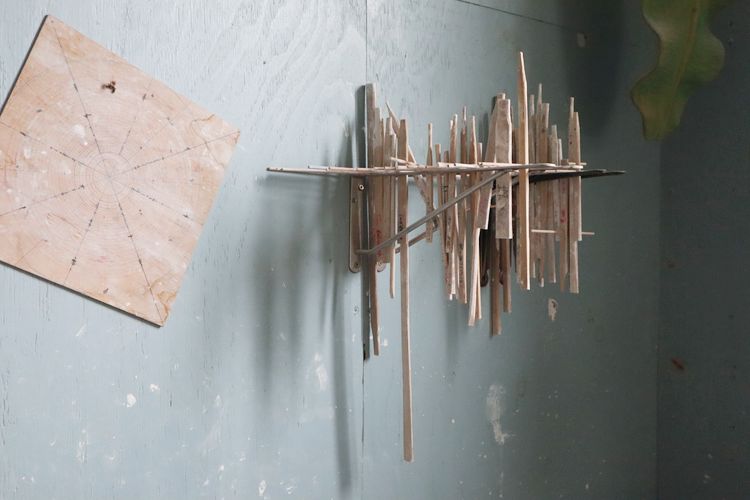
Working the Way I Wanted
Hanada: You set up your independent studio almost immediately after returning from Karatsu.
Atsunobu Koizumi : Having spent four years working completely freely at university, I think I just wanted to start creating exactly the way I wanted as soon as possible.
Hanada: Was your style similar to what it is today?
Atsunobu Koizumi : No. At first, I made everything using red clay sourced entirely from here in Fujino. For the glazes, I would crush local stones to create them. This black glaze was made that way too.
Hanada: That sounds quite different from your current work.
Atsunobu Koizumi : Actually, that was another preconception of mine. You often read in pottery guidebooks that making pieces from raw local clay is best, or that using materials gathered from the local land creates the most natural and beautiful results.
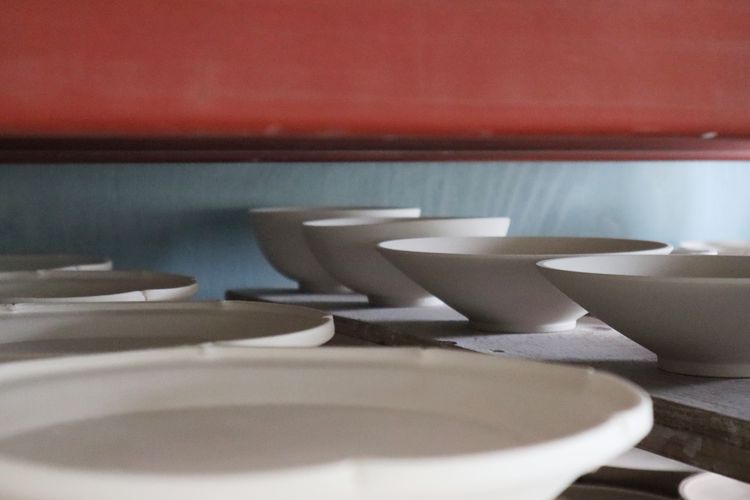
Hanada: Yes, I suppose so. As a concept, that reasoning does sound quite convincing.
Atsunobu Koizumi : So I followed what the books said, but halfway through, I found myself questioning whether this was truly what I personally enjoyed doing.
Hanada: Again?
Atsunobu Koizumi : Looking back, I feel like I have always lived my life that way, even before I started making ceramics.
Hanada: Perhaps your path has unfolded precisely because you have always responded honestly to your inner feelings through your actions. Even so, you have moved forward by constantly exploring different approaches.
Atsunobu Koizumi : Yes. Since I had been working with white porcelain ever since my student days, I eventually began to run my work with raw clay and my white porcelain side by side.
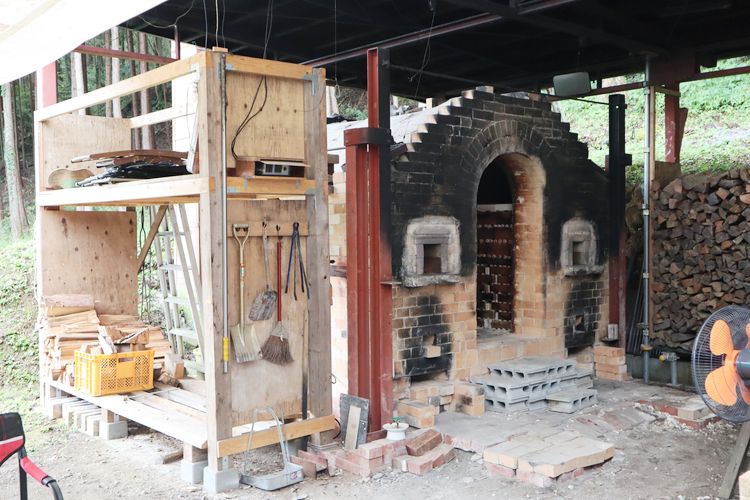
An Emotional Resonance
Hanada: Do you have an ideal inspiration when it comes to white porcelain?
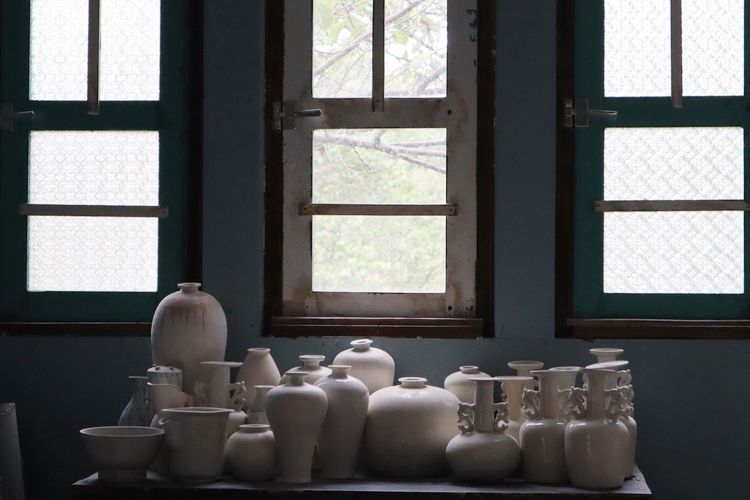
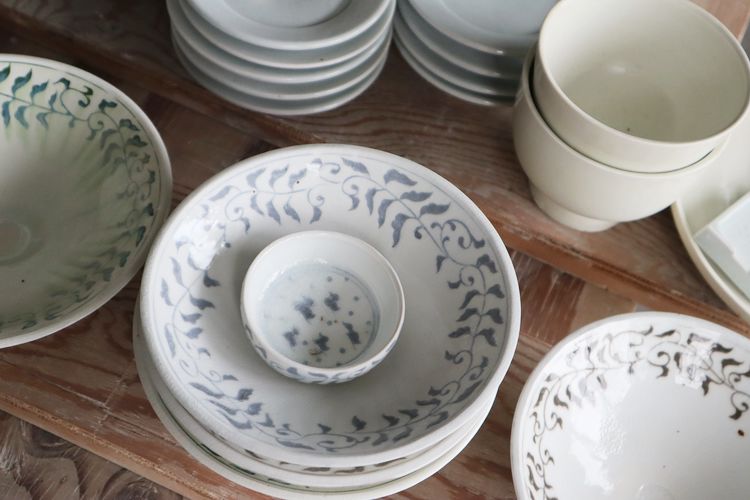
Atsunobu Koizumi : Pieces from the mid-Joseon dynasty. I love how the strong Chinese influence began to soften, and they don’t feel quite as rigidly high-fired as the later periods.
Hanada: You prefer a gentler quality.
Atsunobu Koizumi : Yes. I think of it as having a certain emotional resonance, something that moves the heart. Striving for absolute geometric perfection doesn’t really suit my nature, but at the same time, I can’t completely lean into pure rustic simplicity either. Beyond that, white porcelain just feels right for my hands.
Hanada: What do you mean when you say white porcelain feels right for your hands?
Atsunobu Koizumi : White porcelain often requires relatively precise forms, and that fits naturally with my habits when shaping and throwing.
Hanada: So rather than working with sheer momentum or a fast tempo, your process involves meticulous crafting and a focus on achieving a clean, beautiful finish.
Atsunobu Koizumi : Exactly.
Hanada: Which is why intricate work like inlaying doesn’t bother you.
Atsunobu Koizumi : Yes, I think doing detailed, patient work suits my personality well.
Hanada: Could you share what you value most during your creative process?
Atsunobu Koizumi : I want to stay true to my core and not waver, especially since I have done so much drifting in the past.
Hanada: I don’t think you have been wavering at all. I think it is wonderful and very true to who you are. By staying true to your core, do you mean maintaining a consistent style?
Atsunobu Koizumi : No, I expect my style will continue to evolve. What I want to preserve is that intuitive feeling of creating things simply because I genuinely love them. I want to keep making pieces that come from that place of honest appreciation.
A Quiet, Lasting Appreciation
Hanada: Is there a particular type of piece you have been creating recently where you feel a strong sense of fulfillment?
Atsunobu Koizumi : Flower vases, mostly. Sometimes I find myself quietly reflecting on a piece, thinking, “Ah, that turned out beautifully.”
Hanada: Is that right when you unload the kiln?
Atsunobu Koizumi : No, it is usually when flowers are placed in it. I don’t have a definitive answer yet to what makes a great vase, but I love it when it brings out the beauty of the flowers. I hope to make things that evoke a gentle feeling of comfort, where someone looks at it and feels a quiet, lasting appreciation for having it in their life. I feel the exact same way about tableware.
Hanada: Is there anything specific you keep in mind when making tableware?
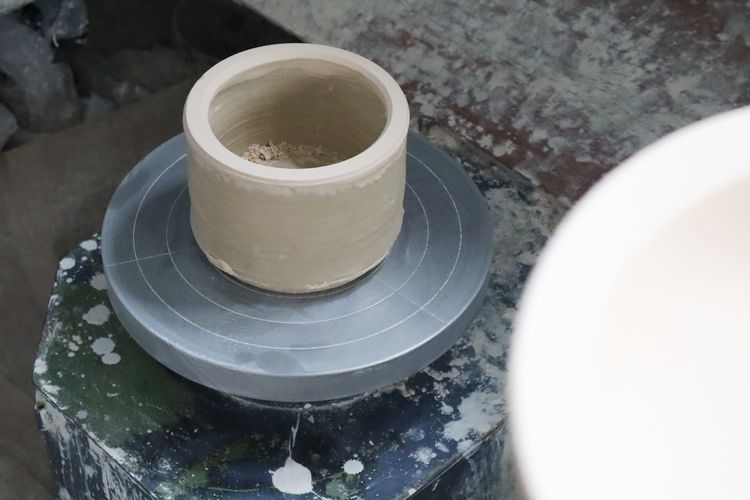
Atsunobu Koizumi : I prefer not to leave too many prominent marks of the making process, so I tend to smooth away the wheel ridges. Fundamentally, I try to avoid overcomplicating the texture or the form.
It Doesn’t Have to Be Noticed, but as the Maker, I Hope It Is There
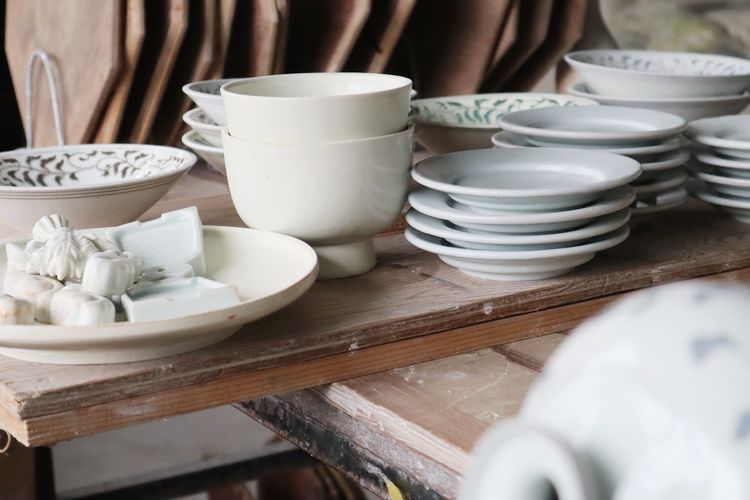
Hanada: With your work, features like the texture of the clay or the shape don’t instantly clamor for attention. Instead, the piece carries a wonderful overall presence. It feels like the kind of tableware where you bring it home, and its quality gradually grows on you the longer you use it. Rather than shouting about the firing technique or the wheelwork, it just possesses an effortless charm.
Atsunobu Koizumi : Yes, exactly. I want to aim for that subtle, wordless appeal where someone just feels that a piece is genuinely good.
Hanada: That sounds like how you fall in love with things yourself. Then you catch yourself tracing your steps back, asking why you like it so much. People rarely fall in love with something because of a pre-formulated list of reasons; the reasons usually come later when trying to explain it to someone else.
Atsunobu Koizumi : It isn’t about the texture or the shape alone. It is about creating something that conveys an intangible quality, even if it is invisible to the eye. For the person using it, it doesn’t truly matter whether that quality is consciously noticed or not, but as the maker, I hope it is there within my work.
Hanada: “It doesn’t have to be noticed, but as the maker, I hope it is there.” That is beautifully put.
Looking Ahead
Hanada: Are there any new endeavors you would like to focus on in the future?
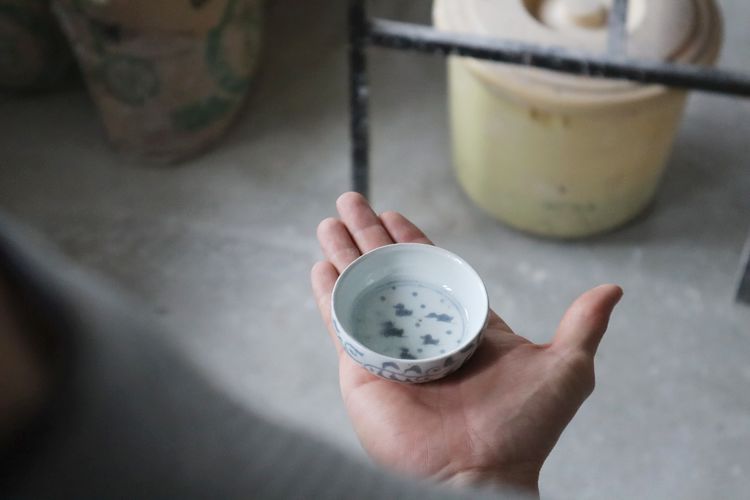
Atsunobu Koizumi : I want to refine my inlay techniques further and bring even greater emotional resonance to my white porcelain. I would also love to try my hand at making tea bowls.
Hanada: We are very much looking forward to the exhibition.
Atsunobu Koizumi : Thank you. I will give my very best to firing the white porcelain pieces.
≪ END ≫
知らなくても、出来なくても、ただただ楽しかった…
花田:小泉さんはどのようにして、焼き物を仕事にされるようになったのですか。(以下花田-)
小泉:明確に道があった上で進んできたわけではなくて、流れ流れて、たどり着いた感じです。
-:流れてきちゃったのですね(笑)。
焼き物とは、どのようにして出会ったのですか。
小泉:大学の窯工研究会です。ただ、これもたまたまで…。
入学直後にキャンパス内をウロウロしていたら、ある部屋から賑やかな笑い声が聞こえてきたんです。
なんか楽しそうだなと思って調べたら、それが陶芸サークルの部室だということが分かったんです。
後日訪ねて、入部することになりました。
-:陶芸を始めたころの作品で、何か覚えていらっしゃるものはありますか。
小泉:赤土と白土の練り込みの尺皿です。
2種類の粘土を合体させて、一緒に挽いて、渦巻き文様が出るという。
1年の夏ごろだったと思います。懐かしい…。
-:まず尺皿ってすごいですね。うまくいくものですか。
小泉:いいえ(笑)。全然できなくて、(ロクロを)挽いて失敗、挽いて失敗、挽いて失敗…その末に「ああ疲れた」みたいな(笑)。
-:4年間、窯工研究会で活動されるわけですね。
小泉:楽しかった…ただただ、単純に楽しかった。知らなくても、出来なくても、とにかく思いつくことは何でも試しますから、失敗も多かったです(笑)。
急須の口が小さすぎてお湯が出ないとか、めちゃくちゃ重い皿とか、釉薬の配合を失敗してとんでもなくボコボコのうつわとか…。
そうそう、薪窯もあったんです。
-:学校の敷地にあったのですか。
小泉:そうです。部室の裏にあったので、みんなで「裏窯」って呼んでいました。
これ、その裏窯で作ったものです。
唐津で過ごした1年
-:大学卒業後は?
小泉:古唐津に憧れがあったので、唐津の梶原靖元さんに1年間弟子入りしていました。
薪や土の用意をしたり、田んぼの手伝いしたり…色々経験させていただきました。
粘土について大事なことを学ばせていただいた1年でした。
-:具体的な制作上のベースとなる部分ですね。
小泉:梶原さんは砂岩を砕くことから粘土作りを始められるのですが、当時初めて聞いた方法でした。砂岩に含まれる粘土鉱物が古唐津のものに近いようで、古唐津にとても近い風合いのものができていました。
-:古唐津への憧れがあったわけですからね。
小泉:ただ、古唐津にあこがれて梶原さんの所へ行ったわけですけど、途中で「なぜ自分は唐津のことを好きなんだろうか」って疑問に感じ始めてしまったんです。
「自分はただ、まわりから影響をうけて『古唐津が好きだ』と思い込んでいただけではなかろうか」と。
よく「炎芸術」なんかの焼き物系の雑誌に格好よく写っているじゃないですか。
そういうのに感化されていただけな気がしてきて…。
-:一度行動に移されたからこそ感じることのような気もします。でも、面白いですね。
唐津に憧れて唐津に行ったのに「やっぱり唐津じゃないかも」と言って戻ってくる(笑)。
小泉:別に古唐津を嫌いにはなっていないのですが、ただ、古唐津だから好きなわけではなくて、古唐津のここが好きというのがわかった1年ではありました。
シンプルな造形や、初期唐津や中期のもののシンプルな絵付けはいまだに魅力を感じますし、なによりあのしみじみとした土味が好きです。
自分の好きなように
-:唐津から戻られてすぐに独立されます。
小泉:大学で4年間自由にやっていたこともあって、すぐにでも自分の好きなようにやりたかったんだと思います。
-:作風は今と変わりませんか。
小泉:いえ、最初は、全てここ藤野の土地でとれる赤土を使って作っていました。
釉薬も、ここでとれる石を砕いて釉薬にしていました。
この黒釉もそうです。
-:今とはずいぶん違いますね。
小泉:実はこれも、思い込みで(笑)。
よく陶芸の指南書なんかに「原土から作るのが一番いいんだ」とか「その土地でとれた原料で作るのが一番自然で、美しいんだ」とかって書いてあるじゃないですか。
-:ええまあ(笑)。
それはそれで理屈としては成立しそうな気もしますが。
小泉:でまあ、その本の言う通りにやっていたのですけど、途中で「本当に、これ自分が好きなことなのかな」って出てきて(笑)。
-:またですか(笑)。
小泉:今振り返ってみるとずっとそうやって生きてきた気がします。
それは焼き物を始める前からも。
-:ご自身の思いに素直に行動で答えてきたからこその道のりなのかもしれません。
そうは言いながらも、色々試みながら前に進んできたわけです。
小泉:で、白磁自体は学生の頃からずっとやっていたので、そのうち原土の仕事と白磁を並行するようになりました。
情感
-:白磁で、憧れはありますか。
小泉:李朝の中期です。
中国っぽさが抜けてきて、後期ほど焼きしまっていない感じが好きです。
-:柔らかい感じが好きなのでしょうか。
小泉:そうですね。
「情感がある」という風に自分では考えているんですけど。
心が動かされるというか。
バチバチに決めるのは性に合っていないし。
だからといって「素朴」一辺倒にもなり切れないというか…。
それと、白磁は自分の体には合っているなと感じます。
-:「白磁が体に合っている」とは、どういうことなのでしょうか。
小泉:割とカチッとした形が求められるのですが、それが自分の作る、成形する癖に合っています。
-:「勢い」や「テンポ」というよりは、丁寧に作り込んでいくような仕事、キレイに仕上げていく感覚でしょうか。
小泉:そうです。
-:だから象嵌なども苦にならないわけです。
小泉:そうですね。チクチクやるのが性に合っているのだと思います。
-:制作される中で、小泉さんが大事にされていることを教えてください。
小泉:ぶれないようにしたいなと。
今まで散々ぶれてきたので(笑)。
-:ぶれてはいないと思いますが…(笑)。「小泉さんらしくて、いいな」と思います。
ところで、ぶれないというのは作風のことですか。
小泉:いえ。それはこれからも変わっていくと思います。
保っていたいのは「こういうのが好きなんだよね」というノリです。
「こういうのが好きなんだよ」というものを作ってい続けたいです。
しみじみと
-:制作していて最近特に手ごたえを感じるものはありますか。
小泉:花器が多いですね。「お、いいのできたなあ」って一人で浸っています(笑)。
-:窯出しの時ですか。
小泉:いえ。花を入れた時などです。「いい花器とは?」なんて問いにはまだ答えを持ちませんが、花がきれいに映えていればいいなと思います。
そして、持っていて心が動くというか。しみじみと「持っていてよかったなあ」と感じてもらえるようなものを作ることができたらいいなと思います。
食器も同じです。
-:食器を作る際に気にされていることはありますか。
小泉:手跡を残し過ぎたくないので、轆轤目などは消したいです。
基本的にテクスチャーや造形を凝り過ぎないようにしたいとは思っています。
あってもなくてもいいけど、僕としてはあってほしい
-:小泉さんのお仕事は、土味なり、かたちなり、そういった各要素がまず目に飛び込んでくるのではなく、全体的にいい雰囲気を持っていて、家に持って帰ってきてから良さをジワジワ感じ始めて長く付き合っていけそうなものだなと感じます。
「焼き!」とか「ろくろ!」とかではなく、「なんかいいよね」というようなものを感じます。
小泉:そうそう。その「なんか、イイネ」という言葉にならない魅力を目指したいです。
-:小泉さんが何かを好きになる時も、そういうところあるのではないですか。
で、立ち返って「なんで、これ好きなんだっけ?」なんて自問されている(笑)。
人って、あらかじめはっきりとした理由をもって何かを好きになるというよりは、好きになってからですよね、他人への説明などのために理由がまとまってくるのは。
小泉:テクスチャーでもないし、造形でもない。
目には見えないんだけど、なんか伝わってくるものを持ったものが良いなと。
それはお客様にとっては実際あってもなくてもいいと思うのですが、僕の作品にはそういうものがあってほしいなって願っています。
-:「あっても、なくてもいいけど、僕としてはあってほしい」ですか…。
なんか、いいですね…。
これからのこと
-:今後取り組んでいきたいことはありますか。
小泉:象嵌をもっと極めたいし、白磁ももっと情感のあるものを。
茶碗もやってみたいと思っています。
-:展示会もよろしくお願いします。
小泉:はい。白磁、頑張って焼きます!
≫ 小泉敦信さんのの作者ページはこちら≪
関連記事はこちら