


English version of the interview here.
The More You Look at It…
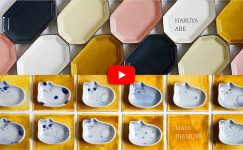
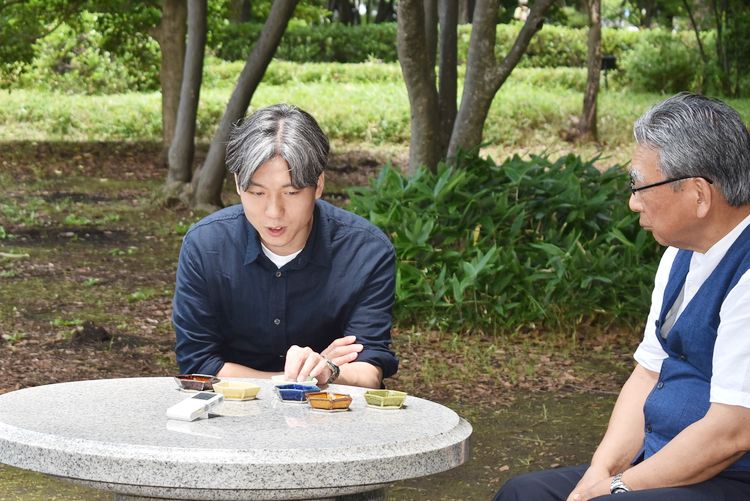
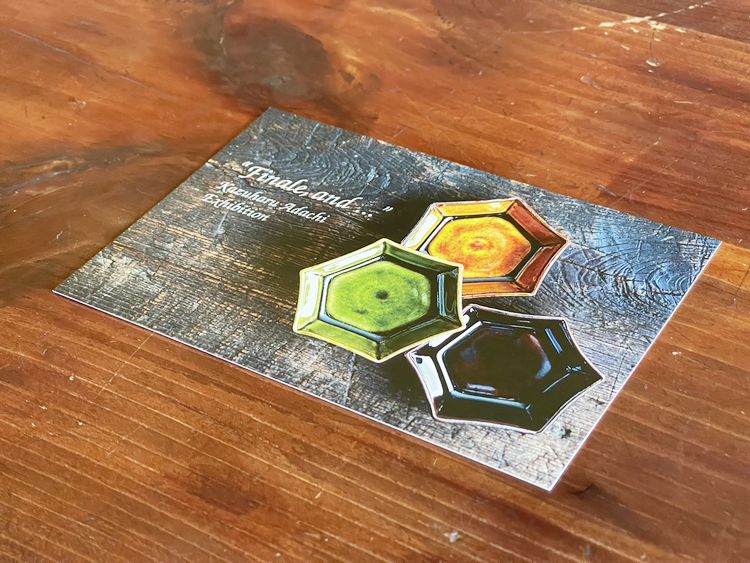
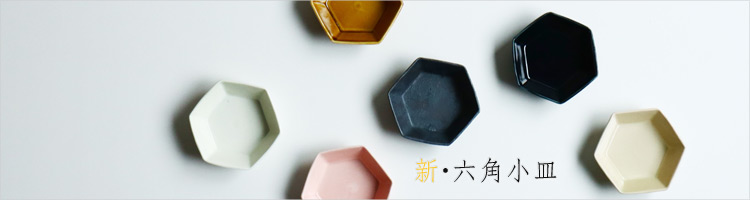
Hanada: This time, Mr. Abe will be taking over the production of this hexagonal small plate originally created by Mr. Adachi. This piece is slightly deeper than a typical small plate, which makes it incredibly practical. It is perfect for condiments, of course, but it is also a wonderful item for turning last night’s leftovers into a proper side dish. With a beautiful variety of colors available, it is also a joy to use several of them arranged together on the table.
Haruya Abe : The more you look at it, the more you realize how masterfully crafted it is in every aspect as a piece of tableware. Precisely because the shape is so simple, making it truly your own must be exceptionally difficult. Yet, while it poses a challenge, I believe that if one can craft it well, it is an item that will endure over time.
Kazuharu Adachi : I made several prototypes at the beginning. Even after that, it went through about three minor adjustments before reaching its current form.
Hanada: You also experimented with a few different production methods, didn’t you?
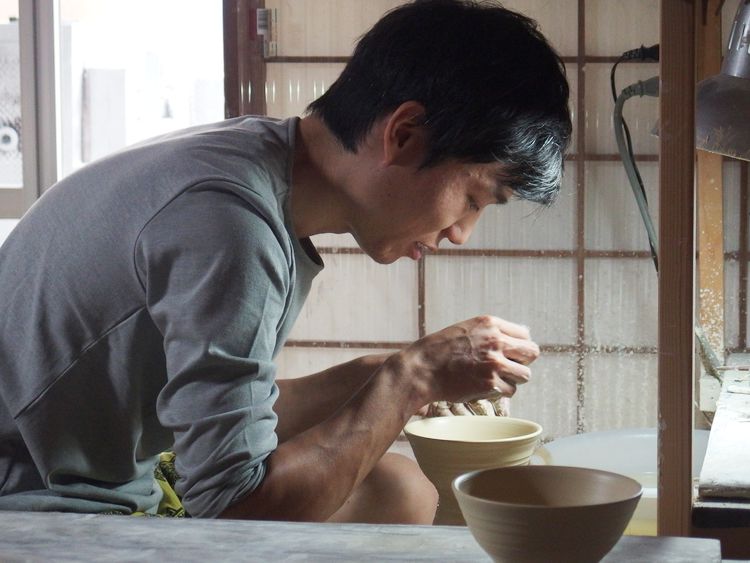
Kazuharu Adachi : In the end, I decided to shape it on the pottery wheel first, and then press it into a plaster mold using the hikiuchi technique.
Haruya Abe : So you shape it on the wheel first.
Kazuharu Adachi : It depends on the clay, but if you use the tatara (slab) method, the piece tends to warp, which is why I chose hikiuchi. Of course, the slab method has its own distinct merits, so it ultimately comes down to the ingenuity of the artist.
Hanada: Much of ceramics involves building upon the past—reproducing historical works, drawing inspiration from them, or transforming their essence. The same applies to this hexagonal plate, but in this unique case, the person who has been making it all this time is right here in front of us.
Haruya Abe : To be honest, from the moment I saw the sample the other day until today, I had a specific production method in mind. But listening to Adachi-san just now has sent me right back to square one (laughs). I will have to go home and rethink it. After all, just because his method works for his clay doesn’t mean it will translate directly to the porcelain I work with.
An Inevitable Transition
Hanada: I am so pleased that both of you readily agreed to pass on the production of this piece.
Haruya Abe : Right now, I feel a deep sense of pressure in taking over something that Adachi-san has crafted for so long, but at the same time, I feel immensely grateful that he has given me his blessing to do so.
Kazuharu Adachi : The gratitude is entirely mine. I remember reading a magazine interview from a long time ago featuring a young artist. When asked what kind of artist they wanted to become, they replied, “I want to create at least one signature piece—something where people look at it and instantly know I made it—and leave that behind.” When I received the email from Hanada asking how I would feel about passing this hexagonal plate on to Haruya Abe-san, that quote immediately came to mind. I entered ceramic school at forty-six and spent twenty-five years working in pottery. In the world of ceramics, that is a very short time. I could never claim to have anything close to a signature piece. No, not a single one. However, if one of the few items I did create can be passed on through Abe-san’s hands and continue to reach customers, then even if it isn’t a signature piece, the act of being “passed on” connects beautifully with that young artist’s words. It made me incredibly happy. Matsui-san’s email seemed filled with a slight hesitation, as if worried I might say, “This is my creation, and I refuse to let anyone else make it.” But from my perspective, that wasn’t the case at all—I am simply profoundly grateful.
Hanada: You saw right through me (laughs).
Kazuharu Adachi : Of course I did (laughs). This plate doesn’t have a grand design; it is a very ordinary, humble piece. Even so, knowing that the next generation will continue to make it brings me immense joy.
Haruya Abe : Now I am starting to feel nervous (laughs).
Hanada: Knowing that you both have your own philosophies and feelings, I did spend a lot of time thinking about how best to propose this. Depending on how one looks at it, such a request could potentially cause discomfort to either side. It is one thing to look to antiques for inspiration, but asking an artist to build upon the work of someone who has only just stepped away can be a delicate matter.
Haruya Abe : Antiques have survived to the present day precisely because they are exceptional pieces. In this case, the time span is simply much shorter, but in essence, it is exactly the same. It is only natural for beautiful items to endure, and I feel very fortunate that I can play even a small part in that process.
Hanada: For my part, rather than seeing an exact visual replica, I hope that the comfort of using this plate and the joy of choosing from its many colors will be carried forward, even as the form evolves slightly over time. It would be wonderful if the spirit and creative energy Adachi-san felt when making this small plate are what truly live on.
Our Respective “Futures”
Hanada: Adachi-san, you entered ceramic school at forty-six. I am forty-eight now, and I cannot imagine my two-years-younger self deciding to pursue a completely different path and going to school to learn it from scratch.
Haruya Abe : I haven’t even taken a step toward a school like that myself (laughs).
Hanada: And then, you chose to step away from pottery just as decisively.
Haruya Abe : I watched the video interview about the closing of your kiln. While I found it incredibly admirable, I also really wanted to ask about the mindset that led you to that final decision.
Kazuharu Adachi : There is really no dramatic story that would shock anyone.
Hanada: Walking away isn’t the only option, and for some, continuing until they reach their absolute limit is a valid path. Rather than the answer itself, it was your way of making that choice, Adachi-san, that felt deeply inspiring to me. It felt grounded in reality yet intensely intuitive—perhaps because you are already looking toward what lies ahead. Because you have things you want to do next, and a strong desire to keep living your life to the fullest. You also mentioned wanting to teach pottery to children.
Haruya Abe : I think your ability to step back and look at yourself objectively is truly remarkable.
Kazuharu Adachi : To put it in slightly philosophical terms, I suppose I just want to be able to feel that I lived my life exactly the way I wanted to. I reached a place of contentment by making pottery my profession, and that kind of fulfillment has nothing to do with age. It doesn’t matter if you are in your twenties, thirties, forties, or fifties—when that moment of clarity comes, it comes. Even in your seventies (laughs). Rather than worrying about whether others see it as a success or failure, I think I have simply always tried to live true to myself.
Staying Mindful
Kazuharu Adachi : Since you have both spoken so highly of me, do you mind if I share two of my past professional envies?
Hanada: Envies… (laughs). Please, go ahead.
Kazuharu Adachi : They were my envy toward those born into pottery families, and my envy toward those with innate talent. First, regarding the former, there were many sons of pottery studio owners or ceramic artists at the school. Compared to an outsider like me, it felt as though they were starting a hundred-meter dash fifty or sixty meters ahead of everyone else. Pottery requires a significant financial investment to even begin. It isn’t like being a novelist, where you can start with nothing more than a single wooden crate to sit on. Beyond the necessary skills, you need a workshop, a wheel, a kiln, and materials—having all of those in place is what it means to reach the starting line. I certainly felt a sense of envy toward those who had those things from the very beginning. Among my classmates, there were some who had incredible talent but had to give up pottery solely due to financial reasons.
Hanada: It seems there are various support systems available these days, though.
Kazuharu Adachi : My other envy was directed toward talent itself. When a truly gifted person creates a jar or a plate, the result turns out completely different from what I made, even though we were supposed to be learning the exact same things. At the time, I believed it was pure, natural talent. However, as I continued with pottery for five, ten years and looked closely at many historical pieces, I began to notice a common thread in the work of those talented individuals. I realized they were looking deeply at historical wares like Old Bizen, Old Karatsu, Yayoi, and Jomon pottery, or even international works, and putting in immense effort to absorb those elements into their own craft. When it comes to whether talent exists, of course it does. But more than that, they were simply working harder than anyone else. My perspective was nothing but envy, and it was a complete misunderstanding on my part. This goes back to when I was living in Seto right after graduating from ceramic school. We had finished firing a kiln as usual, and I was out drinking with my peers, saying how exhausted I was. We were complaining about our seniors and mentors, and criticizing other people’s work (laughs). On my way home after drinking, I passed the studio of an artist who is now highly sought after, including at Hanada. Their studio light was the only one still burning. While we were wrapping up around eight or nine because “it was getting late” and going out for drinks, the light in that studio was always on. They were undoubtedly putting in that level of effort. And what made our drinking group even worse was that by the next day, we had completely forgotten that realization.
Hanada: (Laughs).
Kazuharu Adachi : My belief that they started fifty meters ahead in a hundred-meter dash was entirely wrong. Ultimately, it was a reflection of my own shortcomings for not accumulating that same level of dedication. It really just came down to my own envy. My twenty-five years in pottery were spent wrestling with those thoughts and gradually realizing my mistakes. So, I don’t feel any envy toward Abe-san today just because he is the son of an artist.
Haruya Abe : I am relieved to hear that (laughs). When I went independent, I had to prepare everything myself, so in that sense, I didn’t necessarily have a head start. However, I do feel that I unconsciously learned my approach and attitude toward the craft from my father. The things that make me feel truly fortunate tend to be those that cannot be seen or measured.
The Hexagonal Small Plate Moves Forward
Hanada: I am truly looking forward to seeing how this hexagonal small plate begins its next chapter.
Kazuharu Adachi : As I step away without leaving behind a single signature piece, knowing that one of my daily creations is being carried forward is something I am deeply grateful for.
Haruya Abe : I will give it my absolute best.
≪ END ≫
見れば見るほど…
花田:今回、安達さんが作られていたこの六角小皿を阿部さんに引き継いでいただくことになりました。
このうつわ、小皿にしては少し深めなのが具合いいんです。
薬味などにも勿論使えますし、前日の主菜の残りなどを一品にしてくれる有難いうつわでもあります。
色のバリエーションもあって、いくつか並べて使うのも楽しいです。(以下花田-)
阿部:見れば見るほど、うつわとして、色々な面でうまく作られていますね。
シンプルな形だからこそ、ものにするのは難しいと思います。
ただ、難しいだろうけど、うまく作ることができれば残っていくうつわだとも思います。
安達:最初は何度か試作しました。
その後も3度くらいのマイナーチェンジを経て、今の形に至っています。
-:作り方もいくつか試されていましたね。
安達:最終的にはロクロ成形の後、石膏型にあてる引き打ちで作ることにしました。
阿部:ロクロで一度成形されているのですね。
安達:粘土にもよりますが、たたらだと、ひずむので引き打ちにしています。
たたらにはたたらの良さもありますし、作り手の工夫次第だと思います。
-:焼き物の多くには、先人が作ったものを写したり、参考にしたり、エキスを転換したり…ということの積み上げも含まれます。
この六角小皿も同じことですが、今回の場合はそれまで作っていた人が目の前にいます。
阿部:実は先日見本を見た時から今日まで「こういう風に作ろう」と思っていた作り方が、今の安達さんのお話を聞いてまたスタート地点に戻ってしまいました(笑)。帰って考え直します。
安達さんのやり方を磁器の僕がそのままやればいいかというと、そういうわけでもなさそうですし。
必然
-:お二人にこのうつわの引き継ぎをご快諾いただけて、良かったです。
阿部:安達さんがずっと作っていたものを、受け継いでいくというプレッシャーと、でもそれを僕が「やっていい」って言ってくれたことに対する感謝の両方を、今は感じています。
安達:こちらこそ感謝です。
随分前の雑誌のインタビュー記事で、当時まだ若手の作家さんが「どんな作家になりたいですか」という問いに「代表作というか『これは自分が作ったんだ』というようなものを一点でもいいから認識してほしい、残したい」と答えられていました。それを、花田さんからの「六角小皿を阿部春弥さんに引き継ぐのはいかがですか」というメールで思い出しました。
私は、46歳で窯業学校に入学して、25年間焼き物の仕事をしていました。
焼き物にしては本当に短い期間です。とてもじゃないけど、代表作なんて言えるものはありません。
そう、一つもない…。
でも、いくつか作ったものの中の一つが、阿部さんの手によって、引き継がれて、それがまた、お客さんの手に届くとすれば、代表作とはいえないまでも「引き継がれる」のは、さきほどの作家さんの言葉と、ある面ではつながりがあるのではないかなと、非常に嬉しく思ったんです。
松井さんからのメールは「もしかすると『これは私のモノなのだから、引き継ぐなんて嫌だ』みたいなことを言われるんじゃないか」という危惧感が漂った文章でしたけど、私からすれば、そんなことは全くなくて、非常にありがたいということなのです。
-:お見通しですね(笑)。
安達:分かりますよ(笑)。
このお皿は、大した形でもない、ごくごく普通のお皿です。
それでも、次の世代の人に作ってもらえるということは非常にうれしいことです。
阿部:緊張してきました(笑)。
-:お二人にも、それぞれ考えや思いがあるだろうし「どうやって頼もうかな」とは、考えました。
考え方によっては、お二人それぞれに不快な思いをさせることもありうるわけです。
骨董ならまだしも、やめたばかりの人のものを参考にしてくれというのは、気は引けるものです。
阿部:骨董も、それはいいものだから現在まで残ってきたわけです。
まあ、今回はそのスパンが短いだけで、そういう意味では一緒ですよね。
いいものが残っていくのは必然ですし、そういうことに、微力ながら自分が関われるのは有難いなと思います。
-:僕としては、外見を全く同じようになぞるというよりは、これの使い心地だったり、多くの色から選ぶ楽しさだったり、そういう部分が、形を少しずつ変えながらも引き継がれていくことを望んでいます。安達さんが、この小皿を作った時の気分みたいなものこそ活き継がれていくといいいですね。
それぞれの「これから」
-:安達さんは46歳で窯業学校に入られました。
僕はいま48歳ですが、2年前の自分が、それまでとは全く違う仕事を志して、それを学ぶために学校に入るというのは想像できません。
阿部:僕なんて、まだ学校に入ってもいませんよ(笑)。
-:で、その焼き物もスパッとやめてしまう。
阿部:安達さんの閉窯のインタビュー動画、拝見しました。
「凄いな」と思うと同時に、その決断に至るまでの心境を聞いてみたかったです。
安達:人が聞いて驚くような話なんてありませんよ。
-:辞めることだけが選択肢ではないでしょうし、限界まで続けることだって、人によってはありだと思います。答えそのものより、安達さんの選択の仕方が、僕にはすごく、刺激になりました。
超現実的なのに超感覚的というか。「次を見ているからなのかな」とも思います。
次やりたいことがあったり、自分はまだまだ生きていくという思いがあったりするから…。
「子供たちに焼き物を教えたい」というお話もされていました。
阿部:一歩引いて自分を見る視点がすごいなと思います。
安達:ギリギリ理屈っぽいことを言うとすれば「自分の生きたいように生きたな」と思っていたいだけなのでしょうね。「焼き物を職業としたい」というところで、落ち着いたわけですし、そういうことは年齢ではないですよね。
20代だから、30代だからということではなくて、40代でも50代でも起きるときは起きる。
70代でもね(笑)。
他人から見て、うまくいっているとか、うまくいっていないというよりも、自分が生きたいように生きようとしていたのだと思います。
気付き続ける
安達:随分と褒めてもらったので、私の2つのひがみをお話ししてもいいですか。
-:ひがみ…(笑)。
お願いします。
安達:焼き物屋さんに生まれた人へのひがみと、才能のある人へのひがみです。
まず一つ目。製陶所や陶芸家の息子さんは、学校にもいっぱいいました。我々みたいな全く関係ない人間と比較すると、100m走で50m、60m先からスタートするようなものです。
陶芸は、始めるとなると、お金が必要ですよね。
たとえば、小説家みたいに、ミカン箱一つあれば始められるというものではない。
技術は勿論ですけど、作業場、ロクロ、窯、材料…、それらが全て揃うということが「スタートできる」ということなんです。
そういうものが最初からある人たちに対してのひがみはありました。
同級生にも、作る力はあっても、経済的理由で陶芸を諦めていく人たちはいましたし。
-:最近は色々サポートもあるようですけどね。
安達:もう一つのひがみが、才能に対してです。
才能のある人が、壺でも皿でも作るとします。
そうすると、同じように習っているはずの私が作るものと、全然出来栄えが違うんです。
その時は、それを天性のものだと思っていました。
それが5年10年と自分でも陶芸を続け、古いモノなんかもたくさん見ていく中で、その才能ある人たちの仕事との共通点に気付き始めました。
彼らは、古備前、古唐津だとか、弥生、縄文だとかの焼き物、或いは海外の作品なども見て、それを努力で自分のものにしていたのだなと。
才能の「ある」「なし」で言えば、もちろん「ある」のだと思います。
でも、それ以上に、彼らは努力していたんですよね。
「ひがみ」でしかなかったし、そもそも勘違いでした。
窯業学校卒業直後、瀬戸にいた時の話です。
いつものようにひと窯焚き終わって「ああ疲れた」なんて言って仲間と飲んでいました。
先輩や師匠の悪口言ったり、他人の作品にケチつけたりしながらね(笑)。
そうやって飲み終わっての帰り道―それは花田さんでも人気の作家さんですが―その人の工房だけはまだ明かりがついているんです。
自分たちが8時9時に「もうこんな時間だからやめよう」って飲んでいる中、その人の工房の明かりはいつもついていた。多分それなりの努力していたのでしょうね。
で、飲んでいる我々がさらにダメなのは、そういうことを次の日になったら忘れているところです。
-:(笑)。
安達:100メートル走で50m先行っているというのも間違えでした。
やはりそれは、そこまで努力を積み重ねていかなかった自分の問題ですよね…。
結局「ひがみ」なんです。
そういうことを思ったり、間違いに気づいたりしながらの25年でした。
ですから、阿部さんのことを、作家さんの息子さんだからということで、今は全然ひがんでいませんよ。
阿部:よかったです(笑)。
僕自身、独立時には全て自分で用意しましたので、そういう面では必ずしも先にスタートできているとは言えません。
ただ、仕事へのアプローチや姿勢といったものは父親から知らず知らずのうちに学んでいたなと感じます。どちらかというと、恵まれていたなと感じるものは、そういう形にはならないものです。
六角小皿はこれからも
-:この六角小皿が生まれ変わるのが本当に楽しみです。
安達:代表作も無いまま辞めていくという時に、仕事の一つを引き継いでくれるというのは、本当にありがたいと思っています。
阿部:頑張って作ります。
関連記事はこちら