


English version of the interview here.
How I Encountered Ceramics
Hanada: What was your path to your current work?
Yukiko Mori: I first enrolled in the crafts department at an art university.
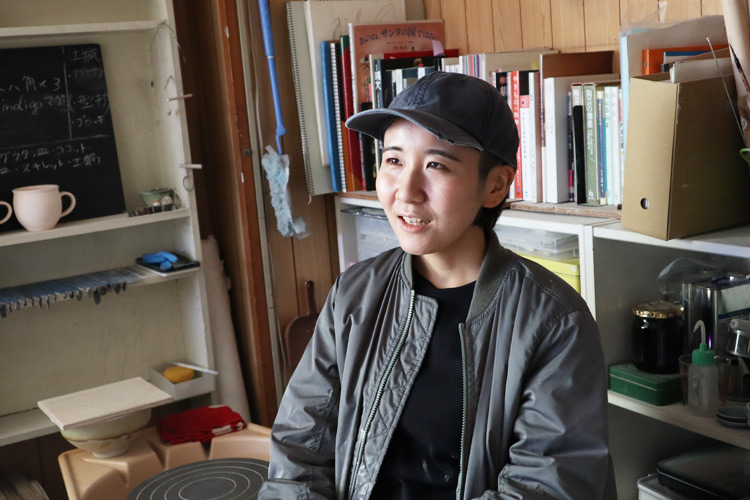
Hanada: So you were interested in crafts.
Yukiko Mori: I originally loved books and was interested in book design and binding, so at first I was considering the design department. But at an orientation session at prep school, I heard that in crafts you can be involved in every step of making a piece, from beginning to end.
I remember thinking, “That sounds nice.”
With design, I felt there are stages where your hands leave the process, or it becomes group work. The idea of being able to complete everything myself, from start to finish, seemed to suit me.
I’m not very good at working in groups (laughs). Since I was a child, my family has described me as someone who moves at her own pace, and I’ve always loved doing things on my own. Reading, drawing, playing the piano…
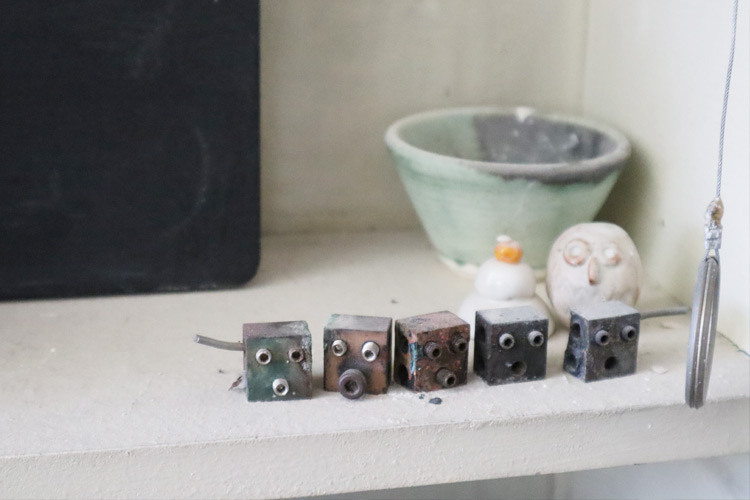
Hanada: And among the crafts, you chose ceramics.
Yukiko Mori: When I entered university, I hadn’t planned on choosing ceramics. But as I worked with different materials, clay was the one that refused to turn out the way I expected.
I had originally been interested in metalwork and textile dyeing, but I began to feel a strong curiosity: “This is something I handle every day as tableware, yet I know almost nothing about it.” That was the turning point.
Hanada: You’re from Nagakute, near Seto and Sanage.
Yukiko Mori: I don’t remember visiting production areas in particular, but I did go to a local museum. And I believe someone from Seto once came to a cultural program at school and let us try working with clay.
Hanada: That’s something special about growing up locally. Did anyone in your family work in a creative field?
Yukiko Mori: No. I’m the only one in my family of five. My parents let me pursue what I liked, in my own way. I’m grateful to them for raising me without comparing me to others.
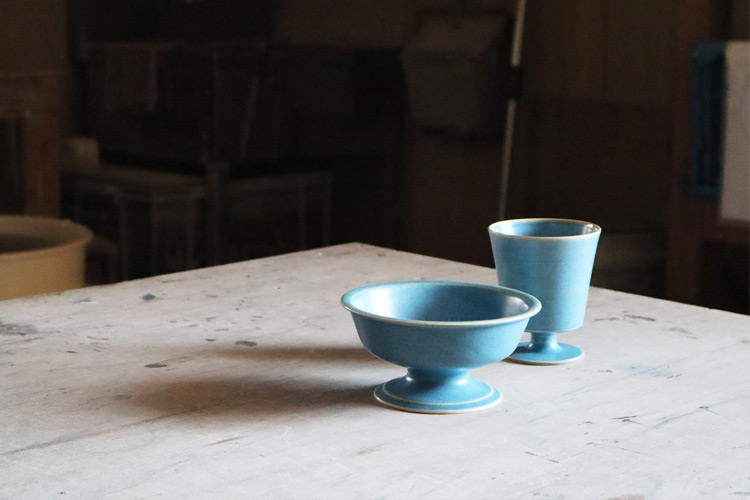
Wedding Favors
Hanada: After studying ceramics at school, was there a particular moment when you decided to pursue it professionally?
Yukiko Mori: While I was in graduate school, I had the opportunity to make the wedding favors for my brother’s wedding. It was the first time I had ever made such a large quantity…
Of course, you can’t just make the exact number needed. At the time I didn’t have much confidence, so I made several times more than required and selected the best finished pieces from among them. My whole family helped with the wrapping as well.
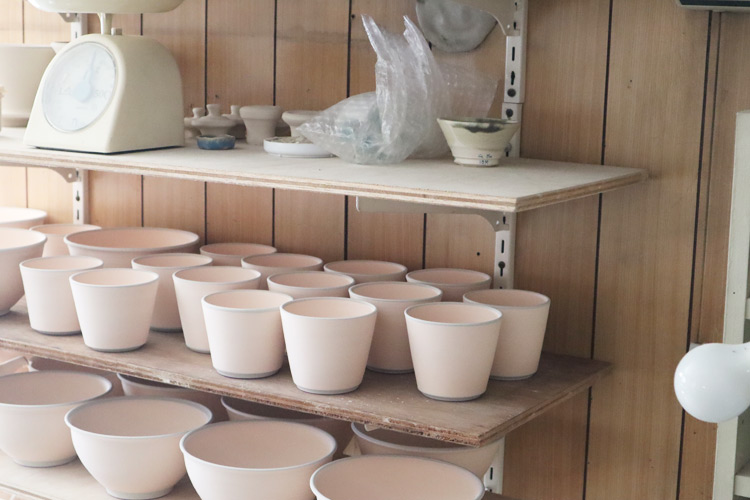
Hanada: About how many did you make?
Yukiko Mori: Around 250 free cups.
It was a lot of work, but I was deeply moved by the thought that something I had made would become part of so many people’s daily lives.
I had never created something while thinking so intently about specific people before. I had always felt somewhere inside that I wanted to make things that are simple, yet grow more beloved the more they are used. That was the first time I truly felt that idea take shape.
Hardworking Tableware
Hanada: What do you value most when making your work?
Yukiko Mori: I don’t feel the need for my pieces to assert themselves.
They don’t have to look striking in photographs. I hope they are dependable pieces that people can reach for casually every day, quietly supporting daily life.
Hanada: What about overall construction, form, and silhouette?
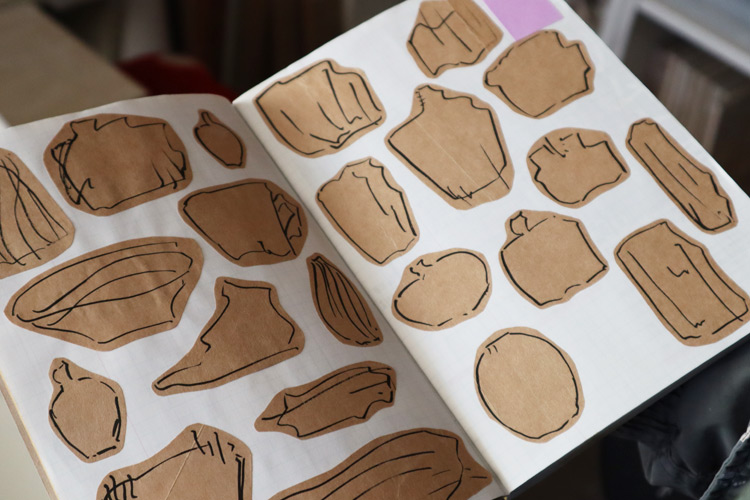
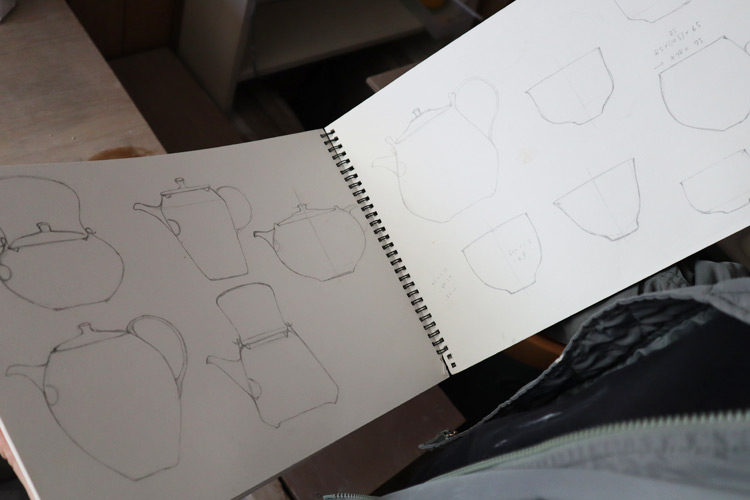
Yukiko Mori: Perhaps it’s about leaving space within the form. I try not to add too much decoration. Curves are especially important to me. I sketch and determine the balance as I go.
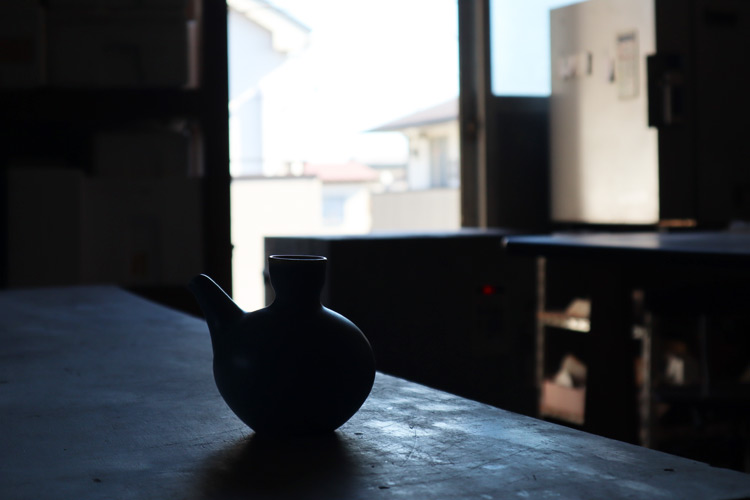
For vases and teapots in particular, I enjoy drawing them beforehand, imagining how I’d like them to be.
Hanada: What, in your view, makes a good form?
Yukiko Mori: These aren’t my own words, but I was happy when someone described my work as “sharp yet warm.”
If something is too sharp, it can feel cold. I want to value the subtle tension that comes from being shaped by hand rather than by machine.
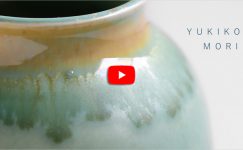
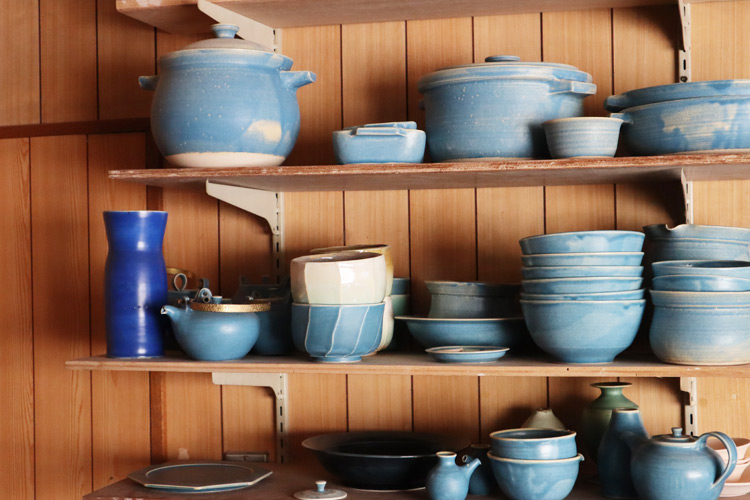
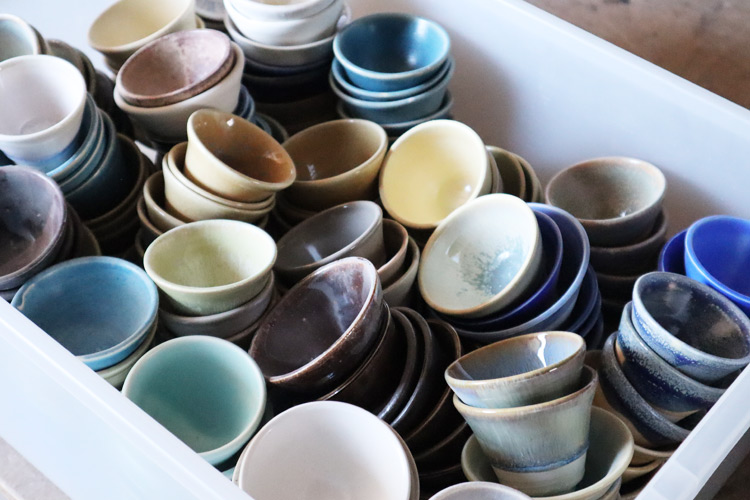
Hanada: One aspect that symbolizes your work is color. It’s a type of blue that’s unusual in ceramics.
Yukiko Mori: There are many blues in ceramics. Even so, I wanted to create my own blue, and I selected it from twenty or thirty different variations.
Hanada: Is there anything you would like to pursue from here on?
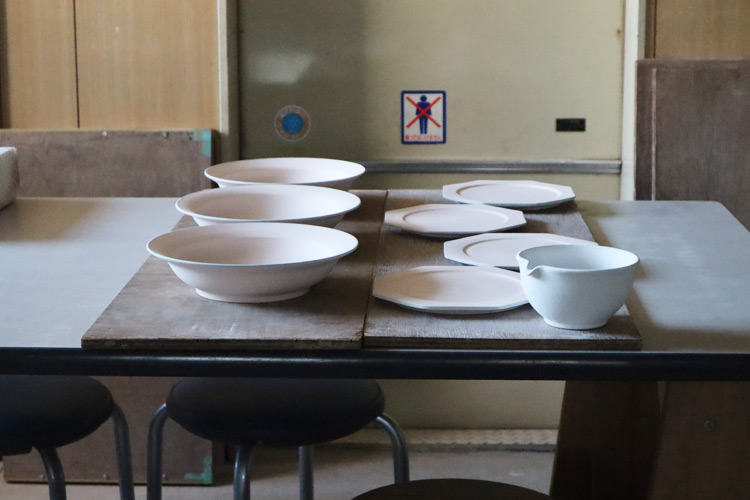
Yukiko Mori: In terms of form, I’d like to increase the number of molded pieces beyond wheel-thrown work.
I also have many friends who work with other materials, and I’d like to collaborate in various ways.
Working with people in different materials often leads to discoveries and learning opportunities.
Actually, this year I had the chance to exhibit my work accompanied by music, which was also enjoyable.
I suppose I’m genuinely interested in many different things—I’m not very good at sitting still.
Hanada: Having many things you want to do is a wonderful thing.
Yukiko Mori: I’m also currently involved in guiding students preparing for entrance exams, and I have opportunities to listen to and advise junior high and high school students who are about to choose their own paths.
I often tell them that I simply happen to be working in ceramics now; it’s not as though I had decided from the beginning that this was what I wanted to become. I feel that where I am today is simply the result of doing what was in front of me at each stage. It’s not as if I possess some obvious, flashy talent. If you feel like trying something, I think it’s important to try.
Hanada: That may be true at any stage and in any profession.
It may not go exactly as you imagine, but it may not be as difficult as you fear, either…
Yukiko Mori: I’m glad I tried, and I’m grateful that I was able to. While continuing to challenge myself with the things I want to explore, I don’t want it to become self-indulgent. I want to remain thankful to those who have supported me and to those I will encounter in the future, and to continue steadily for as long as I can.
≪ END ≫
陶芸との出会い
花田:森さんはどのような経緯でうつわ作家さんになられたのですか。(以下花田-)
森:まず美術大学の工芸科に進学しました。
-:工芸に興味があったのですね。
森:元々、本が好きで、本のデザインや装丁に興味があって、最初はデザイン科を考えていたところ、予備校での学科説明会で「工芸は最初から最後まで全部自分が関わって作品を作ることができる」という話を聞きました。
「なんか、それっていいな」って。
デザインは、どこかの工程で手が離れたり、グループワークになったり・・・、ということが起きると思うのですが「最初から最後まで自分で完結できる」ことが、自分に合っていそうだと感じました。
私は、団体行動があまり得意ではないんです(笑)。
子供の頃から家族からもマイペースって言われていて、1人遊びがとにかく好きでした。
本読んだり、絵描いたり、ピアノ弾いたり・・・。
-:そして、工芸の中でも陶芸を選ばれました。
森:入学時、陶芸を選ぶつもりはなかったのですが、様々な素材を触る中で、焼き物が1番、思った通りにいかなかったんです。
元々は彫金や染織に興味があったのですが「食器として普段触れているものなのに、それについて全然知らないんだな」と強く興味がわいてきたのがきっかけです。
-:ご出身の長久手の近所には瀬戸や猿投があります。
森:産地巡りのようなことをした記憶はありませんが、近くの資料館には行きましたし、学校の文化講座に、たしか瀬戸の方が来て、焼き物体験をさせてもらいました。
-:地元ならではですね。ご家族がモノ作りの仕事をされていたり・・・?
森:いいえ。5人家族で私だけです。
私は、好きなことを好きなようにやらせてもらいました。
他と比べることもなく育ててくれた父と母に感謝です。
結婚式の引き出物
-:学校で陶芸の勉強をされた後、うつわ作家としてやっていこうと考えたきっかけはあったのですか。
森:大学院の時に、兄の結婚式の引き出物を作る機会があったんです。
沢山の数を作ったのはその時が初めてでした・・・。
必要な数をピッタリ作ればいいわけではないし、当時は自信もありませんから、必要数の何倍も作って、その中から仕上がりのいいものを選びました。
家族総出でラッピングしたり・・・。
-:いくつくらい作ったのですか。
森:フリーカップを250個ぐらい作りました。
大変でしたが「自分の作った作品が、こんなにたくさんの人の生活の一部になる・・・」と、感慨深かったです。
こんなに、誰かのことを思いながら何かを作ることはなかったですし「シンプルだけど、使うほどに愛着が湧くようなものを作りたい」みたいなことを、どこかで思っていたのが、その時はじめて形になった実感がありました。
働き者の器
-:森さんが、うつわを作る上で大切にしていることは何ですか。
森:自分の作品に主張してもらわなくてもいいなと思っています。
画像ですごく映えるような作品である必要はなくて、誰かの生活の中で、毎日気軽に使われるような働き者の器であってほしいなと思います。
-:全体のつくり、かたち、シルエットなどはいかがでしょうか。
森:余白がある器・・・でしょうか。
装飾なども基本的には足しすぎない。
それと、曲線は大事に考えていて、スケッチしながら、バランスを決めていきます。
特に花器や急須などは「こんなふうになったらいいな」って、作る前のデッサンも楽しんでいます。
-:森さんの考える良いかたちとは、どのようなものなのでしょうか。
森:自分の言葉ではないのですが「シャープだけど温かい」と言われたときは嬉しかったです。
シャープすぎても冷たい印象になると思うので、機械ではない自分の手の仕事の張り、みたいなものは大事にしたいです。
-:森さんの仕事を象徴するものの一つに「色」があります。
焼き物では珍しいタイプのブルーです。
森:焼き物で青って多いですよね。
それでも自分の青を作ってみたくて、2、30パターンの中から選びました。
-:これからやっていきたいことは何かありますか。
森:形に関しては、回転以外の型物も増やしていきたいです。
あと、異素材を扱っている友人も多いので、いろいろ協働してみたいです。
別の素材の方と一緒にやると発見や勉強になることも多いです。
そうそう、今年、自分の作品に音楽をつけて展示をしていただく機会があったのですが、それも楽しかったです。
ちょっと・・・本当に興味が色々なところにあって、本当に落ち着きがないんです。
-:したいことがたくさんあるのは素敵なことです。
森:私は今、受験生指導の仕事もさせていただいていて、 これから自分の道を選んでいく中学生や高校生くらいの人たちから相談を受けたり、話を聞いたりする機会があります。
そういう時にも話すのですが、別に自分も、たまたま今陶芸をやっているだけで、最初から「こうなりたい」と思っていたわけではありません。
目の前のことをただやってきた結果、今があるなって感じです。
私には、わかりやすい派手な才能があるわけでもありませんし。
「やってみたい」と思ったら、やってみるのが大事だなと、あらためて思います。
-:どのステージでも、どの職業にも言えることかもしれません。
思ったようにはいかないかもしれないけど、思ったほど大変でもないよ、という・・・。
森:やってみてよかったし、やらせてもらえてよかったなって思います。
自分がやってみたいと思う色々なことに挑戦しつつも、自己満足にはならないように、今までお世話になった人、これから関わる人にも感謝して、出来るだけ長く、コツコツと続けていきたいです。
≫森悠紀子さんのうつわはこちらから≪
関連記事はこちら