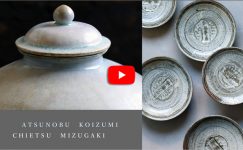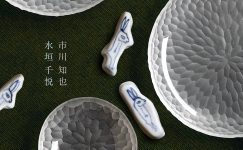








English version of the interview here.
An Ordinary Child
Hanada: Did you enjoy making things from a young age?
Chietsu Mizugaki: I liked crafts, but it’s not as if I was especially good at them or anything… I was just an ordinary child. My mother practiced calligraphy, so from the time I was in kindergarten I was made to hold a brush quite rigorously. Our house was always filled with the scent of ink.
Hanada: I’ve heard your mother placed great importance on food.
Chietsu Mizugaki: She prepared almost everything herself. As for tableware, it was all porcelain—I ended up disliking porcelain because of that.
Hanada: So there wasn’t any earthenware.
Chietsu Mizugaki: After my mother started going to the pottery fair in Mashiko and places like that, little by little…
Hanada: Did she take you to Mashiko as well?
Chietsu Mizugaki: I went with her, but in junior high and high school I had no interest in ceramics, so… (laughs).
Sawing Jōmon Pottery
Hanada: What did you do after graduating from high school?
Chietsu Mizugaki: I studied agriculture at a university in Miyazaki.
Hanada: I imagine agriculture covers a wide range of fields.
Chietsu Mizugaki: At first I was studying environmental science, but by chance I visited a laboratory researching agricultural ruins, and a senior student was sawing a piece of Jōmon pottery in half to examine its components.
It looked incredibly compelling… So I asked, “Is it really okay to cut pottery?” and he said, “Yes, it’s fine.”
Hanada: Did you start cutting pottery as well?
Chietsu Mizugaki: The investigation ended just before my year, so instead I worked on an excavation related to highway construction near the Kagoshima prefectural border. We collected soil from strata dating back about ten thousand years and analyzed it using a centrifuge.
Hanada: That must have been interesting in its own way.
Chietsu Mizugaki: It was. You don’t expect to find pink soil beneath the ground, do you? And when you analyze it, you can tell things like whether pampas grass once grew there.
Hanada: Pink soil?
Chietsu Mizugaki: Looking back, I think it was probably similar to the moxa clay found in Gifu.
Hanada: That’s quite a step closer to ceramics. You must have had many discoveries and surprises.
Chietsu Mizugaki: On a grand scale… I mean, it would have been exciting if we’d unearthed human bones. But our biggest discovery was, “Look! These are traces of roasted chestnuts!” Rather understated (laughs).
Hanada: You found traces of roasted chestnuts?
Chietsu Mizugaki: From the Jōmon period.
Hanada: So people were roasting and eating chestnuts in the Jōmon period.
Chietsu Mizugaki: That was our greatest discovery. No gold or silver treasures whatsoever (laughs).
Hanada: That would be asking too much (laughs).
After Seeing a Jar…
Hanada: What prompted you to want to make ceramics yourself?
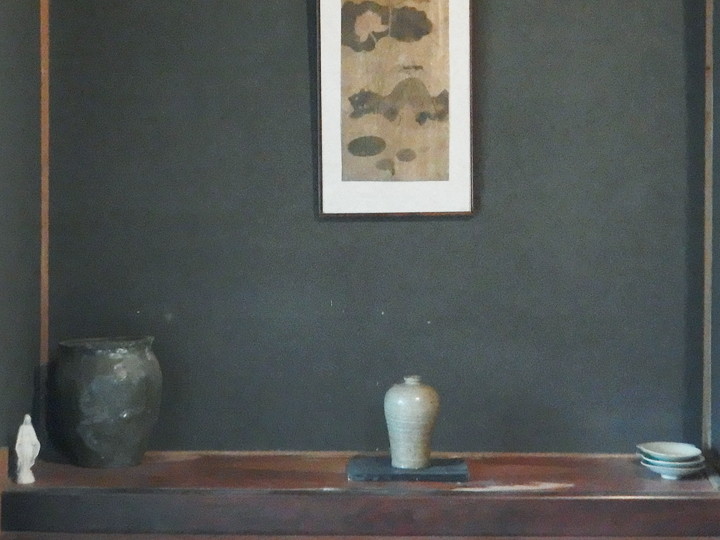
Chietsu Mizugaki: I shouldn’t go into too much detail out of respect for the owner, but when I saw a certain jar someone owned, I thought, “I want to make something better.”
Rather cheeky, considering I’d never made anything myself (laughs).
Hanada: So it was a jar that made you feel that way.
Chietsu Mizugaki: It was a jar with not a single redeeming quality.
It felt flimsy, and it only reinforced my feeling: “This is why I dislike porcelain.”
Hanada: Porcelain was clearly the villain in your mind (laughs). Did you begin studying ceramics after that?
Chietsu Mizugaki: No, not yet (laughs). I didn’t know anyone involved in ceramics, and my mother was strongly opposed.
Hanada: She was firmly against it?
Chietsu Mizugaki: Becoming a potter out of nowhere… She hadn’t even fully accepted my studying agriculture at a university in Miyazaki.
Hanada: I see.
Chietsu Mizugaki: She seemed to believe that “a woman should simply enroll in a literature department or something like that…”
Hanada: What about your father?
Chietsu Mizugaki: He opposed it too, but more in a “Well, that’s just like you, so I suppose it can’t be helped” kind of way (laughs).
Encounter with a Joseon White Porcelain Jar
Hanada: You also love music. What were you into?
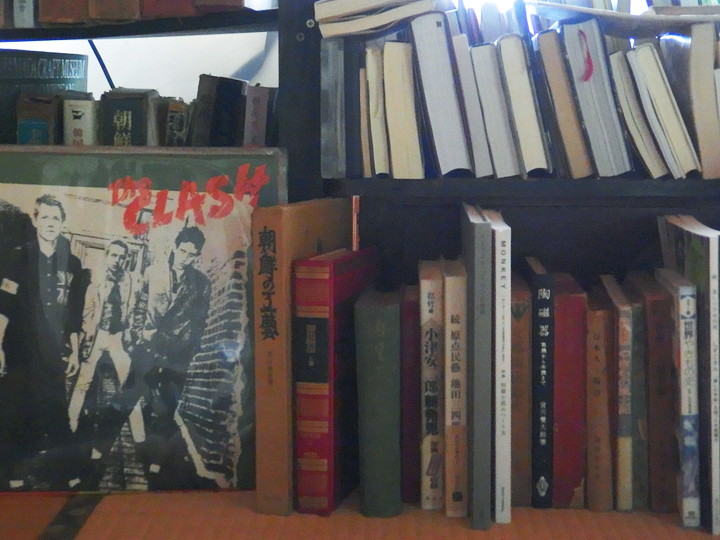
Chietsu Mizugaki: It connects to my first job after graduation, but I was completely immersed in punk. Rancid, The Clash, the Sex Pistols…
Around the time I graduated, I thought, “Next, I’ll devote myself to music,” and just then a record shop in Jinbōchō was hiring trainee staff, so I joined.
But the shop specialized in enka, idol music, and classical…
There was a rock section, but it had its own specialist, so I couldn’t go near it.
As I kept polishing records by artists like Saori Yuki, Morishige Hisaya, and Hibari Misora, I started to grow disillusioned… (laughs).
Hanada: Things didn’t go as planned.
Chietsu Mizugaki: At that time, during a lunch break, I happened to walk into a café called Rihaku (now closed).
Hanada: Quite an encounter.
Chietsu Mizugaki: There, I was struck hard by a Joseon white porcelain jar…
And Rihaku was hiring as well. Before I knew it, I was saying, “Please hire me, for now.”
Hanada: So for you, a poor jar opened the path to ceramics, and a great jar pushed you down that path (laughs).
Chietsu Mizugaki: Then it turned out that the president of the record shop where I had worked was a regular at Rihaku… I’d left saying something dramatic like “I’m pursuing my dream,” and there he was, right in front of me…
Hanada: Extremely awkward.
Chietsu Mizugaki: Very awkward (laughs).
A Year with the Master
Hanada: Did you speak with the master often?
Chietsu Mizugaki: He taught me about Joseon ceramics from the very beginning. There were also many books there.
Hanada: Wasn’t Rihaku busy?
Chietsu Mizugaki: Depending on the weather, there were times when no customers came at all. The master, Shigeyuki Miyahara, was a very single-minded person. If someone came just to chat without any interest in Joseon ceramics, he would send them away.
He deeply valued customers who came quietly to look at Joseon ware, so I think he took the atmosphere of the shop very seriously.
Hanada: Listening to explanations while surrounded by Joseon ceramics… it sounds ideal.
Chietsu Mizugaki: He would say, “When people think of Joseon ware, they tend to favor pieces that are warped or distorted, but that’s not what they truly are. They are much more beautiful.”
He also said, “People praise a crooked sake flask as ‘wonderful,’ but that’s not the point.”
All the books here were given to me by Rihaku.
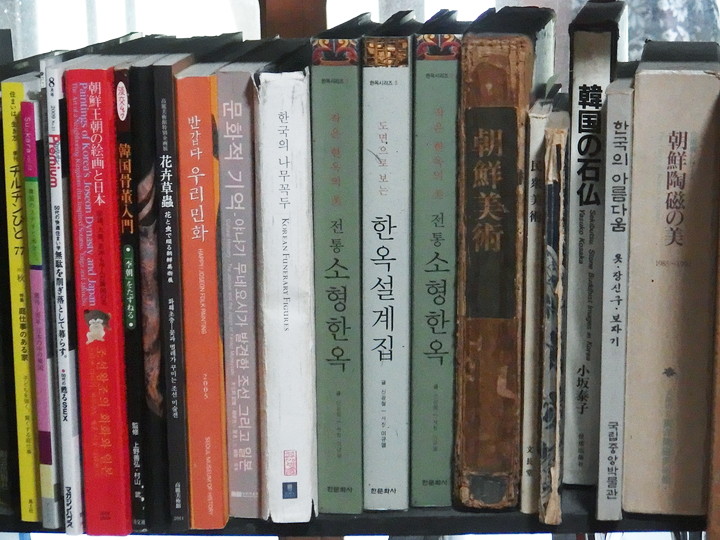
Hanada: I see—that explains the books in Hangul. I had wondered where you found them. You must have been able to see more than just white porcelain jars.
Chietsu Mizugaki: There was woodwork, metalwork… a full range. There were paintings as well.
And museum professionals and antique dealers came in as customers, so I often overheard their conversations with the master…
Hanada: That must have been valuable. You listened from the side?
Chietsu Mizugaki: When they mentioned, for example, a fine piece held in a certain collection, I would stop by a secondhand bookstore nearby on my way home and look for exhibition catalogues to see what it was like…
Hanada: A time of intense absorption, then. Could you name some favorite Joseon pieces?
Chietsu Mizugaki: The white porcelain jar and the meiping I saw at Rihaku, and a Mishima tea bowl at the Mingeikan that is worn and slightly misshapen from being over-pressed, yet still possesses dignity—those three.
Hanada: After encountering Joseon ware at Rihaku, your desire to pursue ceramics only deepened.
Chietsu Mizugaki: I felt I had finally understood what that earlier jar had been lacking.
Hanada: How long were you at Rihaku?
Chietsu Mizugaki: One year. One day the master told me, “You can’t stay here forever. If you’re going to pursue ceramics, you must properly step into that world.”
After that, I attended a school in Kyoto for two years, then worked part-time in factories and offices in Kyoto and Hachioji while making pottery. Eventually I moved to Oita, where I am now.
Teachers in Ceramics
Hanada: Did you learn techniques at school?
Chietsu Mizugaki: The basics at school, and the technical aspects of Joseon ware from books by Akira Yoshida, as well as exhibition catalogues and publications on mingei.
Books are treasures to me.
Hanada: Could you show us those books now?
Chietsu Mizugaki: I’m sorry—I don’t have them with me right now. They’ve wandered off somewhere.
Hanada: That doesn’t sound very careful (laughs).
Chietsu Mizugaki: They’re carefully put away somewhere. I just no longer know where that somewhere is!
Hanada: In any case, you read them again and again.
Chietsu Mizugaki: Until they fell apart…
At that time, no one would teach you how to mix glazes, and such information wasn’t made public.
But Akira Yoshida openly published it all—he even showed exactly what Mishima stamps looked like. They were invaluable to me.
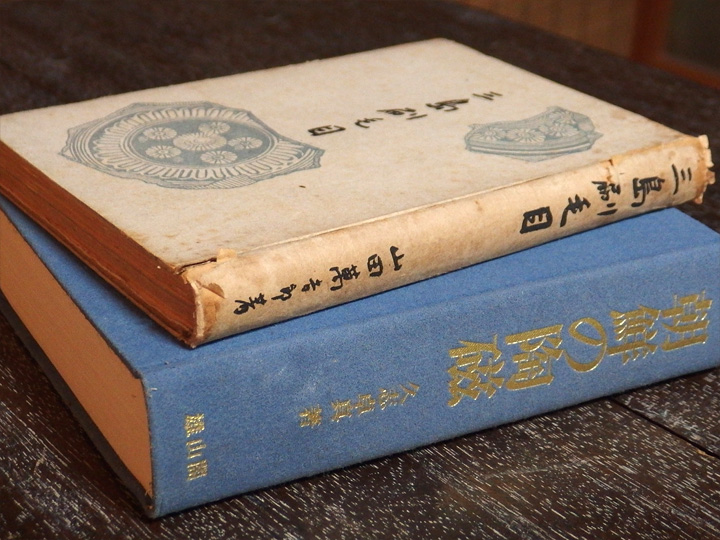
Hanada: There are many fascinating titles here. “Mishima and Hakeme” by Yamada Mankichiro also stands out.
Chietsu Mizugaki: From these books, I learned “affection” for objects.
Reading books filled with genuine love is enjoyable.
This one, too, dates from the wartime period, and it carefully records items unearthed from old kiln sites with hand-drawn illustrations.
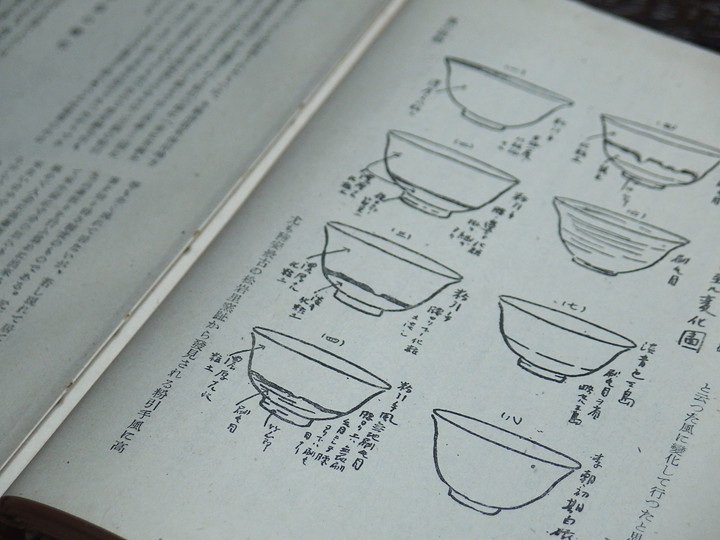
Chietsu Mizugaki: This is “Korean Ceramics,” highly praised by the master at Rihaau. The first edition was published near the end of the war; this is a later reprint… it’s excellent.
Hanada: “Korean Ceramics” by Takushin Kushi.
Chietsu Mizugaki: A pure spirit… perhaps. This, too, was published during the war.
When you read books from that time, you notice that the prefaces often say things like “Japan is great” or “Korea is lazy.” But this author is different.
At first it’s not so apparent, but toward the end he praises Korean art wholeheartedly. He writes about how extraordinary Korean art was, how it was transmitted to Japan and influenced it…
I think it required resolve to write that during wartime. He evaluates Korean works after fully acknowledging the value of various artistic traditions.
Hanada: That’s very different from writing today. He expressed his affection for Joseon ware under wartime conditions. That must have given you strength.
Chietsu Mizugaki: Sometimes I didn’t immediately grasp what the master at Rihaku meant, but when I read this book, it suddenly became clear.
Gratitude
Hanada: Is there anything you’ve made that remains particularly memorable?
Chietsu Mizugaki: When I first saw something I had made, I thought, “What am I going to do? I’ve made something amazing. It’s going to sell too well” (laughs).
Hanada: That’s impressive. What was it?
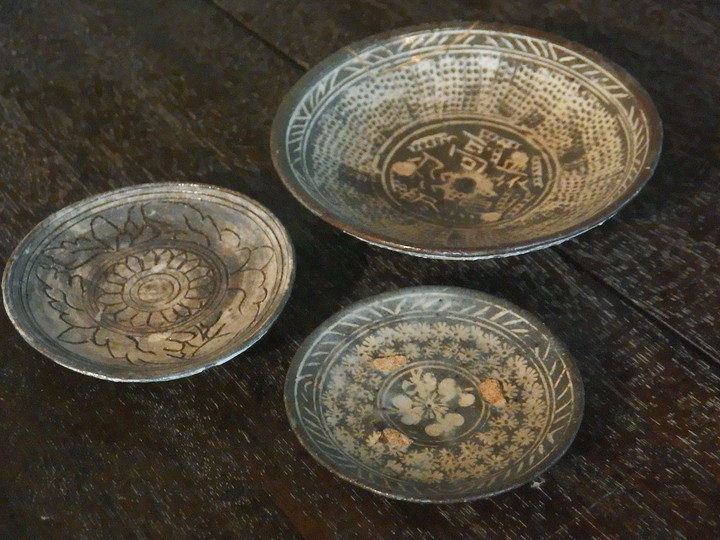
Chietsu Mizugaki: A small Mishima plate. But it didn’t sell at all. It was at a handmade market in Kyoto. Seeing a nearby glass artist with excellent work also struggling to sell made me oddly relieved… It made me realize that what I consider the best isn’t necessarily what others think is best.
Hanada: Do you still have that plate?
Chietsu Mizugaki: This one. It’s been fifteen years.
Hanada: It was this beautiful even fifteen years ago.
Chietsu Mizugaki: It didn’t sell.
Hanada: Why didn’t it sell, I wonder. Does it bring back memories?
Chietsu Mizugaki: Mostly bitter ones (laughs). Now I’m simply grateful to have work. I have to do it properly (laughs).
Hanada: Any particularly happy memories?
Chietsu Mizugaki: I was happy when a small elementary-school child chose one of my bud vases.
Hanada: Why does it make you happy when a child chooses your work?
Chietsu Mizugaki: Because I couldn’t choose things for myself when I was little (laughs). And children don’t choose based on theory or knowledge.
They don’t make extravagant purchases—they have to persuade their mother to spend the money if they truly want it. They overcome that hurdle to take it home.
Hanada: I hope they remember it when they grow up. And perhaps one day return to your solo exhibition.
Chietsu Mizugaki: By then I’ll be an old woman (laughs).
Throwing on the Wheel to Rock ’n’ Roll
Hanada: What do you want to make now?
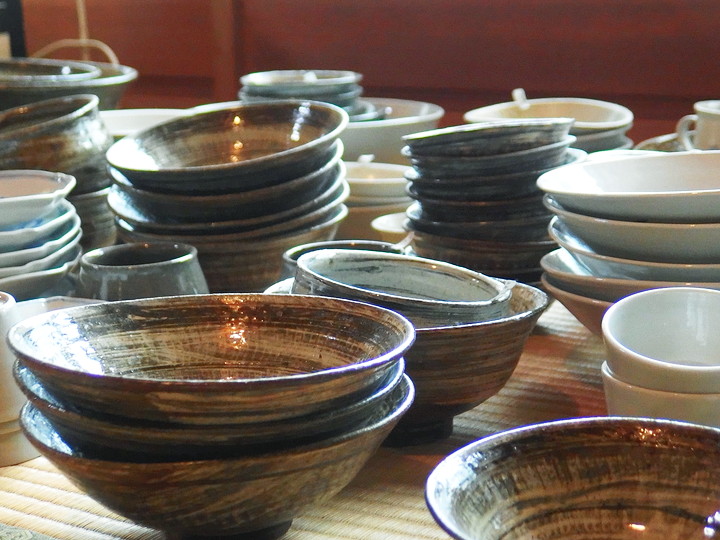
Chietsu Mizugaki: I aim toward the Joseon pieces I love, while continuing to make works that belong on the dining table. For now, I try not to make anything strange. And I don’t forget to make what I myself would want.
Hanada: So you create what you need yourself.
Chietsu Mizugaki: Yes. I wouldn’t want to make things I don’t need and end up with a house full of unsold stock.
Hanada: (laughs)
Chietsu Mizugaki: In one way or another, I do believe in the power of tableware… Even if a couple is arguing, if you’re using your favorite pieces, you’re unlikely to throw them. They enrich everyday life and perhaps even act as a kind of restraint.
Hanada: That’s unusually serious (laughs). I also like your blue-and-white work. The clay body is strong, and so is the brushwork.
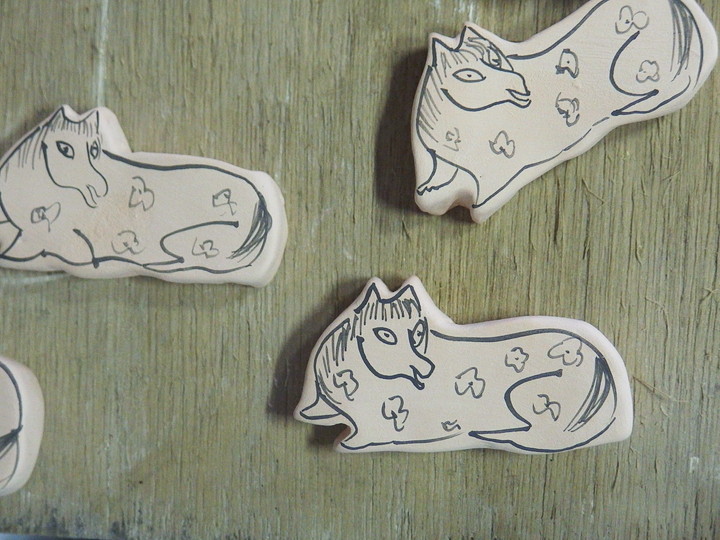
Chietsu Mizugaki: The motifs are based on old examples—Imari, Joseon, Shonzui… I’m drawn to designs that have been shared across Asia.
Hanada: Shonzui as well?
Chietsu Mizugaki: I borrow small elements from Shonzui.
Hanada: Just portions, then. Your blue-and-white work carries your own atmosphere.
Chietsu Mizugaki: When you look at antiques, even with the same motif, the feeling changes depending on the artisan who painted it. That irregularity is part of the appeal, I think.
I’ve simply joined at the end of that lineage, continuing to paint traditional designs— while living in the present.
Hanada: That makes sense.
Chietsu Mizugaki: When someone at Seto’s Shindo Studio said, “If Edo-period artisans were alive today, they’d all be using electric wheels,” it eased my mind a little.
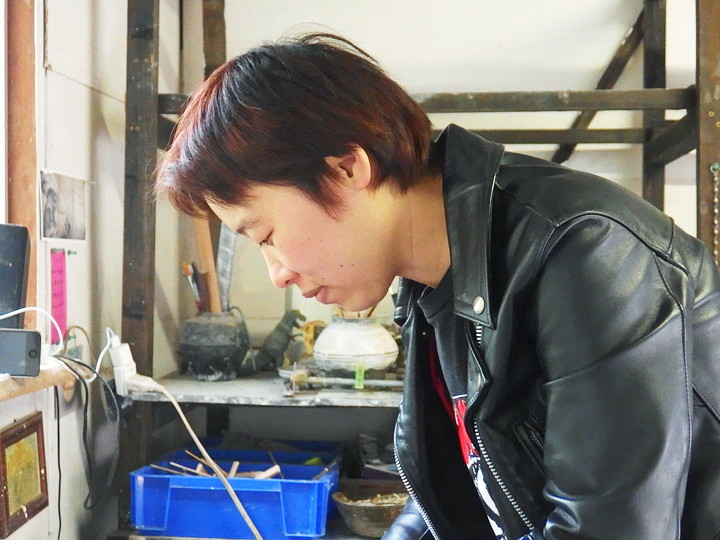
I sometimes worried about the gap between aiming for the past and living a different life now. But I grew up watching Kinnikuman(a famouse anime), after all. So I’ve accepted it—throwing on the wheel while listening to rock ’n’ roll.
Toward the Exhibition
Hanada: Finally, a word about your upcoming exhibition with Etsuji Noguchi.
Chietsu Mizugaki: I like Noguchi’s Nanban work. I’ve never met him in person, but I once saw him somewhere, and he left a strong impression—“Ah, that must be Mr. Noguchi.”
It’s a great honor. Please convey my regards.
Hanada: Certainly. We look forward to the exhibition!
≪ END ≫
普通の子ども
花田: もの作りは小さいときから好きだったのですか。(以下 花田-)
水垣: 普通に工作は好きでしたけど、特にその成績が良かったわけでもないし・・・
普通の子どもです。
母が書道をやっていたので、幼稚園のころからみっちり筆を持たされていたくらいです。
いつも墨の香りが漂う家でした。
-: お母様は、食を大事にされていたそうですね。
水垣: 料理はほぼ全て自分の手で作ってくれていました。
うつわは、磁器ばかりで、磁器が嫌いになってしまいましたが。
-: つちものはなかったのですね。
水垣: 母が益子の陶器市なんかに行くようになってからは、少しずつ・・・。
-: 益子にも連れて行ってもらったのですか?
水垣: 一緒に行ったけど、中学高校当時はうつわに興味がなかったので、なんとも・・・(笑)。
土器をのこぎりで切る
-: 高校卒業後はどうされたのですか?
水垣: 宮崎の大学で、農業の勉強をしていました。
-: 農業も色々な分野があるかと思います。
水垣: 最初は環境の勉強をしていたのですが、たまたま農業遺跡の研究室に行ったら、成分を見るために先輩が縄文土器をのこぎりで切っていたんです。
とても魅力的に見えて・・・。
「土器、切っていいんですか?」って聞いたら、先輩が「うん、いいの、いいの」って。
-: 水垣さんも、土器切りを始めたのですか。
水垣: わたしの学年の前でその調査が終わってしまったので、その代わり、鹿児島との県境の高速道路工事で出てきた遺跡調査で、一万年前くらいからの地層の土を取ってきて、それを、遠心分離機にかけて分析していました。
-: それはそれで・・・
水垣: 楽しかった。
だって、地面の下にピンク色の土があるなんて思わないじゃないですか。
で、調べていくと、ここにはススキが茂っていただろうとか、そういうことが分かるんです。
-: ピンク色の土?
水垣: 恐らくそれは、岐阜で取れるもぐさ土に似たようなものだっただろうな、って今思います。
-: 急に焼きものと接近し始めましたね。
色々な発見や驚きがあったのではないですか。
水垣: 大々的な・・・例えば、人骨が出てきてくれたらいいんだけど、一番メインの発見が「見てください!これ栗を焼いた跡ですよ!」ですから。
地味なものです(笑)。
-: 栗を焼いた跡が出てきましたか。
水垣: 縄文時代に。
-: 縄文時代に、栗を焼いて食べていたのですか。
水垣: それが最大の発見。
金銀財宝は一切ありませんでした(笑)。
-: それは期待しすぎです(笑)。
壷を見て・・・
-: 自分で焼物を作りたいと思うきっかけは何だったのですか。
水垣: 持ち主の方に悪いので、あまり具体的には言えないのですが、ある方が持っている壷を見たときに「もっといいものを作りたい」と思ったのがきっかけです。
生意気ですよね、作ったこともないくせに(笑)。
-: とはいえ、そう思わせてしまう壷だったということですね。
水垣: 良いところが一つもない壷だったんですよ。
ぺラッとしていて「だから、磁器って嫌なのよ」って更に思っちゃって。
-: 水垣さんの中では完全に磁器が悪役ですね(笑)。
それで、焼き物の勉強を始めるのですか?
水垣: いや、まだです(笑)。
まわりに焼き物やっている人がいるわけでもないし、母親は猛反対。
-: 猛反対されましたか。
水垣: いきなり陶芸家だなんて・・・
そもそも宮崎の大学で農業の勉強をすることすら納得していないのに・・・。
-: そうだったのですね。
水垣: 母は「女性は、普通に文学部にでも入って・・・」という感覚を持っていたようなので。
-: お父さんは?
水垣: 反対だけど「まあ、お前のことだから仕方ないかな」みたいな(笑)。
李朝の白磁壷との出会い
-: 水垣さんは音楽も好きです。
何が好きだったのですか?
水垣: 卒業後の仕事に繋がるのですが、パンク一色です。
ランシド、クラッシュ、ピストルズ・・・。
大学卒業する頃「次は音楽三昧だな」と思っていたら、丁度神保町のレコード屋さんが社員見習いを募集していたので、そこへ。
でも、そこ、実は演歌、アイドル系やクラシックが強い店でして・・・。
ロックの部屋はありましたが、そこには専門の人がいて、近寄れず・・・
ひたすら、由紀さおり、森繁久彌、美空ひばりのレコードを磨き続けているうちに、やさぐれて・・・(笑)。
-: 思う通りにはいきませんね。
水垣: そんな時、昼休みにたまたま入ったのが喫茶店の李白(今は営業されていません)でした。
-: ものすごい出会いですね。
水垣: そこで、李朝の白磁壷に、ガツンとやられて・・・。
しかも、李白も求人していたんです。
自分でもよくわからないうちに「とりあえず、雇ってください」って。
-: 水垣さんにとって、良くない壷が焼き物への道を開き、良い壷がその道へ自分を押し出してくれたのですね(笑)。
水垣: そうしたら、前の仕事先のレコード屋の社長さんが李白の常連で・・・。
「夢を追います」とか言って格好良くやめたのに、すぐ目の前にいたっていう・・・
-: 気まずさ満点ですね。
水垣: とても気まずかったですね(笑)。
マスターとの1年
-: マスターとは色々お話したのですか。
水垣: 李朝のことを一から教えてくれました。
あそこ、本も沢山ありました。
-: 李白って忙しくないのですか。
水垣: 天気によっては人が全く来ない時間があって。
マスターの宮原重行さんが一本気のある人で、李朝に興味がなくてただ喋りにきた人なんかは追い返しちゃうんです。
マスター、静かに李朝を見に来てくれるお客さんをとても大事にしていたから、お店の雰囲気を真面目に守っていたのだと思います。
-: 解説付きで、李朝の焼き物に囲まれながら・・・最高ですね。
水垣: 「李朝と言うと、歪んでいたり曲がっていたりするのが好まれるけど、本来はそんなものじゃない、もっとキレイなものだよ」って言っていました。
「グニャっと曲がった徳利を『良いねえ』なんて言っているけど、そういうものじゃない」とも。
ここにある本は全て李白から頂いてきた本です。
-: なるほど、ハングル語の本まであるのはそういうわけですね。
どこで手に入れたのだろうって思っていました。
白磁の壷以外にも色々と見ることが出来たのではないですか。
水垣: 木工品も、金属も・・・一通りありました。
絵も揃っていたし。
あと、美術館の人達や骨董屋さんもお客さんとして出入りしていたので、そういう人達とマスターの会話もしょっちゅう・・・。
-: いいですね。
それを横で聞いていたわけですか。
水垣: どこそこの所蔵品の器が良いなんて話がでてくると、帰りに近くの古本屋さんで図録を探してどんなものか見たりして・・・。
-: どんどん吸収していた時期なのですね。
好きな李朝の焼き物、挙げていただくことは出来ますか?
水垣: 李白で見た白磁の壷と梅瓶、民芸館の三島を押しすぎてヨレヨレになっているけど、品を感じさせる茶碗の3つです。
-: 李白で、李朝に出会って、ますます焼き物への思いは強くなっていくわけです。
水垣: あの物足りなかった壷に足りなかったものが分かったような気がしたから。
-: 李白にはどれくらいいたのですか。
水垣: 1年です。
ある日マスターが「あんたはいつまでもここにいちゃだめだよ。
陶芸やるんだから、ちゃんとそっちへ行かなければいけない」って。
で、京都の学校に二年間通った後、京都、八王子で工場や事務のアルバイトをしながら器を作って、今の大分です。
焼き物の先生
-: 技法などは学校で教わったのですか?
水垣: 基本的なことは学校で、李朝の技術的なことは吉田明さんの本と、図録や民藝の本で。
本はわたしにとって宝物です。
-: 今、その本、見せていただけますか?
水垣: すみません、今無いです。 どこかに、いってしまいました。
-: 全然、大事にしていないじゃないですか(笑)。
水垣: どこかにそっと、大事にしまってあるの。
ただ、その場所が分からなくなっただけ!
-: いずれにしても、その本を何度も何度も読んでいった。
水垣: ボロボロになるまで・・・。
その頃って、釉の調合の仕方なんて誰も教えてくれないし、公表もしていなかった。
でも、吉田明さんはいきなり公表しているし、三島の判子はこんな感じだ、って全部出していましたからね。重宝しました。
-: 楽しそうな本が色々ありますね。
「三島・刷毛目」(山田萬吉郎)も目を引きます。
水垣: ものへの「愛着」を学びました。
やはり、愛情たっぷりの本を読むと楽しいんです。
この本も戦中のものですが、古い窯跡から出てきたものを手書きの絵で丁寧に記録してあるんですよ。
水垣: これは、李白のマスター絶賛の「朝鮮の陶磁」。
終戦間際に初版が出て、これは再版されたものだけど・・・いいですねえぇ。
-: 「朝鮮の陶磁 久志卓真」。
水垣: 清い魂・・・ですかね。これも戦争中に出た本です。
当時の本を読んでいると気付くのですが、大体、前書きなんかに「日本はすごい」とか「朝鮮は怠け者」とか書いてあるんです。
でも、この人は違う。
初めはそうでもないのですが、最期のほうは朝鮮美術絶賛。
いかに、朝鮮の美術が凄かったか、日本にどうやって伝わってきて影響を与えたか・・・。
戦時中にそういうのを書き通せるだけの覚悟があったと思うんです。
そして、色々な美術の良さを受け入れた上で、朝鮮のものを評価している。
-: 今書くのとはわけが違いますからね。
水垣さんが大好きな李朝に対して、戦時中という環境下で愛情を表現してくれていた。
水垣さんにとっては大変な力となったわけです。
水垣: (李白の)マスターの言葉を聞いたとき、ピンとこないこともあったのですが、この本を読んだときにパッとそれがわかった気がしました。
感謝
-: 今まで作ったもので、印象に残っているものありますか。
水垣: 最初に自分が作ったものを見たときには「どうしよう、こんなのできちゃった。売れすぎて困っちゃう」って思いました(笑)。
-: 凄いですね。何だったのですか。
水垣: 三島の小皿です。でも、全く売れなくて。
京都の手作り市だったのですが、近くのガラス作家さんもとても良いのに売れていないのを見て、安心してみたりして・・・。
あらためて「自分で最高だと思うものを、みんなが同じようには思わないんだなあ」って実感しました。
-: その時の小皿はまだお持ちですか。
水垣: これです。15年経ちます。
-: 15年前からこんな素敵だったのですね。
水垣: 売れませんでしたよ。
-: 何で売れなかったんだろう。
これを見て何か思い出しますか。
水垣: 苦い思い出ばかりです(笑)。
今は、仕事があるって有り難いなって。ちゃんと仕事しないと(笑)。
-: 何か嬉しかった思い出はありますか。
水垣: 小学生くらいのちびっ子が一輪挿しを選んでくれたとき、嬉しかったです。
-: なぜ、子どもが選んでくれたことに、水垣さんは喜びを感じるのですか。
水垣: 小さい頃自分が選べなかったから(笑)。
あと、子どもは理屈や薀蓄じゃないからです。
大人買いをするわけでもないし、欲しかったらお金を出してくれるお母さんを説得しなければいけない。
それを乗り越えて手に入れてくれるわけですから。
-: 大きくなってから思い出してくれると良いですね。
そして、いつかまた、水垣さんの個展に現れる。
水垣: わたし、もうその頃はおばあさんですよ(笑)。
ロックンロールでロクロ
-: 今、作りたいのは、どのようなものでしょうか。
水垣: わたしは好きな李朝のものを目指していて、なおかつ食卓の上にのるものを作り続けたいです。
とりあえず変なものをつくらないように、気をつけること。
自分が欲しいものを作ることを忘れずに。
-: 自分にとって、必要なものを作っていると。
水垣: そうですね。要らないもの作って、家の中にいっぱい在庫があったら嫌ですもの。
-: (笑)
水垣: なんだかんだいって多少はうつわの力を信じていて・・・。
もし夫婦喧嘩しても、自分の好きなうつわを選んでいたら、それを投げようとは思わないですよね。
うつわは日々を豊かにしてくれるし、何かの歯止めにもなってくれているような気もするんです。
-: 珍しく、真面目に話して下さいましたね(笑)。
僕は水垣さんの染付も好きです。素地も良いし、筆の雰囲気も。
水垣: 絵柄は古いものの写しです。伊万里、李朝、祥瑞・・・。
アジア全体に伝わる共通的な絵柄が好きです。
-: 祥瑞なんてありましたか?
水垣: 祥瑞の中からすこし連れてくる感じです。
-: 部分的に、ですね。染付はうまく水垣さんの空気が漂っている。
水垣: 骨董をみていると同じ絵柄でも、描いた職人によって雰囲気が違いますよね。
その乱れ具合がいいんじゃないかなって。
勝手にその末尾に加わって、昔ながらの絵柄を描き続けてます。
とりあえず現代的に生きながら。
-: それもありますね。
水垣: 瀬戸の新道工房さんが「江戸の職人が今も生きていたら、みんな普通に電動ロクロ使っているよ」って言ったのを聞いたときにちょっと心が楽になったことがありまして。
昔のものを目指しながら、昔とは違う暮らしをしているズレが気になっていたこともあるけれど、わたしもキン肉マンを見て育ってしまいましたし、もう開き直ってロックンロール聴きながらロクロひいてます・・・。
展示会に向けて
-: さて、野口悦士さんとの展示会に向けてなにか一言お願いします。
水垣: 野口さんの南蛮好きです。
ご本人に会ったことはありませんが、どこかで見て、なんかすごく印象に残っていて・・・「あ、この方が野口さんなんだ」って。
だからすごい光栄です。
宜しくお伝え下さい。
-: はい。
それでは展示会、宜しくお願いします!
≫水垣千悦さんの商品一覧はこちらから≪
関連記事はこちら