


English version of the interview here.
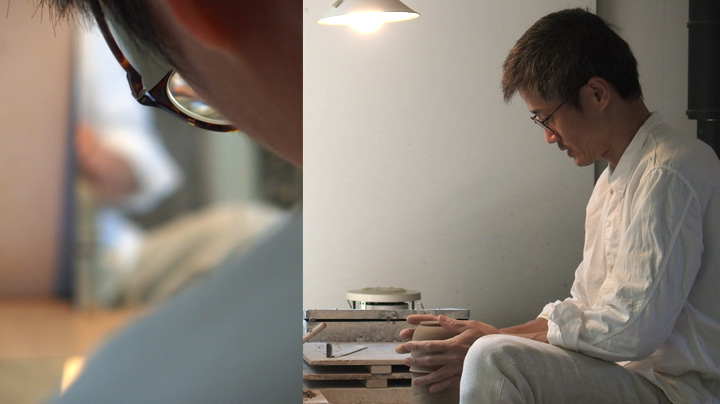
My Six Pieces – Naoto Okada
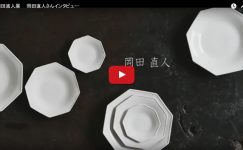
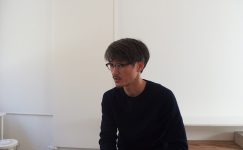
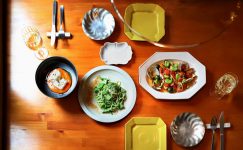
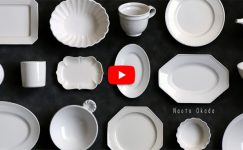
We asked Naoto Okada to select six memorable pieces from among the works he has made since becoming independent, and to speak about the thoughts behind each one, the craftsmanship involved, and how they are used.
As these different pieces are arranged along a timeline, the story of Naoto Okada’s work gradually comes into view.
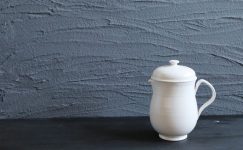
Hanada: This round teapot has been part of your work since the early days after becoming independent.
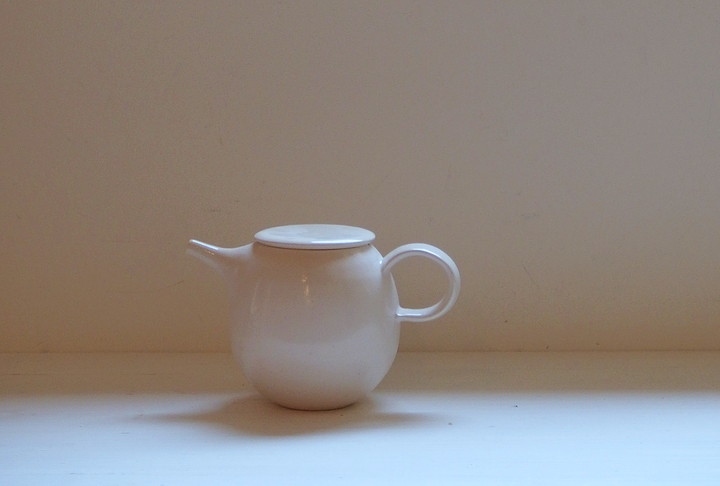
Naoto Okada : It was a few years after I became independent. What led me to go independent was encountering a really good clay, and this teapot was one answer to the question: “How can I make the best use of this clay?”
I wanted to create something orthodox and easy to use. Something suitable for both black tea and Japanese tea, for example. Versatility was important. I made many other designs afterward, but this is ultimately the shape that remained.
Hanada: What qualities of the clay were you making use of?
Naoto Okada : It’s easy to work with in fine detail. A teapot involves a lot of detailed work—the strainer, the spout, the handle…
Hanada: Out of all the designs, why do you think this round teapot survived?
Naoto Okada : Even the maker gets tired of things after making them for a while (laughs). But I never got tired of this one. Decorative objects tend to become too self-assertive, and eventually both the maker and the viewer grow weary of them. I think things that quietly exist within daily life, without leaving too strong an impression, are easier to use without stress.
Hanada: Did the inspiration for the form come from antique pieces?
Naoto Okada : The rounded shape comes from traditional Chinese forms, but the size, handle, and lid were designed with contemporary use in mind.
Hanada: The handle is round as well.
Naoto Okada : A round handle is easy to hold from any angle. With elaborate shapes, you end up only being able to hold them in one specific way, but with a round handle, you can hold it however you like.
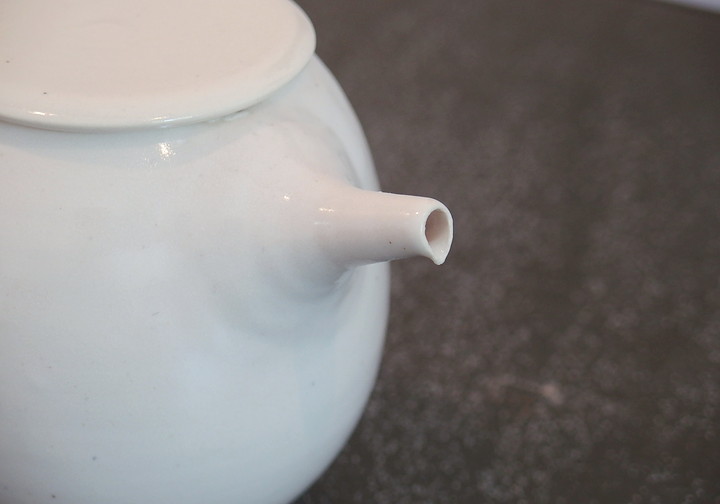
Hanada: And then there’s the spout. It’s a part that greatly determines how a teapot is judged in terms of usability. There must be many ways to improve how cleanly it pours.
Naoto Okada : What matters is the curve of the spout. And also this returning edge here. The liquid cuts cleanly here before flowing back. This round teapot works particularly well.
Hanada: So it was achieved through repeated trial and error.
Naoto Okada : No, actually, it happened by accident. More like, “Oh… it just worked somehow.”
Hanada: (laughs)
Naoto Okada : Later, as I made other teapots, I came to understand and explain the mechanism behind it. Because this teapot is spherical, the flow of water remains stable. That stability also helps when returning it upright.
The spout narrows toward the tip as well, which increases the speed of the flow and makes the return quicker. The liquid doesn’t dribble back slowly.
Hanada: So it pours quickly and returns quickly too (laughs). There are many different elements involved. Do you use this teapot yourself as well?
Naoto Okada : I’ve been using one for about ten years. Every day for Japanese tea, and occasionally black tea. I really love how the crazing develops on it.
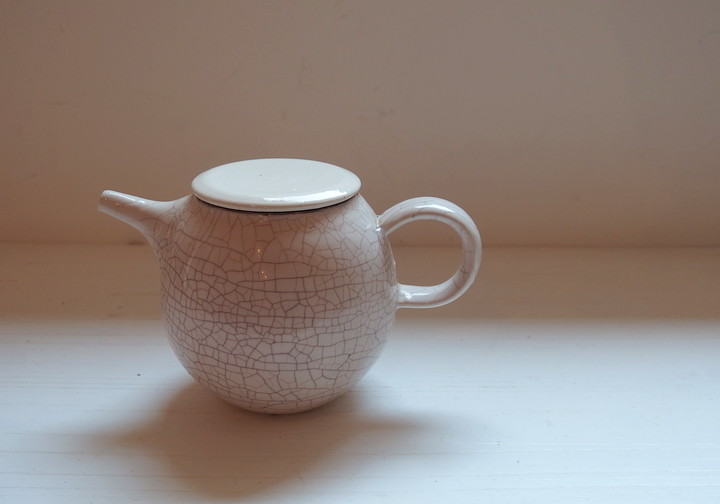
Hanada: So it ages like this.
Hanada: Next is the deep rimmed plate series.
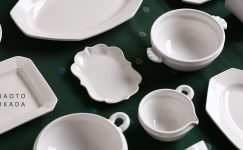
Naoto Okada : Among my standard works, this is the standard of standards. I’ve been making them for twelve or thirteen years.
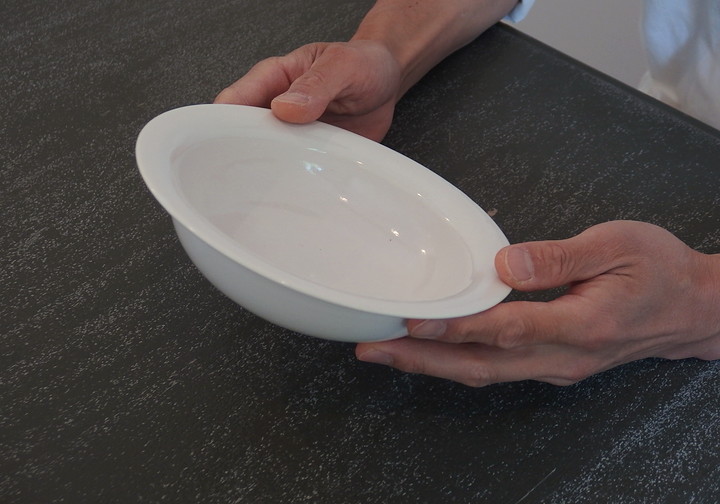
Hanada: This feels like a piece that was developed from practical use.
Naoto Okada : I wanted to make something suitable for soups and similar dishes, so I shaped it while working at the wheel. I kept in mind proportions suited to Japanese table settings, along with an appropriate depth.
I also imagined the transition from the center to the rim folding inward slightly. That’s something unique to handmade work.
Hanada: It turned into a very practical size and form.
Naoto Okada : Since Japanese people often lift plates in their hands, I thought carefully about the rim as well. The rise makes it easier to scoop food, and the depth helps present the dish attractively…
Hanada: There are three sizes: large, medium, and small.
Naoto Okada : The first one was actually this small size. At the time, I was enjoying experimenting with different sizes (laughs), so I made all sorts of variations. These are the three that remained in production.
Hanada: How do you personally use them?
Naoto Okada : They’re perfect for things like stuffed cabbage rolls. You can really dig in, and drink the soup directly from it too. You scoop up the ingredients as well. They’re good for pasta too—really, they work for anything.
Hanada: The rim also makes pasta look beautifully plated.
Naoto Okada : Customers often tell me they work well for Japanese food too. They say they can use them casually, without having to think too hard about choosing tableware. To me, that’s a very gratifying compliment.
Hanada: The octagonal plate.
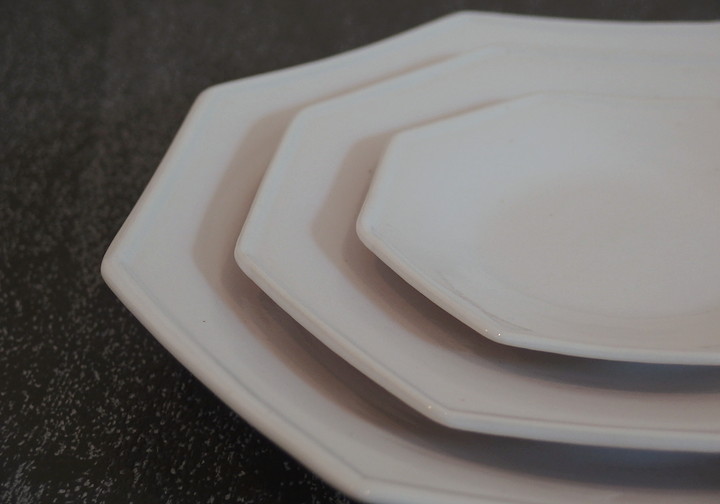
Naoto Okada : The inspiration came from antique French cup-and-saucer sets—specifically the saucer. I don’t think you would normally find plates of this size in Europe.
Hanada: So the size comes from it originally being a saucer.
Naoto Okada : In Japan, it works well as a small serving plate. It’s easy to hold because your fingers fit naturally underneath. European tableware tends to be flatter, but for a plate that’s picked up by hand, I think this amount of rise works better.
Hanada: You’ve lifted the edge slightly. Was that for visual sharpness?
Naoto Okada : It helps visually, but it also gives your fingers something to catch onto when holding it.
Hanada: What do you personally use it for?
Naoto Okada : Small serving dishes. Things like vinegared dishes, sweets… I think smaller cakes work nicely too. The larger size can also be used as a serving platter.
Hanada: Next is the rectangular plate.
Naoto Okada : The base inspiration came from French porcelain. The original had a foot ring, but when I intentionally removed it, it turned out to be surprisingly interesting…
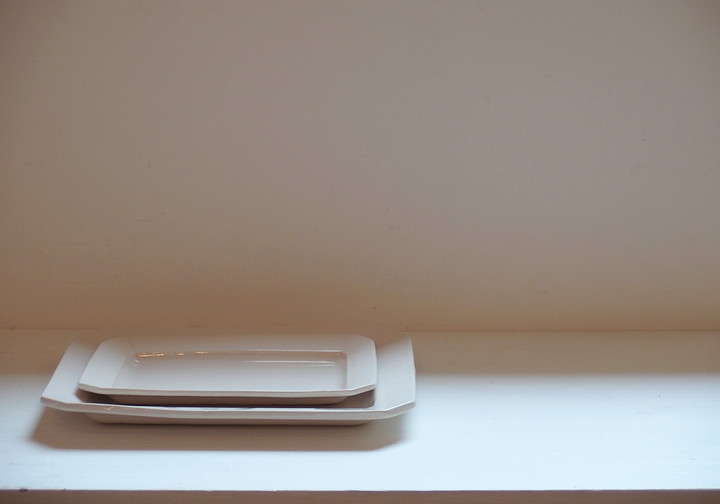
Hanada: It feels lighter and more refined without the foot ring.
Naoto Okada : This shape presents food beautifully, and I also really like this depth.
Hanada: It seems like it would work equally well for bold plating or elegant presentation.
Naoto Okada : When I look at Instagram, people use them incredibly well, and I learn a lot from that. They work for one-plate meals too, and people arrange everything beautifully within this size.
Hanada: It really is just the right size for breakfast or lunch plates. Come to think of it, you used to struggle quite a bit with making these, didn’t you?
Naoto Okada : They would warp and twist… It took me two or three years to master them. Starting from making the slab itself, then how much pressure to apply when fitting it into the mold, how to place it in the kiln…
It became a battle of wills with the clay (laughs). When something failed, I would trace the entire process backward and change the contents or combination of steps… If you don’t remove the clay’s tendencies at each stage, they eventually become the cause of distortion in the final piece.
Hanada: I remember the troubled expression on your face when I tried to place an order back then.
Naoto Okada : (laughs). Recently, I’ve actually started to enjoy making these again.
Hanada: And this cup you’ve been particularly focused on recently.
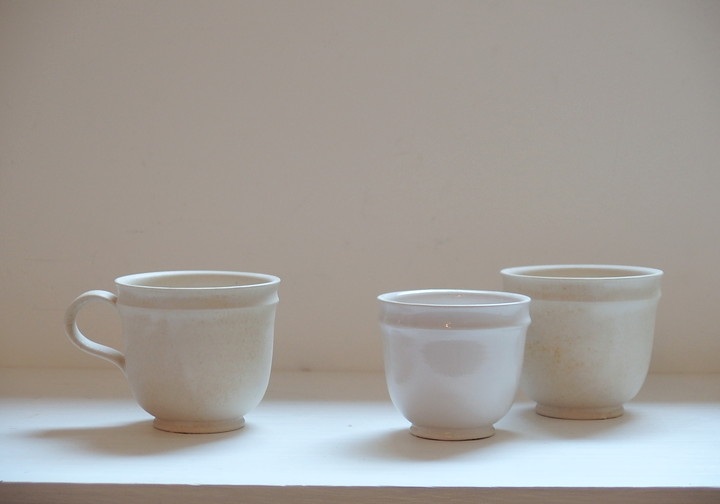
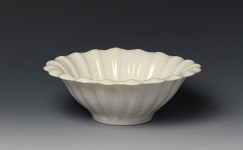
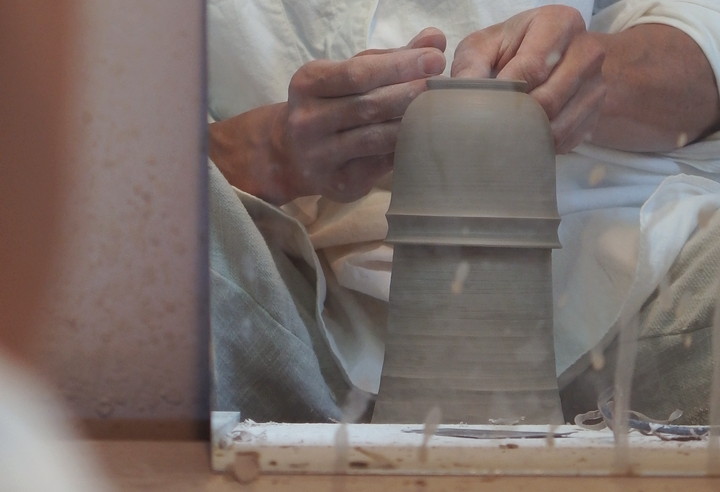
Naoto Okada : I started making this about two or three years ago. The smallest one in the center was the first version I made. I use it every day myself. Barley tea, coffee, of course, and even for cooking. Because greens look especially good on it, I also recommend it for blanched vegetables and similar dishes.
Hanada: The rim is quite distinctive.
Naoto Okada : I added a gentle curve to improve how it feels on the lips, but as a result it also became a visual accent. It also allows the upper lip to move away cleanly.
Hanada: I hadn’t considered the “movement of the upper lip” (laughs).
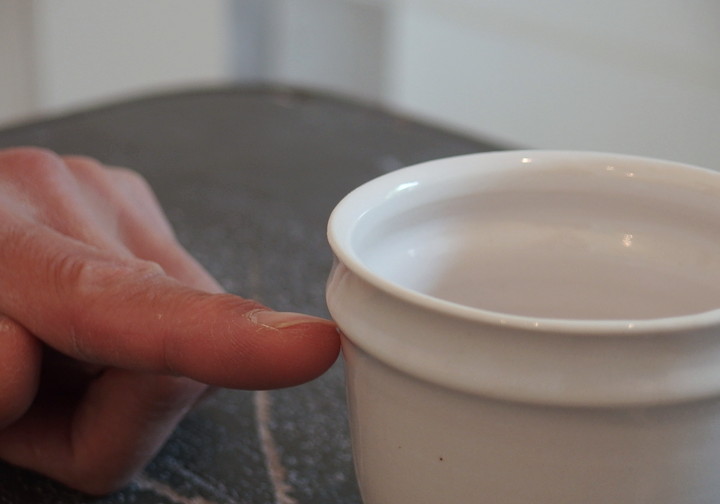
Naoto Okada : It simply feels pleasant.
Hanada: It really does glide off smoothly.
Naoto Okada : The cut-off is clean as well. When you use a cup daily, stains can sometimes build up around the mouth, but this design allows you to drink cleanly to the end.
Hanada: It’s a cup full of consideration for the user.
Naoto Okada : I think that comes from the nature of handmade work.
Hanada: After all, the lips touch it countless times.
Naoto Okada : I began to think that if I could create a consistently pleasant sensation every day, every time, that would be meaningful. This curve is the result of that thinking.
Hanada: Because the curve isn’t purely decorative, it never feels tiring.
Naoto Okada : Sometimes I do add forms for decorative or visual reasons, but then I may start to feel discomfort or lose confidence in them as I continue making them. In this case, I don’t have that concern.
Hanada: And here is another octagonal plate.
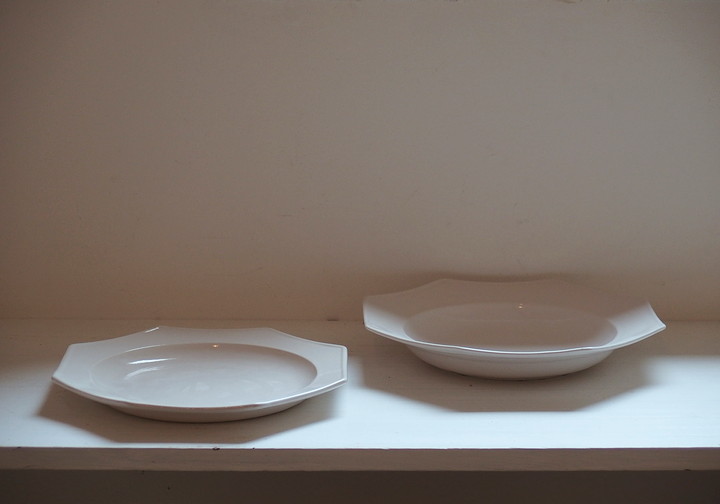
Naoto Okada : This is a new work. It was inspired by a French antique, but it took me as long as ten years after discovering it to actually turn it into a form.
Hanada: So this was a few years after you became independent. Where did you find it?
Naoto Okada : At Écriture in Minami-Ebisu. I had seen it many times, and eventually I thought, “I might as well buy it around here.” Just holding and looking at objects often leads to discoveries, so I try to buy anything that catches my attention on the spot.
Hanada: You often can’t find things once you actually start looking for them. It feels like they were everywhere before, but once you search, they’re nowhere to be found.
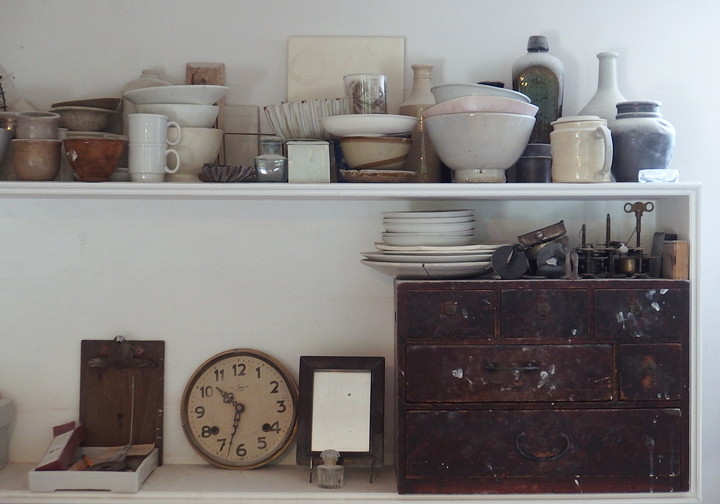
Naoto Okada : Exactly. But in fact, I’ve now accumulated quite a large number of those pieces I collected thinking that way… I’ve been working through them little by little, but I can’t keep up (laughs). Because I’m constantly experimenting… I originally tried making this on the wheel, but it didn’t feel right, so I switched to slab construction.
Hanada: I assumed it was wheel-thrown.
Naoto Okada : For this octagonal plate, I didn’t want the slight unevenness that comes from wheel throwing. I wanted it to be sharp and precise.
Hanada: It’s true that circular motion doesn’t really suit this plate. Did you already have the size in mind from the beginning?
Naoto Okada : I imagined it as something like a dessert plate.
Hanada: It seems perfect for tiramisu or similar desserts.Was there any intention behind the depth?
Naoto Okada : It was designed so it could also be used as a salad plate.
Hanada: And the larger, deeper one?
Naoto Okada : Pasta… something along those lines.
Hanada: Looking back at these older works like this, does it feel nostalgic?
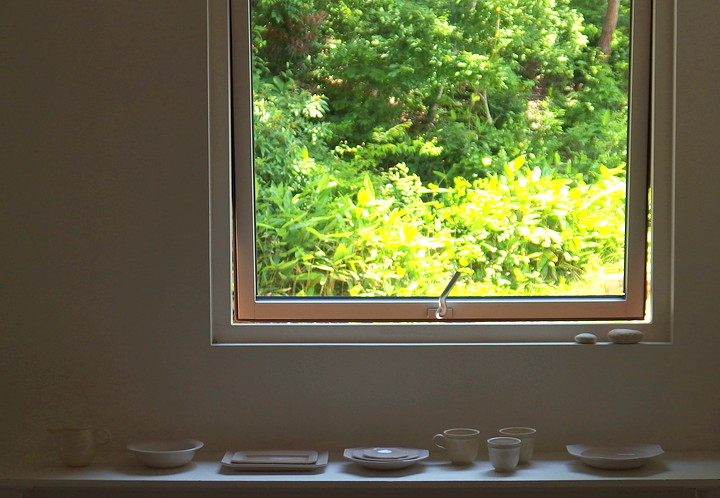
Naoto Okada : My honest feeling is, “I haven’t really changed much.” (laughs)
Hanada: Although many different forms have appeared, the foundation hasn’t changed. Even if your expressions shift slightly, your approach to your work hasn’t changed that much either.
Naoto Okada : My skills haven’t dramatically improved, and my thinking about tools has remained the same, so perhaps it’s natural that I haven’t changed. Honestly, I feel relieved about that.
Hanada: Perhaps that’s because you work in a way that isn’t forced.
Naoto Okada : I’ve come to realize again that my work is not about self-expression. If I try too hard to assert myself, it becomes exhausting (laughs).
For me, focusing on making functional tools is the healthiest way to work.
Hanada: That sense of health is what allows you to continue. You could also say you are consistent.
Naoto Okada : It’s not anything so impressive (laughs). I’m simply trying my best to make things that work properly.

Hanada: In 20 or 30 years, when you look back again, it would be good if you feel the same way.
Naoto Okada : The forms may change in appearance, but I hope my mindset does not. I want to keep the same awareness and feeling I have now.
Hanada: Thank you very much.
≪ END ≫
私の6点 岡田直人
岡田直人さんに、独立以来作っているものの中から、印象的な6点を選んでいただき、それぞれへの思い、作り手としての工夫や使い方などを伺いました。
複数のうつわが時間軸で並ぶことで浮かんでくる岡田直人さんの仕事物語です。
花田: この丸型ポットは独立当初から作られています。(以下 花田-)
岡田: 独立して数年の頃です。
独立したきっかけは良い土との出会いで「その土をどう活かすのか」という問いに対する答えの一つがこのポットでした。
オーソドックスで、使いやすいもの。
例えば紅茶でも日本茶でもいけるようなものを、と。
汎用性です。
これの後も色々作りましたが、結局残った形がこれです。
-: その土のどういった特徴を活かしたのですか。
岡田: 細工がしやすいんです。
茶漉し、注ぎ口、取っ手…ポットには細工が多いので。
-: 多くの中からこの丸ポットが残った理由とは何だったのでしょうか。
岡田: 作っている人間も、作っていると飽きてくるんです(笑)。
でも、これは飽きない。
デコラティブなものは、自己主張を感じさせるものになってしまい、見る側も作る側も嫌になってしまう。
日常の中にあって、あまり印象に残らないようなもののほうが、ストレスなく使えるんだと思います。
-: かたちのヒントは古いものにあったのですか。
岡田: 丸い形に関しては昔の中国のオーソドックスなかたちですが、サイズや取っ手、蓋は現代のものを意識しています。
-: 取っ手は丸く。
岡田: 丸だと、どの角度でも持ちやすい。
凝った形だと、ここでしか持てないとか、この持ち方でしか持てないとかってなるのですが、丸だとどうとでも持てるんです。
-: そして、注ぎ口。
ポットの「使いやすさ」に対する評価を大きく決めるパーツです。
水切れを良くする方法って色々あると思います。
岡田: 大事なのは、この注ぎ口のカーブです。
あと、この返しの部分。
ここでピッと切った上で戻す。
この丸ポットはかなり良い感じです。
-: 試行錯誤を重ねて実現したのですね。
岡田: いや、偶然です。
「あれ?できちゃった…」みたいな。
-: (笑)
岡田: あとから他のポット作っていくうちに、このメカニズムを説明できるようになりました。
このポットは球形ですので、水の流れが一定です。
それなので戻すときも安定しているんです。
注ぎ口も先に向かって細くなっているので、勢いがついて戻りも早い。
ダラダラと戻ってこない。
-: 出掛けていくのも速いし、帰ってくるのも速いと(笑)。
色々な要素があるのですね。
このポットはご自身でも使っていらっしゃるのですか。
岡田: 10年くらい使っています。毎日、日本茶、たまに紅茶です。
僕はこの貫入が入った感じ、大好きです。
-: こんなになるのですね。
-: 続いて、リム深皿シリーズ。
岡田: 僕の中では定番中の定番で、12、3年前から作っています。
-: これは用途から入って作り上げたように見えます。
岡田: スープなどに使えるうつわを作りたくて、ロクロを回しながら、かたちを作っていきました。
径を日本のテーブルサイズに合わせることと、適度な深さを意識しました。
あと、見込みからリムへ折り返す部分を、少し入り込ませているイメージなんです。
これは手作りならではです。
-: 使いやすい大きさ、かたちに仕上がりました。
岡田: リムは日本人だから手に取ることもイメージしました。
立ち上がりはすくいやすさ、深さは盛り栄えを考えながら…。
-: 大・中・小と3サイズあります。
岡田: 最初は、このSです。
サイズ展開を楽しんでいた時期で(笑)、色々作りました。
今まで作り続けているのがこの3つです。
-: 岡田さん自身は、どんな風に使っているのですか。
岡田: ロールキャベツなんかには最高です。
なんかこう、ザクザクやって、そのままスープも飲めるじゃないですか。具もすくうでしょう。
パスタでも良いし、何にでも使えます。
-: リムがあると、パスタを盛っても格好よく決まりますよね。
岡田: お客様からは和食でもいけるって言われます。
気兼ねなく使えるし、あまり考えて食器選ばなくても使えるって言われます。
僕にとっては、とても嬉しい褒め言葉です。
-: 八角皿。
岡田: フランスの古いカップ&ソーサーのソーサーがヒントになっています。
ヨーロッパでこのサイズの皿はないと思います。
-: ソーサーだからこの大きさなのですね。
岡田: 日本では取り皿として使えるサイズです。
これ、指が入りやすくて持ちやすいんですよ。
ヨーロッパの食器はもう少し寝るんですが、手に取る皿なら立ち上がりはこれくらいあったほうがいいと思います。
-: 縁をちょっと上げていますよね。 見た目のしまり、ということでしょうか。
岡田: しまりもありますし、持ったときの引っかかりもあります。
-: 岡田さん自身は、これを何に使っているのですか。
岡田: 取り皿です。
酢の物でも、お菓子でも…小さめのケーキも合うと思います。
大きいほうは盛皿にも使えます。
-: 次は長角皿。
岡田: ベースはフランスの磁器です。
元のは高台がついているんですが、敢えて排除してみたら、意外と面白かったっていう…。
-: 高台が無い方が軽やかで良いですね。
岡田: このかたちは盛り映えもとても良いですし、この深さも好きです。
-: ドーンとやってもいいし、上品に盛り付けても、しっくりいきそうです。
岡田: インスタグラムなんかを見ると、皆さん、とてもうまく使ってくださっていて、勉強になります。
ワンディッシュでも使えるし、このサイズにうまくまとめられています。
-: 確かに、朝ごはんやランチのワンプレートに丁度いいですね。
そうそう、以前は作るの苦労されていましたよね。
岡田: 反ったり、歪んだり…。習得するのに2-3年かかりました。
タタラ板を作るところから始まって、型へあてるときの力の加え方、窯への入れ方…。
土との意地の張り合いですよ(笑)。
うまくいかないと、全工程を逆算して、工程の中身や組み合わせを変えたり…。
各工程で土のクセを取っていかないと、最終的なひずみのきっかけになってしまうので。
-: 以前、僕が注文しようとしたときの岡田さんの困っている表情を思い出します。
岡田: (笑)。
最近は、これを作るのが楽しく思えるようになりました。
-: で、最近凝っているという、このカップ。
岡田: 2-3年前に作り始めました。
真ん中の小さいのが最初に作ったものです。
僕自身も毎日使っています。
番茶、コーヒーは勿論、料理でも。
緑が映えるので、お浸しなどにもオススメです。
-: 縁が印象的です。
岡田: 口当たりをよくするためにアールをつけていますが、結果としてアクセントになっています。 上唇の抜けもいいんです。
-: 上唇の抜けまでは考えませんでした(笑)。
岡田: 気持ち良いんです。
-: 確かに、ツルッと抜けていく。
岡田: 切れもいいんです。
ずっと飲んでいると、飲み後が汚れてくることありますが、これはきれいに飲めます。
-: 岡田さんの気遣いにあふれたカップですね。
岡田: 手作りならではの造作だと思います。
-: たしかに唇が何回触れるか分かりませんからね。
岡田: 毎日、毎回、良い感触が実現したら、気持ち良いだろうなと思って、意識するようになりました。 その末の、このカーブです。
-: 装飾のためだけのカーブではないので、飽きも来ませんね。
岡田: 装飾や見た目だけのために手を加えることもあるんですが、それだと作っている内に違和感を感じ始めたり、自信がなくなってきたりするのですが、これはその心配は無いと思います。
-: そしてもう一つの八角皿。
岡田: 新作です。
フランスのアンティークがヒントになっていますが、それを手に入れてからカタチにするのに10年も掛かってしまいました。
-: 独立して数年後、といった感じですね。
どちらで見つけたのですか。
岡田: 南恵比寿のエクリチュールです。
よく見てはいたのですが「まあこのあたりで買っておくか」って感じで買っておきました。
持って眺めているだけでも、発見することは多いので、気になったものは全てその場で買うようにしています。
-: 欲しくなってから探しても、なかなか見つからないものです。
それまではそこら中にあったような気がするのに、いざ探し始めるとどこにもない。
岡田: そうそう。
でも実は今、そう思って集めてきたものが山積みになっていまして…。
少しずつ消化してはいるのですが、追いつきません(笑)。
色々試しながらなので…。
これも最初ロクロで作っていたのですが、しっくり来なかったので、板作りにしました。
-: てっきり、ひきうちかと。
岡田: この八角皿は、ロクロで引いて手作り風のうねりを出したくなくて…。
ピシッといきたかったんです。
-: 確かにこの皿に円方向の動きは似合いませんね。
最初からこういう大きさにしようと思っていたのですか。
岡田: デザートプレートみたいなイメージです。
-: ティラミスなんかに良さそうです。
深さに何か意図はありますか。
岡田: サラダプレートなどとしても使えるように。
-: この大きくて深いほうは?
岡田: パスタ…そんな感じです。
-: こうやって、昔からのものを振り返ってみると、懐かしくなるのではないですか。
岡田: 「変わっていないなぁ」というのが実感です(笑)。
-: 色々なかたちは出てきましたが、ベースは変わらないのですね。
表現は少しずつ変わりますが、岡田さんは仕事に対する考え方もそんなに変わりません。
岡田: 技術が大きく向上したわけでもないし、道具に対する思想もずっと一緒なので、変わるはずも無いのですが…。
正直、安心しました。
-: 無理なく仕事をされているからなのかもしれません。
岡田: あらためて「自分の仕事は自己主張のための仕事じゃないんだな」って実感しています。
主張していると、しんどくなってくるんです(笑)。
僕の場合、道具作りへの特化に意識を使っているほうが健全でいられるのだと思います。
-: 健全だからこそ、継続できるのですね。
「ぶれていない」とも言えます。
岡田: そんな格好のいいものでもありませんよ(笑)。
単純に「ちゃんと使えるもの」を一生懸命、目指しているだけです。
-: これから20年後、30年後、今のように振り返ったとき、同じように思えるとよいですね。
岡田: かたちなど、見た目は変わっていくと思いますが、意識は変わっていたくないですね。
今と同じような意識や気持ちを持っていたい。そう思っています。
-: 有難うございました。
≫岡田直人さんのうつわはこちらから≪
関連記事はこちら