









English version of the interview here.
The Rhythm of a Potter’s Life
Hanada: You are originally from Tobe in Ehime Prefecture, a well-known pottery region. Your parents were also involved in pottery making.
Shinpei Watanabe : Although pottery was always around me growing up, I don’t remember ever helping with the work. However, there was a constant flow of days without any distinction between weekdays and weekends, and my parents would fire the kiln every month. I feel like that “rhythm of a potter’s life” is deeply ingrained in me. Since it was a pottery town, about half of my friends’ parents were also potters, so I didn’t think of it as anything special. In fact, because my parents couldn’t play with me on weekends, I used to envy families where the parents were salaried employees. (laughs)
Hanada: Did you already aim to work in pottery when you were living at home?
Shinpei Watanabe : I had never really thought about making pottery my career. It wasn’t that I had anything else I wanted to do either, but when I graduated from high school, I wanted some time alone to think about my future, so I lived by myself in Ishikawa Prefecture for about two years. I had always liked art and crafts, and it was around the time the 21st Century Museum of Contemporary Art opened in Kanazawa. I also liked the atmosphere of that town, which is why I chose Ishikawa. It was there, at the Ishikawa Prefectural Museum of Art, that I encountered Ko-Kutani (Old Kutani) ware, and I started considering pottery as a career. At the time, I was living with a strong desire to decide what I wanted to do with my life, so I think I was very receptive to that kind of inspiration when the opportunity arose.
Hanada: It sounds like a wonderful encounter.
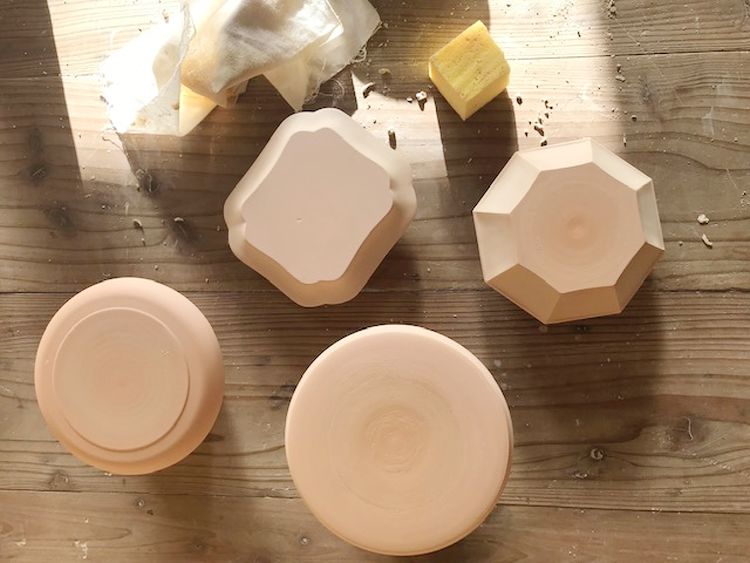
Ko-Kutani, the Joseon Dynasty, and Shoki-Imari
Shinpei Watanabe : Although Ko-Kutani was the initial trigger, I later developed a love for white porcelain from the Joseon Dynasty. Eventually, I began to see similarities between Shoki-Imari (Early Imari) and Joseon porcelain, which led me to attend a pottery school in Arita. I absolutely love Shoki-Imari.
Hanada: What is the appeal of Shoki-Imari for you?
Shinpei Watanabe : Since it was originally made by potters from the Joseon Dynasty, Shoki-Imari inherits the beautiful clay bodies and shapes characteristic of Joseon white porcelain. On top of that, while the highest level of Jingdezhen’s underglaze blue techniques existed at the time, Shoki-Imari features simplified brushwork adapted by provincial kilns. How should I put it… everything I love is packed into Shoki-Imari. In its non-decorative nature, I can see the underlying philosophy of the Joseon period, and in its simple patterns, I feel a sense of Chinese atmosphere that the Japanese interpreted and digested in their own way.
Inspirations from Each Style
Hanada: Currently, you work with overglaze enamels, underglaze blue, and white porcelain, creating your pieces without majorly altering the styles of antique ceramics.
Shinpei Watanabe : My work centers on Shoki-Imari from around 1640 to 1660, as well as the overglaze enamels that were beginning to emerge during that period. After coming to the Arita College of Ceramics, I frequently studied the Shibata Collection at the Kyushu Ceramic Museum. Unlike the Gosai-de (five-color) or Ao-de (bold green) styles I had seen in Ishikawa, the subtle touch of overglaze enamels here is what makes them appealing. I was deeply intrigued by the overglaze enamels from the transitional period leading up to the creation of the Kakiemon style—pieces that feel as though the potters were experimentally saying, “Let’s try adding just a single stroke of red to this Shoki-Imari style.” For instance, I love the overglaze enamel dish in the shape of a military commander’s fan with a divided background and exotic flower patterns from the Shibata Collection. It carries a Chinese atmosphere, yet the expression of the overglaze enamel is gentle. I also like the naive charm that comes from it not being a highly sophisticated technique, and the choice of patterns feels fresh to me. The way red is utilized is also a great reference for my work.
Hanada: So you like that “experimental feel” before a specific style becomes fully established. I can see a similar quality in your own work, which is modest yet elegant.
Shinpei Watanabe : I think the peak of Arita’s technical sophistication was reached around the time Kakiemon was established. However, I am drawn to the earlier period when they were just starting to climb that hill, experimenting and finding their way through trial and error while being influenced by the Tianqi style.
The Beauty of “Fired Clay”
Hanada: Could you tell us what you prioritize when making tableware?
Shinpei Watanabe : I want to be a potter, not just a ceramic painter. Of course, I love painting patterns, but I want to stay deeply rooted in the act of firing clay. When it comes to tableware, the shape is more important than the decoration, and the clay is more important than the shape. That is how I look at it. I work on the painting together with my wife, but we make sure that the patterns do not become too dominant.
Hanada: It was precisely the power of the clay body that drew you to Shoki-Imari in the first place.
Shinpei Watanabe : Yes, it is because Shoki-Imari has such compelling shapes that the simple patterns truly stand out. Whether I am making tableware, flower vases, or teaware, I always find myself thinking how beautiful fired clay is. I want to hold onto that feeling forever.
Hanada: Does that come from a sense of respect or gratitude toward nature?
Shinpei Watanabe : I think of it more as the fundamental spark for human creation—the thoughts of the very first people who began firing clay. It is like the primal touch of making things. In that sense, I also love Jomon pottery and stone tools. You can really feel the raw urge to create objects for everyday life. I see myself at the very end of that long lineage, and even if I cannot reach their level, I never want to lose awareness of that origin.
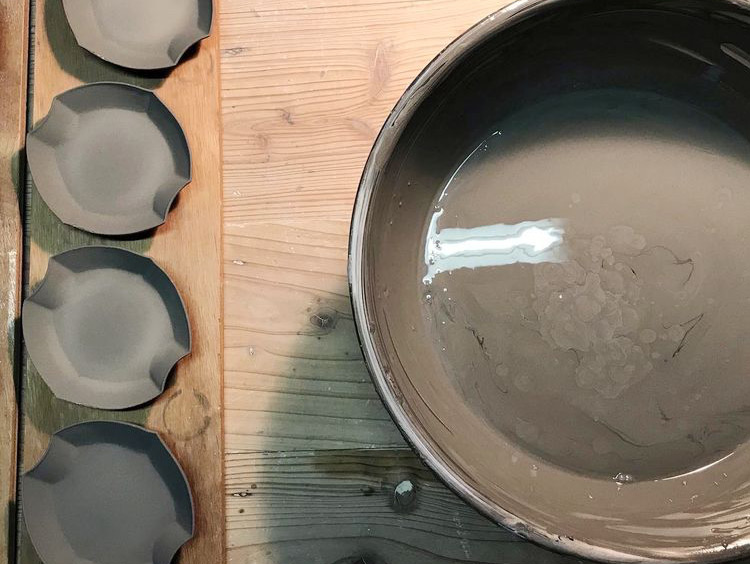
The Movement of the Brush and Wheel
Hanada: Is there anything you would like to achieve in the future?
Shinpei Watanabe : Whether it is throwing on the wheel or painting patterns, I have recently been realizing how crucial technical skill is to fully satisfy my desire for expression. While I want to be selective about materials, my primary goal in my 30s and early 40s is to acquire the level of skill necessary to achieve true expression. It is not just about physical stamina or sensibility, but the actual technique—the way you move the brush and guide the wheel. To achieve that, making a large volume of pieces will be essential, and I also plan to increase my opportunities to see and handle antique ceramics.
Hanada: That sounds like a journey that takes a lot of time.
Shinpei Watanabe : I want to maintain the mindset of constantly refining the quality of my work, rather than letting daily tasks become mere routine. If I only realize the importance of technique when I reach 50 or 60, I feel it will be too late.
Hanada: Thank you, we look forward to the exhibition.
Shinpei Watanabe : I am currently creating new patterns and shapes. Since the exhibition takes place close to the New Year holidays, I am preparing items that would be perfect for special, celebratory occasions. I look forward to sharing them with everyone.
≪ END ≫
焼き物を営む者のリズム
花田: 渡邊さんは焼き物の産地でもある愛媛県砥部の出身です。ご両親も焼き物の仕事をされていました。(以下花田-)
渡邊心平:焼き物が身近にはあったものの、仕事を手伝った記憶はありません。
ただ、平日、休日関係なく日々が流れていて、毎月窯を焚く、という両親の「焼き物を営む者のリズム」は体にこびりついている気がします。
まあ、産地だし、友達も半分くらいは親が焼き物やっていたので、焼き物の仕事が特別とも思っていませんでした。
むしろ、土日に遊んでもらえないし、サラリーマンの家庭がうらやましかったです(笑)。(以下渡邊)
-:ご実家にいるときから焼き物の仕事を目指していたのですか。
渡邊:「焼き物を仕事にしよう」と考えたことはありませんでした。
まあ、他にやりたいことがあったわけでもなく、高校卒業時に将来のことを一人で考えたくて、石川県に2年くらい一人で暮らしていました。
元々美術や工芸は好きで、ちょうど金沢に21世紀美術館ができた頃でしたし、あの町の雰囲気も好きだったので、石川県を選びました。
そこで、県立美術館で古九谷に出会って、焼き物の仕事を考えるようになりました。
その頃は「何をしたいか決めたい」と思いながら暮らしていたので、きっかけがあればそういう気持ちになりやすかったのだと思います。
-:いい出会いがあったのですね。
古九谷、李朝、初期伊万里
渡邊:古九谷がきっかけではあったのですが、その後李朝の白磁を好きになっていって、そのうち初期伊万里にその李朝との共通点を感じるようになって、有田の窯業学校に通うことにしました。
初期伊万里、ほんと、大好きです。
-:渡邊さんにとって、初期伊万里の魅力とは何ですか?
渡邊:李朝白磁の陶工が作っていたこともあって、初期伊万里は李朝の素地やかたちの魅力もそなえています。
そこに、景徳鎮の最高レベルの染付技術が当時存在する上で、それが民窯で簡略化された絵付けがのっているという…。
なんというか、初期伊万里には自分の好きなものが全部詰まっているんです。
僕には初期伊万里の非装飾性に、李朝時代の思想が見えますし、簡素な文様に日本人が日本人なりに咀嚼した中国の空気のようなものも感じます。
それぞれから感じること
-:現在の渡邊さんは、色絵、染付、白磁を手掛けられ、古陶磁をそこまで大きくアレンジすることなく、制作を進められています。
渡邊:1640-60年あたりの初期伊万里や、そのころ出来始めていた色絵をテーマにしています。
有田の窯業大学校にきてから、九州陶磁文化館の柴田コレクションをよく見ていました。
石川県で見ていた五彩手や青手と違って、ちょっと色絵がのっているのが魅力です。
柿右衛門を作り出す準備時期の「ためしに初期伊万里様式に一筆くらい赤をのせてみようか」みたいな色絵に興味がそそられました。
例えば、柴田コレクションの色絵片身替唐花文軍配型皿は好きです。
中国的な雰囲気があるし、色絵なのに表現が柔らかい。
精巧な技術ではないうぶな雰囲気もいいし、文様のチョイスが僕にとっては新鮮です。
赤の使い方も参考になります。
-:様式が確立していく前の「ためしな感じ」が良いのですね。
渡邊さんの、楚々としていて品もそなえる作風に通じるものを感じます。
渡邊:柿右衛門のタイミングくらいが有田の技術の最高峰だと思いますが、そこに向けて坂道を上り始める最初の部分で、天啓あたりに影響を受けながら、試行錯誤していく時期のものに惹かれます。
「焼いた土」ってキレイだなって
-:渡邊さんがうつわを作る上で大切にされていることを教えてください。
渡邊:絵付師ではなく、焼き物屋でいたいという思いはあります。
もちろん僕は絵付けが好きなんですけど「土を焼く」ということは大事にしていたいです。
うつわも、絵付けよりかたちが大事、そしてかたちより土が大事。
そういう風に考えています。
絵付けは妻と一緒にやっていますが、文様表現が前に出過ぎないようにしています。
-:渡邊さんが初期伊万里に魅かれたのも素地の力があったからこそです。
渡邊:初期伊万里も形に魅力があるからこそ、シンプルな文様が活きるんだと思います。
食器だけでなく、花器にしても茶器にしても…、何を作っていても「焼いた土」ってキレイだなって。
そういう感覚はずっと大事にしていきたいと思っています。
-:自然への敬意や感謝もあるのでしょうか。
渡邊:「人がモノを作る上でのきっかけ」でしょうか。
土を焼き始めた人たちの思い。
根本的なモノを作るタッチのようなものです。
そういう意味では縄文土器も好きですし、石器も好き。
「生活する中で物を作っていく衝動」をより感じられるというか。
自分はその流れの末端にいて、至らずともその源というか、おおもとへの意識は失いたくないです。
筆、ロクロ…手の運び
-:これからやってきたいことは、ありますか。
渡邊:ロクロにしても、絵付けにしても、自分の表現欲求に足る技術の重要性を最近痛感しています。
素材も凝りたいですけど、まずは30-40代前半に確かな表現にたどりつくための技量を身に付けていきたいです。
体力や感性だけでなく、筆やロクロの運び方、手の運びいった技術です。
そのためには、数を作ることも大切でしょうし、古陶磁を見たり触ったりする機会をもっと増やしていこうと思っています。
-:時間の掛かることですね。
渡邊:日頃の仕事を流れ作業にせず、常に完成度をあげていこうという気持ちは持ち続けていたいです。
50才、60才になってから技術が大切だって気づいても遅い気がするので。
-:展示会、宜しくお願いします。
渡邊:新しい文様や形を作っています。
時期も年末年始に近いですし、ハレの日に使っていただけそうなもの用意しています。
皆様に見ていただけるのを楽しみにしています。
≫渡邊心平さんのうつわはこちらから≪
関連記事はこちら