








English version of the interview here.
Blowing Glass Is What I Enjoy Most!
Ahead of her upcoming glass exhibition, we visited the studio of Tomomi Kawakami, who is currently in the midst of her busiest production season.
Kawakami’s work is filled with a fresh and youthful sense of form.
Casual and vibrant, her glass pieces blend naturally into contemporary dining tables and interiors.
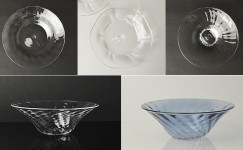
Her strawberry glasses, ribbed glasses, pitchers, and Flower Mall mini bowls are just a few examples of pieces that have become modern classics within only a few years of their debut.
While her popularity continues to grow year after year, Kawakami remains remarkably energetic, constantly taking on new creative challenges.
How exactly are those distinctive glass pieces brought to life?
At the heart of her workshop, we had the opportunity to talk with her about craftsmanship, creativity, and the thoughts behind her work.
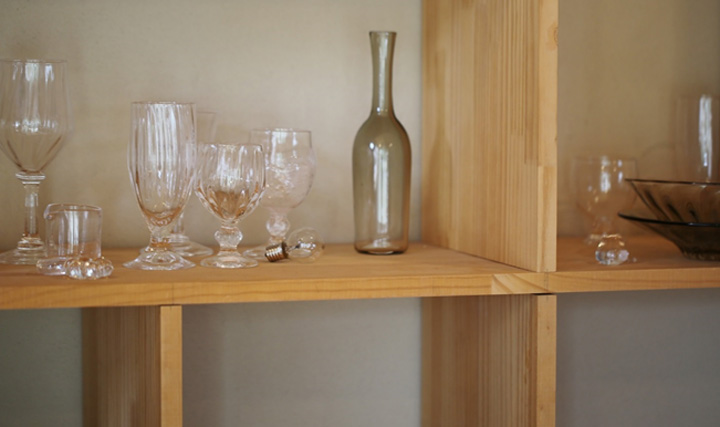
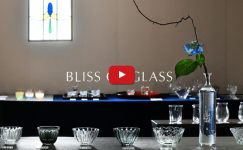
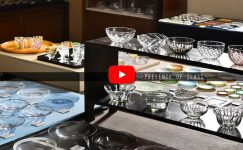
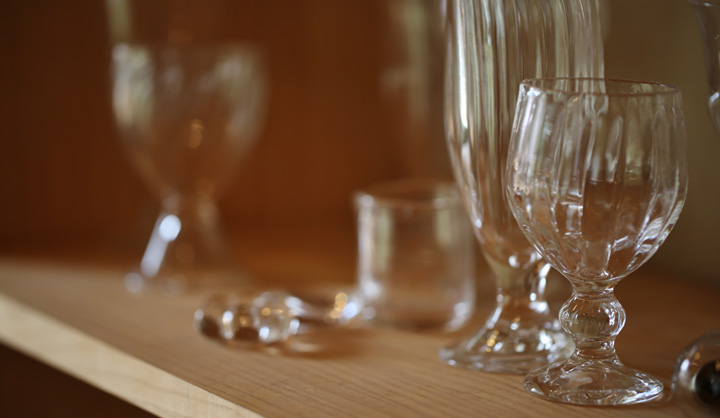
Next to the workshop is Kawakami’s sample room.
Shelves are lined with the many glass pieces she has created over the years.
Seeing them displayed together in various shapes and sizes only adds to their charm.
Before you know it, you find yourself picking them up one after another, completely absorbed, as time slips pleasantly by.
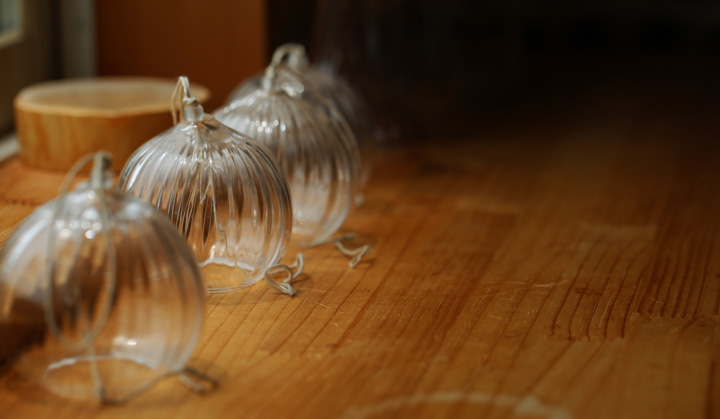
The sample room is filled with glass pieces everywhere you look. Its delicate transparency creates a wonderfully calming atmosphere.
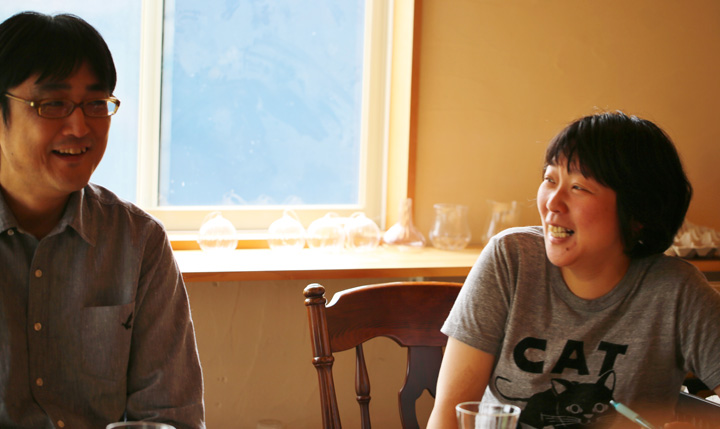
“Blowing glass is what I enjoy most!” Kawakami says this without hesitation. As she spends her days working in the studio, ideas constantly come to mind: “Maybe this plate should be larger?” “Wouldn’t it be cute if this glass had a foot?” “Rather than thinking, ‘I want to make a piece for serving a particular dish,’ I usually get inspired while I’m making something. I start wanting to make it square, or round, and I enjoy challenging myself to bring those ideas to life.”
Perhaps it is precisely because her work is not overly driven by practicality that it possesses such an open, generous character.
“I’m not particularly good at cooking, so the hardest moments are when customers at exhibitions ask me, ‘What should I serve in this?’ The more I feel they’re expecting an answer, the less I can think of one!”
Kawakami says with a cheerful laugh. Together with her partner, Saito, even stories of production struggles and mistakes become amusing anecdotes once they are in the past.
Their lively exchange keeps the workshop filled with laughter.
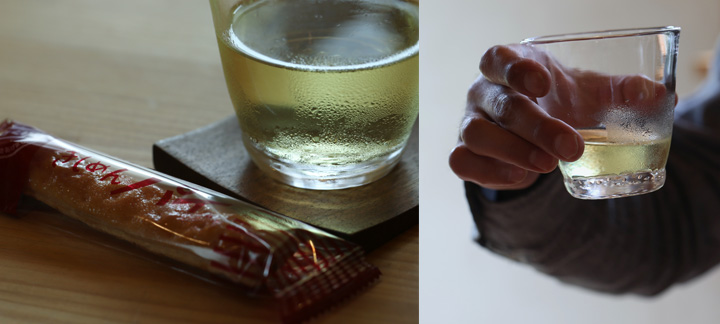
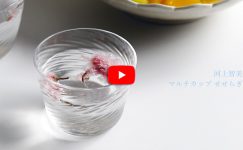
“This glass is one of my new pieces,” she says, serving us chilled green tea in a clear glass.
“I arrange small square air bubbles in the base, but it turned out to be more difficult than I expected. I’m still struggling to get it just right,” she laughs.
The contrast between the simple body of the glass and its thick, substantial base is particularly interesting.
When you hold it, it feels reassuringly solid rather than overly light. The square bubbles in the bottom are charming as well, making it suitable not only for cold tea, but also for coffee jelly, plum wine, and more.
“Sometimes it works well, and sometimes it doesn’t. I’m still experimenting and figuring things out,” says Kawakami.
We always look forward to seeing her new glass designs each year, but it is clear that creating something new is never easy.
Even now, nearly fourteen years after becoming independent, she approaches new work with genuine excitement and curiosity. Watching her take on fresh challenges was truly inspiring.
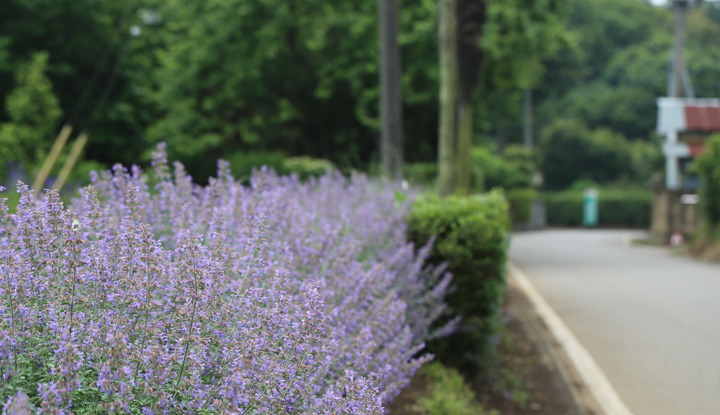
Kawakami’s workshop is located about fifteen minutes by car from the nearest station. At the end of May, fields were being prepared for cultivation, and many flowers had been planted along the ridges. The plants growing directly in the ground seemed full of vitality.
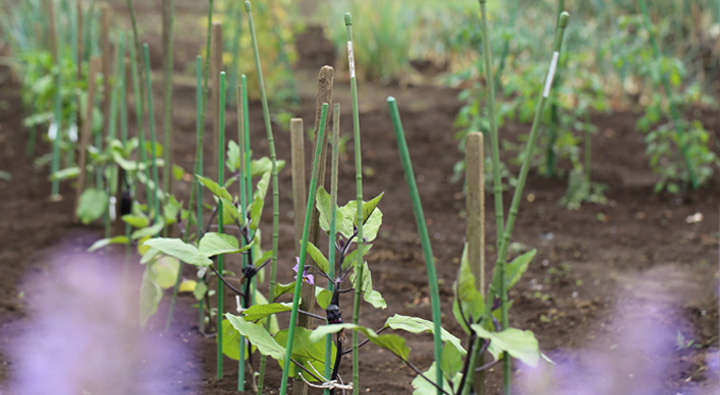
Freshly tilled soil, dark and full of air, softly covered the ground. According to the traditional Japanese seasonal calendar, “Bōshu” (Grain in Ear) was just around the corner, marking the beginning of the busy farming season.
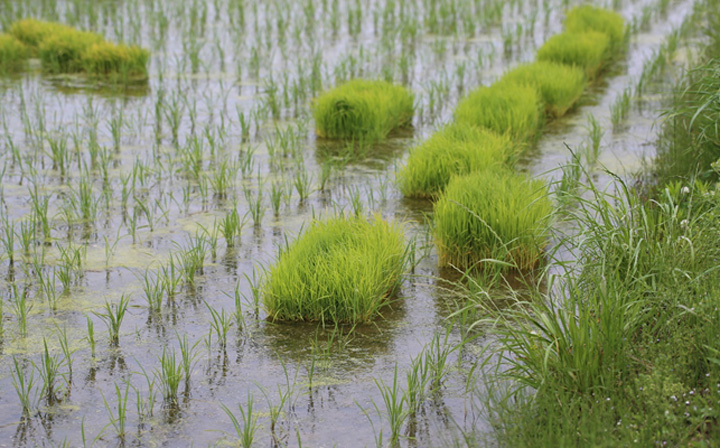
The rice paddies, freshly planted, stretched out before us filled with water. In this peaceful environment, Kawakami devotes herself to glassmaking.
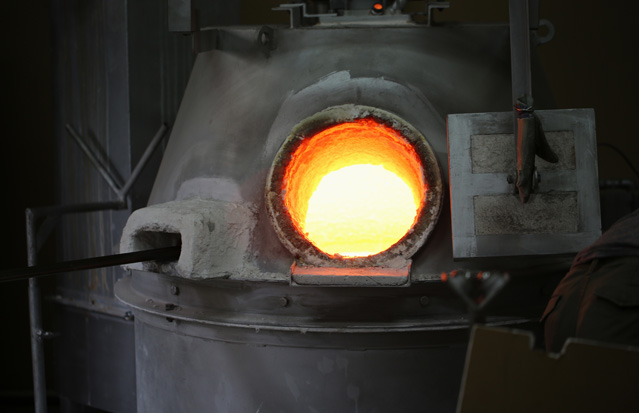
Now, into the workshop. At the very back stood the furnace crucible. It emitted a distinctive roaring sound as the temperature continued to rise.
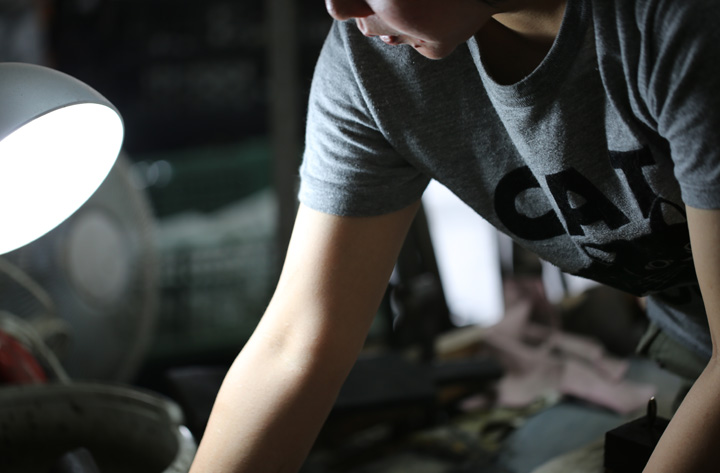
Kawakami efficiently begins her preparations. One tool after another is carefully arranged.
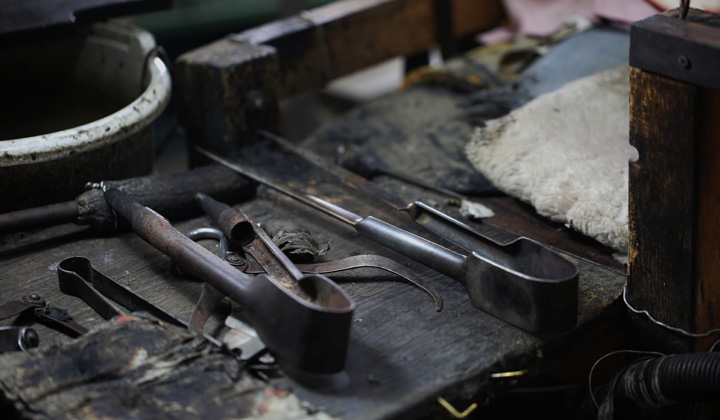
It is hard to imagine that these heavy-duty tools are used to create such charming glassware. Each one serves a different purpose depending on the piece being made.
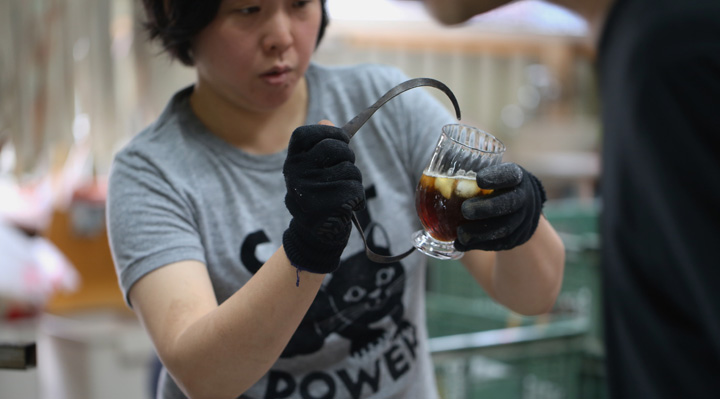
Today, she will make a stemmed glass. “I’m not great at matching sizes, so I need to measure everything carefully!” she says, setting up with a serious expression.
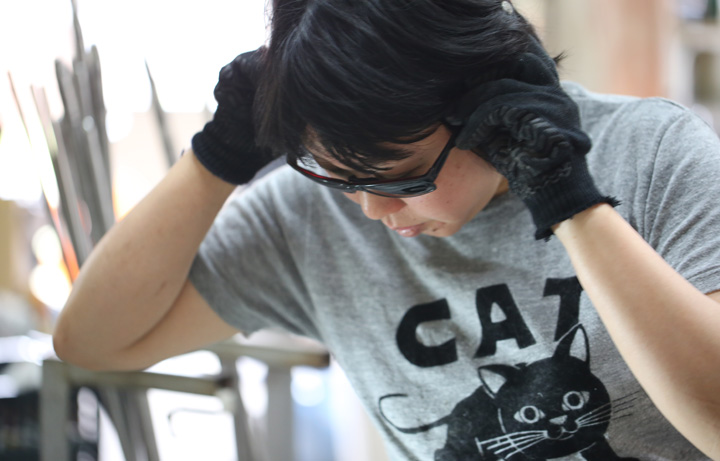
With everything prepared, the glassmaking begins.
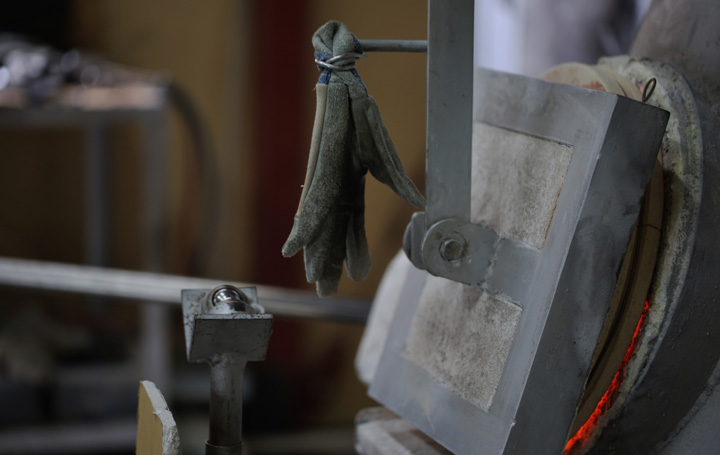
The crucible seems to have reached the proper temperature.
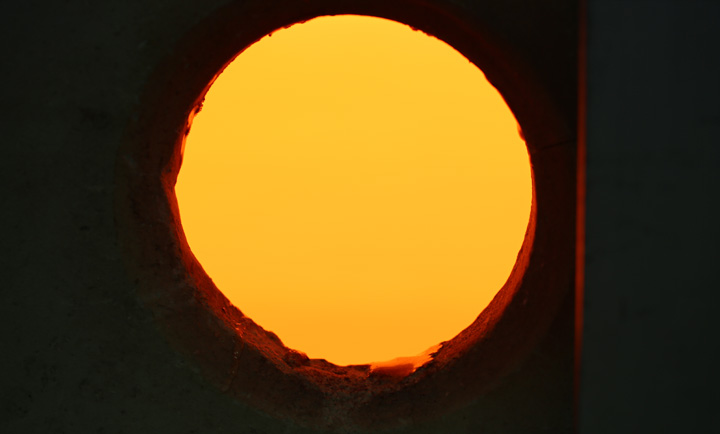
This is the inside of the crucible. The brightness is so intense that it is impossible to stare at it directly. This is what molten glass looks like. When you get close, the heat and glare are overwhelming—you can only manage a quick glance.
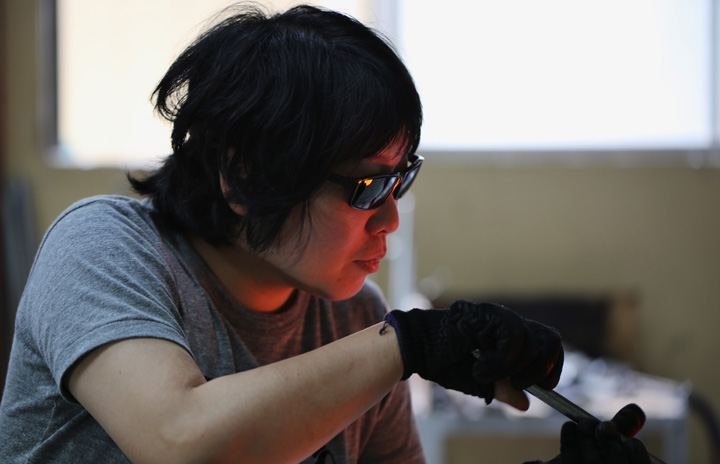
Amid the intense heat and brightness, Kawakami focuses intently on the tip of the blowpipe.
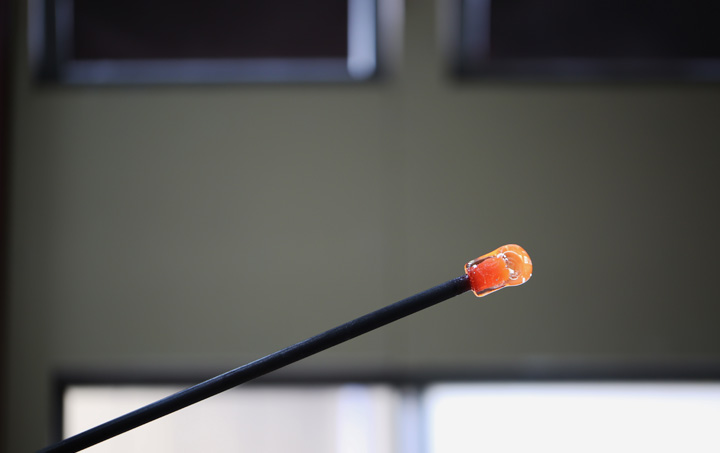
She has gathered the amount of glass she needs. The glowing red color is not a pigment. It is simply the appearance of the glass at such a high temperature, ready to be shaped.
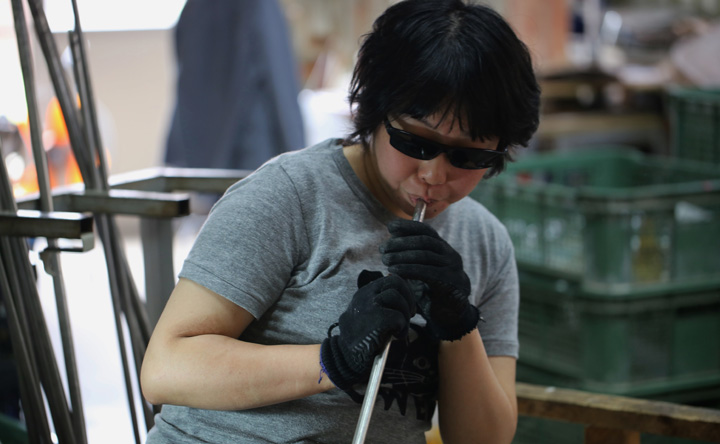
Surprisingly little air is blown in at a time. It is nothing like inflating a rubber balloon.
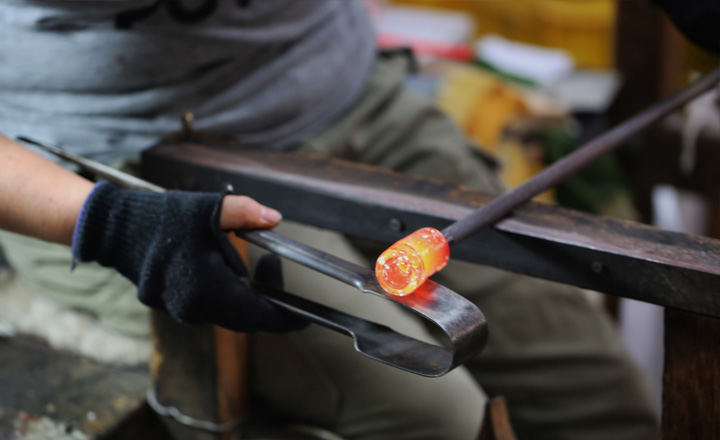
As soon as she blows, she immediately begins shaping the glass. The temperature drops quickly, which explains the efficiency and precision of Kawakami’s movements.
That is also why only the necessary tools are prepared beforehand and placed exactly where they are needed.
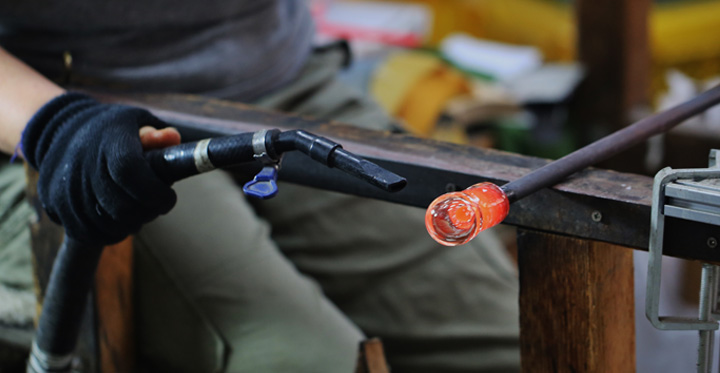
Careful temperature control is essential for each stage of the process. A variety of tools come into play.
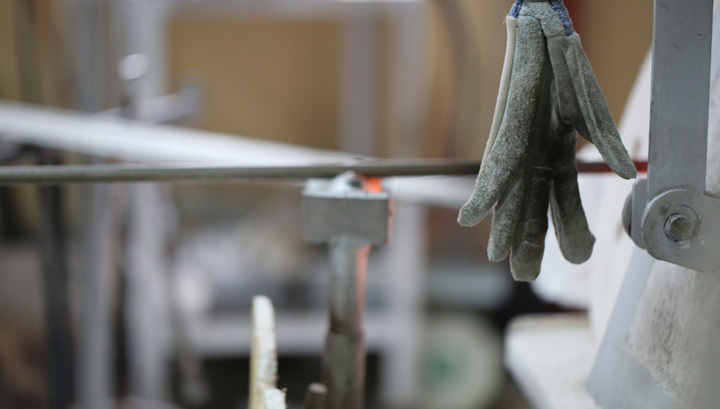
Back into the crucible for a moment…
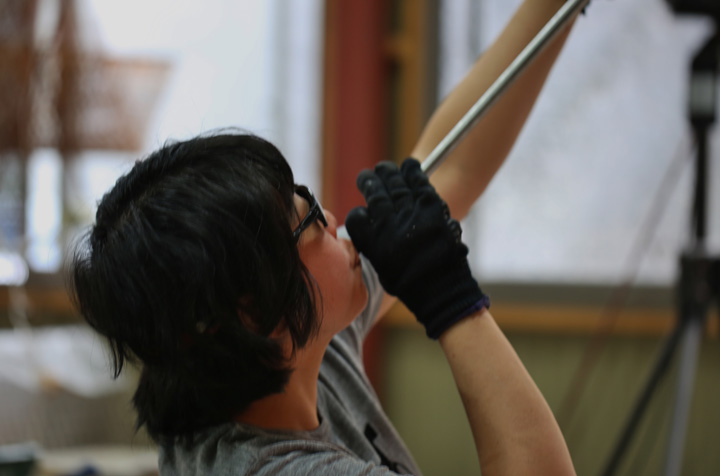
Then she blows again.
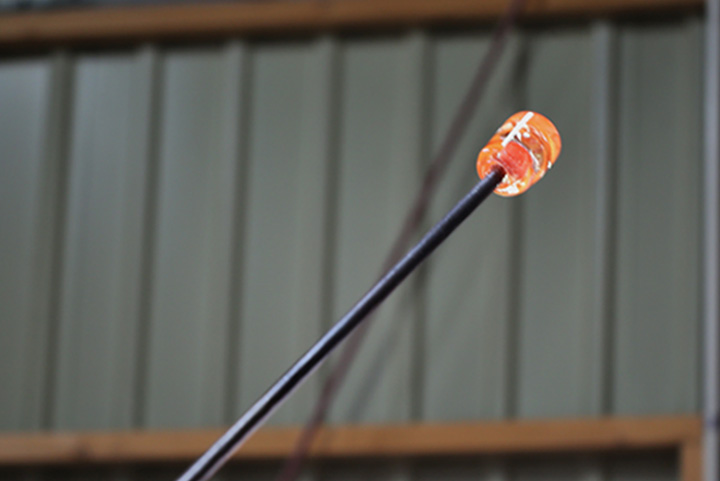
Gradually, the shape and size begin to take form.
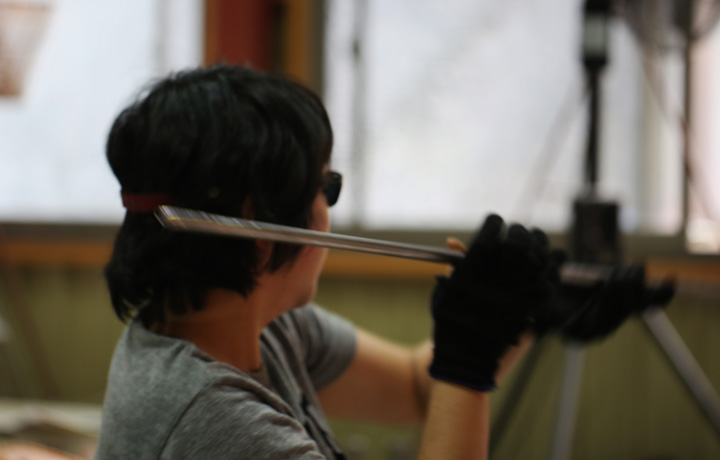
Into the crucible once more…
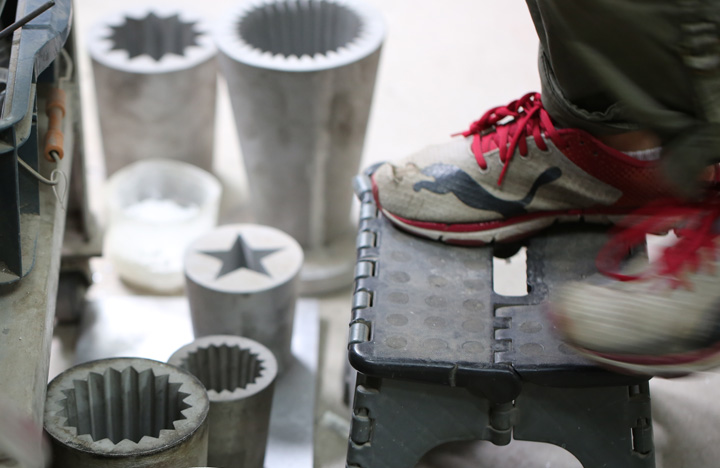
This time, it is immediately placed into a mold to create the textured pattern.
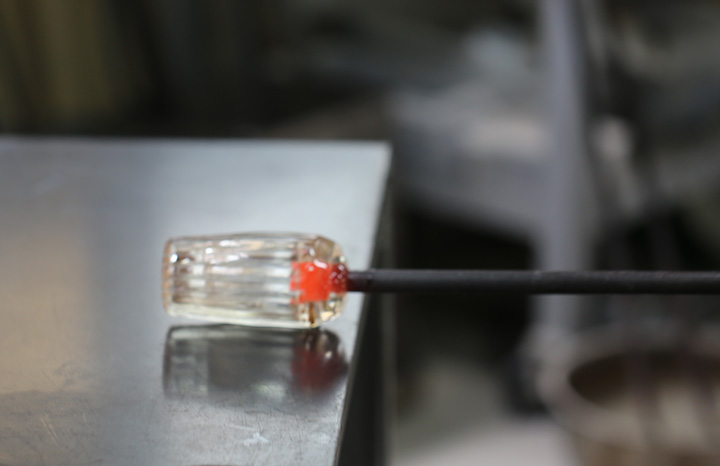
Vertical lines appear!
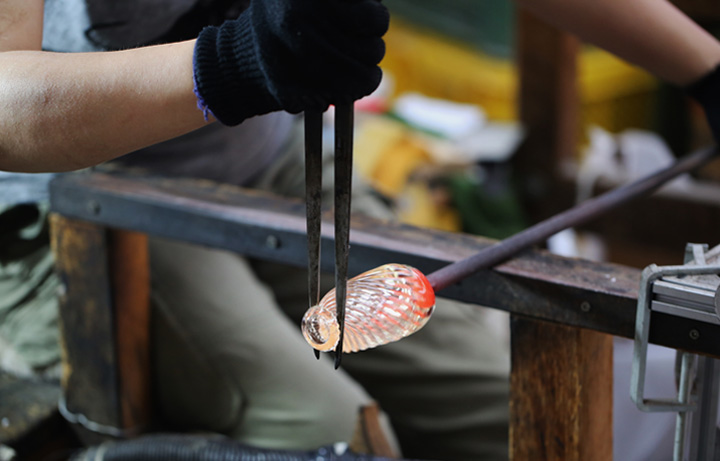
Additional patterns are applied in crossing directions as the shaping continues.
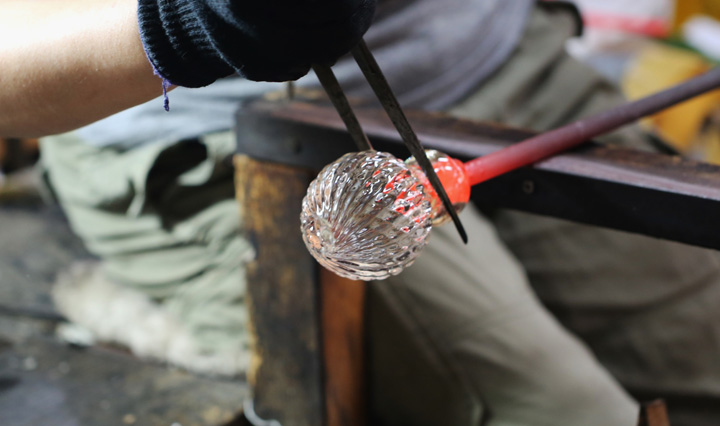
The form is beginning to round out beautifully.
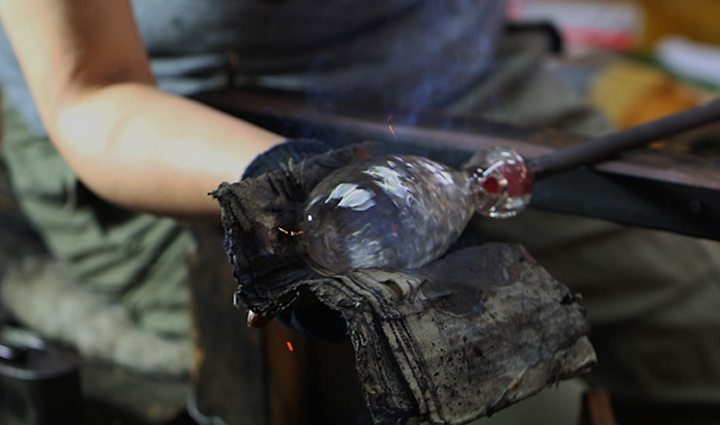
There is even hands-on work involved in refining the shape… She is actually holding it with her hands! And there is smoke coming off it!
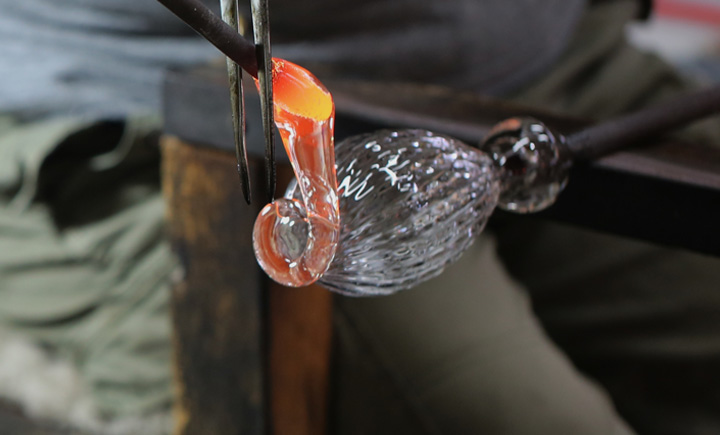
Once the bowl of the glass has reached the desired size and length, a separate gather of glass is wrapped around it to form the stem.
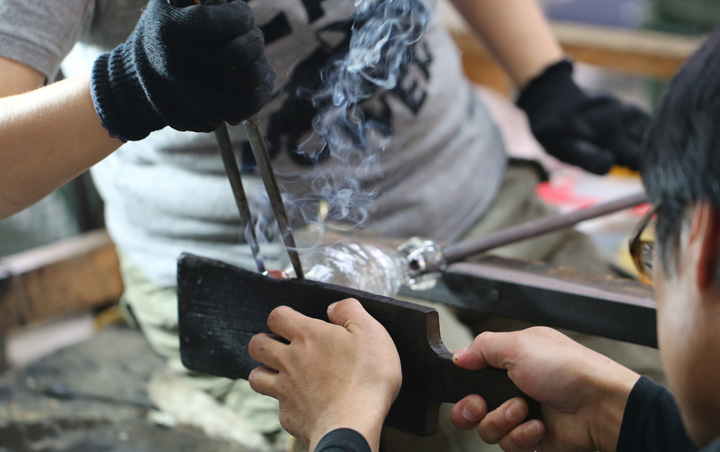
The base is pressed against a paddle-shaped board to flatten it. The heat causes smoke to rise.
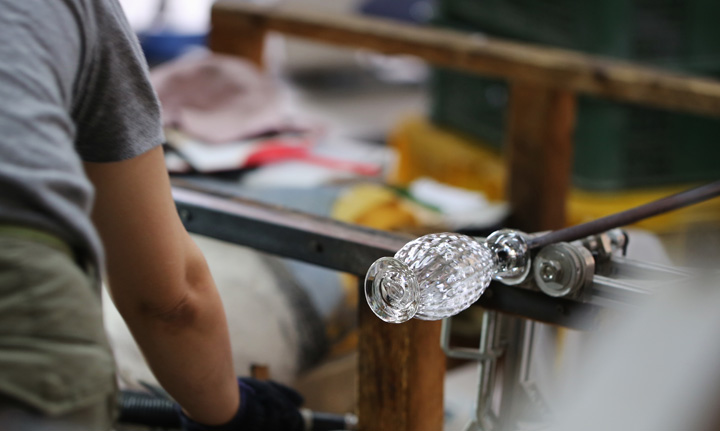
With the stem attached, the next step is shaping the bowl of the glass. A pontil rod is attached to the stem, allowing the blowpipe to be removed.
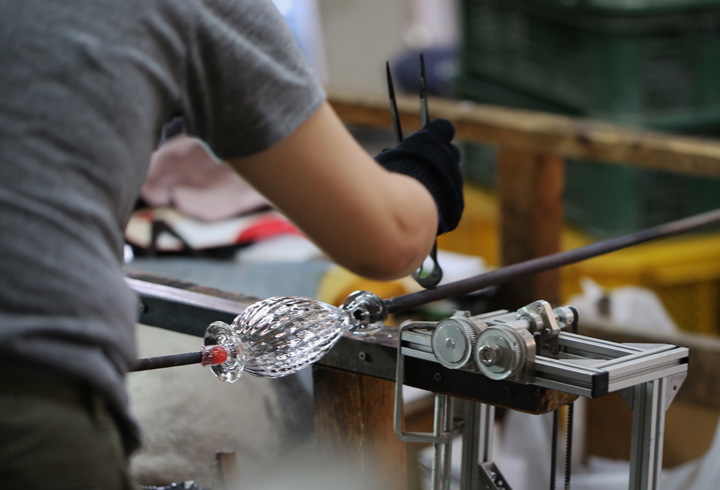
The moment the blowpipe is detached.
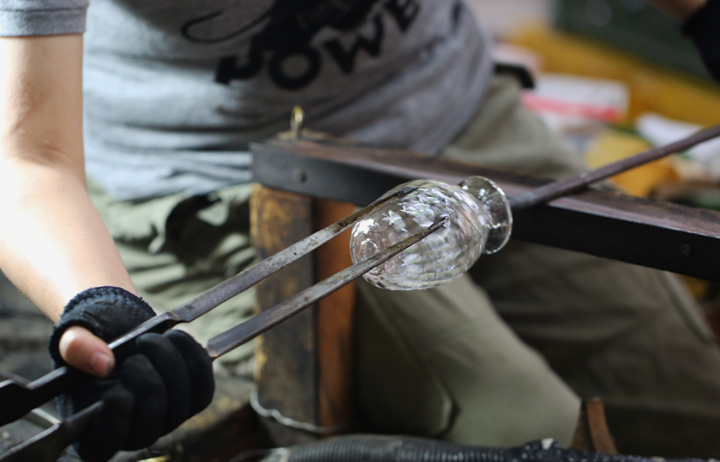
Now the bowl of the glass can finally be shaped. Little by little, it is opened up by hand.
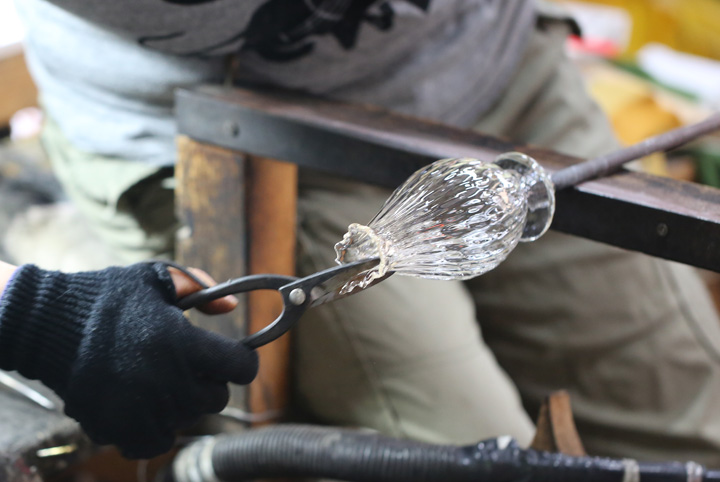
The glass is repeatedly stretched and widened little by little. Throughout the process, the pontil rod is constantly rolled, keeping the glass rotating and maintaining its shape while the work continues.
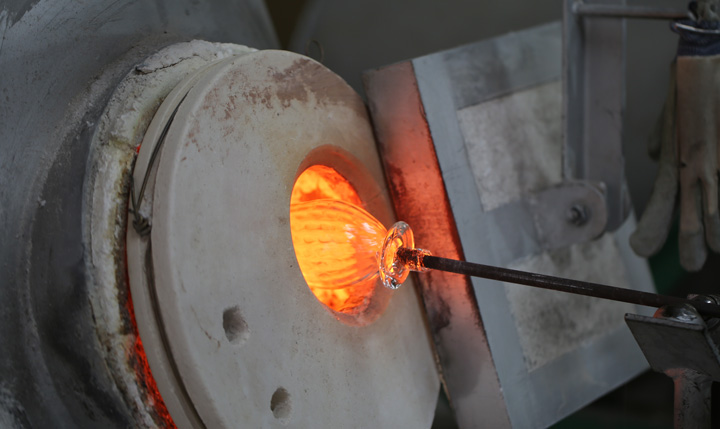
It is heated again in the crucible.
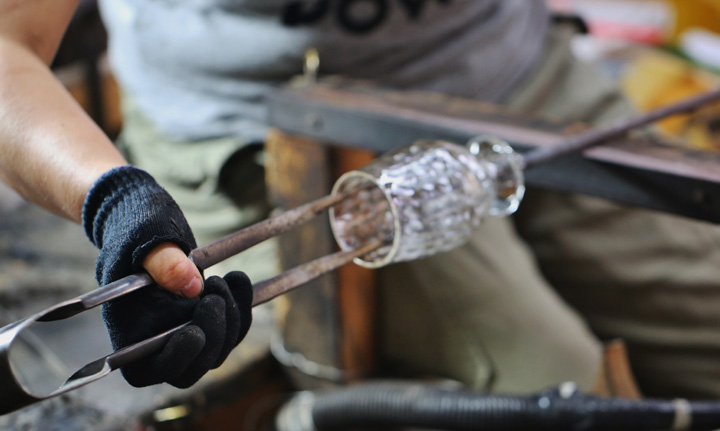
It opens! The shape is complete.
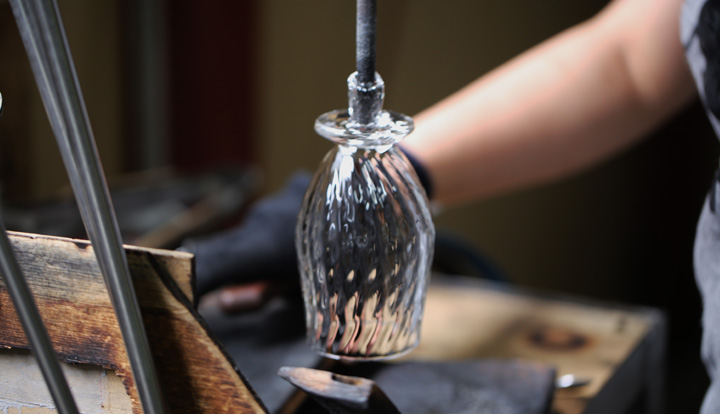
The pontil rod is removed…
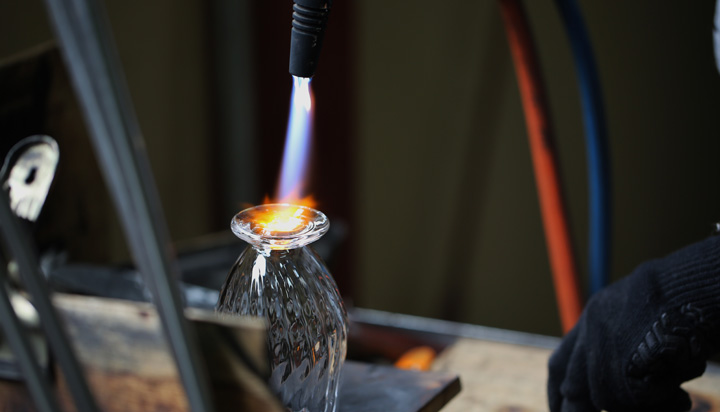
Then the rim is finished with a burner. From here, the piece is placed in an annealing kiln, where the temperature is gradually lowered overnight.
Once it has completely cooled, the signature is added and the piece is finished.
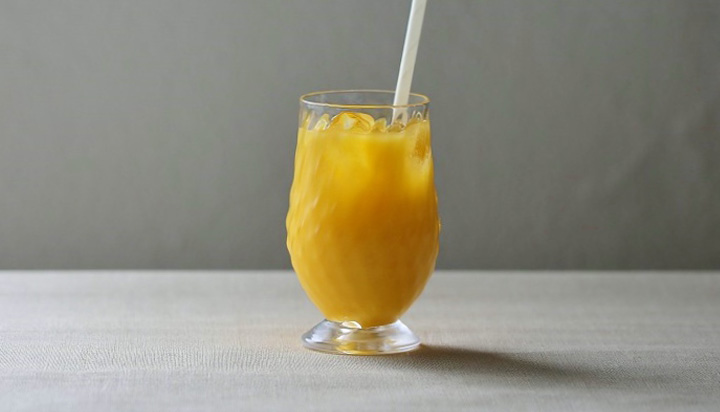
Finished!
It instantly makes you want to pour a fresh juice into it. It would also be perfect for iced coffee, beer, or wine… A stemmed glass this versatile is truly something special.

Ice because it’s hot outside? Not quite—this bucket is filled with glass fragments. These are small pieces of glass that were knocked off the blowpipe or pontil rod with a sharp tap.
They were the points of connection that repeatedly linked the rods and the glass during the making process. Perhaps they are something like an umbilical cord.
So much care, effort, and intense heat go into creating these pieces, yet glass remains something that can shatter if dropped.
Looking at these glass “umbilical cords,” I was reminded once again of both the preciousness and fragility of all things that take shape.
It makes you want to cherish and use them for many years to come.
≪ END ≫
ガラスを吹いている時が一番楽しい!
ガラス展を前に制作のシーズン真っ只中の河上智美さんの工房を訪ねました。
若々しい造形センスに溢れる河上さんのガラスは
カジュアルで瑞々しく、現代の食卓やインテリアに自然に馴染みます。
いちごグラスやしぼりグラス、ピッチャー、花モールミニ鉢など
初登場以来数年で既に定番ともいえるアイテムを指折り数えることが出来るほど。
年々人気が高まる一方で、精力的に新作に取り組むエネルギッシュな一面を持つ河上さん。
一体どんな風にあのガラスが作り出されるのでしょう。
モノ作りの現場で、作ること、想いなどお話しを伺うことが出来ました。
河上さんは工房のすぐ隣にある見本場。
棚の中には今までに作った数々のガラスが並んでいます。
大きさや形がランダムに並んでると、またそれも可愛いもの。
ついつい手にとって見入ってしまい、楽しい時間が過ぎていきます。
ガラスがあちこちの置かれた見本場。
繊細な透明感が心地いい空間です。
「ガラスを吹いている時が一番楽しい!」
迷いなく言い切る河上さん。
工房で一日仕事をしていると「このお皿はもっと大きくしたらいいかな?」
「このグラスに台を付けたらカワイイかも?」と・・・
いろいろなアイデアが浮かんでくるそうです。
「どちらかといえば私は、こういう料理を盛り付けたいと思ってガラスを作ることは少ないです。
作りながら四角にしたい、丸にしたい・・・という思いが湧いてきてそれに挑戦するのが楽しいんです」
モノ作りが実用に偏り、それに執着しすぎないところが
かえってあのおおらかさを生み出すのかもしれないですね。
「料理はあまり得意じゃないこともあって、展示会等でお客様に『これに何を盛り付ければいいですか?』
と聞かれるときが一番大変です。答えを期待されていると思うと、余計になにも出てこなくなる!」
と朗らかでオープンな河上さん。
制作の苦労話や失敗談も、過ぎてしまえば笑えるエピソードになってしまう二人。
パートナーの斉藤さんと意気のあった掛け合いに笑い声が絶えません。
「このグラス、新作なんです。」と
透明なグラスに冷たい緑茶を出して下さいました。
「底に四角い小さな気泡を並べるのですが、やってみたら結構難しくて四苦八苦しています」(笑)
プレーンなグラス部分と厚みのある底部分のバランスにおもしろさがあり
持ってみると、軽すぎないしっかりとした実感のあるグラスです。
底の四角い気泡も可愛らしく、冷茶はもちろんですが
コーヒーゼリーや梅酒などにも良さそうです。
「上手く出来るときと出来ないときがあって、まだ探りながら制作しているという感じです」
という河上さん。
毎年楽しみにしているガラスの新作ですが、やはりそう簡単にはいかないものですね。
独立して14年になろうとしている今も、自分自身がワクワクしながら新作に取り組む姿は
本当に楽しそうでした。
駅から車で15分ほどの場所に河上さんの工房はあります。
5月末のこの時期は、畑は耕作が始まり畦には数多くの花が植えられていました。
地植えの草花は生命力が漲っています。
耕して間もない土は黒く空気を含み、やわらかく地面を覆っていました。
二十四節気ではもうすぐ「芒種」
農繁期にさしかかろうとする時期です。
田植えを終えたばかりの水田は、一面水を湛えて広がっていました。
静かな環境の中で、河上さんはガラス制作に取り組んでいます。
いよいよ工房へ。
工房の一番奥に据え置かれた坩堝(るつぼ)。
ゴーッという独特の音を立てて温度を上げていました。
手際よく段取りを始める河上さん。
いくつもの道具を揃えます。
あの可愛らしいガラスのうつわからは想像できないような
ハード系の道具の数々。
これらは作る種類によってさまざまに使い分けられるそうです。
今回は足付きのグラスを作って頂きます。
「苦手なサイズ合わせですから、きっちり測って作らないと!」
と、真剣なまなざしでセット。
準備をととのえ、いざグラス作りがはじまります。
坩堝(るつぼ)の温度も上がってきたようです。
こちらが坩堝(るつぼ)の中。
眩しくて凝視なんて出来ません。
溶けたガラスとはこのような状態です。
近づくと熱くて眩しいばかりで、チラッと見るのが精一杯・・・
この熱く眩しい中、吹き竿の先端を見つめて集中する河上さん。
必要なガラスを取りました。
着色ではないこの赤い色。
この高温状態から形づくりが行われます。
1回に吹くのは意外と少し。
ゴム風船のそれとは全く違います。
吹いたらすぐさま形を整える。
ガラスの温度がどんどん下がってしまうため
河上さんの無駄のない動きは必然なのですね。
そのために、道具も予め必要な場所に、必要なものだけ用意しておくのですね。
加工に適した温度管理も必須。
いろいろな道具が登場します。
いったん坩堝(るつぼ)に戻して・・・
吹きます。
形、大きさを整えていきます。
もう一度坩堝(るつぼ)に入れて・・・
今度はすぐさまモールに入れて、あの凸凹の模様を付けます。
タテに線が入りました!!
続けて交差するように文様をつけて、成形を進めます。
丸くふくらんできました。
形を整える工程にはこんな手作業も・・・
手で持ってますよ!!
煙も出てるし!
グラスのふくらみや長さが決まったら
別に用意したガラスを巻きつけて、グラスの足の部分を作ります。
羽子板のような板に押し付けて、底を平らにします。
熱さで煙が出ていますね。
足が付いた所で、次はグラス部分の成形をするため
足部分にポンテ竿を付けて、吹き竿を取り外します。
吹き竿を取る瞬間です。
いよいよグラス部分を成形します。
こんな風に少しずつ、手作業で広げていくのですね。
少しずつ引き伸ばしたり広げたりをを繰り返していきます。
この間もポンテ竿をコロコロ転がして、グラスを回転させ
形状を保ちながら作業します。
また坩堝に入れて熱します。
開いた!
形が出来上がりました。
ポンテ竿を外して・・・
バーナーで処理します。
ここから徐冷専用の機器でゆっくりと一晩かけて温度を下げます。
完全に冷めたら、名入れをして完成です。
完成!
フレッシュジュースな気分が盛り上がります。
アイスコーヒーやビール、ワインにも・・・
こんなに幅広く楽しめる足付グラスは価値ありますね!
暑いから氷?
ではなく、バケツいっぱいになったガラスの破片です。
吹き竿やポンテ竿から「コンッ」と外されたガラスの小さな塊です。
坩堝(るつぼ)に何度も出し入れして、竿と作り出されるガラスをつないでいたモノ
つまりへその緒みたいなものでしょうか?
手間をかけて、危険な熱さの中で作ったモノは
落としたら割れてしまうガラス・・・
今更ながら、形あるものの尊さと儚さを、このガラスのへその緒に見たような気がしました。
いつまでも大切に使いたいですね。
関連記事はこちら