



English version of the interview here.
I Wandered Around and Found the Ceramics Club
Hanada: How did you first enter the world of ceramics?
Shigetaka Suzuki: The Tokyo National Museum near my high school was part of my walking route, so I used to drop in from time to time. Especially the permanent exhibitions…
Back then, admission was just 50 yen. I’ve lost count of how many times I visited the Horyuji Treasures Gallery.
Also, on the way from my family home to Nihonbashi Mitsukoshi, there were about three antique shops. My house itself only had junk (laughs), but the surrounding environment was full of interesting things.
Hanada: What did your family do?
Shigetaka Suzuki: We were wholesalers of knitwear, in the same line of business as Etoile Kaito.
Now the area is full of apartment buildings, but back then Bakurocho was a wholesale district.
Brings back memories. Anyway, I only got seriously into ceramics at a university club.
On the day of the entrance ceremony, clubs and circles set up booths in the courtyard, right?
At first I went to the art society, but they were all just painting.
Hanada: That’s not necessarily a bad thing (laughs).
Shigetaka Suzuki: True. But I wanted to work in three dimensions, so I wandered around and came across the ceramics club.
As we talked, I realized I could make whatever I wanted… Though, that’s not much of a story, is it…
Hanada: That’s perfectly fine. What kind of things were you making there?
Shigetaka Suzuki: Whatever came to hand. In that sense, nothing has changed (laughs).
Hanada: What kind of ceramics did you like at the time?
Shigetaka Suzuki: Completely Tang dynasty—Chinese celadon. From there, I came to like pieces up through the Song period as well…
One “A” Short…
Hanada: And that led you to become an apprentice under Kaiji Tsukamoto?
Shigetaka Suzuki: During my job search in my fourth year, I traveled around pottery regions all over Japan. Among them, I felt his studio was the right place for me.
Hanada: Did you ever consider getting a regular job after graduation? Your major was economics, right?
Shigetaka Suzuki: I originally wanted to join a bank and become a businessperson, but there was the oil shock…
Also, to apply to city banks, you needed 20 top grades by your third year, and I fell short.
I had 19…
Hanada: Really? (laughs)
Shigetaka Suzuki: Sounds too convenient, doesn’t it? (laughs) But it’s true.
In any case, I just thought, “Well, never mind.”
So I started working part-time to fund my trips to pottery regions across the country.
Fast and Skillful
Hanada: Did you just show up at Tsukamoto’s place out of the blue?
Shigetaka Suzuki: Yes. I had actually been there once before with friends from the ceramics club. We also visited places around there, like Toyozo Arakawa.
Hanada: Would he really meet students who just showed up?
Shigetaka Suzuki: It’s the opposite—he would meet us because we were students.
If you were already working, you couldn’t just go empty-handed without an introduction.
Students get a pass on that kind of thing.
Hanada: A privilege.
Shigetaka Suzuki: Exactly—and he’d even treat us to meals (laughs).
One of the guys I went with was quite bold and kept making requests. Eventually he even said, “Could you demonstrate that carving?”
Hanada: That’s exactly what you’d want to see.
Shigetaka Suzuki: I was like, “Hey, that’s a bit much,” but…
Hanada: While secretly thinking, “Well said!” (laughs)
Shigetaka Suzuki: Exactly (laughs). And Tsukamoto actually did it. I was deeply impressed. I thought, “This person is extraordinary.”
Hanada: Was it the act itself, or his technical skill?
Shigetaka Suzuki: Both. Without drawing any under-sketch, he started carving a peony design straight away. It was incredibly fast—just fast and precise.
Effort and Consideration
Hanada: How was your time at his studio?
Shigetaka Suzuki: At first, I mostly did miscellaneous tasks, but eventually I was allowed to assist with his work.
He often entrusted me with hands-on work like using the wheel.
Hanada: So you were well regarded.
Shigetaka Suzuki: Hard to say. I hope so (laughs).
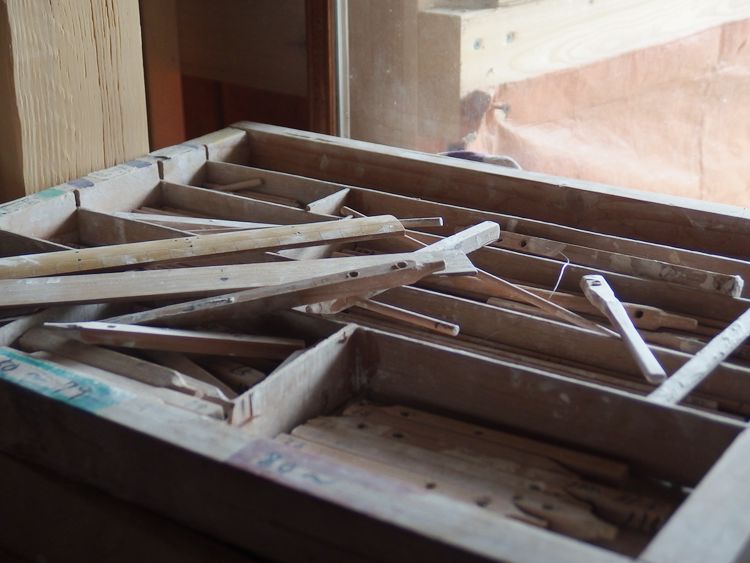
Hanada: What was his work style like?
Shigetaka Suzuki: He was astonishingly diligent. He probably didn’t think of it as effort himself.
Back then, he was about my current age, and I’m amazed he worked without seeming to tire. Also, he treated guests with genuine courtesy.
Hanada: I sense that same hospitality in you. You always prepare so thoughtfully.
Shigetaka Suzuki: Just by chance (laughs). But I do think consideration for others is important.
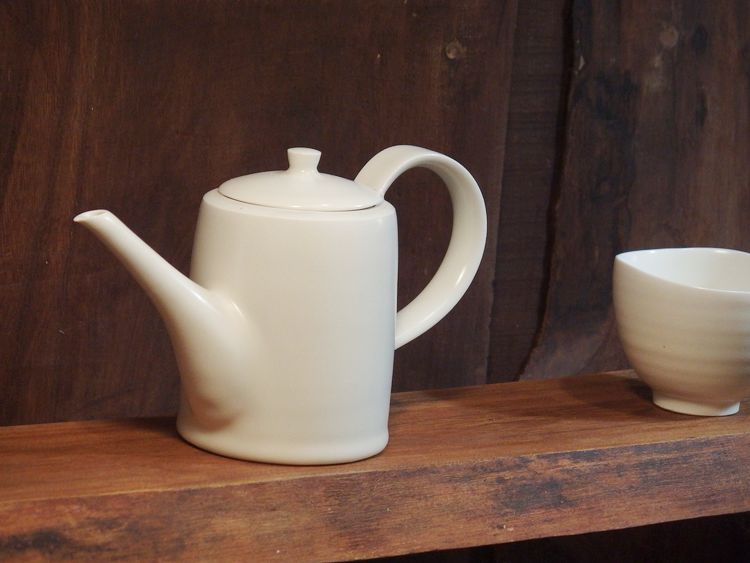
The Work of a Professional
Hanada: What did you learn technically?
Shigetaka Suzuki: What struck me as professional was how he always diversified risk.
For example, when mixing glazes, he would use multiple types of silica, lime, and feldspar.
That way, if the quality of one source changed, another could compensate.
Hanada: Always having a Plan B.
Shigetaka Suzuki: In making things, you steadily eliminate the reasons or excuses for failure.
Hanada: That’s professionalism.
Shigetaka Suzuki: I learned a great deal about glazes.
I wasn’t allowed to handle the final mixing, but I learned the process and gained a sense of direction. I still feel confident about porcelain in particular.
Hanada: Trained under Tsukamoto.
Shigetaka Suzuki: It should be close to his formulation.
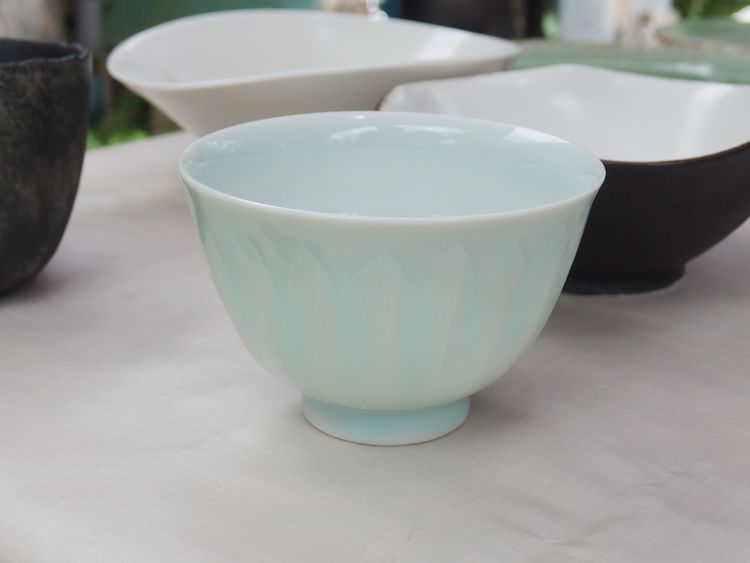
I also learned carving techniques there, like lotus-petal motifs, as well as glazing methods.
Those fine technical details aren’t something you can grasp just by briefly observing.
I’m glad I had that experience.
The Rationality of the World
Hanada: It sounds like a meaningful time.
Shigetaka Suzuki: I was scolded often too (laughs).
It was an apprenticeship—if the master said something white was black, then it was black.
One day he told me, “We don’t need this clay anymore, throw it away.”
So I did, and later he said, “Why did you throw it away?” (laughs)
Hanada: That sounds familiar (laughs). Something everyone experiences at least once.
Shigetaka Suzuki: That’s when I realized: school is where you learn the rationality of the world, and afterward, you keep learning its irrationality.
At that point, even what you learned as “rational” in school starts to seem less so (laughs).
Hanada: Both are important.
Finally Independent
Hanada: And then you became independent after two years.
Shigetaka Suzuki: From the moment I arrived, the factory manager told me, “What are you doing here? You should build your own kiln as soon as possible.”
In the end, you have to go independent, try things yourself, and learn from your own mistakes.
That said, I didn’t have the money to do so (laughs).
So I worked for three years selling electronics in Akihabara, saved about six million yen, and then started preparing for independence.
Hanada: You’re good at making all sorts of things, too.
Shigetaka Suzuki: It’s not that I could do it from the start—I had no choice (laughs).
I had no money, so to make an abandoned house livable, I had to do everything myself.
Looking back, it was quite enjoyable.
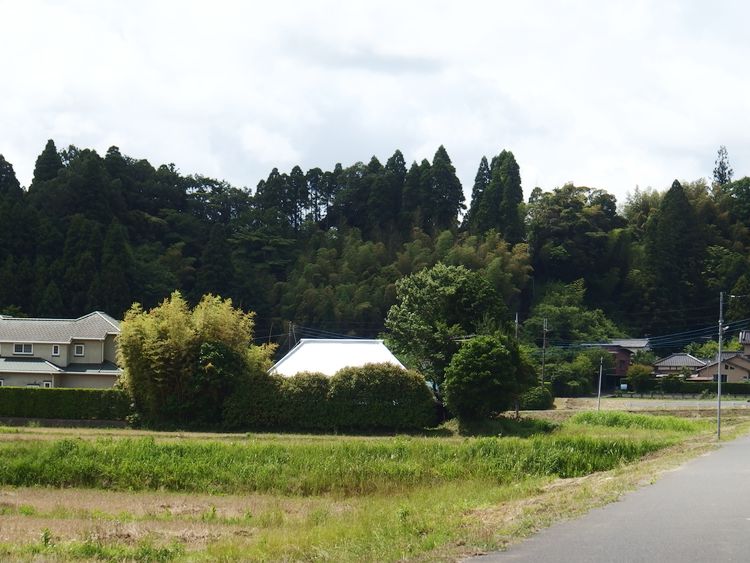
Hanada: And eventually you started building pizza ovens.
Shigetaka Suzuki: Pizza, paella… I think I’ve built around ten kilns in total.
Roofing, baths, toilets—I did everything myself.
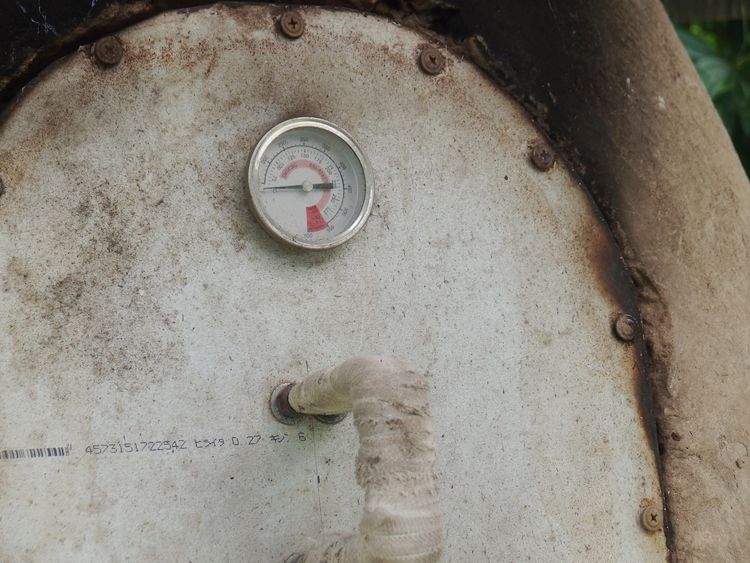
Hanada: Ten kilns?
Shigetaka Suzuki: Ready-made ones are fine, but they’re hard to repair or modify.
If you build them yourself, you can easily take them apart.
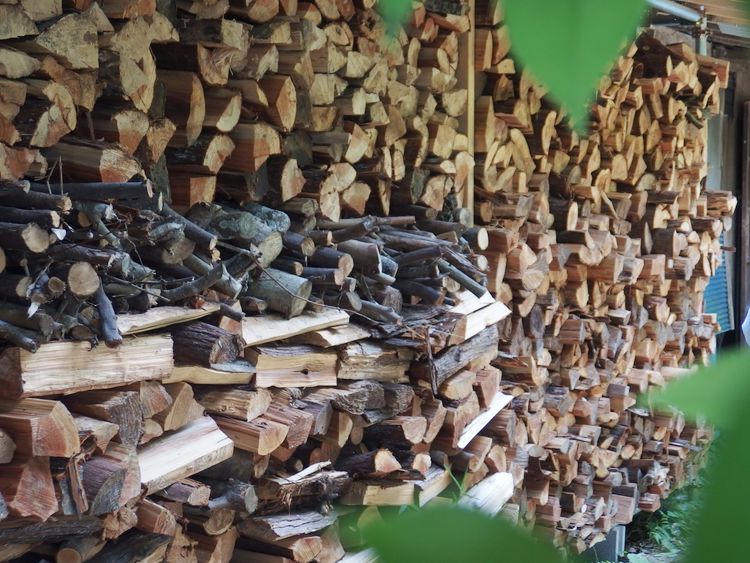
Especially wood-fired kilns—I’ve lost count of how many times I’ve dismantled them.
Since ceramics are even referred to as “yakimono”, firing is the most essential part. being able to adjust that process yourself is valuable.
Memories of the Half-Moon Plate
Hanada: Is there any piece you’ve made that stands out to you?
Shigetaka Suzuki: If I had to choose, the half-moon plate.
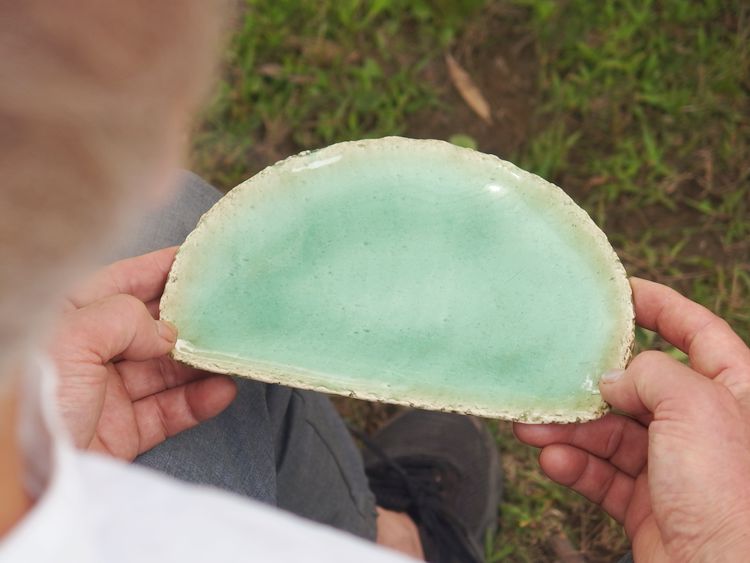
Shigetaka Suzuki: I’ve never made so many of one thing before or since (laughs). They were produced in batches of 500.
Just for Hanada alone, there must have been several thousand pieces. At one point I even said, “I’ve had enough” (laughs).
Then Hanada’s predecessor said something like, “There’s a world you can only see by making a lot.”
Hanada: (laughs) Even after making 1,000, you still can’t see it—so how many does it take?
Shigetaka Suzuki: Normally, 1,000 would already count as “a lot” (laughs).
Enjoying Life
Hanada: What are your thoughts going forward?
Shigetaka Suzuki: I want to keep doing refined work.
Hanada: As expected of someone from Kanda.
Shigetaka Suzuki: And I want to stay relaxed about it.
If I stick to one genre too long, my work tends to become overly meticulous and gradually more complicated.
Unless I reset with something different, it becomes less interesting. Not just ceramics—repairing houses, making chopsticks or spoons in wood… Those activities feed back into my work.
Hanada: More on a mental level?
Shigetaka Suzuki: Yes. There’s a technical aspect too, but above all, the sense of “enjoying life” is what matters most.
Hanada: That idea of “enjoying life” is expressed through this place and your work.
Shigetaka Suzuki: Hosting outdoor parties here is one example. It’s fun because the setting differs from indoors.
Guests also enjoy using my tableware. Of course, people casually suggest things like “You should run a guesthouse” or “A cooking class would be great.”
Hanada: Including me, most of those “ideas” are pretty irresponsible (laughs).
Shigetaka Suzuki: If I were in their position, I’d definitely say the same (laughs).
≪ END ≫
ウロウロしていたら陶芸同好会
花田:重孝さんは、どのように焼き物の世界に入ってこられたのですか。(以下花田-)
鈴木:高校近くの東京国立博物館は散歩コースで、ちょこちょこは見ていました。
特に常設のほう…。
当時は50円で入れたんです。
法隆寺宝物館も何度見に行ったか分からないですよ。
あと、実家から日本橋三越に行く途中に骨董屋が3軒くらいあってね。
実家にはガラクタしかないけど(笑)、周りには色々ある環境でした。
-:重孝さん、ご実家は?
鈴木:メリヤス問屋です。エトワール海渡さんとかと同業で。
今はマンションだらけだけど当時は馬喰町のあたりは問屋街でね。
懐かしいな。まあ、焼き物は本格的には大学の同好会です。
入学式の日って、中庭に部活動や同好会が出店するじゃないですか。
最初、美研に行ったら、絵ばかり描いているんですよ。
-:絵が悪いわけではありませんが(笑)。
鈴木:まあね。
僕は立体やりたかったので、困ってウロウロしていたら陶芸同好会にあたりました。
色々話していて、好き勝手作っていいことが分かったので…。
あ、こんな理由じゃ、あまり話になりませんかね…。
-:大丈夫です。
同好会では、どんなものを作っていたのですか。
鈴木:手あたり次第。そういう意味では今と変わりません(笑)。
-:そのころ好きだった焼き物はどのようなものですか。
鈴木:もう、完全に唐。中国の青磁でした。
そこから宋のあたりまで好きになっていって…。
「優」がひとつ足りなくて…
-:それが塚本(快示)さんへの弟子入りにつながるのですね。
鈴木:4年の就職活動時に…、全国のやきものの場所をまわったんです。
その中で先生のところがいいなと思いました。
-:卒業後、普通に就職することは考えなかったのですか。
学部は経済ですよね。
鈴木:本当は銀行に行って実業家になりたかったんですけど、オイルショックもあったし…。
あと、都市銀行へのエントリーは「優」の数が3年時で20個必要なんですが、足りなかったんですよ。
僕19個だった…。
-:えーー、本当ですか(笑)。
鈴木:できすぎた話だと思うでしょ(笑)。本当ですよ。
いずれにしても「ま、いっか」ってなっちゃいました。
で、アルバイトを始めて、全国のやきもの産地をまわる資金を作りました。
速くてうまい
-:塚本さんのところに、いきなり行ったのですか。
鈴木:そうそう、陶芸同好会の仲間と、以前一度行ったことがあったんです。
荒川豊蔵さんとか…あの辺を色々まわりました。
-:塚本さん、学生がいきなり訪れて、会ってくれるのですか?
鈴木:逆です。学生だから会ってくれるんです。
社会人だったら、手ぶらで、紹介状もなく行けません。
学生って、そういうの、許されるでしょ。
-:特権ですね。
鈴木:学生だからって、ご飯もごちそうになっちゃうし(笑)。
それでまた、一緒に行った奴が図々しい奴で色々要求するんですよ。
しまいには「あの彫りを実演してくれ」って。
-:一番見たいところじゃないですか。
鈴木:「おいおまえ、それはちょっと図々しいんじゃないか」なんて言いながら…
-:内心「よく言った!」って感謝してる(笑)。
鈴木:そんなとこ(笑)。塚本先生、やってくれるんです。それで感動しちゃって。
「この人すごい人だな」って。
-:それは、してくれたことですか。技術的にですか。
鈴木:両方。下絵を全く描かずに、いきな牡丹文を彫り始めたんです。
あっという間。とにかく速くてうまい。
努力と思いやり
-:塚本さんのところでの時間はいかがでしたか。
鈴木:最初はほとんど雑用でしたが、その内先生の仕事も一緒にさせてもらうようになりました。
ろくろなんかの手仕事は結構頼んでくれました。
-:評価されていたのですね。
鈴木:さあ、どうでしょうね。そうだとよいのですが(笑)。
-:塚本さんの仕事振りはいかがでしたか。
鈴木:ビックリするくらいの努力家です。
ご本人は努力なんていう風には思っていないでしょうけど。
あの頃の塚本先生、今の僕くらいの年齢ですから、よく疲れを知らずにやっていたなと思います。
あと、客人に対しては心から礼を尽くされていました。
-:重孝さんにも、そういうもてなす気持ちは感じます。
いつも色々用意していて下さるじゃないですか。
鈴木:たまたまですよ(笑)。
でも、大切だと思いますよ、人を思いやることは。
プロの仕事ぶり
-:技術的なことで学んだことはありましたか。
鈴木:プロだなと思ったのは、必ずリスク分散するんですよね。
例えば、釉薬を合わせるとき、珪石でも、石灰でも、長石でも複数種使う。
そうすると釜戸長石の質が変わったとしても、福島長石でカバーできるわけです。
-:必ずプランBを用意すると。
鈴木:モノづくりの上で、出来ない理屈や言い訳をコツコツと消していくんですよね。
-:プロですね。
鈴木:釉薬については、本当に勉強になりました。
調合は最後までやらせてもらえませんでしたが、プロセスを学べたし、目標を持つこともできました。
特に白磁は今でも自信を持てています。
-:塚本先生仕込みの…。
鈴木:あの調合に近いはずです。
あとは「彫り」も、蓮弁文なんかも覚えたのはあそこにいた時だし、釉薬のかけ方や処理の仕方なんかも。
ああいうのって、どこかでチラっと見ても、分からない技術の細かい部分があるものなんです。
そういうことは行ってよかったなと思っています。
世の合理性
-:有意義な時間でしたね。
鈴木:よく怒られもしましたよ(笑)。
徒弟制ですから、白でも先生が「黒い」って言えば、黒なんですよ。
ある日「この土、もういらないから捨ててこい」って言われるでしょ。
で、捨てに行ってしばらくしたら「なんで捨てたんだ!」ってね(笑)。
-:ありそうな話ですね(笑)。
誰しも一度は経験していそうな事象です。
鈴木:その時、気づきましたよ。
学校は世の中の合理性を学ぶところ、で、そのあとは、世の中の不合理を学び続けるんだなって。
そうなってくると、学校で学んだ「合理性」も、逆に合理的に見えなくなってくる(笑)。
-:両方大事ですよね。
いよいよ独立
-:そして二年で独立です。
鈴木:そもそも、あそこに行った途端、そこの工場長に「何しにきた?早く自分で窯築いてやったほうがいいよ」って言われていましたから。
結局、独立して、自分でやって、自分で失敗して覚えていくほかないんですよね。
ただ、そんなこと言っても、僕にはお金がないわけですよ、独立資金が(笑)。
なので、そのあと3年間秋葉原の電化製品の販売の仕事をして、600万くらい貯まった時点で独立の準備に取り掛かりました。
-:重孝さんは色々作られるのも得意ですよね。
鈴木:別に最初から出来たわけじゃないです。やらざるを得ないんですよ(笑)。
お金はないし、廃屋を住めるようにするためには、自分で何でもやるしかない。
今思えば、それが結構面白かった。
-:その内ピザ窯も作るように。
鈴木:ピザとか、パエリアとか…。焼き物の窯も、通算で10基くらい作っていると思います。
屋根の葺き替え、バス、トイレ、全部自分でやりました。
-:窯も10台ですか。
鈴木:既製品もいいんでしょうけど、直せないし改造しづらいんですよ。
自分で作ったものだと簡単に壊せますから。特に薪窯なんて、何回壊したか分かりません。
焼き物っていうくらいで、焼くのが一番ミソの部分ですから、それを自分で色々いじれるっていうのがいいと思います。
半月皿の思い出
-:いままで作ってきたうつわの中で、印象に残っているものありますか。
鈴木:「印象に残っている」と言われれば、半月皿かな。
鈴木:あんなに、たくさん作ったのは後にも先にもありません(笑)。
作るのは500単位でしたから。花田さんだけでも数千枚は出ていますよね。
しまいには「もう嫌だ」って言ったこともありました(笑)。
そうしたら花田さんの先代「たくさん作らないと見えない世界がある」とかなんとか…。
-:(笑)。1000個作っても見えないのに「いくつ作ったら『その世界』とやらは見えてくるんですか」と。
鈴木:1000も作れば十分「たくさん」でしょう、普通(笑)。
生活を楽しむ
-:これからについては、何か考えていますか。
鈴木:やっぱり粋な仕事をしていたいですよね。
-:さすが、神田っ子。
鈴木:それと、力まずやりたいなと思っています。
ひとつのジャンルでずっとやっていると、僕の場合、重箱の隅突っつくような仕事になって、なぜかだんだん複雑化していくんです。
一度違うことでリセットしないと、仕事がつまらなくなっていくんです。
焼き物だけではありません。
家を修理したり、木工で箸やスプーンを作ったり…、そういうことって、すごく仕事に活きています。
-:精神的な部分ですかね。
鈴木:そうですね。
技術的な意味もありますが、やはり「生活を楽しむ」感覚が一番大切だなって。
-:重孝さんの「生活を楽しむ」ことは、この場所や仕事で表現されるわけです。
鈴木:ここで屋外パーティーをするのもその一つ。
家の中とはセッティングも変わってきて楽しいんですよ。
参加者も僕のうつわを使うのを楽しんでくれるし。
まあ、みんな「ペンションやったら、うまくいくはずだ」とか「料理教室やったら楽しいぞ」とか、好き勝手言っていますけどね。
-:僕も含めて、周りの「アイデア」とやらは大体、無責任なものです(笑)。
鈴木:僕もその立場だったら、間違いなく言っているね(笑)。
関連記事はこちら