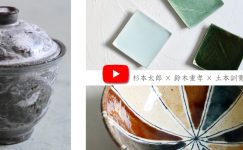



English version of the interview here.
The Act of Firing the Kiln
Hanada: Michihiro-san, how did you get started in pottery?
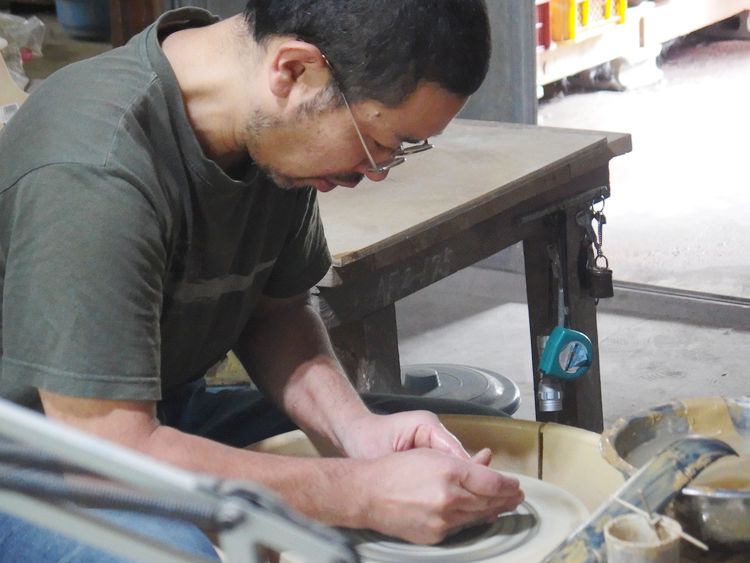
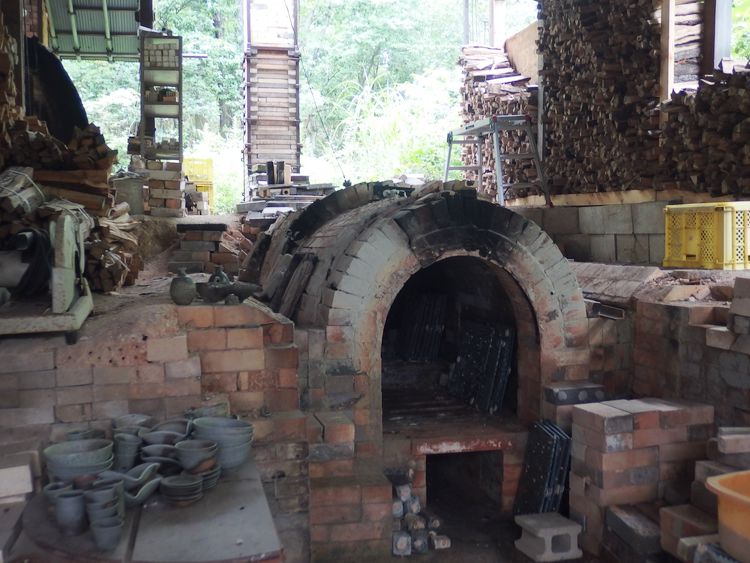
Michihiro Domoto : My brother was going to take over my father’s woodworking business in Wakasa, Fukui, and when he went to Okayama to study woodworking, I decided to go along with him. I originally intended to do woodworking as well, but the school also had a ceramics course. I found myself drawn to it and changed my path. The core focus of that course was Bizen ware. Operating the pottery wheel and firing the wood kiln were both so much fun, and I just fell in love with pottery.
Hanada: So you were captivated by the charm of the wood kiln.
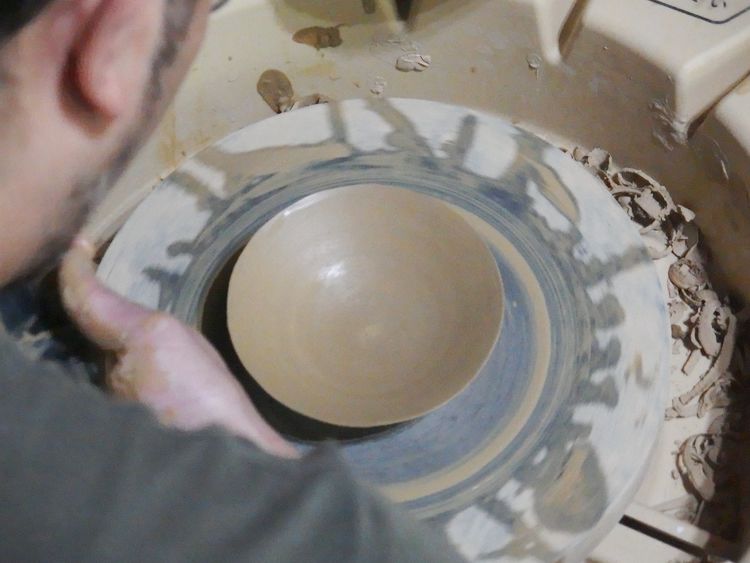
Michihiro Domoto : I found the actual act of firing the kiln fascinating. Plus, the people in Bizen were incredibly skilled with the pottery wheel. It really sparked my competitive spirit and was a wonderful learning experience. They would tell me things like, “Minimize your movements and touch the clay as little as possible when making something. Otherwise, the clay will lose its life.”
Hanada: And then you returned to Fukui.
Michihiro Domoto : After attending the Fukui Ceramics Technical Center, I continued to learn by helping out other ceramic artists with their wood kilns.
Hanada: Did you know from the beginning that you wanted to make tableware?
Michihiro Domoto : I was influenced by the people I studied with here in Fukui. Around that time, an approach was emerging that blurred the line between functional pieces and sculptural art, and my peers and I shared that mindset. I felt that there is a unique expressive depth that comes precisely from the limitations of usability, and I began to view pottery from that angle. The direction of expression shifted from a one-way communication to more of a shared experience. I found it wonderful to connect with people while sharing the things and activities we love.
Something Felt Wrong…
Hanada: Kumiko-san, how about you?
Kumiko Domoto : Since I was a child, I loved drawing and wanted to find a job related to that. I wanted to create things that reach people directly in their daily lives, like posters or album covers. So, I majored in visual design at university. However, once I started, almost all the classes were on computers. I was surprised because I had expected to do more drawing with my own hands.
Hanada: It wasn’t what you expected.
Kumiko Domoto : Because of that sense of misalignment, my attention turned to the world of tableware, which I had always liked. During my third and fourth years at university, I visited various pottery studios and ceramic artists. I wanted to understand what it meant to make pottery for a living and what kind of people potters were. I went to production areas like Shigaraki, Hagi, Karatsu, and Arita, and visited different artists everywhere.
Hanada: How were those visits? The environments where pottery is made must vary quite a bit.
Kumiko Domoto : They really did. One studio had a large group of people, but you were allowed to do whatever you wanted there. If you wanted to draw that day, you could draw. If you wanted to use the wheel, you could do that. If you didn’t feel like doing anything, you didn’t have to. Everyone just went about their work as they pleased. As for the pieces, you could paint any design as long as it was an adaptation of the master’s base style, and the shapes were free too. Everyone looked so happy, and it was a lovely sight.
Hanada: Are there any other places that left an impression on you?
Kumiko Domoto : In Shigaraki, I met someone making large jars. He kept building up the clay while talking to me about all sorts of things. Being in my teens, I knew nothing, and it just looked like repetitive, simple labor to me. I even asked a rather rude question: “Is this kind of work fun?” He just smiled and replied, “This is what’s interesting. I just love it.” I was caught completely off guard and thought, “What is this world?” I was instantly drawn into the world of ceramics.
The Reality is “Always on the Edge”
Hanada: Michihiro-san, what kind of work do you aim to do?
Michihiro Domoto : Since I started out simply wanting to fire wood kilns, I don’t really have a clearly defined goal in words. To be honest, there are so many unknown elements that I couldn’t learn them all in a lifetime, and I’ve just been firing through trial and error. But by doing so, antique pieces from Korea and China have started to look different to me.
Hanada: What do you mean by looking different?
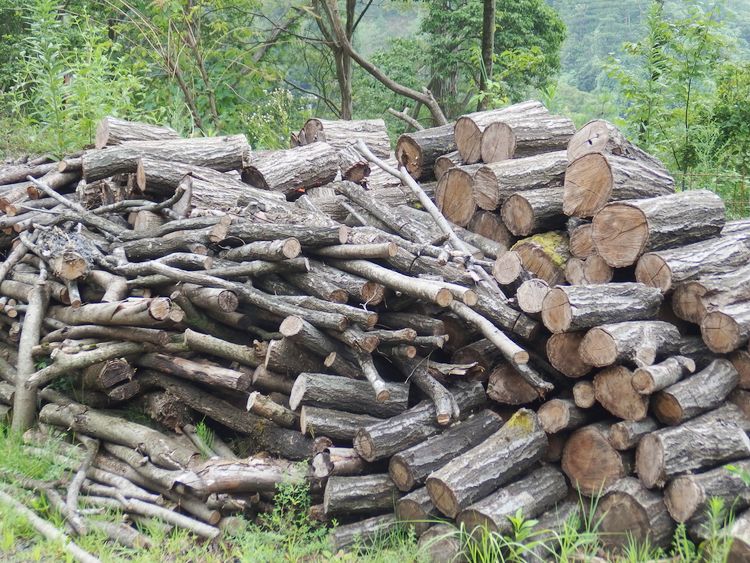
Michihiro Domoto : Instead of just admiring them and chasing after the shape, I began to think about the mindset that led to that specific form. When you take a comprehensive approach—cutting the wood, building the kiln, preparing the materials, shaping the clay, firing, and finally using the piece—you start to feel that every single part is interconnected. This changes how I see the antiques I’ve looked at in the past, and I hope to create a good cycle where that insight feeds back into my own work. Well, that’s the ideal way to put it, but the reality is that we are always living on the edge. (laughs)
Hanada: I imagine there are times when things go well and times when they don’t.
Michihiro Domoto : If you only aim for stability just to get a successful firing, you end up with boring pieces. On the other hand, if you push the limits too much, everything ruins. (laughs) I think the moments of true satisfaction come when your skills successfully back up your challenges.
Hanada: So a balance between maturing technique and a desire for something new is important.
Kumiko Domoto : When a firing goes well, unloading the kiln is incredibly fast. (laughs) He unloads things one after another, but when it doesn’t go as well, it takes him a very long time to take everything out.
Making People Happy…
Hanada: Kumiko-san, what do you value most in your work?
Kumiko Domoto : I want to do work that brings joy to people and makes them feel excited. It is a true happiness to know that my work can bring joy to someone’s life. I am always thinking about what it truly means to make people happy.
Division of Labor
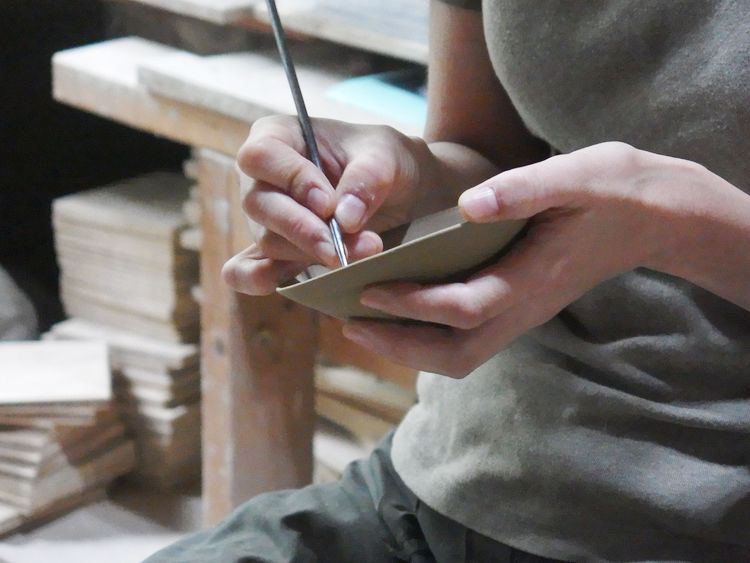
Hanada: Currently, for the inlay work, Michihiro-san prepares the clay body and Kumiko-san applies the decoration.
Kumiko Domoto : At first, I did everything by myself. But for me, having the clay body prepared for me and then thinking about the decoration from there brings out far more ideas.
Hanada: Do you leave the decoration entirely to Kumiko-san?
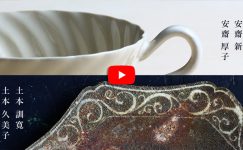
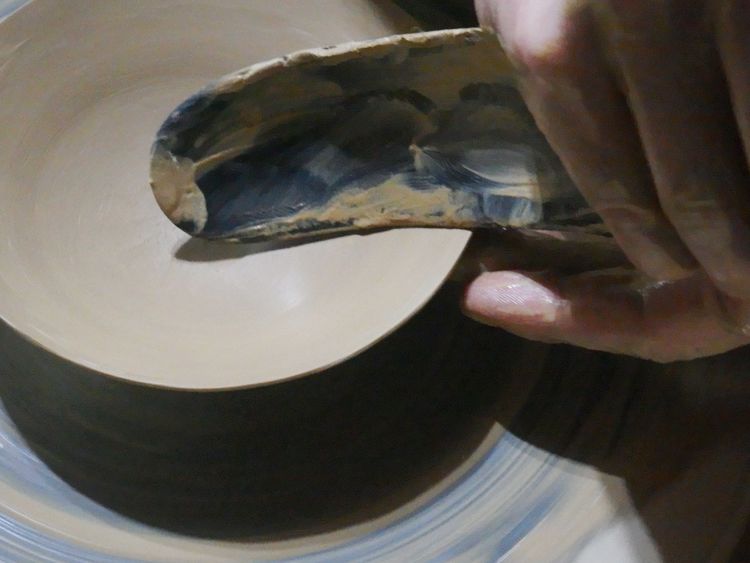
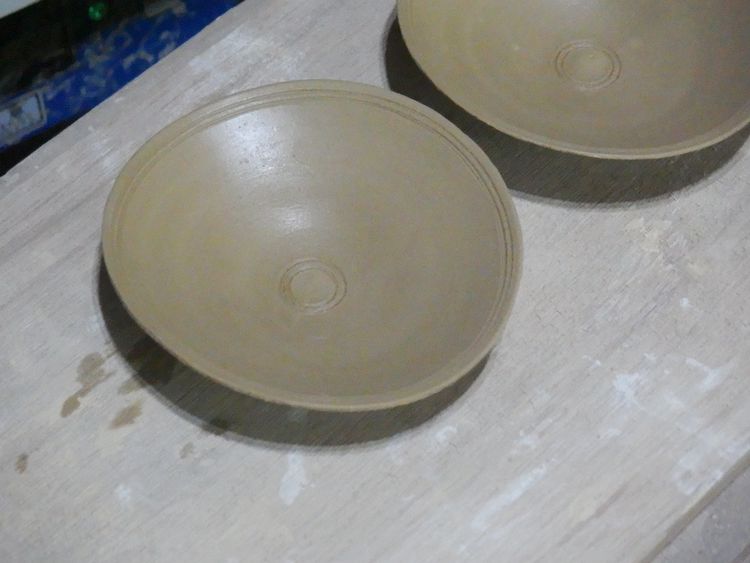
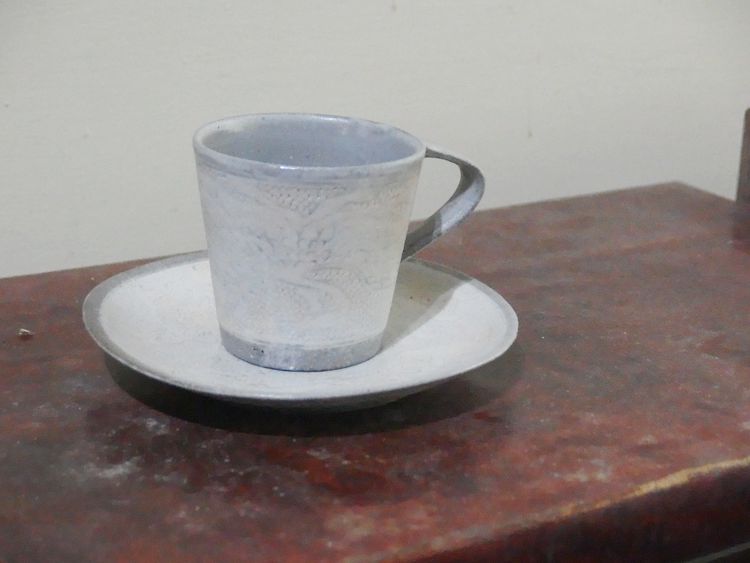
Michihiro Domoto : When I make a piece with a specific image in mind, I try to convey that to her. For example, I think fish-egg patterns (nanako-mon) are more interesting when they hit the eye directly, so I make the form more linear. Also, for Western-style items like coffee cups, I feel that finer inlay work suits them better, so I share those thoughts with her.
Kumiko Domoto : After that, I expand on the idea in my own way.
Hanada: Do you look to Goryeo celadon for inspiration?
Kumiko Domoto : Yes. I look at a lot of classical Chinese and Korean pieces.
Hanada: How do you decide on the composition?
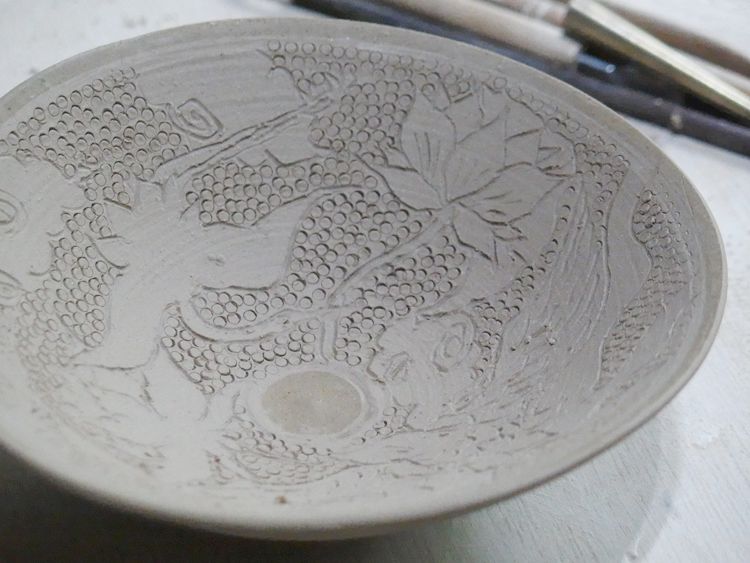
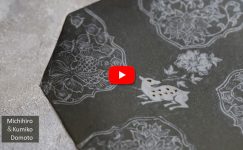
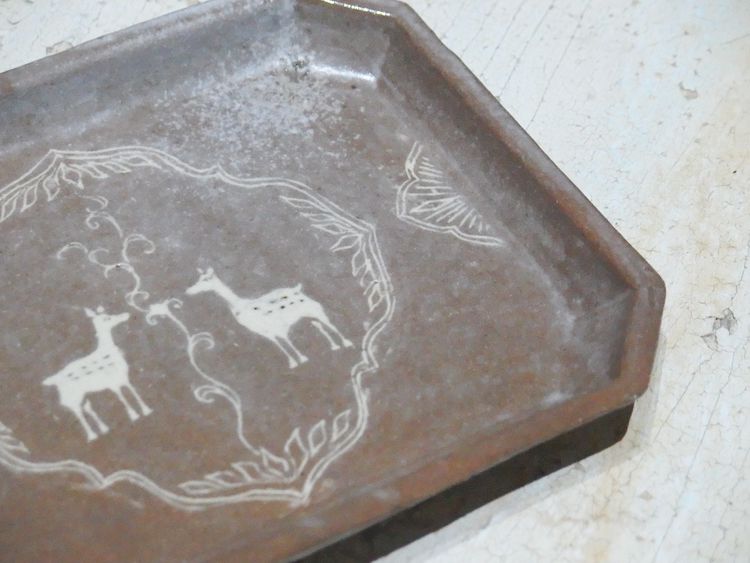
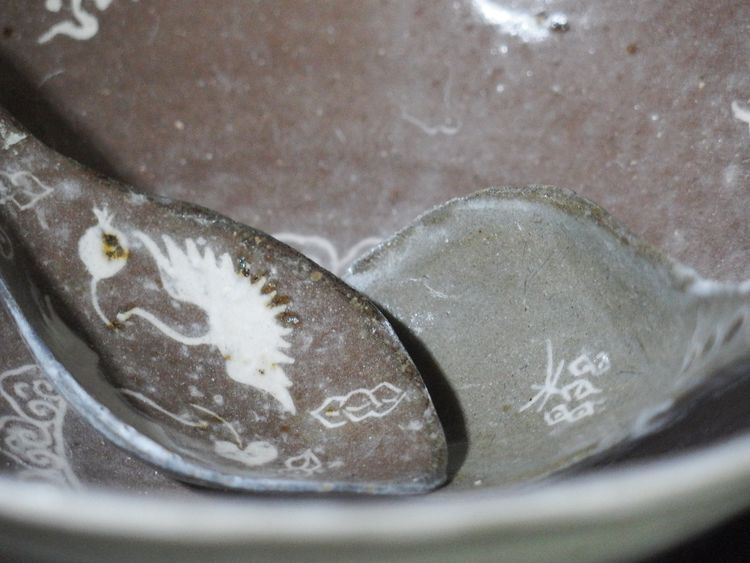
Kumiko Domoto : I usually choose auspicious motifs. Having a traditional blessing or meaning behind the pattern makes it easier for me to work. I’m not particularly good at working purely on intuition, so I find it exciting when things are clear—knowing that a pattern has a specific meaning or has been used since ancient times. Also, I rarely combine completely unrelated things. For example, if I decide on a peony motif as the main focus, I’ll decide to add butterflies. If it’s a deer, I’ll pair it with auspicious Reishi mushrooms; if it’s a crane, I’ll use lotus patterns, and so on.
Their Respective Trends
Hanada: Michihiro-san, you must always look forward to seeing how the decoration turns out.
Michihiro Domoto : A few years ago, there was a phase where stylized, playful characters were popular, right?
Kumiko Domoto : Oh, there was. (laughs)
Hanada: Was that a personal trend for you, Kumiko-san?
Michihiro Domoto : Yes, it was. She would source characters from all kinds of places, so during exhibitions, when customers asked, “What does this say?” we didn’t know and couldn’t answer. (laughs)
Kumiko Domoto : For example, even with a character like “Kotobuki” (longevity), artisans in the old days would render it in a very stylized, creative way. I found that playful atmosphere really fascinating.
Michihiro Domoto : Lately, you’ve been doing a lot of chipmunks.
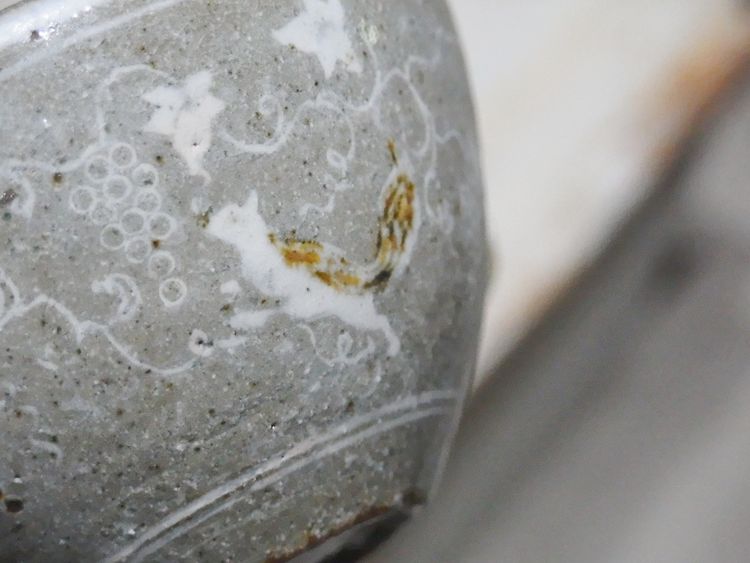
Kumiko Domoto : Oh, so you noticed? (laughs)
Michihiro Domoto : I did. (laughs)
Hanada: Michihiro-san, do you have any personal trends of your own?
Michihiro Domoto : Lately, I’ve been interested in Japanese pieces from the Meiji period. It was a time when designs increasingly took international markets into consideration, like teapots made using intricate Chinese overglaze enamels. I think it was a period when craftspeople were working with immense dedication. Instead of just doing things the way they’ve always been done, they brought in what they learned from old pieces and foreign styles, applying it to what they could do. I am really drawn to that spirit of dedicated research and trial and error.
Moving Forward
Hanada: Is there anything you would like to take on in the future?
Michihiro Domoto : There are many things, but first, I want to keep moving forward with what I currently value. For instance, while I don’t need to be overly extravagant with materials, I want to select them carefully. Instead of overly complex shapes, I want to focus on creating pieces with a strong, well-defined structure.
Hanada: How about you, Kumiko-san?
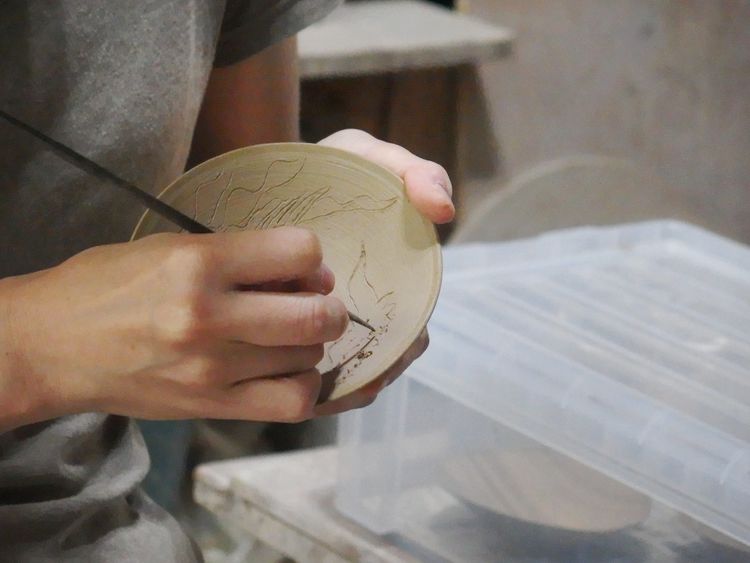
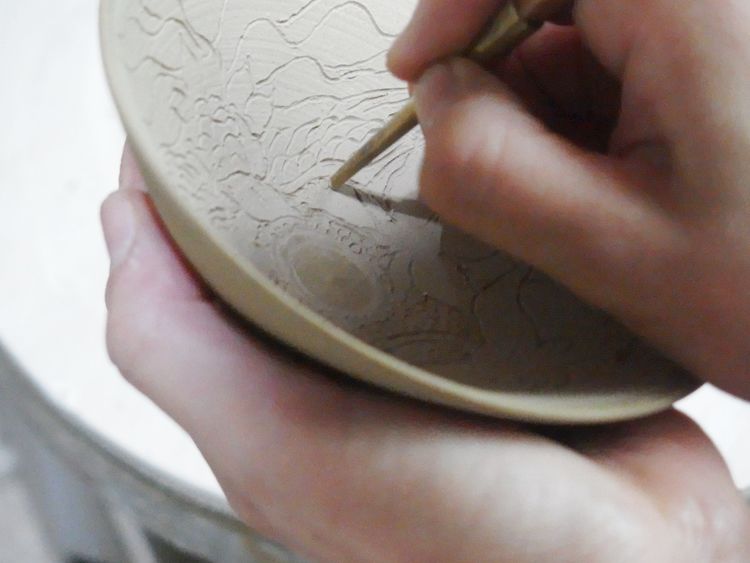
Kumiko Domoto : I want to deepen my work with inlay and sgraffito techniques. I also realized the sheer depth of the fish-egg patterns I started recently as I kept working on them.
Mukozuke, Demitasse Cups…
Hanada: We look forward to working with you for the upcoming exhibition.
Kumiko Domoto : I hope everyone enjoys seeing the fish-egg patterns in a more refined form. In addition to the thick iron styluses I’ve been using, I have started incorporating finer ones. As for Michihiro, he seems to be looking at books on Kaiseki cuisine quite a bit lately.
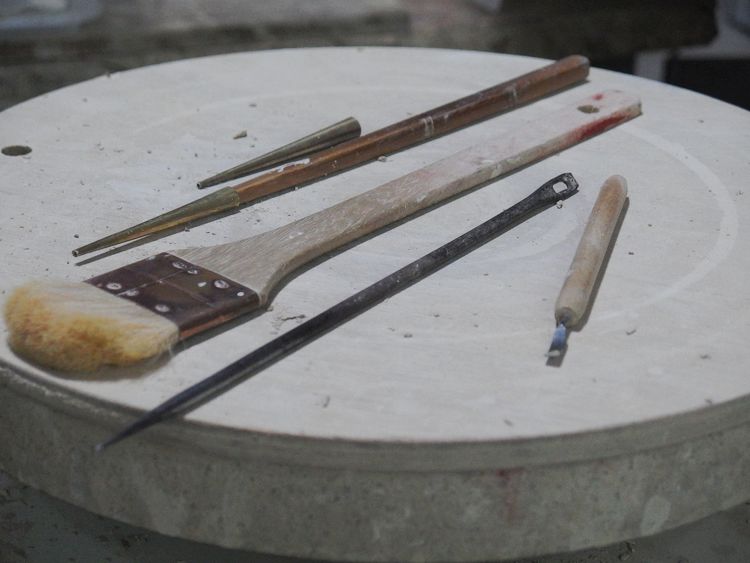
Michihiro Domoto : Yes, that’s true. Because of that, I think there will be more flat bowls and small bowls.
Hanada: You are very receptive. What you see seems to translate directly into your hands.
Michihiro Domoto : I have also made some demitasse cups, so I hope people will take a look at those as well.
Hanada: Yes, we are really looking forward to it. Thank you very much.

「窯を焚く」という行為
花田:訓寛さんは、どのようにして焼き物の仕事に至ったのですか。[以下花田-]
土本訓寛:父親の木工の仕事(福井県若狭)を継ぐことになった兄が、岡山に木工の勉強をしにいく時に、僕も付いて行ったんです。
木工をやるつもりでしたが、その学校には焼き物コースもあって、そっちに惹かれてしまい、進路変更です。
コースの主軸は、備前焼でした。
ロクロも薪窯も楽しかったですし、それで焼き物にはまってしまいました。
[以下土本訓寛:土本(訓)]
-:薪窯の魅力に魅かれたのですね。
土本(訓):「窯を焚く」というあの行為自体に面白さを感じました。
それと、備前の人たち、ロクロがメチャクチャうまいんです。
向上心も煽られたし、本当に勉強になりました。
「手数を減らして、なるべく土を触らずに、作れ。そうしないと土が死んでしまう」とか…
-:そして、福井に戻ってこられます。
土本(訓):福井県窯業指導所に通ったあと、他の作家さんの薪窯などを手伝いながら勉強させていただいていました。
-:食器作りをするということは、最初から決められていたのですか。
土本(訓):ここ(福井)で一緒に勉強した人たちの影響もあります。
当時「うつわとオブジェの境がない」みたいなアプローチが出てきたころで、それを仲間たちと共有していたんです。
僕も「使う」という制限があるからこその表現の面白さを感じていて、その角度からやきものを見るようになっていきました。
表現の方向も一方的な「伝達」ではなくて、どちらかというと「共有」になってきたのではないでしょうか。
自分たちが好きなものや行為を共有しながら、人々とつながっていくのが面白く感じました。
なんか違う・・・
-:久美子さんはいかがですか。
土本久美子:小さいときから、絵を描くのが好きだったので、そういう仕事に就きたいと思っていました。
ポスターやジャケットといった身近に人に届けられるものです。
それで、大学ではビジュアルデザインを専攻しました。
でも、入学したら、パソコンを使った授業ばかりだったんです。
もう少し自分の手で描くことを期待していたので驚きました。
[以下土本久美子:土本(久)]
-:予想と違ったのですね。
土本(久):そういう違和感もあって、元々好きだったうつわの世界に目が向くようになりました。
で、大学3、4年時に、窯元や陶芸家を色々訪問してみたんです。
「焼き物を仕事にするって、どういうことなの?」「焼き物やさんてどんな人たちなの?」って。
信楽、萩、唐津、有田…の産地や、各地の作家さんやら…。
-:仕事訪問はいかがでしたか。焼き物が作られる場も色々です。
土本(久):本当に色々ありました。
あるところは、大人数のところでしたが、そこでは何をしてもいいんです。
その日、絵を描きたければ描いていていいし、ろくろ回していたければ回していていいし、何もしたくなければしなくていいという…。
各人がそれぞれの役割を好きに進めていくんです。
作るものも親方が作ったベースの応用であればどんな絵を描いてもいいし、かたちも自由。
皆とても楽しそうで、いい風景でした。
-:他にも印象に残っているところはありますか。
土本(久):信楽では壺を作っている人に会いました。
ずっと、土を積み上げ続けながら色々話をしてくれていました。
十代の私は何も知らないし、単純作業にしか見えなかったんです。
しかも失礼なことに「こういうお仕事って楽しいんですか」なんて質問してしまって…。
そうしたら「こういうのが、面白いんやー…、好きなんやわー」って笑顔で答えられるんですよ。
「この世界って、何なの?」と一気に焼き物の世界に引き込まれてしまいました。
現実は「いつもギリギリ」
-:訓寛さんが目指される仕事は、どのようなものでしょうか。
土本(訓):「薪窯を焚いていたい」ということから始めているので、目指すところをはっきり言葉で持っているわけでもないんです。
一生かかっても知り尽くせないほど未知の部分が多いし、なんとか試行錯誤しながら焼いてきたのが本当のところです。
ただ、そうしていることで、朝鮮や中国の昔のものも違って見えるようになりました。
-:違って見えるとは?
土本(訓):憧れて形だけを追うのではなく、どういう発想があってそういう形に行きついたのかということを考えるようになりました。
木を切り出す、窯を築く、材料を用意する、形を作る、焼成する、そして使うという風にトータルで取り組むと、どの部分を切り取っても全部がつながっているような感覚を持ててきます。
過去に見た骨董などでも違って見えてきて、それを自分の仕事にフィードバックする、という循環がうまく回っていけばよいなと思います。
まあ、格好良く言えば、そういうことですが、現実は「いつもギリギリ」な感じです(笑)
-:うまくいく時も、いかない時もあるかと思います。
土本(訓):うまく焼き上げようとして安定だけを目指した作りだと、つまらないものしか出てきません。
かと言って、攻めすぎると全部だめになってしまう(笑)。
満足いく時って、チャレンジにちゃんと技術もついてきている時なんだと思います。
-:技術の成熟と新しいものへの気持ちのバランスが大切なのですね。
土本(久):うまくいった時には窯出しが速い、速い(笑)。
どんどん窯から出してきますが、逆にそうでもないときは出すのにすごく時間がかかっています。
「人が喜ぶ」って・・・
-:久美子さんが仕事で大切にされていることはどのようなことですか。
土本(久):人が喜んだり、ウキウキときめいたり…、そういう仕事をしていたいなと思います。
人生において自分の仕事で人が喜んでくれるなんて、本当に幸せなことです。
「人が喜ぶ」ってどういうことなんだろうって、いつも考えています。
分担作業
-:さて、現在、象嵌の仕事は訓寛さんが素地を用意して、久美子さんが装飾を施します。
土本(久):最初は一人で全てやっていたのですが、私の場合素地は用意してもらって、そこから装飾を考えるほうが、色々アイデアが出てくるんです。
-:装飾は久美子さんに一任ですか。
土本(訓):イメージを持って器の形を作った時は、それを伝えるようにしています。
例えば魚子文はストレートに目に飛び込むような感じで作ったほうが、面白いと思っているので、直線的な作りにします。
あと、コーヒーカップなど、洋っぽいものは、細めの象嵌が合うような気がしているので、そういうことは伝えます。
土本(久):そのあと、自分なりに膨らませます。
-:参考にされるのは高麗青磁あたりでしょうか。
土本(久):そうですね。中国、韓国の古典が多いです。
-:構図はどうやって決めていくのですか。
土本(久):大体、吉祥文を選びます。
込められた縁起や意味があるほうが仕事をしやすいですね。
私の場合、感覚的にやるのが得意ではなくて「これにはこういう意味がある」とか「昔から使われている」とかってハッキリしているほうが、ワクワクします。
あと、全く関係ないものを組み合わせることはあまりなくて、例えばメインを牡丹文に決めたら、「じゃあ蝶を飛ばそう」みたいに決めます。
鹿なら霊芝、鶴なら蓮文…といった具合です。
二人の流行
-:訓寛さんも、どんな装飾になるか常に楽しみですね。
土本(訓):何年か前に遊び文字みたいなのが流行った時があったよね。
土本(久):あったねー(笑)。
-:久美子さんの中で、ですか?
土本(訓):はい、そうです。
文字をいろいろな所から取ってくるので、展示会の時などにお客さんに「これなんて書いてあるんですか」って聞かれても分からず、答えられない(笑)。
土本(久):例えば「寿」という字でも、ほんとうに「寿」っていう感じに昔の人は表すんですよ。
その遊んじゃっている雰囲気が面白くて。
土本(訓):最近はシマリス、多いよね。
土本(久):あ、そう思っていたんだ(笑)。
土本(訓):思っていたよ(笑)。
-:逆に訓寛さんにも流行りはあるのですか。
土本(訓):最近だと、明治期の日本のものです。
海外を意識したような意匠が増えてくる時期なんですけど、中国の五彩を駆使して、急須が作られていたり…そういうものを一生懸命やっていた時期なのではないでしょうか。
「今まで通り」をやるのではなくて、自分たちのできることに古いものや海外のものから学んだことを持ってくる。
一生懸命研究して、試行錯誤しながらの意識に惹かれるんですよね。
これからのこと
-:今後、やっていきたいことなどはありますか。
土本(訓):沢山ありますが、まずは今大事にしていることをそのまま進めていきたいと思います。
例えば、材料もすごく凝るわけではないけど、吟味はしたい。
かたちも凝るのではなく、しっかりと骨格のあるものを作っていきたいと思います。
-:久美子さんはいかがですか。
土本(久):象嵌や掻き落としの仕事を深めていきたいです。
最近始めた魚子文も続けているうちに奥の深さに気が付きました。
向付、デミタスカップ・・・
-:今度の展示会、よろしくお願いします。
土本(久):魚子文をより深めたかたちで、見ていただきたいなと思います。
鉄筆も、今までの太いものに加えて、細いものも組み合わせるようにしました。
訓寛のほうは、最近懐石の本を良く見ているようです。
土本(訓):そうですね。それなので、盤とか小鉢とか多くなりそうです。
-:素直なんですね。見るとすぐ手に乗り移ってしまう。
土本(訓):あと、デミタスカップなんかも作ってありますので、見てもらいたいです。
-:はい、楽しみにしています。有難うございました。
関連記事はこちら