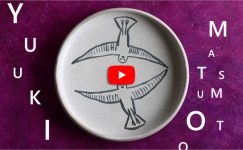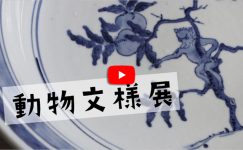




English version of the interview here.
Ceramics Was the Hardest to Understand
Hanada: How did you find your way into the world of ceramics?
Yuki Matsumoto : I initially went to art university because I was interested in crafts, but at the time, I was drawn to furniture and wanted to do woodwork. However, right after entering college, we got to try a bit of everything—ceramics, metalwork, and woodwork. That was when ceramics, something I hadn’t considered at all before, suddenly clicked. I just found it incredibly fascinating.
Hanada: What made it so fascinating?
Yuki Matsumoto : How should I put it… ceramics was the thing I understood the least. With clay, the material constantly changes physically with every step of the process, right? Conceptually, I understood it, but actually doing it left me completely baffled (laughs). I thought clay would feel familiar because of playing in the mud as a kid, but once I tried it, it was an absolute unknown. That initial shock was huge, and that is how my journey with ceramics began.
Hanada: What kind of pieces were you making during your university years?
Yuki Matsumoto : Mostly sculptures. I made things without any specific practical use, and flower vases were about the only functional items I created. After graduating, I wanted to see how studios operated outside of Japan, so I spent six months at a residency in Jingdezhen, China. Even there, I was still mainly focusing on flower vases and sculptural pieces.
Creative Work in Jingdezhen
Hanada: Were you purely focusing on your own creative work during the residency?
Yuki Matsumoto : I worked half the time as a staff member, and then used my free time for my own projects. I was surrounded by people at various stages—some were students preparing to become artists, while others were established professionals who were already selling their work. I lived and worked alongside all kinds of people from all over the world.
Hanada: That sounds incredibly stimulating. The scale of the work in Jingdezhen must have been immense as well.
Yuki Matsumoto : Oh, it was unbelievable. The number of people, the volume of material, the sheer scale of the objects—everything. Some jars were five meters tall. The work was completely divided, with dedicated professionals handling either the wheel or the painting, and there were so many of them. It went far beyond being stimulating; it actually made me want to stop making things for a while. I started thinking, “Does the world really need me to make anything?”
Hanada: It sounds like you were completely overwhelmed.
Yuki Matsumoto : Yes. But when I talked to peers of my generation in broken English, I realized everyone was worrying about the same things, like how they were going to make a living. Realizing that we were all in the same boat is one of the most memorable moments from that incredibly valuable experience.
Hanada: Sharing experiences and pushing each other forward with peers from around the world who share the same vision is wonderful. What was it that eventually turned your focus toward tableware?
Tableware Captures the Essence of the Maker
Yuki Matsumoto : Moving here to Fujino was a turning point. I moved because I felt it would be a great environment for both living and creating, and I found a lot of talented artists actively making great tableware in this area.
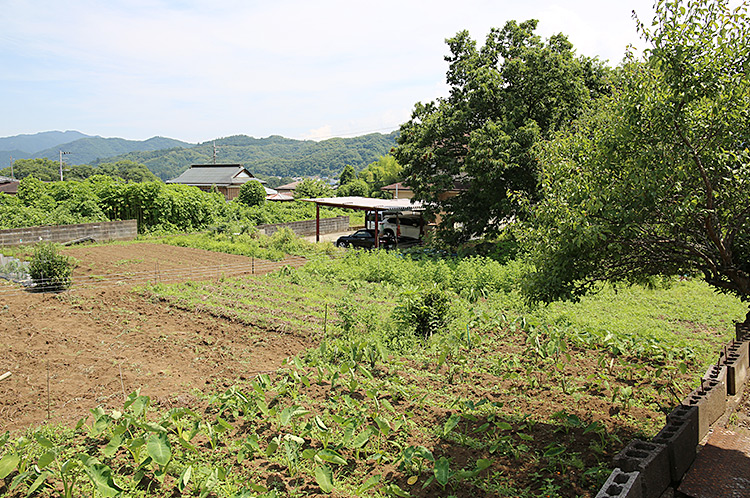
Hanada: There are indeed many creators working here, like Hitoshi Fujizaki in woodwork, and Ryutaro Yamada and Atsunobu Koizumi in ceramics.
Yuki Matsumoto : Interacting with them made me realize how incredible tableware is, because it brings all creative elements together.
Hanada: All creative elements?
Yuki Matsumoto : Well, the basic shapes of tableware are generally predefined—a plate is a plate, a bowl is a bowl. Yet, what comes out of each artist’s hands is entirely different. The maker’s philosophy, aesthetic sense, and even their physicality are all reflected in the work. Unlike purely sculptural work where you have absolute freedom, having a certain degree of functional constraint actually highlights the unique character of the maker. That is what sparked my interest in making tableware, and that brings me to where I am today.
Hanada: Feeling that personal touch is also a huge part of the appeal for the user. Your pieces used to have a rather structured, sharp impression from slab building. But recently…
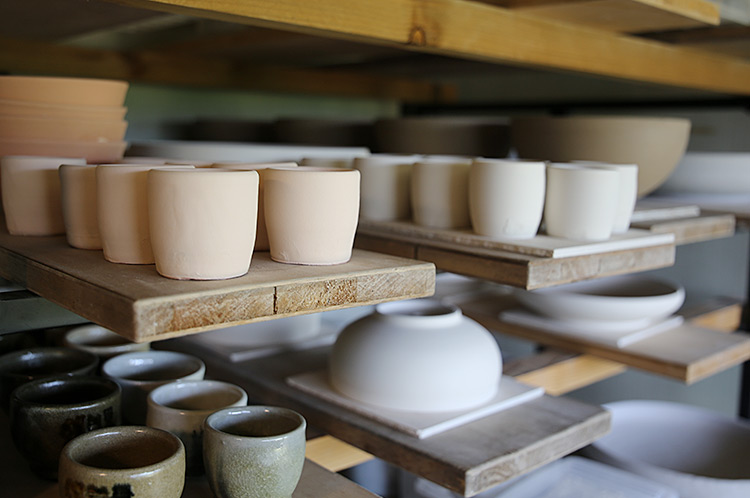
Yuki Matsumoto : I’ve been making more rounded shapes and painting designs on them. I wonder what happened to me (laughs). I still do some slab building, but right now, I mainly work on the wheel.
Hanada: (Laughs) I am very curious about the story behind this shift.
The Act of Painting
Yuki Matsumoto : I’ve always considered myself the type of person who thinks things through before creating. But since I started making tableware, I’ve found myself drawn to more generous, intuitive qualities. For example, working on the wheel feels that way to me. With slab building, you can plan everything out in your head and execute it precisely. On the wheel, however, quite apart from your own thoughts or intentions, the clay just spins and expands on its own (laughs). Of course I control it, but never completely.
Hanada: So elements beyond your own intent come into play.
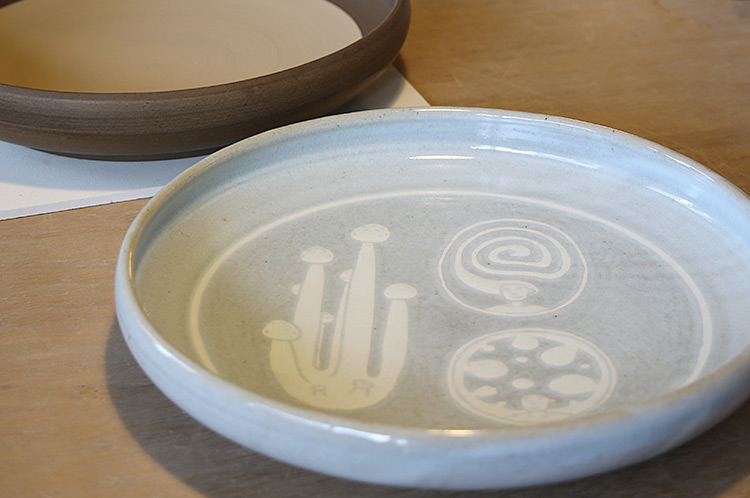
Yuki Matsumoto : Exactly. I wanted to incorporate those elements that bypass premeditated thought, so I try to test out whatever ideas pop into my head without overthinking them. Painting on my pieces was one of those experiments.
Hanada: Had you done much painting before?
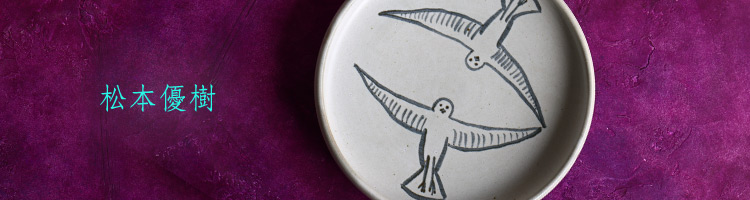
Yuki Matsumoto : No, just basic sketching. That is probably why I was able to approach it with a relatively light heart. Once I actually started, it was incredibly fun. I was amazed by what was coming out of me. Trying out different techniques like sgraffito, sometsuke (underglaze blue), and icchin (slip trailing) all started from a simple “that looks interesting, let’s try it” mindset. Because I intentionally start without fixing any rules, the process can often be quite inefficient.
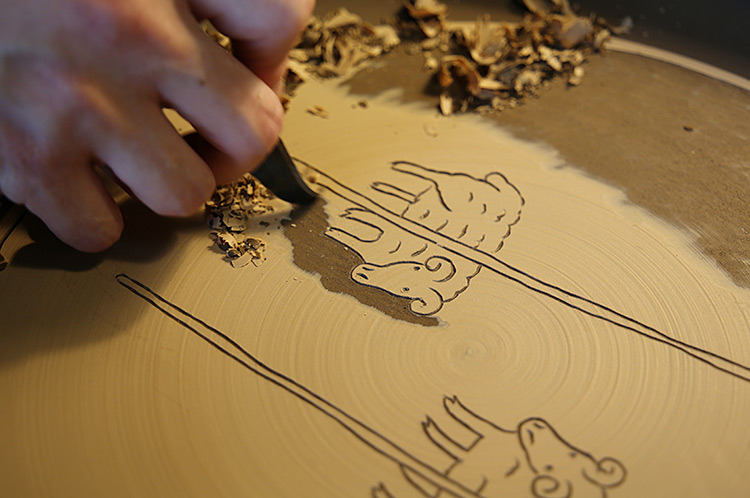
Hanada: Your motifs are very unique too—people with afros, someone riding a scooter, centaurs… Where do you get these ideas?
Yuki Matsumoto : I think they come from things around me, or whatever catches my sense of humor at the time. I am also influenced by folk art. I’ve always loved traditional Japanese narrative scrolls, Korean folk paintings, Russian lubok prints, and French animal fables. Even when folk art deals with themes rooted in faith or deep prayers, there is often a humorous, playful quality to it. It’s still delightful to look at today, and it really lifts your spirits. I want to make things like that.
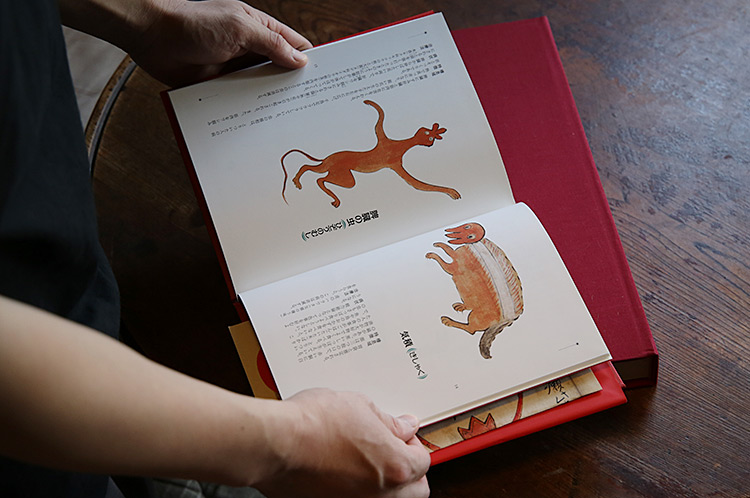
Hanada: Tableware that brings a smile to your face every time you use it is wonderful. You always seem to be tackling something new. What would you like to challenge yourself with next?
Balancing Tradition and Intuition
Yuki Matsumoto : Let’s see… the patterns on tableware are highly calculated, and they have become incredibly refined over a long history. Those traditional, structured elements are closely tied to how user-friendly a piece is. While keeping those aspects in mind, I also want to cherish the unique atmosphere that comes from creating intuitively. I hope to gradually strike a beautiful balance between the two. Also, I am currently working with porcelain for the first time, hoping to showcase it at our upcoming three-person exhibition. But the feel of making it is completely different from regular clay, and nothing is going well, so it might turn out to be a total disaster once fired (laughs). Still, I have plenty of ideas I want to try regarding colors and new items.
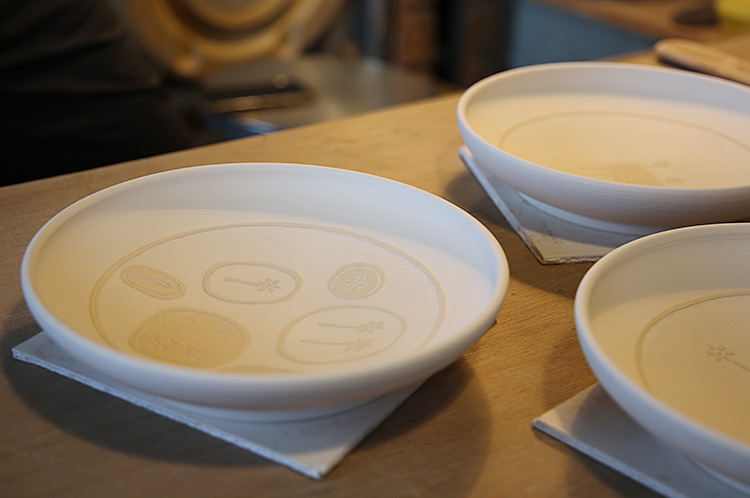
Hanada: So you might change direction completely based on another new idea.
Yuki Matsumoto : I am always looking to break away from what I’ve done before (laughs).
Hanada: We are really looking forward to the exhibition. Thank you very much.
≪ END ≫
陶芸が一番、分らなかった
花田:松本さんはどのような経緯で陶芸の道に進んだのですか。(以下花田-)
松本:工芸の世界に興味を持ったことがきっかけで美大に進んだんですが、当時は家具に興味があって木工がやりたいと思っていたんです。
でも入学してすぐ陶芸、金工、木工と一通り体験してみたら、それまで全然考えてなかった陶芸に「面白い!」となって。
-:面白いというのは?
松本:何というか…陶芸が一番分からなくて。
陶芸って、土が工程毎に物質としてどんどん変化していくじゃないですか。
理屈としては分かる、でもやっぱり訳が分からんぞと(笑)。
土ってどろんこ遊びとかで馴染みのある素材だと思っていたけれども、やってみたら全くもって未知で。
その衝撃が大きくて、陶芸を選んだのが始まりです。
-:在学中はどんなものを作られていたのですか。
松本:主にオブジェです。
明確な用途のないもの、用途があるものは花器くらいでした。
卒業した後、日本以外の制作の現場も見てみたいと思って、中国の景徳鎮にあるレジデンスで半年間お世話になったのですが、そこでも主に花器やオブジェを作っていました。
景徳鎮での制作活動
-:レジデンスでは、制作活動をされていたのですか?
松本:半分スタッフとして働いて、空いている時間に自分の制作活動をさせてもらっていました。
作家になる前段階の子だったり、もう売れ始めている先輩だったり。
世界中から来た色んな人たちと寝食を共にしてものを作って過ごしました。
-:それはたくさんの刺激がありそうですね。
景徳鎮での仕事は規模感もすごそうです。
松本:いや、それはもうすごかったですよ。人も物量も、モノの大きさも何もかも。壺が5mとか…。
ろくろ、絵付けと完全に分業で、それぞれがプロフェッショナルで。それも半端ない人数ですからね。
刺激を受けるとか通り越して、しばらく作るのが嫌になりました。「自分が作らなくっていいんじゃないか」って。
-:圧倒されてしまいますね。
松本:でも、同世代の子らとお互い片言の英語で話すと、みんな自分のように「これからどうやって生きていこう」って悩んでいて。ああ、一緒なんだなって。
そう思えたのは、たくさんさせてもらった貴重な経験の中でも特に印象に残っています。
-:同じ方向を向いて頑張っている世界中の同世代と、色んな事を共有して切磋琢磨できるって素晴らしい経験ですね。そこからうつわ作りへと向かったきっかけは何だったのでしょうか?
うつわには「その人らしさ」が詰まってる
松本:ここ(藤野)に引っ越してきたことが大きかったです。
暮らすにも制作をするにも良いと感じて藤野に越してきたんですが、藤野界隈ではしっかりうつわを作っている作家さんがたくさん活躍していて。
-:木工の藤崎均さん、陶磁器では山田隆太郎さんや小泉敦信さん…と、たくさんの方が活動されていますね。
松本:そういう方々と接しているうちに、うつわって全ての要素が詰まっていてすごいと思うようになって。
-:全ての要素、ですか。
松本:皿はこう、鉢はこうってうつわの形は大体決まっているのに、作家によって出来上がるものは全然違うじゃないですか。
作り手の思想や美的感覚、あとは身体性とかもあると思うんですけど、そういう「その人らしさの全て」が、オブジェのように完全な自由演技ではなく、ある程度の機能的な縛りがあることでより際立つのかなって。
それでうつわを作るということに興味が湧いて、今に至るという感じです。
-:その人らしさを感じることって、使う側にとっても大きな魅力です。
松本さんのうつわは、以前は板づくりの割とかっちりした印象でした。でも最近は…
松本:丸みのあるうつわに、絵を描いたりしてますね。どうしちゃったんでしょうか(笑)。
板づくりのものも作りますが、今はろくろが主です。
-:(笑)。この変化の経緯も気になります。
絵を描くこと
松本:自分はもともと考えてものを作るタイプだと思っているんですけど、うつわを作り始めてもっと大らかで、感覚的なものに魅力を感じるようになりました。
例えば、僕にとってはろくろもそうです。
板づくりって頭で考えて決め込んでつくることができるけど、ろくろは自分の考えや感覚とは別に、土が回りながら勝手に広がっていくじゃないですか(笑)。
勿論コントロールするんですけど、完全にはできないというか。
-:自分の意志とは違うものも入ってくるという。
松本:はい。そういう頭で考えたものとは違う部分を取り入れたくて、思い付いたことはあれこれ考えずに試すようにしています。うつわに絵を描き始めたのもそのひとつでした。
-:以前から絵は描いていたのですか?
松本:いえ、デッサンくらいです。
だからこそある意味軽い気持ちでできたんだと思います。
それに実際描いてみたらすごく楽しくて。自分の中からこんなもんが出てくるんだ!とか。
掻き落とし、染付、イッチンといろいろやるのも「面白そう、やってみよう」っていうところからで。
敢えて何も決めずに取り組み始めるので、非効率的なことも多いですけど。
-:モチーフもすごく独特ですよね。
アフロヘア、スクーターに乗る人、ケンタウルス…。一体どこから着想を得ているのですか?
松本:自分の身の回りにあるものや、その時面白いと感じたものだと思います。
あとは民画の影響とか…。
日本の絵巻物や朝鮮民画やロシアのルボーク、フランスの動物寓意譚とか昔から大好きで。
民画って、信仰に根差したものや強い願いが込められているような画題でも、滑稽だったりふざけている感じがあったりして今見ても楽しいし、すごく元気をもらえるんですよね。
自分もそういうものが作りたいなと。
-:使う度に笑顔になれるうつわ、いいですね。
松本さんはいつも何かしら新しいことに取り組まれている印象がありますが、これから挑戦したいことって何でしょうか?
様式と感覚のバランス
松本:そうですね…。うつわの絵柄ってすごく考えられていて、長い歴史の中でどんどん洗練されていくじゃないですか。
様式的な要素って使いやすさにも繋がっていると思うので、そういう部分も意識しながら、且つ感覚で作ることで生まれる雰囲気も大事にして…。
少しずつそのバランスを取っていけたらと思っています。
それから今、三人展でも見てもらえたらと新しく磁器に取り組んでいます。
でも作る感覚が陶土とは何もかも違いすぎて全然うまくいかないんで、焼いたらこれダメかもしれないです(笑)。
色合いやアイテムにも「これやってみよう」という案はいっぱいありますよ。
-:また新たなアイデアから大きく舵を切ることがあるかもしれないってことですね。
松本:常に、今までのものをぶっ壊したいとは思っていますので(笑)。
-:三人展、楽しみにしています。よろしくお願いいたします。
▼鈴木亜以×鈴木潤吾×松本優樹 三人展のご案内はこちらから ▼
関連記事はこちら