








English version of the interview here.
Responsibility and Joy
Hanada: Your family owned a pottery kiln. Did that influence your decision to choose this path?
Kosei Kobayashi : Initially, the driving force was a sense of responsibility—the feeling that, as the eldest son, I had to take over the family business. However, the reason I continue doing it today is entirely different. When I was a child, I drew Pokémon characters on some leftover biscuit-fired small plates we had at home and gave them to my friends. They were absolutely delighted. That simple joy of making people happy with something I created remains my core support even now.
Hanada: So you grew up watching your father work and seeing firsthand what it takes to run a pottery shop.
Kosei Kobayashi : The workshop was my playground; it was just a natural part of daily life. Because my siblings and I were always running around, we would be handed clay bodies and told, “Here, play with these and draw some pictures.” While I have no personal memory of it, I was told that I once stuffed stones into the kiln’s draft damper during a reduction firing, completely ruining the entire batch. According to my parents, I was made to sit on my heels and received a massive scolding…
Hanada: Oh dear, that sounds like it was a major disaster! (Laughs)
Meeting Mr. Hata
Hanada: Did you naturally expect your career path to lead to ceramics?
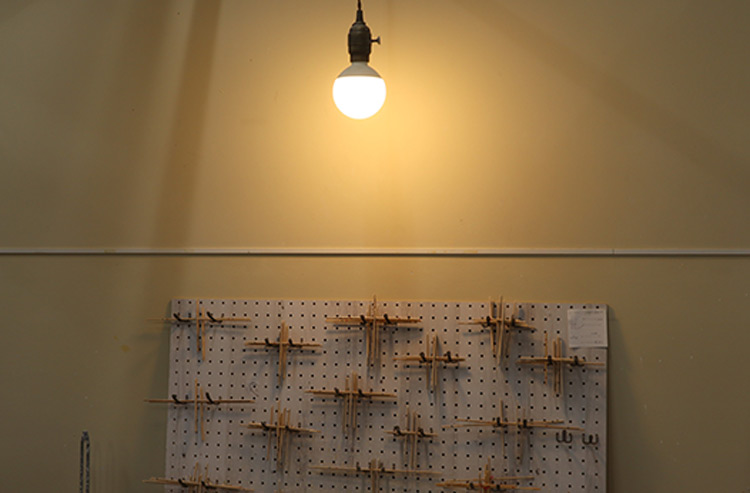
Kosei Kobayashi : When I entered high school in Arita, I actually chose the design department rather than the ceramics department. At the time, I was interested in interior design, particularly spatial design using lighting. It wasn’t until university that I tried the pottery wheel for the first time, since my family’s workshop specialized exclusively in hand-painting. Rather than thinking “I love this,” I felt “I might have a knack for this.” I suppose that was the turning point. However, I didn’t plan on returning home immediately, and through an introduction from an acquaintance, I discovered Kutani Seiyo. When I heard they handle everything from shaping to painting in-house, I felt anxious about joining straight away. Fortunately, the late Mr. Hata, who ran Kutani Seiyo, introduced me to a training institute. While studying desperately there for two years, I also kept popping into Seiyo, even though I didn’t really have any specific business there.
Hanada: Right, you wouldn’t want them to forget about you while you were away at the institute.
Kosei Kobayashi : Exactly. It would have been troublesome if he had a change of heart! (Laughs) I went to show him my work and have him teach me throwing techniques. Mr. Hata would throw right in front of me, demonstrating, “This is how you do it.”
Hanada: That sounds like an incredibly precious experience.
Kosei Kobayashi : It truly was. Later on, everyone told me, “It’s so rare for Mr. Hata to throw on the wheel himself.”
Hanada: What was his technique like?
Kosei Kobayashi : At the time, I had nothing to compare it to, so I just thought, “Wow, he’s good.” Looking back now, though, it was… how should I put it… completely effortless. The form just emerged naturally. I don’t know how to describe that feeling, but the shape would just materialize in an instant.
An Immediate Order for 1,000 Pieces
Hanada: After spending two years at the training institute, you finally officially joined Seiyo…
Kosei Kobayashi : Actually, he turned me down once. Even though I had visited so many times! He told me, “You’re too serious, so it won’t work.” He was someone who believed creators should enjoy life more, so I understood what he meant, but still, my immediate reaction was, “Wait, seriously?!” (Laughs) I waited about a month and went back to tell him, “This is truly the only place for me.” He just replied, “Alright, I get it. Come on in then.”
Hanada: (Laughs) I’m glad it worked out. How were your first days?
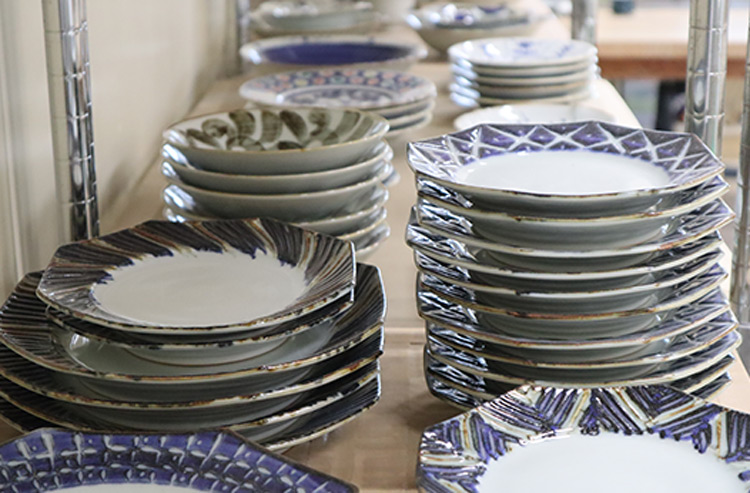
Kosei Kobayashi : Since my time at the training institute, Mr. Hata had always told me, “Make sure you master the pottery wheel.” I practiced throwing more than anyone else, and I think I stood out completely at the institute. I could actually throw reasonably well. Perhaps because of that, on my second day at Seiyo, I was told, “Go ahead and throw 1,000 of these.” They were small plates, about 13.5 centimeters in diameter.
Hanada: Right from the very start…
Kosei Kobayashi : I had already heard that Seiyo was a place that produced high volumes, so I assumed that was standard practice. But when I mentioned it to others later, they were shocked and said, “He made you do that?”
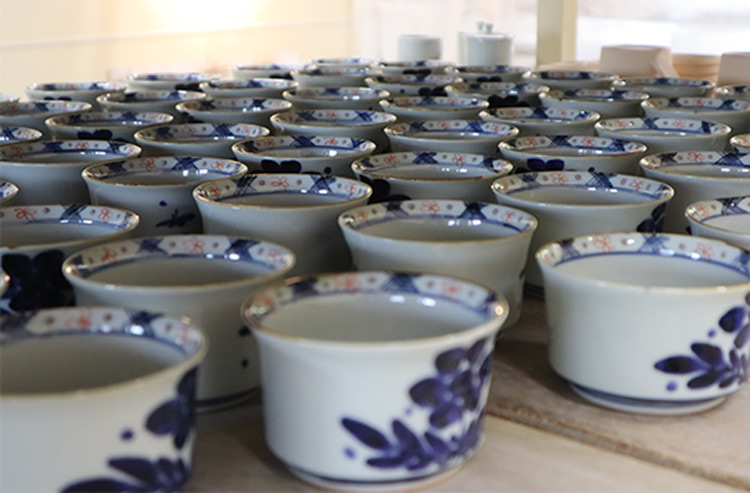
Hanada: It’s very typical of the Seiyo atmosphere that the people around you didn’t even notice at first. (Laughs)
Kosei Kobayashi : They apparently noticed I was throwing an awful lot, but they had no idea it was 1,000 plates! (Laughs) Well, everyone was focused on their own busy schedules.
Learning from Senior Potters
Hanada: It must have been excellent training for your wheel skills.
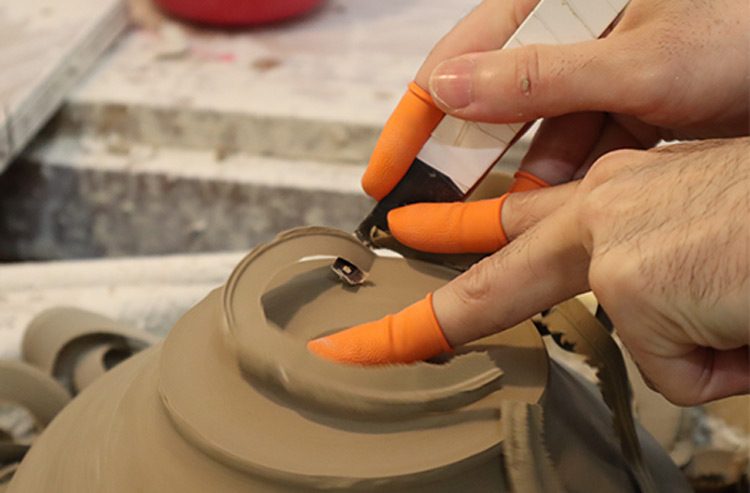
Kosei Kobayashi : I had been confident at the institute, but at Seiyo, the two most skilled potters were positioned right next to me, and I keenly felt the gap between myself and the professionals working on-site. The speed, accuracy, and physical stamina were on a completely different level. While I was desperately struggling to shape each piece, they threw effortlessly, filling up their drying carts one after another. I closely observed their movements, touched their actual pieces to see exactly how much thickness they left in the clay, and even broke defective pieces to examine their cross-sections.
Hanada: Was there a significant difference compared to your own work?
Kosei Kobayashi : In appearance, they didn’t look that different. The real distinction lay in how the clay was compressed. Because they compressed the clay thoroughly while throwing on the wheel, the pieces fired beautifully without warping.
Hanada: So you improved by closely following the examples set by your seniors.
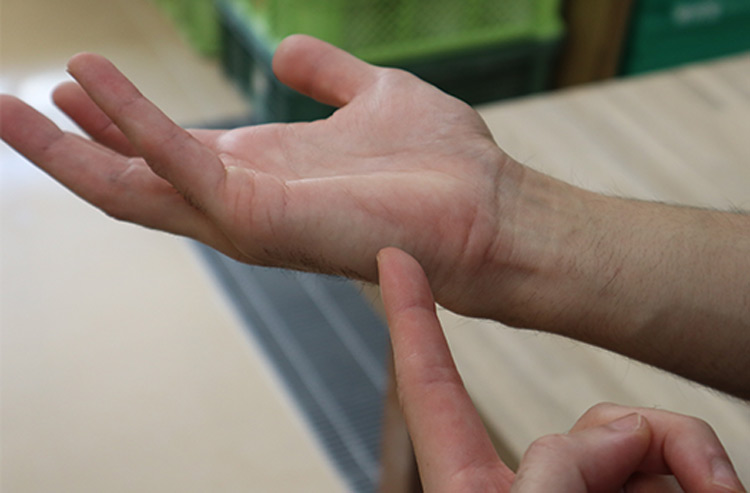
Kosei Kobayashi : I copied everything they did. Potters at Seiyo don’t use wooden ribs, but they used their hands like a tool to firmly compress the clay. The amount of water mattered too. Using too much water makes the surface slick and easier to throw, but it reduces friction, which prevents the clay from compressing properly. So, the key is to throw without using any unnecessary water.
Hanada: After throwing 1,000 plates at the beginning, any subsequent challenges must have felt much more manageable.
Kosei Kobayashi : We were often told, “If you can’t throw around 100 pieces a day, you can’t do this as a job.” However, I believe the quality of the final piece is entirely different when someone capable of throwing 200 a day makes 100, compared to someone who can only manage 100 making 100. I think that initial 1,000-piece assignment was designed to give me a firsthand understanding of that difference.
Hanada: I imagine Mr. Hata offered you various other pieces of advice as well.
Kosei Kobayashi : The words that resonate with me most today are: “Always visualize how you want to use the plate yourself, and what kind of piece would be best when eating that specific dish. Never create something aimlessly.” He also frequently said, “Fall in love with something.” It could be an era, a production region, or a particular potter—it didn’t matter what, just find something to love deeply.
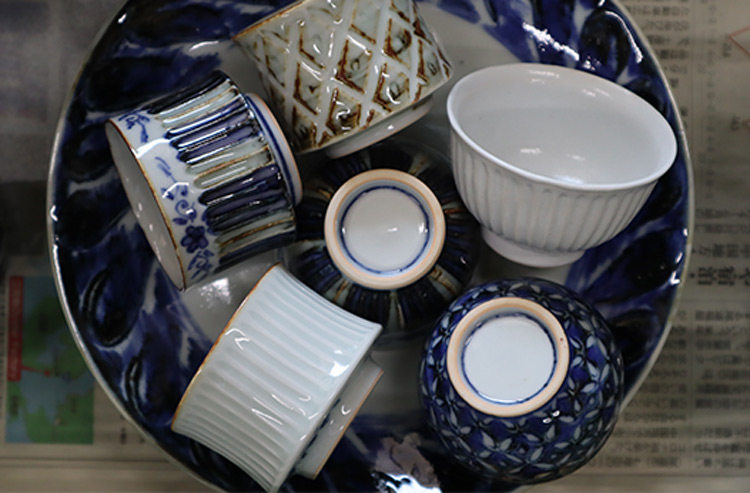
Hanada: And after that, you became independent.
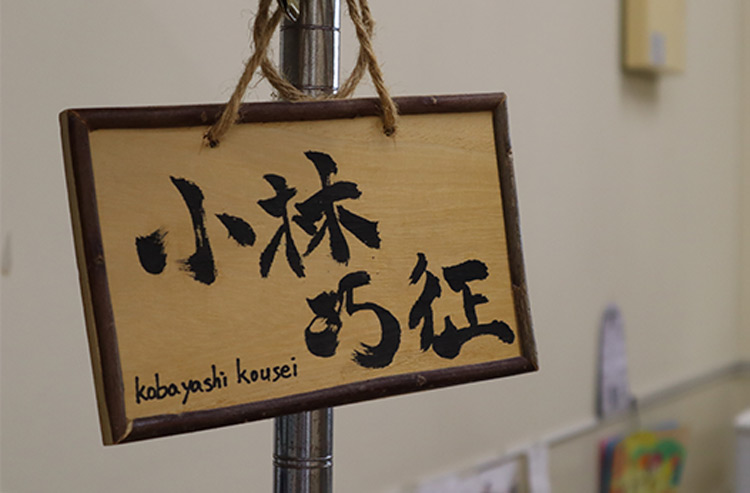
Kosei Kobayashi : After various experiences, I decided to establish myself as an independent artist here in Ishikawa Prefecture.
What Matters Most
Hanada: What do you value most when creating tableware?
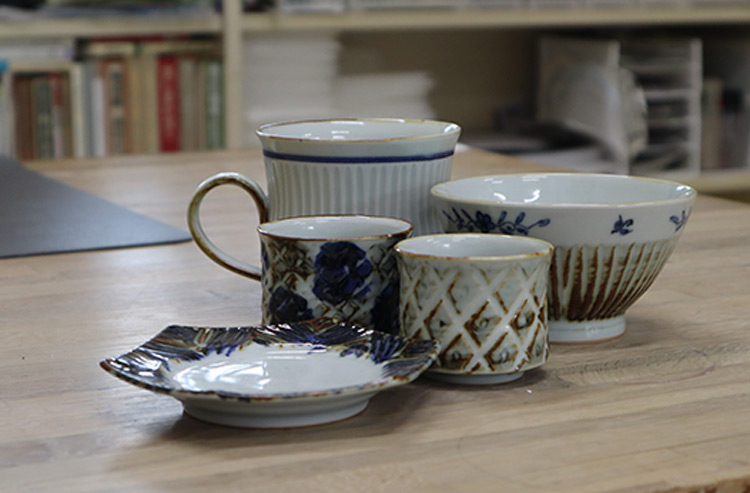
Kosei Kobayashi : I am always mindful that tableware is not complete when it is sitting by itself; it is only truly completed once food is served on it. I also try not to pour too much of my own ego into the pieces. If you overcomplicate things with too many thoughts, they can become difficult to use. I feel that if the tableware I make serves its purpose on the user’s dining table, my presence is no longer needed there. It really doesn’t matter who made it.
Hanada: How do your new designs come to life?
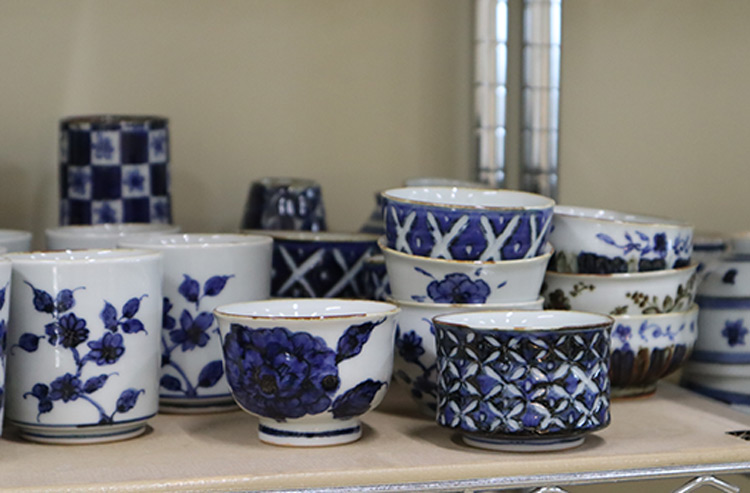
Kosei Kobayashi : I just bring a shape into reality first, and then I try using it myself. Using it always brings unexpected discoveries and sparks new ideas. Lately, I’ve been focusing closely on shinogi fluted patterns.
Passing on the Baton of Gratitude
Hanada: Is there anything specific you would like to work on in the future?
Kosei Kobayashi : The environment at Seiyo was something I was incredibly grateful for, and I would love to create a similar space myself. At the training institute, I saw talented people give up on ceramics simply because they lacked a supportive environment. Fortunately, my family’s property has extra space, so my long-term, eventual goal is to work with people like that to build a creative environment akin to Seiyo.
Hanada: Creating a place like that requires the right equipment and facilities, but experiencing that atmosphere firsthand must also be incredibly important.
Kosei Kobayashi : Absolutely. It is about what you have seen with your own eyes, heard with your own ears, and experienced with your own body. I don’t think there is any value in just copying the surface details of an environment like that. Seiyo possessed a strong, grounded creative philosophy, which is precisely why so many of its alumni are so successful today.
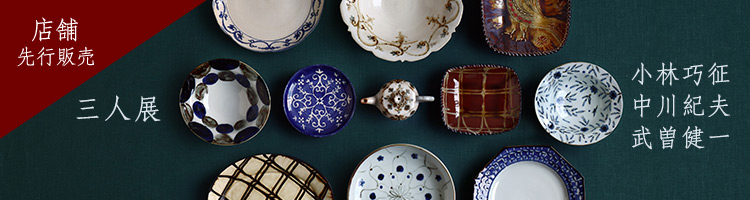
Hanada: That is a wonderful vision for the future. We are looking forward to the upcoming exhibition.
Kosei Kobayashi : Thank you. I would be delighted if people hold the pieces in their hands while picturing their own dining tables.
≪ END ≫責任感と喜び
花田:小林さんはご実家が窯元さんでした。その影響で今のお仕事を選ばれたのでしょうか。(以下花田-)
小林:きっかけは「長男として継がねば」という責任感でした。
ただ続けている理由は別です。
子どもの頃、家にあった素焼きの余りの小皿にポケモンを描いて友達にあげたら、とても喜ばれたんです。
自分の作ったもので人が喜ぶという、そのシンプルな嬉しさが今も支えになっています。
-:ご実家で、焼き物屋さんの仕事ぶりをお父さんの姿に見ていたわけです。
小林:工場(こうば)は遊び場でしたし、生活の一部になっていました。
僕らがチョロチョロするから、素地を渡されて「これに絵を描いて遊んでいなさい」みたいな。
記憶にないのですが、窯の還元をかけるドラフトという部分に石を詰めて、ひと窯分を全部ダメにしたこともあったらしいです。
親によると、正座させられて大分怒られていたらしいですけど…。
-: それは、大変でした(笑)。
秦さんとの出会い
-:自然と進路は焼き物に考えられたのですか。
小林:進学した有田の高校では、窯業科ではなくデザイン科を選びました。
当時はインテリア、特に照明を使った空間デザインに興味がありました。
で、大学で初めて、ロクロに触れたんです。
実家は絵付け専門でしたので。
その時「好き」というより「向いているかも」と感じました。
そのあたり、ですかね。
ただ、すぐ戻る気はなく、ある方の紹介もあって九谷青窯に出会いました。
成形から絵付けまで一貫してやると聞き、いきなり青窯に入社するのは不安でしたが、九谷青窯の秦さん(故人、九谷青窯主宰)が研修所を紹介してくれました。
研修所で2年間、死に物狂いで学びつつ、青窯にも顔を出していました。
別に用事があったわけじゃないんですけど。
-:研修所に行っている間に、忘れられても困りますものね。
小林:そうなんです。
気持ち変わられても困りますし(笑)。
品物を見てもらったり、ろくろを教えてもらったりしました。
秦さんが、目の前でひいてくれて「こうやってひくんだよ」って。
-:それは貴重ですね。
小林:はい。
あとから、皆に「珍しいよ、秦さんがロクロひくのって」って結構言われました。
-:どの様な感じでしたか。
小林:当時はまだ比較対象がなかったので「うまいな」くらいでしたけど、今思うと、なんて言うか…、全く力の入ってない、自然に形が出来上がるというか。
なんですかね、あの感じ。
ひゅっと出来上がるんですよね、形が。
いきなり1000枚
-:研修所で2年過ごされ、晴れて青窯に・・・。
小林:いや1回、断られるんですよ。
あれだけ行っていたのに…。
「お前は真面目すぎるからダメだ」って…。
「もっと遊べ」ということを言う人だったから、分かるんですけどね。
「いやいやいやいや…」って、思いました(笑)。
そのあと、一カ月位空けて「やっぱりここしかないんです」って行ったら、「うん、わかった。
じゃあ、来いよ」って感じで。
-:(笑)。よかったですね。最初はいかがでしたか。
小林:研修所にいる時から、秦さんに「ロクロだけはしっかり、やっておけ」と言われていたので、誰よりもろくろは回して、研修所では圧倒的だったと思います。
実際そこそこひけていたんです。
だからなのか2日目に「これ、1000枚ひいておいて」って言われて。
4.5寸くらいの皿でした。
-:いきなり・・・。
小林:元々、青窯は数を作るところだと聞いていたので「そんなものかな」と思っていたのですが、後から皆にその話をしたら、「そんなこと、やっていたの」って…。
-:周りが気づいていないのも青窯っぽくて、いいですね(笑)。
小林:「めっちゃ、ひいてんな」という感じはあったらしいのですが「1000枚もやっていたんだ」みたいな(笑)。
まあ、みんなそれぞれ忙しいですから。
先輩たちのロクロ
-:ロクロの鍛練になったのですね。
小林:研修所では自信がありましたが、青窯で一番ロクロが上手な二人が両隣で、現場で働く方々との差を痛感しました。
スピード、正確さ、体力、すべてが違い、僕は必死で形にしているのに、彼らは軽くひいて次々と台車を埋めていきます。
彼らの仕事を観察し、実際に器を触って、どこをどれだけ残しているのか見てみたり、不良品を割って断面を確認したりしていました。
-:ご自身のものとの違いは大きかったですか。
小林:見た目は、そこまで変わりません。
違いは、土の締め方なんですよね。
ろくろを引くときに、しっかり締めているから、焼いた時に綺麗に上がるんです。
-:先輩に倣いつつ、上達されていかれたのですね。
小林:真似しました。
青窯はコテを使わないんですけど、ここをコテ代わりに使って土をギューっと締めているんですよね。
あと水の量。
量が多いと表面が滑ってひきやすい反面、摩擦が減るので、締まりが悪くなります。
だから、余計な水を使わずにひくというか。
-:最初に1000枚ひいたら、のちのハードルは下がりますね。
小林:「1日100枚くらいはひけないと仕事にならない」とよく言われていたのですが、1日200枚ひける人が100枚ひくのと、1日100枚ひける人が100枚ひくのでは、上がりが違うと思います。
その部分を体験させるための1000枚だったのかなとも思います。
-:他にも秦さんからも色々声を掛けられたと思います。
小林:「自分がこの皿をどう使いたいか、この料理を食べる時にどういう皿がいいのかイメージしながら物を作れよ、漠然と物を作るなよ」という言葉が今1番残っています。
それと、秦さんよく言っていたのが「惚れ込め」でした。
時代でもいいし、産地でもいいし、陶工でもいい。
何でもいいんですけど、何かに惚れ込めって。
-:そして、独立です。
小林:色々経て、この石川県で作家としてやっていくことにしました。
大事なこと
-:器を作る上で、大事にされていることは何ですか。
小林:食器のままで、食器として完成させず、料理を盛って、初めて完成するよう意識しています。
それと、自分の思いを詰め込みすぎないようにしています。
入れ込み過ぎると使いづらくなるかなって。
僕は自分が作った食器が、選んでくれた人の食卓で役割を果たしていれば、そこに僕の存在は必要ない、誰が作ったかは、どうでもいいなと思っています。
-:新作などはどのように生まれてくるのでしょうか。
小林:とにかく1回形にしてみて、まず自分で使ってみる。
使ってみると、意外な発見もありますし、アイデアも生まれてきます。
最近は、しのぎに凝っています。
感謝のバトン
-:これから取り組んでいきたいことは、ありますか。
小林:青窯の環境は自分にとって本当にありがたいものでした。
そのような場を自分でも作りたいと思っています。
研修所では優れた人が環境に恵まれずに焼き物をやめていく姿も見てきました。
幸い実家にスペースがあるので、そういった人たちと青窯のような場をつくることを、漠然とですが、目標にしています。
-:同様の場を作るとなると、設備環境も求められますが、あの場を体感していることも大切ではないでしょうか。
小林:自分の目で見て、耳で聞いて、自分の身体で経験したものですよね。
ああいう環境って、表面的なことをなぞっても、意味ないと思います。
青窯は精神的な部分をしっかり持っていたからこそ、青窯出身の人たちが、たくさん活躍されているんだろうなと思います。
-:夢が広がりますね。展示会、よろしくお願いします。
小林:食卓をイメージしながら手に取っていただけたら、嬉しいです。
▼小林巧征×中川紀夫×武曽健一 三人展のご案内はこちらから ▼
関連記事はこちら