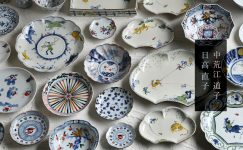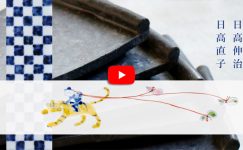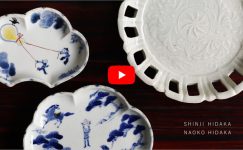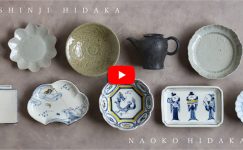





English version of the interview here.
Before I Knew It, I Was Following Along…
Hanada: Could you tell us how you came to pursue a career in making tableware?
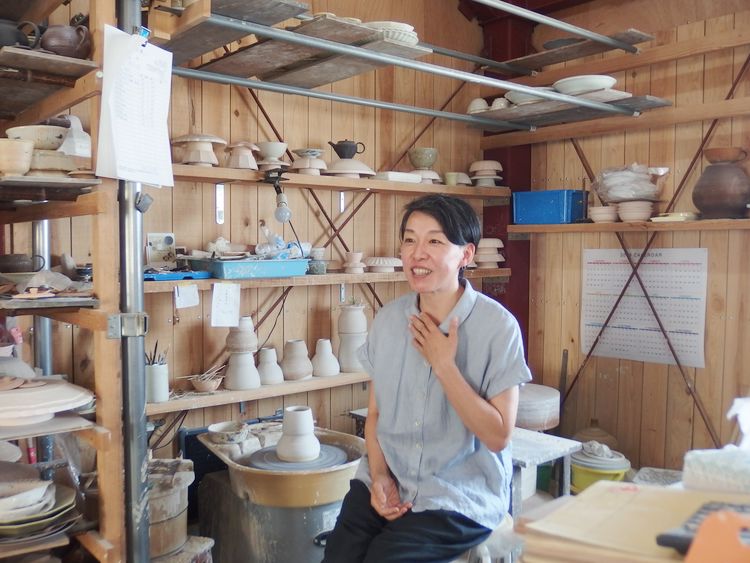
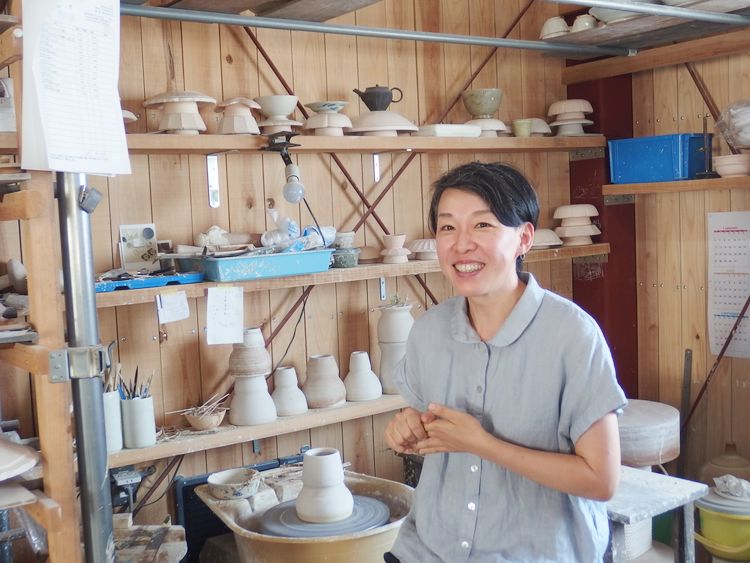
Naoko Hidaka : I worked as a knitwear designer in the apparel industry for twelve years. The beginning of my journey into ceramics was when I accompanied my husband, who had decided to become a ceramic artist, and enrolled in a ceramics vocational school in Seto with him.
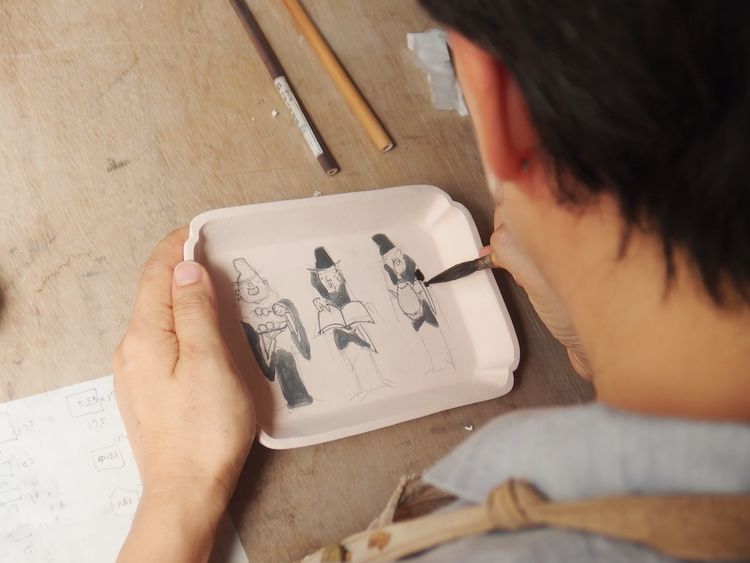
After graduating, I worked at a pottery workshop painting decorative designs, and before long I found myself making my own pieces on weekends as well. I would add small illustrations to the side dishes my husband made, for example.
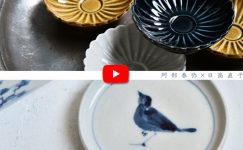
One day, at a pottery fair, I casually placed a small bird plate of mine next to his work.
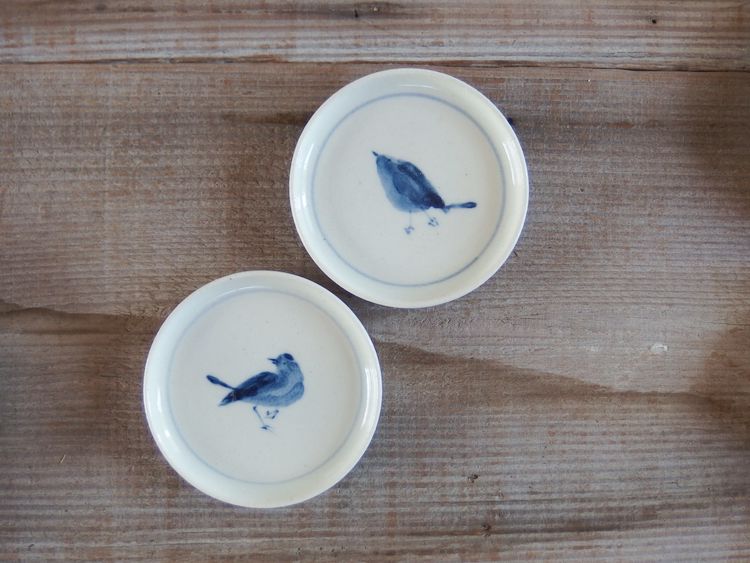
Naoko Hidaka : Then a man passing by was delighted by the bird illustration. I was surprised by how happy it made me to see someone enjoy a drawing I had made. In the end, I may have been even happier than he was (laughs).
Hanada: You must have always enjoyed making things.
Naoko Hidaka : I think it also had something to do with growing up around antiques. My mother loved antiques, and my uncle worked as an antique dealer. My uncle would take me to antique markets and explain things like, “See how the indigo color changes completely from this period onward? This is when synthetic gosu cobalt pigment started to appear.” I loved listening to those stories. Influenced by that, I was the kind of twenty-year-old who got excited about buying serving bowls for 1,000 or 2,000 yen (laughs).
Shonzui vs. Middle-Aged Men
Hanada: Was your current style what you were making from the beginning?
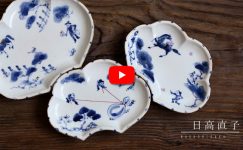
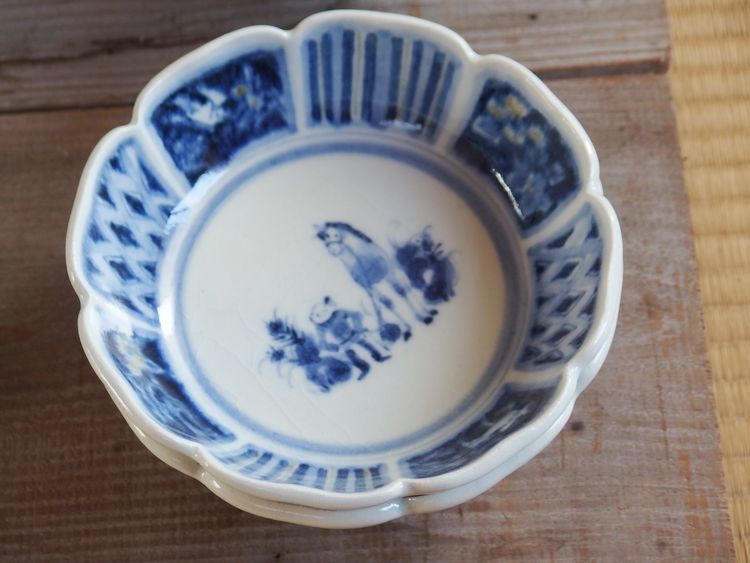
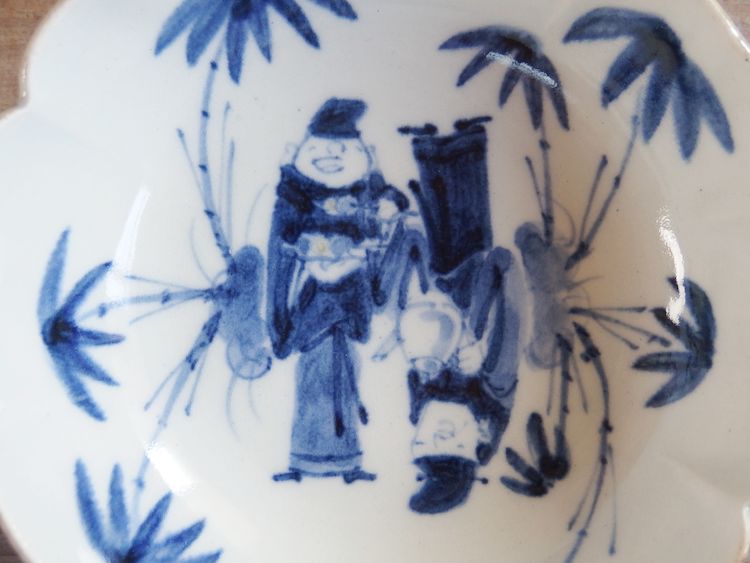
Naoko Hidaka : At first, I mainly copied classical wares that I loved, such as Ko-Sometsuke and Shonzui. But when I reproduced them exactly, I found that I couldn’t express what I personally felt about those works or what I loved most about them.
Copying them was certainly valuable as technical training, but unless something comes from within yourself, it never truly becomes your own work.
Hanada: Looking at your work today, it isn’t direct reproduction, but I can still sense the spirit of Ko-Sometsuke.
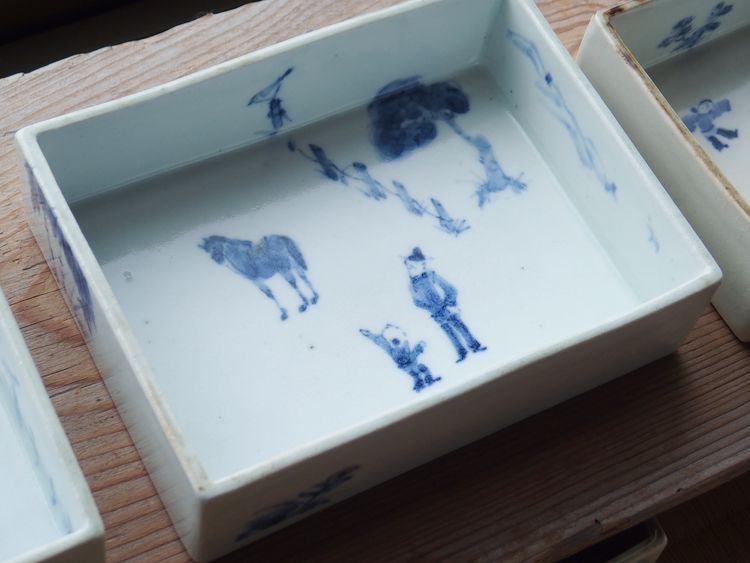
Even in something like the expressions on the animals’ faces, there’s a certain complexity that defies easy interpretation.
Naoko Hidaka : That’s definitely something I want to convey.
Hanada: At times I also sense elements of Annam ware, and sometimes the atmosphere of Ko-Imari. The qualities you love in historic ceramics seem to emerge in transformed ways through your work.
Naoko Hidaka : That may be true. And while I was painting all sorts of things, people started reacting to my drunken middle-aged-man motifs by saying, “They’re cute,” “They’re fun,” or “What is this?!”
Hanada: That was the moment when people shared your own enjoyment of those drunken men.
Naoko Hidaka : I suppose that’s what suits me better.
Hanada: By “that,” do you mean the middle-aged men? Middle-aged men over Shonzui… (laughs).
Naoko Hidaka : Yes (laughs).
It’s Not That I Only Draw Middle-Aged Men…
Hanada: How did you arrive at the middle-aged-man motif?
Naoko Hidaka : My father was the eldest of six siblings, and every New Year’s holiday the entire extended family would gather together. Everyone drank, got thoroughly tipsy, sang whatever they wanted, fell asleep, woke up whenever they pleased… As a child, I watched it all and thought, “That looks like so much fun.”
Hanada: So you have a fondness for middle-aged men.
Naoko Hidaka : My uncles on my father’s side adored me—perhaps because I was their first niece. They really doted on me… Maybe that’s why I have such a positive image of them.
Hanada: Not old men, not young men… middle-aged men.
Naoko Hidaka : They’re self-centered, straightforward about enjoying themselves, and it’s hard to tell whether they’re relaxed or not. They say whatever they want without much hesitation… That’s my own personal image of middle-aged men.
Hanada: You seem to feel an affection for those qualities.
Naoko Hidaka : Well, it’s not as if I only draw middle-aged men (laughs).
Hanada: Yet somehow it feels right.
Naoko Hidaka : I wonder why. Even I don’t really know (laughs).
Presence and Space
Hanada: Can you put into words the kind of tableware you want to make?
Naoko Hidaka : I hope to make pieces that allow people to form an emotional connection with them while also enhancing the food they hold.
Hanada: An emotional connection…
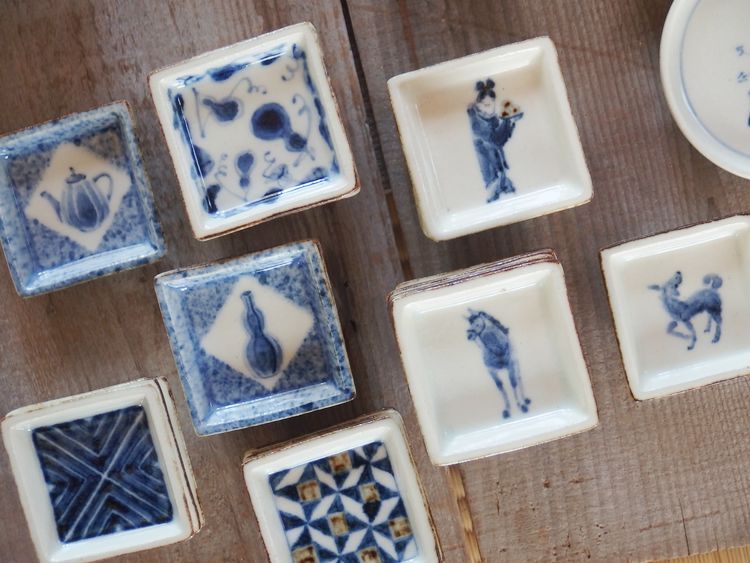
Naoko Hidaka : For example, suppose I’m depicting an animal. Rather than simply drawing the animal itself well, I always hope to capture the feeling that the animal is there—the sense of its presence. That’s where the bird dishes come from as well. It doesn’t matter what kind of bird people think it is. Though if anything, it’s more likely a small bird than a large one (laughs).
It’s the atmosphere of, “This is what it feels like when a bird is there.” The same goes for dogs or horses. Or the atmosphere of a middle-aged man sleeping contentedly… (laughs).
Even with sake bottles, it’s not the bottle itself that I want to depict. I hope something emerges softly as a whole—something you can almost sense or smell. The sake bottle is simply a means of conveying that feeling.
Hanada: That’s a major part of what makes people fall in love with pottery, isn’t it? It’s something we naturally empathize with.
Perhaps it’s the feeling that the maker and the user are breathing the same air through the piece.
Naoko Hidaka : I think that’s often how I come to love things as well. That said, if I focus too much on that aspect alone, I feel I might end up going in a strange direction (laughs), so I try not to forget that these are ultimately pieces for serving food. That’s why I always try to leave room for the food itself.
On Glazes and Color Tones
Hanada: The character of your glazes and the tones of your gosu cobalt pigment fit beautifully with what you’re trying to achieve.
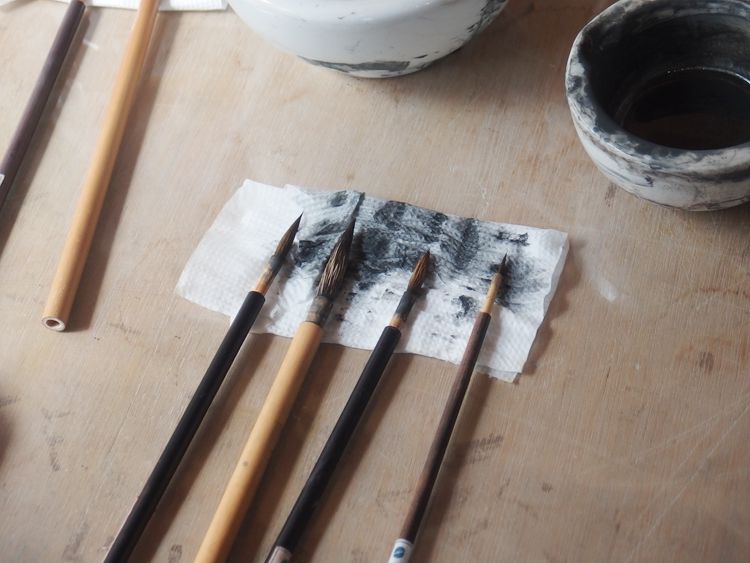
Naoko Hidaka : I rely on my husband when it comes to the materials (laughs). For the glazes, I aim for a soft quality that blends naturally into the dining table without standing out too much. As for the gosu cobalt pigment, I use old works that I admire as references, adjusting the formulas and conducting repeated tests.
It can’t be too sharp, but it can’t be too soft either, so my husband tested countless variations for me.
The Images I Want to Draw and the Forms I Want to Create
Hanada: There are very few perfectly ordinary circular forms in your work. At the very least, there’s always something added (laughs). A clipped corner, a relief decoration, and so on.
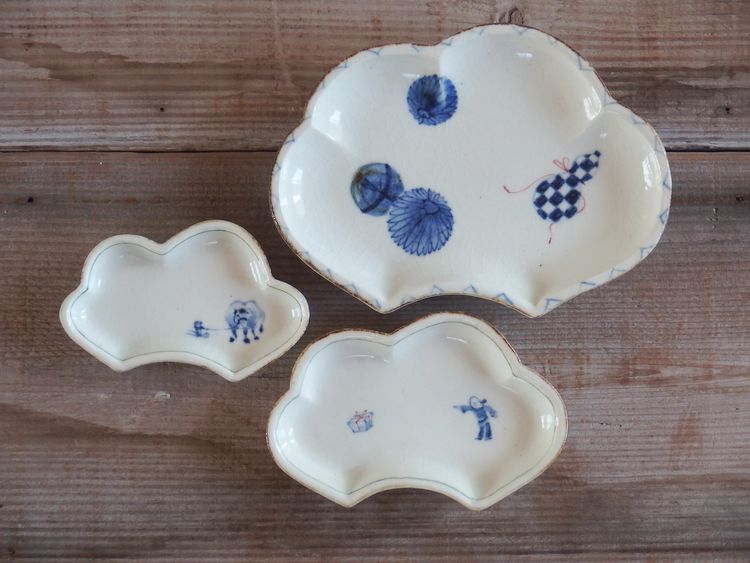
Naoko Hidaka : I have images I want to draw and forms I want to create, and it’s enjoyable exploring combinations between the two.
Hanada: This cross-shaped plate certainly catches the eye.
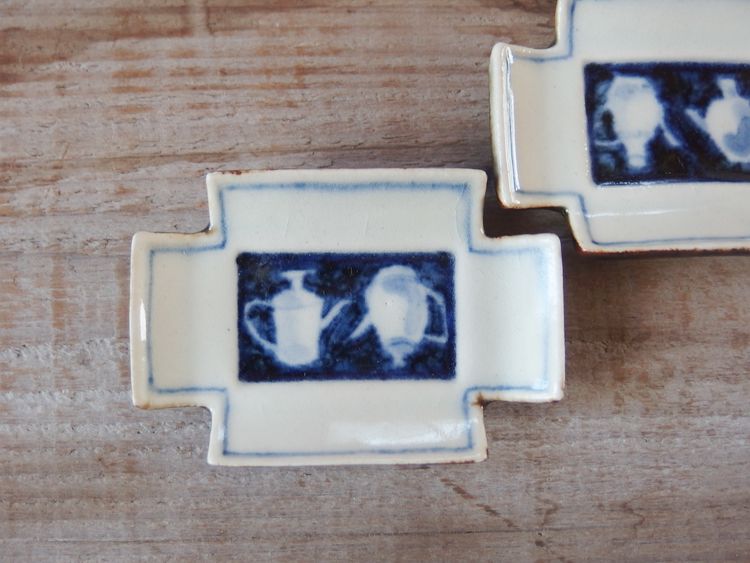
Naoko Hidaka : I wanted a small plate that would be perfect for holding a rolled hand towel.
Hanada: Sushi restaurants would love that. And this square dish is quite something as well…
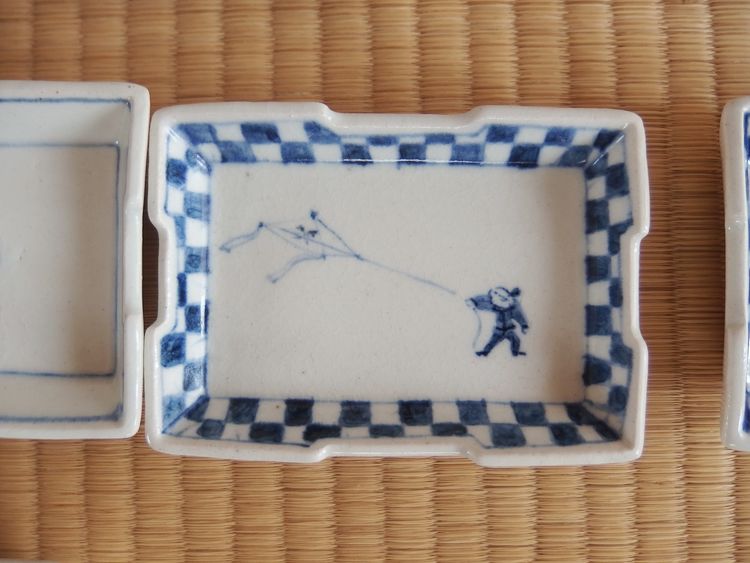
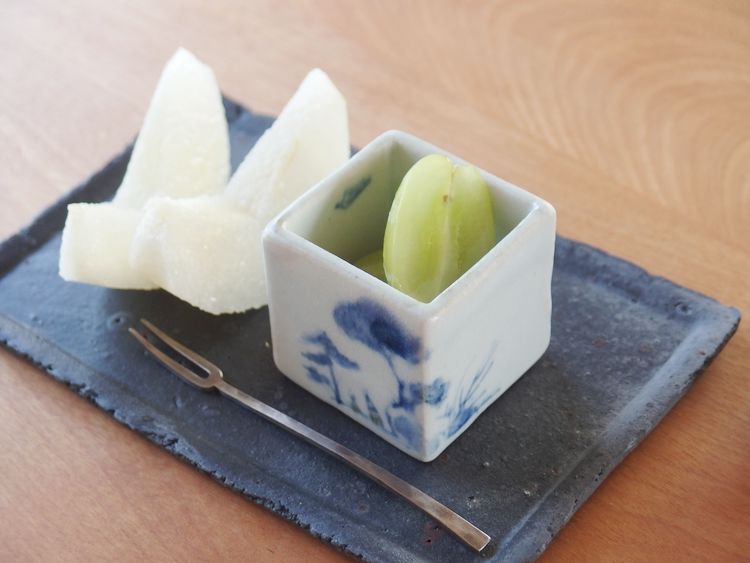
Naoko Hidaka : I thought this window-frame square dish would also be just the right size for serving rice balls as an after-school snack when children come home in the evening.
Middle-Aged Men in 3D
Hanada: Is there anything you’d like to make in the future?
Naoko Hidaka : Perhaps something that moves, with wheels attached… I’d like to create things that are neither simply containers nor purely decorative objects, but something fun in between.
Something that brings a little enjoyment to the people who use it.
Hanada: A playful spirit, perhaps.
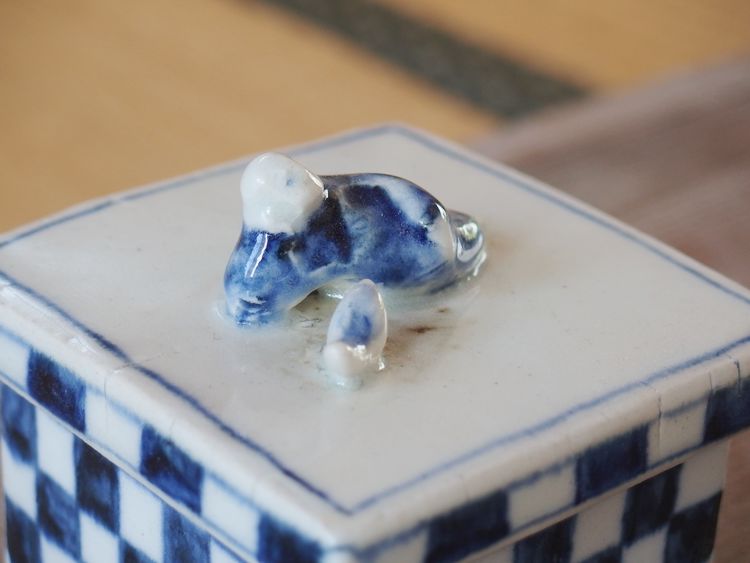
Naoko Hidaka : When I made a figurine of one of my middle-aged men, a woman who already owned one of my dishes featuring the same character said, “Oh! It’s a 3D middle-aged man!” and seemed genuinely delighted.
The Starting Point
Hanada: You seem happiest when describing moments of people enjoying themselves right in front of you.
Naoko Hidaka : In fact, I graduated from ceramics school just after the Great East Japan Earthquake occurred. I became hesitant about purchasing an electric kiln, and when I shared my concerns with one of my teachers, he told me, “Human beings cannot live without consuming energy. Rather than worrying about that, devote yourself to making the best work you can.”
That may have helped me move forward. From then on, I was able to focus wholeheartedly on bringing joy and enjoyment to others.
Hanada: So that was your starting point.
Looking Ahead to the Exhibition
Hanada: Well then, we’re looking forward to the exhibition.
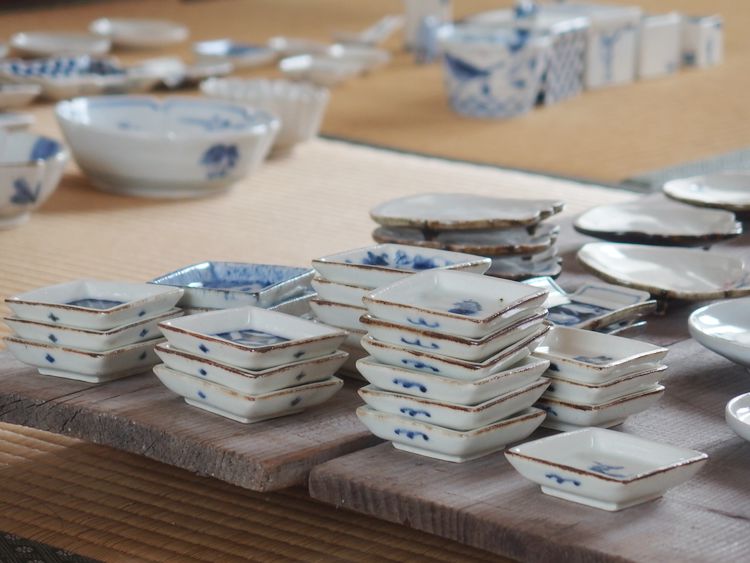
Naoko Hidaka : Since it will be held in November, I’d like to create work with a feeling of “the harvest season” and “abundance,” while also incorporating a celebratory mood so that the pieces can be enjoyed during the New Year holidays as well.
Hanada: We’re looking forward to it. Thank you very much.
Naoko Hidaka : Thank you.
≪ END ≫
付き合っているうちに…、ついて行くうちに…
花田:日高さんがうつわ作りの仕事に至った経緯をお話していただけますか。(以下花田-)
日高:12年間、アパレル業界でニットデザインの仕事をしていましたが、うつわ作家を目指すことにした夫に付き合って瀬戸の窯業専門校に通うことになったのが始まりです。
専門校終了後は製陶所で絵柄をつける仕事をしていたのですが、そのうち週末だけ、自分のうつわも作るようになっていました。
夫が作った小皿にワンポイントで絵を描き入れたりして…。
ある時、陶器市で試しに夫のものの横に鳥小皿を置いておいておいたんです。
日高:そうしたら、通りがかったおじさんが鳥の絵を喜んでくれて…。
「自分の描いた絵を人が喜んでくれることがこんなに嬉しいとは…」って驚きました。
結局、そのおじさんより、私のほうが喜んでいたかもしれません(笑)。
-:もともとモノを作ることも好きだったのでしょうね。
日高:母が骨董好きだったり、叔父が骨董商の仕事をしていたりと、そういうものが身近にあったこともあると思います。
叔父には骨董市に連れて行ってもらって「ほら、この時期から藍の色が全く変わるだろ、この頃に人工の呉須が入ってくるんだ」なんて話を楽しく聞いていました。
つられて、1000円や2000円のなます皿を買って喜んでいる二十歳でした(笑)。
祥瑞 vs.おじさん
-:もともと今の作風だったのですか。
日高:最初は古染付や祥瑞など、自分の好きな古典の模しが中心でしたが、そのまま模すと、自分がその古典を見て感じていることや、それの好きな部分が却って表現できないんです。
模しは技術的には勿論勉強になりましたが、そこに自分の中から出てくるものがないと、自分のものにはなりませんよね。
-:日高さんの今の仕事からは、模しではないけれど、古染付の気分みたいなものは伝わってきます。 古染付って動物の目つきなんかにしても、一筋縄でいかないようなところあるじゃないですか。
日高:そういうところは出したいと思っています。
-:他方、安南の要素をふと感じることもあるし、古伊万里の雰囲気を感じるときもあります。
日高さんが好きな焼き物の要素が形を変えて浮き上がってきているのですね。
日高:そうかもしれません。
そして、そうやって色々描く中で、酔っ払ったおじさんの文様を、皆さんが「かわいい」「楽しい」「ナニコレー!?」って喜んでくれて…。
-:酔っ払ったおじさんを「楽しい」って思う日高さんの気分が共有された瞬間ですね。
日高:わたしだったら、こっちが合っているってことです。
-:「こっち」って「おじさん」のことですか?祥瑞よりおじさん…(笑)。
日高:えぇ(笑)。
「おじさんしか描かない」わけではないけれど…
-:どうやって、おじさんに行きついたのですか。
日高:父が6人兄弟の長男で、お正月は親戚一同大集合でした。
みんなでお酒飲んで、凄い酔っ払って、好きに歌ったり、勝手に寝たり起きたり…、
その状況を子供ながらに「楽しそうだな」って見ていました。
-:日高さんはおじさんが好きなのですね。
日高:親戚の叔父たちが―初めての姪だったというのもあるんでしょうけど―とても、
かわいがってくれて…。
そういうことでイメージが良いのかもしれません。
-:おじいさんでもなく、おにいさんでもなく…おじさん。
日高:自己中心的で、楽しいことに素直で、ゆとりがあるのか、ないのかよく分からないし、
言いたいことも遠慮なく言うし…。
それが私の勝手なおじさんのイメージです。
-:日高さんは、そういうものに愛着を持たれるのですね。
日高:まあ「『おじさん』しか描きません」というほどではないですけど(笑)。
-:なぜか、しっくりくるんでしょうね。
日高:何なのでしょう。自分でもよくわかりません(笑)。
気配と隙間
-:日高さんが作りたいなと思ううつわを言葉で表現することはできますか。
日高:使ってくれる人が気持ちを寄せることができた上で、料理も引き立つものができればいいなと思っています。
-:気持ちを寄せる…。
日高:例えば、生き物を描いていたとしますよね。
そんな時、その生き物自体をうまく描くというよりは、「その生き物がそこにいる気配を描けたらいいな」という思いはいつも持っています。
鳥豆皿もそういう所からきています。何の鳥に見えてもいいんです。
どちらかと言えば、大きな鳥ではなくて小鳥のほうではあるんですけど(笑)。
「鳥がいる瞬間って、こんな感じだよね」という空気です。犬でも馬でも一緒。
あと、おじさんが気持ちよさそうに寝ている空気感だとか…(笑)。
お酒の瓶も、それが描きたいわけじゃなくて、トータルでフワっと見えてくる、香ってくるようなものがあるといいなと思います。
それを伝えるためのお酒の瓶です。
-:そういう部分は、うつわを好きになる要素として大きいですよね。自然と共感できる部分。
うつわを通じて、使う人と作る人が同じ空気を吸っているような感覚、というのでしょうか。
日高:私自身も何か物事を好きになる時はそういう感じのことが多い気がします。
ただ、そこばかり意識しちゃうと、私の場合、変な方向に行ってしまいそうなので(笑)、結局は食事のためのうつわであることは忘れないように。
だから、料理のための隙間は残しておきたいと思いながら作っています。
釉調と色調について
-:そうやって日高さんがしようとしていることに、釉調や呉須の色調がうまくフィットしています。
日高:材料は主人に頼っていますねぇ(笑)。
釉調は食卓で浮きすぎないようなフワっと溶けるような感じを目指しつつ、呉須は自分の好きな古いものをお手本にしながら、調合変えてテストを繰り返しています。
はっきりしすぎても、柔らかすぎてもいけないので、夫には本当に何種類もテストしてもらいました。
描きたい絵と、作りたい形
-:日高さんの仕事には、正円のような普通の形が少なく、少なくとも何かひとつ加わっています(笑)。 隅が切ってあったり、レリーフが加わっていたり…。
日高:描きたい絵と作りたい形があって、その組み合わせを探っていると楽しいです。
-:この十字のお皿も目を引きますね。
日高:小さいおしぼり置くのにいい小皿が欲しくて。
-:お寿司屋さんが喜びそうです。この角小皿もなかなか…。
日高:この窓枠角小皿は、子供が学校から帰ってきたときの夕方用のおにぎりを握っておくのにもちょうどいいかなって。
おじさんが3Dに
-:これから作っていきたいものはありますか。
日高:例えば、車付きの、動くものとか…。
単なる入れ物とも飾り物とも違う何か楽しいものも作っていきたいです。
使ってくれる方がちょっと楽しい気分になるような…。
-:遊び心…ですかね。
日高:おじさんの人形を作ったとき、おじさんの小皿をすでに持っている女性が
「あ!3Dおじさんだ!」って、すごく楽しそうにしくれたんです。
出発点
-:日高さんは目の前で人が楽しんでいる風景を話すとき、ご自身がとても楽しそうです。
日高:実は、窯業専門校を終了したのが、東日本大震災が起きた直後でした。
電気窯を購入することに迷いが出てしまい、専門校の先生にその気持ちを伝えたら「人間はもともとエネルギーを消費しないと生きていけないのだから、それを心配するより、精一杯良いものを作りなさい」って言葉をかけていただいたんです。
それで吹っ切れたのかもしれません。
誰かに喜んでもらう、楽しんでもらうことに真っ直ぐ向き合えるようになりました。
-:そこが出発だったのですね。
展示会に向けて
-:さて、展示会、よろしくお願いします。
日高:11月なので、「実りの秋」や「豊穣」といった雰囲気で、お正月にも使ってもらえるようにお祝いムードを入れた感じで作ってみたいと思っています。
-:楽しみにしています。
よろしくお願いします。
日高:こちらこそ。
関連記事はこちら