





English version of the interview here.
Into Molten Glass…
Hanada: Could you tell us how you came to work with glass?
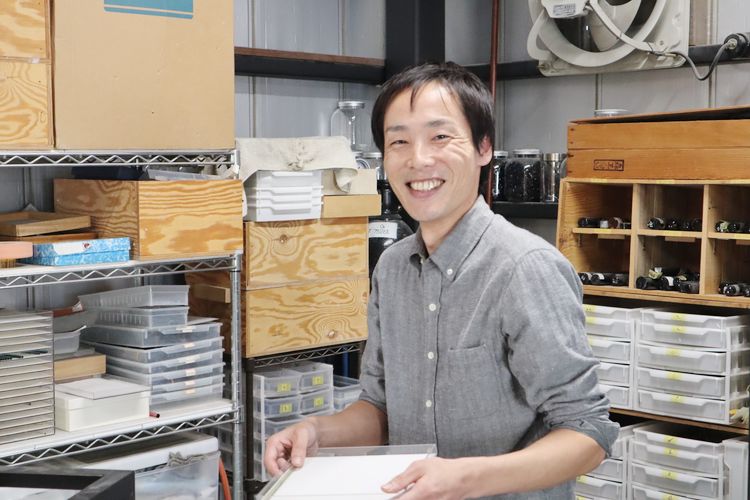
Koichiro Mori : I entered university intending to study ceramics, but I happened to see a glass workshop there, and the impact of that experience led me to choose the glass course.
Hanada: An impact…
Koichiro Mori : The entire space was filled with intense heat and energy, and above all, there was that molten glass—bright red and viscous like syrup.
On top of that, the senior students handling it looked like they were having so much fun.
I later realized that glassblowing studios are hot, you sweat a lot, and the rhythm of the work feels almost like a sport.
Having played sports all my life, it felt very natural to me.
Whether It Moves You Yourself
Hanada: What did you do after graduating?
Koichiro Mori : I joined the technical department at the Toyama Glass Studio.
Hanada: Not the institute?
Koichiro Mori : It’s the studio next to it.
Originally, it was established as a place for graduates of the institute to work and develop as artists, and now creators from across Japan belong there. After completing a four-year term at the studio, I apprenticed for two years under Taizo Yasuda, who was also a senior figure there.
At that time, influenced by him, I was aiming to create fine craft art.
Hanada: What kind of work were you pursuing specifically?
Koichiro Mori : I made many elaborate pieces, such as decorative vases. At the time, I believed that the more techniques and skills I incorporated, the greater the value would be…
Hanada: So the total amount of input would directly translate into value…
Koichiro Mori : Exactly. The more effort you put in, the higher the cost, so naturally the price goes up. But that’s just the creator’s perspective—whether it sells is a different matter. I realized that later (laughs).
It’s harsh, but the response from people to that kind of work was quite cold. Not only did it not sell, there was hardly any reaction at all. If I had possessed exceptional technical or expressive ability, it might have been different, but I wasn’t at that level (laughs).
Hanada: I’m sure you’re being modest.
Koichiro Mori : I was around 28 or 29—very much a classic “hitting the wall” moment. Around that time, someone told me, “What matters is whether your own work moves you.” For some, that might be obvious, but until then, I had never looked at my work that way. I was always starting from how others might perceive or evaluate it…
Hanada: Even before that, you were making what you wanted to make.
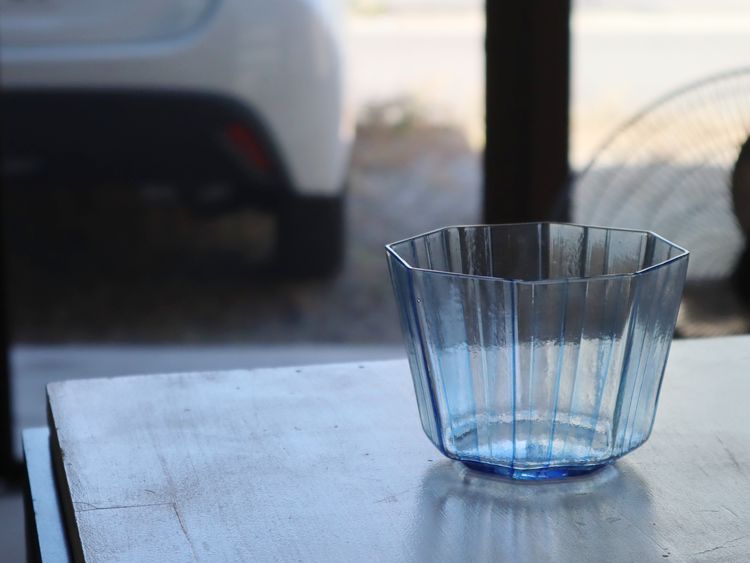
Koichiro Mori : I think many of my choices were surface-level—changing textures or making forms slightly unusual to catch attention. But that advice led to the striped series that has since become central to my work. Intuitively, I felt, “This is good.” The response from customers was also positive. I realized, “So this is what it means.” What had been overly complex with accumulated techniques suddenly felt open and clear. In a practical sense, that was the real starting point for me as a maker of tableware.
Hanada: Since then, you’ve steadily progressed as a tableware artist.
Koichiro Mori : As I continued working this way, I came to want to study the background and history of objects more deeply, and to incorporate those elements into contemporary tableware.
Hanada: Background and history…
Koichiro Mori : I’ve just about finished reviewing the long history of glassmaking. In a sense, I’m only just beginning (laughs). There’s still so much to learn about tableware and craft.
From Both Past and Present
Hanada: What do you value when making tableware?
Koichiro Mori : There are two main aspects. The first is function. Shape, size, and color all serve as supportive elements for food, but this is almost a given when creating tools for use. Moreover, manufacturers invest far greater resources into this than any individual can.
Hanada: That’s true.
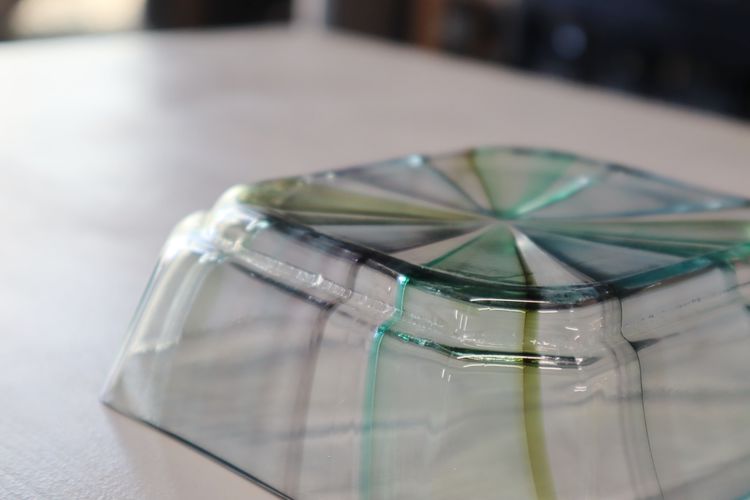
Koichiro Mori : The second is expression. These are both functional objects and works in their own right, so through the process of making, I aim to give form to abstract elements within myself. It’s about balancing utility and expression, while also studying history carefully.
Hanada: So you engage with the past as well.
Koichiro Mori : I see my work as tracing from both past and present to arrive at my own answer.
Analyzing Sensation
Hanada: How do new works come into being?
Koichiro Mori : There are many entry points in daily life. For example, my wife, who cooks regularly, might say, “It would be nice to have something like this.” I also look at older objects, books, or spend time in museums… But recently, I’ve developed a habit—when I think something is good, I try to analyze why I feel that way.
Hanada: You’re in an analytical phase (laughs).
Koichiro Mori : We often talk about “sensibility,” but I’ve started to think that its nature can be explained, at least to some extent, logically. For example, “Maybe I think this is beautiful because it resembles a form I’ve seen in historical masterpieces,” or “Maybe I’m influenced by something I was told is exceptional, and I recognize similarities.” I try not to leave things at a purely intuitive level of preference.
Hanada: If you don’t consciously strip away what can be explained logically, the truly intuitive aspects—though I believe they do exist—may never clearly reveal themselves.
Koichiro Mori : One way to answer “what is this sensation” is through verbalization, though it can sometimes feel clumsy. But I think that “clumsy verbalization” and that vague sense of “this is good” are almost equivalent. Perhaps that vague feeling seems better simply because it hasn’t been put into words. In such cases, rather than avoiding it, I think pushing the analysis as far as possible can lead to development. That’s how I see it now.
New Approaches and What Lies Ahead
Hanada: You’ve also created works with new approaches.
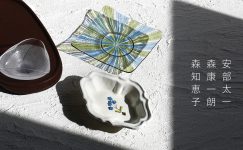
Koichiro Mori : This deeper, chamfered square plate is a classic form, but for me, it was my first time making it using single-gather glassblowing, so it felt new. It took three months to complete.
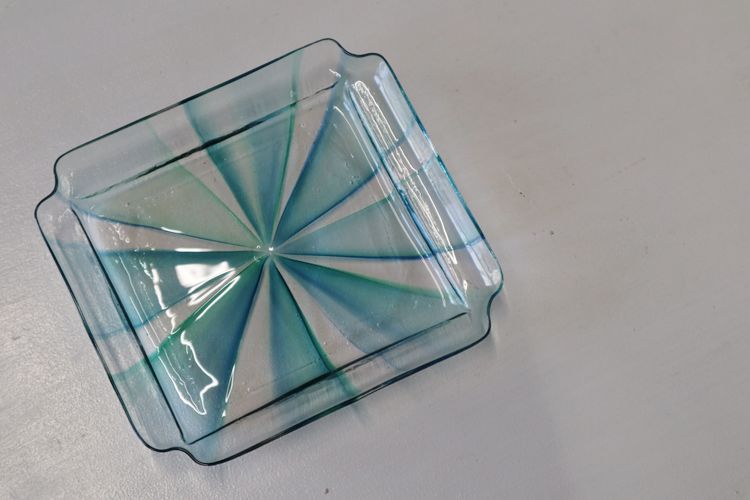
Hanada: What about this scalloped plate?
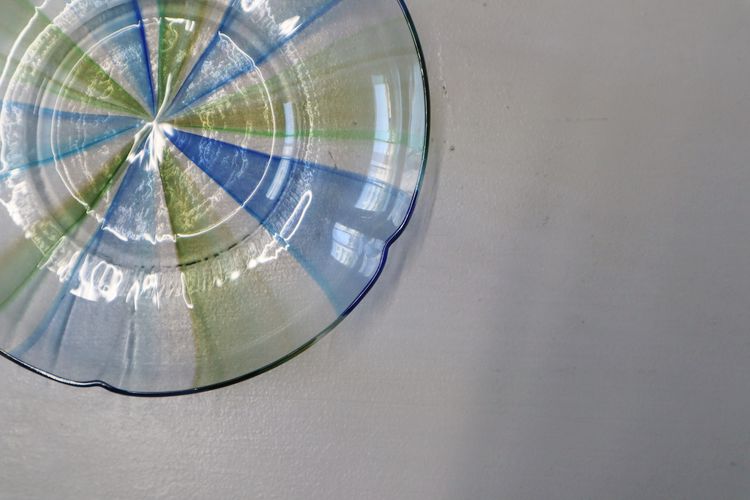
Koichiro Mori : This is also a traditional form, but I feel that forms that have endured over time carry a kind of core or essence as completed tableware.
Hanada: What would you like to pursue going forward?
Koichiro Mori : I want to create a wide variety of tableware. Until now, my work has been constrained by the techniques I could use, so it remained within a narrow range. I want to explore tableware more deeply and give form to what I want to express through it. In many cases, I had simply decided for myself what was “possible” or “impossible.”
Hanada: We look forward to the exhibition.
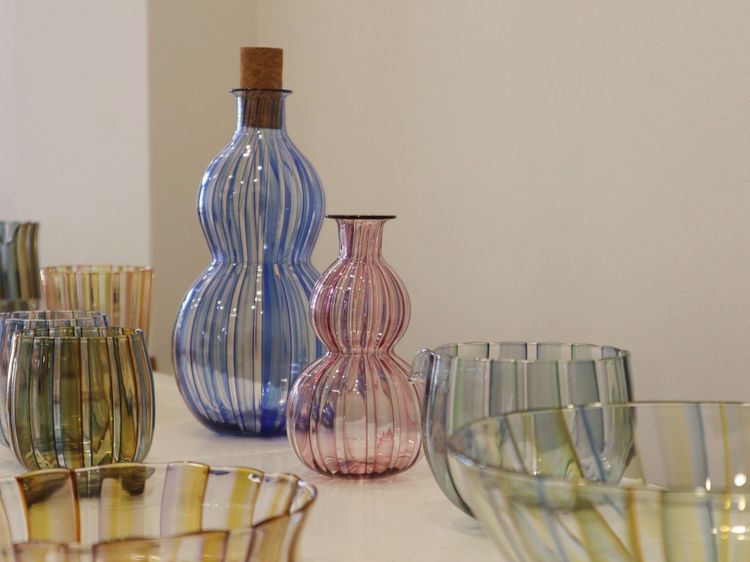
Koichiro Mori : Thank you very much. I’d also like to present larger pieces that I don’t usually show, such as vases. I’m considering forms similar to a meiping.
Hanada: I’m looking forward to it.
≪ END ≫
溶けたガラスに・・・
花田:康一朗さんはガラスの仕事に至るまでのお話を聞かせてください。(以下花田-)
森:陶芸を学びたくて大学に進学したのですが、たまたまそこで見たガラス工芸の作業場に受けた衝撃のままガラスコースに進みました。
-:衝撃・・・。
森:全体として、ものすごく熱気のある作業場でしたし、何より、真っ赤で水飴のようにドロドロのあの「溶けたガラス」です。
その上、先輩方のそれを扱う姿がとても楽しそう。
その後気づいたのが、吹きガラスの作業場は暑くて汗もかくし、制作のリズムがスポーツ感覚だということです。
それまでずっとスポーツをやってきた僕にはしっくりきました。
自分で感動するかどうか
-:卒業後はどうされたのですか。
森:富山ガラス工房の技術部に入りました。
-:研究所ではなく?
森:その隣の工房です。
当初は研究所卒業生の就職先として、作家として育成される場所として立ち上げられた場所で、現在は全国から作家が集まり所属しています。
で、工房での任期四年を終えて、工房の大先輩でもある安田泰三先生に二年間師事しました。
当時は先生の影響もあって、美術工芸を目指していました。
-:具体的にはどのようなものを志向されていたのですか。
森:飾り花器など手の込んだ作品が多かったです。当時は、技法や技術を詰め込むほど、その価値が上がると思い込んでいたというか・・・。
-:インプットの総量が全て価値に転換されると・・・。
森:そうです。手間をかければコストがあがりますから、必然的に高い値段をつけることになります。
ただ、それは作家の勝手で、売れるかどうかは別の話であると。
そういうことに後から気づきまして(笑)。
残酷ですが、そういうものに対しての人々の反応というのは実に冷ややかなものでした。
売れないどころか、反応すらありません。
僕に類まれな技術力や表現力があれば話は違ったかもしれませんが、そこまででもない(笑)
-:ご謙遜かと思いますが。
森:28、9才の頃で、典型的な「壁にぶちあたる」ですね。
ちょうどその頃、ある方に「自分の作ったものに対して、自分で感動するかどうかが大事なんだよ」とアドバイスいただいたんです。
人によっては当然の話なのでしょうけど、実はそれまで、そういう見方で自分の仕事を見たことがありませんでした。
「どう思われるかな」「どう評価されるかな」と、他者の視点を起点にしていたというか・・・。
-:それまでも作りたいものを作ってはいたわけです。
森:質感を変えたりフォルムを少し奇抜にしたり、目を引くための表層的なものが多かったと思います。
でもそのアドバイスがきっかけで現在中心になっている縞模様のうつわシリーズが出来たのもこの頃で、直観的に「いいの、できたな」と思えました。お客様に見てもらっても反応が良い。
「こういうことか」と。それまで、あるだけの技術技法を詰め込んで自ら複雑にしていたものが、スッと風通しが良くなった気がしました。
実質的には、そこがうつわ作家としてのスタートであった気がします。
-:それ以降、うつわ作家さんとして、現在まで確実に前進されてきました。
森:そういった作り方をしていくうち、ものに対して色々な背景や歴史をじっくり学んだ上で、それらを現代のうつわに落とし込む作業を続けていきたいと思うようになりました。
-:背景や歴史・・・
森:ようやくガラス工芸の長い歴史のおさらいが終わったところです。
始まったばかりですね(笑)。「うつわ」のこと、「工芸」のこと等、まだまだ先は長いです。
過去と現在の双方向から
-:森さんがうつわを作る上で大切にしていることを教えていただけますか。
森:大きくは二つで、まず機能です。
形状、サイズ、色合いといった料理の補助的な要素になりますが、ただしこれはうつわという道具を作る上ではほとんど当たり前の話だとも思っています。
更に言えば、それは食器メーカーが個人の比じゃないくらいのコストをかけて取り組んでいるわけです。
-:その通りですね。
森:二つ目は表現です。これは「道具」であると同時に「作品」でもあるわけで、制作を通して、自分の内面にある抽象的なものを具現化していく事を意識しています。道具と作品の両立ということでしょうか。同時に歴史をしっかり学びながら。
-:過去のものとも向き合っていくということですね。
森:過去と現在の双方向からトレイスしていって、自分なりの答えを出すというのが、自分にとってのうつわ作りだと思っています。
感覚を分析する
-:新作など、新たなものはどのように生まれてくるのでしょうか。
森:日常に、色々な窓口があって、日頃料理をしてくれる妻の「このくらいのうつわあったらいいな」もそのひとつです。あとは、古いモノを見たり、本を見たり、美術館にいたり・・・。
ただ、最近変な癖がついてしまって「いいな」と思っても「なんで、自分はこれを好きなのだろうか」と分析しようとしてしまうんです。
-:森さん、分析期なのですね(笑)。
森:よく「感覚」という表現をするじゃないですか。
その正体を、ある程度ロジカルに説明できるはずだと思い始めていて。
例えば「過去の名品を見ていて、それと似た形だから、『格好いい』と思っているのではないか」とか「『ものすごくいいものなんだよ』という正解を与えられた上で紹介されたものの記憶が残っていてそれと似ているものだからではないか」とか・・・。
感覚的な「好み」で終わらせないようしているところです。
-:ロジカルに片づけられる部分は、ロジックで切り落とす努力をしていないと、本当に感覚的な部分が―僕はそれが全くないとは思っていないので―姿をはっきりとは見せないのではないかとは思います。
森:「その感覚は何なのか」への答えとして、言語化が手段のひとつですが、時には野暮ったい表現になることもあると思うんです。
でも「野暮ったい言語化されたもの」と「なんかいい感覚」は、ほとんどイコールで、フワっとした感覚は言葉にしないことで、良く見えているだけなのかなって。
そういう場合はそこから目をそらさずに、攻められるだけ攻めていくと、そこに発展があるのではないかと、今はそう考えています。
新たな試みとこれから
-:新たな切り口のうつわも生まれてきました。
森:この深めの隅切皿、うつわとしては典型的なかたちですが、僕にとっては初めての片吹きだったので、新鮮でした。できあがるまで3カ月かかってしまいました。
-:この輪花のお皿はいかがでしょうか?
森:これも昔からあるかたちですが、昔から残っているものには、うつわの完成形としての芯があるというか、実体があるように思います。
-:これからやっていきたいことについて教えて下さい。
森:色々なうつわを作っていきたいです。これまでは可能な技法を前提にしたモノづくりだったので、狭い範囲でしか作ってきませんでした。「うつわ」を探求していって、そこから出てくる「自分がどういう表現をしたいか」を、かたちにしていきたいです。「できる」「できない」って、自分で勝手に決めていただけの部分も大きいので。
-:展示会、宜しくお願いします。
森:こちらこそよろしくお願いいたします。普段は出さないような大きいもの、例えば花器なども出したいと思っています。梅瓶のような形を考えています。
-:楽しみです。よろしくお願いします。

関連記事はこちら