





English version of the interview here.
Molten Glass
Hanada: How did you come to your current line of work?
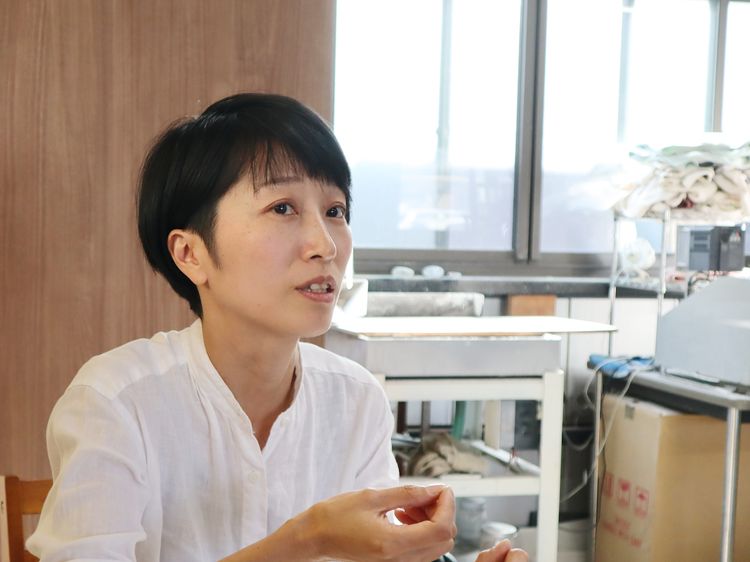
Chieko Mori : My older sister, who is seven years older than me and worked in graphic design, had a big influence. When I was in elementary school, I would look at the assignments she was working on in college and listen to her talk about them…
Also, my father worked in architecture, and my mother made and sold stained glass as a hobby, so it felt like a natural progression for me to enter a junior college art program in lifestyle design.
There, I mainly worked with metal and thought I might become an accessory designer someday.
Hanada: It sounds like your encounter with glass came later.
Chieko Mori : It started when I happened to find a photo book in the school library themed around “molten glass.” After that, I kept thinking I’d like to see it in person someday, and when I had the chance to try a glassmaking experience, I joined. Even though I only touched it briefly, I was completely hooked. After that, I enrolled in classes at that studio and commuted once a week, spending an hour and a half each time.
Hanada: That’s quite an intense way to get into it (laughs).
Chieko Mori : While I was doing that, I had the opportunity to participate in a workshop at a glass studio in Chiba. Until then, I wasn’t very comfortable going somewhere unfamiliar or doing things on my own, but for that, I felt I could go alone.
Hanada: You must have been very drawn to glass.
Chieko Mori : Well, it was also because none of my friends wanted to come along (laughs).
Hanada: The workshop must have been a great stimulus.
Chieko Mori : Yes. But there, it was normal for participants to be attending art universities or glass schools—no one was just going once a week like me. That became a turning point, and I started thinking I wanted to pursue glass seriously, so I decided to go to the Toyama Institute of Glass Art.
What Matters to Me
Hanada: From there, you began working with glass in earnest. What is the appeal of glass for you?
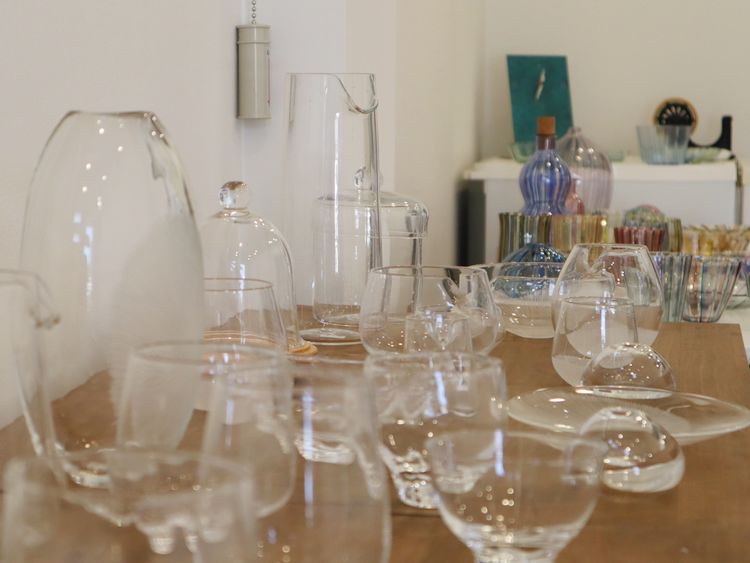
Chieko Mori : It sparkles. That’s all. For me, that’s exactly what matters.
Hanada: Can you put into words the appeal of glassblowing?
Chieko Mori : There are many aspects, but first of all, the process allows you to adjust and correct as you work, and it’s easier to arrive at answers. More than anything, when I’m blowing glass, I enter a state of emptiness—it feels almost like playing a sport. At the institute, I was able to experience various methods of glassmaking, but glassblowing suited my nature best, and it was also the method through which I could create what I truly like.
Something of My Own
Hanada: Has your style always been as it is now?
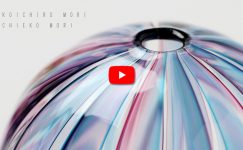
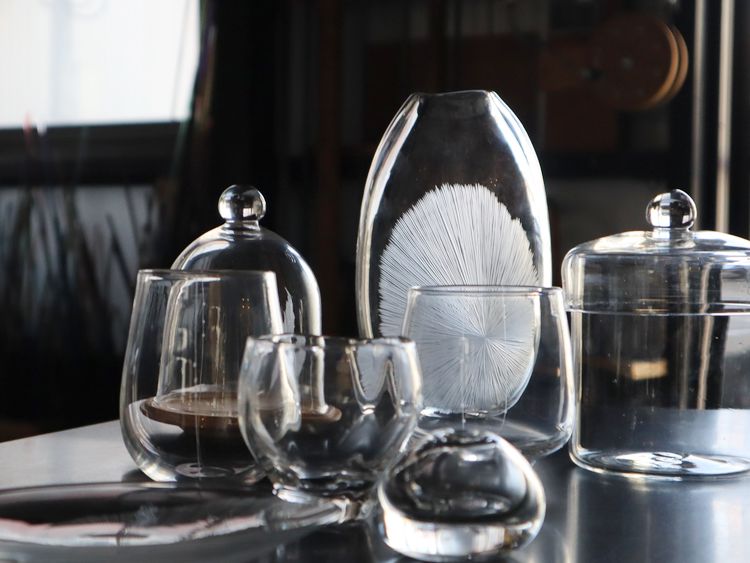
Chieko Mori : The simplicity of the construction hasn’t changed. In particular, this series called “Hakuu” is something I’ve been making since I was a student.
Hanada: Your glasswork is simple, yet it subtly conveys the maker’s sensibility. The balance is remarkable.
Chieko Mori : If I strip things down too much, I feel like I disappear from it. That may not actually be the case, but… I want to add something like a “reason” for my presence—or a slight distinctive touch.
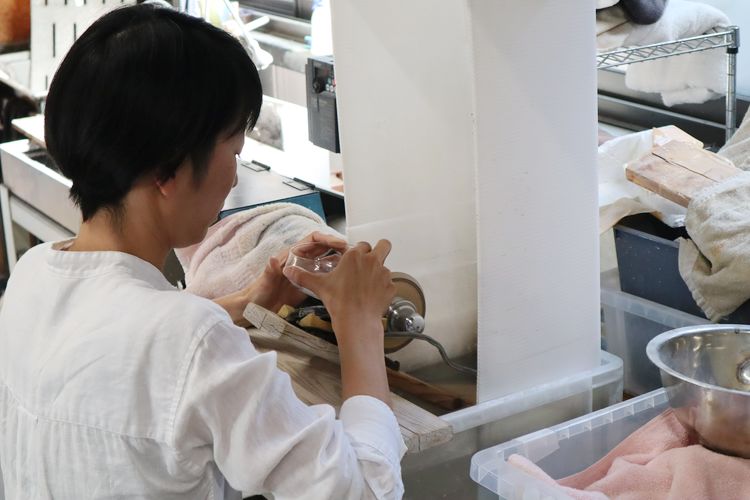
Hanada: I think that “distinctive touch” you mention is what draws me in.
Chieko Mori : I do want to add “something.” By doing so, I hope what’s within me can be conveyed.
Hanada: It’s interesting, isn’t it? Not something you’d be troubled without, but something that makes you happy when it’s there… From the user’s perspective, what might that be?
Chieko Mori : Perhaps it becomes “something of your own”… Even when I make the same item, each one is different, and people choose from among them. Also, when I add that “something,” I’m thinking only about that particular piece, so each carries its own intention. I personally like choosing works by other artists thinking, “For me, this one is the one I love.” And I hope using it becomes a “happy moment” for each person.
I Like Lines
Hanada: What do you value when making your pieces?
Chieko Mori : It’s the opposite of him (Koichiro Mori), but I value intuition.
Hanada: That’s interesting—being in the same place yet valuing completely opposite approaches.
Chieko Mori : I don’t do things I feel are unnecessary or wrong. For example, I don’t like the center.
Hanada: The center?
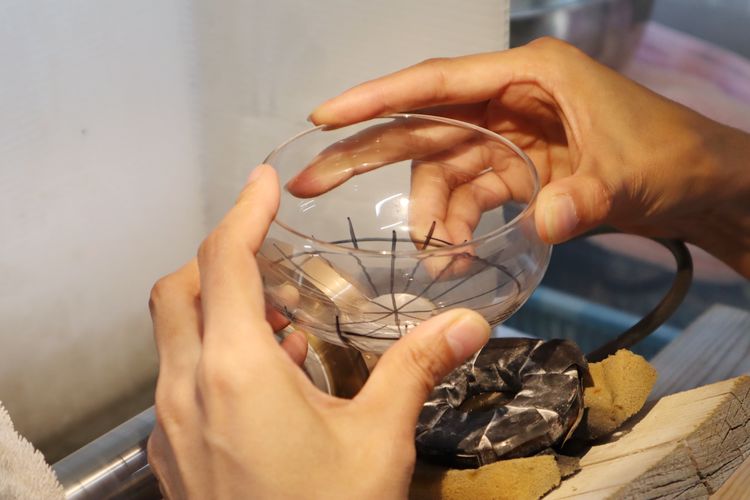
Chieko Mori : Even when cutting into the glass, I don’t place it in the center.
Hanada: Indeed, it’s slightly off, asymmetrical. The widths vary subtly as well. Do you try different patterns?
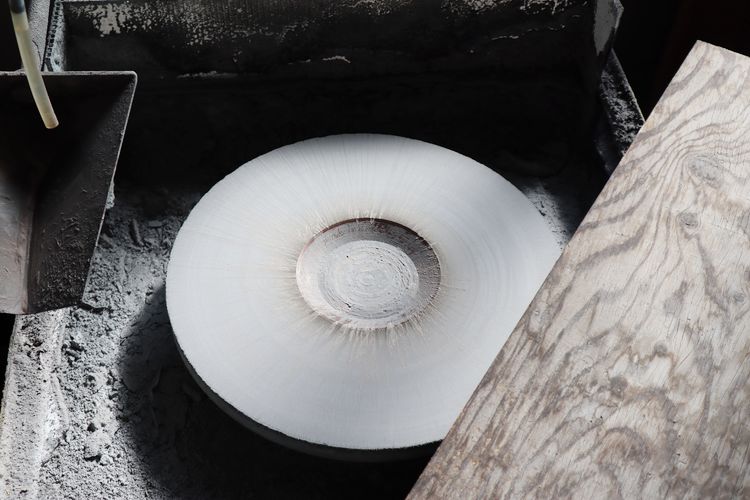
Chieko Mori : I follow the image I have at that moment, searching for a balance that feels right to me, capturing my intuition at that time and translating it into glass. Simply put, I like lines.
Hanada: Lines!
Chieko Mori : Lines cast beautiful shadows. I also like how, when you pour water, they appear to shift or ripple.
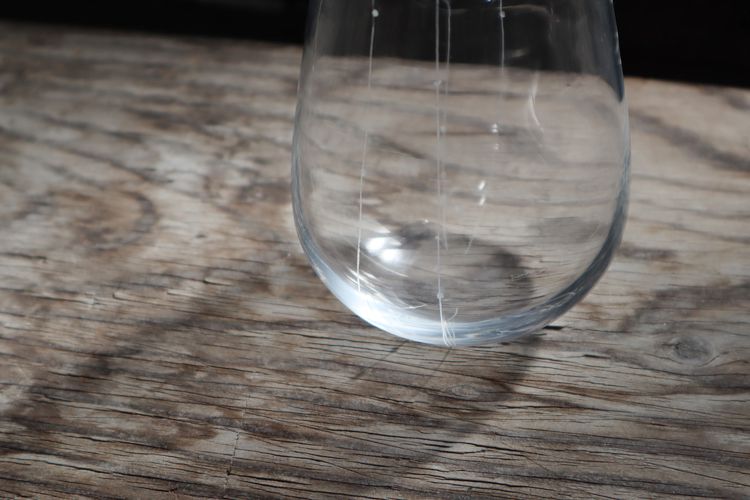
Natural Landscapes in Glass
Hanada: What inspired this?
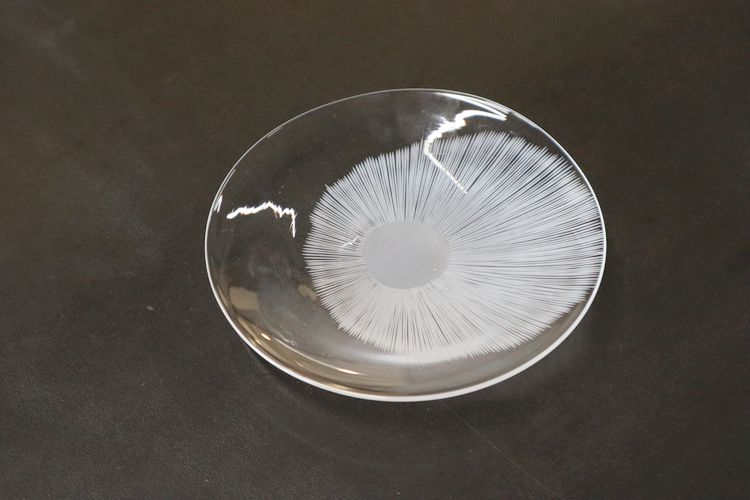
Chieko Mori : I’m imagining the way light flickers in an instant. I draw each line one by one using the same technique as Edo Kiriko cutting. I want people to see not only each individual line but also the whole composition, so I value both the lines and the spaces between them.
Hanada: The spacing between the lines?
Chieko Mori : If the spacing is too wide, it can actually feel noisy. I also like when, once food is served, only one side of the lines becomes visible.
Hanada: Yes, plating really enhances it. I also like the textured surface.
Chieko Mori : I set limits on the extent of the texture. I also try to ensure it doesn’t appear as a pattern. I hope it has a presence similar to something without decoration.
Hanada: All your works have titles.
Chieko Mori : Yes. I begin with something I want to express, and I want to convey even a part of the image I originally had. “Matataki” suggests a flash… “Hakuu” refers to a sudden shower, but I imagine raindrops trailing down; “Yukibare” evokes sunlight hitting accumulated snow after it stops falling. I often draw inspiration from natural landscapes.
Favorite Canisters
Hanada: We look forward to the exhibition.
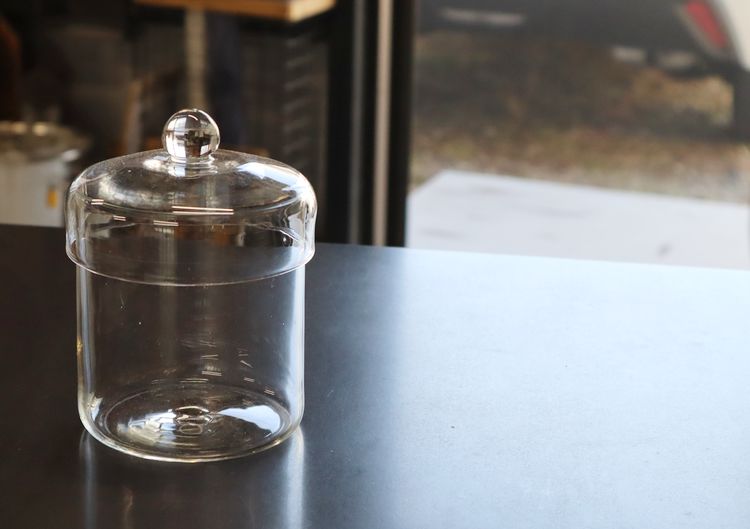
Chieko Mori : Thank you very much. I’d like to make canisters that we also find useful in our daily life at home.
Hanada: Haven’t you already made canisters?
Chieko Mori : I’m thinking of making ones with an even simpler structure. At home, we use them for things like jam and shio-koji.
Hanada: They must look beautiful as well.
Chieko Mori : I pay attention to the size of the opening and the lid so that they are easy to take things in and out of, and easy to clean.
Hanada: I’m looking forward to it!
≪ END ≫
溶けているガラス
花田:森さんは現在の仕事にどのように至ったのですか。(以下花田-)
森:グラフィックデザインをやっていた7歳上の姉の影響が大きいです。
小学校の時に、当時大学生だった姉の取り組んでいる課題を見たり、話を聞いたり・・・。
さらに、父は建築関係の仕事、母は趣味のステンドグラスを自分で販売していたこともあって、自然な流れで美術短大の生活デザインコースに入りました。
そこでは金属中心の制作で「いつかアクセサリーデザイナーにでもなりたいな」と思っていました。
-:ガラスとの出会いはまだ先のようですね。
森:学校の図書館で「溶けているガラス」をテーマにした写真集をたまたま見つけたのがきっかけです。
その後ずっと「いつか実際に見てみたいな」と思っていたところ、ガラス体験の機会があったので、参加しました。
ちょっと触っただけだったのに、それではまってしまいました。
その後は、そこの工房の講座生になって、週一で毎回1時間半かけて通っていました。
-:はまり方が極端ですね(笑)。
森:そうこうしている内に、千葉のガラス工房でのワークショップに参加する機会がありました。
それまでは一人で知らないところへ行ったり、何かをしたりって苦手だったのに、そこには「一人で行こう」と思えたのです。
-:よほど、ガラスに魅かれていたのですね。
森:まあ、付き合ってくれる友達が誰もいなかった、というのもあります(笑)。
-:ワークショップは、いい刺激になったのではないですか。
森:はい。ただ、そこでは、参加者は美術大学やガラスの学校に通っているのが当たり前で、私みたいに「週一」なんていません。
それが転換期になって「ガラスを本気でやりたい」と考え始め、富山のガラス研究所に行くことにしました。
私にとって大切なこと
-:そこから本格的にガラスに取り組んでいかれるわけですが、森さんにとってガラスの魅力とは何ですか。
森:キラキラしている。それだけです。
私にとっては、そういうことこそ大切なんです。
-:さらに、吹きガラスの魅力を言葉で表すことはできますか。
森:いっぱいありますが、まずは、その動きで「作業しながらの調整や修正」ができるし、その答えも出てきやすい。
何より、吹いていると「無になる瞬間」というかスポーツをやっているような感覚になります。
研究所でガラス制作を一通りやらせて頂きましたが、自分の性分に一番合っていたのも、「自分の好きなもの」ができあがるのも、吹きガラスでした。
自分だけのもの
-:最初から現在のような作風だったのですか。
森:シンプルなつくりは変わっていないです。
特にこの「白雨(はくう)」というシリーズは、学生の頃からずっと作っています。
-:森さんのガラスはシンプルだけど、制作者の感性をわずかに感じさせるバランスが素晴らしいです。
森:シンプルにそぎ落とし過ぎると、私がそこになくなってしまう気がします。
本当はそうではないのかもしれませんが。
自分がそこにいる「理由」・・・というか「ひとくせ」のようなものを加えたいなと思っています。
-:森さんの仰る「ひとくせ」に僕は魅かれているのだと思います。
森:やはり「何か」をしたい・・・。
その何かをすることで、自分の中にあるものが伝わっていけばいいなと。
-:なんなのでしょうね。
無くなって困るものではないけれど、あればハッピーになれるもの・・・。
使う側から見ると、何なのでしょうか。
森:「自分だけのもの」になっているのかな・・・。
同じものを作っていても、それぞれ違いますし、その中から選んでいただけるわけです。
またその「何か」を加えるときは、そのものだけについて考えているので、それぞれの思いは個別です。
私自身も他の作家さんの作品を「『私にとっては』この子がかわいいの」って選ぶのが好きです。
そして、それを使うのが、それぞれの「幸せな時間」になってほしい、そう願っています。
「線」が好き
-:森さんが、うつわを作る時に大切にしていることを教えていただけますか。
森:彼(森康一朗さん)とは正反対になりますが、「感覚」を大切にしています。
-:いいですね。同じ場にいながら、正反対と思うものを大切にできる。
森:自分で「これはいらない」「これはだめ」と思うことはやりません。
例えば、真ん中は嫌なんです。
-:真ん中?
森:ガラスにカットを入れるときも、真ん中にはしません。
-:確かに、少しずれていて、非対称。幅も微妙に違います。
色々なパターンを試されるのですか。
森:その時持ったイメージ通りに、自分が気持ちよく感じるバランスを探りながら、その時その時の自分の感覚を切り取って、それをガラスに置き換えていきます。
とりあえず「線」が好きなんです。
-:線!
森:線は影がきれいです。
水を注いだ時に、ずれて見えたり、波打っているように見えたりするのも好きです。
自然の風景をガラスに
-:これは何から出てきたのですか。
森:光がパッと瞬く様子をイメージしています。
江戸切子のカットと同じやり方で、一本ずつ引いていきます。
一本一本の線だけでなく、かたまりでも見てほしいので、それぞれの線はもちろん、その間も大事にしています。
-:線と線の、間の取り方ですか。
森:間が空きすぎると却ってうるさくなってしまいます。
料理を盛りつけた時に、この線の片側だけ見えてくるのも好きです。
-:そうそう、盛り付けると尚更魅力的なんです。
凸凹させているのも好きです。
森:凸凹の範囲は決めています。
また、模様として見えないように心がけています。
模様が無いものと同等の雰囲気になってくれたらいいなって。
-:森さんのうつわには全てタイトルがついています。
森:はい。
表現したいものがあって、それから作り始めるのですが、元々私が持っていたイメージを少しでも伝えたいなと思っています。
「瞬き(またたき)」もフラッシュ・・・。
「白雨はくう」は夕立という意味ですが、イメージとしては雨がつたう雫、「雪晴(ゆきばれ)」は雪がやんで、積もった場所に光が当たった感じです。
自然の風景をイメージすることが多いです。
愛用のキャニスター
-:展示会、宜しくお願いします。
森:こちらこそよろしくお願いいたします。
我が家でも普段から重宝しているキャニスターを作りたいなと思っています。
-:キャニスターは既に作られていませんか。
森:もっとシンプルなつくりのものを考えていて、家ではジャムや塩こうじを入れています。
-:見た目もキレイでしょうね。
森:中身を出し入れしやすく、洗いやすい大きさの口や蓋を意識しています。
-:楽しみにしています!
関連記事はこちら