







English version of the interview here.
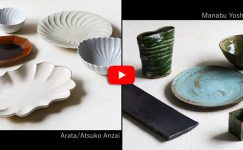
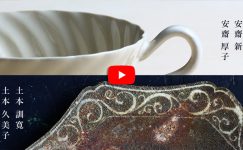
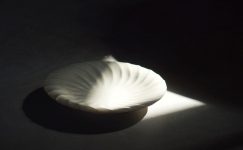
The tableware of Arata and Atsuko Anzai possesses an atmosphere never before seen in traditional Japanese tableware. For some reason, Mr. Anzai always seems to carry the air of a traveler. Where will their journey of tableware creation lead them next?
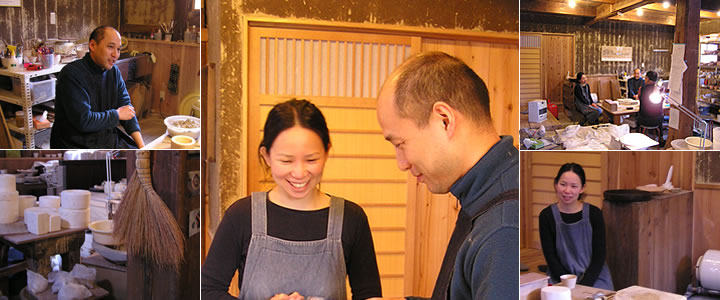
Hanada: You originally trained in Arita, didn’t you?
Arata Anzai: Yes. Mr. Shomura was also there with me in Arita.
Hanada: Come to think of it, I heard a story that you used to live abroad.
Arata Anzai: I spent about a year backpacking and wandering around America and Europe. We just thought, “Let’s go on a trip without spending much money” (laughs). It allowed me to see many different things.
Hanada: Your focus is mainly on white porcelain. Is that a natural continuation of your training in Arita?
Arata Anzai: Yes, it is. Since porcelain was my starting point, the experience in Arita was incredibly educational—not just in terms of technique, but in many other ways as well.
Hanada: Hanada also works with many artisans from Arita. A common trait among them is their strong, positive commitment to clay and glazes. Their deep understanding of tableware is also remarkable and always teaches me a lot. Even when looking at antiques, they instantly grasp the essential points from a maker’s perspective. Everyone possesses a solid standard as a creator. Having that as a starting point is a great strength for those who work in Arita. On the other hand, developing a personal style from that standard depends entirely on the individual, and I often see young artists struggling with this. Given that, how did you arrive at your current style?
Arata Anzai: I think a big factor was starting to work together with Atsuko. We used to work independently, but after we got married, we began sharing the same studio. Watching her work beside me, I started to feel it might be better if we made tableware together. I enjoy the process of polishing, carving, and shaping models, but I have always found it difficult to give them their final functionality.
Hanada: I see. But in your case, the process of focusing entirely on the object itself without distraction seems to work wonderfully.
Arata Anzai: When I watch her create up close, her use of color and unique ideas come into view—things that would never cross my mind.
Hanada: So you thought, “Oh, that looks great” (laughs)?
Arata Anzai: Yes. I began to think that together we could create something interesting and completely different from my solo work. It took me a whole year to convince her to join me (laughs). She often speaks her mind quite spontaneously, so we do have our arguments, but in the end, everything settles smoothly (laughs).
Hanada: People who are close or alike always tend to bicker a bit (laughs).
Atsuko Anzai: In my case, when I work alone, I tend to over-intellectualize the pieces. They become a bit too tense. Working as a pair brings a nice balance, perhaps because it combines our subjective and objective perspectives. Since these are everyday tableware items, I feel a slightly relaxed touch makes them more comfortable to use in daily life. Technically speaking, it has also expanded the variety of shapes we can create.
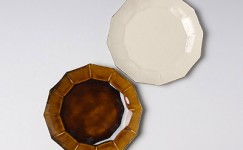
Hanada: The first thing I notice when looking at your tableware is that the atmosphere never feels heavy. The touch is wonderfully light. I am truly looking forward to seeing how your amber-glazed pieces develop, and the butterfly series feels so distinctively yours. While unique, they are never difficult to use and feel completely natural to pick up.
Arata Anzai: Thank you very much.
Hanada: Where do you source your clay?
Arata Anzai: From Kyoto. Atsuko is from Kyoto and did her training there.
Hanada: So it is a combination of Kyushu and Kyoto.
Arata Anzai: Kyushu has a direct historical connection to the Korean Peninsula, so even within porcelain, it feels very solid and possesses a certain rustic beauty. On the other hand, Kyoto style is elegantly refined.
Hanada: It is a wonderful balance—incorporating elements of Kyoto while retaining the rustic beauty of Kyushu. Is there anything you pay special attention to when making tableware?
Arata Anzai: I try to prevent the traces of handcrafted work from becoming too raw or overt on the pieces. Even as you deliberately smooth those marks away, whatever inevitably remains at the very end is the true trace of the maker—and that essence is the creator themselves. I really like that delicate space right on the boundary between craft and design.
Hanada: That might apply to more than just handcrafted marks. Generally speaking, individuality or distinctive characteristics in creation do not flourish by being forced. Trying too hard to show them off rarely works well. Another thing I feel when looking at your tableware is a sense of comfort and stability, even if a piece is not perfectly symmetrical. I can tell it is carefully calculated. Even with the butterfly shape, I sense it was not done on a mere whim. Do you have any plans for the future?
Arata Anzai: While expanding our range of asymmetrical shapes, I want to create tableware that is even easier to handle, with stacking capabilities in mind. I am also fascinated by antiques from various times and places, simple minimalist designs, and folk art—such as the color palettes and embroidery of ethnic minority costumes. I hope to integrate these inspirations into forms that fit modern living.
Atsuko Anzai: Currently, it takes us quite a long time to perfect a single shape, so one of my goals for the future is to streamline our process and work a bit faster.
Hanada: This collection has exceeded my expectations once again. It was well worth the wait.
Arata Anzai: It took some time, but we are very confident in these pieces. We hope you enjoy them.
≪ END ≫
従来の和食器にはなかった雰囲気を持つ安齋新さん、厚子さんのうつわ。
なぜか、常に旅をしているような雰囲気の安齋さんですが、うつわの旅ではどこを目指すのでしょう
花田:安齋さんは元々有田で修行されていました。
安齋新:はい。有田では庄村君も一緒でした。
─ そういえば、安齋さんは海外にいたという話を聞いたことがあります。
安齋新:アメリカやらヨーロッパやら、1年くらいバックパッキング放浪していました。
「さあ、お金かけずに旅に出てみよう」と(笑)。で、色々見ることができました。
─ さて、安齋さんは白磁がメインですが、それは有田修行の流れでもあるのでしょうか。
安齋新:そうですね。磁器からのスタートだったので。
有田での経験は勉強になりました。技術だけでなく、いろいろと。
─ 花田も有田の作者との付き合いがありますが、
彼らの共通点は土や釉薬に対するいい意味での強いこだわりです。
で、うつわに対する理解力もすごくて、勉強になります。
骨董見ていても作り手として見るべきところを押さえているというか・・・。
皆、作り手としてのスタンダードをきちっと持っています。
まず出発点にそれがあるのは有田で仕事をする人たちの強味だと思います。
一方で、そのスタンダードからそれぞれのスタイルを展開していくのは
個人個人ということになるのだけれども、そこで若い人たちが苦労しているのはよく目にします。
そんな中、安齋さんはどうやって今のスタイルに行きついたのでしょう。
安齋新:厚子と一緒に仕事をし始めたことも大きいと思います。
別々に活動していたのですが、結婚を機に、2人で同じ仕事場で作業をするようになったんです。
横で見ていて一緒にうつわ作りをした方が良いのでは、と思い始めて・・・
僕は磨いたり、削ったりして形や型を作るのが好きなのですが、最後に用途にすることが苦手で。
─ なるほど、でも安齋さんの場合、
他のことを考えずにモノそのものに集中する過程がうまく機能している気がします。
安齋新:彼女の制作を間近で見ていると、色使いや、
僕だったら思いつかないようなアイデアが目に入ってくるんですね。
─ 「お、いいな、あれ」って感じですか(笑)?
安齋新:ええ、僕とはまた違った面白いものができるんじゃないかと思い始め、
一緒にうつわ作りをしないかと1年がかりで説得(笑)。
結構思いつきで意見を言うのでよくけんかになりますが、最後は一応まるくおさまります(笑)。
─ 似たもの同士や仲良しは喧嘩をするものです(笑)。
安齋厚子:私の場合は、1人で仕事をしていると作品にし過ぎてしまうんです。
気負ったものになってしまう。
2人で作るとバランスが取れ、主観と客観がうまく組み合わせられているのかもしれません。
食器なので、それくらいの方が実際に使ってみてよいのかなあとも思います。
技術的にも、可能な形のバリエーションが広がりました。
─ 安齋さんのうつわを見ていてまず感じることは、雰囲気が重くないんです。
タッチが軽いというか。
アメ釉なんて今後の展開が楽しみですね。
あの蝶々シリーズも安齋さんらしいし。
独特だけど、決して使いづらいものではなく抵抗なく手に取れます。
安齋新:有難うございます。
─ 土はどこのものを使っているのですか?
安齋新:京都です。厚子が京都出身で、京都で修業をしていたので。
─ 九州と京都なのですね。
安齋新:九州は朝鮮直結なので、同じ磁器でもしっかりしている気がします。
野趣もあるし。
一方で、京都は品良くまとまっている。
─ 京都の要素もあるけど、それだけじゃなくて九州の野趣もあって、いいバランスですね。
うつわ作りで気を使っていることは何かありますか?
安齋新:うつわに手作りの痕跡が生々しくならないようにしています。
痕跡を消していっても、それでもどうしても最後に残るものが本当の痕跡であり、
それこそが作り手自身なのではないか、と。
ちょうど工芸とデザインの境目くらいの感じが好きです。
─ それは手作りの痕跡だけの話ではないのかもしれません。
一般的に、モノづくりにおける、いわゆる個性とか特性とかって
いうものはスポイルされて伸びてくるものではないのでしょう。
そういういうものは敢えて出そうとすると余りうまくいかない気がします。
あと、安齋さんのうつわを見ていて感じるのは、上下左右対称でなくても安心、安定感があるんです。
ちゃんと計算しているんだろうなって思います。
あの蝶型にしても、思いつきだけでやってはいないだろうな、と感じます。
今後についてはなにか考えていますか?
安齋新:変形のものを展開しつつ、重ねなどを意識したより扱いやすいうつわなどを作っていきたいです。
古今東西の古いものやシンプルでミニマムなもの、それとは別にフォークアート、
たとえば少数民族の衣裳の色使い、刺繍にも興味があるので、
今の生活に合った形でそれらを活かしていきたい、とも考えています。
安齋厚子:今は、1つの形を完成させるのに時間がかかっているので、
もう少し早くできるようになることも今後の課題のひとつだなあと思っています。
─ 今回も期待以上でした。待っていてよかったです。
安齋新:時間がかかってしまいましたが、自信作ですのでよろしくお願いします。