







English version of the interview here.
What Slipware Has Taught Me
Encounter
Hanada: You first learned about slipware when you were a university student, right?
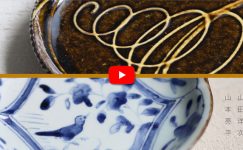
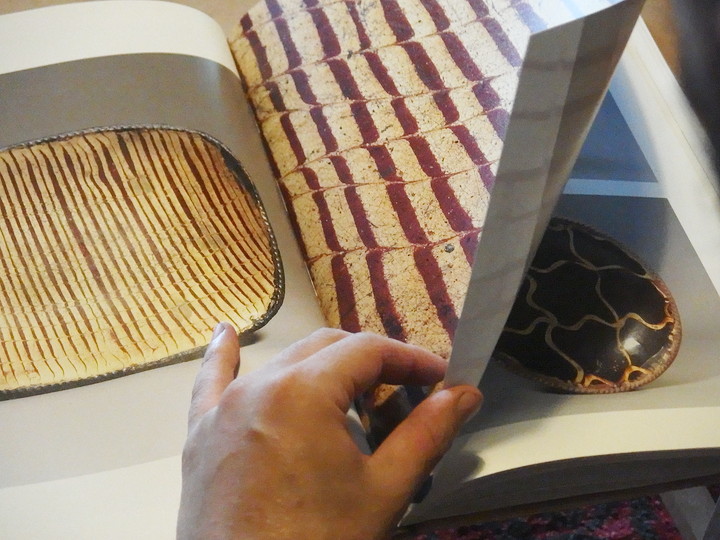
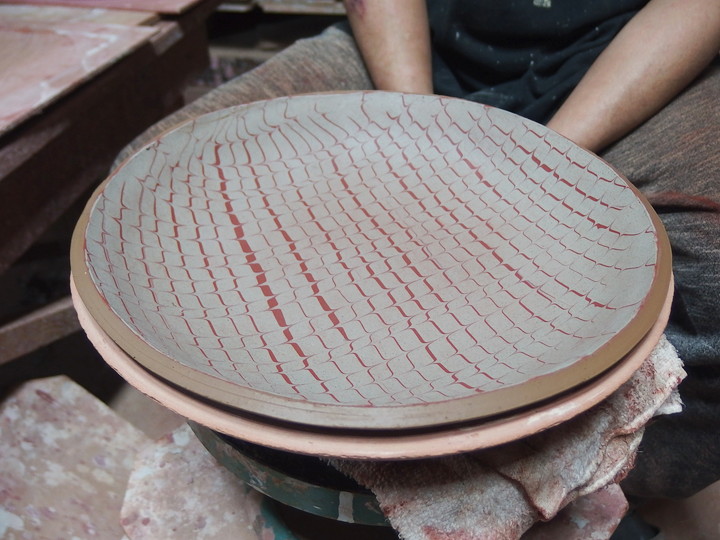
Yoji Yamada: Yes, when I was 21, I saw a poster for the Folk Craft Museum. I was instantly drawn to it — it was a piece with a bird motif. I remember seeing on their website the lattice-patterned one that Muneyoshi Yanagi was holding in a photo.
Hanada: Back then, it must have been more instinctive than logical. Looking back, what do you think fascinated you so much about slipware?
Yoji Yamada: I’m not really sure… In retrospect, I think I was seeing a tangible form of what I had only vaguely imagined I wanted to do at that time.
Hanada: At that time, you were majoring in chemistry.
Yoji Yamada: In chemistry, everything can be expressed with symbols. Slipware, on the other hand, felt like something that couldn’t be expressed that way — something you couldn’t quite grasp. To me at that time, it was like, “What on earth is this?”
Hanada: What do you mean by that, specifically?
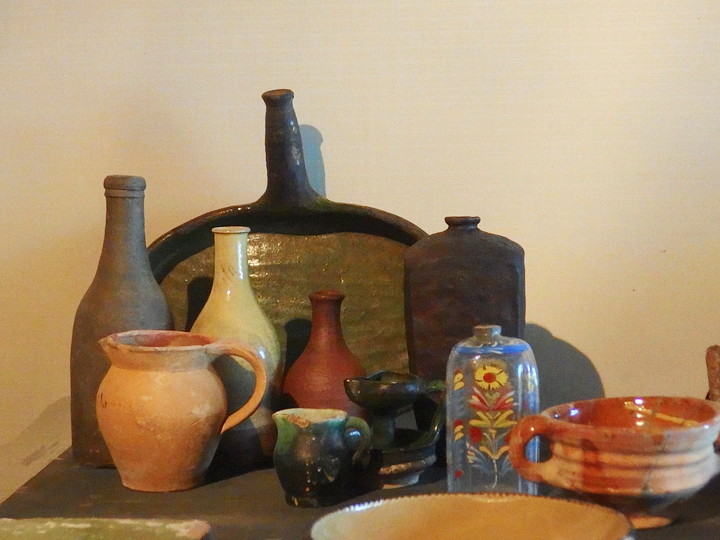
Yoji Yamada: The historical background of England, their way of life, materials, techniques — things that could only have come into being in that time and place. Compared to other soft-bodied ceramics in Europe made with similar materials and methods, slipware feels completely distinct.
I think it emerged through the interplay of local culture, climate, and traditions unique to that land.

Because It Was That Place and That Time
Hanada: Even though you later went to England to train, back then you didn’t really know much about the country as it was in the era when slipware was originally produced, did you?
Yoji Yamada: No, not at all.
Hanada: Yet, you still felt something.
Yoji Yamada: Yes. Saying “something resides within it” might sound religious, but I felt there were layers upon layers — a kind of depth or resonance that wasn’t just on the surface. Maybe “seen” isn’t quite right… but there was something deeply compelling about it.
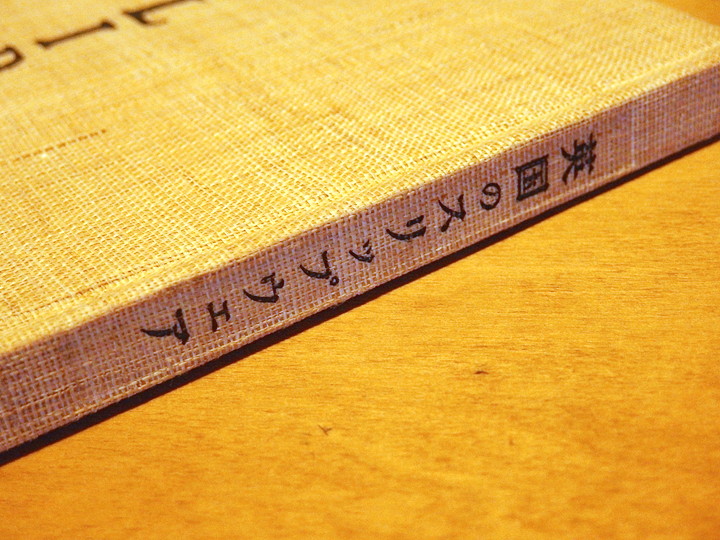
Hanada: Do you ever feel a similar kind of presence when you look at Asian antiques or other forms of classical art?
Yoji Yamada: No, not since slipware.
Hanada: So, only slipware gives you that feeling.
Yoji Yamada: Well, there are partial elements in Seto iron-painting or Karatsu ware that connect to slipware in some way. Even outside ceramics — wooden kneading bowls, for example — whether European or Japanese, sometimes just the atmosphere feels like slipware. I find myself thinking, “Ah, this is slipware.”
Hanada: So for you, “slipware” isn’t just about appearance.
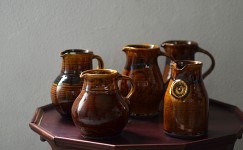
Yoji Yamada: Of course, the patterns and colors are distinctive, and it’s also appealing that they suit the Japanese dining scene. But as a maker, if you only extract and reproduce those superficial aspects, it wouldn’t last long. I feel a sense of urgency about that. I want to think about what I saw and felt in those historical pieces, how to interpret that, and how to express it in my own work — combining many layers of meaning, while keeping the forms simple and pop-like for everyday use.
Hanada: Just as slipware once emerged from its own environment — the society, economy, and customs of that time — you’re creating your own version today, responding to the world you live in now.
Yoji Yamada: I’m not trying to recreate old slipware exactly, but I do hope to carry it forward. I’m influenced by the old pieces, so there’s a part of me that wants to get closer to them. I sometimes use materials similar to those of the past to see how my work compares, but I’m Japanese, working in Shigaraki. So I want to make slipware that belongs to this time and this place.
Hanada: What do you think is most important to make that possible?
Yoji Yamada: Everyday life, I think. What I choose to live with, what I want around me.
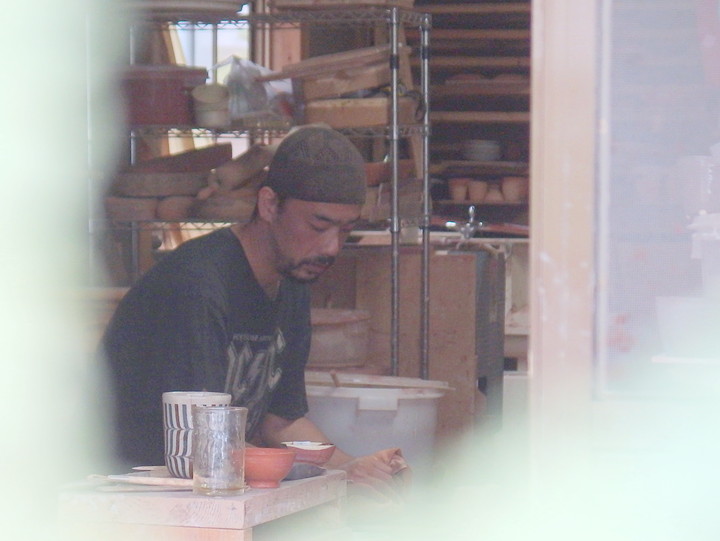
The foundation of making things lies in creating what I myself would want. Without that, it loses its sense of reality. When I push myself to the limit, I sometimes go beyond what I imagined — but since tableware comes from daily life, that’s always my starting point.
Connecting with the Past Through Objects
Hanada: Is there anything new you’ve been trying lately?
Yoji Yamada: I’ve started sourcing clay myself. From an efficiency standpoint, it’s a terrible idea — digging your own clay. But there are things you can only learn by doing it. The clay doesn’t behave as you wish, and if you try to force it, it collapses. When that happens, you realize, “Ah, so this is what it means.” You start to understand the fine line — the physical limit where it barely holds together — and that line often turns out to be the most natural form.
Hanada: So the natural form is the one that the raw clay itself allows.
Yoji Yamada: Yes, I realized that recently. And when I finally shape something well and think, “This looks good,” I sometimes find that the folk craft masters of the past had already done something similar. I’m impressed — “Of course they had.” When I notice similarities or shared lines, I feel, “We were thinking the same thing.”
Hanada: That’s the moment you feel connected to the people of the past — one of the real joys of traditional craft.
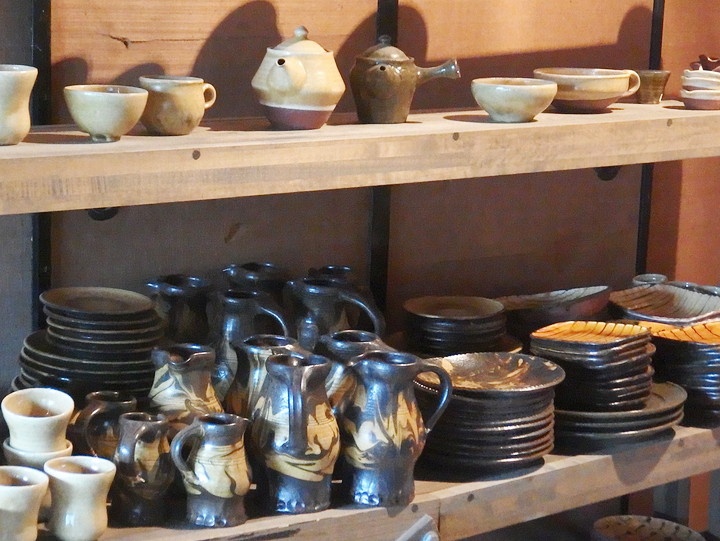
Trivial Talk, Folk Songs, and African Drums
Hanada: Has your idea of what you want to make changed since you became independent?
Yoji Yamada: I don’t think the work I did back then was bad, but it has changed a bit. In the past, I worked like a “one-man pottery factory,” focused on making the same pieces in large numbers at low cost. Now I also want to make things that truly move me.
Yoji Yamada: These days, I even change the background music while working. When I need to mass-produce, I listen to the radio — lighthearted talk shows. When decorating slipware, I play Japanese folk songs or African drums.
Hanada: Japanese folk songs?
Yoji Yamada: They’re actually really good.
Hanada: That’s interesting — slipware to the rhythm of Japanese folk music!
Yoji Yamada: I like that the rhythm sometimes drifts — it’s not perfectly steady.
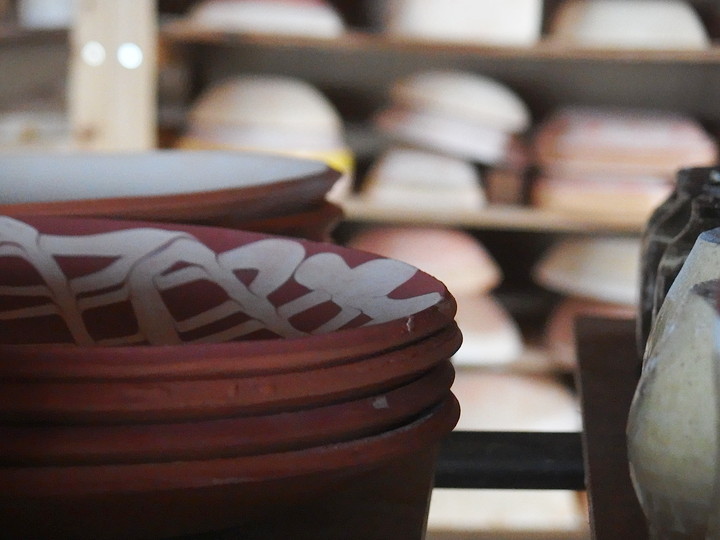
Slipware Before Firing
Hanada: What’s the most enjoyable moment when making slipware?
Yoji Yamada: Right after drawing the pattern, when the surface is still moist. It’s so beautiful — the slip slightly swells where the lines are drawn, glistening with freshness.
Hanada: Like a water surface, maybe… or is that too much to say? (laughs)
Yoji Yamada: Hmm, not quite (laughs). The clay itself is just beautiful. When you apply the slip and see it flowing smoothly — that moment is amazing.
Hanada: You really love slipware, don’t you?
Yoji Yamada: I think everyone who makes it does. You can’t help but think, “I wish it could stay just like this.”
Hanada: But then it disappears once it’s fired.
Yoji Yamada: Yes, though once fired, a different kind of beauty appears.
Hanada: That’s a maker’s perspective. Thank you very much — I’m looking forward to your exhibition.
Yoji Yamada: Thank you. I’m looking forward to it, too.

≪END≫
スリップウエアが教えてくれたこと
出会い
花田: 山田さんが初めてスリップウエアを知ったのは大学生時代ですよね。
山田: はい。21の時に、民藝館のポスターで。
ひと目でひき付けられました。
この鳥の文様のものです。
で、民芸館のホームページを見たら、あの柳さんが写真で持っている、3連の格子のものが出ていたのを覚えています。
-: 当時は理屈抜きだったかと思いますが、今思えばスリップウエアの何にそこまで惹きつけられたのでしょうか。
山田: なんなんでしょうね・・・。
今思えば、ほとんどイメージでしかなかった当時自分がやりたいと思っていたことを形で見せつけられたのでしょうね。
-: 当時は、化学を専攻されていました。
山田: 化学は、なんでも記号で表せます。
スリップウエアには、その記号では表せないもの、つかめないものを感じました。
当時の僕にとっては「なんなんだ、これは」という・・・。
-: 具体的にはどのようなものなのでしょう。
山田: イギリスの当時の時代背景、生活習慣、原料、製法・・・、その時代、その場でしか、生まれ得なかったもの・・・。
似たような原料で似たような製法で作っていた当時のヨーロッパの他の軟質陶器に比べても、これだけ異質なものが生まれてくると言うことは、その土地やその固有の文化などが影響し合って出来あがったものなんだろうな、という気が最近はしています。
この場所、この時だからこそ
-: 山田さん、後にイギリスへ陶芸修行に行くことになるにしても、その時点で当時のイギリスを知っていたわけでもありません。
山田: はい、全然知りません。
-: それでも感じることがあった。
山田: 「宿っている」というと、宗教的に聞こえてしまうかもしれませんが、色々なレイヤーが重なっているというか、表面的じゃない奥行、或いは重なりがあるように見える・・・うーん、見えるんかなあ・・・。
とにかく惹きつけられものがありました。
-: 東洋の古物や他の古美術などを見て感じることもあるのですか。
山田: いいえ。 スリップウエア以来、無いです。
-: 山田さんはスリップウエアにしかそれを感じない。
山田: ただ、瀬戸の鉄絵とか、唐津とか、部分的な要素だけをピックアップしたら、どこかしらスリップと繋がる部分はあると思います。
焼き物以外でも、木の捏ね鉢なんて―ヨーロッパのものでも、日本のものでも―雰囲気だけを見たら、スリップウエアに見えるんです。
「これ、スリップウエアだな」と。
-: 山田さんにとっての「スリップウエア」は外見的な見た目だけではないわけです。
山田: 勿論、文様や色味が独特ですし、日本の食卓でも使えるということも魅力です。
ただ、作り手としては、そういうスリップの表面的な部分だけを切り出して、今、作ったとしても、それはすぐ無くなってしまうのではないかな、という危機感も持っています。
当時のスリップウエアに自分が何を見て、感じて、どう解釈し、うつわに表していくのか。
色々なものを重ね合わせながら、でも形としてはシンプルにポップに食器を作っていきたいと思います。
-: 昔のスリップウエアが当時の様々な環境の中から生まれてきたように、山田さんは現在の社会環境や経済環境、文化、慣習などを受け止め、スリップウエアを通じて、形にしていこうとしているわけですね。
山田: 最終的に当時のスリップを復興させたいわけでもありませんが、引き継いで続けていければなと思います。
僕は古いものに影響を受けているので、それに近づいていきたい気持ちもあります。
当時に近い原料使って、古物にくらべて自分のものがどうなのか、確かめてみたい気持ちも有りますが、僕は日本人だし、信楽でやっているわけですから、この時この場所のスリップウエアを作っていきたいと思っています。
-: それを実現させるために大切なものとは何でしょうか?
山田: 生活かなあ。
自分の身の回りに何を置いて生活するか。
「自分が欲しいと思うもの」が作ることの基本になってくると思うので・・・。
そうでないと、リアリティーがなくなってしまう。
ギリギリまで追い込まれると、自分の想像を超えることもありますが、食器ではあるので「生活の中から出てくるもの」が基本です。
モノを通じて、先人たちと繋がるとき
-: 最近、作ることで新たに取り組んでいることはありますか。
山田: 土を自分で探し始めています。
効率だけを考えたらやるべきじゃないんですよ、自分で土を掘るなんて。
でも、それをやらないと分からない事があると思います。
掘ってきた土は、なかなか言うことを聞かないし、無理やり作ろうとすると、崩れていってしまう。
失敗してみて「あぁ、こういうことか」って、広げたら崩れる、ギリギリの物理的にもつラインに気が付くんです。
で、そのラインを見てみると凄く自然だったりする・・・。
-: 原土が許してくれる形の限界、というのは自然の形なんですね。
山田: 最近、作っていて気が付きました。
で、形を上手く作れて「あ、これいいな」と思って出来上がりを見ると、既に過去に民芸の人がやっていることだったりして「流石やな」って感心することもあります。
ラインが似ていたり、共通する部分を感じたりすると「あ、一緒のこと思っていたんだな」って。
-: 先人と繋がる瞬間ですね。
伝統工芸に関わる人にとっての醍醐味でもあります。
くだらないトーク、民謡、アフリカの太鼓
-: 作りたいものは独立当初と変わってきましたか?
山田: あの時の仕事も悪いものではないと思っていますが、少し変わってきました。
昔の仕事は「1人製陶所」のスタンスで「同じものを数多く、安く作る」のみでした。
今はそれにプラスアルファで、グッとくるものを作りたいと思っています。
山田: あと、最近はBGMを変えるんです。
量産しないといけない時はラジオで、くだらないトーク聞いています。
スリップの模様付ける時は、日本の民謡や、アフリカの太鼓・・・。
-: 日本の民謡ですか!
山田: 結構いいんですよ。
-: 面白い。 日本の民謡をBGMにスリップウエアですか。
山田: リズムがたまにずれるし、一定じゃないのがいい。
焼く前のスリップウエア
-: スリップウエアをやっていて、一番楽しい時はどんな時ですか。
山田: 模様を描いた直後の、乾いていない素地ってキレイなんです。
瑞々しいし、模様のところがプクってふくらんでいて・・・。
-: なんか水面というか・・・言い過ぎですか(笑)。
山田: うん、ちょっと違う(笑)。
泥がきれいなんです。
模様をつけるときに、化粧土がツーっと出ているさまとか。
-: 好きなんですね、スリップウエア。
山田: やっている人は皆好きだと思います。
「ああ、このままうつわになったらいいのになあ」って思います。
-: それって、消えてなくなってしまいますね。
山田: ええ、また焼いたら別のよさが出てくるんでしょうけど。
-: 作っている人ならではの目線ですね。
有難うございました。
企画展、宜しくお願いします!
山田: 宜しくお願いします。
≫山田洋次さんのうつわはこちらから≪
関連記事はこちら