






Read the English version here.
Vibrant Colors, Striking Brilliance.
― Anticipating the Overglaze Enamel Exhibition of Shinichi Takashima (Kyo-yaki) and Naoto Ikeshima (Ko-Kutani) ―
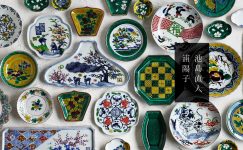
Ahead of the “Shinichi Takashima and Naoto Ikeshima Overglaze Enamel Exhibition,” which opens on Thursday, February 21, we visited their respective studios in Imakumano, Kyoto, and Yamashiro Onsen, Ishikawa. For Hanada, this marks the first time hosting a joint exhibition for these two artists. Based on the rich histories of Japan’s iconic overglaze enamel styles, Kyo-yaki and Ko-Kutani, this exhibition was conceived from their shared commitment to creating tableware tailored for modern lifestyles.
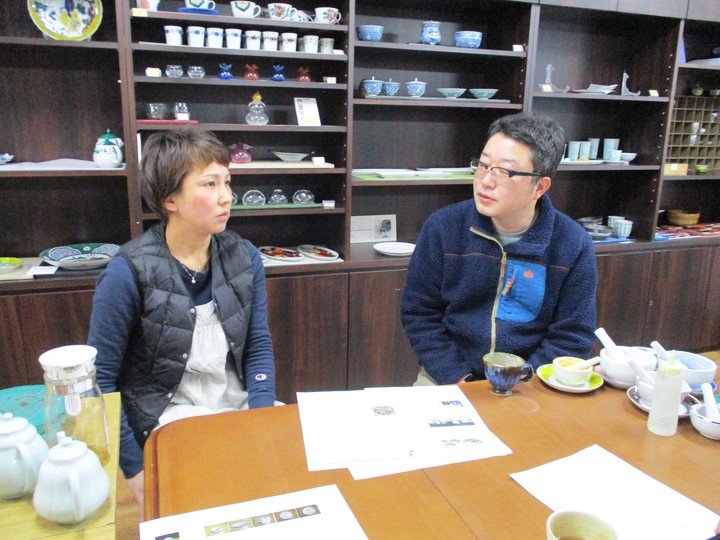
When thinking of Kyo-yaki, brilliant overglaze enamel porcelain often comes to mind. However, a visit to the Kyoto Archaeological Museum reveals that not only overglaze enamel and blue-and-white porcelain, but also ceramic shards of Oribe, Satsuma, and Karatsu wares excavated from within the city are on display. After all, Kyoto has been the capital for over a thousand years. To satisfy the desires of the rulers and wealthy elites of each era, potters and merchants surely competed to replicate and deliver renowned styles from famous production areas across the country. Among these, thin and vividly colored overglaze enamel porcelain—centered around yellow and green Cochin (Kochi) glazes—likely became the definitive style of Kyo-yaki, serving as the most effective medium to express the elegance befitting the imperial capital.
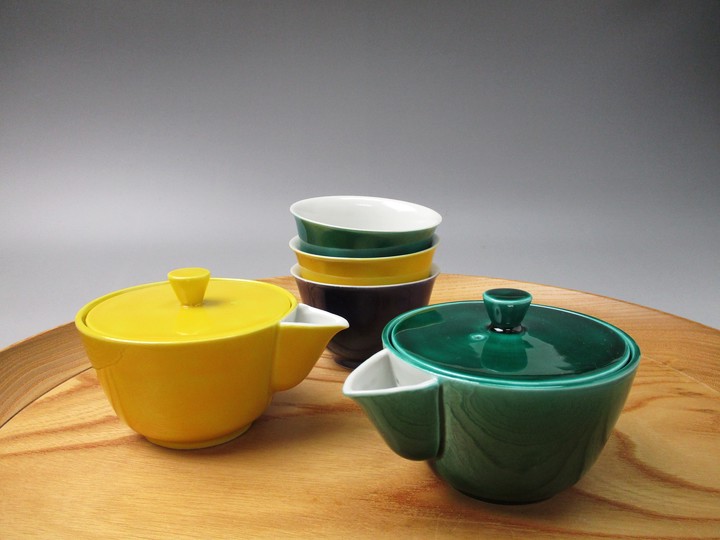
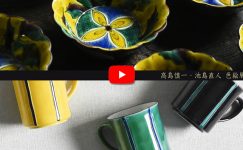
Shinichi Takashima succeeded to the name Koshun as the third-generation head of the Koshun Kiln fifteen years ago. The Takashima family originally engaged in pottery for generations in Seto, Aichi Prefecture, before relocating to Kyoto during the mid-Meiji period under his great-grandfather’s generation. His grandfather established the Koshun Kiln, and over three generations, it has secured a firm position as a kiln specializing in overglaze enamels. While his grandfather’s era focused on making tableware for traditional Japanese restaurants, the previous generation expanded into a wide range of everyday tableware for ordinary households. The fact that mugs, kyusu teapots, pots, and small plates form the core of his collection for this exhibition is a reflection of his response to these contemporary needs.
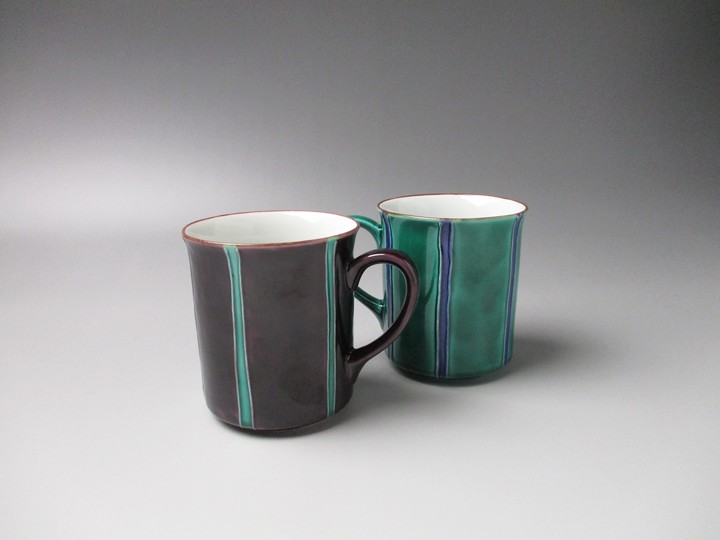
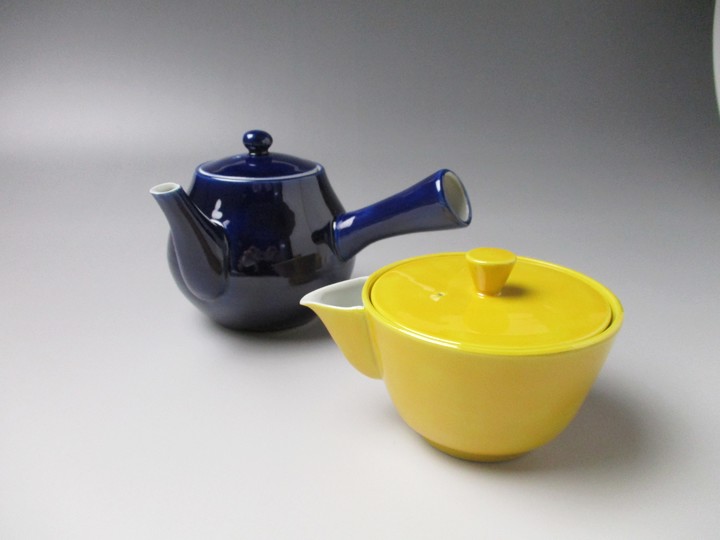
Kyoto culture often carries the impression of respecting tradition to a strict degree. However, it is said that the previous head occasionally advised Takashima, who would carry the kiln into the next generation: “The fundamental spirit and techniques must be refined and passed down, even as generations change. Yet, as people change, eras and sensibilities change as well. Never let yourself be buried in tradition; continue to challenge yourself with a fresh sense of style.” Here, we see the true essence of Kyoto’s flexible culture—not clinging to hollowed-out forms, but adapting precisely to the ever-shifting trends of the times.
Takashima never compromises on form or color. In fact, he has recently developed new shades of turquoise blue and deep navy, offering a glimpse into a new direction for overglaze enamel work.
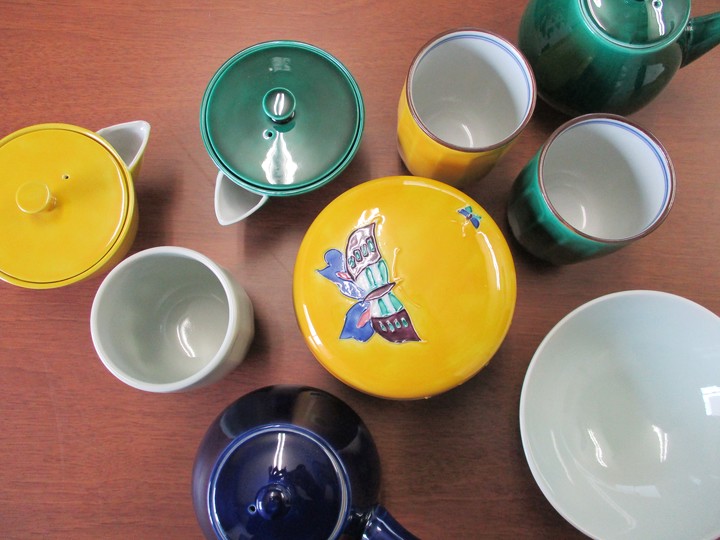
Takashima firmly states that when it comes to making everyday tableware, the most important quality is ease of use. It is about how naturally and comfortably the piece fits when held in one’s hands. As long as this steadfast conviction guides his work, Takashima’s creations will undoubtedly bring a reliable sense of elegance to our dining tables.
On the other hand, Ko-Kutani emerged in the early Edo period and vanished suddenly after a brief period of just over fifty years. It remains a genuinely mysterious story. Naoto Ikeshima, who represents the other half of this exhibition, maintains his studio in Yamashiro Onsen, near the birthplace of Ko-Kutani. The defining characteristics of Ko-Kutani lie in its bold, innovative color tones and patterns, boasting a magnificent scale that stands out unrivaled in Japan.
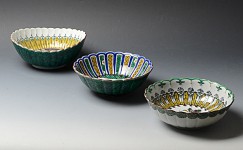
When looking at the pieces crafted by Ikeshima, his deep use of color—particularly centered on Aote (green-style Kutani)—evokes the spirit of Ko-Kutani. However, rather than being simply bold, his patterns are remarkably delicate, showcasing his exceptionally skillful brushwork.
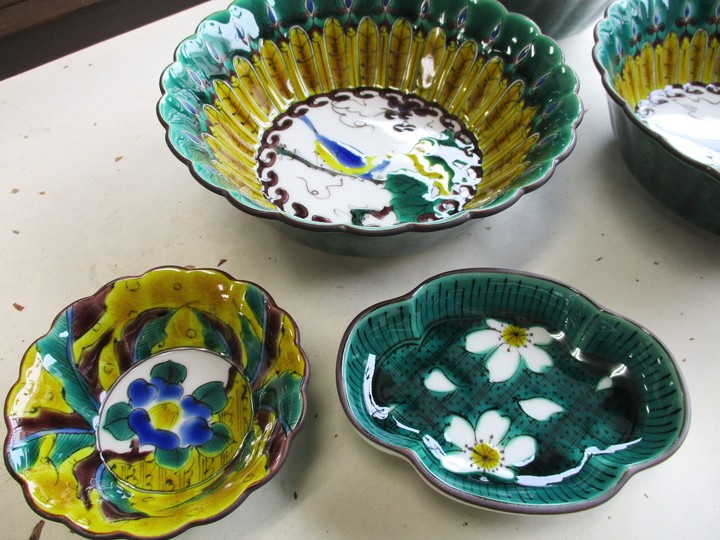
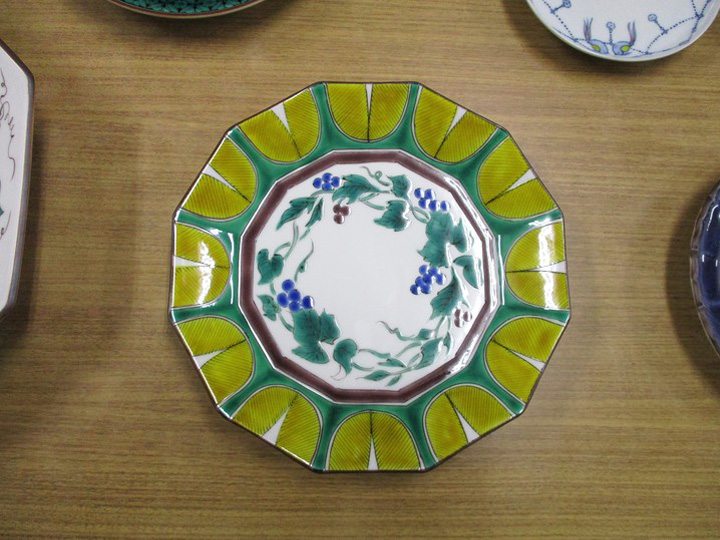
When asking him about this, the quiet artist offered a simple yet earnest explanation: “I certainly love the atmosphere of Ko-Kutani, but in my own mind, I am not trying to replicate it or closely imitate it. Rather, I want to create an original world that has never existed before.” He further shared with a sparkle in his eyes: “While blending various overglaze enamels over the years, I have aimed for my own distinct color palette based on Aote. Along with the patterns, I want to express a gentle feel and a sense of lively, delightful movement within a steady, grounded atmosphere. Looking ahead, I would eventually like to step into a different realm using Western overglaze colors as well.”
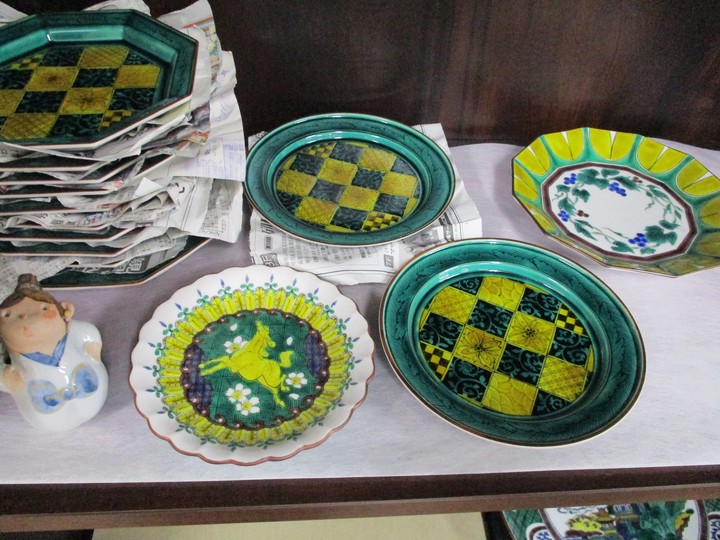
For this exhibition, he highlighted items such as small plates with cobblestone patterns and those entirely covered in green enamel as pieces to look out for. At first glance, these unique items might seem challenging to use, but he proudly notes that they produce a wonderfully interesting effect when actually put to use.
Shinichi Takashima and Naoto Ikeshima are both potters who immerse themselves in crafting overglaze enamel porcelain that beautifully brightens modern life, while remaining deeply rooted in Japan’s ancient ceramic traditions. We eagerly await the day when their stylish latest creations will be on display.
Additionally, overglaze enamel works by Hitomi Ikeshima, Naoto’s wife, will also be featured in this exhibition.
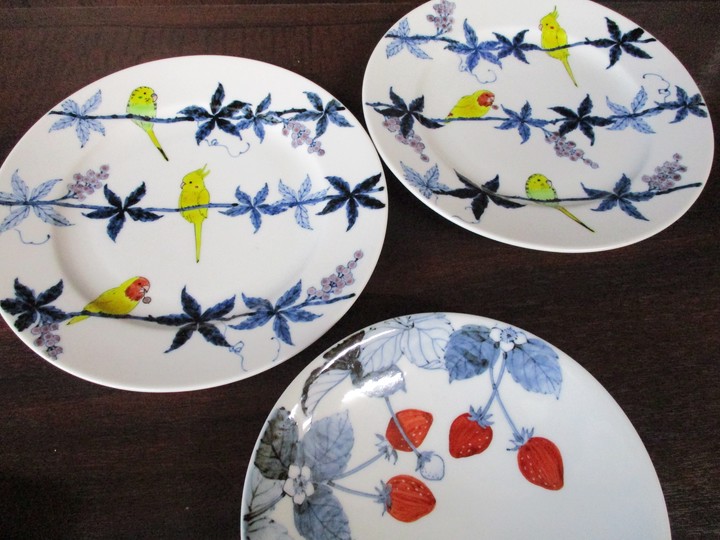
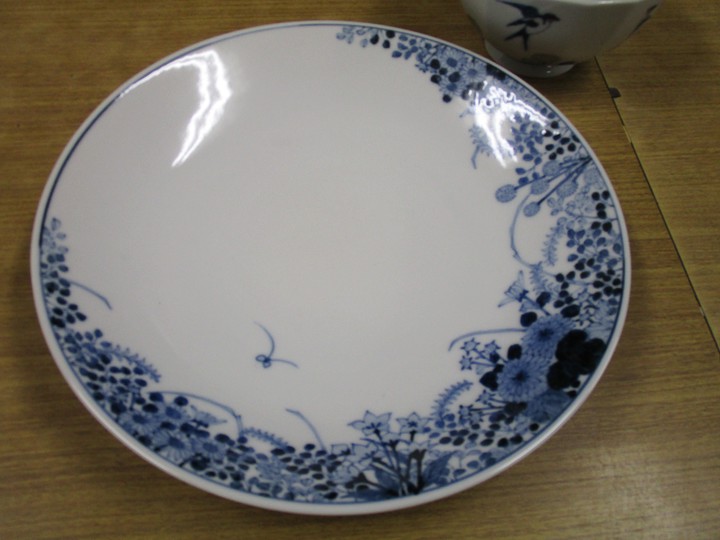
Although these original patterns depart from traditional styles, please also note the witty, elegant, and charming expressions they bring forth.
≪ END ≫色、冴える。
― 高島 慎一(京焼)池島 直人(古九谷)色絵展を控えて ―
2月21日(木曜日)に初日を迎える「高島慎一、池島直人色絵展」を前に
二人の工房がある京都市今熊野、石川県山代温泉にそれぞれを訪ねた。
花田にとって二人の個展は初めてのこと、
長い歴史に育まれてきた日本の代表的な色絵
『京焼』『古九谷』をベースにして
現代生活に向けたうつわ作りに邁進する
二人の共通の姿勢から企画された展覧会である。
京焼といえば鮮やかな色絵磁器を連想しがちだ。
しかし京都考古資料館を訪ねてみると色絵染付だけでなく
織部 薩摩 唐津等の陶片も市内の発掘品として陳列されている。
何といっても京は一千年を越える都、時の権力者や富豪の物欲を満たすため
窯元や商人達は競って全国の名立たる産地のものを
倣って納めたにちがいない。
その中でも薄手で色鮮やかな黄交趾、緑交趾を中心とした色絵磁器は
“京の都に相応しい優雅”を演出する為 最も効果的な焼き物として
京焼の代表格となって来たのだろう。
高島 慎一氏は「洸春窯」三代目当主洸春を15年前に襲名した。
高島家はもともと愛知県瀬戸で代々窯業を営んでいたが
明治中期 曽祖父の代に京都に移転する。
祖父が「洸春窯」を起こし
由来 三代に渡り色絵専門の窯として確乎とした地歩を固めてきている。
祖父の代は割烹中心のうつわ制作であったが
先代から一般家庭の日常食器を幅広く手掛けるようになった。
出品作の中で マグカップ、急須、ポット、銘々皿が中心をなしているのも
そうした需要に応えてのことだろう。
京の文化と言えば堅苦しいまでに伝統を重んずるという印象がある。
先代は 生前 次代を担う高島氏に折に触れてこう諭したという。
『基本的な精神、技術は代が変わっても 磨き 継承していかねばならない。
しかし人が変われば時代も変わるしセンスも変わる
決して伝統に埋没することなく新感覚にチャレンジしなさい。』
ここには形骸化したかたちに固執するものではなく
刻々と変容する時流にも的確に対応して行こうとする
しなやかな京文化の本流の姿をみるのである。
高島氏はかたち、色に妥協することはしない。
事実 以前には無かったトルコブルー、濃紺を新たに開発し
『新たなる色絵の展開』を予感させる。
高島氏は日常食器を作るうえで
一番重視したいのは何といっても『使い易さ』と断言した。
うつわを掌に包んだ時、如何に馴染み 和むかということだ。
この確固とした信念が貫かれている限り高島氏の仕事は
我々の食卓により安心した華やかさを与えてくれるに違いない。
一方『古九谷』は江戸初期に勃興し
五十余年の僅かな時を経て忽然と消えてゆく。
実にミステリアスな話だ。
今回の企画展でもう一方を担当する池島直人氏は
古九谷誕生の地近くの山代温泉内に工房を構えている。
古九谷の特徴は大胆、斬新な色調と文様で表された
わが国では群を抜いたスケールの大きさにある。
池島氏の手になるうつわを見ていると
青手を中心とした深みのある色遣いは古九谷を彷彿とさせるものがあるが
文様は大胆というより
氏独特の達者な筆力を活かした繊細なものが顕著だ。
このことについて当人に聞いてみると
寡黙な氏は朴訥ながら
「古九谷の雰囲気は確かに好きだが
意識の上では決して倣おうとか肉薄していこうなどとは思っていない。
寧ろ今までに無い独自の世界を作り上げて行きたい。」
と強調する。その上で
「今まで色絵具も様々調合しながら
青手をベースとした自分自身の色調を狙ってきた。
文様も含めて揺るぎない雰囲気の中にも
柔らかな感じ 動きのある愉しい感じを出していきたい。
挙句 将来的には洋絵具も使った違う世界にも踏み出したい。」
と眼を輝かせる。
今回の展覧会では特に注目してもらいたいアイテムとして
石畳文様や全面緑で塗られた銘々皿を挙げた。
他にはない一見使うのが難しそうなうつわだが
なかなかどうして使ってみるとこれが面白い効果を発揮すると
胸を張る。
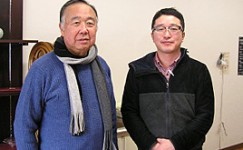
高島 慎一 池島 直人
共に日本古来の伝統的な焼き物に身を寄せながら
現代生活をより華やかに彩っていく色絵磁器の制作に没頭する陶工。
お洒落な最新作の数々が展観される日が待たれる。
尚 今回は池島直人夫人 仁美さんの色絵も出品される。
伝統的なものとは離れた創作文様だが
醸し出す軽妙洒脱でチャーミングな表情にも注目して頂きたい。
関連記事はこちら