



English version of the interview here.
An Increasing Range of Namasu Bowls
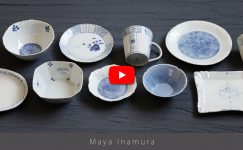
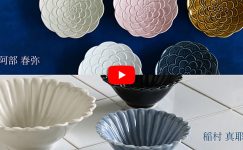
Hanada: For this special exhibition, you’ve created a wide range of appealing new works. You’ve also expanded the variations of your namasu bowls.
Maya Inamura: I’ve been using namasu bowls quite often lately, and I’ve really felt how practical they are—the ease of plating, how naturally everything comes together.
They’re a very comfortable, versatile size. That made me want to expand the range, so I created three new types.
Hanada: Specifically, they’re about 15 cm wide, or just under, with a height of around 4.5 cm including the foot,
and the well is fairly flat… is that right?
Maya Inamura: Yes, many of them are like that.
Hanada: Somewhere between a plate and a bowl.
Maya Inamura: Exactly. They work well for dressed dishes, and even foods with some liquid are fine. If you place the food in the center, it looks nicely composed.
Hanada: Which was the first namasu bowl you made?
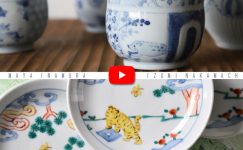
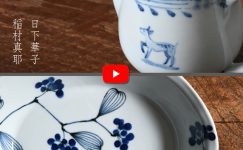
Maya Inamura: This blue one here. It’s a very familiar shape, and I thought of it as the most basic form. At first, I tried it with a simple design—just a single flower. Next came the tiger. I was happy that even something playful like that was received better than expected.
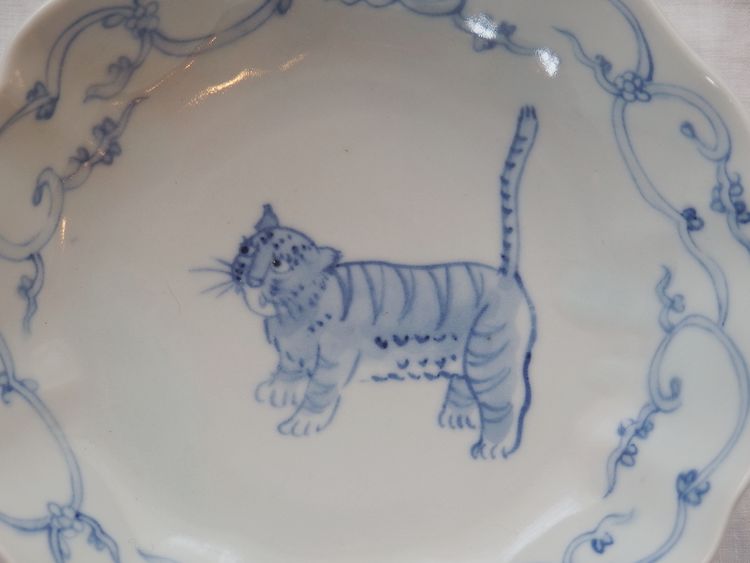
Hanada: It feels like it’s been a while since I last saw your “tiger.” I remember that the tiger motif was what first introduced me to your work.
Maya Inamura: I recently started keeping a cat, and seeing one up close made me think again, “Tigers are great too.”
Hanada: What is it about tigers that you like?
Maya Inamura: That they’re carnivores.
Hanada: “Carnivores,” meaning…? (laughs)
Maya Inamura: When you go to a zoo, don’t you head straight for the carnivores first? They’re powerful and exciting to watch. And you don’t exactly see them around you every day.
Hanada: I see (laughs).
I’ve Always Liked the Kirin
Hanada: Next, this octagonal piece. We had you look at an example of old Imari ware.
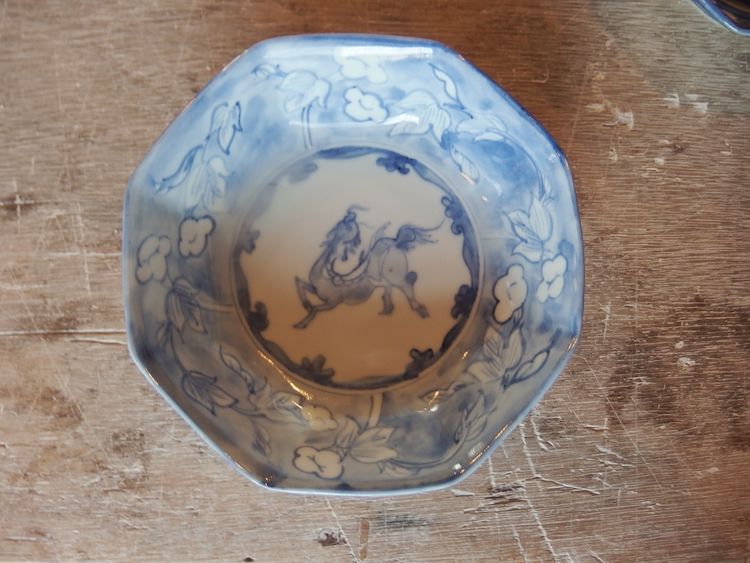
Maya Inamura: The kirin is fascinating. The overall form, the delicacy of the brushwork, the composition… it really makes you feel the mastery of past artisans.
Hanada: The composition is particularly interesting.
Maya Inamura: The kirin is placed right in the center, and then there’s this grass arranged around it—that sense of strangeness. You wonder what connection the kirin has to the plants.
Hanada: You often see combinations like that in Japanese tableware.
Maya Inamura: It’s not something you’d come up with by thinking logically, yet it works so well. That’s what makes it amazing.
Hanada: How was it when you actually tried painting it?
Maya Inamura: Balancing the dynamic movement of the kirin with the softer feeling of the surrounding plants was difficult. And drawing curves—like the veins of the leaves—was challenging.
Hanada: Did you make any changes of your own?
Maya Inamura: I changed the back slightly. I wanted it to feel lighter.
Hanada: Yes, the original does feel a bit heavy.
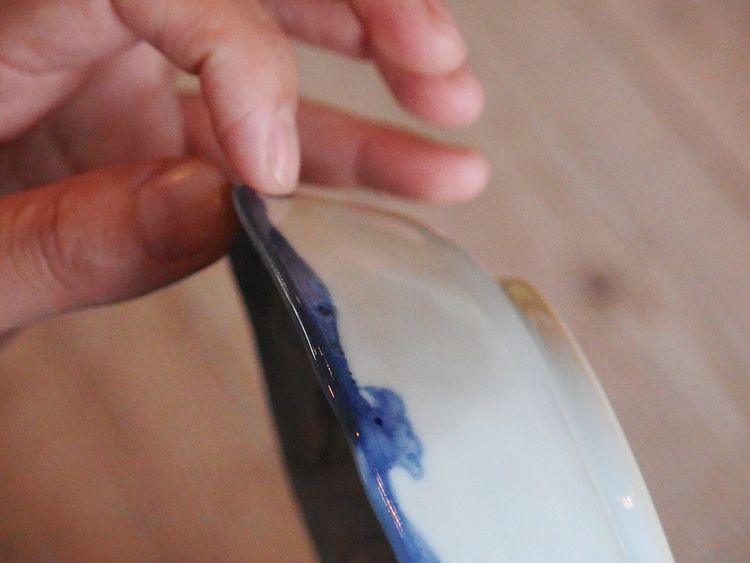
Maya Inamura: I also hoped I could capture the overall spirit of the kirin.
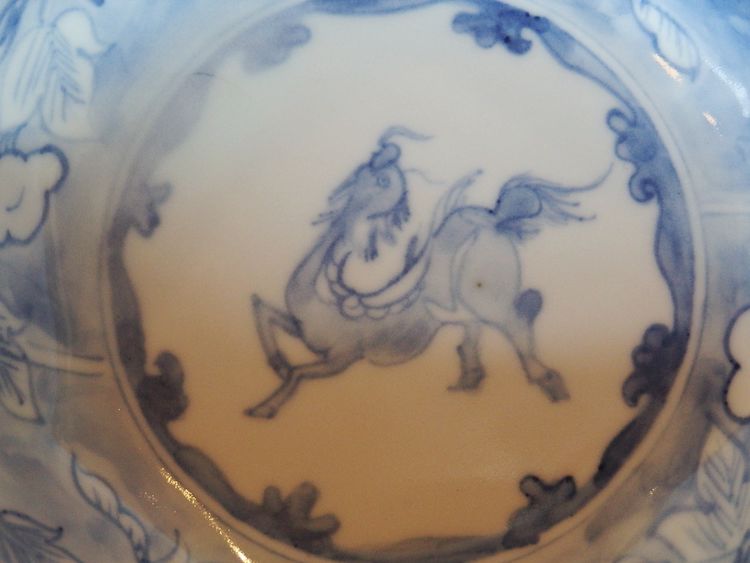
Hanada: Did this make you like the kirin more?
Maya Inamura: I’ve liked the kirin for a long time.
Hanada: Please tell us a bit about this piece as well. It’s a common pattern in old Imari ware.
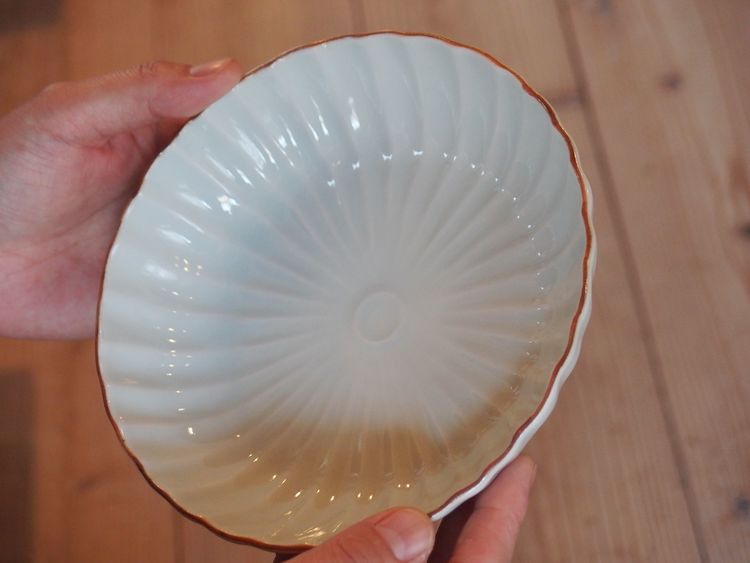
Maya Inamura: I wanted to try making a classic form myself, so I did. By keeping the rim flat, I think it avoided becoming overly cute.
For Tawara-Shaped Croquettes
Hanada: Next is this oval plate. We showed you a French antique as reference.
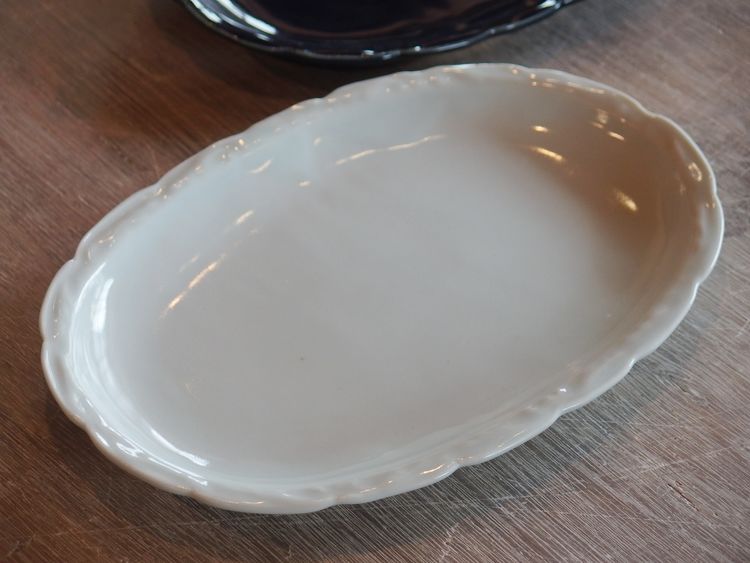
Maya Inamura: Lately, I’ve really felt that French ceramics and Japanese ceramics share common roots. At first glance they seem different, but there are many similarities. Japanese food also works beautifully with French pieces.
Hanada: You made this one slightly shallower than the original.
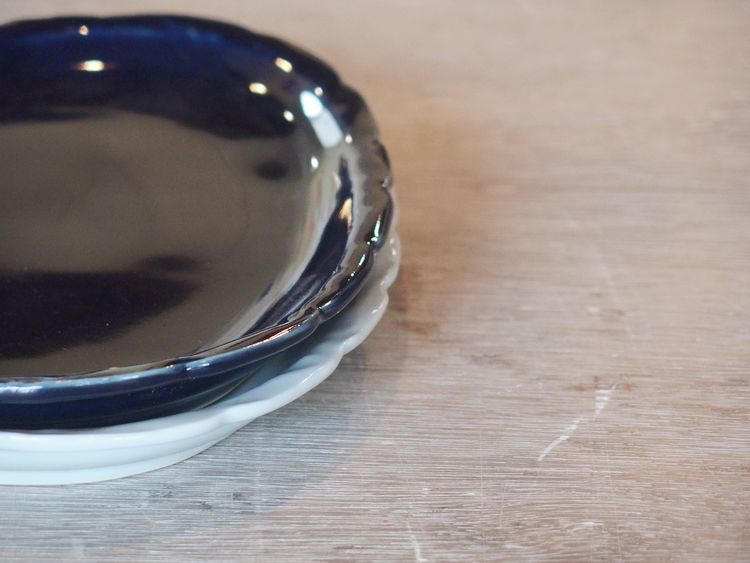
Maya Inamura: Yes. I thought asparagus would look good on it. You can place it on the plate whole.
Hanada: White asparagus here, green asparagus there.
Maya Inamura: The proportions feel just right, don’t they? I think tawara-shaped croquettes would suit it as well.
Hanada: Arranging two or three would look nicely balanced.
Maya Inamura: This wing-like detail on the rim is also charming.
Hanada: Yes, that’s what gives it a stylish feel.
Maya Inamura: I like that it’s not just cute. This is the kind of atmosphere I’d like to create.
Another Oval Plate
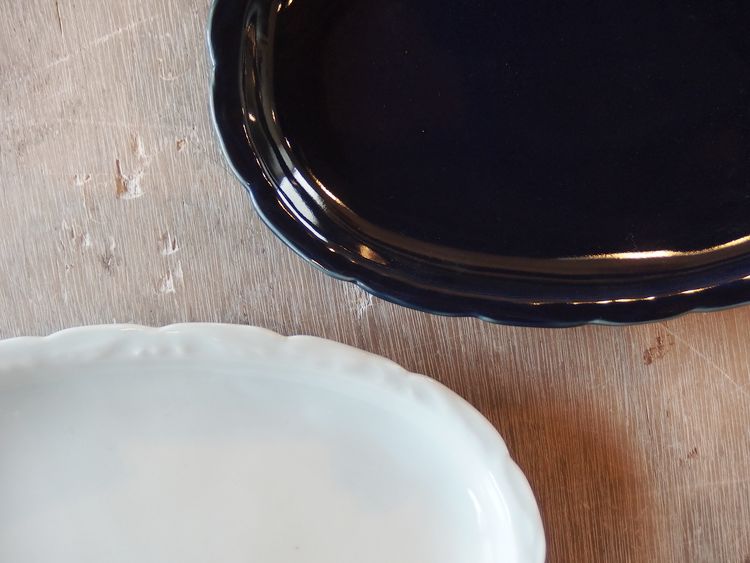
Hanada: Next is the larger, deeper oval plate.
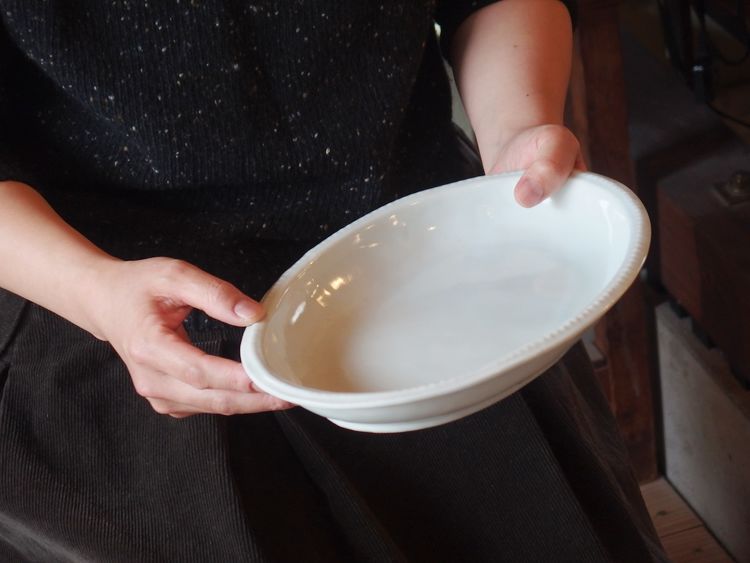
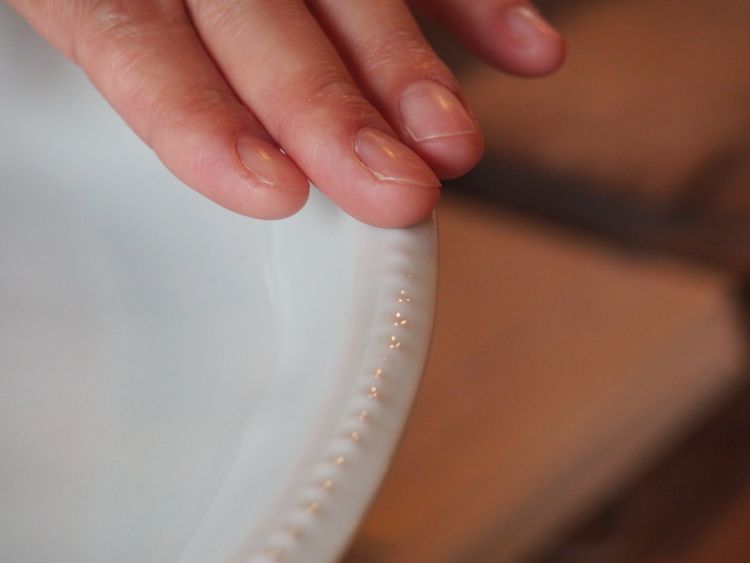
Maya Inamura: It’s a simple form, but it was difficult. I struggled with the decoration on the rim, but decided to leave it as it was.
Hanada: Without anything there, it might feel a bit plain.
Maya Inamura: I felt it would become too ordinary.
Hanada: Right.
Maya Inamura: But I think that detail is probably there more for structural strength than decoration. If it were completely flat, it might warp more easily. The rim is folded back to add thickness, and understanding those functional reasons made it an interesting piece to work on.
Hanada: It also looks very practical to use.
Maya Inamura: Hayashi rice would be good. Pasta as well.
Hanada: Has your daughter started eating curry yet?
Maya Inamura: For now, it’s Anpanman curry (laughs).
Something to Use Slowly, Over Time
Hanada: About this cylindrical piece—sometimes you feel like doing more detailed painting.
Maya Inamura: Yes, sometimes I want to work on something more densely painted. I borrowed motifs from many sources, mainly old Imari ware. I included not only geometric patterns but also plants. Rather than everyday work, I aimed for something you can use slowly and thoughtfully.
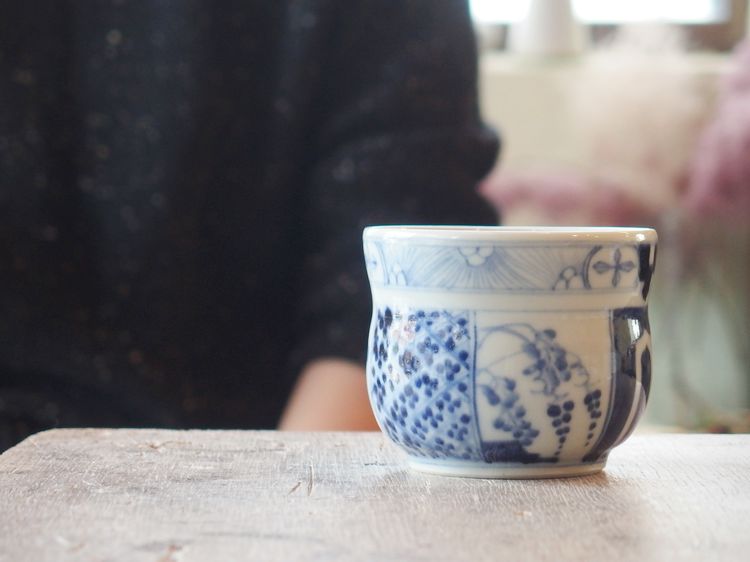
Hanada: Have you used it for anything yet?
Maya Inamura: For shochu mixed with hot water.
Hanada: So your husband drinks shochu.
Maya Inamura: No, I do (laughs).
Hanada: My apologies (laughs).
Maya Inamura: My husband prefers shochu in small cups, drinking several in a row.
Hanada: That cylinder really reflects your personal style.
Maya Inamura: Yes.
No Offense to Birds, But…
Hanada: You seem to really enjoy painting now.
Maya Inamura: I really do. I feel more comfortable with the brush than before—it’s become easier to paint.
Hanada: Why do you think that is?
Maya Inamura: Probably just time and experience. Trying many different things. What I want to paint hasn’t changed, but what I’m able to paint has increased. I used to be especially bad at animals.
Birds were easier, but recently I’ve started painting four-legged animals too. They’re much harder to balance.
Hanada: There’s more movement involved as well.
Maya Inamura: And many different poses. Birds are… well, no offense to birds, but they’re simpler.
Returning to a Free State of Mind
Maya Inamura: This is a piece I consciously made after my child was born. I gave it a wide foot so it wouldn’t tip over easily, and focused on creating an overall sense of cuteness.
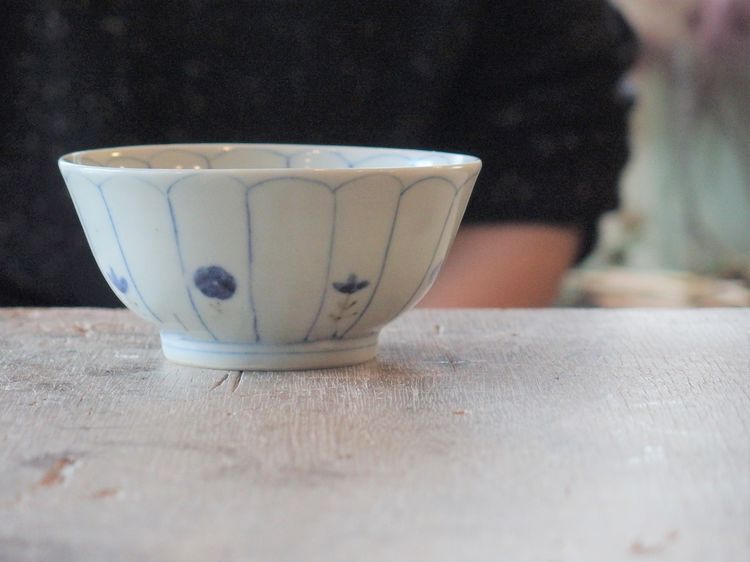
Hanada: When did you decide to make it?
Maya Inamura: For her first ceremonial meal.
Hanada: How did your child react?
Maya Inamura: She’s three now, and she seems to recognize it as “my own rice bowl.” She takes it out of the cupboard herself and eats from it.
Hanada: She brings it herself—that’s impressive.
Maya Inamura: Eating is everything to her.
Hanada: That sounds a bit like you (laughs).
Maya Inamura: Not just a bit—we’re exactly alike (laughs).
Hanada: Did the birth of your child influence your approach to making ceramic work?
Maya Inamura: It freed my mind. Before, I think I was deciding too many things in advance. Thinking, “This goes against the principles of ceramics,” or “I can’t paint this.”
Hanada: So you stopped deciding everything beforehand.
Maya Inamura: Now I try it first, and then think about it.
Hanada: What about your child made you feel that way?
Maya Inamura: She absorbs everything without overthinking, and when children are small, they feel like pure life itself. There are no fixed rules… freedom is a wonderful thing.
Hanada: Perhaps one day your child won’t feel so free anymore, after learning many things. And then you might say, “It’s okay to be free.”
Maya Inamura: Maybe I will (laughs). I wonder if she’ll remember this conversation.
The Drawings of Tomitaro Makino
Hanada: It’s been seven or eight years since we first met. Your range of work has expanded considerably. Originally it was mainly white porcelain, sometsuke, and lapis-blue glazes… and your decorative patterns have broadened as well.
Maya Inamura: I want to keep expanding. It still feels too early to narrow things down.
Hanada: I thought the barley motif was also a new approach for you.
Maya Inamura: The balance there was inspired by French tableware.
Hanada: The way the motifs are scattered. Speaking of plants… is that Tomitaro Makino on the wall?
Maya Inamura: No, that one is from overseas.
Hanada: My apologies.
Maya Inamura: But I do like Tomitaro Makino, and I’ve visited the Makino Memorial Garden in Nerima.
Hanada: His work is overflowing with love for plants… Drawings by people who weren’t originally professional artists have a unique charm.
Maya Inamura: He depicts plants down to the roots, showing their entire form. It’s not an image—it’s a faithful transcription of detail. They’re real, yet somehow not real. In everyday life, we don’t usually observe seeds that closely.
Hanada: The images we normally hold in our minds are closer to conventional drawings. Makino’s work is so true to the subject that, paradoxically, it feels less real to our memory.
Maya Inamura: That’s exactly what I like about it.
Hanada: Has his work influenced your own painting?
Maya Inamura: Not fully yet (laughs).
Hanada: There’s still so much to be explored—that makes what’s ahead exciting.
The Pleasure of Following the Work of a Living Artist
Hanada: Looking ahead to the exhibition.
Maya Inamura: I hope visitors can see what I personally find interesting right now.
Hanada: What we enjoy changes over time, and naturally our style changes with it. That’s one of the pleasures of following the work of someone who is actively creating.
Maya Inamura: I agree. I think it will continue to change.
Hanada: Thank you very much.
≪ END ≫
なます皿が増える
-:今回の企画展に向けて、魅力的な新作を色々と作っていただきました。
なます皿のバリエーションも増えましたね。
稲村:ここのところ、なます皿をしょっちゅう使っていて、盛り付けやすさとか、
まとまりやすさとか、とても使いやすいサイズ感であることを実感しました。
それで、バリエーションを増やそうと思って、新たに3種類作りました。
-:具体的には幅15㎝か15㎝弱、高さは高台入れて4.5cmくらいで、
見込みはフラット…でしょうか。
稲村:そういうのが多いですね。
-:皿と鉢の中間みたいな。
稲村:そうです。和え物でもいいし、汁気があっても大丈夫だし、真ん中に盛れば格好良く見えるかなって。
-:最初に作ったなます皿はどれでしょうか?
稲村:この青いなます皿です。
昔からよく見る形ですし、一番ベーシックなのかなと思って。
最初、絵柄はシンプルな花一つだけ入れて、作ってみました。
次に、虎です。こうやって、意外と遊んだものでも、結構受け入れられたので、よかったなと思います。
-:稲村さんの「虎」は久しぶりに見た気がします。
稲村さんを知ったのは、虎の絵がきっかけだった覚えがあります。
稲村:最近、猫を飼い始めて、間近で猫を見ていたら「虎もいいよね」ってあらためて思うようになりました。
-:虎の何が、好きなのでしょう。
稲村:肉食獣なところ。
-:「肉食獣な」というと(笑)?
稲村:動物園行ったら、まず肉食獣を見に行きませんか。力強いし、見ていて楽しいですよね。
それに、その辺にいないし。
-:そういうことですね(笑)。
麒麟は昔から好きでした
-:続いて、この八角です。
古伊万里を見ていただきました。
稲村:麒麟、面白いですね。
-:うつわ全体のかたち、筆の細やかさ、構図の取り方…、先人の凄さを実感しました。
-:構図、面白いですね。
稲村:真ん中に麒麟がいること。それと、この草が周りに来ている不思議さ、でしょうか。
麒麟となんの関係があるのかと。
-:そういう組み合わせ、和食器ではよく見ます。
稲村:頭で考えていると出てこない発想ですが、絶妙にマッチしているじゃないですか。
すごいなって。
-:実際描いてみて、いかがでしたか。
稲村:躍動感のある麒麟と、周りの柔らかい感じの草花をバランスよく対比させるのが難しかったです。
あと曲線の出し方―例えば、葉脈とか…難しいと思いました。
-:自分なりに変えてみたところなどはありますか。
稲村:後ろ側は、ちょっと変えました。軽い感じにしたくて。
-:そうですね。元は、若干ごついです。
稲村:あとは、麒麟の雰囲気を写し取れたらいいなと。
-:麒麟、好きになりましたか。
稲村:麒麟は昔から好きでした。
-:これの話も、少しお願いします。古伊万里でよくあるパターンですね。
稲村:よくある形も自分で作ってみたかったので、やってみました。
縁をフラットにしたら、可愛くなり過ぎずよかったかなと思います。
俵型のコロッケを
-:続いて楕円のお皿です。
これはフランスのアンティークを見ていただきました。
稲村:最近、フランスのうつわなどと日本のうつわに、ルーツの同一を実感します。
一見、違いますが、似ている部分も少なくないなって。
フランスのものにも、日本料理は合いますし。
-:元より、少し浅くしてくれました。
稲村:はい。アスパラガスなんか合いそうだなと思って。
長いまま載せられます。
-:こっちはホワイトアスパラ。こっちはグリーンで。
稲村:これ、サイズ感が絶妙ですよね。
俵型のコロッケとか合いそうな気がしますけど。
-:二つか三つくらい並べると、可愛くおさまりそうです。
稲村:この縁の羽みたいなのもかわいいですね。
-:そうそう、それがおしゃれです。
稲村:かわいいだけじゃない感じがいいなと思います。
こういう雰囲気が出したいですね。
もうひとつの楕円皿
-:じゃあ次は大きくて深いほうの楕円皿です。
稲村:シンプルな形ですが、難しかったです。
この縁の装飾の部分を悩みましたが、そのまま残しました。
-:何もないと、つまらなくなりそうですね。
稲村:ありきたりになる気がして。
-:ですね。
稲村:でも、あれ、多分装飾というよりは、強度確保のためだと思います。
フラットなままだとゆがみやすいのではないでしょうか。
で、厚みを出すために、折り返してもあるし、そういうのも分かって面白い仕事でした。
-:使い勝手もよさそうに仕上がりました。
稲村:ハヤシライス。パスタもよさそうです。
-:お嬢さん、カレーはまだですか。
稲村:いまは、アンパンマンカレーです(笑)。
じっくりと使えるもの
-:筒について。たまに絵を描きたくなるのですね。
稲村:たまには、書き込んだものを書きたくなるんです。
模様は、古伊万里を中心に色々な所から借りてきました。
幾何学文だけでなく草花も入れました。
いつもの普段使いのような雰囲気ではなく、じっくり使えるようなものを目指しました。
-:何かに使われましたか。
稲村:焼酎のお湯割りです。
-:ご主人、焼酎なのですね。
稲村:いえ、私が(笑)。
-:失礼しました(笑)。
稲村:主人は、焼酎もぐい飲みで何杯も行くのが好みです。
-:その筒は稲村さんのスタイルなのですね。
稲村:はい。
鳥には失礼ですが…
-:今は、絵をかくの、楽しそうですね。
稲村:楽しいですねえ。前より筆に慣れてきたというか、書きやすくなってきました。
-:なぜですか。
稲村:年月だと思います。いろいろやっているうちに。
書きたいものは変わりませんが、書けるものは増えてきました。
特に、昔は動物が苦手でした。
鳥なんかのほうが書きやすかったのですが、最近は四つ足も描くようになりました。
四つ足はバランスが難しいです。
-:動きも出てきますしね。
稲村:ポーズも色々ですし。
鳥は、まあ…鳥に失礼ですけど、簡単なんですよ。
自由な状態に戻るとき
稲村:これは子供が生まれてから意識して作ったうつわです。
高台を広く取って倒れにくく、全体の雰囲気は可愛さを意識して、作りました。
-:いつ頃作ってあげようと思ったのですか。
稲村:お食い初めの時です。
-:お子さんの反応はいかがですか?
稲村:今3歳なのですが「自分のご飯茶碗」という意識を持っているようです。
食器棚から自分でそれを持ってきてご飯を食べています。
-:自分で持ってくるのですか。すごいですね。
稲村:食べることが全てなんです、彼女は。
-:そのへんちょっと似ていると(笑)。
稲村:ちょっと似じゃないです。そっくりです(笑)。
-:お子さんの誕生は、稲村さんのうつわ作りに影響を与えましたか。
稲村:心が自由になりました。
以前は、自分でいろいろ決めてしまっていた気がします。
これは焼き物の原則から外れるなとか、これは描けないなとか…。
-:やる前にいろいろ決めなくなったと。
稲村:一応やってみてから、考えようかなって。
-:お子さんの何を見て、そう思ったのですか。
稲村:頭では考えずに、色々なことを吸収しているわけですけど、小さいうちは生命そのものっていう感じですよね。
決めごとが何もないし…、自由っていいですよね。
-:そのうち、お子さんが自由じゃなくなっていくのかもしれません。
いろいろ知ってしまって。
そうしたら「自由でいいんだよ」なんて、稲村さんから声をかけることに…。
稲村:言いますかねえ(笑)。今、こんな話をしていること、覚えていられるか…。
牧野富太郎さんの絵
-:最初に会ってから7-8年経ちます。制作の幅もずいぶん広がってきました。
もともとは白磁と染付、瑠璃…。文様のバリエーションも広がってきました。
稲村:これからも、広げていきたいです。まだ、絞るのには早すぎるかなと思っていて。
-:あの麦文なんかも、今までにないようなやり方だなと思っていました。
稲村:あの辺のバランスもフランスの食器なんかをイメージしています。
-:文様が散っているところですね。
植物といえば…あの壁に貼ってあるのは牧野富太郎さんですか。
稲村:いや、これは外国のです。
-:失礼しました。
稲村:でも、牧野富太郎さんは好きで、練馬の記念庭園には行きました。
-:植物に対する思いに溢れていて…。
ああいう、もともと絵をかくのが仕事じゃない人の絵には独特の魅力があります。
稲村:根っこまで、植物の全貌が描かれていますよね。
イメージじゃなくて、事細かにそのままが移されている。
実際のものだけど、実際ではない気がするんです。
逆に実生活では、種まで、そんな詳しく見ないですよね。
-:普段、頭の中で捉える画像は、普通の絵のほうが、近いです。
牧野さんの絵は、現物に対してリアルに描いたがゆえに、却って僕らの記憶に対してはリアルじゃなくなっていますね。
稲村:その感じが好きなんです。
-:ご自身の絵付けに何か影響を受けていますか。
稲村:まだ、活かしきれていないです(笑)
-:活かしきれていないものがたくさんあって、これからが楽しみですね。
現役の人の仕事を追う楽しみ
-:企画展に向けて。
稲村:自分が今、面白く感じていることをお客さんに見てもらえたらいいなと思います。
-:楽しいことも色々変わりますよね。つられて作風も変わっていく。
それが今生きている人の仕事を追う楽しさの一つだと思います。
稲村:そうですね。これからも変わると思います。
-:有難うございました。
関連記事はこちら