


English version of the interview here.
High Concentration Creations
Hanada: Could you tell us what you’ve been feeling or thinking about recently?
Shintaro Abe: In our case, I think we excel more at producing the same items repeatedly, rather than one-of-a-kind pieces—more like craftsmen than artists. That aspect hasn’t changed. What has changed recently is that, while our conventional pieces give customers a sense of reassurance, I feel they are also seeking something different from that.
Hanada: What kind of things do you mean by “something different”?
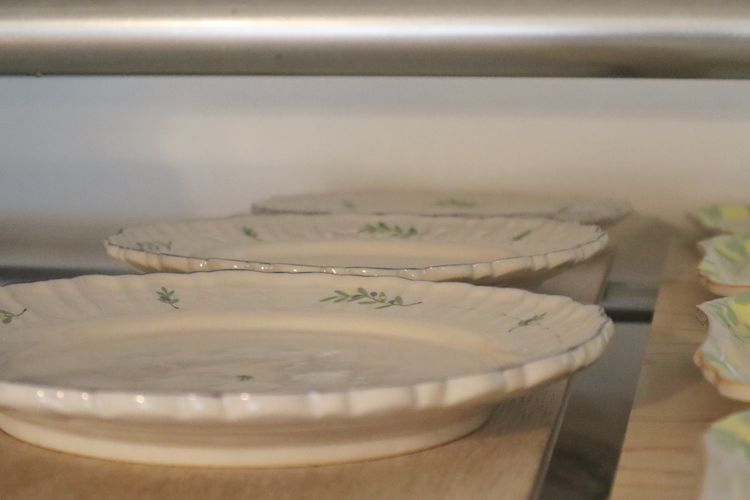
Shintaro Abe: Something with more concentration… or rather (laughs), something more condensed.
Hanada: Like a highly crafted one-of-a-kind piece?
Shintaro Abe: Exactly. Apart from our standard tableware, I’m thinking about how to express the artist’s character through one-of-a-kind pieces. I’m in my 30s now, but when I reach my 40s and 50s, I hope to gradually create pieces that symbolize those periods.
Hanada: What is the key to achieving that “high concentration”?
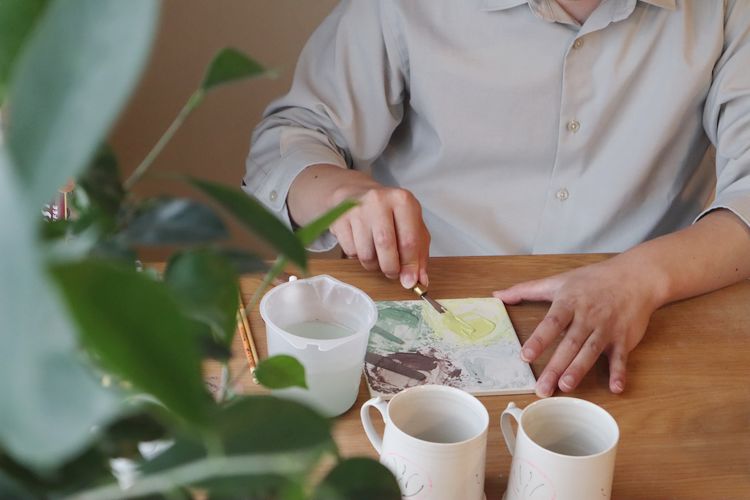
Shintaro Abe: I’m also challenging myself to use techniques that weren’t suitable for mass-produced standard tableware.
Hanada: That must broaden your creative range as well.
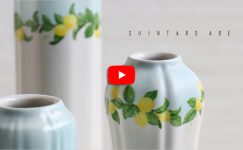
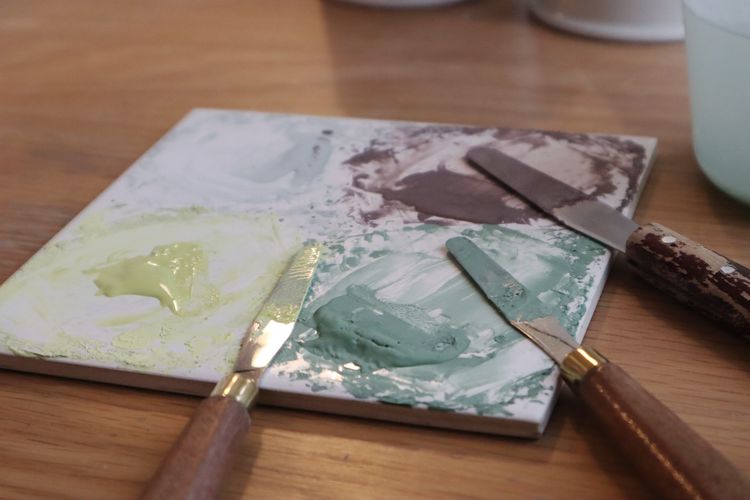
Shintaro Abe: For painted tableware, I usually use a white base, but I try things like changing colors on the top and bottom, or increasing the number of colors used in the designs.
Hanada: How many colors do you usually use?
Shintaro Abe: Up to seven colors sometimes. That makes it difficult to produce as a standard item.
Hanada: What forms are common?
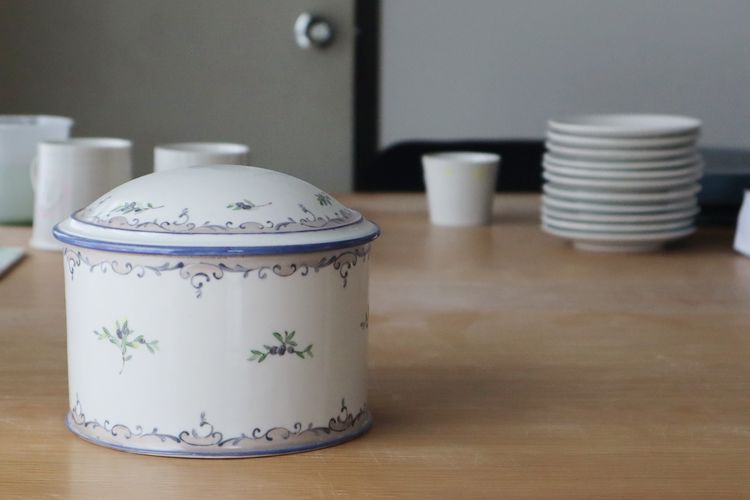
Shintaro Abe: Lidded pieces, and recently I’ve started making cup-and-saucer sets. I’m also considering teapots, though I haven’t made them yet.
Seeing the Same Things Differently
Hanada: So in your mind, you have two directions: standard pieces and high-concentration pieces.
Shintaro Abe: It’s a different field, but like Toyota—they do motorsports separately from regular cars. Motorsports push the limits, and those innovations eventually feed back into regular cars. I realized one-of-a-kind pottery is similar; pursuing these pieces allows me to apply those elements practically in standard works later.
Hanada: One-of-a-kind pieces involve taking risks and making bold moves.
Shintaro Abe: Even in painting, the way each surface is used greatly changes the impression. I saw a vase at the Idemitsu Museum’s Hazan Itaya exhibition; the composition and use of space was very inspiring. Since I started painting seriously myself, I notice not only the main design but also the fine edge decorations and details in the blank spaces.
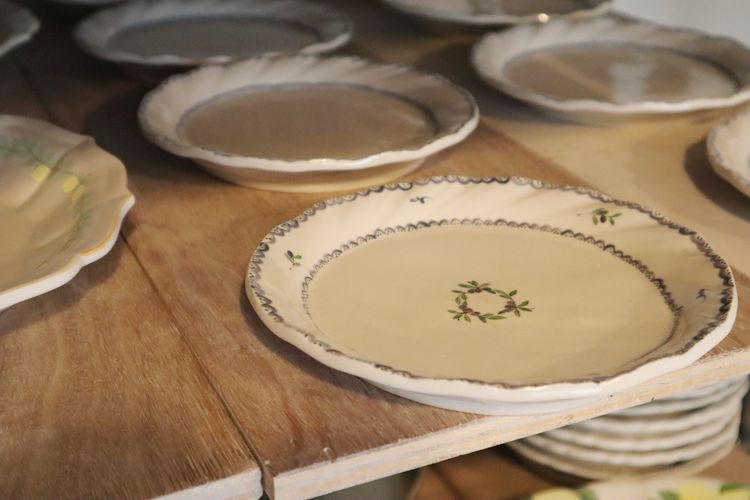
Hanada: Even if the object hasn’t changed, it appears different or shows things previously unseen. You’ve changed yourself, haven’t you?
Western Tableware Made by Japanese
Hanada: You also pay attention to European tableware, but you don’t directly imitate it.
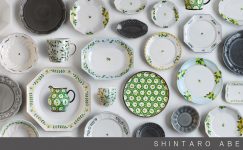
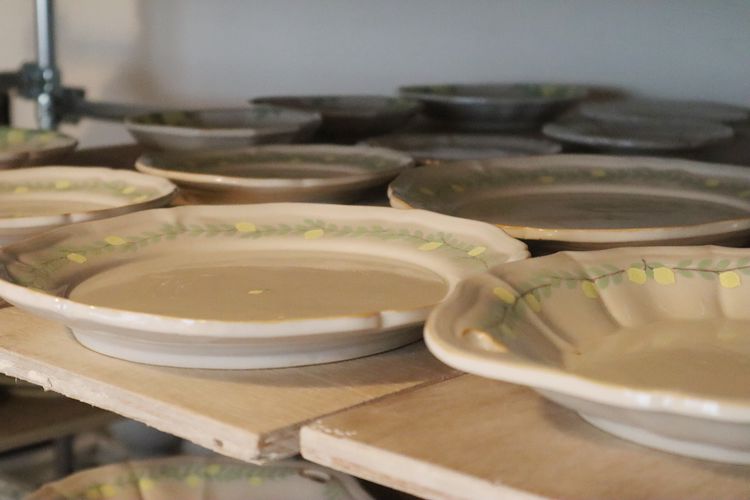
Shintaro Abe: I think of it as “Western tableware made by Japanese.”
Hanada: So you are intentionally conscious of that perspective.
Shintaro Abe: Foreign interpretations of Shino or Oribe are quite different from Japanese creations. They admire old Japanese pottery and express their artistry that way, but I think it’s the other way around. Starting from Western tableware, ideas emerge uniquely from a Japanese perspective.
Mentoring the Next Generation…
Hanada: You also serve as the leader and manager of your workshop. Your approach to running the studio feels fresh, and I believe it brings inspiration and hope to the world of tableware and Japanese ceramics.
It demonstrates a mindset and capability that can motivate young people to consider a career in this field.
Not everyone may agree with your approach, and you likely hear differing opinions—but I respect your choice to continue deliberately despite that.
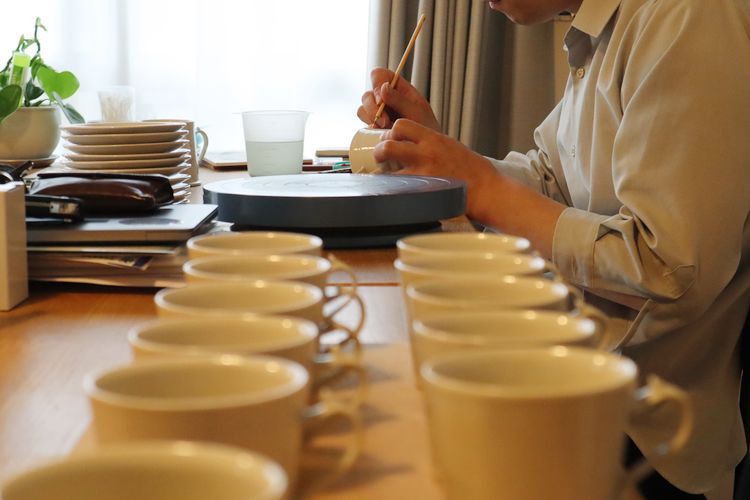
Shintaro Abe: Certainly, given the traditional image of Japanese pottery, people may imagine a humble life in the mountains, occasionally gathering wild herbs… something like that.
Hanada: I suppose there’s also a preconceived image of that lifestyle.
Shintaro Abe: That would be fine if I were working alone, but I have staff, and in many ways, the workshop couldn’t function without a proper system.
I had a vague idea of the standard pay in this industry, but I was prompted to reconsider when I heard from a junior who worked part-time as an assistant at another artist’s studio.
Apparently, they were earning around 80,000 yen per month and working from 8 a.m. to 11 p.m. every day.Well, apparently they got dinner, though.
People often say things like, “The industry must nurture young talent.” But if the actual employment conditions are like this, it’s very difficult. In modern times, one cannot live on that, and it’s mentally tough as well. I thought, “We need to change this ourselves.”
We first need to provide compensation comparable to other industries. I see this as the minimum starting point, and ultimately, it ties back to nurturing the next generation.
Hanada: Have you felt any results so far?
Shintaro Abe: Of course, it hasn’t been easy, but for now, I feel, “I’m glad we did this.”
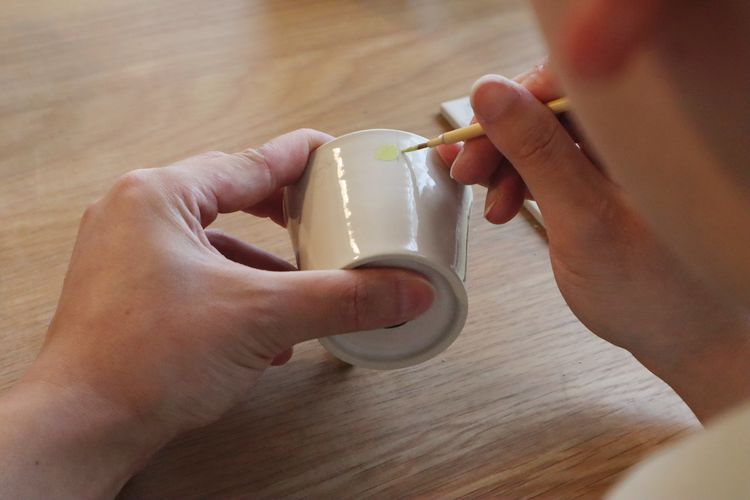
Cinema and Noodles
Hanada: Any interests outside of tableware?
Shintaro Abe: On Wednesdays, my day off, I usually eat noodles, then go to the cinema. In the evening, the assistants come, and I return to work briefly before finishing. Going to the cinema has been a hobby for a long time.
Hanada: So it’s “going to the cinema,” not just “watching a movie”?
Shintaro Abe: Exactly. The experience in a theater is different; at home I might fall asleep—well, even in theaters sometimes (laughs).
Hanada: No forcing yourself (laughs).
Shintaro Abe: I just sleep if I get sleepy (laughs).
Hanada: Any recent memorable movies?
Shintaro Abe: A niche horror, “Inheritance of the Goddess,” a Thai-Korean collaboration. It was good, and I traveled two hours to see it in Takasaki since it wasn’t shown elsewhere.
Hanada: And noodles…
Shintaro Abe: I don’t know why I like noodles (laughs), but recently I’ve been fascinated by the category itself.
Hanada: Among noodles…
Shintaro Abe: Mostly ramen. For me, ramen is like pottery in crafts, soba is more like woodworking or glass. Ramen can do anything—soy sauce, miso, tonkotsu, hybrids… Just like ceramics, glazes and forms are endless. Ramen may seem playful to enthusiasts, but it’s fascinating how much can fit into a single bowl.
Hanada: Thank you for the enjoyable conversation. We look forward to the exhibition.
Shintaro Abe: Likewise, thank you very much.
≪ END ≫
濃度の高いもの
花田:阿部さんが最近、感じたり、考えたりしていることを教えていただけますか。(以下花田-)
阿部:うちの場合、一点ものというよりは、同じものを反復して作っていくという、どちらかというとアーティストというよりは職人に近い仕事を得意としていると思っています。
その部分は変わりません。
最近、変わってきたなと思うのは、これまで作ってきた「従来のモノ」はお客様にも安心感はあるけれど「それではないもの」も求められているなと感じるようになったことです。
-:「それではないもの」とはどのようなものなのでしょうか。
阿部:もっと濃度の高いもの…というか(笑)、よりギュッとした感じというか…。
-:作り込んだ「一点もの」のようなイメージでしょうか。
阿部:そんな感じです。
定番のうつわとは別に、一点ものなどで作家としてのカラーをどうやって出していこうか、考えています。
僕は今30代ですけど、40代、50代となった時に、振り返られるようなその時期を象徴するものを、少しずつでも作っていきたいなと。
-:その「高い濃度」を実現するエキスは何なのでしょうか。
阿部:これまで数を作る必要のある定番のうつわに向いていなくて採用できなかった技法を活用することにも挑戦しています。
-:ご自身の制作の幅を広げることにもなりますね。
阿部:絵付けのうつわの場合、普段は白い素地を使っていますが、例えば上下で色を変えてみたり、絵に使う色数とかを増やしたり…です。
-:色絵は何色くらい使うのですか?
阿部:多いと7色くらい使います。そうなると定番として作ることは難しくなってきます。
-:どのような形が多いのでしょうか。
阿部:蓋物や、最近だとカップアンドソーサーも作るようになりました。
まだ作ってはいませんが、ポットも思案中です。
同じものが違って見えてくる
-:「定番」と「濃度の高いもの」の二方向が阿部さんの頭の中にはあるのですね。
阿部:別ジャンルですが、トヨタ自動車さんは、一般乗用車とは別にモータースポーツもやっていますよね。
モータースポーツは走ることの限界を追うものですが、その限界を高めておくと、最終的に一般乗用車の方にもフィードバックされるらしいんです。
そっちで、最先端技術や限界を扱う訓練をしておくということらしいのですが、それを聞いた時「焼き物の『一点もの』ってモータースポーツに近いな」と思いました。
一点ものを追求することで、最終的には定番にその要素を現実的なレベルで落とし込めるというか…。
-:一点ものって、リスクを取って、勝負かけるような部分もあります。
阿部:絵付けも、それぞれの面をどう使うかによって、印象が大きく変わりますよね。
この間、出光美術館の「板谷波山展」に初めて見る花瓶がありました。
中央に大きく絵が描いてあって、余白の上下で色が変わっているのですが、その画面の埋め方が、とても参考になりました。
前から好きな作家さんでしたが、自分で本格的に絵付けをするようになってから、メインの絵付け以外の縁取りの小さい模様とか、余白に入っている細かい彫りとか、そういった部分も目に入ってくるようになりました。
-:もの自体は変わっていないはずなのに違って見えたり、今まで見えなかったものが見えたりしてくる…。
おそらく、阿部さんご自身が変わられてきたのですね。
日本人が作る洋食器
-:また、阿部さんは大きな要素として、ヨーロッパ食器にも目を向けられています。
ただ、ストレートに模しているわけではありません。
阿部:僕が考えるのは「日本人が作る洋食器」です。
-:敢えてそういう意識を持たれているのですね。
阿部:逆に外国の方が作る志野や織部って、日本人の作るものとは解釈が全然違います。
彼らは日本の古い焼き物に憧れて、それを手本にして自分の作家性を出していますが、僕は多分逆です。
洋食器を起点に日本人だから出てくる発想もあると思うので、そういうものを作っていけたらいいなと思います。
若手を育てる、ということは…
-:阿部さんには工房をまとめるリーダー、経営者としての立場もあります。
阿部さんの工房運営のアプローチは新鮮で、僕はうつわや焼き物の世界に、夢や希望を与えるものだなと感じています。今の若い人たちが、うつわの世界で仕事をしてみたいと思わせるに足る考え方、実行力だと思います。
賛同する声ばかりでもないでしょう。そういった声も耳に入ってくるはずです。その中で、敢えてやっていくのは尊敬します。
阿部:確かに、これまでの焼き物のイメージからすると、山中で慎ましく暮らして、たまには山草摘んで…みたいなものは想像しやすいと思います。
-:作られたイメージもあるのでしょうね。
阿部:1人でやっているのならいいのですが、スタッフもいますし、色々な意味で工房が回らなくなってしまいます。
以前から業界の給与水準は何となくありましたが、僕がそこから出てみようと思ったのは、作家さんの所へアシスタントとしてバイトに行っている後輩の子から聞いた話がきっかけでした。
聞いたら「月8万円のお給料で、毎日朝8時から夜11時まで働いている」らしいのです。
まあ、晩御飯は出るらしいですけど。
「業界として若手を育てなければだめだ」みたいなこと、よく言いますよね。
でも、実態として、そういう雇用の仕方をしているのであれば、難しいと思います。
現代では、それで生活はできないし、メンタル的にも厳しいと思います。「自分から変えないと」と思いました。
他の業種並みの待遇をまずは用意する。
それが最低限の出発だし、最終的に「若手を育てる」というところに返ってくると考えています。
-:手ごたえはありますか。
阿部:勿論楽ではないけど、今のところは「やってよかったな」と思っています。
映画館と麺類
-:うつわ以外で興味のあることはありますか。
阿部:僕は、平日だと水曜日が休みで、その日の流れは大体決まっています。
お昼はどこかで麺を食べて、そのあと映画館に行き、夕方にはバイトの子たちが来るので、その頃には仕事場に戻って皆と合流、少し仕事をして帰るという…それがルーティンです。
というわけで、映画館に行くのはずっと趣味にしています。
-:「映画を見る」じゃなくて「映画館に行く」ですね。
阿部:そうそう。
映画自体も好きですけど、映画館でないと見られない質なんです。
家だと寝てしまう。
いやまあ、映画館でも寝ますけど(笑)。
-:無理はしない(笑)。
阿部:「眠くなったら、寝る」ことにしています。
そこには抗いません(笑)。
-:最近印象に残っている映画はありますか?
阿部:マニアックなホラーですが「女神の継承」というタイと韓国の合作映画です。
結構よかったですよ。
その映画は高崎か都内でしかやっていなかったので、高崎まで約2時間かけて行きました。
-:あと麺類…。
阿部:「なんで麺が好きなの」と聞かれるとよく分からないのですが(笑)、最近「麺」というカテゴリーに興味があります。
-:麺類の中でも…。
阿部:やはり一番多いのはラーメンになってしまいます。
「ラーメン」って、僕から見ると工芸で言うところの陶芸です。
「蕎麦」は木工やガラス。
ラーメンは本当に何でもできる。
単純に醤油、みそ、とんこつだけではなくて色々あるじゃないですか。
ハイブリットだったり、それぞれの中間みたいなものだったり…。
陶芸も釉薬かけてもいいし、かけなくてもいい。釉も無限にあるし、造形もほんと多彩です。
ラーメンファンの人たちから見たら、僕のラーメン巡りなんてお遊びみたいなものですけど、やっぱり面白いなと思います。
あの限られた丼ぶりの中に、あれだけのものを盛り込むんですから。
-:楽しいお話を有難うございました。
展示会、よろしくお願いします。
阿部:こちらこそ、よろしくお願いします。
関連記事はこちら