




English version of the interview here.
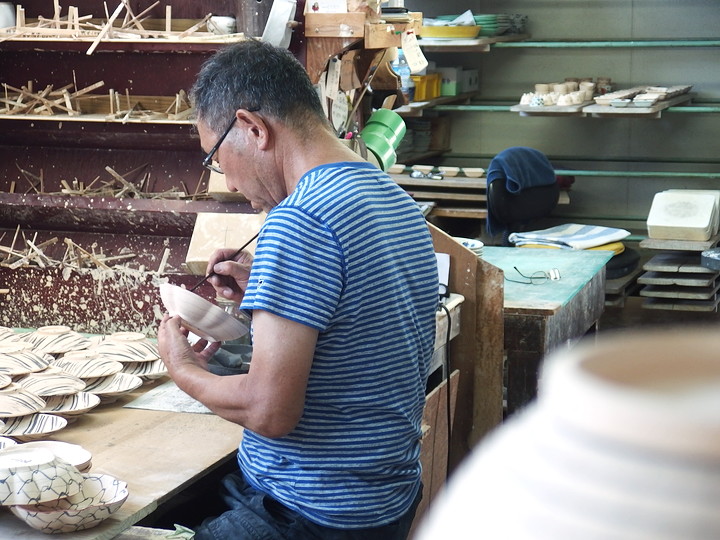
“Overglaze Painting and Me”
Every August, Hanada hosts its annual exhibition of works by Mansaku Nakao.
We visited his studio, where he was hard at work preparing for the exhibition, and sat down to talk with him.
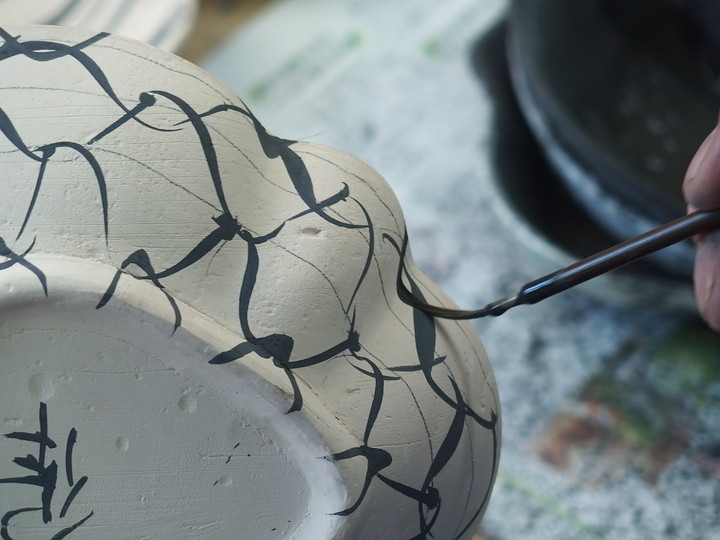
The theme of this year’s interview was “Overglaze Painting and Me.” The distinctive rhythm and energy of Nakao’s brushwork are among the defining characteristics of his work. We asked him about his thoughts on painting, what it means to him, and the ideas behind it.
Thinking Hard… Drawing… Thinking Again…
Hanada: Mans-san (Mansaku Nakao is affectionately known as “Man-san” by those around him) originally worked designing patterns for kimono fabrics.
Mansaku Nakao: When I was eighteen, I apprenticed in Kyoto under a designer who created patterns for kimono fabrics. All day long, we would pull motifs from old art books and kimono design references—everything from komon patterns to sarasa designs—and come up with new compositions under our teacher’s guidance.
We had to produce at least ten designs a day, but honestly, at first I couldn’t come up with that many ideas. I’d think as hard as I could… draw… think some more… and then my teacher would say, “No, that’s not good enough.” In the beginning, almost everything I did was rejected.
Hanada: Ten kimono designs a day while still in your teens…
Mansaku Nakao: So at first, my teacher would sketch out a basic framework on paper and tell me, “Fill this area with this kind of motif.” That was my job all day long. There were three apprentices, plus the teacher—four of us together from morning to night. His desk was separate, but he sat right beside us, so there wasn’t much room for complaining. You couldn’t exactly chat either. It was tough. (laughs)
After two or three years of that, though, I gradually began to understand how patterns were constructed and started creating designs on my own. Eventually, some of our work was mixed into the master’s submissions for design exhibitions attended by kimono and textile manufacturers. That was about fifty years ago now…
Hanada: Fifty years ago…
Mansaku Nakao: Back then, I think a design sold for somewhere between 6,000 and 10,000 yen.
Hanada: That’s impressive. If you were producing ten designs a day, that sounds like a pretty good business.
Mansaku Nakao: Only if they sold. (laughs)
Off to Ito, Shizuoka
Hanada: And then you moved to Shizuoka.
Mansaku Nakao: I started getting migraines in Kyoto.
I thought, “I can’t stay somewhere this cold.”
So I started looking for somewhere warmer to live.
Hanada: Is Kyoto really that cold? (laughs)
Mansaku Nakao: Well, I was getting tired of it too…
Hanada: Ah, so that’s what it was.
Mansaku Nakao: I quit my job, went back to Osaka, borrowed train fare from my parents, and headed for Taiyokyo, a kimono manufacturer in Ito. Looking back, it was reckless. I didn’t call ahead or make any inquiries. I just showed up at the workshop and asked, “Would you hire me?” As luck would have it, the company president, who normally lived in Tokyo, happened to be visiting the workshop that day.
Hanada: That was fortunate.
Mansaku Nakao: Very fortunate.
I told him I’d been working in textile design in Kyoto, and somehow I ended up getting hired as an assistant. At that workshop, artists who exhibited at the Nitten and Inten exhibitions would come in as part-time painters. Back then, quite a few mid-career artists charged high prices for their work but still couldn’t actually make a living from painting alone…
Hanada: Thank you for that behind-the-scenes story. (laughs)
Mansaku Nakao: One of my first jobs was going around to collect paintings from those Inten artists. Before long, the president started asking me to design kimono patterns as well.
Hanada: And those designs were actually used on Taiyokyo’s kimono?
Mansaku Nakao: That’s right.
Hanada: What was it like seeing your own designs turned into kimono?
Mansaku Nakao: They became far better than the original drawings. Honestly, it was astonishing.
There are so many techniques involved—adding gold leaf here, embroidery there, and so on.
The entire garment is built through layers of different processes, so it becomes something completely different.
Being able to watch that transformation all the way through was invaluable. It taught me to design while imagining the finished result, which made the work much easier. And the art books in that workshop were incredible too—rare volumes that ordinary people like us could never have afforded.
Hanada: So you worked your way through them one after another.
Mansaku Nakao: When you’re young, knowledge just sinks in naturally, even if you’re not consciously trying to study. I don’t have any savings now, but that knowledge is still an asset. I’ve got plenty of wealth that doesn’t make any money. (laughs)
Hanada: But you’ve spent your life contributing to other people’s enjoyment and happiness.
Mansaku Nakao: Have I? (laughs)
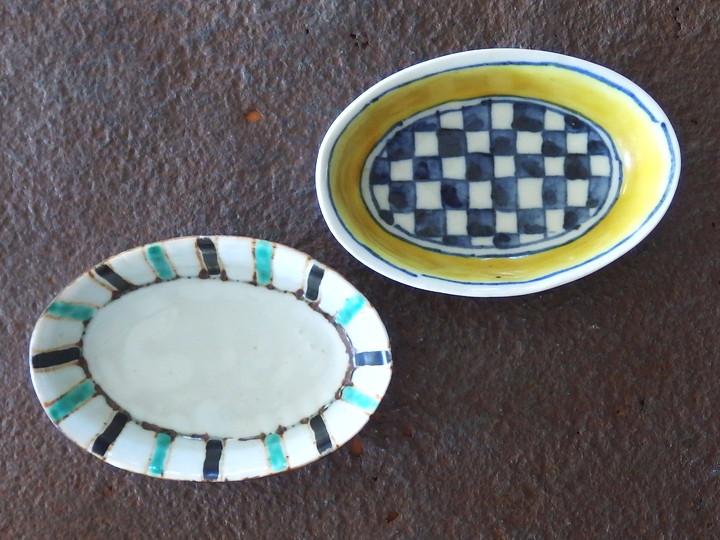
Fulfilling Days
Mansaku Nakao: The president lived in Tokyo and only came to Ito about twice a week. Which meant, the rest of the time, he wasn’t there.
Hanada: (laughs) Nice. The complete opposite of Kyoto.
Mansaku Nakao: Exactly. Since it was an art-related job, I’d grab a sketchbook and say, “I’m heading out to sketch.” Of course, I wasn’t actually going sketching. (laughs) I became friends with someone who ran a beach house, so we’d borrow a boat and go fishing for horse mackerel.
In autumn, we’d head into the hills to dig for wild yams. There was a local guy a couple of years younger than me at the workshop too, and he taught me all sorts of local pastimes.
Hanada: Though I suppose you had to get some work done before the president showed up.
Mansaku Nakao: I always knew what needed doing, so I’d get it done quickly. As long as that was finished, everything was fine. I studied Nihonga painting, attended tea ceremony lessons… At night, I’d go to the Ito Public Library and spend hours reading.
Hanada: Those experiences really became the foundation of your current work. And it was around this time that you met Hideo Hata. When someone like Hata-san tells you, “You’re good at drawing,” that must have given you confidence.
Mansaku Nakao: He knew exactly how to flatter me. (laughs)
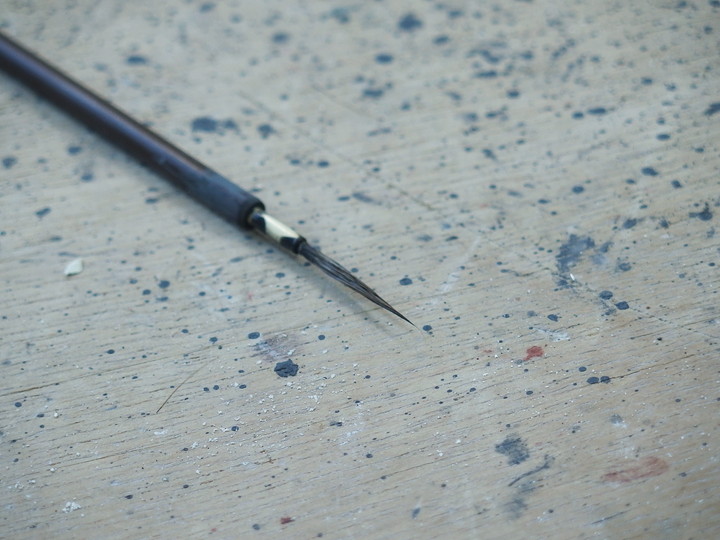
Hanada: You must have been completely fired up after hearing that.
Mansaku Nakao: He was very good at building people up. He’d say things like, “You know, you’d be well suited to ceramics…” in that thoughtful way of his. He was very good at that sort of thing.
Looking back now, I sometimes think, “How did he manage to praise work like that?” Because honestly, I was terrible back then.
Hanada: Maybe it wasn’t technical skill he saw. Perhaps he recognized something else in your work.
Mansaku Nakao: I’m grateful that he noticed something.
Hanada: He seemed to have an eye for young talent and for qualities that others might overlook.
I was speaking with his son, Shoichi Hata, recently, and he said Hideo-san could simply “see” things.
Whether it was objects or people, he had a way of noticing things that most people would miss.
Perhaps he saw that same spark in your drawings.
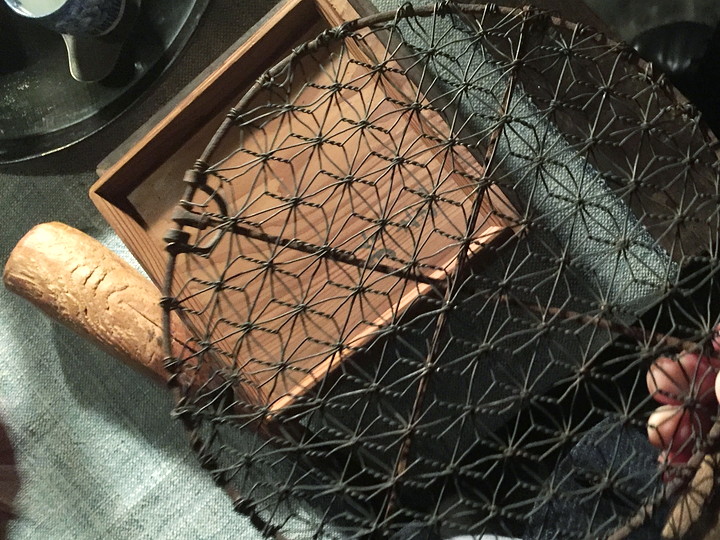
Mansaku Nakao: Take those old wire mochi-grilling racks, for example. Most people would never have paid attention to something like that.
Hanada: Looking at them now, they seem remarkably stylish.
Going to Meet Jiro Aoyama
Mansaku Nakao: Speaking of Ito, I also had the chance to meet Jiro Aoyama. It was around the time he bought a villa in Kawana, and I visited him a couple of times. He left quite an impression on me.
I owned the complete set of Shodo Geijutsu books that he had designed, so I carried the heavy volumes over to his place and asked for an autograph. I assumed writers and artists were always happy to sign things.
Hanada: Did he sign them?
Mansaku Nakao: He said, “It already says ‘Book Design by Jiro Aoyama’ on the back. Why do I need to write my name again?”
Hanada: (laughs)
Mansaku Nakao: And that was that. But somehow it didn’t feel unpleasant at all. His wife, who was sitting nearby, kept saying, “Oh, just sign it for him,” but he simply looked away and ignored us. Another time he took me upstairs and showed me a mud painting depicting western Izu, saying, “This is one of mine.”
Overglaze Decoration on Tableware
Hanada: After your fulfilling years in Ito, you moved to Kutani. You mentioned that at first, your work was almost entirely painting, right?
Mansaku Nakao : When people study ceramics, they usually start with forming and production techniques, so it takes a while before they get to painting. I came into it through painting, so my experience was a little different. I was already comfortable holding a brush. You know how people talk about a line having “character” or not? It’s not enough to simply paint. I think I understood that instinctively from the beginning.
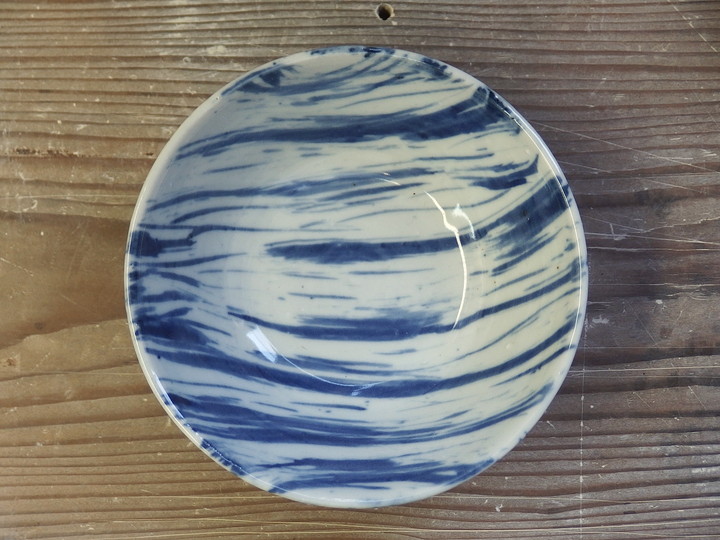
Hanada: Did you notice any differences between designing patterns for kimono and painting on tableware?
Mansaku Nakao : Hmm… honestly, I didn’t think about it much.
Hanada: Oh… really? (laughs)
Mansaku Nakao : There were plenty of potters throwing pieces on the wheel, and there was no shortage of blanks. So I just painted everything they made.
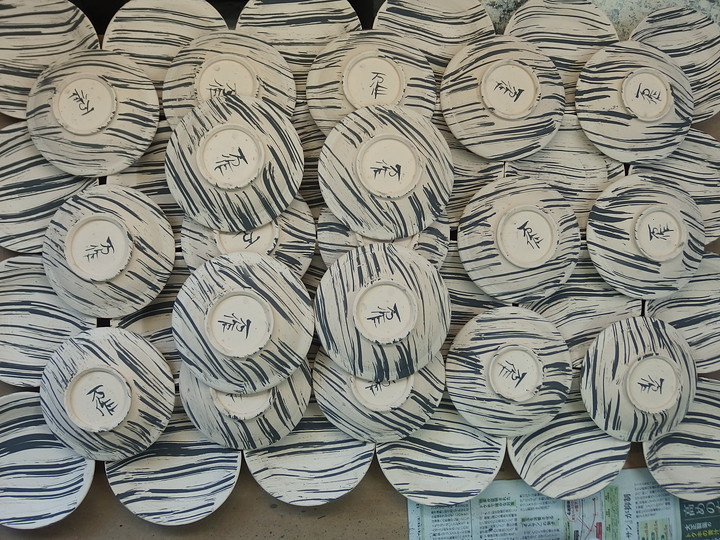
Hanada: Did you ever draw on the pattern ideas you had developed while working with kimono?
Mansaku Nakao : At first I tried, but it just didn’t work. Tableware shouldn’t become an art piece. If it does, it stops being tableware.
Hanada: So you tried it, but it just didn’t feel right.
Mansaku Nakao : I realized it almost immediately. (laughs) I thought, “No, this isn’t it.” So I started thinking about patterns that were suited to tableware.
About the Net Pattern
Hanada: Are there any patterns you feel particularly attached to?
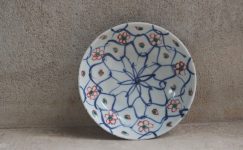
Mansaku Nakao : Not especially, but I’ve been drawing net patterns for a very long time.
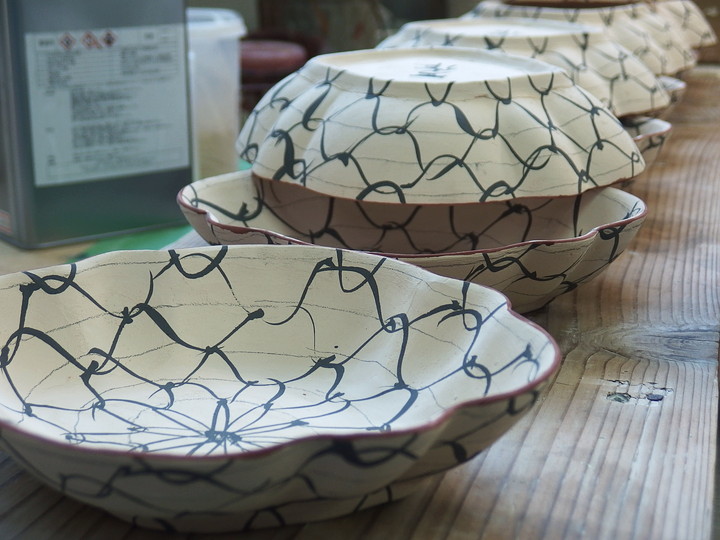
Hanada: Your net pattern has a very distinctive rhythm to it. Has the feeling you have while painting it changed over the years?
Mansaku Nakao : Not really, but if I do too many, I start to hate it.
Hanada: (laughs)
Mansaku Nakao : You get tired of it. Fifty is probably my limit. As far as quantity goes.
Hanada: After that it starts becoming a chore.
Mansaku Nakao : When you’re drawing the same pattern over and over, you start thinking, “I wonder if I’m going to get tendonitis.” (laughs)
Hanada: That’s understandable. A repeating pattern means making exactly the same movement endlessly. It seems like it would require both patience and stamina.
Mansaku Nakao : In Arita, there are women who paint net patterns incredibly well.
Hanada: They draw them all day long, don’t they?
Mansaku Nakao : As net patterns, they’re probably better than I am. Though that’s a different thing from rhythm or expression.
Hanada: When you say “better,” do you mean closer to the traditional model?
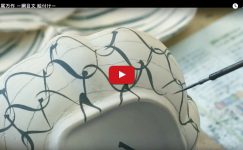
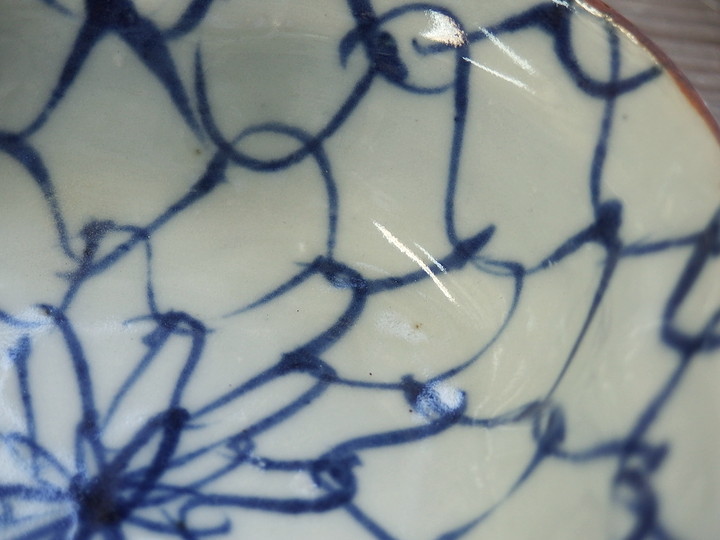
Mansaku Nakao : There are all kinds of net patterns. Mine break off partway through.
Hanada: Sounds like the fish might escape through them. (laughs) Your net patterns are quite different from the ones we usually see. Even your brush sequence seems different. You make each stroke separately and distinctly…
Mansaku Nakao : Then I connect them together.
Hanada: It feels rhythmic and full of momentum.
What Ultimately Matters
Hanada: What is most important to you when painting tableware?
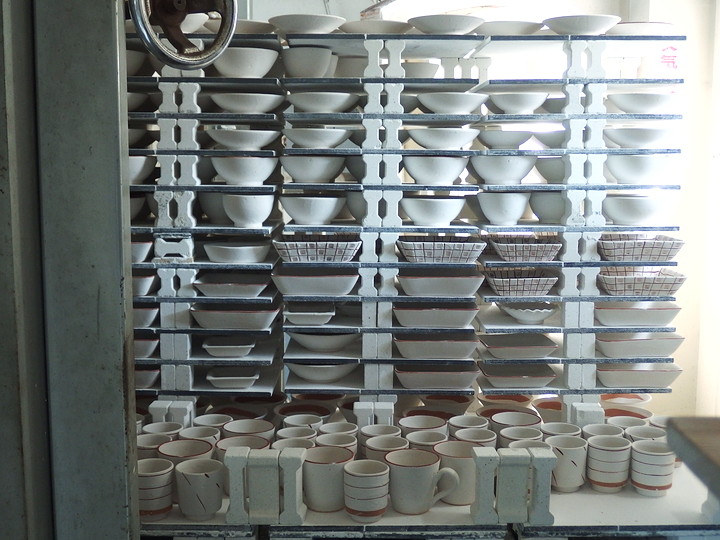
Mansaku Nakao : The clay body. For example, I bisque-fire at a slightly lower temperature than usual. If it’s fired too hard, the gosu(cobalt underglaze pigment) won’t penetrate properly. I also mix sand into the clay to create tiny gaps. That allows the gosu to soak into the body, and after the final firing, the painting, clay body, and glaze become more integrated.
Hanada: So you’re creating the conditions for the decoration to penetrate properly.
Mansaku Nakao : Old Imari ware was often fired for two or even three days straight. That’s probably part of why it turned out the way it did. Nowadays you can finish a firing in twelve hours, but something changes. It shows how important seemingly unnecessary time can be.
Hanada: So there was meaning behind it after all, even if we don’t know whether people at the time consciously intended it.
Mansaku Nakao : Take tofu, for example. In the old days, soybeans were soaked, ground, and strained before making tofu. Today, crushed soybeans are boiled and strained afterward. The unpleasant flavors come out along with everything else. The goal isn’t better tofu—it’s producing a lot at once.
Hanada: When quantity becomes the measure of value, that’s what happens. Of course, things don’t always move in that direction forever. That’s why we also need people who recognize the value of quality.
I Think I’d Be Good at It If I Tried
Hanada: Kotaro Matsuura from Shiga once told me, “I think Mansaku’s work comes closest to capturing the feeling of Ko-Sometsuke.” Not in the sense of direct imitation, but in the atmosphere of the firing and the painting. Many people imitate Ko-Sometsuke, though that’s not what you do. Still, that’s how it struck him.
Mansaku Nakao : As for imitating Ko-Sometsuke… I think I’d be pretty good at it if I tried.
Hanada: You’re saying that yourself! (laughs)
Originality Built on a Foundation
Mansaku Nakao : I choose not to.
Hanada: “Choose not to,” huh? (laughs)
Mansaku Nakao : Creating my own originals is more important to me than imitation.
Hanada: Perhaps the reason you can confidently talk about originality is because of the foundation you built by studying traditional work during your kimono years.
Mansaku Nakao : Those ten or twenty years from the age of eighteen…I guess all that time I wasted turned out to be useful after all. (laughs) It’s funny that things somehow worked out despite all that wasted time. (laughs)
What It Means to Be a Professional
Hanada: Even now, you’re constantly creating new patterns.
Mansaku Nakao : Because I’m always thinking about them. While eating, drinking coffee, taking a walk… I think that’s what being a professional means. It’s always in your head. I think it’s the same with shogi. You don’t need to know much about anything outside your work. A shogi player can devote himself entirely to shogi. Whether he’s in love or not… That’s not something other people need to worry about.
Hanada: You can’t become that absorbed out of obligation alone. In that sense, you were fortunate to find ceramics and painting.
What Makes a Good Pattern?
Hanada: What do you think makes a good pattern for tableware?
Mansaku Nakao : Whether it’s plain or decorated, good is good.
Hanada: I meant patterns…
Mansaku Nakao : A good vessel can be plain, white porcelain, lapis glaze, iron glaze—anything. Glass, woodwork, even a leaf from a tree.
Hanada: That’s true. (laughs)
Mansaku Nakao : If it’s enjoyable, that’s enough. If the person using it enjoys it, that’s what matters. Some people like busy decoration; others prefer plain surfaces.
Of Course There Are People Who Don’t Like My Work
Hanada: I hope many more new patterns continue to emerge.
Mansaku Nakao : Honestly, I’d like every piece to have a different design. Sometimes I’d dash it off quickly, other times draw it slowly and carefully. But there are people on the other side. As a maker, you also have to create things that suit the people choosing them. (laughs) You can’t force your preferences on them.
Hanada: You have to find a balance. It’s not entirely about catering to the user, either.
Mansaku Nakao : I’m fortunate that there are people who enjoy the things I like. Of course there are people who dislike my work. They probably don’t come to my exhibitions, so I simply never have to see them. (laughs)
In the End, White Porcelain
Hanada: Could you tell us about three works you’ve made that are particularly meaningful to you?
Mansaku Nakao : You mean things that have become standards for me?
Hanada: Standard works, yes…
Mansaku Nakao : White porcelain…
Hanada: (bursting into laughter) We’re supposed to be talking about decoration!
Mansaku Nakao : Right, right. Well, I like vine patterns and wari-tsuke patterns. And shinogi pieces without the iron-brown accent.
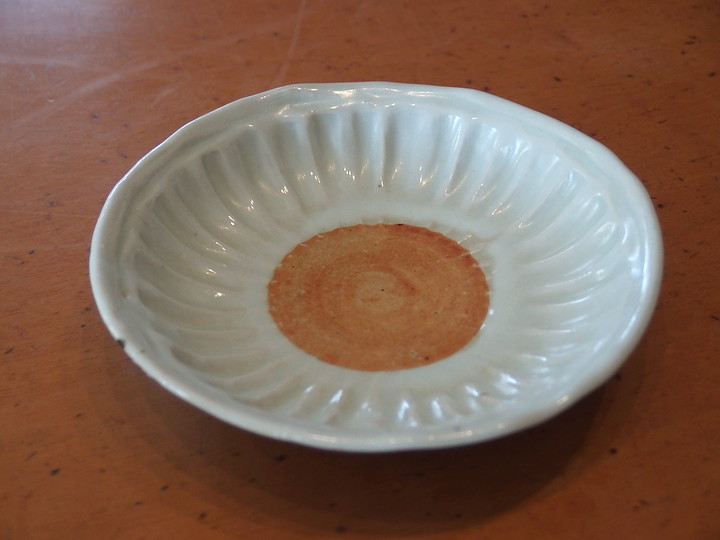
Hanada: This is a wonderful plate. Though it isn’t painted. (laughs)
Mansaku Nakao : In the end, things like this are the easiest to use.
Hanada: I suppose that’s the conclusion. (laughs) Thank you very much. We look forward to the exhibition.
Mansaku Nakao : I’ve made plenty of new work this time as well, so I hope everyone enjoys it!
≪ END ≫
「絵付と俺」
花田では8月恒例の中尾万作展。
精力的に準備を進めてくれている万作さんの工房を訪ね、お話しを伺ってきました。
テーマは「絵付と俺」。
独特のテンポと勢いを見せる絵付は、万作さんの仕事を特徴づける大きな要素となっています。
絵付について、万作さんが思うこと、考えていること、色々と伺ってきました。
一生懸命、考えて・・・描いて・・・考えて・・・
花田: 万さんは(中尾万作さんは周りから”万さん”と呼ばれています)、元々着物の絵付の仕事をしていました。(以下 花田-)
中尾: 18の頃、京都で着物の絵柄を考えてデザインする仕事に弟子入りしたんだ。
古い美術書や着物の図案の本から小紋や更紗などの古典からあらゆるパターンの柄を引っ張ってきて、先生の下で年がら年中考える仕事だった。
1日最低10枚は考えないといけなかったんだけど、正直、最初はそんなに思いつかない。
一生懸命、考えて・・・描いて・・・考えて・・・でも先生に「それじゃあ、ダメ」なんて言われてさ。
最初のうちは、ほとんどダメだった。
-: 10代で着物の文様のデザインを1日10枚ですか・・・
中尾: なので、最初は先生が紙にある程度パターンを書いてくれて「ここに、こういう絵付けで埋めなさい」という風に、大枠で指示をもらっていた。
それを1日中やっているわけ。
弟子が3人で、先生入れて4人が一日中一緒。
先生の机は別だけど、隣にいるから、そんなに文句も言えないしね。
喋れないし、困ったよ(笑)。
2-3年そんなことをしていると、パターンの組み方が何となく分かってきて、自分で色々図柄を考えられるようになる。
で、着物や織物の業者が集まってくる図案の展示会向けの先生の図案の中に、僕らの描いたものも混ぜてくれる。
今から50年前か・・・。
-: 50年前・・・。
中尾: 当時の値段で1枚6,000円から10,000円くらいだったかな。
-: 凄いですね。 1日10枚も描いていたら、それは良い仕事です。
中尾: いやいや、売れればの話だよ(笑)。
静岡伊東へ
-: それで静岡へ。
中尾: 京都で、なんか偏頭痛が出たんだよ。
で「こんな寒いところに、いられるか」って。
「どこか暖かい所へ行きたいな」って自分で考えたのさ。
-: 京都って、万さんにそこまで言われるほど寒いですかね(笑)。
中尾: まあ、飽きてきてもいたし・・・。
-: そういうことですね。
中尾: 仕事辞めて、まず大阪に戻って親に電車賃もらって、伊東の大羊居という呉服メーカーに向かった。
今思えば無謀なんだけど、問い合わせも何もしないで、直接工房へ行って「使ってくれませんか」って。
そうしたら、普段は東京に住んでいる社長がたまたま伊東の工房に来ていた。
-: よかったですね。
中尾: 運が良かったね。
「京都で図案の仕事していました」とかなんとか、そんなこと言って、使い走りで使ってもらうことになった。
そこでは、日展や院展に出展するような先生方がアルバイトで絵を描いていたの。
当時、普段は高く値段つけていても、実は絵では食えていないっていう先生方、結構いたんだよ、中堅層のね・・・。
-: 裏話を有難うございます(笑)。
中尾: そういう院展の先生のところへ描いた絵を取りに行くのが最初の仕事だった。
その内、社長が着物の文様のデザインも頼んできてくれて。
-: それが大羊居さんの着物に使われるのですか。
中尾: そう。
-: 自分の図柄が着物になっていくのは、どんな感じなのですか。
中尾: もとの図柄よりずっと良くなるね。
ビックリするほどだよ。
染め方など、表現にも色々あってね。
ここに金箔貼って、ここに刺繍をして・・・って。
複合的に全体を構築していくから、全く別物。
着物になるまでの工程を見ることができたのは良かった。
先を想像しながらデザインできるから、やりやすくなった。
あと、その工房にある美術書も凄くて、僕らが買えないような貴重な美術本が沢山有るんだよ。
-: それらを片っ端から見ていったのですね。
中尾: 若いと、頑張って学ぼうとしなくても、見たものがドンドン染み込むように入って来る。
今は預金なんか何もないけど、その知識だけが財産だね。
金にならない資産ならいっぱいある(笑)。
-: 沢山の人々の喜びや楽しみを支えてきたじゃないですか。
中尾: そうかね(笑)。
充実の日々
中尾: そこの社長は普段は東京に住んでいて、伊東には週に二回くらい来る。
逆を言えば、あとは来ない。
-: (笑)いいですね。京都の時とは逆ですね。
中尾: そういうこと。
絵の仕事だからスケッチブックを持って「スケッチ行ってきます」って出掛けちゃうの。
スケッチなんて、するわけない(笑)。
で、海の家をやっている友達が出来たので、ボート借りて鯵を釣りに行ったり、秋になると裏山に山芋を取りに行ったり・・・。
同じ工房にも二つくらい年下の地元の奴がいて、地元の遊びを色々と教えてくれた。
-: 社長が来る時のために多少は仕事をしておかないといけませんね。
中尾: やるべきことは決まっていたから、それをシャシャッとやいておいてね。
それが終わっていれば大丈夫。
日本画習ったり、お茶の稽古行ったり・・・。
夜は伊東図書館に行って、本ばかり読んでいた。
-: 今の仕事のまさに土台作りだったのですね。
秦秀雄さんとも知り合うことになる。
秦さんみたいな方に「お前、絵、上手いな」なんて言われれば、自信持てますよね。
中尾: うまいこと、乗せられたんだね(笑)。
-: もうノリノリじゃないですか。
褒められたら。
中尾: うまくヨイショされたんだよ。
「焼き物に向いているねぇ」なんてしみじみと言うんだ・・・。
そういうの上手いんだよ、あの人。
振り返ると「あの人、あんなものを、よく褒めたなあ」って思う。
今思えば、当時は、本当に下手だったから。
-: 技術的なものではなく、秦さんは、万さんの当時の絵に、何か光るものを見たのでしょう。
中尾: 見つけてくれたことには感謝せんとね。
-: 多くの人々が目を向けないそういう若い才能や、キラリと光るものに目が利いたのですね。
この間もご子息の秦笑一さんが言っていたのですが、秀雄さんは「見えちゃう」って言うんです。
モノも人も一緒で、普通の人だと見逃してしまうようなものでも「見てしまう眼」というのがあるらしいのです。
万さんの絵にもなにか光る才能を見たのでしょう。
中尾: 例えば、あの、昔の餅焼き網なんて普通誰も取り上げないよ。
-: 今見ると、相当格好良くてオシャレです。
青山二郎さんに会いに行く
中尾: そうそう、伊東では青山二郎さんにも会えたんだ。
川奈に青山さんが別荘を買った頃で、2回ほど遊びに行った。
印象深い人だった。
青山二郎さんの装丁で「書道藝術」っていう本の全集を持っていたので、重い思いをして、青山さんのところに「サイン下さい」って頼みに行ったんだ。
作家って普通、喜んでサインしてくれるものだと思っていたし。
-: してくれました、青山さん?
中尾: 「本の後ろに、『装丁青山二郎』って書いてあるじゃねえか。
なんでまた名前書かないといけないんだ?」って言われたよ。
-: (笑)
中尾: それで終わり。
でもそれが、全然嫌な感じじゃないんだよ。
横にいた奥さんが「書いてあげなさいよ」なんて言ってくれているんだけど、横向いてもう知らん顔さ。
二階に上げてくれて「これ、西伊豆を書いた泥絵だ」って案内してくれたこともあった。
うつわの絵付
-: 充実の伊東の日々を経て、九谷に。
最初は絵付ばかりだったとお話しされていましたよね。
中尾: 焼き物の勉強っていうと、まずは成型や製法だから、なかなか絵付まで回らないよね。
自分は絵付から入っていたので、少し違ったかもしれない。
筆を持つのには慣れていた。
「味」ってあるじゃないの。
線一本で味があるとかないとか・・・。
ただ、描けば良いわけじゃない。
そういうことは、最初から感覚的に理解できていた気がする。
-: 着物とうつわの絵付で、違いを感じたこともあったのではないでしょうか。
中尾: うーん、何も考えなかったなあ。
-: あ・・・そうですか(笑)。
中尾: ロクロひく人は何人もいて、素地はいくらでもあったから、それに片っ端から描いていったよ。
-: 着物のときに色々考えていた文様を活かすことはありましたか?
中尾: 最初はやってみたけど、合わないんだよね、やっぱり。
うつわは作品にしてしまったらダメなんだよ。
食器じゃなくなってしまう。
-: やってはみたけど、しっくりこなかったわけですね。
中尾: もう、すぐ感じた(笑)。
「これは違うわ」って。
それで、うつわに相応しい文様を考え始めた。
網目について
-: 特に思い入れの強い文様など、何かありますか。
中尾: 特別にはないけど、網目なんかはずっと描いているなあ。
-: 万さんの網目って独特のリズム感です。
描くときの気分は今も昔も変わりませんか。
中尾: 変わらんけど、あまり多くの数をやると嫌になるね。
-: (笑)
中尾: 飽きるもん。 50までだな。 数で言えば。
-: それ以上は段々嫌になってくる。
中尾: 同じ絵をずっと描いていると「腱鞘炎になるんじゃないかな」と思ってしまうよ(笑)。
-: 確かに連続文様は延々とずっと同じ動きですからね。
連続文様には忍耐力も体力も求められそうです。
中尾: 有田には網目なんか、本当に上手に描くおばちゃん達がいるよね。
-: あの人たちはずっと描いているじゃないですか。
中尾: 多分、網目としては俺より上手い。
リズム感とかそういうものとはまた別なんだけど。
-: 万さんが今言う「上手い」と言うのは「お手本と比較して」と言う意味ですか。
中尾: 網目ひとつとっても、色々なパターンがある。
俺の網は途中で切れたりしている。
-: 魚に逃げられてしまいそうですね(笑)。
万さんの網目は、僕らの普段見るものとは違いますよね。
描き順も違いませんか。
万さんのは1回1回、はっきりと切っていく・・・。
中尾: それをつないでいく。
-: リズミカルでテンポも良いですね。
結局大事なのは・・・
-: 万さんがうつわの絵付をしていて、大事にしていることは何ですか。
中尾: 素地だな。
例えば、素焼きの温度は普通より少し低い。
高い温度で焼き締め過ぎると、ゴスが染み込んでいかないんだ。
それと、砂も混ぜて素地に隙間が少しできるようにする。
そうすると、ゴスが素地に染み込んでいって、本焼きのあと、絵付と素地と釉薬がより一体化する。
-: しっかりと染め付けられるように工夫しているわけですね。
中尾: 古伊万里なんかも、本焼きに二昼夜、三昼夜、掛けていた。
だから、ああいう風になると思う。
最近は最低12時間あれば焚けるけど、何か変わってくる。
一見無駄に見える時間がいかに大事かってことだよ。
-: 実は意味があることなのですね。
当時の人が、はっきりとそういった意図を持っていたかは不明ですが。
中尾: 豆腐だって、昔は豆をふやかして、それを絞って、豆腐が作られていた。
今は粉砕した大豆を湯がいて、それを絞る。
不味い味も一緒に出てきてしまう。
それは美味しい豆腐のためではなくて、いっぺんにたくさん作るため。
-: 世の中で量が評価されている時はそうなりますね。
全ての物事がずっとそんな風に進んでいくわけでもないと思いますが、そういう意味では、質の面での価値を評価してくれる人も必要です。
俺、やれば上手だと思うよ
-: 滋賀の松浦コータローさんが「万作さんの仕事が一番、古染付のあの感じを表現していると思う」って言っていました。
模しどうこうではなくて、焼き上がりの感じとか、絵付けの雰囲気とか。
古染付の模しをしている人は沢山いますし、万さんは別に模しをしているわけではありませんが、そういう風に思ったみたいです。
中尾: 俺、古染付の模し・・・やれば上手だと思うよ。
-: 自分で言ってる(笑)。
ベースあってのオリジナル
中尾: 敢えてやらないのさ。
-: 「敢えて」ですね(笑)。
中尾: 模しより、自分のオリジナルを作り上げていくことのほうが、俺にとっては大事だから。
-: 万さんがそうやって「オリジナル」って言えるのも、着物の時に古いものを学びながら築いたベースゆえではないですか。
中尾: あの18からの10~20年・・・、無駄に過ごした時間が活きているんだなって思うね(笑)。
あんな無駄に過ごしてきたのに、何とかなっているのが自分でも不思議だよ(笑)。
プロであるということ
-: 万さんは今でも新しい文様を色々生み出していますよね。
中尾: いつも考えているから。
食事している時も、コーヒー飲んでいる時も、散歩しているときも・・・。
プロってそういうものだと思っている。
そのことだけがずっと頭にあるんだ。
それは、例えば将棋だって一緒だと思う。
自分の仕事以外のことなんて別に知らなくて良いんだよ。
将棋の人は将棋だけで、いいんだ。
恋愛がどうのこうのとかさ・・・。
少なくとも他人が心配することではない。
-: そうやって、のめり込むのは義務感だけじゃ無理ですね。
そういう意味では万さんは、焼き物や絵に出会えた。
良い文様とは・・・
-: 万さんが思う、良いうつわの文様ってどんなものなのでしょうか。
中尾: 無地でもなんでも、良いものはいいね。
-: 文様・・・。
中尾: 良い器っていうのは無地でも、白磁でも、ルリでも、鉄釉でも、なんでもいいんだけどね。
ガラスでも、木工でも、木の葉っぱでも。
-: それはそうです(笑)。
中尾: 楽しければ、良いんだから。
使っている人が楽しければ、それでいいんだよ。
ゴチャゴチャした絵付けが好きな人がいれば、無地が好きな人もいる。
俺の仕事を嫌いな人だっているに決まっている
-: これからも新しい文様、生まれてくるといいですね。
中尾: ほんとはね、全部違う絵にしたい。
その時の気分でパッパッと描いたり、スーッと描いたり。
でも、相手がいるわけだから。
選んでくれる人に合うようなものも作り手としては作っていかなきゃいけない(笑)。
押し付けるわけにはいかないよ。
-: ちょうど良いところで折り合いつけていくしかないですね。
全て使い手に寄り添っているわけでもありません。
中尾: 僕の好きなものを喜んでくれる人がいるのは幸せなこと。
俺の仕事を嫌いな人だっているに決まっている。
そういう人は恐らく個展にも来ないから、俺は目の当たりにしないで済んでいるだけの話で(笑)。
結局白磁。
-: 万さん、3つくらい今まで作ってきたもので、思い入れのあるもの教えていただけますか。
中尾: 定番となっているようなものかな。
-: 定番というと・・・。
中尾: 白磁・・・。
-: (大笑) 絵付の話なのに・・・。
中尾: そっかそっか。
蔦文とか、割付文とか、ああいうのは好きだね。
あと、サビ抜きのしのぎかな。
-: これ、良い皿ですよね。
絵付していないですけど(笑)。
中尾: 結局、こういうのが一番使いやすいんだよ。
-: そういうことですね(笑)。
有難うございました。
個展、宜しくお願いします。
中尾: 今回も色々新作作っているから、よろしく!

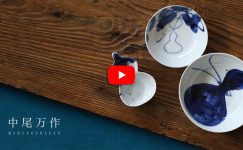
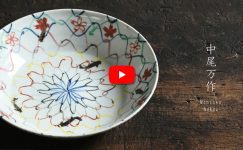
中尾万作さんの絵付けの動画(流水文)はこちらから
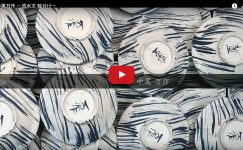
中尾万作さんの絵付けの動画(網文)はこちらから
≫中尾万作さんのうつわはこちらから≪
関連記事はこちら