





English version of the interview here.
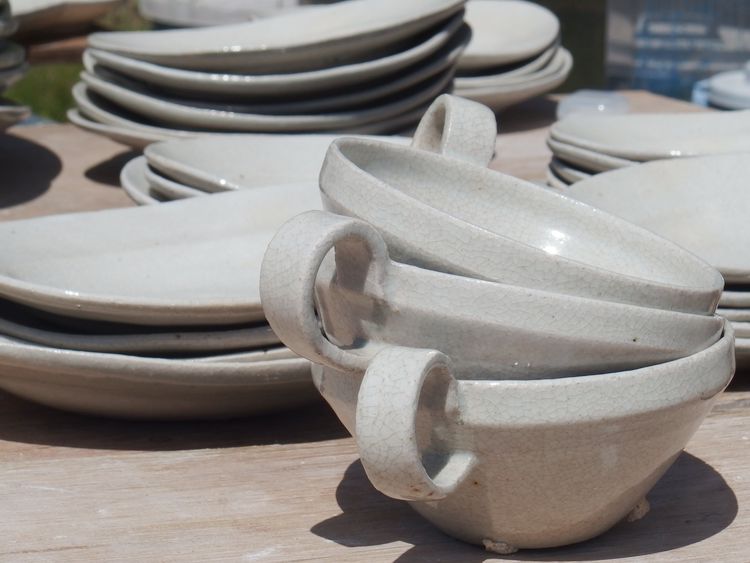
Ofukei Ware is Truly Captivating
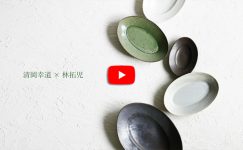
Hanada: I would like to ask you about the pieces you plan to present for the upcoming exhibition. First, let’s talk about the Ofukei leaf-shaped plate. What inspired you to make this?
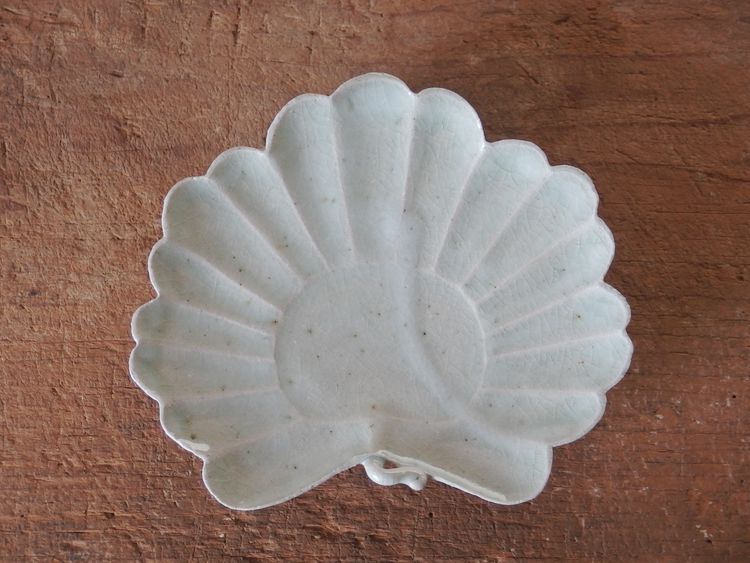
Takuji Hayashi : Ever since I was in Seto, I had been interested in Ofukei ware and thought, “I want to try making it someday.” Just recently, I remembered that desire and finally gave it a try. I had actually prepared the glaze a long time ago.
Hanada: What do you find most appealing about Ofukei ware?
Takuji Hayashi : It is the overall aesthetic—the atmosphere of the glaze and the shapes. Originally, many of the traditional pieces were small side bowls like mukozuke, and I wanted to create work that reflects the historical lineage of Oribe ware.
Hanada: When did you first encounter Ofukei ware?
Takuji Hayashi : It was when I was working at a pottery studio in Akazu. Ofukei is one of the seven Akazu glazes (ash, iron, Ko-Seto, Ki-Seto, Shino, Oribe, and Ofukei). That sparked my interest, and as I researched further, I learned about the original Ofukei ware from the early Edo period. It was close to the Momoyama style but had its own unique character. To me, Ofukei ware looked just as captivating as Oribe ware.
Hanada: Is this leaf-shaped plate the exact same shape found in traditional Ofukei ware?
Takuji Hayashi : The shape and size are identical, but I modified the foot.
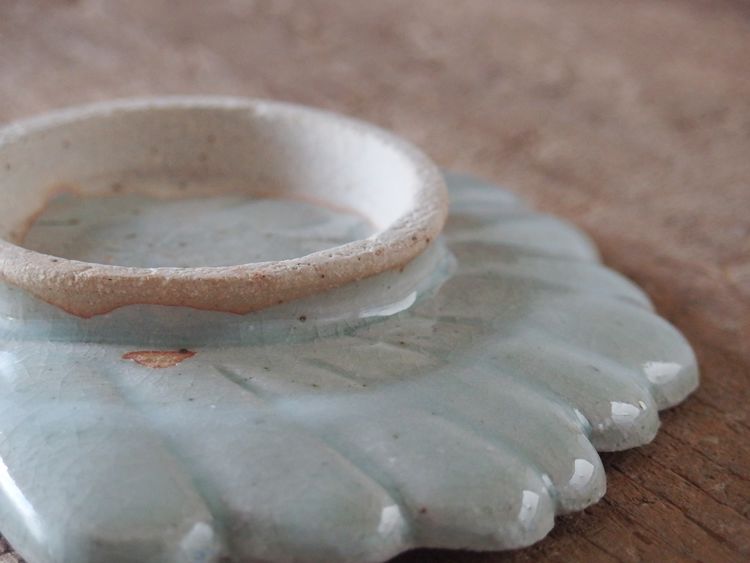
Hanada: What was the original foot like?
Takuji Hayashi : It originally had three small legs. However, I felt this standard ring foot provided a better overall balance for the piece.
Hanada: How did it go when you first started making them?
Takuji Hayashi : I had wanted to achieve that distinct bluish hue of Ofukei for a long time, and since the clay and glaze were already prepared, it was mostly a matter of trial and error while making the plaster molds.
Hanada: What kind of food would you suggest serving on it?
Takuji Hayashi : As with my other pieces, I don’t have any specific rules on how to use it, but I think it would pair beautifully with traditional Japanese sweets.
The Excitement of Food Delivery
Hanada: Next, let’s look at the lidded bowl with crazing glaze.
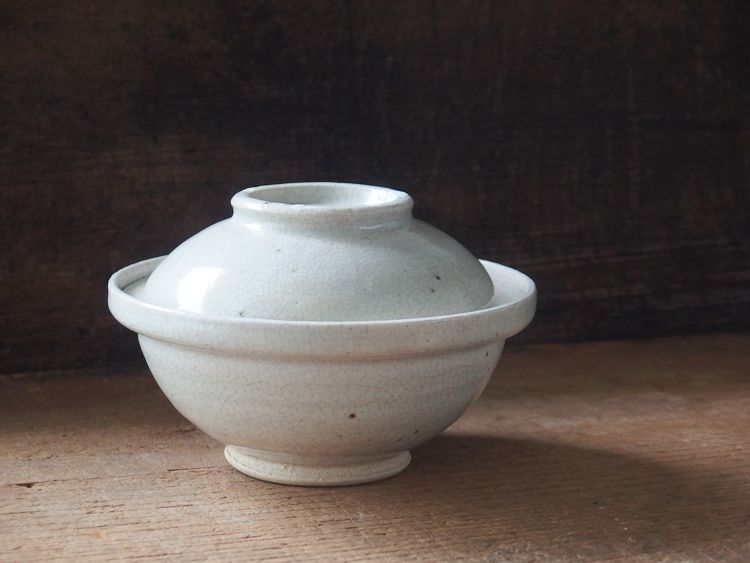
Takuji Hayashi : When I first started making these about five years ago, they were slightly larger than this. I happened to make a smaller version as an experiment and found it to be just right, so this size became the standard.
Hanada: Why did you decide to add a lid?
Takuji Hayashi : I have always loved lidded tableware. Isn’t there a sense of joy when you lift a lid? It reminds me of the childhood excitement of opening the lid of a neighborhood food delivery. Because of that, I decided right from the start to include a lid. The shape of this piece is actually based on a clay pot. My parents’ house always had a clay pot used for making rice porridge, and I always admired its shape.
Hanada: It seems like it would also work wonderfully for everyday dishes, like braised pork belly.
Takuji Hayashi : Yes, absolutely. It is perfect for that.
Inspired by a Distant Land…
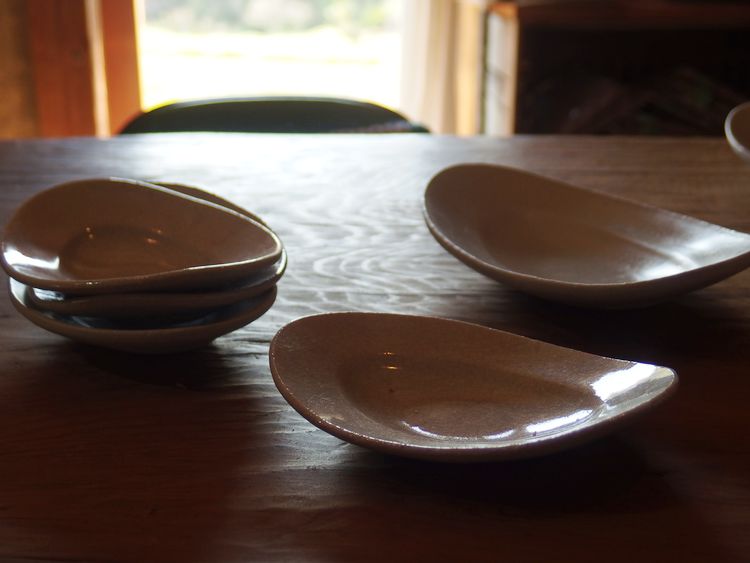
Hanada: Next is the oval plate, which could be considered one of your signature pieces. It is currently available in two colors and four sizes.
Takuji Hayashi : Yes. At first, the design was slightly flatter, but after a while, I raised the rim to give it more depth.
Hanada: Did you settle on the shape right away?
Takuji Hayashi : I made the largest size first, and when I transitioned from the flat style to the curved rim, the shape clicked instantly. The image in my mind was something like a metal bowl from another country.
Hanada: And that led to developing the different sizes.
Takuji Hayashi : I might have created a few too many variations (laughs). First came the large, medium, and small sizes, and after a while, I added the miniature dish size.
Hanada: Was that due to a request from customers?
Takuji Hayashi : No, not particularly. I just felt like making it.
Hanada: (Laughs)
A Texture I Love
Hanada: Moving on, here is the carbonized rimmed plate (approx. 18cm).
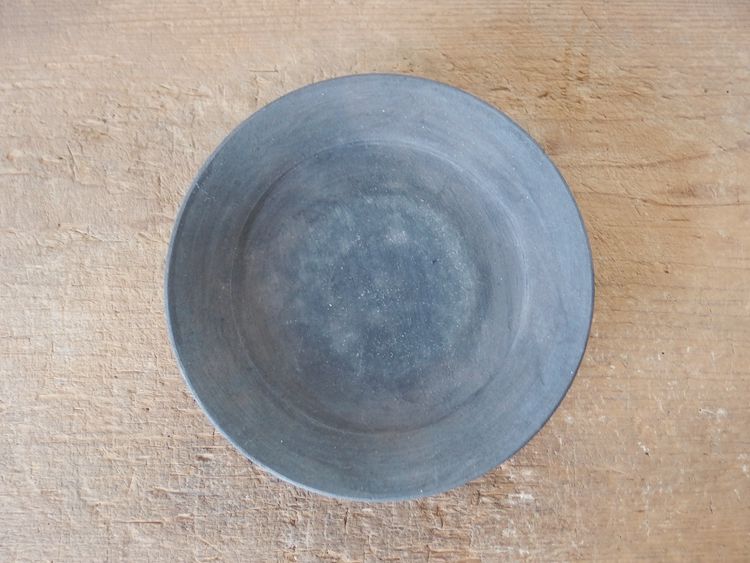
Takuji Hayashi : For the carbonization process, the pieces are placed in a saggar container filled with rice husks and charcoal, and then sealed tight for firing. Right after I finished technical school, I was talking with some fellow makers about what kind of pottery we could create, and this technique was one of the things we experimented with.
Hanada: The texture looks like it might absorb food oils or aromas over time.
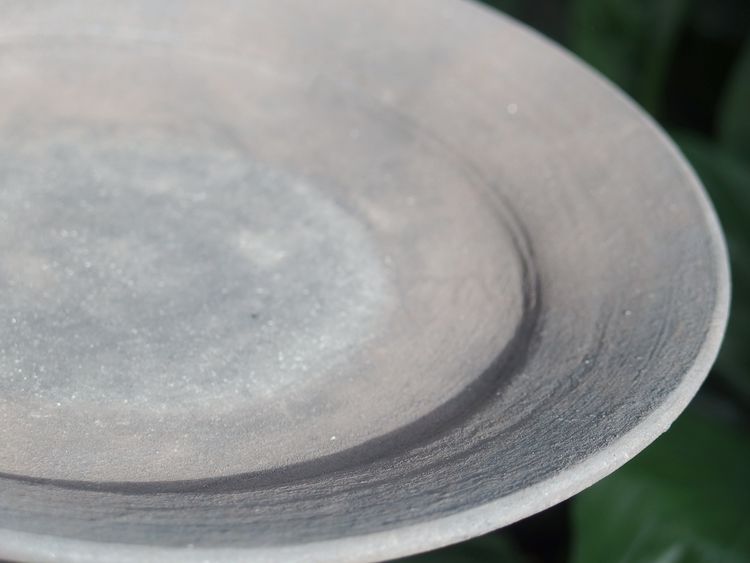
Takuji Hayashi : Exactly. I really love that porous, absorbent texture found in stoneware or Suzu ware. Giving it a quick rinse in water before each use will make a significant difference in preventing stains.
Ofukei and Celadon
Hanada: We are looking forward to your two-person exhibition with Kodo Kiyooka.
Takuji Hayashi : I have been making a wide variety of Ofukei and celadon pieces, so I am excited for everyone to see them. Thank you very much.
≪ END ≫
御深井、カッコイイぞ
花田:
林さんに、今度の展示会に出品予定のうつわについてお話を伺いたいと思います。
まずは御深井葉形皿です。作られたきっかけは何ですか。(以下花田-)
林: 瀬戸にいた頃から、御深井焼に興味があって「いつかやってみたいな」と思っていたんですが、ついこの間、そう思っていたことを思い出して、やってみました。
釉薬は昔から用意してあったので。
-: 林さんにとって御深井焼の魅力は何でしょうか?
林: 全体的なものです。釉薬の雰囲気やかたちなど。
もともと向付のようなものが多いのですし、織部の流れにあるようなものを踏まえた仕事もしてみたいと思いました。
-: 最初に御深井焼を見たのはいつですか。
林: 赤津焼の窯元で仕事をしていた時です。
御深井は赤津七釉(灰釉、鉄釉、古瀬戸釉、黄瀬戸釉、志野釉、織部釉、御深井釉)の一つなんですが、それで興味を持ち始めて、色々調べていったら、桃山に近いけど、ちょっと違う本来の御深井焼の存在を知るようになったんです。
僕にとって織部が格好いいのと同様に、御深井焼が格好よく写りました。
-: この葉型皿はもともと御深井焼にあるかたちそのものですか。
林: 形や大きさは一緒ですが、高台を変えました。
-: 高台は元々どのようになっていたのですか。
林: 元々三つ足でした。こっちの高台のほうが全体のバランスがいいかなと思って。
-: 最初作る時は、いかがでしたか。
林: 御深井の青っぽい感じを出したいとは昔から考えていて、土や釉薬などは準備してありましたので、石膏型を試行錯誤しながら作ったくらいです。
-: 何に使いましょう?
林: 他のうつわ同様、特に「これに使ってください」というのはありませんが、和菓子なんかは合わせやすいでしょうね。
出前のワクワク
-: 続いて、貫入蓋付丼です。
林: 5年くらい前に作り始めたときは、もう少しこれより大きかったんです。
たまたま試しに小ぶりのものを作ってみたら具合が良くて、こっちが定着しました。
-: 蓋はなぜつけたのですか。
林: 僕、蓋物が好きなんですよ。蓋開けるときって嬉しくないですか。
小さいころ近所の出前の蓋を開けるときのワクワク感ですよ。
それなので、蓋をつけることは最初に決まっていました。
これのかたちのベースは、実は土鍋なんです。
実家にいつもおかゆを作る土鍋があって、そのかたちが好きでした。
-: 豚の角煮なんかの普通のおかずもありですね。
林: 全然、ありです。
どこかの国の・・・
-:
次は林さんの代表作ともいえる楕円皿です。
現在色が2種類、サイズが4種類です。
林: はい。最初は、もう少しフラットでしたが、しばらくしてリムを盛り上げて、深さを付けました。
-: かたちはすぐに決まりましたか。
林: 最初に一番大きいものを作ったのですが、フラットから反り上げたときは、一発で決まりました。
どこかの国の金属のボウルのようなイメージです。
-: そこからサイズ展開が始まりました。
林: ちょっと種類作りすぎちゃったかな(笑)。
まず大中小ができて、しばらくして豆ができました。
-: お客様からのリクエストですか。
林: いえ。そういうわけではなく、なんか作っちゃいました。
-: (笑)
好きな質感
-: 続いて炭化リム皿6寸です。
林: 炭化自体は、エンゴロ(さや)にもみ殻と墨を入れて密封して焼きます。
まだ訓練校出てすぐの頃に、作家仲間と「こういうやきものどうかな?」なんて話しながら色々試していた中のひとつです。
-: 料理の匂いや脂分のしみ込みが気になる質感でもあります。
林: そう、その、炻器や珠洲焼のようなしみ込みそうな質感が好きなんです。
使う前に水を通してくれればずいぶん違うと思います。
御深井や青磁
-: 清岡さんとの二人展、よろしくお願いします。
林: 御深井や青磁も色々作っているので、色々見ていただけるのが楽しみです。
よろしくお願いします。
関連記事はこちら