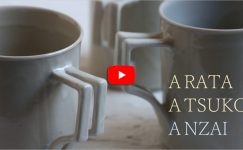



English version of the interview here.
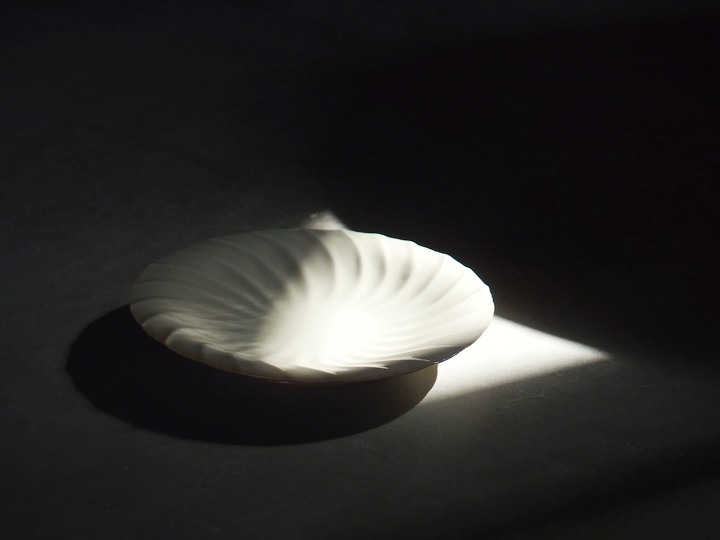
*Ms. Atsuko was unable to join us due to scheduling conflicts and joined after the interview concluded.
Garden Ash
Hanada: We’d like to ask you about the pieces you plan to present at the exhibition. First, could we start with this garden-ash glazed tiered plate?
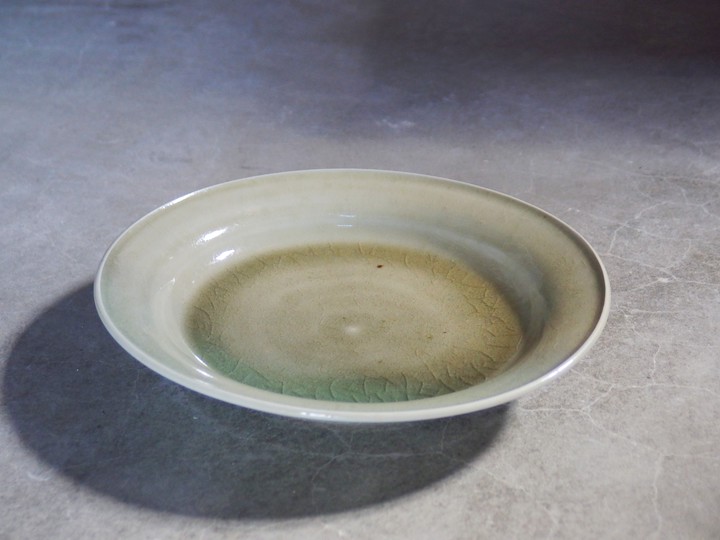
Arata Anzai: I use ash made from weeds, fallen leaves, and pruned branches from our garden as glaze material. That’s why it’s called “garden ash.”
Hanada: So many different things are mixed in.
Arata Anzai: Pine, camellia, and even trees whose names I don’t know… We collect them while grilling food with our children, almost like play, so it’s one of our pleasures. Since we keep adding to it, the fired result is slightly different every time.
Hanada: Opening the kiln must be exciting.
Arata Anzai: There are pieces I aim to make the same way every time, but if that’s all, there’s no thrill—this offers a different kind of enjoyment.
Hanada: The form feels very natural, and the treatment of the rim especially has a very Anzai-like atmosphere.
Arata Anzai: This one was made by her (Atsuko), but when you think about usability, the forms naturally become more orthodox.
Hanada: What do you usually use it for?
Arata Anzai: Mostly Japanese food.
Hanada: Japanese food… (laughs)
Arata Anzai: That was a bit too broad. We use it for tamagoyaki, nanban-style marinated horse mackerel, and kobu-jime, which she’s been into lately. Everyday home cooking, really.
Plum Blossom Incised Motifs on a Lobed Rim
Hanada: Next is a new piece.
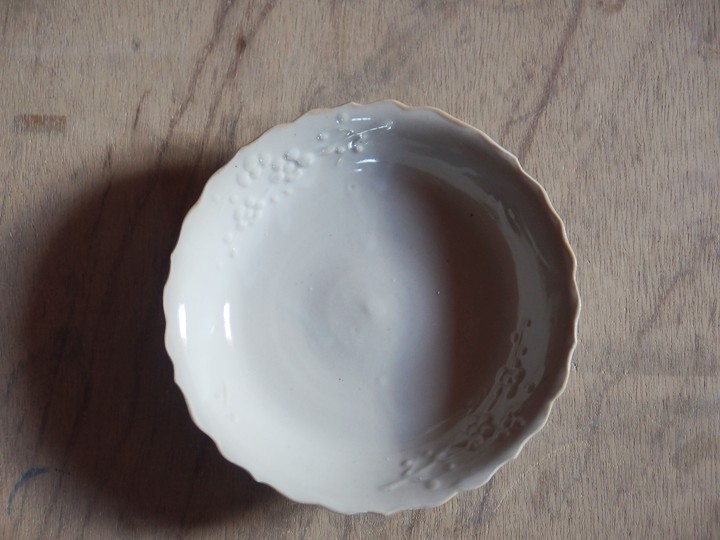
Arata Anzai: When a neighboring potter was closing their studio, they said, “I’m clearing out the workspace—take whatever you need.”
There were all sorts of things, from early Imari-like pieces to Chinese-style white porcelain, and among them was a white porcelain plate with an incised plum blossom motif like this.
Hanada: Was the placement of the blossoms similar to this?
Arata Anzai: Yes.
Hanada: What aspect of that plate appealed to you?
Arata Anzai: The whole thing.
The feel of the clay, the overall unity of the white porcelain, its stone-like clarity…
The pattern isn’t overbearing, and the sense of openness is well balanced.
I’d been wanting to add more incised designs, so I thought I’d try making something inspired by it.
Hanada: It really feels like the kind of East Asian ceramics you would choose.
Learning from the Original
Arata Anzai: This is the original piece.
Hanada: It’s quite close. That feels a bit rare for you. How was it when you actually started making it?
Arata Anzai: Old works are surprisingly rationally made.
In this case, the piece is wheel-thrown and then pressed into a mold, but it releases from the mold very smoothly. When you try making something from scratch, it might catch, not come out cleanly, or the clay might tear.
But the old pieces were clearly designed with all of that in mind.
If you exaggerate the decoration more than the original for visual impact, it can crack during drying… Each part is the result of careful consideration. It’s logical, with nothing forced.
Hanada: You only understand that once you actually try making it.
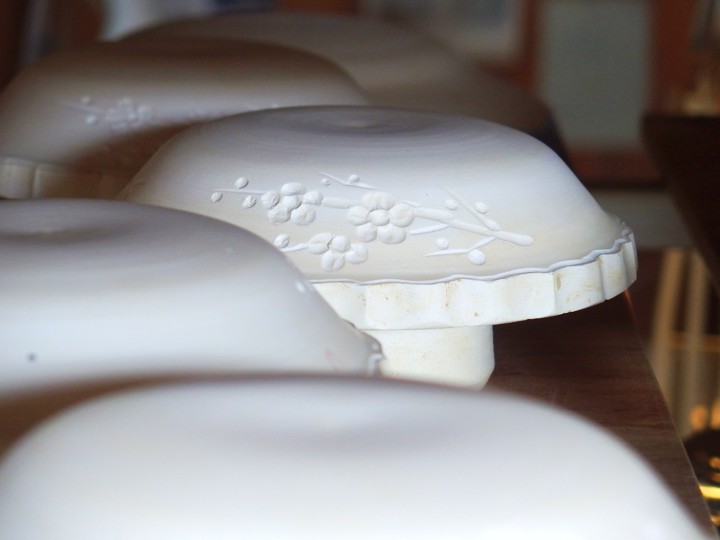
Arata Anzai: And because the incisions are shallow, they also appear more refined as decoration.
Hanada: It’s visually considered, yet settles naturally where it should.
Arata Anzai: Common forms are well thought out in terms of ease of making and design.
You notice many intentions only after trying to make them yourself.
The Number Ten
Hanada: Shall we move on to this one?
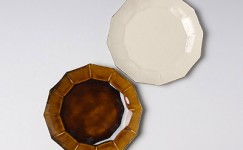
Arata Anzai: This uses weathered feldspar, a material often used in Shino ware. Normally, feldspar sinks in water and hardens solid.
What’s beautiful is when that feldspar melts smoothly, but this glaze doesn’t sink, so it’s easy to work with. And since it’s used in Shino ware, it feels very Japanese…
With celadon around here, you imagine something hard and rigid—East Asian, Chinese, Korean, even European—but this produces a softer impression.
Hanada: Did you design the form to match that quality? It almost looks like a rinka (petal-shaped rim)…
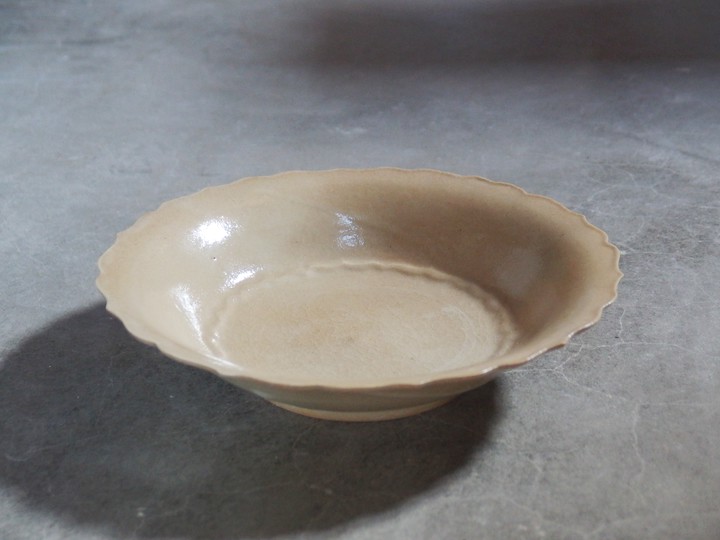
Arata Anzai: It’s a decagon.
Hanada: There’s a faint ring line in the well. Would it feel lacking without it?
Arata Anzai: I thought it might, so I added it. Ten is an interesting number. Powers of two like four or eight are easy to make, but ten is moderately difficult. A decagon might originally come from five, and if so, it feels quite Japanese.
Hanada: The glaze really shines here.
Arata Anzai: I went to see the mountain where the raw material is taken.
Near Shigaraki, an elderly man was excavating it with a power shovel.
It felt like “the whole mountain is feldspar,” with milky, translucent stones emerging everywhere.
It was a very beautiful mountain.
Hanada: That’s wonderful.
Things Sustained by Mutual Support
Arata Anzai: I found myself wondering, “What will happen to this feldspar when there’s no one left to succeed him?”
It’s the same with other materials—there are fewer and fewer successors.
Hanada: We often hear that even if materials exist, there’s no one left to extract or process them.
Arata Anzai: I’ve heard the same about Shunzo Masaki’s brushes—“It has to be the ones he makes.”
Craftsmanship relies on people supporting one another in different roles.
But those kinds of jobs rarely come into the spotlight, so they aren’t widely known.
Hanada: Even if we know the names of potters, we rarely see the names of those people.
Yet being aware of their support may be what allows makers like Shunzo Masaki and yourself to remain humble in your work. By the way, this is a serving bowl, isn’t it?
Arata Anzai: Yes it is.
Hanada: For simmered dishes…?
Arata Anzai: Winter melon, daikon, oden—she likes those kinds of dishes.
Hanada: Individual portions of oden?
Arata Anzai: Exactly.
Celadon Incised Five-Sun Plate
Hanada: Next, the celadon incised five-sun plate.
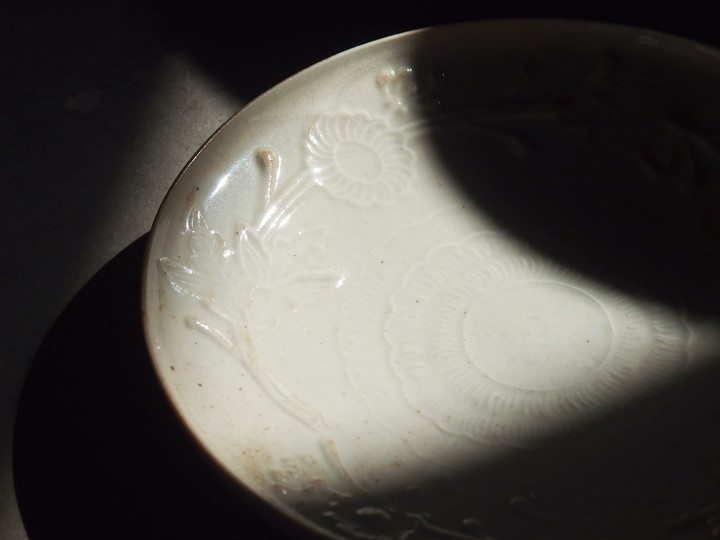
Arata Anzai: This ash glaze comes from the Iga region. I also visited the ash maker—again, an elderly man. His son was there, so it should be fine (laughs). I hope these mysterious “ash specialists” continue to exist.
Demand isn’t what it used to be, so ash alone may not sustain a business… Originally, dye houses used lye extracted from ash, and potters received the remaining ash afterward. Since Shigaraki and Iga often have glassy effects, I imagine that’s why ash makers existed there.
The idea of ash turning directly into glass is physically fascinating when you think about it—and quite interesting. And because it contains many impurities, the unexpected nuances and changes are what make it appealing.
Hanada: This motif has appeared in your work before, hasn’t it?
Arata Anzai: It’s from China’s Northern Song dynasty. I’m only using the inner part of the design.
Hanada: Was it reconstructed just from this photograph?
Arata Anzai: Yes, so it’s probably a little different from the original.
Hanada: It doesn’t really look like a Chinese reproduction.
Arata Anzai: Right—once you strip away the overtly “Chinese” elements. I like things where you can’t quite tell whether they’re European or Chinese. China exported many wares to Europe, and there are Islamic influences as well. With Xi’an and the Silk Road connections, that subtle exoticism is intriguing to me.
Hanada: Is this a standard side plate?
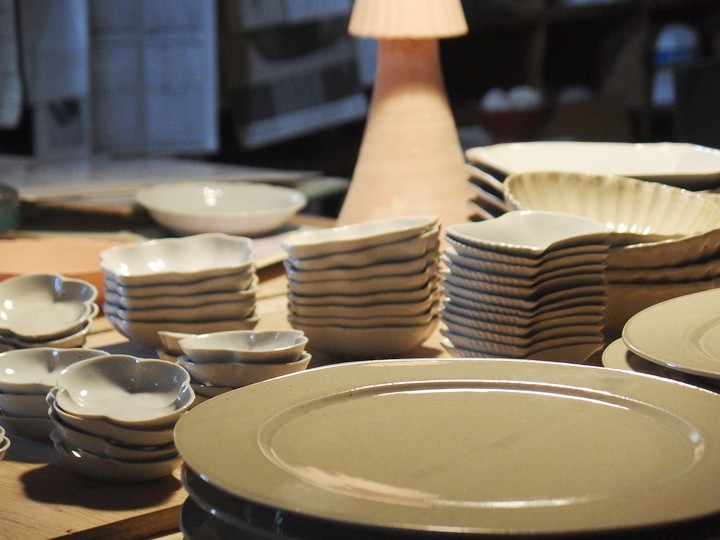
Arata Anzai: I think it works well for desserts too. At home, we use it for individual servings of fruit, kanten jelly, or mizuyokan.
Diamond-Shaped Chrysanthemum Bowl for Boiled Dumplings
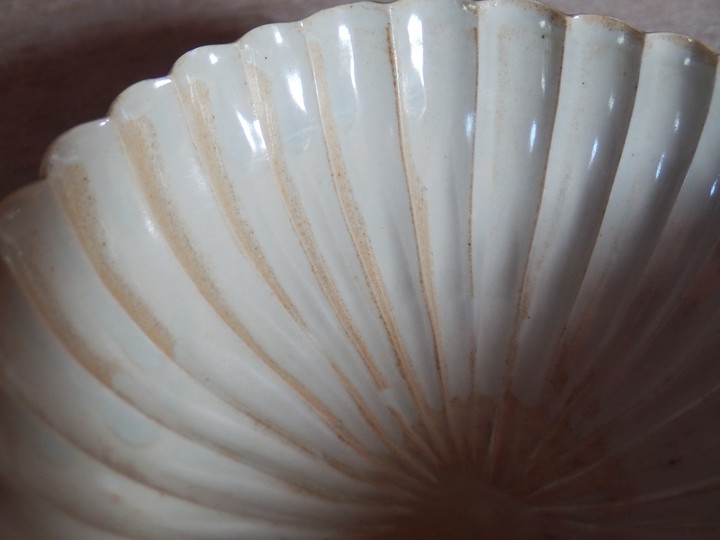
Hanada: How about the celadon diamond-shaped chrysanthemum bowl?
Arata Anzai: This one is made by her, and each edge is carved by hand.
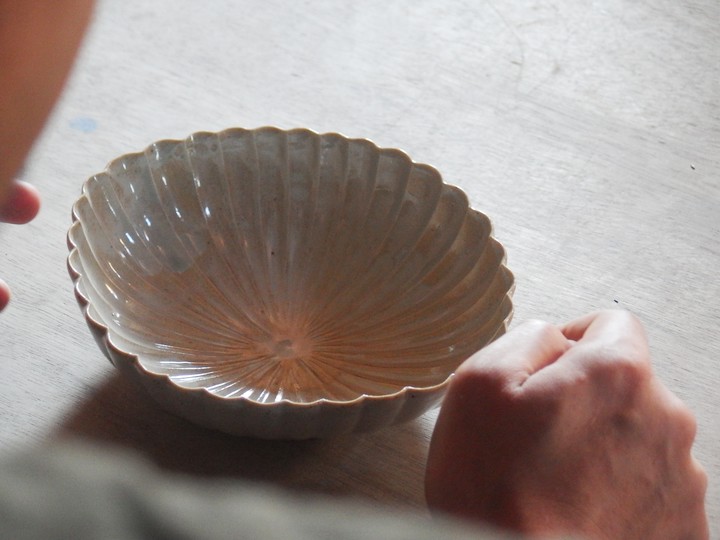
Hanada: It has a nice sharpness to it.
Arata Anzai: Yes. I like this crisp quality that porcelain has.
Hanada: The strong curvature of the oval feels just right. Do you use it regularly?
Arata Anzai: We use it for spinach ohitashi, for example. Also for fruit. Celadon works well with Japanese, Western, and Chinese food, so we use it a lot.
Hanada: Ohitashi again (laughs). Thank you for answering on Atsuko’s behalf.
Arata Anzai: (laughs). Oh, and we also serve boiled dumplings individually in these. Because they’re deep, they work well both for dishes with broth and without.
Hanada: That sounds perfect. This one looks slightly more fired.
Arata Anzai: The glaze is applied thinly to make the lines stand out.
Dessert Time
Hanada: This hexagonal piece is a recent one, isn’t it?
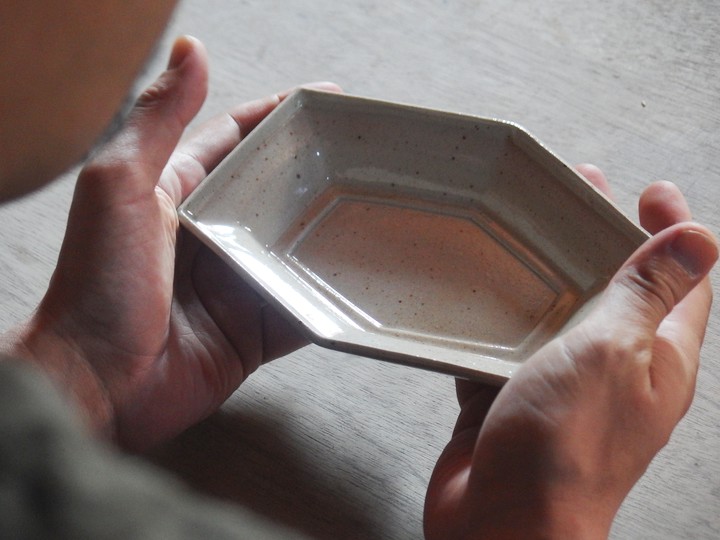
Arata Anzai: It’s relatively new. It’s meant for sweets or desserts. Dessert after meals has become a routine for our child. Serving small portions on individual plates seems to feel satisfying… We didn’t have that habit before having a child, but it’s become established.
Hanada: And the parents started joining in.
Arata Anzai: Exactly (laughs). So we thought, why not make tableware specifically for that?
Hanada: The elongated hexagon, the well, the slightly flared edges, the final rise—you’ve clearly paid close attention to the form.
Arata Anzai: Yes. I’m also planning to make it in amber glaze.
When You Make Without Strain, You Can Use Without Strain
Hanada: Next, the twisted form. A classic. I like its soft atmosphere.
Arata Anzai: We like this thin quality too. The crisp porcelain-like character of the semi-porcelain comes through nicely, and it feels good to make.
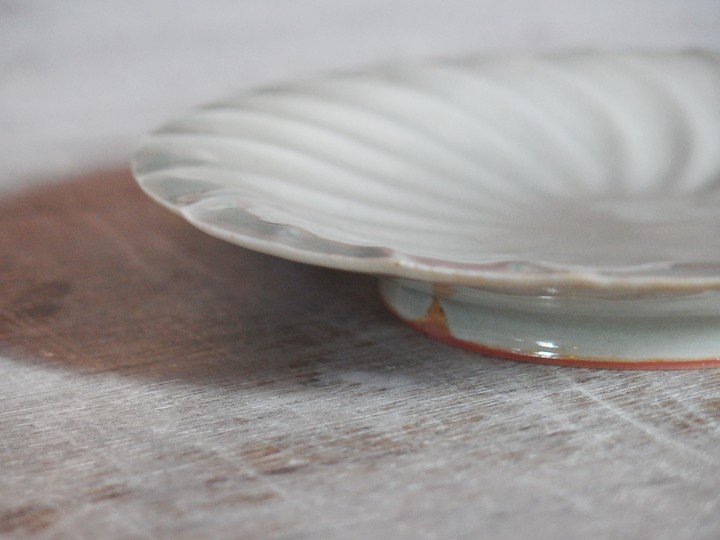
Hanada: It feels good to make?
Arata Anzai: It comes out the way I imagine… This form makes it easy to express our image of celadon. Many of our standard pieces are made smoothly, with a good rhythm. They’re plain because there’s no excess intention behind them.
Hanada: A natural feeling while making them.
Arata Anzai: When you make without strain, you can use it without strain.
Closer to Our Own Daily Lives
Hanada: You’ve been independent for about sixteen or seventeen years now?
Arata Anzai: Yes. It’s been just over ten years since we started working together.
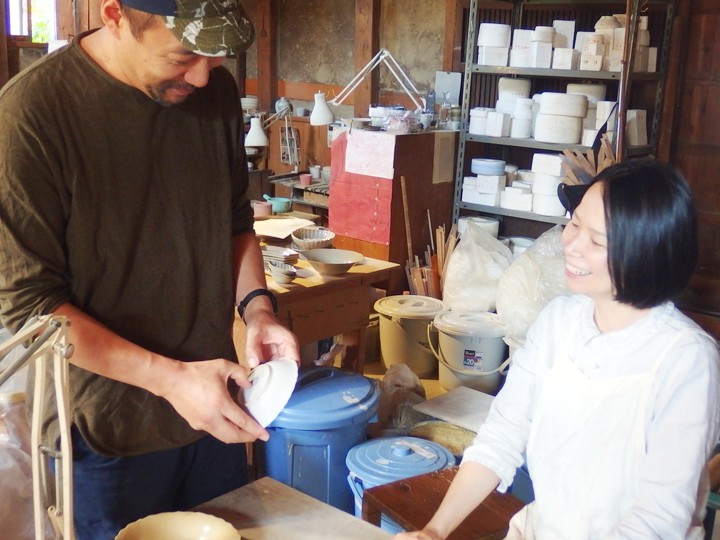
Hanada: Little by little, new pieces have been added and things have gradually changed.
Arata Anzai: The proportion of orthodox pieces has increased. We’re moving closer to what’s easy for us to use daily. Because we have a clear image, we can make them without forcing anything.
Hanada: Has your daily life become more closely linked to your work?
Arata Anzai: It has.
Hanada: And that’s made things feel more natural.
Arata Anzai: I think that’s exactly it.
Hanada: Thank you very much. We look forward to the exhibition.
Arata Anzai: Thank you—we appreciate it.
≪ END ≫
*厚子さんは予定が合わず、インタビュー終了後の合流となりました。
庭の灰
花田:展示会に出品予定のうつわについてお話を伺いたいと思います。
まず、こちらの庭灰段皿からお願いします。(花田以下-)
安齋新:庭の雑草や落ち葉、剪定したものなどの灰を釉薬に使っています。
それなので、庭灰という名前です。
-:色々なものが混ざっているのですね。
安齋新:松やら椿やら、名前も知らないような木も・・・。
まあ、子どもと一緒に食べ物を焼きながら、遊びを兼ねているので、楽しみの一つという感じです。
いろいろ継ぎ足しながら作るので、焼くと感じが毎回少しずつ違います。
-:窯出しも楽しみですね。
安齋新:毎回同じ仕上がりで作るものもありますが、それだけではドキドキ感もないですから、違う楽しみです。
-:かたちも自然で、最後のこの縁の感じも、安齋さんらしい良い雰囲気です。
安齋新:これは彼女(厚子さん)が作ったものですが、自分が使いやすいカタチとなると、オーソドックスなものになってきますよね。
-:何に使っているのですか。
安齋新:これは、和食が多いですね。
-:和食・・・ですね(笑)
安齋新:大まか過ぎました。
玉子焼き、アジの南蛮漬け、最近彼女がはまっている昆布締めなどに使っています。
家庭料理ということで。
輪花に梅花の刻文を
-:次は、新作です。
安齋新:近所の陶芸家の方が廃業される時に「仕事場を整理するから要るもの持って行って」って声を掛けてくれたんです。
初期伊万里みたいなものから、中国の白磁みたいなものまで色々あって、その中のひとつにこういった梅の刻文をのせた白磁のお皿がありました。
-:梅花も配置もこんな感じですか。
安齋新:はい。
-:そのお皿を魅力的に感じた部分はどこですか。
安齋新:トータルです。
土の感じや白磁の全体的な一体感、石っぽいきれいな質感とか・・・。
模様もしつこくないし、抜け感もバランスいいですよね。
刻文も何か増やしたいなと思っていた時だったので、何か作ってみようと。
-:いかにも、安齋さんが選ばれる東洋の焼物という感じです。
本歌から学ぶこと
安齋新:これが本歌です。
-:結構近いですね。
安齋さんにしては珍しい気がします。
実際、作り始めてみていかがでしたか。
安齋新:昔のものは、結構合理的に出来ているんです。
例えばこの場合、ろくろをひいたものを型打ちしていますが、型からの抜けがいいんです。
最初から自分で作る場合、引っかかって取れなかったり、どこかで素地が切れてきたり、うまくいかないこともあります。
でも、昔のものは、そういうこともちゃんと考えられているんですよね。
見た目を考えて模様を本歌よりはっきり強調して作ったりすると、乾燥のときにそこから切れてきたり・・・。
それぞれのパーツが考えられた結果なんですよね。
理にかなっていて、無理なことはしていない。
-:作ってみて初めて分かるわけです。
安齋新:尚且つ、その切込みが浅いことによって装飾的にも上品に見えるという。
-:見た目に配慮しつつ、収まるところに収まっているのですね。
安齋新:よくあるかたちは作りやすさやデザインなど、ちゃんと考えられているんだなあって。
作ってみて色々な意図に気が付くことは多いです。
数字の10
-:次はこれいきましょうか。
安齋新:風化長石という志野などに良く使われている原料のひとつです。
普通長石って水の中で沈んでコチンコチンになります。
そういう長石がトロッとなるのがきれいなわけですけど、この釉薬だけは沈まないので、使いやすいです。
それと、志野焼で使われるだけあって、日本的というか・・・。
このあたりの青磁だと東アジア、中国、韓国、ヨーロッパみたいな固い焼物のイメージなんですが、これだと柔らかい感じになります。
-:かたちもそれにあわせて考えたのですか。
輪花のような・・・。
安齋新:十角形です。
-:見込みにはうっすら、輪線を。
無いと物足りないですかね。
安齋新:かなーと思って、入れました。
10って面白い数字です。
作る上でも4、8なんかの2の乗数は作りやすいですけど、10はまあまあ難しい。
元々十角形というのは5から来ているかもしれないし、そうだとすれば日本的なんだろうなって思います。
-:釉薬がうまく活かされましたね。
安齋新:これは原料の山を見に行きました。
信楽に近いところで、おじいちゃんがパワーショベルで掘っていました。
「山全体が長石」みたいな感じで、表面は乳濁した透明な石が一杯出てくるんですよね。
とてもきれいな山でした。
-:いいですね。
助け合って成り立つもの
安齋新:「このおじいちゃんを継ぐ人がいなくなったらこの長石どうなってしまうのかなあ」なんて思いながら見ていました。
他の材料も一緒で、なかなか後継者がいないですから。
-:そのものは存在していても、掘る人や加工する人がいないというのはよく聞きます。
安齋新:正木(春蔵)さんの筆も「この人の作るこれじゃないと、いけないんだ」って聞きました。
ものづくりって、それぞれがそれぞれを助けあって成り立っている部分があると思うんです。
でも、そういう仕事って、あまり表に出てこないから、知られていないですよね。
-:焼物を作っている人の名前は出てきても、そういった人達の名前を見ることはありません。
それでも、そういった人達に支えられているという事実や意識があるからこそ、正木さんや安齋さんが、ものづくりを謙虚に保っていられるのかな、とも思います。
ところで、これは盛り鉢ですね。
安齋新:そうですね。
-:煮物とか・・・。
安齋新:冬瓜とか、大根とか、おでんとか、彼女がそういうの好きなんです。
-:おでんは銘々ですか。
安齋新:そうです。
青磁刻文五寸皿
-:続いて青磁刻文五寸皿。
安齋新:この灰釉は伊賀方面です。
これも作っている灰屋さんを見に行きましたが、まあ、おじいちゃん。
そこは息子さんがいらしたから大丈夫なんでしょうけど(笑)。
そういう不思議な「灰の専門店」という存在、あり続けて欲しいです。
昔ほど需要がないから、灰だけじゃ成立しないのかもしれませんが・・・。
元々は灰のアク汁を染色屋さんが染めるときに使って、アクが抜けた後の灰を焼物屋さんがもらって・・・。
信楽や伊賀はビードロぽいのが多いからそういう灰屋さんがいたのだと思うんですが、灰がそのままガラスになっていくって、あらためて考えてみると物理的にも不思議な感じがするし、ちょっと面白いですよね。
で、不純物も一杯入っているから、思わぬニュアンスの出現や変化の感じがいいんです。
-:ところで、この文様は以前から作られていますね。
安齋新:中国の北宋時代のものです。
中のほうの文様だけ活かしています。
-:この写真だけから起したんですか。
安齋新:それなので、実物とは少し違うと思います。
-:中国の写したように見えないですよね。
安齋新:ええ、この中華風のもの抜いちゃうと。
ヨーロッパなのか中国のものなのか分からないようなものがいいです。
まあ、中国の中にはヨーロッパに輸出していたものも多いだろうし、イスラムっぽいものもありますよね。
西安あたり、シルクロードで繋がっているから、ちょっとエキゾチックなのが面白いなと思って。
-:これは普通の取り皿でしょうか。
安齋新:デザートにも良いかなと思って。
フルーツを銘々に盛ったり、寒天ゼリーや水羊かんなんかにも、うちでは使います。
水餃子にひし形菊鉢
-:青磁ひし形菊鉢はいかがでしょうか。
安齋新:これは、彼女が作っているんですが、一個一個エッジを削っています。
-:ピリっとしていて良いですね。
安齋新:そうですね。
磁器のピリッとしたこういう感じがいいなと思います。
-:丸みの強い楕円の具合も丁度良いですね。
普段、使われていますか。
安齋新:ほうれん草のおひたしなんかを盛ります。
果物にも。
青磁は和洋中何でも合いやすいと思っているので本当によく使います。
-:また、お浸し(笑)。
料理をされている厚子さんの代わりに答えてくださってありがとうございます。
安齋新:(笑)。
そうそう、あとこれ水餃子なんかを銘々に盛っています。
深さがあるので汁物にも汁気のないものにも銘々鉢としてよく使います。
-:いいですね。合いそうです。
これ、ちょっと焼けた感じになっていますね。
安齋新:釉を薄めにして、線が際立つようにしています。
デザートの時間
-:この六角は最近のものですね。
安齋新:割と新しいです。
お菓子やデザート皿みたいな感じで。
子どもはご飯食べた後のデザートが恒例になっています。
銘々の皿に盛ると少しずつでも満足感があるようで・・・。
子どもが生まれる前はなかったんですけど、その習慣が定着しました。
-:親もそれに付き合い始めた。
安齋新:そう(笑)。
で、そんな時に、それ用にうつわを作ろうかって。
-:六角で横長になっていて、この見込みの部分や、このちょっと端反っている部分や、最後の立ち上がり・・・形は色々気を使われているようです。
安齋新:そうですね。
飴釉も作ろうと思っています。
気負わず作ると、気追わず使える
-:続いてねじり。
定番です。
柔らかい雰囲気が好きです。
安齋新:自分たちもこの薄い感じが好きです。
この半磁の磁器っぽい部分がピリッと表現されている感じがいいのと、作っていても気持ちいいので。
-:作っていて気持ちがよいとは。
安齋新:思い描いていたようにできるというか・・・。
このかたちは自分たちのイメージする青磁のカタチとして表現しやすいんです。
定番は、そういう感じでリズムよく出来たものが多いですね。
変な思いがない分プレーンだから。
-:作るときに自然な感じというか。
安齋新:気負わず作ると、気負わず使える気がします。
自分達の暮らしの近くに
-:安齋さんは独立16、7年でしょうか。
安齋新:そうですね。
ふたりで一緒に作るようになってからは10年ちょっとです。
-:少しずつ新しいものが加わって、徐々に変わってきました。
安齋新:オーソドックスなものの割合が増えてきました。
自分たちが普段使いやすいものに寄ってきています。
イメージがある分、無理なく作れます。
-:自分達の暮らしと仕事がよりリンクしてきたのでしょうか。
安齋新:近くなってきました。
-:その分、自然になって来たのですね。
安齋新:そういうことなんだと思います。
-:ありがとうございました。
展示会、宜しくお願いします。
安齋新:よろしくお願いします。
≫安齋新さん・厚子さんの商品一覧はこちらから≪
関連記事はこちら