



English version of the interview here.
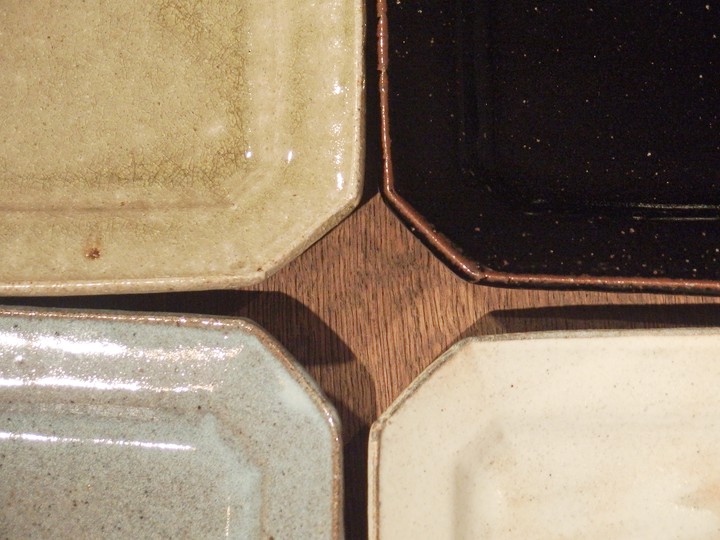
Ten-sided Plates
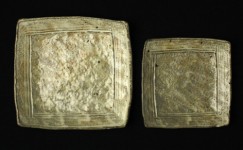
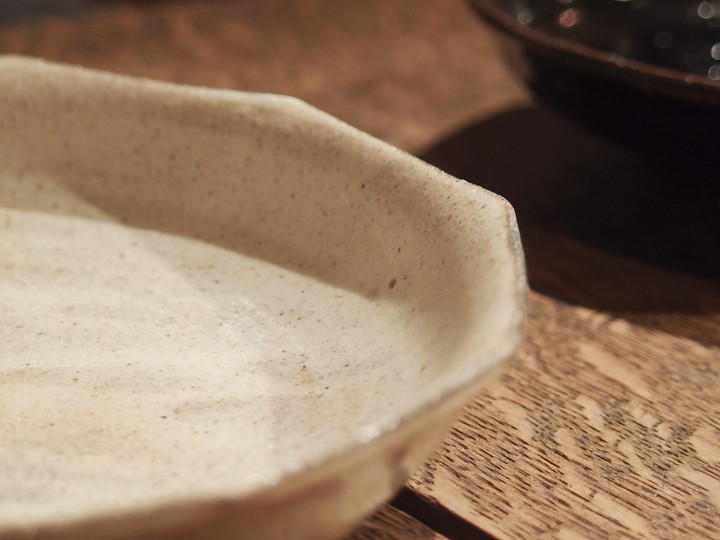
Hanada: I would like to ask you about your new pieces for the upcoming exhibition. First, could you tell us about these ten-sided plates? They come in two sizes. You looked at a piece of vintage Ko-Imari white porcelain as a reference, right? Personally, I think the final pieces turned out so well that people wouldn’t even realize they were inspired by Ko-Imari unless they were told. Did the vision come to you immediately when you first saw that white porcelain?
Yujiro Koga : Yes, I immediately imagined something that would suit pottery, rather than the delicate feel of porcelain. Even when I make things according to an initial idea, the result can sometimes turn out differently, but this one came together very smoothly.
Hanada: While keeping the ten-sided shape, you decided not to make it with a scalloped rim. Were there any other elements you incorporated?
Yujiro Koga : I tried to keep the center as flat as possible while giving it deep, upright sides. The curve itself is beautiful, and I think it functions very well for practical use.
Hanada: The original piece was around this size, but you also made a larger version for us.
Yujiro Koga : Since the center is wide, I felt an 8-sun (approximately 24cm) size would be a bit too large, whereas a 6-sun(approximately 18cm) size would feel awkward. So, I decided on a 7-sun (approximately 21cm) size.
Hanada: These ten-sided plates do not feature the ash glaze, correct?
Yujiro Koga : Based on my personal intuition, I choose glazes that best complement the specific shape of each piece.
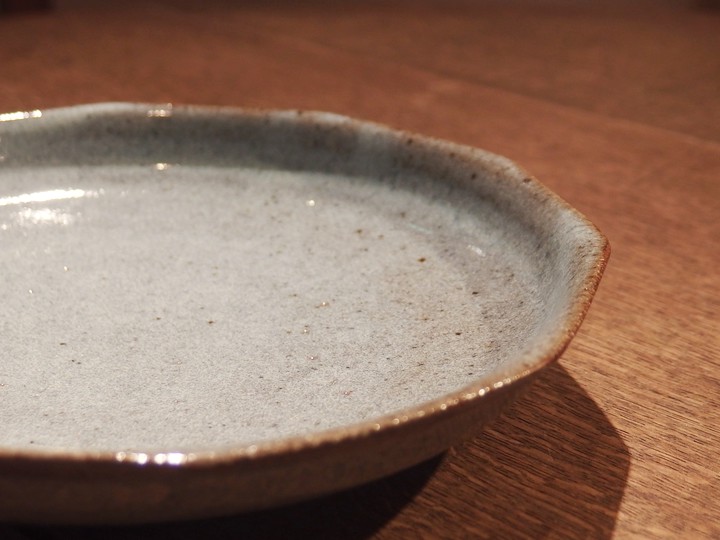
Hanada: This straw ash glaze goes wonderfully with it. It is a perfect match.
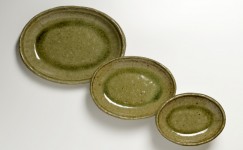
Octagonal Plates
Hanada: Next, let’s look at this corner-cut plate. You looked at a vintage European piece for this one, which was originally much larger.
Yujiro Koga : I changed both the size and the proportions. If I had kept it exactly as it was, it would have looked too Western.
Hanada: Those original proportions might have been difficult to use on a Japanese dining table. The final shape turned out beautifully.
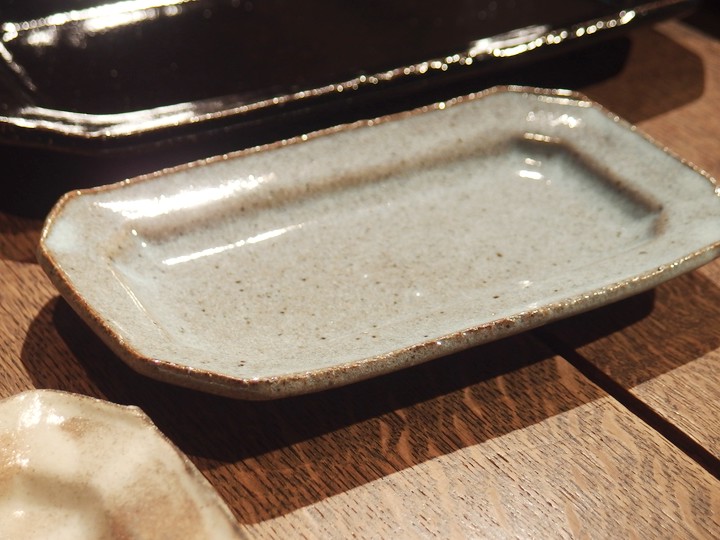
Yujiro Koga : At first, I thought a square shape might actually be better, but when I tried making a rectangular version, it worked out very well. It feels like a traditional plate used for grilled fish. I hadn’t thought of this approach before, so it was enjoyable to make.
Hanada: What kind of approach was new to you?
Yujiro Koga : Octagonal and corner-cut shapes have long existed in traditional Japanese tableware, but the way the sides rise and the feel of the rim were different from what I had done before.
Hanada: The slight lift at the very edge works effectively.
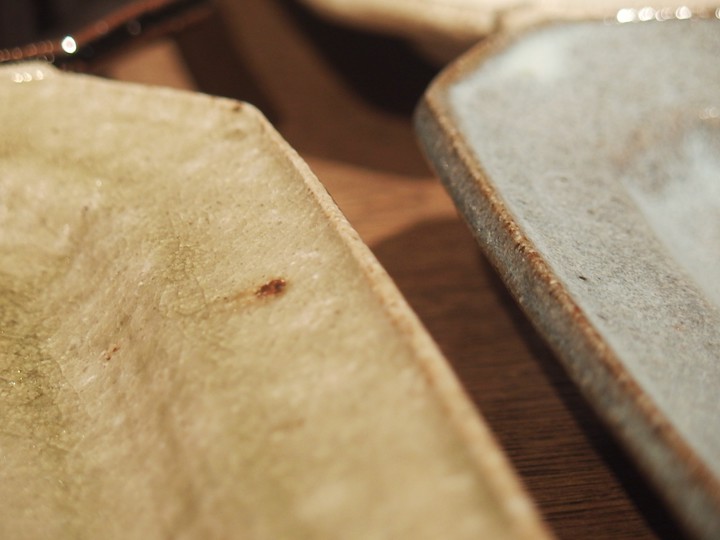
Yujiro Koga : I think it is better to have it. It gives a sense of containing everything nicely.
Hanada: It tightens the design and gives character to the entire piece.
Yujiro Koga : Yes, because the glaze becomes thinner there.
Hanada: How about its practical use?
Yujiro Koga : For the smaller one, although I made it, I can’t quite think of a specific use myself (laughs). I would love to hear how customers end up using it.
Hanada: (Laughs) Perhaps for grilled eggplant?
Yujiro Koga : Ah, yes, that would work.
Hanada: The larger one is easier to imagine, isn’t it? For meat dishes, for example…
Yujiro Koga : Yes, exactly.
Kohiki, Hakeme, Yakishime…
Hanada: By the way, in your early days, you focused exclusively on Kohiki and Hakeme.
Yujiro Koga : Yes. I only started working with things like black glaze recently.
Hanada: Did you admire antique pieces when you chose Kohiki and Hakeme?
Yujiro Koga : When it came to pottery, those were the only styles I could think of (laughs). I didn’t paint designs or think about decorating the surfaces. However, I originally liked Yakishime. My initial entry into pottery was actually through Yakishime.
Hanada: Styles like Shigaraki or Bizen ware?
Yujiro Koga : Yes, Shigaraki and Bizen.
Hanada: For everyday tableware, Kohiki and Hakeme certainly offer more versatility than relying solely on Yakishime. Do you have any Yakishime pieces for this exhibition?
Yujiro Koga : I tried making some sake ware, but the final result wasn’t quite where I wanted it to be, so I decided not to include them this time.
Hanada: Do you fire them in the same kiln as the other pieces?
Yujiro Koga : Yes, in the very front section where the temperature rises the highest and the pieces get covered well with ash. However, unlike an anagama kiln, a climbing kiln doesn’t catch a lot of ash. Essentially, a climbing kiln is meant for clean firings, so I am thinking about how to approach the kiln setup a bit more moving forward.
Hanada: Do you plan to modify the kiln again?
Yujiro Koga : I am thinking about dismantling the kiln I previously built just for Kohiki and rebuilding it. I couldn’t manage to do it in time for this exhibition, though.
30 Years of Hakeme
Hanada: Next is Hakeme. Your Hakeme pieces have many fans among the staff here at Hanada.
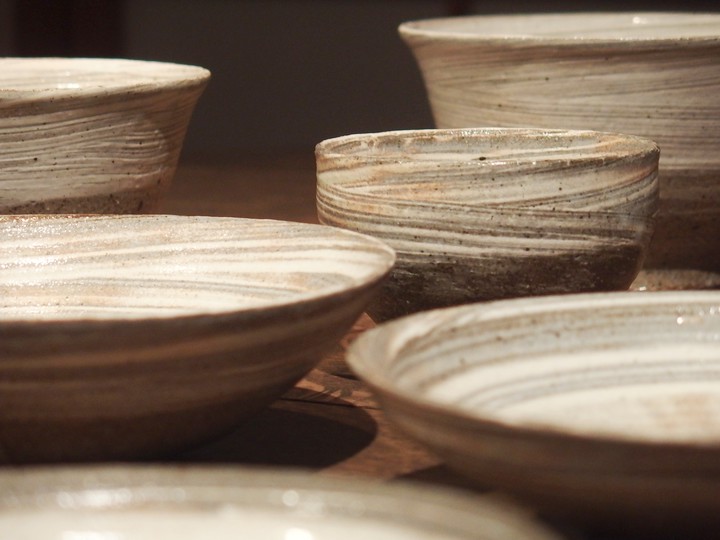
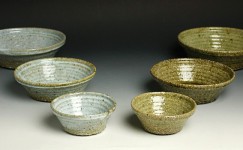
Yujiro Koga : For Hakeme, there is a method where you apply the slip directly with a brush, and another where you dip the entire piece into the slip and then run a brush over it. I usually use the latter method. I find that brushing it when it is semi-dry creates a lighter feel. The former method has its own charm, bringing out a rougher and more rugged texture. I used to do both, but now I prefer to apply the brush strokes lightly over the surface.
Hanada: When it is semi-dry.
Yujiro Koga : If it is too dry, you won’t get the brush marks, and if it is too wet, it doesn’t form distinct brush lines and looks too thick. It is hard to describe, but you lose that sense of sharp, moving lines.
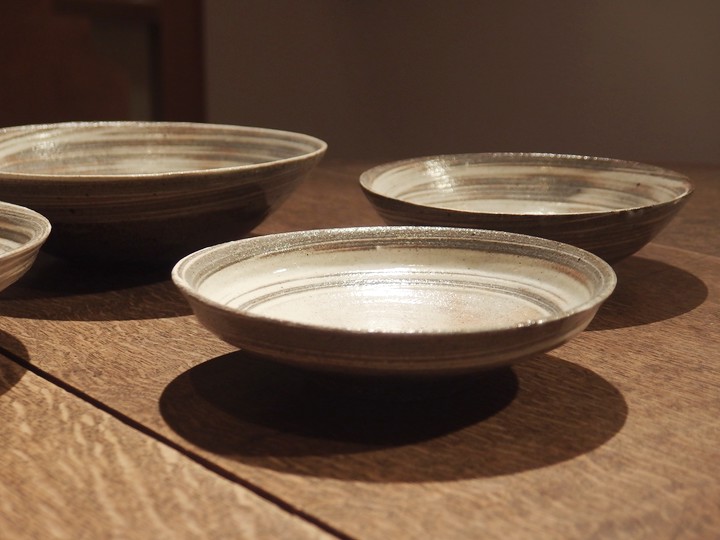
Hanada: It has been over 30 years since you started making Hakeme. Has your approach changed compared to the beginning?
Yujiro Koga : Just like working on the potter’s wheel, it is like driving a car. I don’t think about it too much anymore; my body just reacts naturally.
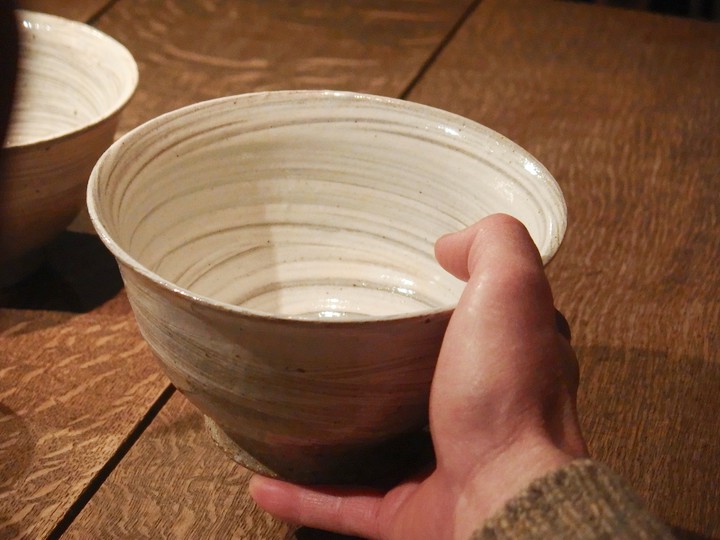
Hanada: The Hakeme on the donburi bowls has a different feel.
Yujiro Koga : I have been making donburi bowls continuously, so I still use the same white clay that I have used since the early days. This clay has a stickier quality and feels closer to porcelain. The clay itself contains very little iron, making it less prone to developing reddish tones.
Hanada: Thank you very much. We look forward to the exhibition.
Yujiro Koga : Thank you, I look forward to it as well.
≪ END ≫
十角のお皿
花田:今回の企画展出品予定の新作などについてお話を伺いたいと思います。
まず、この十角皿はいかがでしょうか。
大小2サイズあります。古伊万里の白磁を見ていただきました。
言われなければ元が古伊万里とは分からない仕上がりになったと僕は思います。
最初あの白磁を見たとき、イメージはすぐわきましたか。
(以下花田-)
古賀:
磁器みたいに繊細な感じではなくて、つちものに合うようなイメージをすぐ持てました。
イメージに従って作っても、違うことがありますが、これはすんなり受け入れられました。
-:十角は活かしつつ輪花にはしませんでした。
他に取り込んだ要素はありますか。
古賀:
なるべく見込みを平らに保って、深く立ち上がる部分でしょうか。
カーブそのものもきれいだし、「使う」意味でも優れていると思います。
-:元々の大きさは、ちょうどこれくらいでしたが、加えて大きいのも作ってくれました。
古賀: 見込みが広いので8寸じゃちょっと大きいし、かといって6寸だと中途半端だなと思って、7寸にしました。
-:この十角皿、灰釉はありませんね。
古賀: 個人的な感覚だけど、そのかたちに合う、合わないで、釉は決めています。
-:この藁灰釉は相性いいですね。
ぴったりです。
八角のお皿
-:続いてこの隅切です。
これはヨーロッパの古物を見ていただきました。
元はもっと大きいです。
古賀:
サイズも、縦横の割合も変えました。
あのままだと、洋風になり過ぎてしまうので。
-:あの縦横比率だと、日本の食卓では使いづらいかもしれません。
きれいな形に仕上がりました。
古賀:
最初は、いっそのこと正方形のほうがいいなと思いましたが、長方も作ったらうまくいきました。
焼き物皿なんかのイメージです。
今までこういう発想がなかったので作っていて楽しかったですよ。
-:なかった発想とは?
古賀: 八角とか、隅切って和食器にも昔からあるけど、立ち上がりの部分や、リムの雰囲気が今までとは違いました。
-:縁の最後の立ち上がりが利いています。
古賀: あったほうがいいと思います。止まる感じがするっていうのかな。
-:これがあると引き締まるし、全体に表情も出てきます。
古賀: 釉が薄くなりますからね。
-:用途はどうでしょうか。
古賀:
小さいほうは、作ってはみたけど、自分の中で用途が思いつかない(笑)。
お客さんに使ってみた感想を聞いてみたいです。
-:(笑)。焼きナス…ですかね。
古賀: あ、そうだね。
-:大きいほうは分かりやすいですね。
肉料理とか…。
古賀: そうですね。
粉引、刷毛目、焼締…
-:ところで、古賀さん、最初のころは粉引や刷毛目だけでした。
古賀:
はい。黒釉なんかは最近です。
-:粉引や刷毛目は古いものか何かに憧れていたのですか?
古賀:
つちものといって、それしか思いつかなかったんですよ(笑)。
絵を描くわけでもないし、装飾することも頭になかったから…。
ただ、自分は最初は焼締が好きでしたよ。
やきものの最初のきっかけは焼締だったから。
-:信楽あたりですか。
古賀: そう。信楽や備前。
-:食器をやるなら、焼締だけよりは、粉引や刷毛目のほうが幅は出てきますね。
今回の企画展には焼締は…?
古賀: 酒器を作ってみたけど、仕上がりがもう一つだったので、今回は出さないでおきます。
-:他と窯は一緒ですか。
古賀:
一番前の温度が高く上がって、灰もよく被るところで。
でも、登り窯って、穴窯なんかと違ってあまり灰被らないから。
基本的に、登り窯はきれいに焼きたい窯なんで、窯のことは、もう少し考えようかなと思っています。
-:窯は何かまた手を加える予定ですか。
古賀:
前に一度作った粉引だけの窯をばらして、もう一回作り直そうかなって思っています。
今回ちょっと間に合わなかったけど。
刷毛目30年
-:次は刷毛目です。
古賀さんの刷毛目は花田のメンバーにもフアンが多いです。
古賀:
刷毛目って、刷毛に化粧土をつけてかけるのと、素地を化粧土にドボンとつけて刷毛をかける方法がありますが、僕は大体後者です。
それで半乾きの時に、刷毛をかけるほうが軽い感じになるのかなと思います。
前者だと、それはそれで荒々しさとか、ごつさみたいな感じは出ますよね。
前は両方やっていたけど、やはり、どっちかというと、上からサッとかけたいですね、僕は。
-:半乾きの時。
古賀: 乾きすぎると刷毛目にならないし、あまり乾いていないと、刷毛の線にならずに、ベタっとした感じに…、なんて言ったらいいのかな、線がぼやけて走っている感じが出ないんですよ。
-:刷毛目始めてからだと、30年以上経ちますね。
最初のころと変わってきましたか。
古賀:
ろくろもそうだけど、車の運転と一緒ですよ。
いろいろ考えなくなりました。体が勝手に反応する感じです。
-:どんぶりの刷毛目は雰囲気が違いますね。
古賀:
どんぶりだけは作り続けているので、昔から使っている白い土をずっと使っています。
こっちは粘りっけがあるというか、磁器に近い感じなんです。
土自体は、あまり赤味とか出にくい、鉄分が少ないものです。
-:ありがとうございました。
展示会、よろしくお願いします。
古賀: よろしくお願いします。
関連記事はこちら