



English version of the interview here.
The Journey to Tableware Making
Hanada: Could you tell us how you started your career in making tableware?
Noboru Yagihashi : I was studying painting at an art university, but I was feeling lost about my future. At that time, a professor from another department advised me to think about “water,” one of the five elements. That conversation sparked my interest in pottery, which requires all five elements to create. After graduating, I initially joined a pottery studio in Koisago, Tochigi Prefecture. Because of my art background and painting skills, my work there focused mainly on hand-painting the pottery.
Hanada: How did it feel to work with pottery after studying painting at an art university?
Noboru Yagihashi : In terms of creation, painting aims to appeal to the visual senses. While there are elements like scent and brush pressure, clay feels much more direct. For me, making pottery involved more sensory elements than concepts or techniques, so right after graduation, I actually felt that it did not suit me at all. With no real reason, I kept thinking that woodwork or bamboo crafts would suit me better. However, once you start something, you cannot just give it up so easily. (laughs)
Hanada: That is true. (laughs)
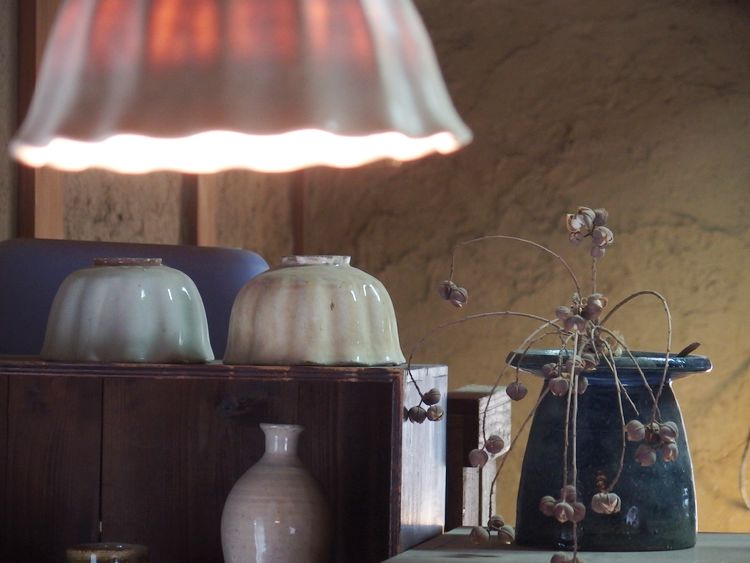
Noboru Yagihashi : So, I spent my time throwing on a traditional kick wheel entirely in my own way. As with anything, it eventually became second nature to me, and I completely forgot that I ever thought pottery did not suit me. Then one day, during a company trip with the studio, we visited the Hakone Museum of Art, and there I encountered an antique Shigaraki jar.
Hanada: Was that what brought you to Shigaraki, where you are based now?
Noboru Yagihashi : Yes, exactly. After working at the studio in Koisago for three years, I moved to Shigaraki and spent some time at a local pottery studio. Every night after work, I would stay in my boarding room and continuously make jars by hand-pinching. When the master of the studio saw my small room completely filled with jars, he kindly said, “Why don’t you try firing one whole batch in our anagama kiln?” I just kept repeating that process. Over time, I began to aim for making casual, everyday tableware.
Hanada: Was there a specific turning point?
Noboru Yagihashi : I realized one day that working on those kinds of everyday items made me feel the most at peace.
What Changes and What Remains Through Repetition
Hanada: What does tableware mean to you?
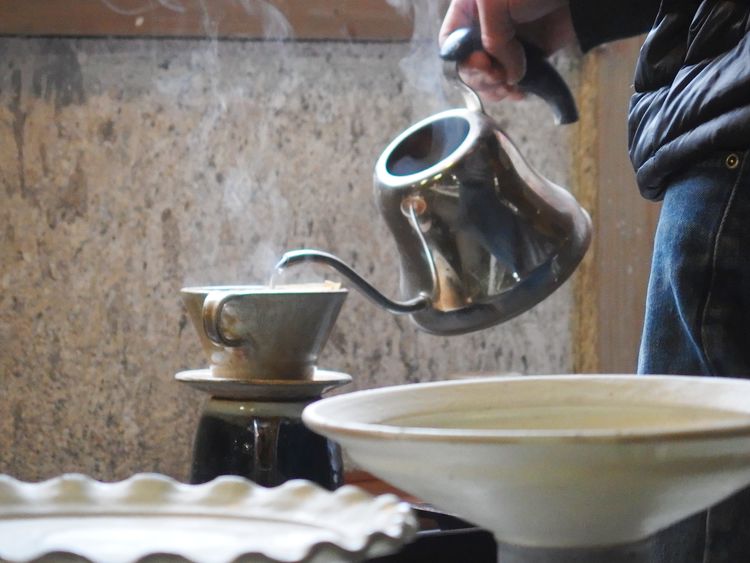
Noboru Yagihashi : I would say it is a “space.” Among the spaces where people eat, where items are placed, and where food is served, it is just one of those elements. It is similar to how a house is a space. The table, the tableware, the ingredients, the various dishes, the coffee, water, or wine—they are all gathered in that space and then they disappear. Within this repetition, some things change, and some things remain the same. The world changes, and I change as well. Naturally, tableware also changes through these experiences. I work with the mindset that tableware is a space, and it is something that can change at any time.
Hanada: Does that apply to the pieces you create as well?
Noboru Yagihashi : Yes, I believe they change naturally.
Hanada: Yet, there are some items you have been making for a quarter of a century.
Noboru Yagihashi : Even for the same item, the raw materials change, and I slightly alter the shape—for instance, the inner space of a bowl. This is because my own sense of what feels right also evolves.
“Breathing” Shapes the Form
Hanada: You have always used a kick wheel.
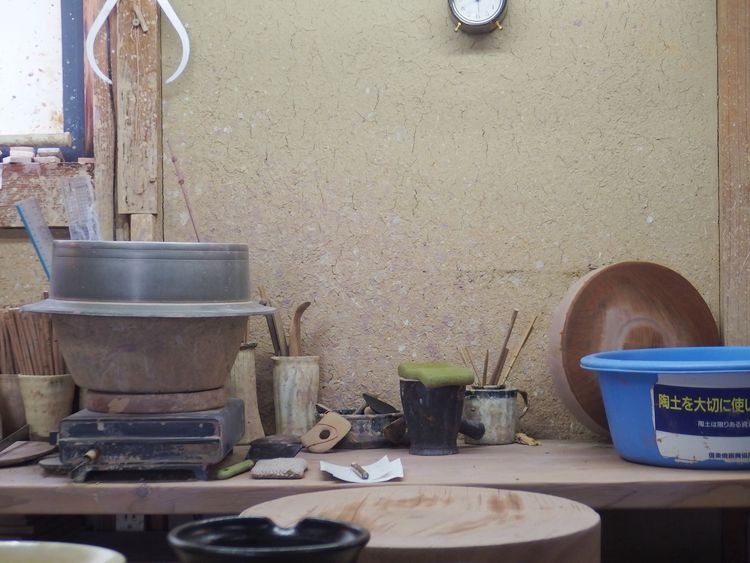
Noboru Yagihashi : When using a kick wheel, the form will not take shape unless your body moves. Your physical movement directly connects to the birth of the form. However, my body is in a different condition now compared to twenty or thirty years ago when I started. The times are different too. Knowing that things will continue to change, I just go with the flow. Also, when I am working on the kick wheel, I realize how important breathing is. It feels as though breathing itself shapes the form.
Hanada: Do you feel that breathing connects one thing to another?
Noboru Yagihashi : Yes. And this might not just apply to working on the kick wheel. I feel that objects themselves breathe. When I look at antique Shigaraki jars, especially around the rim, I sometimes get the illusion that air is moving in and out, or that the piece is about to come alive. It is similar to the feeling you get when looking at sculptures, where you imagine they might suddenly start to move.
No Answer Comes Back…
Noboru Yagihashi : Certain parts of pottery making involve heavy labor, which makes your breathing heavy. Working like that makes me feel connected to the craftspeople of the past, thinking they must have panted in the exact same way. I believe the awareness gained from repeating these actions is what truly matters.
Hanada: That makes sense. They must have done the same work and breathed the same way. Would you say you are conversing with the clay through that heavy breathing?
Noboru Yagihashi : That connection is all I rely on.
Hanada: Does the clay ever respond to you?
Noboru Yagihashi : It never answers back. (laughs) Even when I feel the clay’s reaction has changed, it is usually just me who has changed. In the end, nature is indifferent to humans.
Perfect for Cake
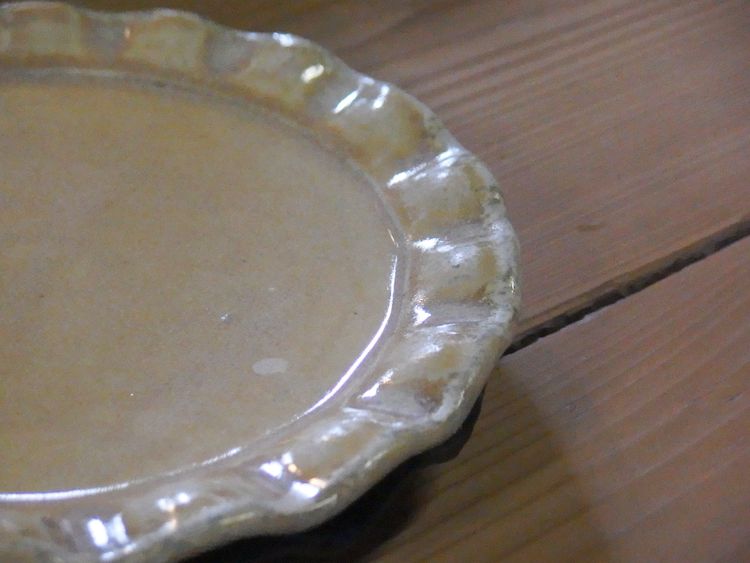
Hanada: I would like to ask you about some of your new pieces for this exhibition. First, this ruffled plate has a wonderful, elegant presence.
Noboru Yagihashi : I usually find it difficult to make decorative pieces, but I am very pleased with how this one turned out. I made sure the ruffles were not overly pronounced.
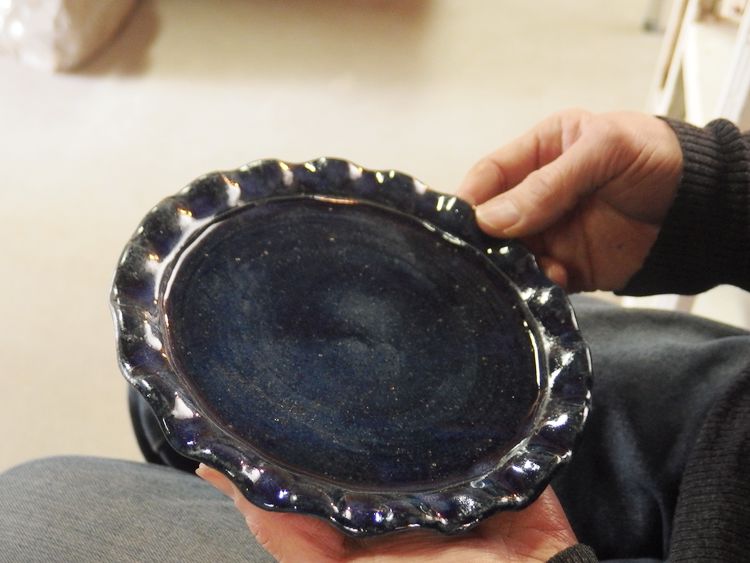
Hanada: What kind of food would you use it for?
Noboru Yagihashi : It would definitely be perfect as a cake plate.
Hanada: It really is perfect. The size is just right too.
Rimmed Bowls in Four Colors
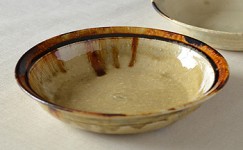
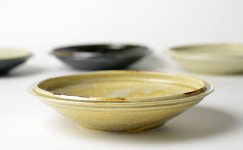
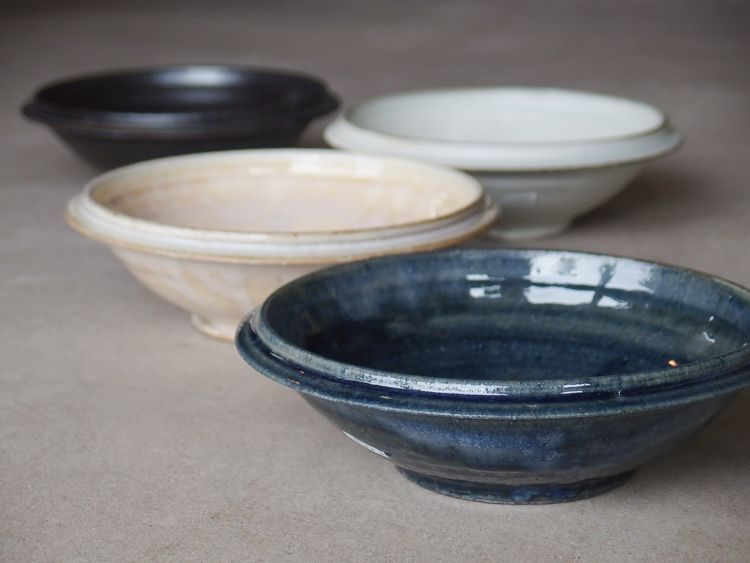
Hanada: Next, let us look at the rimmed bowls.
Noboru Yagihashi : I previously made six-sun (approx. 18cm) bowls with a rounded rim in this size, but I wanted to try something new. I designed this shape aiming for a piece that can also be used for main dishes.
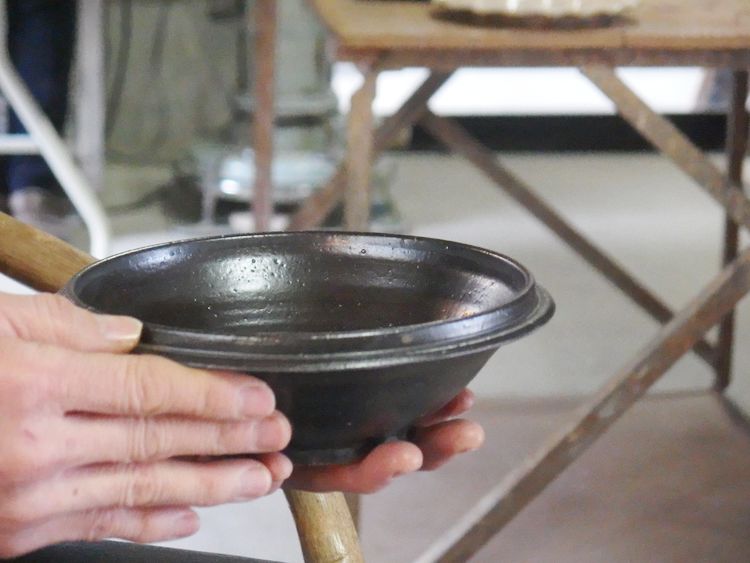
Hanada: The rim creates a beautiful accent.
Noboru Yagihashi : Thanks to the extended rim, I feel the overall appearance looks beautifully defined.
Hanada: It looks versatile enough to serve salads, or even dishes like Nikujaga (Japanese beef and potato stew) and beef stew.
Noboru Yagihashi : Yes, absolutely.
Hanada: These come in four different colors. It seems like it would be fun to mix and match all four on the table.
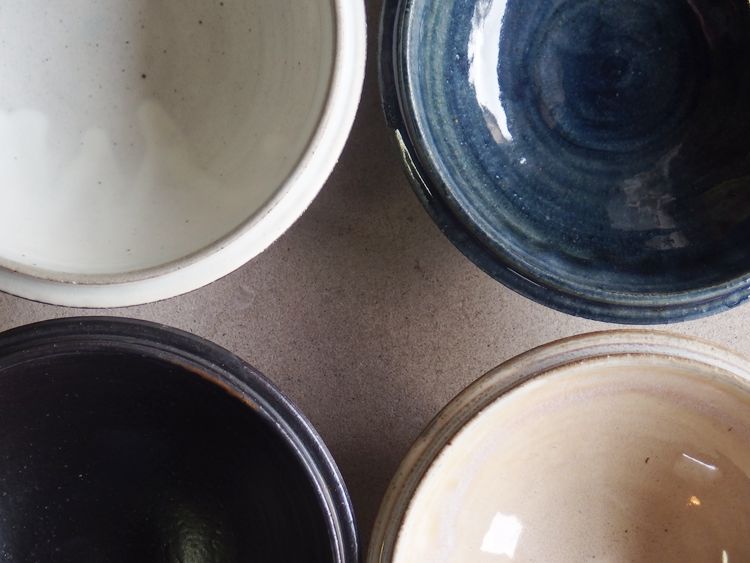
Noboru Yagihashi : I hope customers will choose according to their preference and enjoy bringing a cheerful touch to their dining table.
Hanada: Thank you very much. We look forward to the exhibition.
Noboru Yagihashi : Thank you, I look forward to it too.
≪ END ≫
うつわ作りに至るまで
花田:八木橋さんがうつわ作りの仕事に至る話を聞かせてください。(以下花田-)
八木橋:美大で絵を描いていたのですが、将来が見えずに考え込んでいた時に、他科の先生に「五元素の『水』について考えてみたらどうか」とアドバイスされたことがきっかけです。
そこから、五元素すべてを必要とする焼き物に気持ちが向き始めました。
卒業後、最初は栃木の小砂焼(こいさごやき)の窯元にいました。
美大出で絵も描けるだろうということで、そこでは絵付けの仕事が中心でした。
-:美術大学で絵を勉強した後に、焼き物をされて、いかがでしたか。
八木橋:制作上、絵画は視覚に訴えることを、目指しますよね。
匂いや筆圧、みたいなものもあるにはありますが、土はより直接的に感じます。
僕にとって焼き物は、概念や技術論よりも感覚的な要素が大きかったので、実は卒業直後は「焼き物は自分に合わないなあ」という思いが強かったです。
なんの根拠もなく「木工や竹工のほうが自分には合っているはずだ」なんて思いながらやっていましたけど、一度始めたことを簡単にはやめられないので…(笑)。
-:確かに(笑)。
八木橋:で、ずっと我流で蹴ろくろを回していたんです。
どんなことでもそうかもしれませんが、その内自分になじんできて「焼き物は自分には合わない」なんて考えていたこともすっかり忘れて…。
で、ある時、その窯元の社員旅行で箱根美術館に連れて行ってもらい、
そこで古信楽の壺に巡り合いました。
-:それが、現在信楽にいるきっかけになったのですね。
八木橋:そうです。
小砂焼の窯元に3年間お世話になった後、信楽にやって来て、しばらく窯元にいました。
で、毎晩仕事が終わると、下宿先の部屋で、手びねりで壺をずっと作っていたんです。
そうしたら、窯元の親方が、六畳一間が壺でいっぱいになっているのを見て、「うちの穴窯で、ひと窯焚いてごらん」って声を掛けてくれまして。
で、まあ…そういうことを、繰り返していました。
その内、カジュアルで普段使いできるうつわ作りを目指すようになりました。
-:何かきっかけがあったのですか。
八木橋:そういうものと向き合っているときが、一番気持ちが落ち着くことに、ある時気が付いたんです。
繰り返しの中で変わっていくもの、変わらないもの
-:八木橋さんにとって「うつわ」とは。
八木橋:「場」でしょうか。
人が食べる場、うつわを置く場、料理を置く場…とある中で、そのうちの一つなんだと思います。
住宅が「場」であることとも一緒で、そこにあるテーブル、うつわ、食材、色々な料理、コーヒーや水、お酒などが、場に盛られて、またなくなっていくんですよね。
この繰り返しの中で、変わっていくものもあるし、変わらないものもある。
世の中も変わるし、自分も変わっていく。
そして、うつわもそれらを経ながら変わっていく。
「うつわは『場』であり、いつでも変化しうるものだ」と思いながらやっています。
-:ご自身が作るものも…。
八木橋:自然に変わっていくと思います。
-:四半世紀作り続けているうつわもありますね。
八木橋:同じものでも、原料も変わっていきますし、かたち―
例えば、見込みの空間も多少変えています。
「いいな」と思える感覚も変わっていきますから。
「呼吸」がかたちを作る
-:八木橋さんはずっと蹴ろくろを使っています。
八木橋:蹴ろくろを回す時は、自分が動かなかったら形ができていきません。
「自分が動くこと」が「形が生まれること」にダイレクトにつながっていくんですけど、自分自身も始めたころの20年前、30年前とは状態が違います。
時代も違いますし、今後も変わっていくだろうなと思いながら、流れに身を任せています。
あと、蹴ろくろしていると、「呼吸」って大切だなって。
呼吸が、かたちを作るというか…。
-:呼吸によって何かと何かがつながっていくのでしょうか。
八木橋:そうですね。蹴ろくろの話だけではないかもしれません。
モノも呼吸している気がします。
古信楽の壺なんかを見ていますと、口のあたりなんか、空気が出入りしているんじゃいか、ブワッと動き出すんじゃないかっていう錯覚を覚えることすらあります。
彫刻作品なんかを見ていても、ちょっと動き出すんじゃないかっていう錯覚になることがありますが、それに近い気がします。
返事は来ない…
八木橋:焼き物は、作業によっては重労働だし、呼吸が荒くなります。
そうやって作業していると「昔の人も同じようにハアハア言っていたんだろうな」って、
そういう人たちとつながっている感覚になるんです。
そういうことの繰り返しで得られる感覚が大事なんじゃないかなと思うんですよ。
-:そうですよね。
同じようなことして、同じようにハアハア言っていたでしょうし。
ハアハア言いながら、土と対話をしてゆくということでしょうか。
八木橋:それが全ての頼りです。
-:土は何か返してきてくれますか。
八木橋:それが返してこないんですよね(笑)。
土の反応が変わっているように感じでも、自分が変わっているだけのことのほうが多いんだと思います。
結局、自然は、無関心じゃないですか、人間に対して。
ケーキ皿に
-:いくつか今回の新作についてお話を伺います。
まず、このフリル皿。華やかな感じがします。
八木橋:自分は華やかなものってなかなか作れなかったんですけど、
これは納得いくものに仕上がりました。
フリルの部分はあまりヒラヒラしすぎないようにしました。
-:何に使いましょうか。
八木橋:これはやっぱりケーキ皿ですよね。
-:ちょうどいいですよね。 大きさも。
リムボウル4色
-:続いてリムボウルです。
八木橋:今まで玉縁の六寸鉢をこの大きさで作っていたんですが、
変化が欲しいなと思って作りました。
メインディッシュにも使えるようなものを目指し、こういうかたちになりました。
-:縁のところがアクセントになっていますね。
八木橋:このリムが張り出していることで、結果的に全体が締った気がします。
-:サラダなどちょっとした盛り鉢としても使えそうです。
肉じゃがやビーフシチューにも…。
八木橋:そうですね。
-:これ、4色の色変わりです。4色で使っても楽しそうな感じですよね。
八木橋:お客様のお好みで。
これでテーブルが楽しくなればいいな、って思います。
-:有難うございました。
展示会、よろしくお願いします。
八木橋:よろしくお願いします。
関連記事はこちら