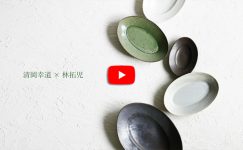



English version of the interview here.
Olive Glaze Pouring
Hanada: I’d like to ask you about the pieces you’re planning to exhibit this time. First, the 6.5-inch Olive Glaze Pouring plate.
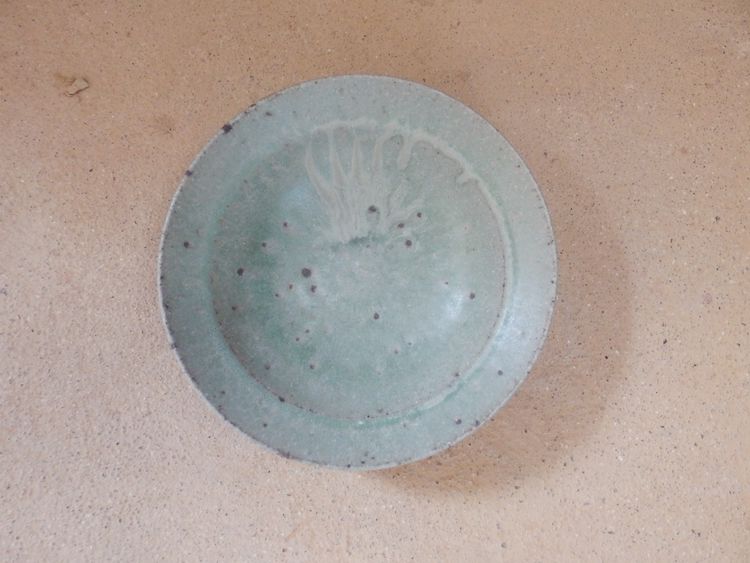
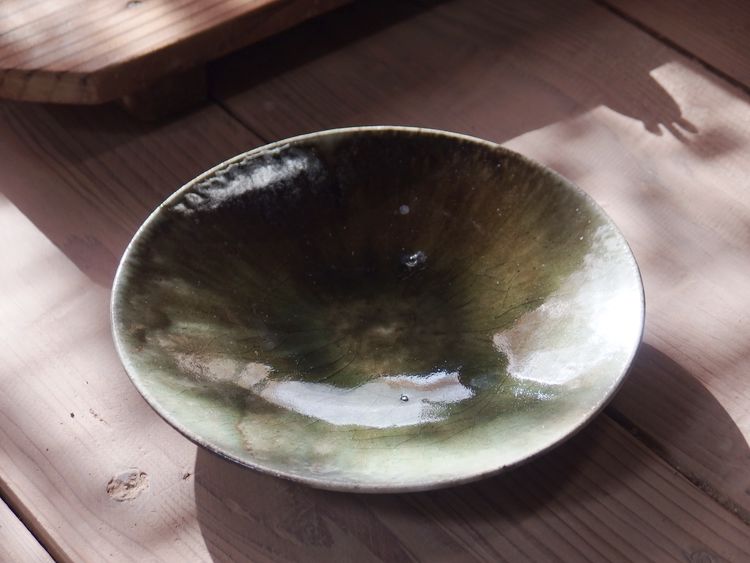 Kodo Kiyooka: This has the olive glaze along with another type of glaze.
Hanada: Compared to the plain “Olive Glaze,” this “Olive Glaze Pouring” seems darker in color. Is the other glaze an iron-based one?
Kodo Kiyooka: Yes. The iron glaze I used is called “Oni-ita,” and it creates these patterns. You can see it in these areas.Hanada: Why did you decide to add iron glaze to the olive glaze?
Kodo Kiyooka: The clay used for the regular olive glaze and for the Olive Glaze Pouring is different. If I only applied the olive glaze on the clay used for Olive Glaze Pouring, it would feel a bit too soft. So I wanted to add some character to the surface.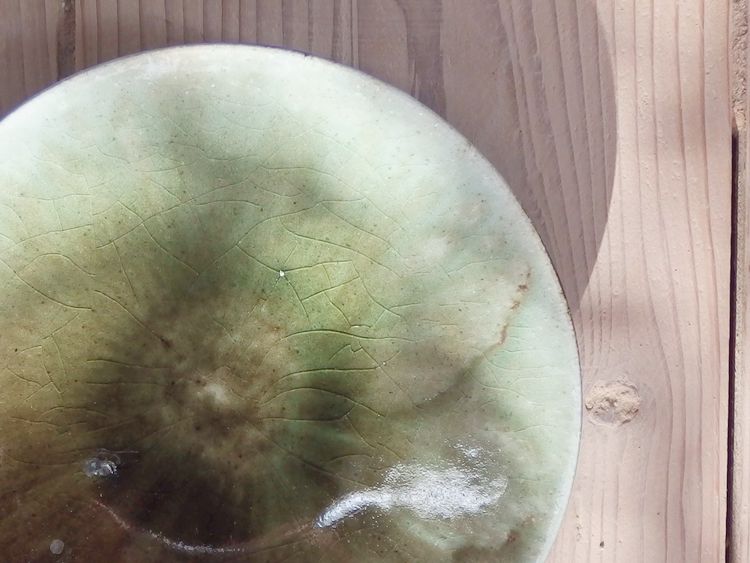
Hanada: The back is interesting too.
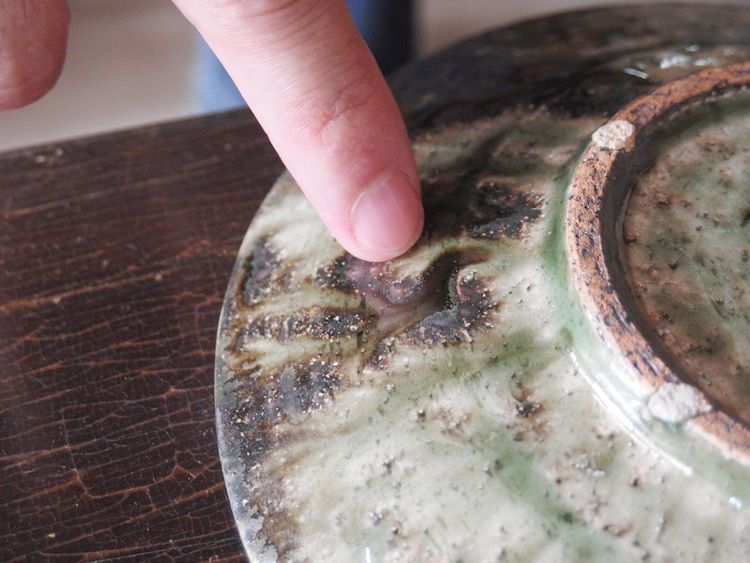 Kodo Kiyooka: Each back has a different expression. Among the various iron glazes, Oni-ita is particularly interesting. I like this plate myself and use it often.
Kiyooka’s Oval Plates
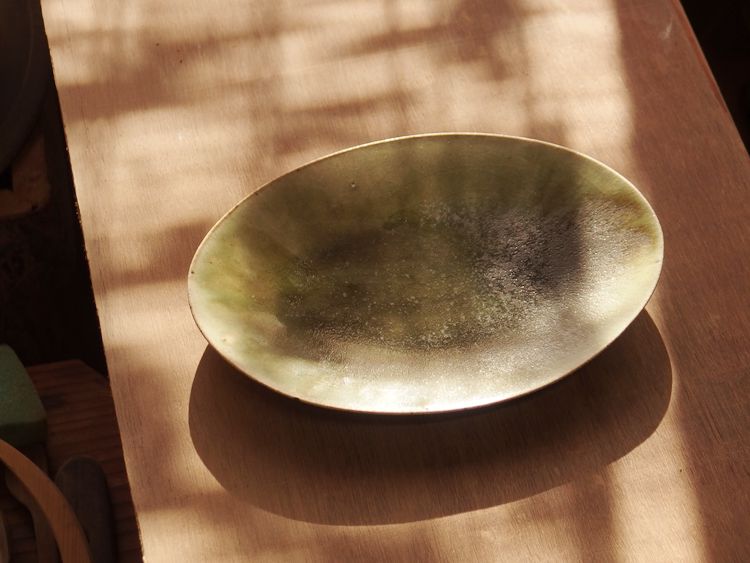
Hanada: Next, this small oval plate (S). Is this also Olive Glaze Pouring?
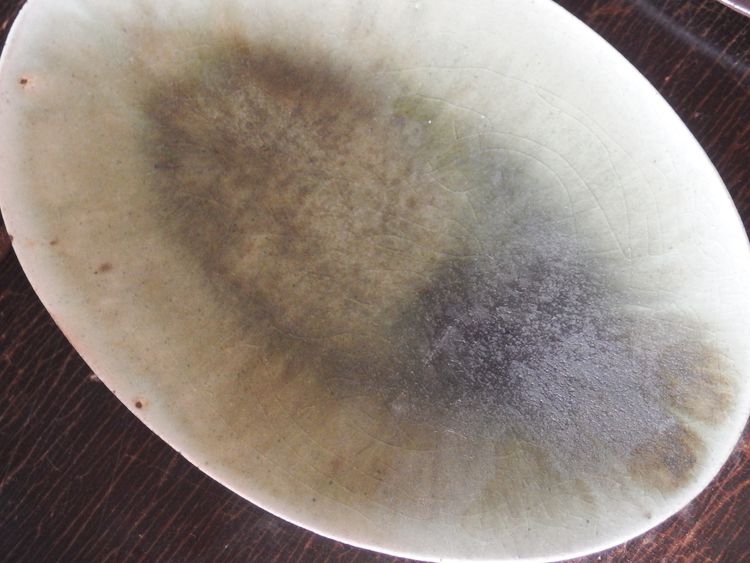 Kodo Kiyooka: The glazing method is the same, but the firing is slightly different. For this one, the reduction is stronger and the temperature a bit lower.
Hanada: Is this rimless oval plate a recent design?
Kodo Kiyooka: Yes, since this year. I aimed to make an oval plate that could be used as a plate, so the surface is almost flat.Hanada: It would be perfect for a one-plate breakfast too.
Kodo Kiyooka: Exactly.Hanada: Oval shapes are almost limitless—you have proportions, roundness, slenderness, and so on. What kind of oval do you personally find appealing?
Kodo Kiyooka: I like ovals where the ends are gently tapered, but not sharply pointed. Since I usually make round shapes, having a contrast with these ovals makes them stand out.Unique Qualities and Discoveries in Each Piece
Hanada: Next, the 6-inch flat bowl with ash-white kiln variation. The glaze flows beautifully toward the center, creating a mesmerizing effect.
Kodo Kiyooka: I’ve been making this for over five years.Hanada: You must have tried various techniques to achieve this effect.
Kodo Kiyooka: Since I apply the glaze rather thickly, it’s prone to cracking. So after firing, I let it cool slowly.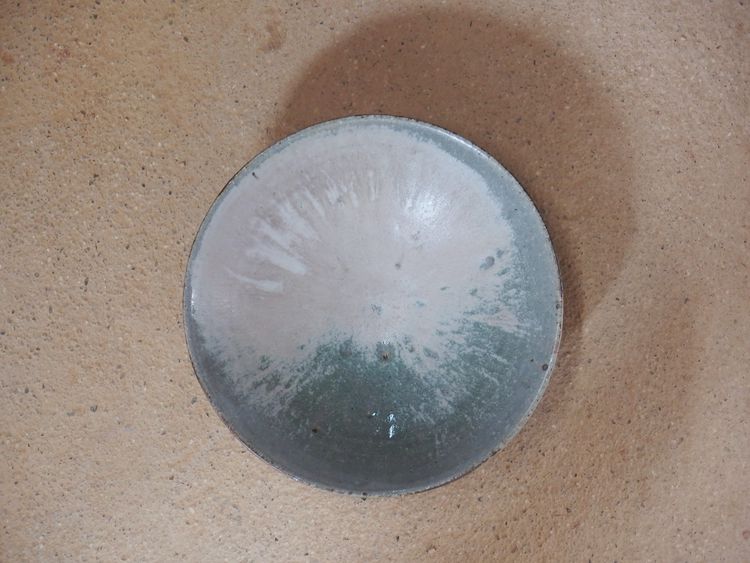
Hanada: The flow varies with each piece, making each one unique.
Kodo Kiyooka: I don’t have a single ideal form in mind. Each piece has its own qualities and surprises. Some turn out greener, some whiter, some slightly pinkish—variety is part of the charm.Hanada: Sometimes they sparkle beautifully. I really like that. Does this glaze flow better on pieces with some height or angles?
Kodo Kiyooka: Even flat plate-like pieces can be interesting. The glaze moves in various directions rather than in a straight line, which creates a different character.Occasionally it swirls around, producing fascinating effects.
The User Decides How to Use Them
Hanada: When you make a piece, do you imagine what food might go in it?
Kodo Kiyooka: Not much. If I were the user, part of the enjoyment is figuring out how to use it, so I try not to impose too many of my own ideas on the pieces.Hanada: So you’re careful not to take away that joy from the users while creating the pieces.
Kodo Kiyooka: My pieces aren’t necessarily easy to envision for a specific use. I think people enjoy imagining uses themselves when they choose my work among many others.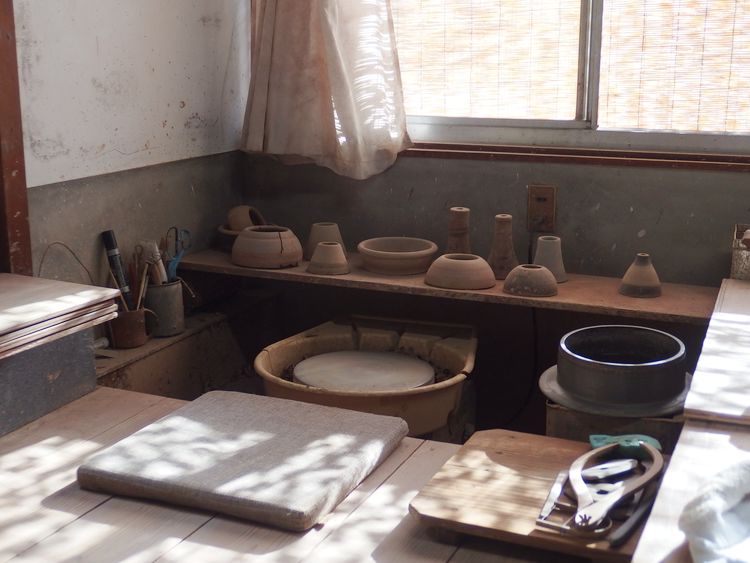
Familiar Yet Uncommon
Hanada: What do you focus on when making your pieces?
Kodo Kiyooka: I aim for simple shapes that are easy to use.Hanada: Your work is simple and orthodox, yet not something you see everywhere. As you once mentioned, they feel “familiar yet uncommon.” I feel the same.
Kodo Kiyooka: That “familiar yet uncommon” quality is probably the most difficult to achieve.Mug Cup Lips and Handles
Hanada: Next is this ash-white mug.
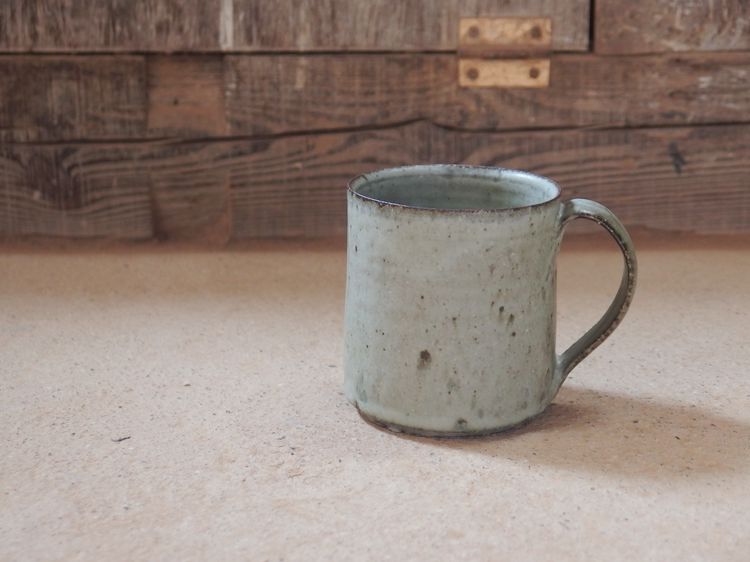 Kodo Kiyooka: This clay contains a high iron content. I chose a glaze that enhances the clay. If I used an iron glaze, the iron in the clay would be lost in a “black on black” effect.
I selected a glaze that allows the iron to show beautifully.
Hanada: Your mugs come in various shapes. What do you pay attention to when making mugs?
Kodo Kiyooka: The lip of the cup.Hanada: It has a sharp, precise edge.
Kodo Kiyooka: Just before the lip, it slightly swells and then tapers sharply.Hanada: So every mug has this lip shape.
Kodo Kiyooka: I like the way it feels—clean and precise.Hanada: It delivers the drink directly and smoothly.
Kodo Kiyooka: Exactly. It just feels better that way.Hanada: It must be great for drinking cold sake.
Kodo Kiyooka: I actually made it based on a customer’s request.Hanada: How about the handles?
Kodo Kiyooka: I designed even the square-handle mugs for easy grip. Also, I try to give a place for the thumb to rest naturally.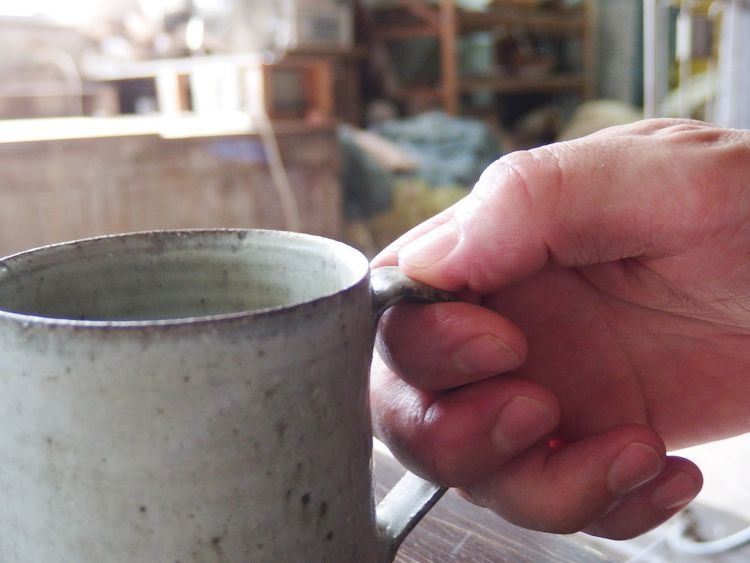
Blue Grey-Ash Glaze and Kiln Variation
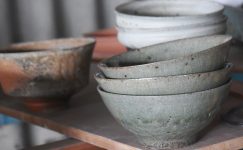
Hanada: Next is the blue-grey kiln variation rim bowl. The flow of the blue-grey glaze is beautiful as always. Is this the same glaze as the previous pieces?
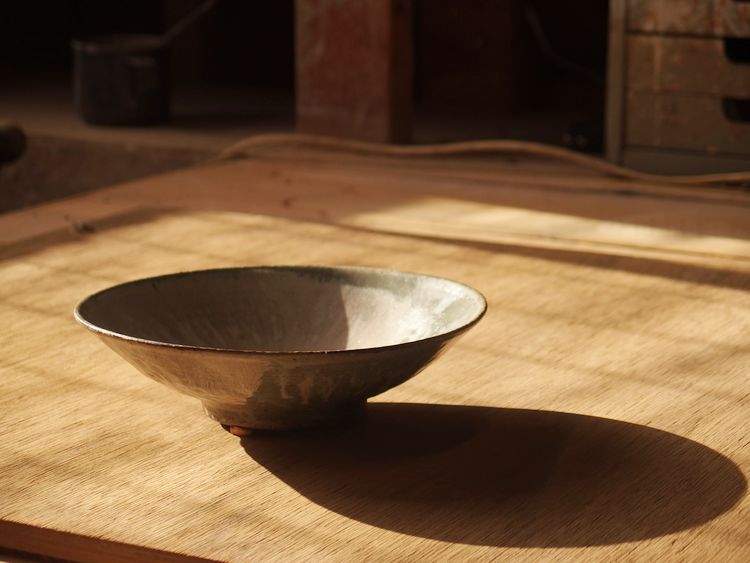 Kodo Kiyooka: The only difference is whether the base has a white slip applied or not.
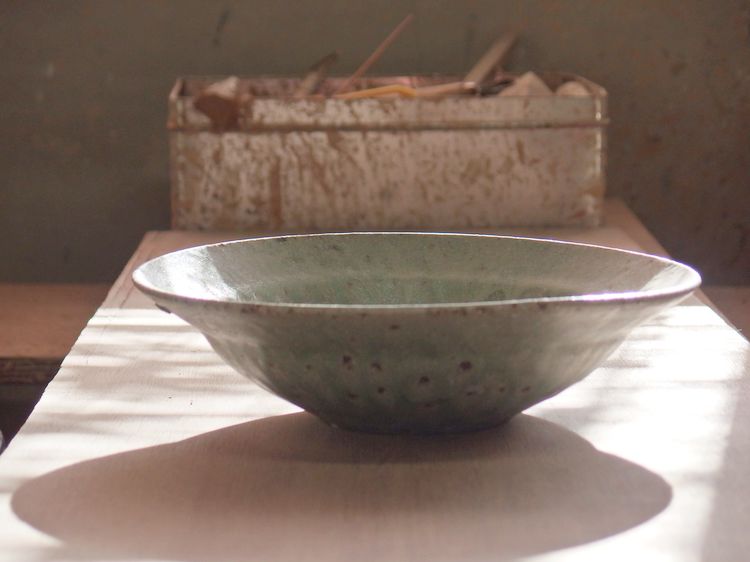
Hanada: The way the glaze accumulates where the bowl curves from center to rim is also a highlight. How about the shape?
 Kodo Kiyooka: Not all, but many of my pieces tend to be shallow. I often use shallow bowls myself, so I think that influences my work.
Hanada: Overall, it feels like tableware has been becoming shallower these days. The shapes of vessels are influenced by living environments, family structures, and food culture at any given time. Thank you very much for sharing your thoughts. We look forward to the exhibition.
Kodo Kiyooka: Thank you very much. I look forward to it as well.≪ END ≫
オリーブ流し
花田:
今回の展示会に出品予定のうつわについて、お話を伺いたいと思います。
まず、オリーブ釉流し6.5寸皿です。(以下花田-)
清岡: これはオリーブ釉と、もう一種類釉を掛けています。
花田:
この「オリーブ釉流し」は「オリーブ釉」に比べて、色が濃いようです。
もう一つの釉薬は、鉄釉か何かですか。
清岡: はい。鉄釉の種類は鬼板で、それで景色を出しています。こういう部分ですね。
-: オリーブ釉に鉄釉を加えて掛けようと思ったのはなぜですか。
清岡: オリーブ釉のものとオリーブ釉流しのものは、土の種類が違います。
オリーブ釉流しで使っている土に、オリーブ釉だけしか掛けないと、ちょっと柔らかすぎるイメージになってしまいます。
それなので、ちょっと表情を出そうと思いました。
-: 裏も面白いですね。
清岡: 裏も、一枚一枚表情が違います。
色々ある鉄釉の中でも、鬼板は結構面白いです。
このお皿は自分でも気に入っていて、よく使います。
清岡さんの楕円皿
-: さて続いてこちらの楕円皿(S)。同じくオリーブ流しですか。
清岡: 釉薬のかけ方は一緒ですが、焼き方が少し違います。
こちらは、還元を強くして、温度も低めです。
-: このリム無しタイプの楕円皿は最近ですか。
清岡: 今年からです。プレートとして使える楕円皿を目指したので、見込みはフラットに近いです。
-: ワンプレート朝食にもよさそうです。
清岡: はい。
-:
楕円のパターンは縦横比率だけではなく、丸みを帯びていたり、細身だったり、ある意味無限です。
清岡さんが「いいな」と思う楕円はどのようなものでしょうか。
清岡: 普通の楕円のものよりは、先端がシュっとなっているような、かと言って尖がっているわけではないくらいのものが好きです。
僕はもともと正円のものが多いので、その中で対比的に際立てばいいなとも思っています。
それぞれに良さや発見が・・・
-:
続いて、灰白窯変6寸平鉢です。
釉が見込みに向かってキレイに流れ込んでいて、吸い込まれるような魅力があります。
清岡: これは5年以上作っています。
-: この雰囲気を出すのに色々と工夫されているのではないですか。
清岡: 元々釉を厚めに掛けているのでヒビも入りやすかったんです。
それなので、焼いた後ゆっくり冷ましています。
-: 流れ方も色々で、一つ一つの違いを楽しめますね。
清岡: 僕の中にも理想形があるわけではなく、出てきたものにそれぞれ良さや発見がある気がしています。
緑が多くなるのもいいし、白っぽくなるのも、それはそれでいいなって。
ちょっとピンクがかっている時もあるし、色々です。
-:
すごくキラキラしている時もありますよね。僕、あれ好きです。
これは釉が流れるから、ある程度高さや角度がある形状のもののほうが良いのでしょうか。
清岡: プレートみたいに平らなものでも面白いんですよ。
一方向に流れずに、グニュグニュ釉薬が動くので、また違った表情が楽しいです。
たまに、グルっと回ったり、すごく面白いのが出るので。
使うイメージは使う人へ
-: 清岡さんは、うつわを作る時、料理などをイメージされるのですか。
清岡: あまりしないです。
自分が使い手だったら、何に使うか悩んだり、考えたりすることも楽しみの一つだったと思うので、使い道に関して、あまり自分のアイデアをうつわに詰め込み過ぎないようにしてます。
-: 作る段階で、その楽しみを使う方々から奪ってしまわないように、ということですね。
清岡: 僕のうつわって、決して用途をイメージしやすいうつわではないですよね。
色々なうつわがある中で、自分のものを選んでくれている人は、だからこそ、そういうイメージ作りも楽しんでくれているんじゃないかなと思っています。
ありそうで、ない
-: 清岡さんが、うつわを作る時に大事にされていることは何ですか。
清岡: 形状などはできるだけシンプルで、使いやすいものを目指しています。
-:
清岡さんのうつわはシンプルで、つくりもオーソドックスですが、どこにでもあるものではありません。
清岡さんも以前チラっと仰っていましたが「ありそうで、ない」って、僕も思います。
清岡: 「ありそうで、ない」って一番難しいんでしょうけど。
マグカップの飲み口と取っ手
-: 次はこの灰白マグです。
清岡: これは鉄分を多く含んだ土を使っています。
その土を活かせる釉薬を選びました。
鉄釉なんかを使ってしまうと、Black on blackで土から出てきた鉄分が埋もれてしまいますよね。
出てきた鉄分がキレイに見えそうなものを選びました。
-:
清岡さんのマグにも色々なかたちがあります。
マグを作る時に、大事にされていることはありますか。
清岡: 飲み口の部分です。
-: 先がピッとしていますものね。
清岡: 飲み口の直前で少し膨らんで、先をピッとさせています。
-: どんな形のマグでもこの飲み口ですね。
清岡: この口当たりが好きなので。キレがいいというか。
-: 飲み物がストレートにダイレクトにシュっと入ってくる感じですね。
清岡: そうですね。そっちのほうが美味しい気がしています。
-: こういう口で冷酒なんか飲むと美味しいでしょうね。
清岡: 以前、お客様に言われて作っていました。
-: 取っ手はいかがでしょうか。
清岡: 角手マグなんかも持ちやすさを考えました。
あと、これも、何となく親指が置けるようにはしています。
青灰窯変
-:
続いて青灰窯変リムボウルです。
青灰は相変わらず流れるのがきれいですね。
この釉は先ほどのものと一緒でしょうか。
清岡: 下地に白化粧がかかっているか、かかっていないかの違いです。
-:
見込みからリムに向かって折れるところにたまった釉なども見どころの一つですね。
かたちはどうでしょうか。
清岡: これだけではありませんが、僕のものは浅いものが多いです。
自分自身が浅いうつわを使うことが多いからだと思います。
-:
現在は、全体的にも食器は浅くなっている気がします。
うつわの形状も、その時その時の住環境や家族構成、食文化の影響を受けますよね。
お話、有難うございました。
展示会、よろしくお願いします。
清岡: こちらこそよろしくお願いします。