







English version of the interview here.
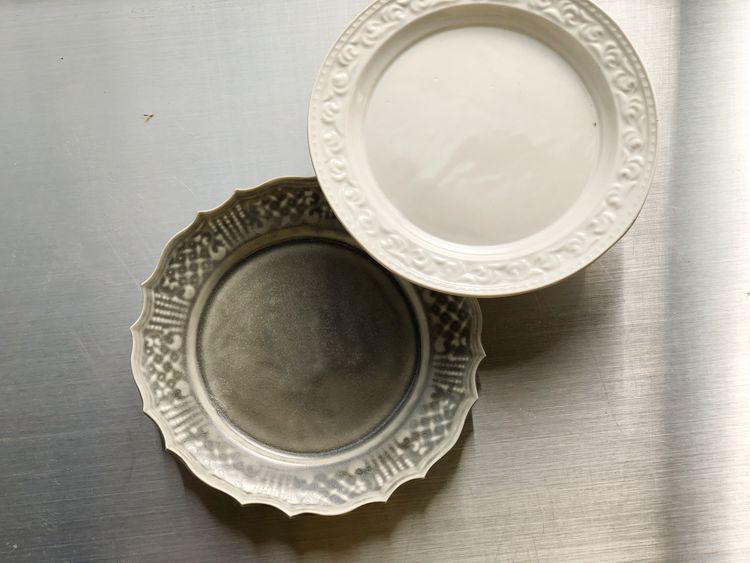
Encounter with Ceramics
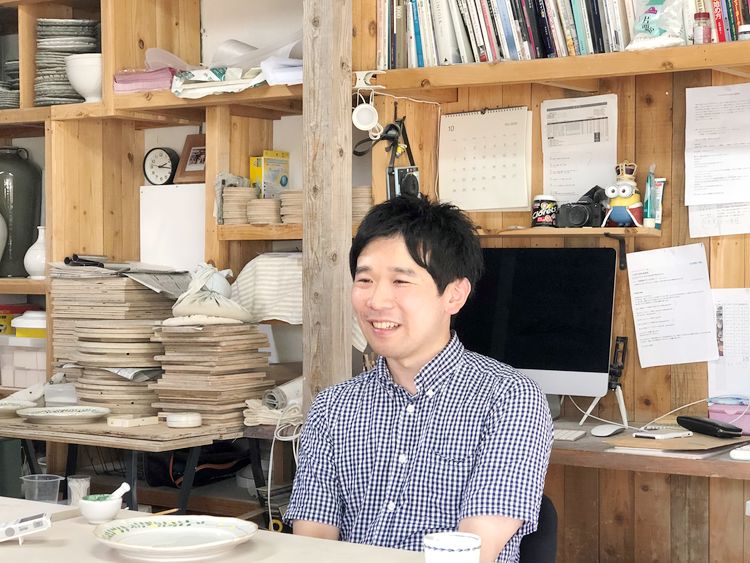
Hanada: Please tell us how you came to start making tableware.
Shintaro Abe: I was born and raised in Takamatsu, Kagawa, and went to university in Komazawa, Tokyo. It was there that I encountered ceramics.
Hanada: A regular university, right?
Shintaro Abe: I majored in psychology in the Faculty of Letters.
Hanada: Did that influence your current work?
Shintaro Abe: Not really (laughs).The trigger was the ceramics club.
On the day of the entrance ceremony, I had just moved to Tokyo and had no friends, so I was wandering around campus. I was invited at a recruitment event.
The senior who spoke to me was an interesting person, and I followed them to the ceramics club.
If I hadn’t met that senior, I probably wouldn’t be doing ceramics now.
Hanada: So meeting that senior was the trigger, then.
Shintaro Abe: Later I found out that the person barely did any ceramics and was mostly just there for the social gatherings (laughs).
Seven Years of Immersion
Hanada: So the four years in the ceramics club began.
Shintaro Abe: Well, actually…It wasn’t four years. I repeated a year three times, so it ended up being seven years.
Hanada: Seven years…
Shintaro Abe: I did cause some trouble for my parents. I’m grateful they let me pursue what I loved.
Hanada: Why…?
Shintaro Abe: I was fully absorbed in ceramics. I wasn’t playing around; I spent seven years fully dedicated to ceramics and part-time work.
The first time I touched clay, I didn’t find it that interesting, but as I kept working, I became more and more immersed.
As I practiced, the pieces I could make gradually became larger and more refined.
Hanada: I imagine your technical options also increased.
Shintaro Abe: I started experimenting with glazes and got more deeply into it.
Eventually, I thought, “It’s a waste of time to go to classes; I shouldn’t be going,” (laughs).
That’s how I ended up repeating years.
Hanada: At first it must have been a shock, but by the second and third repetitions, you probably got used to it (laughs).
Feeling the Great Potential of Ceramics
Hanada: What kind of pieces did you make as a student?
Shintaro Abe: Mostly wheel-thrown work, focusing on Oribe, Karatsu, and Kohiki styles.
Hanada: How did you learn ceramics?
Shintaro Abe: There was a senior who was almost professional level, and he taught me a lot. Also, the clubroom was only available in the afternoons, so in the mornings I went to museums, read every ceramics book I could find in the library or the clubroom, and visited nearby tableware shops.
Hanada: What was it about ceramics that fascinated you so much when you were first invited?
Shintaro Abe: There were several things, but the first shock was seeing a tenmoku kiln variation in a catalog the first day I visited the clubroom. I was amazed that something like this could exist in ceramics. It was like a galaxy, I thought it was amazing.
Hanada: Seikado Museum is also close to the school.
Shintaro Abe: Yes, exactly, very close. So I went to see it many times. Also, Goto Museum was within cycling distance.
One Year of Glazes
Hanada: What did you do after graduation?
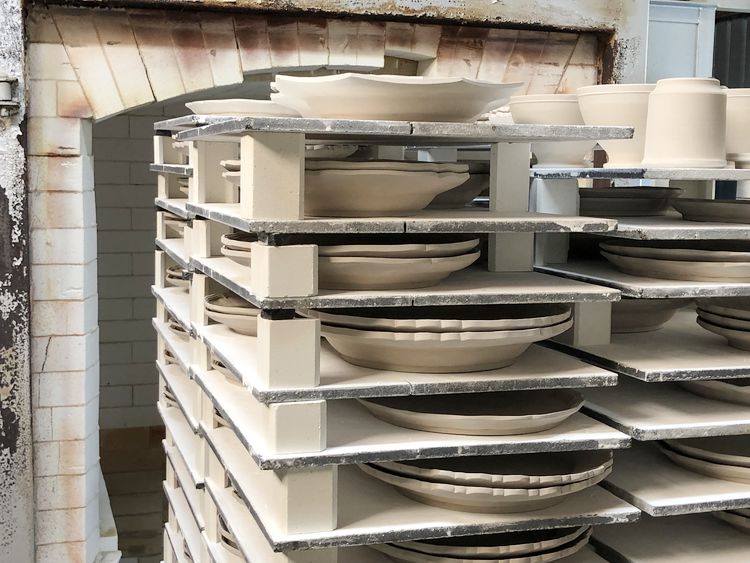
Shintaro Abe: I took a one-year training course in glazes at the Kasama Ceramics School. Every day, I measured and mixed glazes, applied them to test pieces, fired them, and observed them arranged on boards in order of composition.
Hanada: How was it?
Shintaro Abe: The theory and development methods for glazes are essentially academic.
You need to dedicate enough time to cover them thoroughly.
Once independent, it’s hard to find the time, so I’m glad I did this before going independent.
To the Current Style
Hanada: How did you arrive at your current style? It seems a bit different from what you liked as a student.
Shintaro Abe: In the seventh year of university, while making Momoyama and Joseon style pieces, a senior told me, “You have the tastes of an old man” (laughs).
Hanada: Very straightforward (laughs).
Shintaro Abe: Yes, but it’s true. I thought, “Maybe this is too mature for someone in their twenties.”
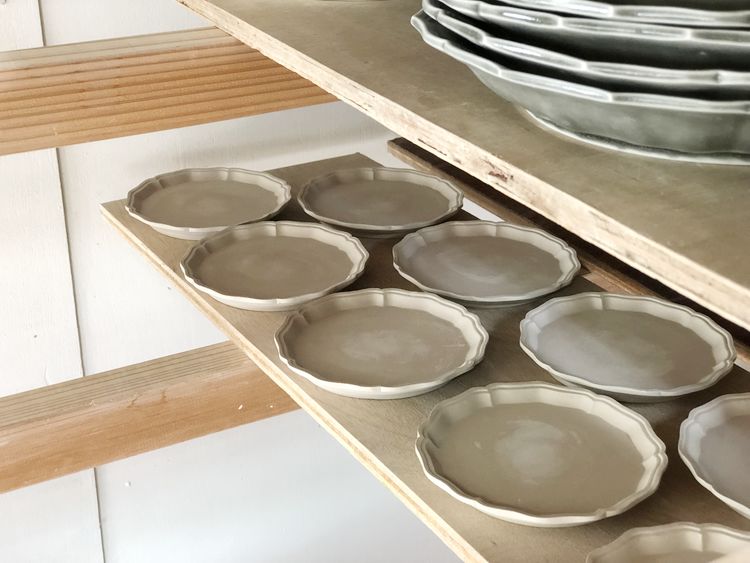
I didn’t want to be younger-looking, but walking home from club that day, I saw some European antique plates.I thought, “This is interesting too.”
Hanada: Perhaps your eyes were opened because of that senior’s comment.
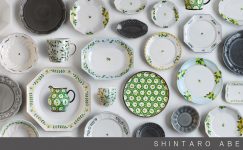
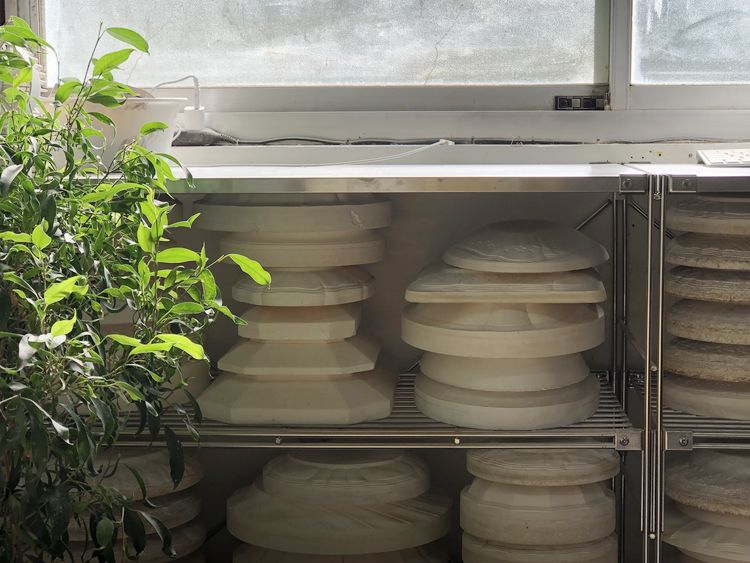
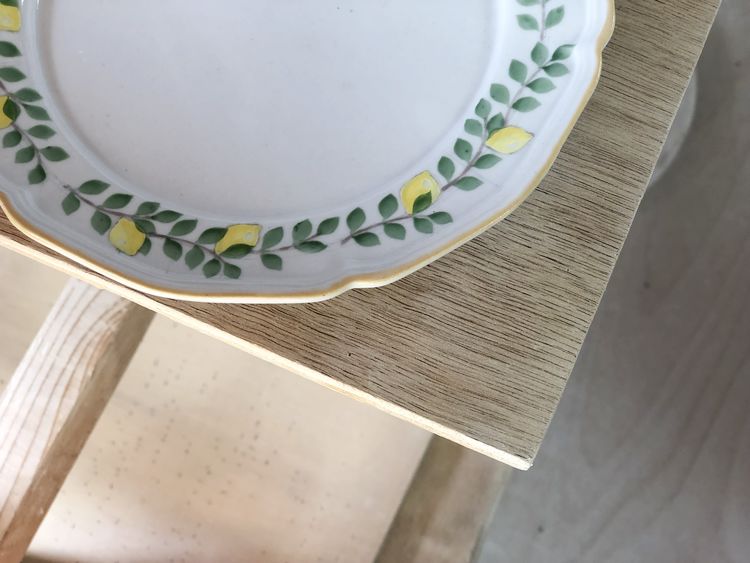
Shintaro Abe: They were around 1800, from Sarreguemines. I didn’t know how to make them, so I asked an alumnus who runs a ceramics company to teach me about molds, and tried making them.
Hanada: From Momoyama and Joseon to France.
Shintaro Abe: I still like Oribe, Setoguro, and Kohiki… I want to continue ceramics for a long time, so I’m thinking of exploring them thoroughly when I’m older.
For European pieces and Japanese styles, my feelings are the same.
Hanada: Well, ceramics around the world are mostly connected anyway.
As Carefully as Possible
Hanada: What do you prioritize in your work?
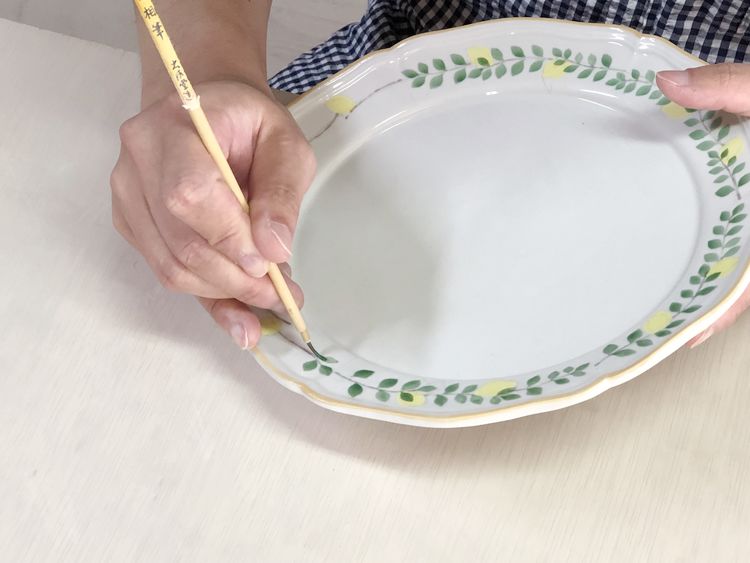
Shintaro Abe: Perhaps obvious, but I try to make everything as carefully as possible.
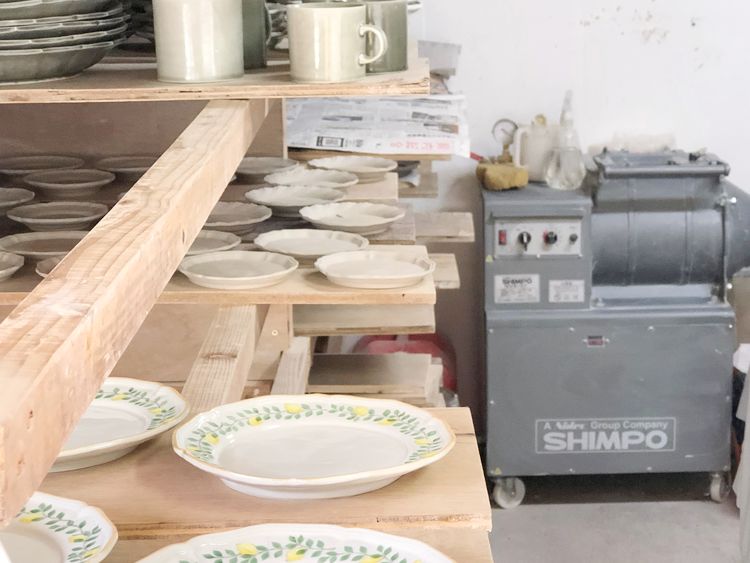
Even if I make 100 of the same piece, I give my best from the first to the hundredth.
I also aim for uniformity.
It might sound “product-like,” but even handmade, I strive for pieces to align precisely, down to the millimeter.
People may call differences “charm”… Well, if you want to call it that, I suppose it is.
Hanada: If you abandon uniformity and carefulness from the start and just call it “charm” or “handcrafted enjoyment,” it can go in a strange direction.
Shintaro Abe: I think it’s fine if users call it “charm”. But if the maker calls it that, it feels a bit off.
Hanada: Previously, you mentioned that if your pieces last 100 years and are called antiques, it would make you very happy.
Shintaro Abe: I think about that often, but I don’t have an answer yet. In 100 years, I certainly won’t be here, so how will they remain? I still don’t know.
In London
Hanada: When creating new works, where do you get inspiration? Do you go around and look at things?
Shintaro Abe: Yes. Just last week, I spent a week in London. I wanted to create something like Liberty prints, so I observed them. Currently, I paint on white surfaces, but I’m considering painting on colored backgrounds.
Hanada: How did you find London as a city?
Shintaro Abe: The history is well preserved in the city and buildings, and the country seems committed to protecting it. The most impressive was the long-established department store “Liberty”. Not only the products, but the overall atmosphere has a quality you don’t find in Japan. The way of expression, the overall color scheme… it’s just a different sense.
Hanada: So you received new stimuli.
Shintaro Abe: Even in color combinations, what may seem tricky to Japanese sensibilities ends up looking quite proper and stylish.
While simpler, earthy tones make food presentation better, I also want to try bold colors and challenge myself a bit.
Hanada: Looking forward to it.
Shintaro Abe: Lately, I’m drawn to slightly punchy pieces. Something that makes you wonder, “How would I use this?” or “This is a bit flashy.”
For the Solo Exhibition
Hanada: Thank you for your first solo exhibition.
Shintaro Abe: Since it’s near the end of the year, I plan to show the Year Plate I make annually.
Also, I am working on new pieces I hope you will see.
Hanada: I’m looking forward to it. Thank you.
Shintaro Abe: Thank you very much.
≪ END ≫
陶芸との出会い
花田:阿部さんがうつわを作るようになった経緯を教えて下さい。(以下花田-)
阿部:香川県高松で生まれ育ったあと、東京の駒沢にある大学に通っていましたが、そこで出会いました。
-:普通の大学ですよね?
阿部:文学部で心理学を専攻していました。
-:それが現在に影響を与えたのですか。
阿部:いえ、学業はあまり影響していません(笑)。
きっかけは陶芸サークルです。
入学式の日、上京したてで友達はいないし、学内をウロウロしていたら、勧誘イベントで誘われました。
声を掛けてくれた先輩が面白い人で、ついて行ったら陶芸のサークルだったんです。
その先輩に会わなかったら、おそらく陶芸をやっていませんでした。
-:その先輩との出会いがきっかけだったのですね。
阿部:後から知ったのですが、その人は陶芸はほとんどやっていなくて、飲み会要員だったんですけどね(笑)。
没頭の7年間
-:陶芸サークルでの4年間が始まります。
阿部:ええまあ…。
4年ではなく、実は3回留年したので7年やっていたことになります。
-:7年…。
阿部:まあ、親には迷惑をかけました。
好きにさせてくれたことに感謝しています。
-:どうして、また…。
阿部:焼き物に没頭していました。
遊んでいたわけでもなく、7年間ひたすら焼き物とバイトでした。
初めて土を触らせてもらった時はそこまで面白いと思わなかったんですけど、やっているうちに、どんどんのめりこんでいきました。
練習しているうちに、作れるものがだんだん大きくなってきたり、キレイになってきたりするので。
-:技術的な選択肢も増えてきたことでしょう。
阿部:釉薬もいじりはじめて、どんどんはまっていきました。
その内「学校行く時間がもったいないし、授業に行っている場合じゃない」みたいな発想になっていって(笑)。
その結果留年です。
-:初年度はショックでも、留年も2年目、3年目となると慣れてきそうです(笑)。
焼き物の大きな可能性を感じて…
-:学生時代はどのようなものを作っていたのですか。
阿部:基本的にはロクロ仕事で、織部、唐津、粉引あたりをメインで作っていました。
-:焼き物はどうやって学んでいったのですか。
阿部:プロ並みにうまい先輩がいて、色々教えてくれました。
あと、部室は午後からしか使えないので、午前中は美術館行ったり、大学の図書館や部室の焼き物の本を片っ端から読んだり、近所のうつわ屋さんに行ったりしていました。
-:たまたま誘われた焼き物の何が阿部さんをそこまで魅了したのでしょうか。
阿部:いくつかありますが、初めて部室に行った日に図録で見た窯変天目が最初の衝撃です。
「焼き物でこんなものがありうるのか」と衝撃を受けました。
「この銀河系みたいなのすごいな」って。
-:静嘉堂も学校から近いです。
阿部:そうです、そうです、近いです。
だから何度も見に行きました。
美術館と言えば五島美術館も自転車で行ける距離だったし。
釉薬の1年
-:卒業後はどうされたのですか。
阿部:笠間の陶芸学校の釉薬科で1年研修を受けました。
釉薬を量って、溶いて、テストピースにかけて焼成して、調合順にボードに並べて観察…の毎日でした。
-:いかがでしたか。
阿部:釉薬の理論と開発手法は、結局座学です。
ある程度時間も割かないと、網羅できません。
一回独立してしまうと、なかなか時間取れないし、独立前に行って良かったなと思っています。
現在のスタイルへ
-:どのようにして現在の制作スタイルに行きついたのでしょうか。
学生時代に好きだったものとは少し離れている気がします。
阿部:大学の7年目で、桃山や朝鮮あたりのものをずっと作っていた時に、先輩に「おじいちゃんみたいだね」って言われたんです(笑)。
-:ストレートですね(笑)。
阿部:ええ。でも、確かにそうなんです。
言われてみて「20代の若者が作るにはちょっと渋すぎるかな」って、その時自分でも思いました。
若くしたいわけじゃないけど、ああやって言われた後「確かになあ」なんて部活の帰り道を歩いていたら、ヨーロッパのアンティーク皿を見かけました。
で「こういうのもいいな」って。
-:先輩の言葉があったからこそ、目に入ってきたのかもしれません。
阿部:サルグミーヌの1800年くらいのものだったと思います。
まず作り方が分からないので、サークルのOBで陶芸メーカーの社長さんがいらっしゃったので、その人に型のことを教えてもらいながら、作ってみました。
-:桃山や李朝から、フランスへ。
阿部:今も、織部や瀬戸黒、粉引も好きですし…、焼き物の仕事は長く続けたいと思っているので、年取ってから、じっくり取り組んでみようかなって考えています。
ヨーロッパのものに対しても、織部や粉引に対しても、僕の場合、気持ちは一緒です。
-:ま、世界中の焼き物は大体つながっていますしね。
可能な限り丁寧に
-:阿部さんが、仕事をする上で大切にしていることはありますか。
阿部:当たり前のことかもしれませんが「可能な限り丁寧に作る」ってことです。
100個同じものを作っても、1個目から100個目まで同じようにベストを尽くす、ということでしょうか。
「均質」を目指すことも大事だと思っています。
「プロダクト」っぽく聞こえてしまうかもしれませんが、丁寧にミリ単位でそろうように作ることは、手作りだったとしても目指します。
個体差を「味」なんて言うこともありますが…。
まあ味と言えば味なんでしょうけど。
-:最初から均質や丁寧を放棄して、「味」とか「手仕事の楽しみ」と言ってしまうと、変な方向にいきますね。
阿部:選ぶ方や使う方が「味」と言うのは全然アリだと思います。
作る側が自分で「味」って言うのは、なんか違うなと思います。
-:以前「100年後にアンティークと呼ばれて残るようなものが作れるとしたら、非常に嬉しいことだ」と伺いました。
阿部:それは常日頃考えていることですが、まだ答えは出ません。
100年後だと、僕も間違いなく存在していないと思うんですけど、どうすれば残るんでしょうね。
まだ分かりません。
ロンドンにて
-:阿部さんは、新作などを作る時、どういう所から発想を得るのですか。
色々見て回るのですか。
阿部:はい。つい先週もロンドンに1週間行ってきました。
今、リバティプリントみたいなものを作りたいなと思っていて、見てきました。
今は白地に絵付けしていますが、色の地に絵付けをする感じです。
-:ロンドンはどのような町でしたか。
阿部:しっかりと歴史が形として残っていて、町や建物も含めて国全体で残されたものをちゃんと守ろうとしている姿勢を感じます。
一番印象に残っているのは、「リバティ」という老舗百貨店です。
置いてあるものももちろんそうですが、全体の雰囲気に日本では感じないものがあります。
表現の仕方、全体の色使い…、とにかく感覚が違います。
-:新たな刺激を受けられてきたのですね。
阿部:色の合わせ方にしても、日本人の感覚だとトリッキーに思えるものも、仕上がってみると、なんかちゃんとしているというか、様になっているというか。
まあ、確かに土っぽくて控えめなほうが、料理の盛り映えはすると思うんですが、派手なものにも挑戦して、少し責めてみたいなとも思いました。
-:楽しみです。
阿部:自分自身も最近魅かれるのは少しパンチのきいたものなので。
「これ、どういう風に使うんだろう」とか「ちょっと派手だな」とかって思うものです。
個展に向けて
-:初めての個展、よろしくお願いします。
阿部:年末に近いので、毎年作っているイヤープレートを出すつもりです。
あと、新作も今考えていますので、見ていただきたいです。
-:楽しみです。よろしくお願いします。
阿部:よろしくお願いします。