



English version of the interview here.
Hanada: I’d like to talk about the pieces you’re exhibiting this time.
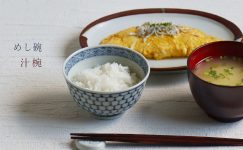
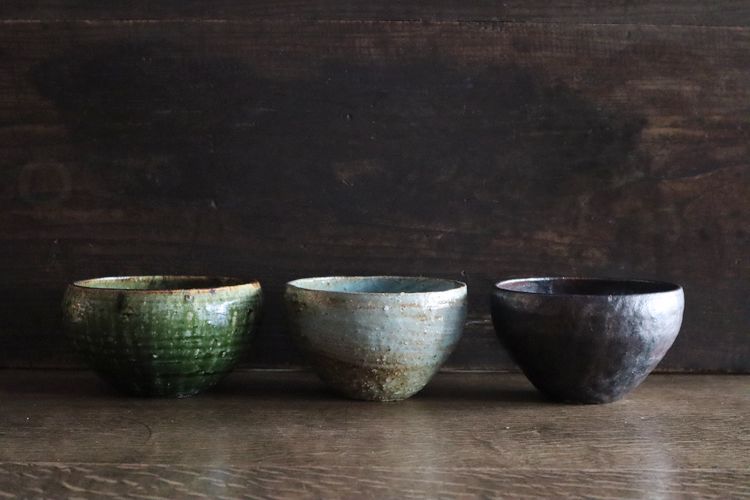
Let’s start with the small Oribe bowl.
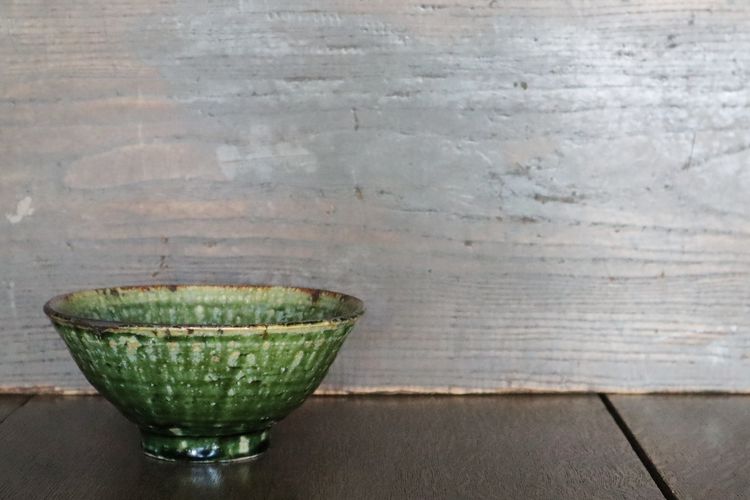
Manabu Yoshida: This time, I made it smaller.
Partly because of feedback from users, but mainly due to changes in my own eating habits.
My two big-eating sons both left home for university—one in Okayama and one in Nagasaki—so I naturally started eating less myself (laughs).
Hanada: What do you usually eat from a donburi (rice bowl)?
Manabu Yoshida: Rice dishes like katsudon and gyudon.
They’re quite hearty, but this smaller bowl is designed so you don’t end up serving too much rice (laughs).
Hanada: What do you pay attention to most when making donburi bowls?
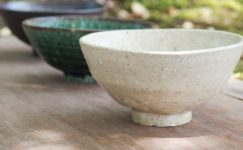
Manabu Yoshida: Just like with rice bowls, it’s the rim and the feel in the hand.
The sensation when it touches the mouth is important—if the rim is too thick, it interferes with the eating experience and feels like eating from a disposable container.
That said, thinner isn’t always better. For example, with imo shochu (sweet potato spirit), if the rim is too thin, the drinking experience feels too light.
Shochu should have some weight to it, so I prefer a thicker rim for that.
Hanada: How about the feel in the hand?
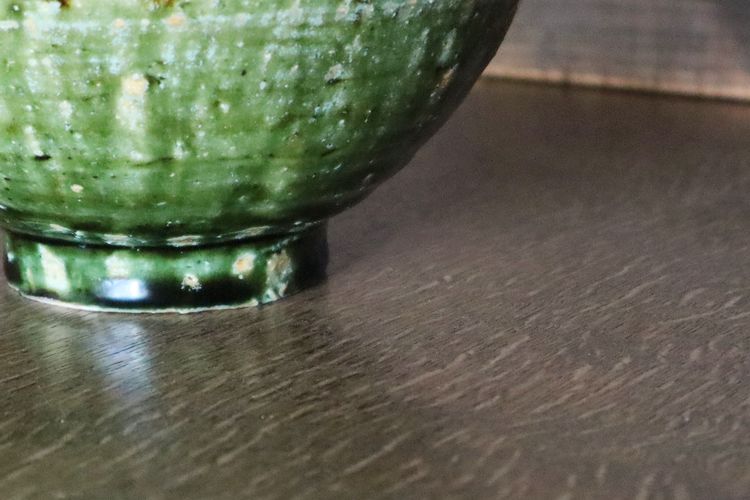
Manabu Yoshida: I made the foot a bit higher.
Usually it’s about 8mm to 1cm, but this time it’s 1.5cm.
That way, even when you serve something hot, the heat doesn’t transfer too much to your hand.
Hanada: Do you ever use it for noodles?
Manabu Yoshida: It actually goes surprisingly well with Vietnamese pho.
Hanada: I see. The color of the coriander would look nice in it.
Hanada: This bowl looks like a convenient, easy-to-use size.
Manabu Yoshida: That also comes from changes in my eating habits.
I wanted something just right for small side dishes like nikujaga or ohitashi.
Of course, it can be used as a personal serving bowl, or as a shared serving bowl for two people.
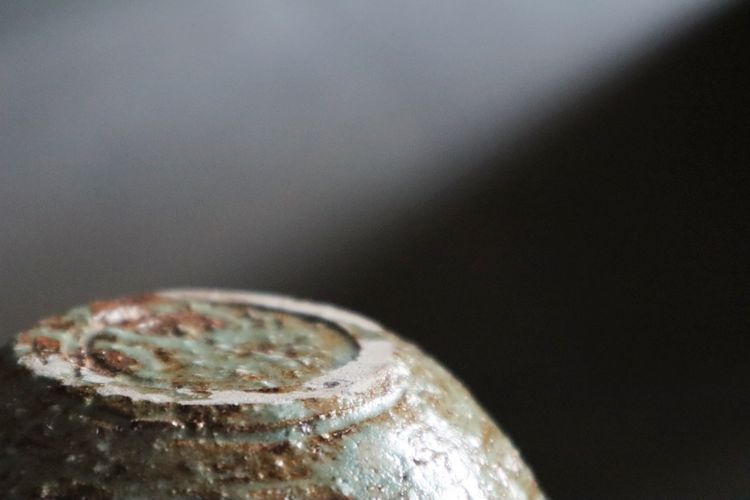
Hanada: In contrast, the foot on this one isn’t very prominent.
Manabu Yoshida: I rounded it.
It turned out nicely during the prototype stage.
Hanada: How do you usually develop your prototypes?
Manabu Yoshida: Usually, I start with a dish I want to serve or a way I want to eat, jot it down when it comes to mind, and then bring it to life in the studio.
But for this bowl, the form came first.
Hanada: I see. This form seems quite versatile.
Manabu Yoshida: It goes well with simmered chicken liver, too.
Hanada: As expected from you, a lover of evening drinks (laughs).
By the way, could you tell us your “Top 3 drinking snacks”?
Manabu Yoshida: Number one is sashimi, especially sardines.
I don’t marinate them in vinegar—just with ginger and soy sauce.
Number two is miso-simmered marucho (small intestines). Very fatty, but delicious.
Number three is stir-fried meat and vegetables—I enjoy experimenting with different spices.
Hanada: Sounds fun.
Manabu Yoshida: It is (laughs).
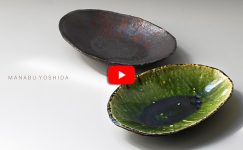
Hanada: Next, let’s talk about the oval plate.
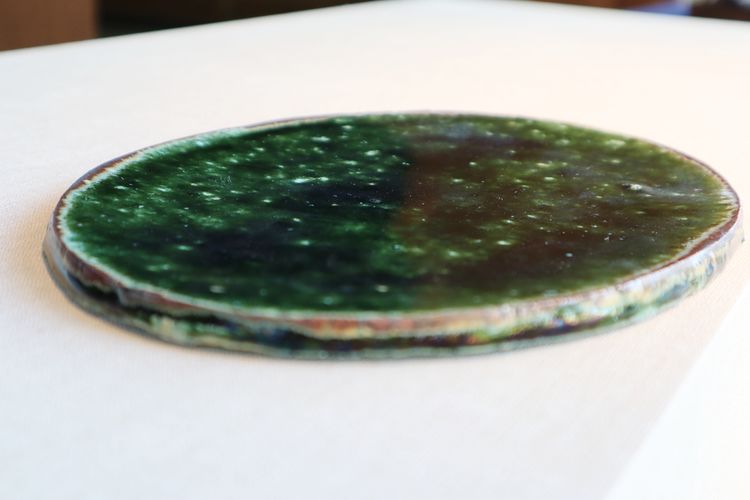
Manabu Yoshida: It’s meant for breakfast—scrambled eggs, sausage, and a croissant fit nicely on it.
I actually don’t eat much breakfast myself, but my bread-loving wife asked me to make a “breakfast plate.”
I made the surface flat.
Hanada: Perhaps because of that, the Oribe glaze doesn’t pool in the center, giving the whole piece a smooth, glossy look.
It’s a different kind of beauty from your usual work.
Also, you’ve made several oval pieces before—what image did you have in mind for this one?
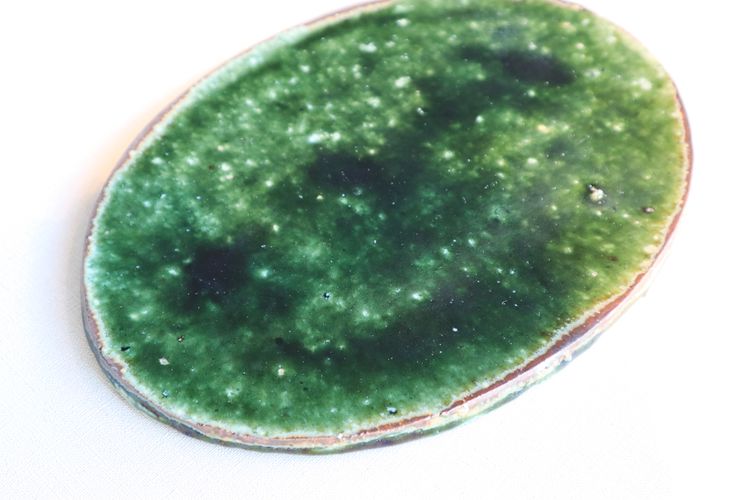
Manabu Yoshida: Since I had bread in mind, I made it more linear than rounded.
Hanada: How about the 6- and 7-inch plates?
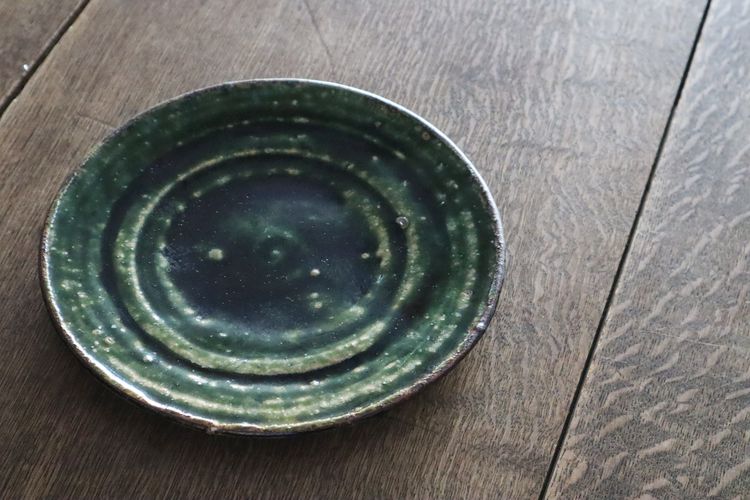
Manabu Yoshida: I used a method I’d never tried before.
Normally, when making flat plates, I flatten coils on the wheel.
This time, I made it as flat as possible, flipped it over, tapped it even flatter, and let it dry.
As the clay dries, it naturally tries to return to its original form—but that slight rebound gives it just the right finish.
Hanada: Flat plates are wonderful.
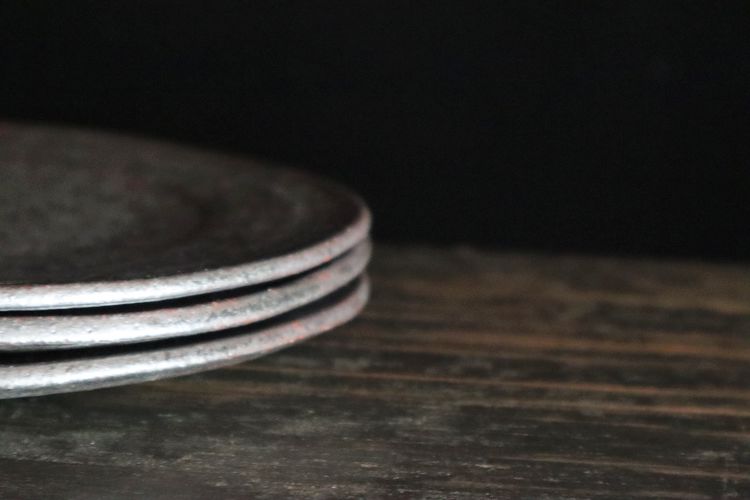
Manabu Yoshida: The idea came when I was at a nearby Italian restaurant and saw carpaccio served on a flat glass plate. I thought, “I’ll try making this in Oribe.”
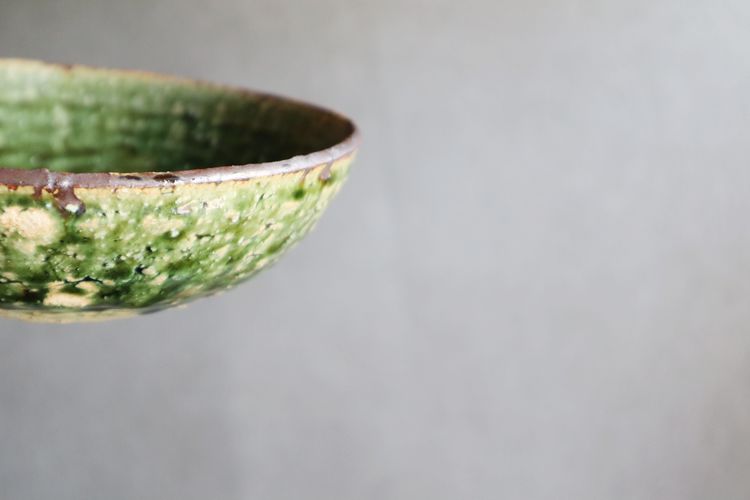
Hanada: The “Torn Bowl” has a very ceramic-like name.
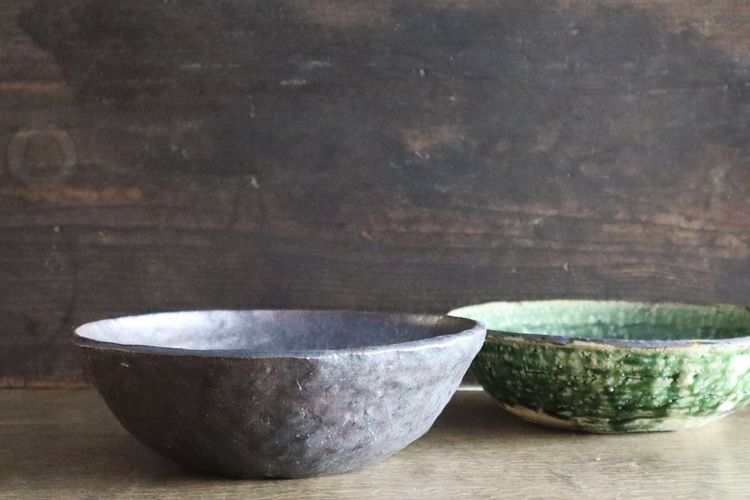
Manabu Yoshida: At first, I tore the edges much more dramatically, but I went a bit too far (laughs), and it started to lose functionality. So I made the edges gentler.
In the past, they were much more torn.
I still make them the same way, stretching the clay only from the inside during forming. That’s why the shape ends up naturally uneven.
Since I don’t touch the outside at all, the texture remains raw and natural, giving it a wild feeling.
It’s a method that can only be done by hand-building with coils, so I feel it’s a style that’s very much my own.
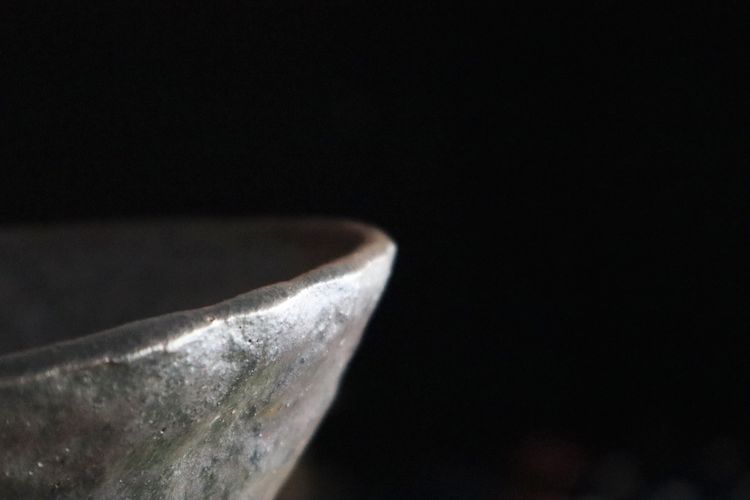
Hanada: What do you usually serve in it?
Manabu Yoshida: Nimono (simmered dishes), things like taro or konnyaku sautéed together… that sort of food.
Also, stir-fried tomato and egg.
Hanada: They all sound like they’d go perfectly.
Hanada: Could you give us a few words for the upcoming exhibition?
Manabu Yoshida: I often learn unexpected ways of using my work from customers—it gives me ideas for the next pieces.
I’m looking forward to hearing everyone’s thoughts again this time.
Hanada: Thank you very much.
We look forward to the exhibition.
花田:今回出展いただくうつわについてお話を伺いたいと思います。
まず織部小丼です。(以下花田-)
吉田:今回はサイズを小さくしました。
お使いになる方々のアイデアもありましたが、主には自身の食生活の変化です。
大食漢の息子たちが二人とも大学入学して岡山と長崎に行ってしまい家にいないので、つられて自分も少食になってしまいました(笑)。
-:吉田さんは丼ぶりで何を召し上がりますか。
吉田:かつ丼、牛丼などのご飯ものです。
ガッツリ系ですが、今回の小丼はご飯が入りすぎないようになっています(笑)。
-:丼ぶりを作るとき、吉田さんが大事にされることは何ですか。
吉田:飯椀と一緒で、口作りと手取りです。
口に当たった時の感覚は大切で、口が厚すぎると、食べたときの邪魔になりますし、使い捨て容器で食べているような感覚になってしまいます。
ただ、いつでも薄いほうがいいわけでもなくて、芋焼酎なんかは薄い口づくりだと、スッキリしすぎてしまいます。
芋焼酎はグッとくるほうがいいので、厚めの口づくりが好みです。
-:手取りについてはいかがですか。
吉田:高台を高めにしました。
いつもは8mmから1cmくらいなのですが、今回は1.5cmとっています。
熱いものをいれても手に熱が伝わりすぎない高さにしました。
-:麺類には使われますか。
吉田:ベトナムのフォーが意外と合います。
-:なるほど。パクチの色が合いそうですね。
-:このボウルは手頃な大きさで使いやすそうです。
吉田:これも自分の食生活の変化によるものです。
肉じゃが、お浸しなどの副菜を、ちょっと入れたい時に。
もちろん銘々でも使えるし、二人家族なら盛り鉢にも使えるようにしました。
-:こちらは逆に高台が目立ちませんね。
吉田:丸くしました。
試作段階でいい感じに仕上がったので。
-:吉田さんの場合、試作はどうやって進んでいくのですか。
吉田:普段は、盛りたい料理と食べたい食べ方があって、思いついたときにそれをメモしておいて、仕事場で形にしていきます。
ただ、このボウルは、かたちが先にできてきました。
-:そうなのですね。このかたち、用途の幅が広そうです。
吉田:鶏レバーの甘辛煮も合いますよ。
-:晩酌大好きな吉田さんらしく、酒の肴(笑)。
ところで、吉田さんの「酒の肴Top3」教えてください。
吉田:1番は刺身で、特にイワシです。
酢で〆ることもせず、ショウガ醤油で。
2番は丸腸のみそ煮込み。油がすごいですけど、美味しいです。
3番は肉野菜炒めで色々なスパイスを楽しんでいます。
-:楽しそうですね。
吉田:楽しいです(笑)。
-:続いて楕円プレートです。
吉田:朝ごはん用で、スクランブルエッグ、ソーセージ、クロワッサンがちょうどよくおさまります。
僕自身はあまり朝食を食べないのですが、パン好きの妻が「朝ごはん用のプレートを作って」と言ってきたのがきっかけです。
かたちはフラットにしました。
-:そのせいか、見込みに織部釉が流れ込まずに、全体的に艶やかな印象です。
これもまたいつもとは違うキレイさですね。
あと、吉田さんはいくつか楕円のうつわを作られていますが、今回はどのようなイメージですか。
吉田:パンをイメージしていたので、丸みのある楕円というよりは、直線的なものにしました。
-:6寸、7寸プレートはいかがでしょうか。
吉田:今までやったことのない方法で作っています。
通常、フラットなうつわを作るときは紐づくりをろくろで平らにしていました。
今回はまずギリギリまで平にして、ひっくり返して、さらにそれを叩いて平たくして乾くのを待ちます。
土は乾きながら元の形に戻ろうとするのですが、その多少の戻りがちょうどいいです。
-:フラットなお皿、いいですね。
吉田:近所のイタリアレストランでフラットなガラスのうつわにカルパッチョが出てきて、「あ、これを織部で作ろう」って思ったのがきっかけです。
-:やぶれ鉢は、つちものらしいネーミングです。
吉田:元々はもっと縁までバリバリに破っていましたが、ちょっとやりすぎてしまって(笑)、用途を損ないそうだったので、縁はなだらかにしました。
昔はもっと破れていたんですよ。
ただ相変わらずの作り方で、成形の時にはうつわの内側だけしか触らずに伸ばしているので、かたちもよりランダムに整っていない感じになります。
外側は全然触っていないので、テクスチャーも自然な感じで野趣があると思います。
紐づくりでしかできないやり方なので、僕ならではの仕事かなと思っています。
-:何に使っていますか。
吉田:煮物だったり、里芋、こんにゃくを炒ったものだったり・・・、そんな感じです。
あと、トマトと卵の炒め物。
-:どれも合いそうです。
-:展示会に向けて、一言いただけますか。
吉田:自分では考えもしない使い方をいつもお客さんに教えてもらっていて、次のアイデアになっています。
また、色々ご意見いただけること、楽しみにしています。
-:ありがとうございました。
展示会、よろしくお願いします。