




English version of the interview here.
Not Fired Clay, but Raw Earth
Hanada: What kind of childhood did you have?
Shinji Hidaka: I loved making things freely from a young age and would spend entire days playing with building blocks. Usually, blocks come in sets with a predetermined outcome, don’t they? I ignored that and just kept making whatever I wanted.
Hanada: So it wasn’t clay? (laughs)
Shinji Hidaka: Strangely enough, I was interested in the color of soil. On my way to and from elementary school, I liked observing it. Yellow earth, red earth… I still remember those landscapes clearly.
There must have been many places back then where you could actually see exposed soil. I was born in Toyota City, Aichi Prefecture, near Sanage. There was always pottery on display at the local cultural center, but I didn’t care for it much.
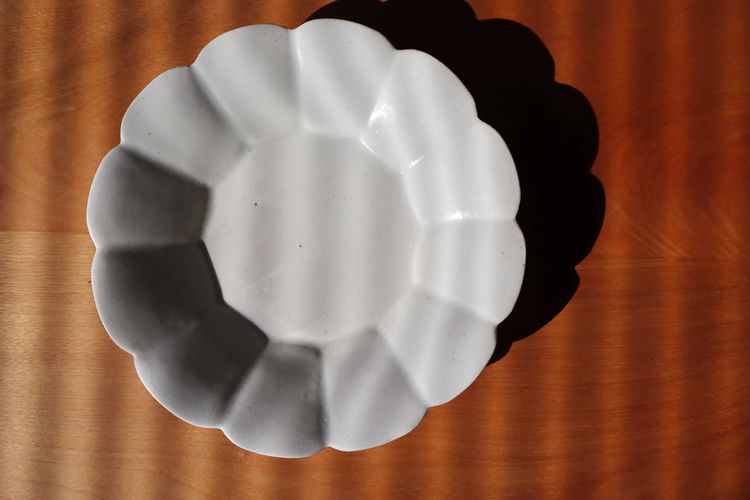
Hanada: So you preferred raw earth (laughs). And being near Sanage, for a child…
Shinji Hidaka: I remember thinking, “Why would anyone display something that smells so earthy?” (laughs) As a child, jars were unsettling. You can’t see inside them, can you? I recall feeling uneasy, as if something might come out from within.
Hanada: You probably never imagined you would end up making them yourself.
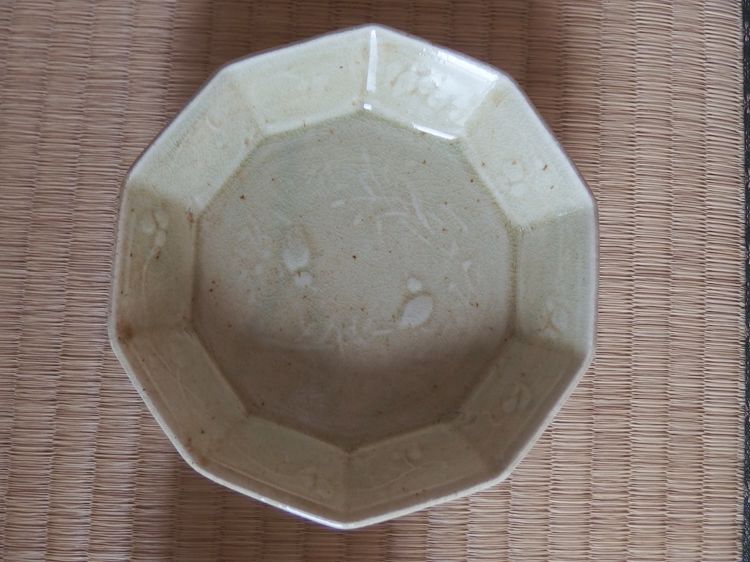
In an Empty Atelier
Shinji Hidaka: In high school I was in the science track and liked mathematics, but I was also strongly drawn to painting. I went to art school and majored in oil painting.
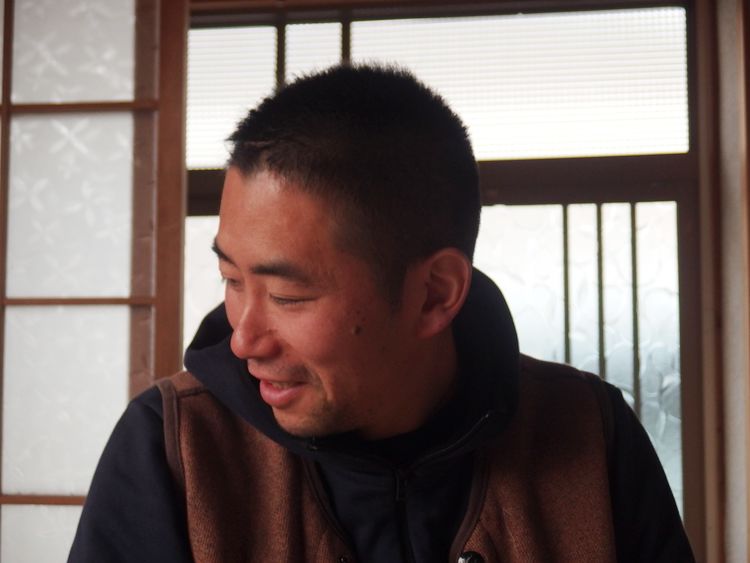
Hanada: What was your life studying oil painting like at university?
Shinji Hidaka: It wasn’t a hands-on environment where everything was carefully taught. Other students stopped coming or dropped out, and I remember painting alone in a nearly empty studio.
In the end, I stayed at the university for seven years, including graduate school and a research period.
From the World of Games to Ceramics
Hanada: What did you do after graduating?
Shinji Hidaka: I had aimed to become a fine artist, and alongside that I began working part-time at a game production company, painting and designing backgrounds for games. At the time, the PlayStation was at its peak, and I found it irresistibly engaging. It felt as though my world had suddenly expanded.
Playing a game I had helped create was immensely satisfying, and I discovered the joy of having many people see what I had made. But after about ten years, I began to feel a certain lack in backgrounds that I had constructed entirely myself and fully understood…
Hanada: With real landscapes, after all, we never fully grasp them to begin with. The scenes of raw earth you observed as a child, the empty studio—those seem to overlap, yet not quite, with the worlds you created yourself…
Shinji Hidaka: Each has its own merits, but at that time I found myself craving a stronger sense of tactility. Also, in game development I was responsible for deeply refining just one part of a larger project. I began to want work that I could oversee from beginning to end on my own.
Around then, a friend who makes tableware let me work with clay. It brought back sensations from childhood, and my interest gradually shifted toward ceramics… That’s how I arrived where I am now.
Hanada: How long has it been since you became independent?
Shinji Hidaka: Eleven years. It was difficult at first, though now I look back on it with some nostalgia. I wasn’t yet confident on the wheel, and I couldn’t create what I envisioned with precision.
Background
Hanada: What is most important to you when creating your work?
Shinji Hidaka: I make it a point to define clearly what I will create, down to the details, before I begin. In the past, whenever I started vaguely, I was never satisfied with the result. It’s similar to painting: if you don’t establish clear criteria at the outset, you lose your decisive standard. Starting from emotion alone can be risky. Of course, emotion is important as well (laughs).
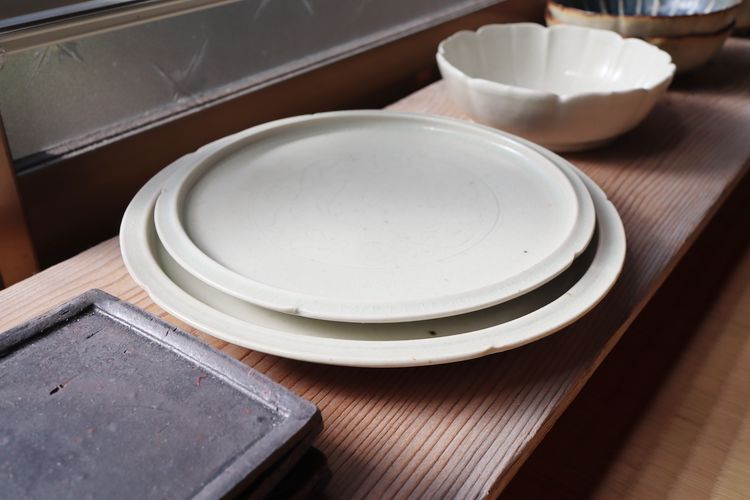
Hanada: You are also particular about your materials.
Shinji Hidaka: I use materials whose origins are clearly identified. I have worked with ash glazes made from clay or mixed woods, but I want to know exactly what kind of wood is included. If something happens, I want to be able to determine the cause myself, and to have a clear understanding of what I am doing.
Hanada: It’s clear how important materials are to your practice.
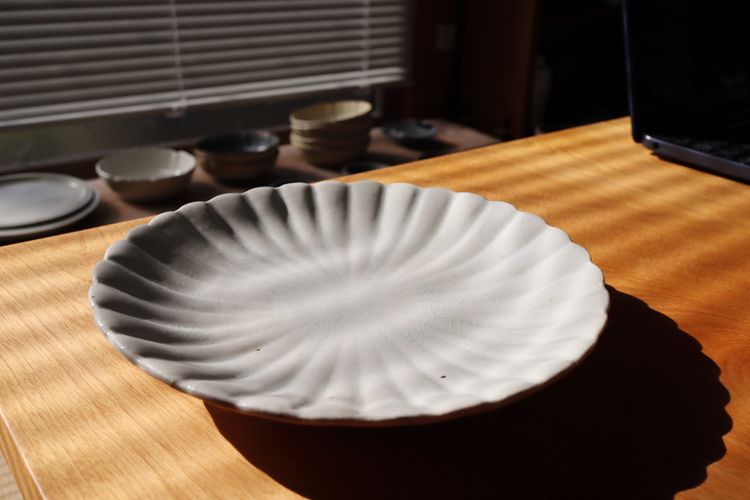
Shinji Hidaka: Materials are like the background to my work. It’s not just about the clay body itself. The materials determine the background—the world—within which I form shapes or apply imagery.
I recall a flower arrangement teacher once telling me, “When you go into the mountains, bring back not only the flowers but also their background.” That resonated deeply with me.
Hanada: From observing soil on your school route to today, “background” seems to be a key word in your work.
Shinji Hidaka: Perhaps it is.
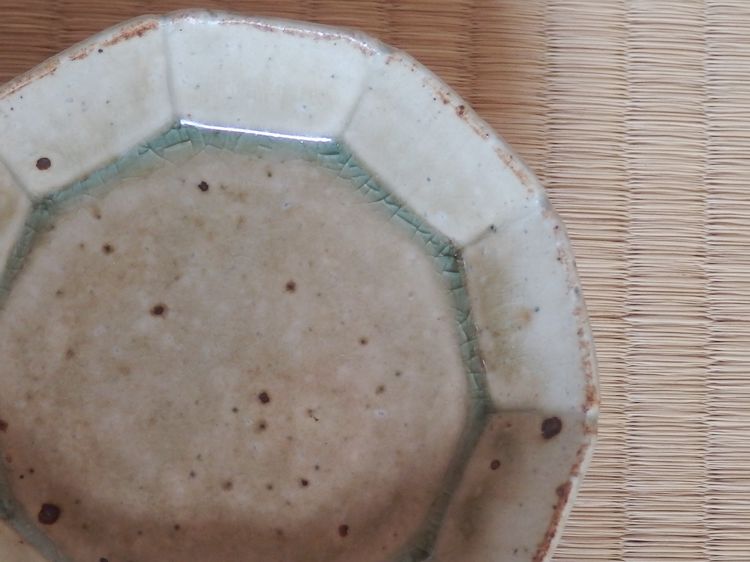
Goryeo Celadon and Black Glaze
Hanada: Is there anything you would like to pursue going forward?
Shinji Hidaka: I have no intention of making the same things indefinitely. I want to approach new work with a fresh mindset at all times.
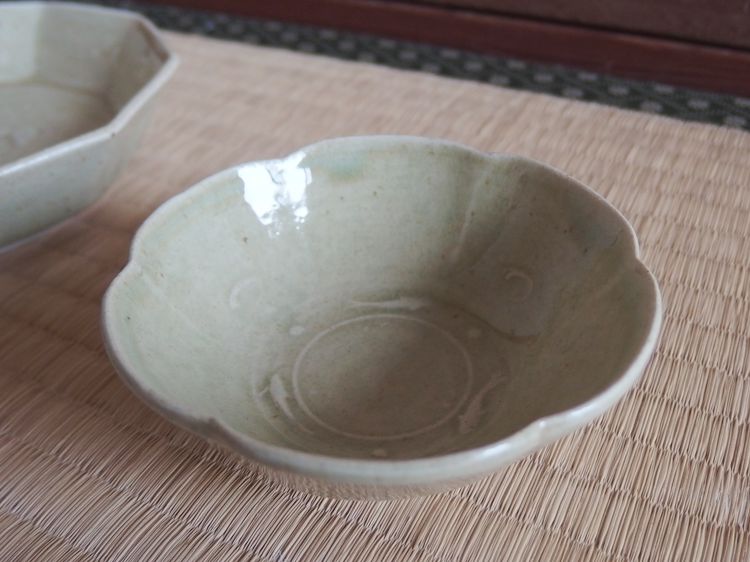
In particular, I have long admired Goryeo celadon and would like to capture something of its atmosphere.
Hanada: What draws you to Goryeo celadon?
Shinji Hidaka: Perhaps its sense of another world (laughs).
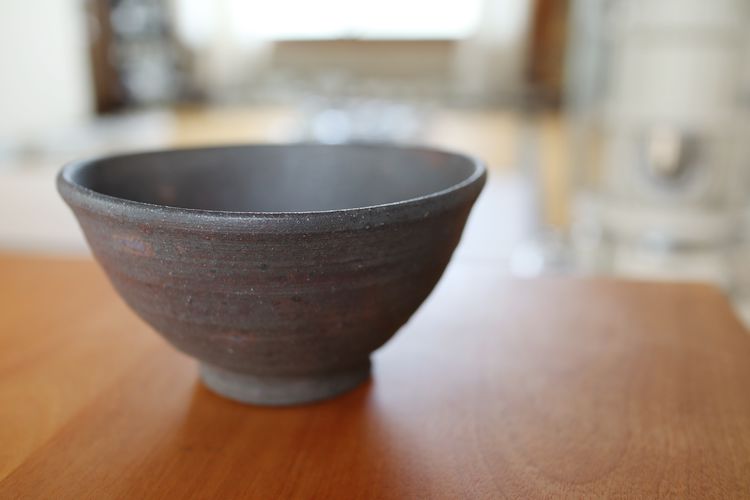
It feels distant, yet somehow close. I am also repeatedly testing black-glazed tableware.
Hanada: Black can be difficult once you begin to pursue it, can’t it?
Shinji Hidaka: Yes. I have a clear image in mind, but I am still struggling to achieve it.
Hanada: Thank you for sharing your thoughts. We look forward to the exhibition.
Shinji Hidaka: Thank you. Please extend my regards to Haruya Abe.
≪ END ≫
焼いた土ではなく、生の土
花田:日高さんはどのような幼少期を過ごされたのでしょうか。(以下花田-)
日高:小さいころから自由に作ることが好きで、一日中ブロックで遊んでいました。
普通、ブロックって出来上がりが決まっていて、そのためのセットになっていますよね。
それを無視して、勝手なものばかり作っていたみたいです。
-:粘土ではなかったのですね(笑)
日高:でもなぜか、土の色には興味があって、小学校の登下校中に色々観察するのが好きでした。
黄色い土だったり、赤い土だったり…、風景をよく覚えています。
土を見られる場所というのが当時は多かったのでしょうね。
それと、僕は生まれが愛知県豊田市で、猿投の近くでした。
近所の文化会館には必ず焼き物が展示されていていましたが、それはあまり好きではなかったです。
-:生の土が好きだったのですね(笑)。
しかも猿投なんかだと子供にとっては…。
日高:「なんであんな土臭いものを飾るんだろう」って(笑)。
子供にしてみたら、壺なんて、中が見えないし、不気味じゃないですか。
中からお化けか何かが出てきそうで、気味悪く感じていたのを覚えています。
-:まさか将来、自分で作ることになるとは夢にも思わなかったことでしょうね。
ガランとしたアトリエで
日高:高校は理系のクラスで、数学が好きでしたが、絵にも強く惹かれていたので美大に行って油絵を専攻しました。
-:大学での油絵生活はいかがでしたか。
日高:手取り足取り教えてくれるわけでもないし、他の学生も学校来なくなったり辞めてしまったりで、ガランとしたアトリエで、一人で絵を描いていたという印象です。
でも、結局、大学院、研究生を合わせて7年間、大学にいました。
ゲームの世界から焼き物へ
-:卒業後はどうされたのですか。
日高:美術作家を目指していたので、その傍らゲーム制作会社でゲームの背景を描いたり、デザインしたりするアルバイトも始めたら、当時はプレイステーション全盛ですし、それが面白くてしかたないんです。
一気に世界が広がったような気がしました。
自分が関わったゲームで遊ぶのなんて最高に楽しいですし、作ったものを多くの人に見てもらえる喜びを知りました。
ただ、10年くらい経つと、段々自分が作ってすべて把握している背景というのは、それはそれで、物足りない部分も出てくるというか…。
-:現実の風景なら、もともと自分ではほとんど把握などはしていないわけです。
小学生のころ観察していた、生の土のある風景やガランとしたアトリエの風景と、ご自身が作る風景が重なるようで重ならない…。
日高:それぞれに良さはありますが、当時の自分は、触感を強く欲するようになっていました。
あと、ゲームの仕事は全体のプロジェクトの一部を深く掘り下げる立場だったので、一人で最初から最後まで関われる仕事をしてみたいという思いもありました。
そんな中、たまたま、うつわ作家をしている友達に土を触らせてもらい、小さいころの感覚を思い出したこともあって、焼き物のほうに気持ちが向き始めて…。
で、今に至ります。
-:日高さんは独立されてどれくらい経ちますか。
日高:11年です。
最初は大変でしたが、懐かしいですね。
轆轤もおぼつかないし、作りたいものがイメージ通りに作れないんですよ。
背景
-:日高さんがうつわを作るうえで大切にされていることは何ですか。
日高:「作るものを具体的に、そしてデティールまで考えてから始める」ということはしています。
自分の場合、過去に何となく作り始めて納得いくものはなかったので。
絵画にも通じるんですが、最初に基準をはっきりさせておかないと、決め手が無くなってしまうんです。
感情的な動機だけで始めてしまうと危険だなと。
まあ、感情も大事ですけど(笑)。
-:日高さんは材料にも気を使われています。
日高:原料は出所がはっきりしているものを使います。
土灰、雑木灰を使うこともありましたが、やはりそれに何の木が入っているかは分かっておきたいというか。
何か起きた時に、自分で解明できるようにしておきたいですし、自分が何をしているのかはっきり分かってわかっておきたいです。
-:原料は日高さんの仕事にとって大切なことがよく分かります。
日高:原料って、僕の仕事にとって背景みたいなものなんです。
素地だけのことでもない。原料によって、形づくったり、絵を描いたりする上での背景なり世界なりが決まっていくんです。
花の先生に「山野へ行ったら、花だけでなくその背景も一緒にとって来い」と言われたときに、すごくしっくりきたことも思い出します。
-:通学路での土の観察に始まり、日高さんの仕事の中で「背景」はキーワードですね。
日高:そうかもしれません。
高麗青磁と黒釉
-:これからしたいことはありますか?
日高:僕の場合、同じものをずっと作り続けるつもりはなくて、常にフレッシュな気持ちで新たなものに取り組んでいたいなと思っています。
具体的には、高麗青磁が以前から好きで、あの雰囲気を出せることができたらいいなと。
-:日高さんにとって高麗青磁の魅力は何でしょうか?
日高:異世界感でしょうか(笑)。
遠いようで近いような。
日高:もう一つ、黒釉のうつわは、何度もテストを繰り返している最中です。
-:黒は、追求し始めると難しくないですか。
日高:はい、目指すイメージはありますが悪戦苦闘しています。
-:色々なお話、ありがとうございました。
展示会、よろしくお願いします。
日高:こちらこそ。
阿部さんにもよろしくお伝えください。
≫日高伸治さんのうつわはこちらから≪
関連記事はこちら