



English version of the interview here.
Recent Days
Hanada: About three years have passed since your last solo exhibition. How have you been doing lately?
Kan Kishino : This winter, I tried serving oden in various antique mukozuke bowls, choosing a different piece for each ingredient. Sorry to jump straight into talking about food (laughs).
Hanada: Not at all. It sounds wonderful, please go on.
Kan Kishino : Since I don’t own a complete matching set of antique mukozuke, I hadn’t used them that extensively before. But doing this was far more fascinating than I had imagined. It really clarified for me why these pieces complement food so beautifully. Mukozuke, in particular, are all about how they focus the attention on the ingredient. By trying out various combinations, I began to see the patterns behind that focus.
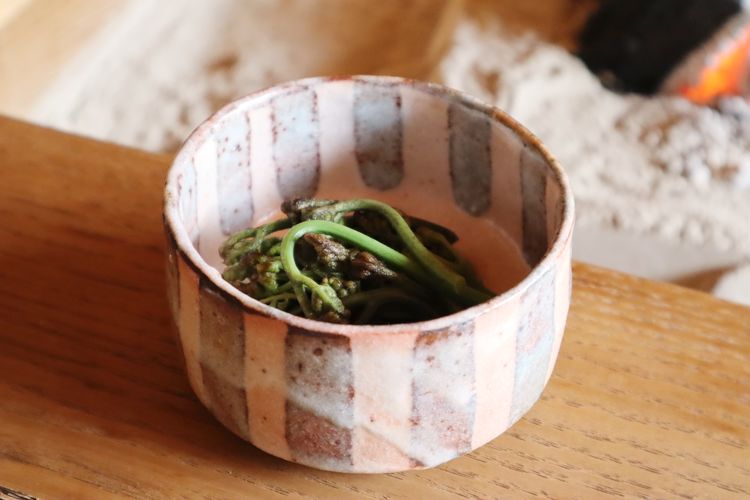
Hanada: “Focusing on the ingredient”—that makes perfect sense. People often use the phrase “complementing the food,” but when you think about it, it is a rather vague expression.
Kan Kishino : Exactly. When you actually try to give it shape, “complementing” can be hard to pin down.
Hanada: Perhaps you were able to take this step forward precisely because you have spent so much time making pieces with those beloved antiques as your goal, and now you are truly using them.
Kan Kishino : As a maker, simply enjoying using them doesn’t turn into professional work. However, because I went through a phase of being completely immersed in the objects themselves, I feel that actually using them allowed me to gain a fresh perspective. In any case, being able to deeply consider how to focus attention on the ingredient was a major breakthrough. Looking closely, elements like form and line all serve as means to create that focus. I believe Rosanjin was intentionally doing this over and over again.
Hanada: He had a very clear purpose and was thorough about it. His theme was simple: “to eat well.”
Kan Kishino : And he approached it from a bird’s-eye view.
Familiar Forms, Yet Entirely New
Hanada: Lately, it feels as though you are facing your work with complete, direct focus.
Kan Kishino : Compared to before, I have come to see my work as focusing entirely on what captivates me and translating that directly into form. Instead of worrying about external things like what will sell, I think it is better to turn my awareness inward.
Hanada: Was there a particular turning point that led you to think this way?
Kan Kishino : (Thinks for a moment) When I made things while thinking about external factors, I found myself unable to be moved or fulfilled by them. It felt as though I was disappearing from the very things I was creating, even though I used to find genuine joy in that before.
Hanada: It sounds like this is not a matter of technical skill.
Kan Kishino : Until you master the technique, even if you approach a piece from an external perspective, your heart naturally goes into it as you strive to reach a certain technical level. But once you reach a point where you can do that effortlessly as a matter of course, you wonder what comes next. Exploring entirely new things is one path, but deepening your approach to the same things is another. Ultimately, the things I love don’t change all that much, and there is an enduring value in standard beauty. In a restless search for the “new,” if you try too hard to make something completely different from what you made before, it can drift away from standard beauty and become less practical to use. On the other hand, even when making the same form, if you stop viewing past creations or ancient ceramics as fixed templates for comparison, and instead focus on the piece right in front of you—shaping the beauty you feel in your heart at that exact moment—the result will be entirely new, even if the form looks similar. That is the mindset I strive for in my work.
Preparing for the Exhibition
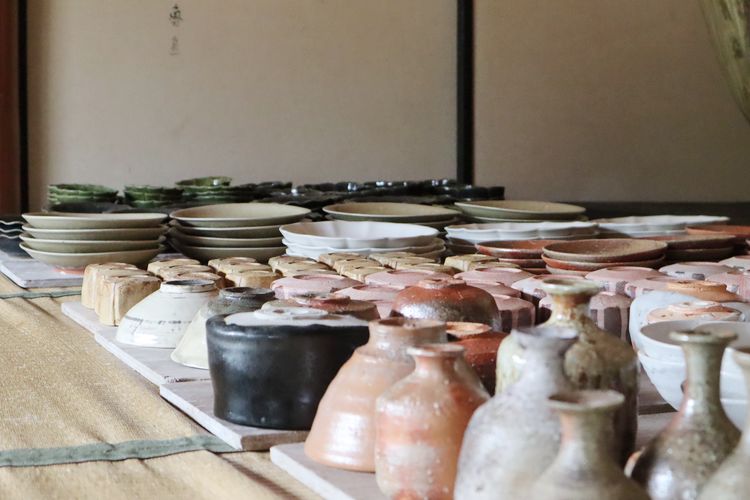
Hanada: For this exhibition, you have prepared a wonderful variety of tableware, and the other pieces are equally impressive. This hanging flower vase is particularly intriguing.
Kan Kishino : It started with the suihatsu (hanging board). Flowers look so alive when you use one. When I wondered why, I realized the background enhances the appearance of the flower. So, I thought about making the vase itself serve as that background.
Hanada: The structure appears unique at first glance, but it seems versatile enough to accommodate many types of flowers.
Kan Kishino : I tried to design it so that arranging flowers would be effortless, making sure they stand upright naturally, whether the stems are short or long. I gave a lot of thought to how to make it look completely natural. Also, what do you think of that large jar over there?
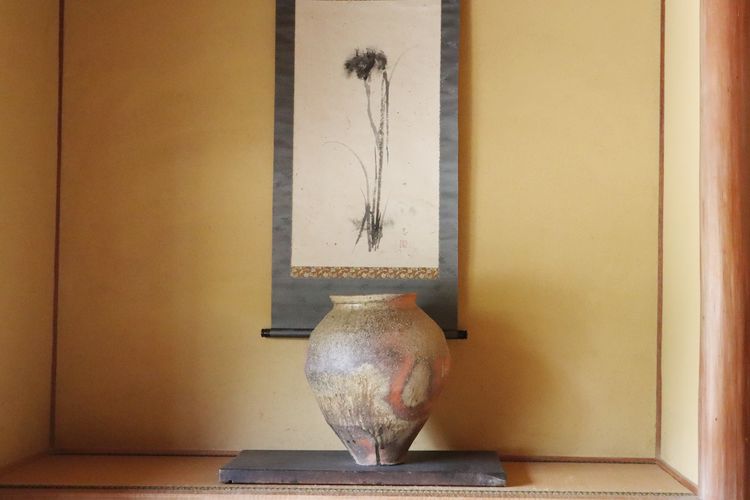
Hanada: It has a wonderful, deep inner glow.
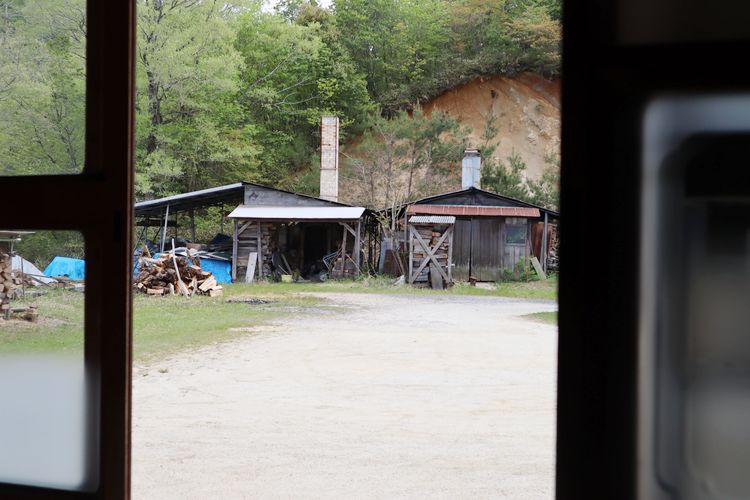
Kan Kishino : For the natural glaze effects on that jar, I am involved during the loading stage because I arrange the pieces while imagining how the flames will flow, but I don’t interfere during the actual firing. I used to think those raw, rugged textures only occurred in the very back of the kiln. This time, however, that dynamic was reversed. I loaded the kiln by taking advantage of the higher temperatures in the back and the lower temperatures in the front. I also paid close attention to the size of the firewood.
Hanada: Does the size of the firewood affect the final outcome?
Kan Kishino : It changes how the fire travels significantly. Especially in a down-draft kiln, the conditions shift drastically, so I make fine adjustments. While the resin content of the pine matters, the size of the wood has a massive impact.
Hanada: Is there an ideal size?
Kan Kishino : Since I split the wood myself, I can adjust it in various ways. I even use pieces so large that most people wouldn’t dream of putting them in. But if you think about it, potters in the past didn’t have chainsaws; they must have used whole logs. They likely just burned long logs, pushing them in gradually.
Hanada: While we often deduce how something was made by looking at the object itself, it is fascinating that you can also deduce techniques from historical context, like the absence of chainsaws, concluding that they wouldn’t have done things the modern way.
Kan Kishino : I imagine those kinds of scenarios all the time.
Hanada: You often mention trying something only to realize that potters in the past would never have done it that way.
Kan Kishino : There are many things taken for granted in modern pottery that simply wouldn’t make sense given the historical environment of the time. For instance, no one back then would have cut firewood into neat 50cm pieces. They would have had to cut everything by hand with a handsaw (laughs).
Hanada: That would be an immense amount of labor.
Kan Kishino : Absolutely immense (laughs). No matter how strong your arms are, you just wouldn’t do it (laughs).
Hanada: Unless there was a very compelling reason to do so.
Kan Kishino : Perhaps if it allowed for an incredibly short firing time, but even that seems unlikely.
The Presence an Object Carries
Hanada: Looking at the pieces you brought for this exhibition, the overall impression is wonderfully serene and quiet.
Kan Kishino : I made them with what we just discussed in mind. I wanted my true feelings to transfer into the objects, ensuring that the pottery wheel didn’t simply slide along out of habit.
Hanada: What do you mean by the wheel “sliding”?
Kan Kishino : It refers to a state where the form comes out beautifully, but it lacks presence, as if the maker’s spirit wasn’t fully poured into it. Having worked as an artisan for a long time, I can easily shape things purely through technical skill.
Hanada: But isn’t that technical consistency exactly what is required of an artisan? If an artisan poured their emotions into every single piece, the work wouldn’t get done. Maintaining a steady, consistent condition is essential.
Kan Kishino : Yes, but I think that applies more to modern artisans.
Hanada: Even so, perhaps true expression is something built upon that foundation of consistency.
Kan Kishino : Until relatively modern times, artisan work was often delightfully unrefined, and I find those pieces possess much more soul. Among them, the work of highly focused artisans resonates with me deeply.
Hanada: Does that quality come entirely from the individual maker?
Kan Kishino : The historical background must play a major role. When the collective consciousness of society is high, the standards of the artisans rise too, and from that environment, individuals with exceptional sensitivity emerge. I imagine the masterpieces of the Momoyama period were born under such conditions. Many of those pieces possess a powerful presence that cannot be explained simply by the existence of a great producer.
Hanada: When do you find yourself noticing these qualities?
Kan Kishino : It starts with gazing deeply at a piece. The presence and atmosphere that the object carries simply speak to you.
Hanada: What kind of presence do you seek to bring to your own work?
Kan Kishino : I believe one’s daily life naturally becomes the atmosphere of the object, infusing it with a distinct character. There are pieces that make you sit up straight, pieces that bring a smile, and pieces that move you to tears—and it is wonderful to have that variety. However, things that make the heart heavy or feel careless are not things you can live with long-term.
Finding Joy in the Joy of Others
Hanada: Your daily life and your work are deeply intertwined.
Kan Kishino : To deepen my work, I believe I must deepen my own life. I need authentic personal experience; conceptual thinking alone won’t move things forward. Part of deepening life involves refining a sensibility that is entirely your own, not borrowed. That said, even if you approach life with earnest intent, it won’t last if it isn’t enjoyable. For me, this centers on what I eat and how I enjoy meals. I need to constantly refine how I perceive that time, how I feel about food, and how the ingredients look while I am actually eating. Lately, I have become particularly mindful of this. The story about the oden came out of that practice.
Hanada: That is truly what it means to bring joy to others. When trying to please someone, it is difficult to create something based purely on guesswork or assumptions without real personal experience. You mentioned before that things lacking authentic experience simply do not resonate. When I see how you host people, I can see exactly why your pottery turns out the way it does.
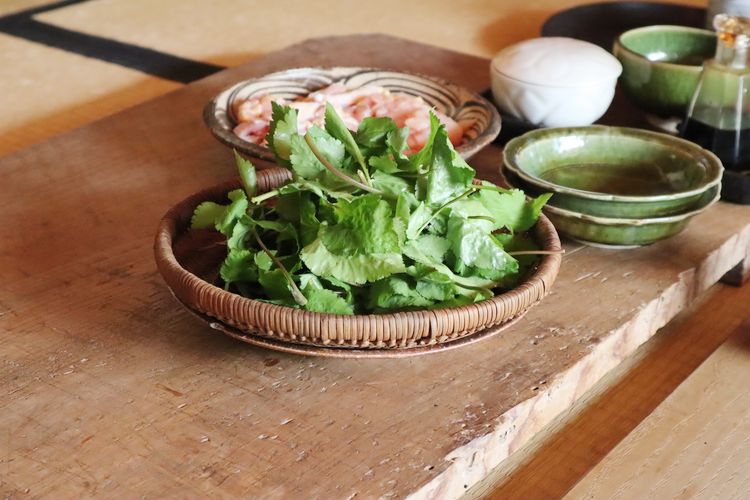
Kan Kishino : It ultimately comes down entirely to how much joy you can bring to that moment.
Hanada: The ability to find your own joy in the joy of others is a true talent.
Kan Kishino : Though, when I think about it, the reason I started experimenting with making meals more enjoyable was simply because I was working all the time and rarely went out. It began with a simple desire to bring some joy to my children at home.
Hanada: Quite simply, you love seeing the happiness of the person right in front of you. I am sure you will continue to work this way for a long time to come.
Kan Kishino : If the things I make can play a small part in bringing joy to people’s lives, I couldn’t ask for greater happiness.
Hanada: Thank you very much. We look forward to a wonderful exhibition.
Kan Kishino : Thank you, I look forward to it as well.
≪ END ≫
最近のこと
花田:前回の個展からおよそ3年が経ちます。
最近はどうお過ごしですか。(以下花田-)
岸野:この冬、自分が持っている古い向付にそれぞれおでんを具材別に盛り付けてみたんです。
いきなり食べ物の話でスミマセン(笑)。
-:いえ、楽しいですので是非。
岸野:骨董の向付を揃いで持ってないので、そこまで使い込んではいなかったのですが、それが想像以上に面白くて、なぜこの向付が料理を引き立てるのかということが整理されたんです。
特に向付は「食材にどう集中させるか」なんです。
色々試したことで、その「集中させる」パターンも見えてきました。
-:「食材に集中」ですか。とても分かりやすいです。
「料理をひきたてる」なんて言いますが、よく考えると、なんか漠然とした表現ですよね。
岸野:そうそう、いざ形にしようとすると、よく分からないんですよ「引き立てる」って。
-:モノとして気に入っている骨董を目標に置いてさんざん作ってきたからこそ、そうやって使うことでさらに進めたのかもしれません。
岸野:作り手である僕がただ楽しく使うだけだと、仕事になりませんが、モノそのものに没頭したことを経ているからこそ「使う」ことで新たな着眼点を得ることができた気もします。
いずれにしても「食材に集中させる」ことを考えられたのは大きいです。
見てみると造形、線など色々なことが集中させる手段になっているんですよね。
魯山人は意図的にそれをさんざんやっていたということなんだと思います。
-:あの人は目標がはっきりしていて、徹底しています。
「うまく食べるため」というシンプルなテーマ。
岸野:それも俯瞰的に。
かたちは似ていても新たなもの
-:特に最近は真っすぐにご自身の仕事と向き合われているように思えます。
岸野:以前にくらべると「『自分が何に魅力を感じ、そこを形に変える事』に集中すること」が自分の仕事だと思えるようになってきました。
「何が売れるか」と、外側のことを考えるよりは、自分に意識を向けていったほうがいいなと考えています。
-:何か、そう考えるようになったきっかけはあったのですか。
岸野:(しばらく考えて)外側のことを考えながら作ったものに対して自分自身が感動できず、自分自身が満たされなくなってきたんです。
自分で作っているのに、そこに自分がいなくなっているような。
前はそれで十分喜べていたのに・・・。
-:技術的な話ではなさそうですね。
岸野:技術が身に付くまでは、外側から捉えた物でも技術的な到達を意識する中で気持ちが入って行くと感じます。
でも、どこかのタイミングでそれが出来て当たり前になると、さて「次」はなんなのかと。
新たなことを試みるのも一つですけど、同じものを深めていくということもあります。
結局、自分が好きなものはそんなに変わらないし、スタンダードな良さというのはあるわけです。
「新しい」ものを求めるあまり、前に作ったものと違うものを作ろうとすると、どんどん普通のものではなくなって、どんどん使いにくいものになっていってしまう。
一方で、同じものを作っていても、以前作った物や古陶などを見本と固定化し比較の中で作るのではなく、造っているその瞬間の目の前の物を感じ、心にある魅力を形にしていく事で形は似ていても新たな物となる。
そうありたいと考え取り組んでいます。
展示会に向けて
-:今回の展示会では豊富にうつわを用意いただきましたし、さらにそれ以外も充実しています。
この掛花も面白いですね。
岸野:きっかけは、垂撥でした。
垂撥を使うと、花がとても活きるんですよ。
理由を考えてみると、背景が花のうつりをよく見せているのではないかと思って、花器そのものを背景にしてみようと考えました。
-:一見、作りは独特ですが、受け入れる花の範囲は広そうです。
岸野:花が入れやすいように工夫したつもりです。
「真っ直ぐ花が立つように」「短い花でも、長い花でも」・・・。
どうやったら自然に見えるか、随分考えました。
それと、どうですか、あの甕。
-:「底光り」ですね。
岸野:あの甕の景色、火がどういう風に流れるか想像しながら詰めるので、窯詰での関与はしていますけど、窯焚きでの関与はしていません。
今までは窯の奥でああいうガサっとした景色が出るものだと思っていました。
でも今回の窯はそれが逆転しています。
奥が温度が高く、手前が低いのを利用して窯を詰めました。
薪の大きさにも気を使っています。
-:薪の大きさは仕上がりに影響を与えるのですか。
岸野:どっちに火が走るかが大きく変わるし、特に倒炎式の窯は、ものすごく状態が変わるので微調整しています。
松脂ののりかたなども重要ですけど、大きさも相当影響します。
-:適度な大きさというものがあるのですか。
岸野:僕は自分で薪を割っているので、色々調節できるということもありますが、普通の人ならこんなに大きなもの入れないっていうくらいの大きさのものもいれています。
まあ、昔の人はチェーンソーもないし、原木をそのまま入れていたはずです。
長い木そのまま燃やしては押し入れていただろうと。
-:モノそのものから「これはこうして作っていただろう」と推測することも多いと思いますが、「チェーンソーがない」なんていう社会状況から「こんなことをやっているはずがない」って予測していくこともあるのですね。
岸野:そういう想像はしょっちゅうしています。
-:「こうやってはみたけれど、考えてみると昔の人がこんなことをするはずがない」なんて、よく話されていますよね。
岸野:現代陶で当たり前とされていることも、当時の外部環境を考えれば「やるはずないよな」ということは結構あります。
だって、薪をこんな50cmに切るなんて絶対やらないですよ。
全部のこぎりでひくんですよ(笑)。
-:膨大な作業量ですよね。
岸野:膨大ですよ(笑)。
いくらこんな太い腕してるって言ったって、やらないですよ(笑)。
-:そこに大きな意味があればやるでしょうけど。
岸野:あるとすればすごい短時間で焚けるとか・・・。
それもどうでしょうか。
モノが背負う空気
-:今日展示会に出品いただくうつわを拝見しましたが、全体としてすごく穏やかというか、静かな感じがしました。
岸野:先程お話した事を意識し作りました。
自分の実感がモノに移って欲しいと思い、「ロクロが滑る」ことにならないように。
-:「ロクロが滑る」とは?
岸野:形はキレイにできているけど、気持ちが伝わってこないというか、込められていないというか。
僕自身、職人が長かったので、手先の作業で形にしてしまいがちなんです。
-:職人の仕事というのは、そういうことを求められている側面もあるのではないですか。
いちいち職人が思いを込めていたら仕事にならない、というか、一定のコンディションで作り出していくことも求められます。
岸野:そうですね、でもそれは近代の職人のお話ではないでしょうか。
-:ただ、その一定のコンディションに上乗せするような思いや気持ちだったりするのでしょう。
岸野:近代までは職人仕事も大雑把な物が多く、そういった物の方が私は魂を感じます。
中でも集中力の高い職人の仕事はビンビン感じます。-:それは作った本人が持つものなのでしょうか。
岸野:時代背景は重要でしょうね。
社会全体の意識が高い中で職人の意識が高くなり、その中から突出した感性の職人が出てくる。
桃山の名品はそのような中で生まれたのかなと想像しております。
単に名プロデューサーの存在だけでは説明が付かない強い気配のあるものが多いですよね。
-:どういう時にそういったことを気付くのでしょうか。
岸野:作品を凝視するところからです。
モノが背負っている空気が伝わってくるんです。
-:岸野さんは、ご自身の仕事に、どのような「背負う空気」を求められますか。
岸野:自分自身の暮らしがそのまま作った物の空気となり、にじむ匂いになると思うんです。
背筋が伸びる物、笑顔になる物、涙が出る物、色々有って良いと思いますが、心が暗くなったり、だらしなく感じる物は使い続けられませんよね。
人の喜びを自らの喜びに
-:ご自身の暮らしと仕事も密接に関わっていますね。
岸野:自分の仕事を深めていくためには、自分自身の生活を深めていく必要があると考えています。
「自分の実感」が必要で、頭の中での思考的なことのみでは進んでいかないと。
生活を深める一つとして借り物で無い自分自身の感性を磨くことがあると思います。
と頭でそう思ってかしこまっても楽しくないと続きませんよね。
その一つが、僕の場合、食事の中で、何を食べて、どう楽しむかが中心になるのですが、実際食べながら自分が「その時間を楽しく過ごせているか」「食に対してどういう風に感じるのか」「その食材がどんな風に見えるのか」ということを日頃から磨いていかないといけないなって。
特に最近はそういうことを意識するようになりました。おでんのお話もその中での事です。
-:人に喜んでもらうというのはそういうことですよね。
人に喜んでもらおうとした時に、実感なく予想して「こういうもんだろう」とか「こうしたら喜ぶんじゃないか」って知りもしないものを勝手に作り上げても難しいですよね。
以前にも「実感がないものは通用しない」と仰っていました。
僕は岸野さんが人をもてなしているのを見ていると、焼き物がああいう風になっていくのが分かります。
岸野:その時間をいかに喜んでもらうかってことに、尽きます。
-:人の喜びを、自らの喜びにできるのは才能です。
岸野:でも、なんでしょうね、よくよく考えると、今みたいに食事をもっと楽しくしてみようと、色々試し始めたのも、仕事ばかりで出かけることも少なくなって「家で子供たちをなんとか喜ばせたいな」って思うところから始まったのかなあ。
-:シンプルに、目の前の人の喜んでいる姿が好きなんですよ、岸野さんは。
これからも、ずっとそれを続けていかれるのだと思います。
岸野:自分の作った物が、人の暮らしの喜びの一翼となればこれほど幸せな事は無いですよね。
-:ありがとうございました。
展示会、よろしくお願いします。
岸野:よろしくお願いします。
≫岸野寛さんのうつわはこちらから≪
関連記事はこちら