








English version of the interview here.
A Childhood of Free Exploration
Hanada: How did you first encounter glass?
Ken Ikushima: When I was a child, I was always drawing, cutting and pasting paper… always making something. I thought, “When I grow up, I want to be making things no matter what.”
Hanada: Was it influenced by your family?
Ken Ikushima: My father was a salesman for a liquor company. Because of that, I was in the U.S. from the age of two. My mother cooked and sewed…
I don’t think there was a direct influence, but I’m grateful that even though I didn’t study at all and only made things, they didn’t scold me and rather watched over me welcomingly.
Hanada: So it wasn’t “Stop drawing and study”?
Ken Ikushima: Not at all. They let me attend art classes and took me to museums and galleries.
Hanada: You still keep a sketch diary, right?
Ken Ikushima: It helps maintain my drawing skills and serves as a memory aid. I tend to forget things easily (laughs).
Hanada: Keeping a sketch diary must make you observe things and events more carefully.
Ken Ikushima: Usually I draw from memory the next day, so it requires both observation and imagination.
Sometimes I reread them and think, “Ah, that happened,” or “I did this”… It’s really fun.
The ones from when my son was small are especially amusing.
Wait, What About Pottery?
Hanada: Where in North America did you live?
Ken Ikushima: Los Angeles, Chicago, and New York.
Hanada: Do you feel any influence from your childhood experiences in the U.S.?
Ken Ikushima: Probably the language. When I returned to Japan in sixth grade, I couldn’t write hiragana.
Math was also a disaster (laughs).
At that time, U.S. arithmetic for sixth grade was adding 1000 and 1000, for example.
So even in a normal Japanese school, it was incomprehensible.
I transferred to a school with an international class, where I first studied hiragana.
Hanada: How did you decide on your career path after that?
Ken Ikushima: Specifically, I wanted to become a ceramic artist. Tama Art University had a “Craft Department.” At the time, I thought “Craft = ceramics,” and figured if I got into the craft department, I could eventually work with ceramics somewhere.
It was fortunate that I got accepted, but once I enrolled, the craft department only had glass and metal.
Ceramics, for some reason, was under the oil painting department (laughs).
Hanada: You only found out after entering?
Ken Ikushima: Yes. I thought, “Huh?” But then again, the prep school teachers never said anything even though I wanted to study ceramics. Well, I guess I was the one who didn’t know (laughs).
Hanada: So you chose glass instead.
Ken Ikushima: I had admired the pottery wheel, but I told myself, “If I tilt the wheel, it’s glass.”
Either way, I only had two options.
Hanada: Well, which is closer to ceramics…
Ken Ikushima: I’d say glass. The glaze is basically glass too.
Working and Thinking
Hanada: What did you do after graduation?
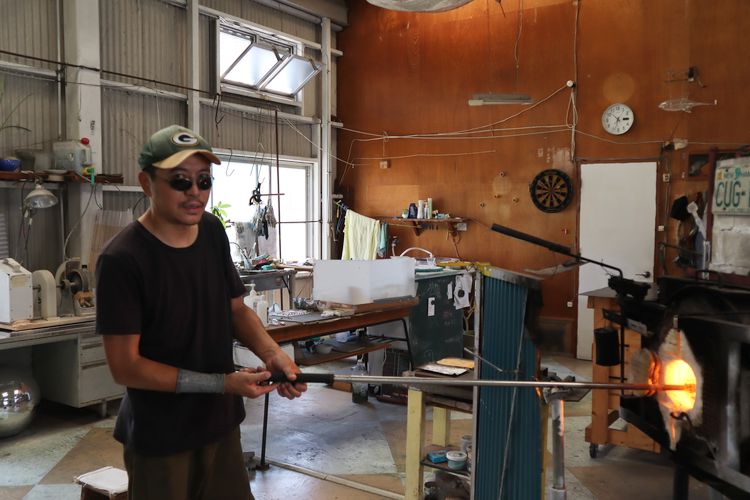
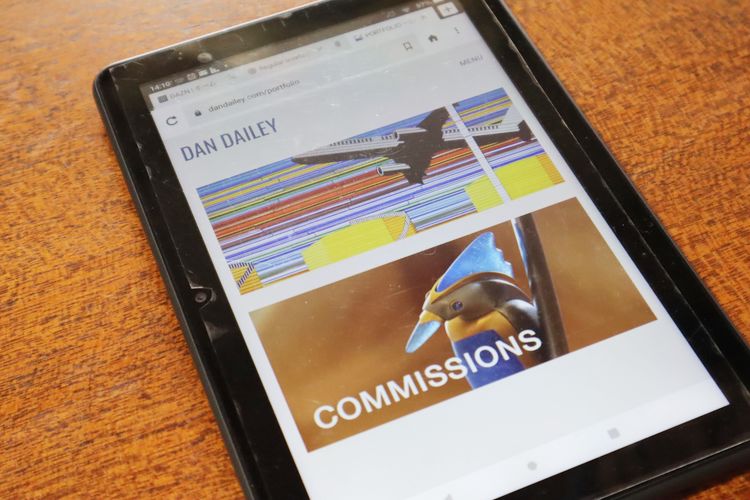
Ken Ikushima: I spent three years at Niijima Glass Art Center, two years in Yoshihiko Takahashi’s studio, and then two years in Dan Dailey’s studio in New Hampshire.
The first two were mainly glassblowing, but at Dan Dailey’s, I also learned torch work and polishing.
Hanada: What kind of work did you do with Dan Dailey?
Ken Ikushima: Dan would show us something like a painting and decide, “Make something close to this.” As assistants, we worked to realize it.
The approach of “materializing what’s in Dan Dailey’s head” was incredibly fun and full of first-time experiences.
Dan only painted and said, “Do the rest freely.”
Basically, he gave instructions only for shape and color, and we figured out the rest.
At that time, Dan was considered top-class, so seeing glass from a different perspective at that level was extremely valuable.
Bright and Fun
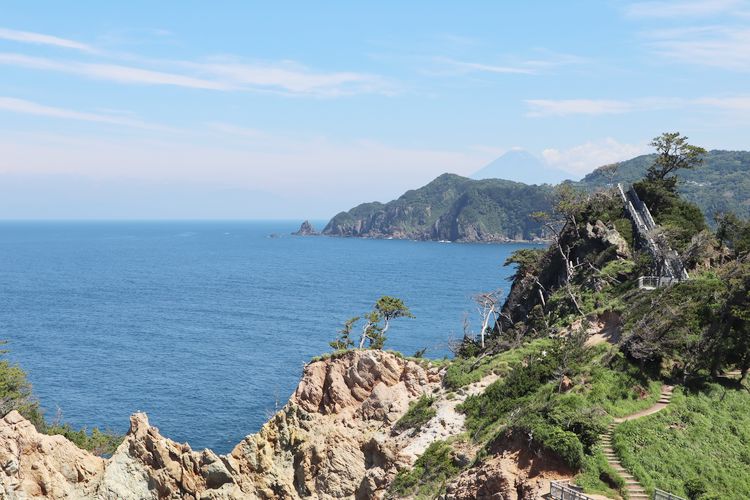
Hanada: And now in Nishi-Izu.
Ken Ikushima: It’s been 22 years.
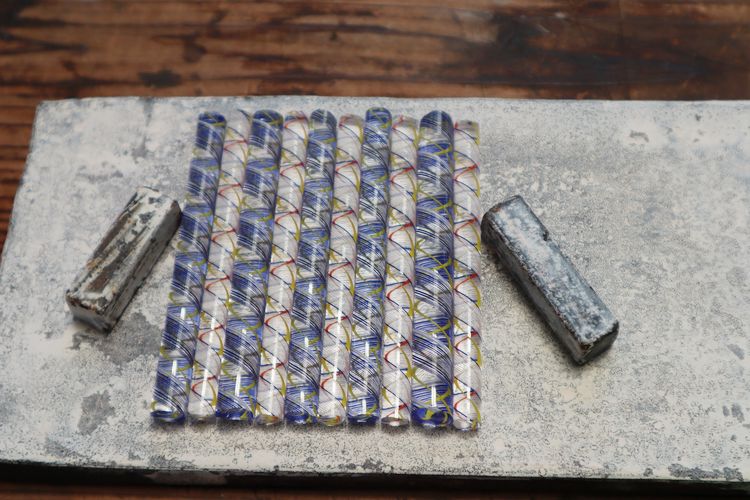
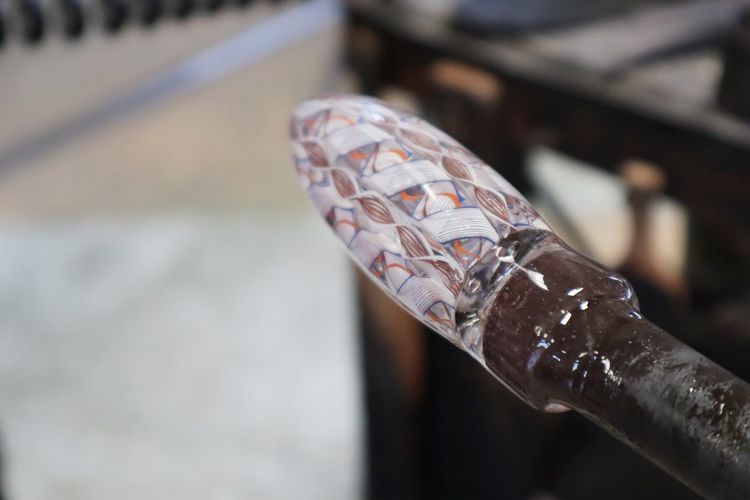
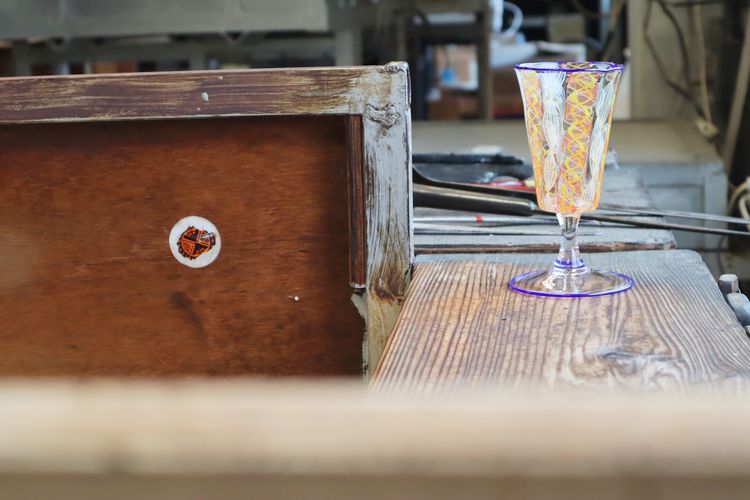
Hanada: Nowadays, you mainly work with lace glass.
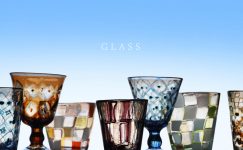
Your work is bright and fun, rather than gorgeous or elegant.
Ken Ikushima: “Lace but for everyday use.”
Although I work with lace a lot now, I’m not strictly a lace artist, so I want to explore various things.
Hanada: Are there things you want to pursue in the future?
Ken Ikushima: Woodworking… I do it occasionally for fun, but I want to go deeper.
Carving, assembling, and combining with other materials like wood and metal.
I also want to try installations.
Hanada: How about your exhibition at Hanada?
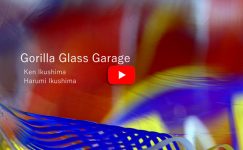
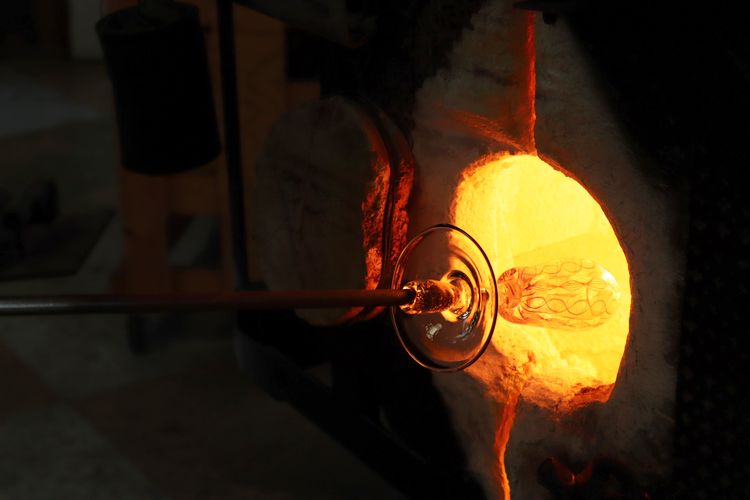
Ken Ikushima: This time, there’s a video of the making process, so I hope people can imagine it while looking at the pieces.
Lace glass itself is a fun process.
As I like to say, “Interesting work produces interesting results.”
≪ END ≫
のびのびと。
花田:ガラスとの出会いは、どのようなものだったのでしょうか。(以下花田-)
生島賢:子供のころは絵を描いたり、紙を切ったり貼ったり…、常に何かを作っていて「大人になったら何でもいいから物を作っていたい」と思っていました。
-:ご家族の影響でしょうか。
生島賢:父親は酒類メーカーのセールスマンでした。
その関係でアメリカに2歳からいたんです。母親は料理作ったりとか、裁縫したりとか…。
直接的な影響はなかった気がしますが、僕が勉強を全くせず、物ばかり作っていることを咎めず、むしろウェルカムな感じで見守ってくれていたのは感謝しています。
-:「絵なんか描いていないで、勉強しなさい」ではなかったのですね。
生島賢:反対は全くされませんでした。
そして、絵画教室に行かせてくれたり、美術館や博物館に連れて行ってくれたり…。
-:今も、絵日記をつけられています。
生島賢:自分のデッサン力の維持と記憶の補助です。
忘れっぽいので(笑)。
-:絵日記にするためにも、モノや出来事をきっちり見るようになりますね。
生島賢:大体、記憶を頼りに次の日に書くことが多いので、モノを見る力と想像力が必要になります。
で、たまーに読み返すんですけど「あ、こんなことあったなー」とか「こんなことしていたんだ」とか…結構楽しいですよ。
息子が小さかった頃のものは、特に面白いです。
あれ、焼き物はないの?
-:北米はどちらにいらっしゃったのですか。
生島賢:ロサンゼルス、シカゴ、ニューヨークです。
-:今、幼少時のアメリカでの経験の影響を感じられることはありますか。
生島賢:言葉…でしょうね。小6で日本に帰ってきたとき、ひらがな書けませんでしたから。
数学も全然でした(笑)。
だって、当時アメリカの算数って、小6で1000と1000の足し算とかなんですよ。
だから普通の日本の学校に行っても、ちんぷんかんぷん。
国際学級のある学校に転校、そこで初めてひらがなの勉強をしました。
-:その後どのようにして進路が決まっていったのですか。
生島賢:具体的には陶芸家になりたいと思っていて、多摩美術大学に「クラフト科」というのがあったんです。当時「クラフト=陶芸」だと思い込んでいて「クラフトというジャンルに入れればいつかどこかで陶芸できるだろう」ということで受けました。
で、たまたまでも合格したのは良かったのですが、入学したら、そのクラフト科にはガラスと金属しかなかったんですよ。
で、陶芸はなぜか油絵科だったんです(笑)。
-:入学後に知ったのですか。
生島賢:えぇ。「あれー?」って。
でも「陶芸やりたい」って言っている僕に何も言ってくれない予備校の先生もどうなの?って感じですよね。
まあ、知らない自分が一番悪いんですけど(笑)。
-:それでガラスを選ばれる。
生島賢:焼き物のロクロに憧れていたんですけど「ロクロを横にすればガラスだよな」って自分に言い聞かせて…。
いずれにしても選択肢は二つしかありませんから。
-:まあ、どっちが陶芸に近いかと言えば…。
生島賢:まあ、ガラスかなと。釉薬もガラスだし。
務めること、考えること
-:卒業後はどうされていたのですか。
生島賢:新島ガラスアートセンターに3年、高橋禎彦さんの工房に2年、その後ニューハンプシャーのダン・デイリーさんの工房に2年いました。
最初の二つは主に吹きガラスでしたが、ダン・デイリーさんの所ではそれ以外のバーナーワークや研磨について学べました。
-:ダン・デイリーさんの元ではどのようなことをしていたのですか。
生島賢:ダンが、あの絵のようなものを見せてきて「あれに近いものを作る」って決めるんです。
その上で、アシスタントとしてその実現を目指します。
「ダン・デイリーの頭の中にあるものを具体化させる」という取り組みがメチャクチャ面白くて、初めてのことばかりでした。
ダンは絵しか描かなくて「あとは自由にやって」って。
基本的には形と色の指示だけで、あとは僕らが考えて作るんです。
ダンは当時で既に超一流と言われていたので、そのレベルでガラスを別の視点から見ることが出来たのは実に貴重でした。
明るくて楽しい
-:で、この西伊豆に。
生島賢:22年になります。
-:現在はレースグラス主体で活動するようになりました。
賢さんの仕事は、ゴージャスやエレガントでなく、明るくて楽しいレースガラスだと思います。
生島賢:「レースだけど普段使い」です。
ただ、今はレースが多いですが、別にレース作家というわけでもないので、色々やっていきたいと思っています。
-:これからやっていきたい事はありますか。
生島賢:木工とか…。たまに遊びでやりますけど、もうちょっと踏み込んだ木工。
彫ったり、組んだり。あとは、木や金属などの異素材と組み合わせて。
インスタレーションもやってみたいです。
-:花田の展示会に向けては、いかがでしょうか。
生島賢:今回は制作動画もあるので、モノを見ながら一緒にイメージしてもらえるといいなと思います。
レースガラスは作業自体も面白いものですから。
「面白い作業をすると、面白いものができるね」なんてね。

≫生島賢さんのうつわはこちらから≪
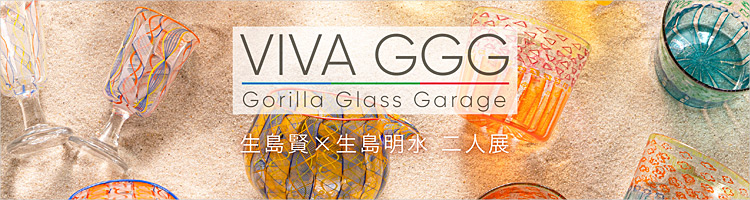
▼ VIVA GGG 生島賢×生島明水 二人展の商品一覧はこちら ▼
関連記事はこちら