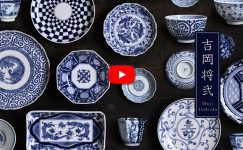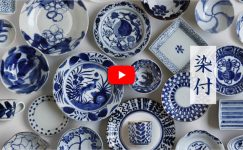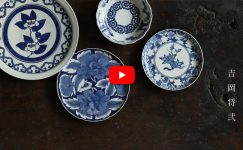









English version of the interview here.
Everyone Looked Like They Were Enjoying Themselves
Hanada: You was born and raised in Tobe, a well-known pottery-producing region.
Shoji Yoshioka: My grandmother worked part-time in slip casting, and just about everyone around us—neighbors and acquaintances—was involved in pottery.
I sometimes got to try making things during summer vacations, and everyone working with ceramics seemed to genuinely enjoy it. By the time I was in junior high school, I knew I wanted to work in sometsuke (underglaze blue painting). So after graduating from high school, I came to Kutani.
Hanada: Why Kutani?
Shoji Yoshioka: There isn’t a school in Tobe, so a lot of people go to Kyushu to train. I figured I’d rather take a different path from everyone else.
To Kutani
Hanada: After the Kutani training institute, you joined Myosen Pottery Studio. How did that come about?
Shoji Yoshioka: I applied through the training institute and had an interview. I didn’t even have a driver’s license back then, so I remember walking seven or eight kilometers to get there.
It was around their 20th year since founding, and they told me stories about when the brothers first started the studio, which were fascinating. Right around that time, they were also working on an Imperial Household Agency commission, and I saw firsthand how incredibly demanding that work was. I feel I was shown something truly invaluable.
Hanada: You must have gained a lot of experience there.
Shoji Yoshioka: Getting used to sitting cross-legged was tough (laughs), but looking back, I think I was fortunate in terms of the working environment.
The hours were regular, and the conditions weren’t bad. Compared to now, I might have had it much easier back then… The work never really ends, though (laughs).
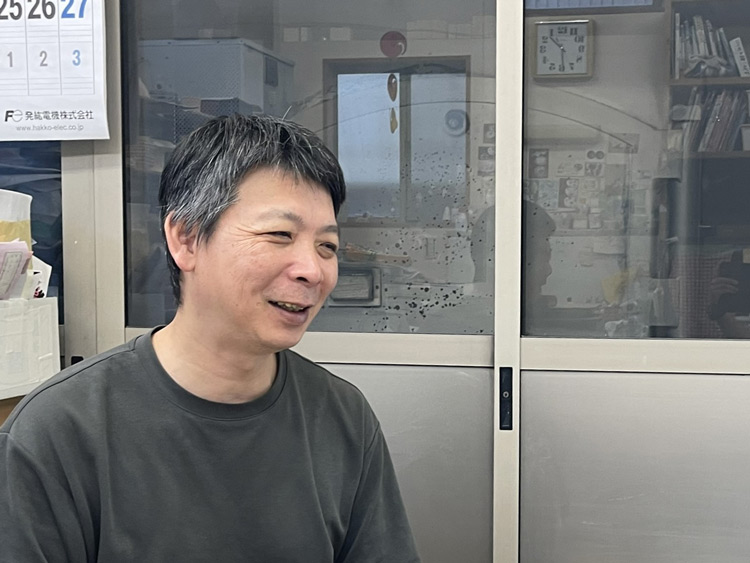
Hanada: Is there anything in particular that left a strong impression on you?
Shoji Yoshioka: There was this enormous plate, and the master did almost all the painting himself, but at one point he said, “Yoshioka, why don’t you try painting this part?” and let me work on it.
You hold it with your left arm while painting… Well, I’m a big guy, so it was kind of like in brass bands where the bigger kids end up playing the double bass or tuba (laughs).
Hanada: I think that means he trusted your skill (laughs).
Shoji Yoshioka: He painted a dragon in the center and had me paint the small patterns around it. Since he had already done so much by then, adding my work afterward was pretty nerve-wracking.
Hanada: There was always the risk of ruining it.
Shoji Yoshioka: Exactly. If I had messed it up, it would have been really bad (laughs).
Working with Sometsuke
Hanada: Were you gradually entrusted with more work?
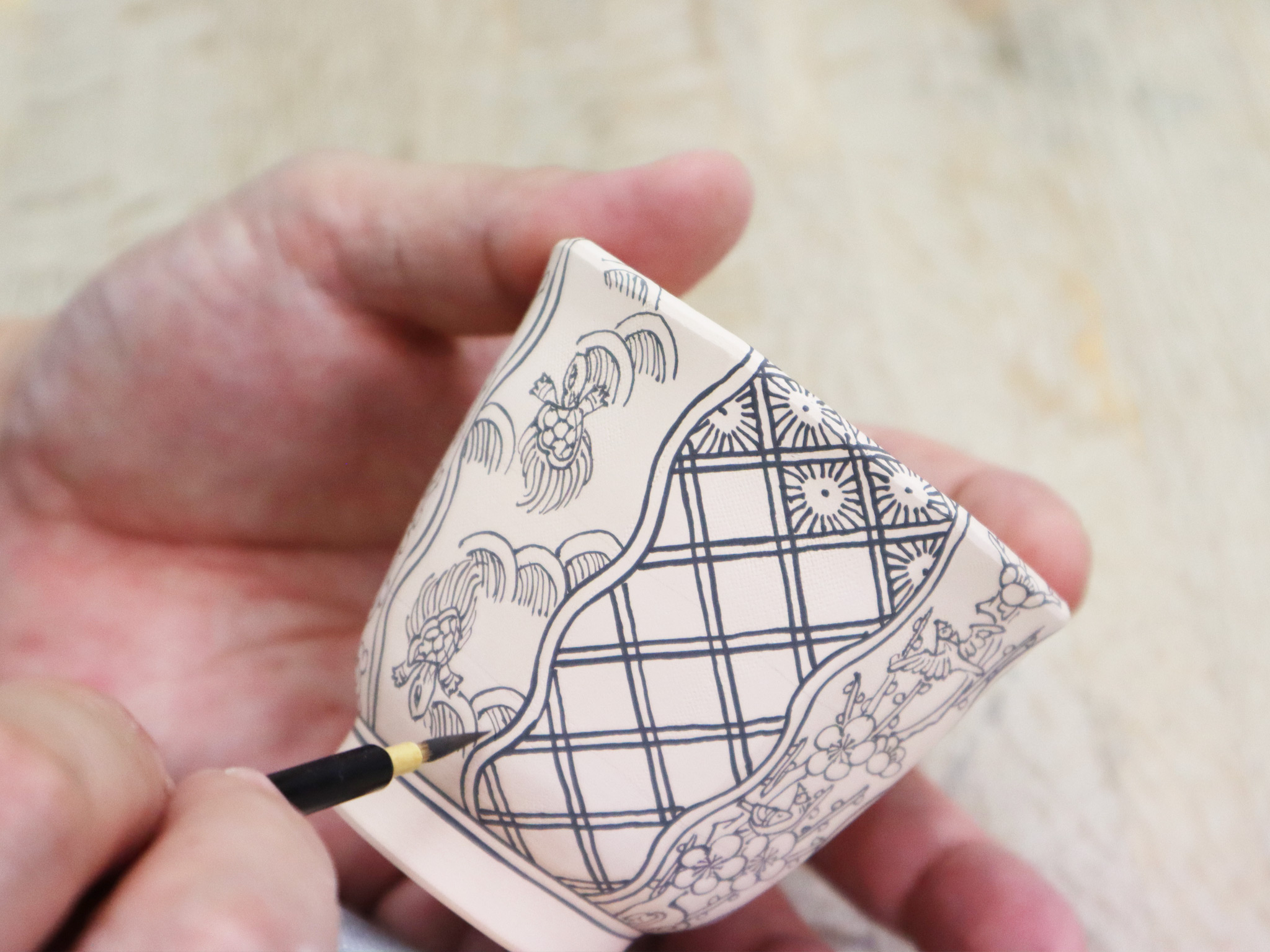
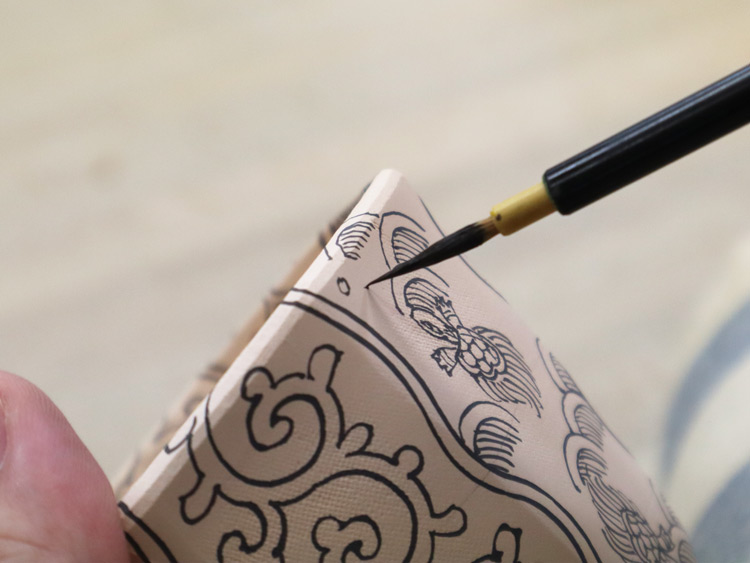
Shoji Yoshioka: You start with wheel lines and frame lines, but even that is difficult at first. After that, you move on to painting the surrounding motifs. The dami (color-filling) was done by the master’s wife and a part-time worker—they filled in everything we outlined with line work.
Hanada: They must have been very fast.
Shoji Yoshioka: I think working at that speed while doing dami is incredibly difficult. Unlike lines, once it goes wrong, the pigment flows, and there’s no fixing it.
Hanada: What kind of brushes do you use?
Shoji Yoshioka: Completely different from line brushes—very thick ones. You use the same brush for both wide areas and fine parts, just swish, swish. Color-filling is an entirely different skill altogether.
Hanada: In such a strictly divided system, what were you aiming for personally?
Shoji Yoshioka: Simply to work as hard as I could until someone said, “This is fine.” To keep working until I could draw lines that others would trust me with.
At Myosen, multiple people finish a single piece together, so rather than improving as an individual, the goal was for everyone to work together so that the final result felt seamless and unified.
Hanada: What does “good” sometsuke mean to you?
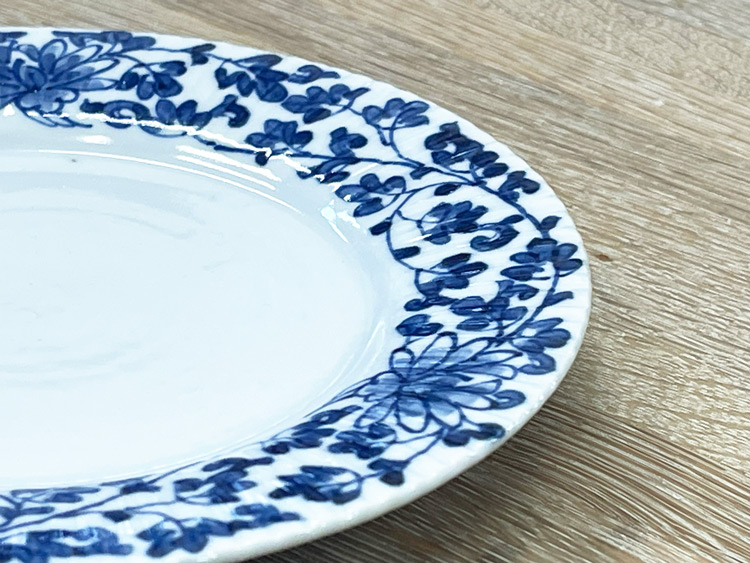
Shoji Yoshioka: It may be basic, but I think it’s important that the pigment doesn’t just sit on the surface, but is absorbed into the clay body.
Hanada: Truly “dyeing” the surface, then. Is that the same for both lines and dami?
Shoji Yoshioka: I think dami is more affected by mindset.
Later on, I realized that the master must have been considering many factors, including the bisque firing temperature, not just the painting technique.
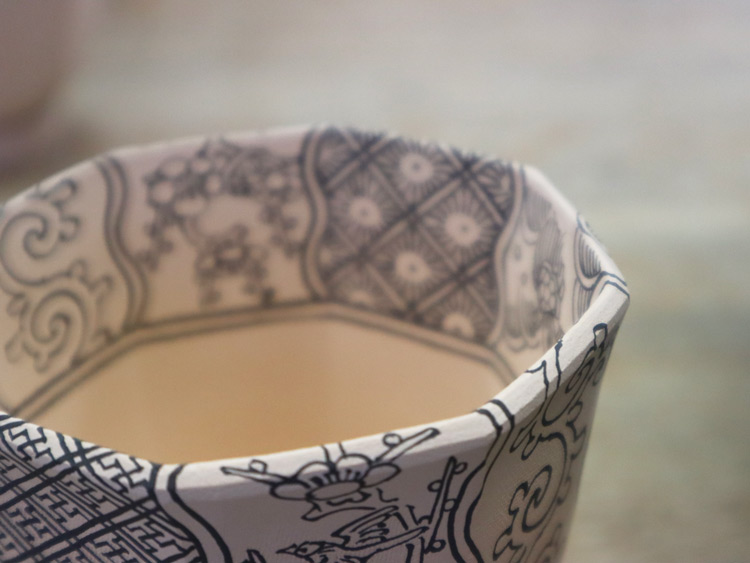
At Kutani Seiyo
Hanada: After that, you joined Kutani Seiyo.
Shoji Yoshioka: I had gone independent for a while, working only on painting, but I felt it would be better if I could also make the clay forms myself. When I talked to my master at Myosen, he introduced me to Seiyo. I was very grateful.
And a few months after I joined, he even stopped by to check if I was doing well… I can’t express how thankful I am.
At the time, though, I was still very immature and didn’t understand much. I took that kind of support for granted back then. I only realized later how difficult it truly is to nurture and look after others.
Hanada: What was Seiyo like?
Shoji Yoshioka: At Seiyo, there’s no division of labor—you finish everything yourself. Someone might be waiting for the pug mill to open up while casually reading a magazine… it was very free. There was absolutely no “do this” or “do that.”
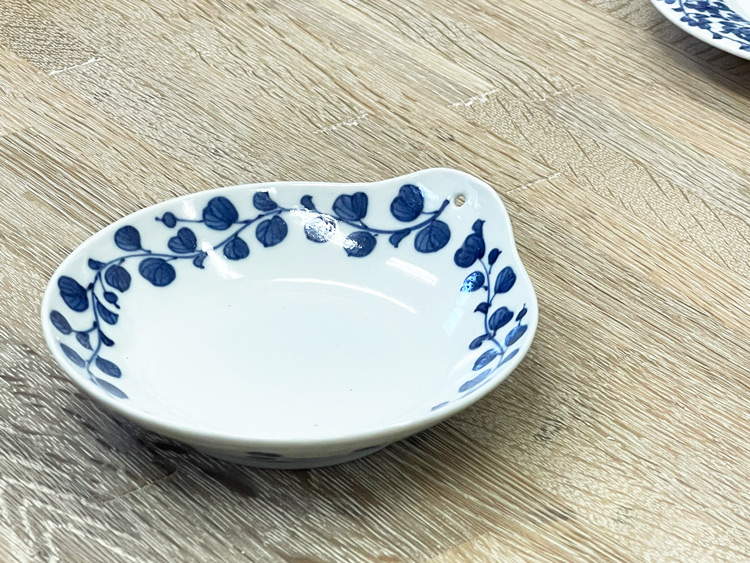
Hanada: There are many highly skilled seniors there. Didn’t they teach you?
Shoji Yoshioka: Not really (laughs). If you asked, they might tell you a little—but that’s about it.
Hanada: Mr. Hata, the head of Kutani Seiyo, doesn’t seem like the type to teach step by step either.
Shoji Yoshioka: Not at all. But Mr. Hata conveys a lot with just a few words.
Things like “Don’t make mistakes,” or “Don’t practice during work hours.” Practice isn’t work, in other words.
He also says, “Effort doesn’t translate into money.” Putting in time doesn’t automatically make something better, nor does it justify a higher price. Saying “I worked really hard on this, so it’s expensive” simply doesn’t work.
It’s completely reasonable, of course—but since all I can do is put in the effort, I hope that one day I can truly understand what those words mean through my work.
He also often told us to “create something new.” From there, the good and the bad get sorted, and the good ones remain. So even though it’s tough, you have to keep putting out new work—that’s what he meant.
A Phantom Debut
Hanada: Do you remember the first thing you made at Kutani Seiyo?
Shoji Yoshioka: I tried to make something very “Seiyo-like” at the time, painting plovers or something on a flat plate, but if I saw it now, I think it would look pretty awful.
Hanada: Was it released to the public?
Shoji Yoshioka: No, it wasn’t.
Hanada: A phantom debut, then. Too bad we can’t see it.
Shoji Yoshioka: Honestly, I’d prefer it stayed a phantom (laughs).
Hanada: What was the first piece that did make it out into the world?
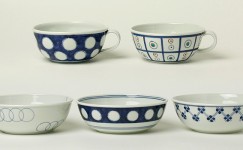
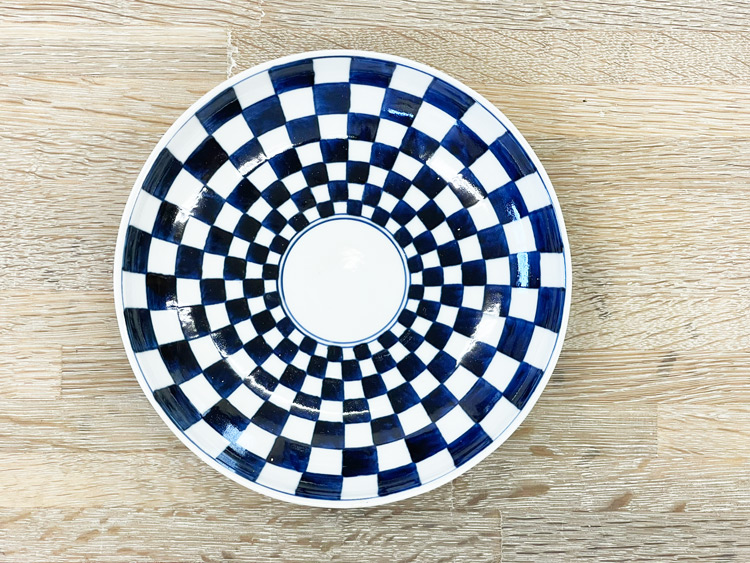
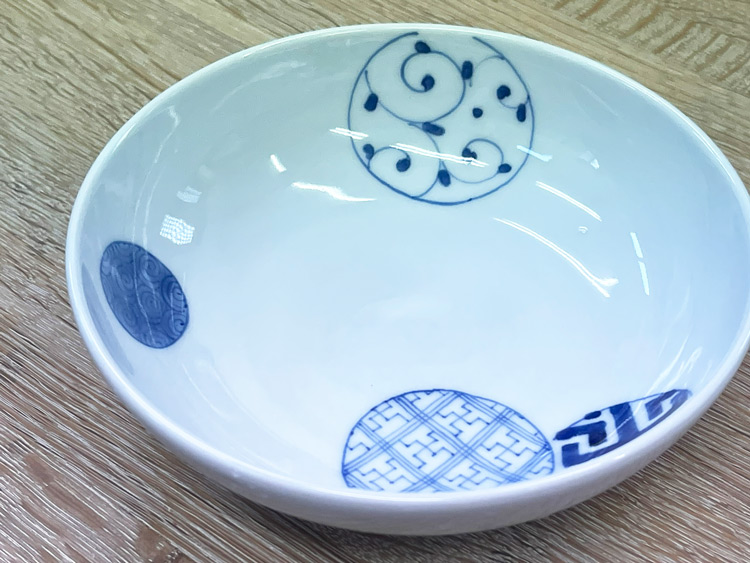
Shoji Yoshioka: A round-patterned piece. I was making a lot of them at the time, and that really helped my hands get used to the work.
Making Work That Gets Chosen
Hanada: At Myosen, you learned technique and mindset.
At Kutani Seiyo, it seems the goal is to become someone who can truly work as a professional.
Shoji Yoshioka: Back then, I thought rather casually that as long as I improved, there would be work. But at Seiyo, my focus shifted from simply “getting better” to “making good work” and “making work that gets chosen.”
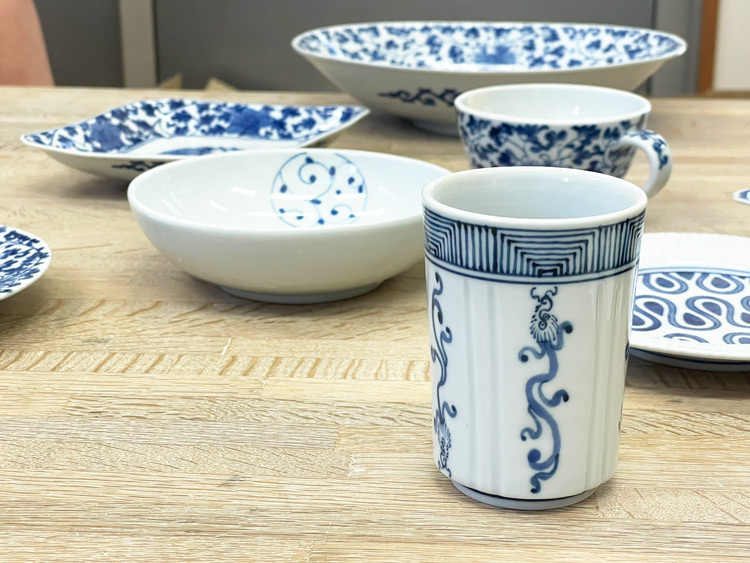
Seiyo—and Mr. Hata—were also the ones who first introduced me to antiques as reference material for that purpose.
Hanada: Do you look at them when the timing feels right?
Shoji Yoshioka: No, they’re just placed around casually. He also took us to places like the Nara National Museum and shops in Tokyo.
Hanada: Mr. Hata often brought younger Seiyo members to Hanada as well.
Shoji Yoshioka: Eventually, I went to Taiwan’s National Palace Museum with some of my juniors from Seiyo. Being proactive about seeing things like that is something I learned thanks to Mr. Hata.
Because It’s Yoshioka
Hanada: Listening to you, I strongly sense that both Mr. Yamamoto of Myosen and Mr. Hata of Kutani Seiyo truly cared about nurturing others.
Shoji Yoshioka: They’re completely different types, but both are incredibly caring. When I held my first solo exhibition at Hanada, my master even sent flowers. Mr. Hata doesn’t praise much, but he quietly watches over you—and that meant a great deal to me.
Believing and Continuing
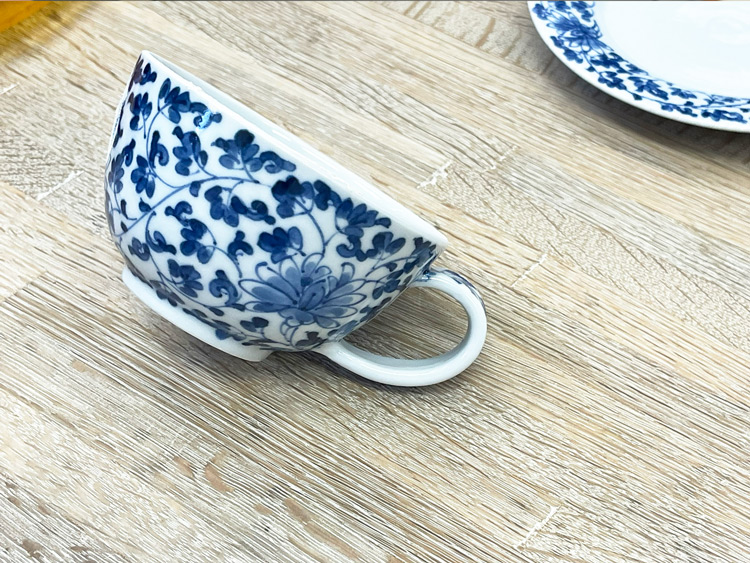
Hanada: You create both classical works and pop, casual ones. You’ve said before that it’s not that you prefer one over the other, but that you want to keep making both.
Shoji Yoshioka: If I had to say what I love most, it’s sometsuke. Within what’s being asked of me, I want to do my absolute best while making use of what I know and what I can do.
Hanada: Is there anything you value most when creating tableware?
Shoji Yoshioka: I want to make tableware that makes meals at home more enjoyable simply by being there. If eating at home is something to look forward to, your spirits don’t sink as easily.
Hanada: And in terms of your process?
Shoji Yoshioka: I keep putting into practice what I’ve learned, in my own way. Once, a senior told me, “Finish chamfering the edge of the foot in a single pass.” I felt that was about decisiveness.
Or someone said, “Try drawing a line slowly, as if it were drawn in a swift motion.” There are a few words like that which really resonated with me at the time. If I incorporate those ideas into my work, I feel the piece naturally takes on that kind of presence.
I can’t say that path is neatly organized in my mind, nor do I know if that feeling is conveyed to those who use my pieces, but I believe in it and continue creating.
Hanada: I truly respect that you continue while holding onto that belief.
Shoji Yoshioka: No, really—it’s because the people I’ve been involved with were so wonderful that I can enjoy the work. I’ve been looked after so much. Now it’s my turn to be that person for my juniors.
I Shouldn’t Have Asked…
Hanada: Is there anything you’d like to pursue going forward?
Shoji Yoshioka: I’m thinking about developing new glazes with a different feel. I think it could really change the overall impression, and I hope it leads to better work.
Hanada: Are there specific materials you’re considering?
Shoji Yoshioka: When I mentioned natural ash, some seniors said, “The materials vary each time, so it’s hard to control.” Others said, “If you’re going to buy a lifetime’s worth at once, natural is fine.” Then when I thought, “I can’t secure a lifetime supply, so maybe I’ll go synthetic,” a junior said, “What, Yoshioka-san, you’re using synthetic?”—in a way that sounded almost mocking. I shouldn’t have asked anyone (laughs).
Hanada: (Laughs.) We’re looking forward to it.
≪ END ≫
みんな楽しそう
花田:吉岡さんは焼き物の産地である砥部で生まれ、育ちました。(以下花田-)
吉岡:祖母が鋳込みのパートをしていましたし、近所や知り合いは焼き物屋さんだらけでした。
夏休みなんかに作らせてもらうこともありましたし、焼き物をしている人がみんな楽しそうにしていて、中学の頃から染付の仕事をしたいと思うようになりました。
で、高校卒業後、九谷に来ました。
-:なぜ九谷だったのですか。
吉岡:砥部には学校がなく、九州で習ってくる人が多いんです。
それなら、みんなと違う方がいいなと思って。
九谷へ
-:九谷の研修所のあと、妙泉陶房に行かれました。どのように入社されたのですか。
吉岡:研修所を通じて応募し、面接を受けました。当時は自動車免許も持っていなかったので、7、8キロ歩いて行ったのを覚えています。
僕が入社したのは創業20年目くらいで、兄弟で始めた頃の話も面白く聞かせてくれました。
ちょうどそのタイミングで、宮内庁の仕事もしていて、本当に大変な思いをして描いているのも見ました。とても貴重なものを見せていただいたと思っています。
-:色々なことを経験されたのではないですか。
吉岡:あぐらに慣れるのは大変でしたが(笑)、今思えば、環境には恵まれていた気がします。
定時の仕事時間ですし、待遇も悪いわけではない。今の方がよっぽどひどい目にあっているかも・・・。
仕事もどれだけやっても終わらないし(笑)。
-:何か印象に残っていることはありますか。
吉岡:とんでもない大きさのお皿があって親方1人でほとんど絵付けするんですけど「吉岡、ちょっとここ描いてみるか」って描かせてもらったことがあります。
左手で抱えて描くんですけど・・・。まあ、僕、身体もでかいですし、ブラスバンドなんかで体が大きいとコントラバスとかチューバやらされる、みたいな(笑)。
-:いえいえ、腕を見込まれてのことと思います(笑)。
吉岡:親方が真ん中に龍を描いて、その周りの小紋を描かせてもらいましたが、親方がだいぶ描いた後に僕の手を加えるので、プレッシャーはありました。
-:台無しにしてしまう可能性もあるわけです。
吉岡:ホントです。もしそうなっていたら、ほんとやばかったです(笑)。
染付に取り組む
-:仕事は徐々に任されていくのですか。
吉岡:ロクロ線や枠線からですが、最初はそれすら難しいです。
その次に周りの絵です。濃み(だみ)は親方の奥様とパートの方の二人で、僕らが線描きしたものを全て塗ってしまいます。
-:速いのですね。
吉岡:あのスピードで濃みをするというのは、相当難しいと思います。線と違って、失敗すると流れていくので取り返しがつきませんし。
-:筆はどのようなものを使うのですか。
吉岡:線を描くものとは違うとても太い筆で、広いところも細いところも同じ筆でシュッシュッって。
とにかく色塗りは全く別です。
-:分業が徹底されている中で、吉岡さんの目指すところはどういったことだったのですか。
吉岡:「これでいいよ」と言われるまで、一生懸命頑張るというだけです。
任せてもらえるような線が引けるよう、仕事をし続ける。
妙泉では1つのものを何人かで仕上げていくので、個人としてうまくなるというよりは、違和感なく1つのものを仕上げられるように、みんなで頑張ろうという描き方でした。
-:吉岡さんにとって良い染付とはどのようなものなのでしょうか?
吉岡:基本的なことではありますが、絵具が表面にとどまらず、素地に吸い込まれていることが大事だと思います。
-:まさに染め付ける、ということですね。それは線でも濃みでも一緒ですか。
吉岡:濃みの方が、意識の持ちようで変わりやすいと思います。
描き方だけでなく、素焼きの温度なんかも、親方は色々考えていたのだろうなと後から気づきました。
九谷青窯にて
-:続いて、九谷青窯に入社されました。
吉岡:一度独立して絵付けだけで仕事をしていたのですが、素地も自分で出来たほうが良いと思い、妙泉の親方に相談したら青窯を紹介してくれたんです。ありがたいですよね。
しかも、青窯に入社してから何ケ月か経った時に「無事でやっているか」って顔を出してくれて・・・。感謝の言葉しかありません。
ただ、あの時の僕は本当に何にも分かっていない未熟者で、当時はしてもらって当たり前だと思っていました。
人を育てたり、面倒を見たり、ということが、どれだけ大変なことか知ったのは、あとからです。
-:青窯はいかがでしたか。
吉岡:青窯は分業ではなく一人ですべて仕上げるので、例えば土練機が空くのを雑誌を読みながら待っている人がいたり・・・、自由でした。
とにかく「ああしろ、こうしろ」というのが全く無いんです。
-:腕のいい先輩たちは沢山います。教えてもらえるのではないですか。
吉岡:いや、教えるということはほぼない(笑)。
まあ、聞けばちょっとは教えてくれるかも、という程度です。
-:秦さん(九谷青窯主宰)も、手取り足取りというタイプではなさそうです。
吉岡:全く。でも秦さん、短い言葉で色々伝えてくれます。
「失敗するな」とか「仕事中に練習するな」とか・・・。
練習は仕事じゃない、ということです。あと「手間は金にならない」とも。
手間を掛けさえすればよいものが出来るわけでも、値段を上げられるわけでもないって。
「一生懸命作りました、だから高いんです」なんて絶対通用しないっていう。
まあ、ごもっともなんですけど、僕は手間をかけることしかできないので、その上でその言葉の意味をちゃんと理解したものがいつか作れればいいな、と思っています。
それと「新しいもの(新作)を出せ」ともよく言われました。
その中から、良かったものと悪かったものに振り分けられて良いものが残っていく。
だから、大変だろうけど新しいものを出し続けろ、ということなんですよね。
幻の・・・
-:青窯で最初に作ったものを覚えていますか。
吉岡:平皿に千鳥かなんかを描いて当時の青窯っぽいものを作ろうとしたのですが、今見たら、相当ひどく見えると思います。
-:世には出たのですか。
吉岡:いや、出していないです。
-:幻のデビュー作ですね。見られずに残念です。
吉岡:いやもう、幻にしておきたいぐらいの代物ですよ(笑)。
-:最初に世に出たうつわは何だったのですか。
吉岡:丸文のうつわです。当時は作る数も多かったので、そのおかげで手も慣れました。
選ばれるものを作る
-:妙泉では技術や心構えを学ばれました。
青窯ではゴールとして「プロとしてやっていけるように」というのがあると思います。
吉岡:当時は上手くさえなれば、仕事ぐらいあるだろうと気軽に考えていましたが、青窯では「うまくなる」というよりは「いいものを作る」「選ばれるものを作る」ということに意識が向かった気がします。
そのための資料として骨董などに初めて触れさせてくれたのが青窯であり秦さんでした。
-:タイミングを見て、見せてもらうのですか。
吉岡:いや、その辺に無造作に置いてあります。
あとは、奈良の国立博物館やら東京のお店やら、色々連れて行ってくれました。
-:秦さん、花田にもよく青窯の若い人を連れて来てくれていました。
吉岡:そのうち、自分で青窯の後輩と台湾の故宮にもいきました。
そうやって自主的に見る機会を持つようになったのは、秦さんのおかげです。
吉岡さんだからこそ
-:お話を聞いていて、妙泉の山本さんにも、青窯の秦さんにも「育てる」意識を強く感じます。
吉岡:タイプは全く違いますけど、二人とも、とにかく面倒見がいいです。
僕が初めて花田さんで個展をさせてもらった時も親方は花を送ってくれました。秦さんも褒めはしないけど実は見守ってくれていて、それがすごく有難かったです。
信じて続けること
-:吉岡さんは、クラシックなものも、ポップでカジュアルなものも作られます。
以前も、どちらかだけが好きなわけではなくて、両方を作っていきたいんだと伺いました。
吉岡:何が好きかと言えば、やはり「染付」です。
それであれば、求められた中で、自分の知っていることや出来ることを活かしながら精一杯のことをしていきたいです。
-:吉岡さんが、うつわを作っていく上で、大事にされていることはありますか。
吉岡:存在することで、家での食事が楽しみになるような食器を作っていきたいです。
家でご飯を食べることが楽しみなら、気持ちが暗くならないですよね。
-:作る上では、いかがでしょうか。
吉岡:今まで学んだことを自分なりに実践し続けています。
以前、先輩に「ろくろの削りの最後の高台の角の面取りを一周で終わらせろ」と言われました。「潔さ」なのかなと感じました。
或いは「シュッと描いたような線をゆっくり描いてごらん」とか・・・。
聞いた時、納得感があった言葉が、いくつかあるのですが、そういうことを自分の作業の中に入れていけば、ものがそういう雰囲気をそなえてくるんだろうと。
その道筋が自分の中できれいに整理されているわけではありませんし、それが使ってくれている人に伝わっているかどうかも分かりませんが、そう信じて作り続けています。
-:信じて続けられている吉岡さんを尊敬します。
吉岡:いや、本当に関わってきた人たちが良かったので、楽しんで作業できています。本当に、面倒を見てもらいましたから。
今度は後輩にとって自分がそうならないといけませんね。
相談しなければよかった・・・
-:これからやっていきたいことは、ありますか。
吉岡:雰囲気の違う釉薬を新たに考えています。
全体の印象も大きく変わると思いますし、より良いものが出来ればいいなと思います。
-:具体的にはどのような材料を考えているのですか。
吉岡:天然の灰を考えていたら「その時によって物が違うからコントロールしづらいよ」って言う先輩もいるし「一生分を一気に買うなら天然でいいんじゃないか」って言う先輩もいる・・・。
「一生分なんて確保できないから、合成でやろうかな」と思っていたら「え、吉岡さん、合成使うんですか」って後輩に馬鹿にされるような言い方されるし。
相談しなければよかったです(笑)。
-:(笑)。
楽しみにしています。
≫吉岡将弐さんのうつわはこちらから≪

関連記事はこちら