


English version of the interview here.
Aiming for a “Usable Black”
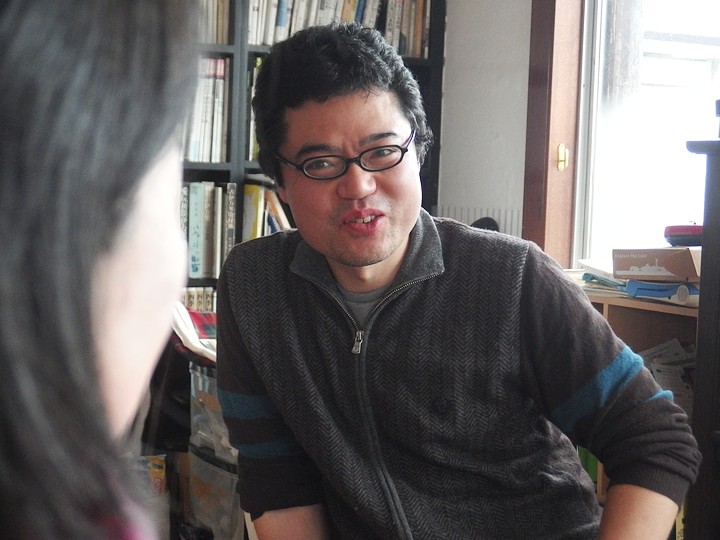
Hanada: For the upcoming exhibition next month, we’d like to talk with you about your new works. I’m looking forward to a lively exchange, teasing and responding to each other along the way.
Maiko Miyaoka: We’re both playing the fool, aren’t we? (laughs)
Hanada: So neither of you is playing the straight man, then. (laughs). Let’s start with Mr. Shimura’s black.
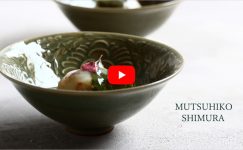
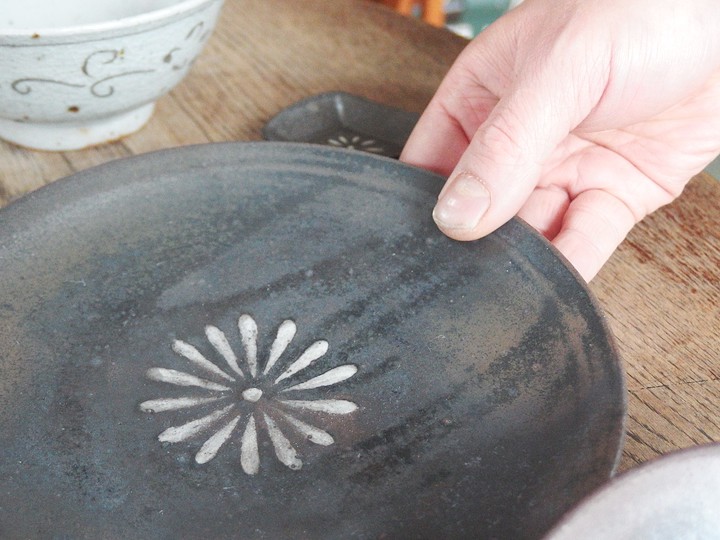
Mutsuhiko Shimura: Recently, I’ve been making this kind of black ware. The patterns are applied by brushing white slip onto the surface. From the late early to early middle Joseon period, decorations like this begin to appear.
Hanada: What prompted you to try this approach?
Mutsuhiko Shimura: When I was working at Mr.Sokichi Nagae’s place, I spent a lot of time looking at tenmoku, so I was drawn to black from the beginning.
Hanada: It’s different from the black that Mr. Nagae’s works with, but that experience helped you discover the appeal of black.
Mutsuhiko Shimura: At the same time, I felt that the rigid, tense feel of Northern Song wares wasn’t right for my own work.
Later, when I saw Joseon-period pieces in the Ataka Collection and at the National Museum of Korea in Seoul, I thought, “This is really good.”
Originally, many of those works were large—maebyong vases and the like—but I wanted to create tableware that could be used in contemporary life.
It took time, but I’ve finally reached a point where this black comes out in a satisfying way.
Hanada: Was achieving this “usable black” difficult?
Mutsuhiko Shimura: I wanted to produce this black using only natural iron. Through a lot of trial and error with different firing combinations, I eventually arrived at this black.
Hanada: You’ve always valued materials highly. What is the significance of aiming for a black achieved solely through natural iron?
Mutsuhiko Shimura: Using processed materials makes it easy to do many things, but when I look at the finished piece, something feels off.
Red Flesh and White Flesh
Hanada: Have you tried using them yourself in various ways?
Mutsuhiko Shimura: Of course!The red flesh really pops.
Hanada: If you say that, the white flesh would stand out beautifully too.
Mutsuhiko Shimura: I did try making soba cups, but with tea you can’t enjoy the color… It feels like you’re drinking something pitch-black, and I thought, “This doesn’t work.” You can’t really see the soba broth either… It turns into a blind tasting situation (laughs).
Hanada: How do you choose the motifs for the patterns?
Mutsuhiko Shimura: This chrysanthemum comes from around early Imari ware. This one is a typical ruyi-cloud motif from Joseon ware. I choose motifs based on how visually appealing they are and how well they suit the form.

Hanada: MS. Miyaoka, what do you think of Mr.Shimura’s new “black”?
Maiko Miyaoka: Huh?!
Hanada: Sorry for putting you on the spot.
Maiko Miyaoka: I let my guard down. I was just vaguely listening and thinking, “Oh, I see…” (laughs).
Hanada: When you first saw them, what impression did you have? Something like, “Hey, these are good,” perhaps?
Maiko Miyaoka: …Yes. That’s about it—“These are good.”
Mutsuhiko Shimura: She doesn’t really look at them much. Probably not that interested.
Hanada: (laughs)
Maiko Miyaoka: That’s not true—I do look at them!
Mutsuhiko Shimura: At the exhibition, she’ll say, “Oh, so you’re making things like this now.”
Maiko Miyaoka: Right, sometimes you discover things at the exhibition.
Hanada: You’re completely viewing it from a customer’s perspective (laughs).
Maiko Miyaoka: I’m usually too busy focusing intensely on my own work. I think Shimura is the same.
Mutsuhiko Shimura: That might be true.
Maiko Miyaoka: And asking, “What are you working on?” every time, you know… (laughs).
Hanada: That’s just your style as a pair.
The Rhythm Within a Tableware
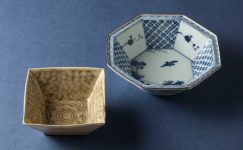
Hanada: This square plate is wonderful too.
Mutsuhiko Shimura: For dried sardines, for example.
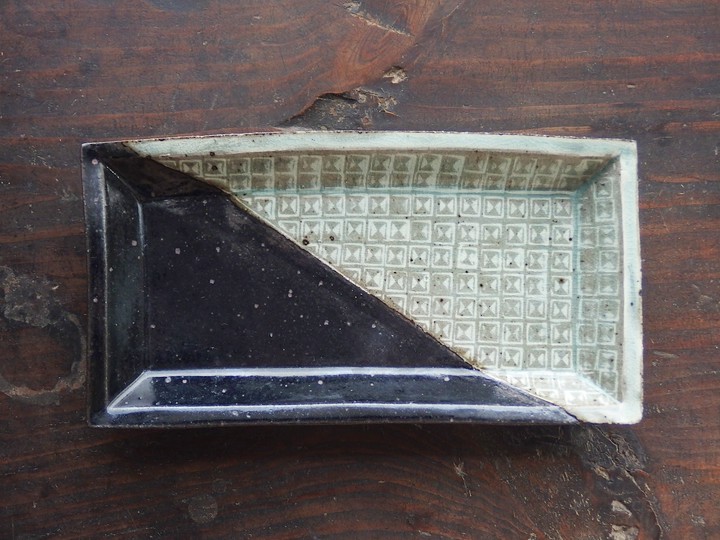
Hanada: The slightly shifted hakeme division really catches the eye. It has a great balance.
Mutsuhiko Shimura: Some Mishima sections are neatly aligned, while others leap around more freely. What I pay attention to is that each part stands on its own. Put another way, you could call it a sense of “rhythm.”
Hanada: Rhythm.
Mutsuhiko Shimura: Yes. Whether they’re orderly or irregular, I hope each piece conveys its own rhythm.
That Delicious Hitsumabushi
Hanada: Now, let’s move on to this piece.
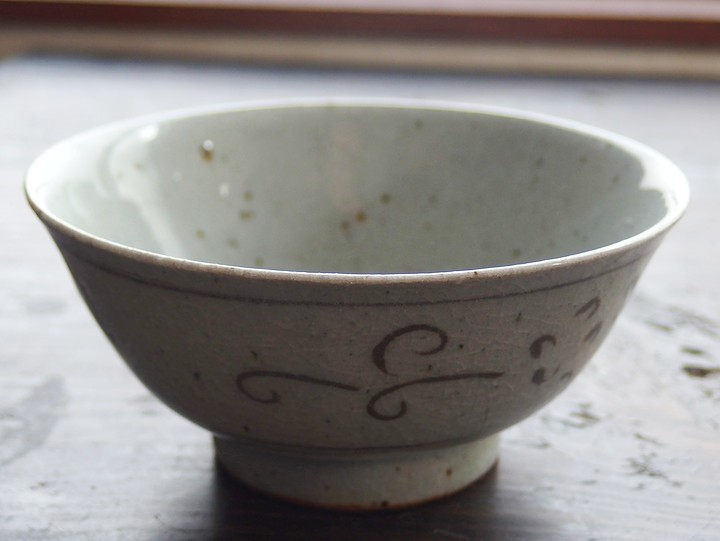
Mutsuhiko Shimura: This is inlay work. I scratch the surface and fill it with black clay. It’s based on pieces that appeared around the mid-early Joseon period. Up until now, I’ve mainly done white inlay, but I’d like to increase black inlay as well.
Hanada: What is the motif of this pattern?
Mutsuhiko Shimura: It’s probably a simplified peony.
Hanada: Ms. Miyaoka, is this the first time you’re seeing this piece?
Maiko Miyaoka: I’ve seen this one before (laughs).
Hanada: Is this a bowl? It could almost be mistaken for a rather large rice bowl.
Mutsuhiko Shimura: For people who like to eat a big serving (laughs).
Maiko Miyaoka: Maybe a small donburi.
Mutsuhiko Shimura: It works for simmered dishes, or bibimbap.
Maiko Miyaoka: Mini bibimbap.
Mutsuhiko Shimura: Noodles in broth, braised pork belly… it might even work for dessert.
Hanada: Ah, braised pork belly sounds great. The blocky shape would suit it well. Speaking of blocks, cubed tuna topped with grated yam would look beautiful too.
Mutsuhiko Shimura: Ochazuke would be good as well.
Maiko Miyaoka: And Hitsumabushi.
Mutsuhiko Shimura: I don’t usually make hitsumabushi at home, though.
Maiko Miyaoka: But when you bought eel at Tsukiji market and made it once, it was really delicious.
Mutsuhiko Shimura: Oh yes, that did happen.
Hanada: From filleting onward?
Mutsuhiko Shimura: Yes.
Hanada: Impressive.
Mutsuhiko Shimura: My family ran a tempura restaurant, and when I lived at home I filleted about a hundred conger eels a day, so you kind of pick it up naturally.
Hanada: Is the body structure similar between eel and conger eel?
Mutsuhiko Shimura: The cross-section of the bones is slightly different, but the basic structure is pretty much the same, I think. Oh, and lately I’ve also been working on white porcelain.
Hanada: Joseon white porcelain would be different from Ms. Miyaoka’s white porcelain, so that adds more variation.
Going to the Trouble of Making It a Gourd…
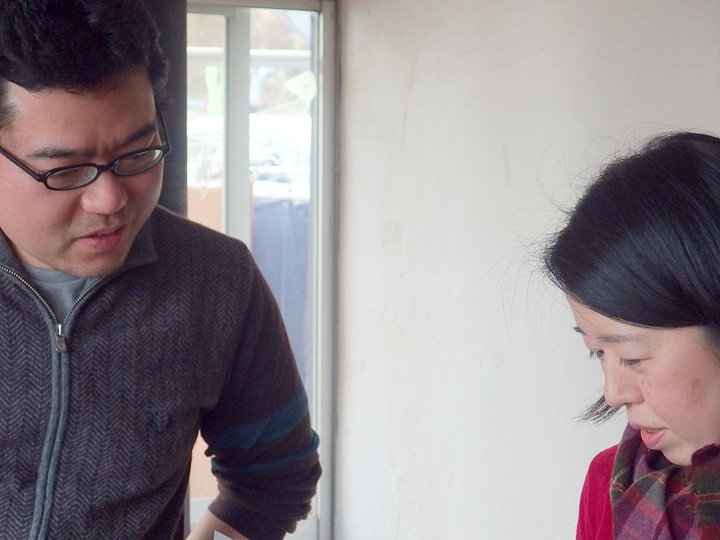
Hanada: Next, let’s move on to Ms.Miyaoka’s new works.
Maiko Miyaoka: Oh no, it’s my turn…
Hanada: (laughs) This gourd-shaped piece looks like it’s going to be very popular.
Maiko Miyaoka: It’s a take on Ko-Imari. On top of the gourd, there’s probably a gourd leaf layered over it.
Hanada: Layering motifs like this is something you often see. What do you find interesting about it?
Maiko Miyaoka: Don’t you find it interesting that after going to the trouble of making it a gourd shape, you then hide it with a leaf? You create a distorted form, and then boldly place a big leaf right in the center… And on top of that, filling the remaining space with shippo patterns is quite something. The composition is really fascinating.
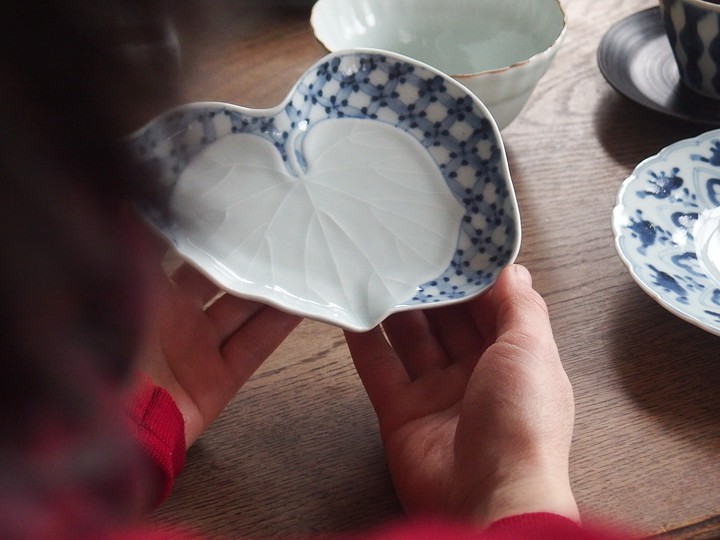
Hanada: There’s also charming decoration on the back… so many highlights.
Mutsuhiko Shimura: Restaurants would probably like this too.
Maiko Miyaoka: Would shirako work?
Hanada: Grilled shirako after marinating might be nice.
Mutsuhiko Shimura: Ah, cod milt.
Maiko Miyaoka: Were you imagining fugu shirako just now? (laughs)
Mutsuhiko Shimura: Yeah, a little. But cod would be good too.
Hanada: Well, either works. I was thinking of cod.
Maiko Miyaoka: (laughs)
Hanada: Ms.Miyaoka, you’ve made several other irregular shapeed plates as well.
Maiko Miyaoka: Fish-shaped ones, ones with two overlapping windmill palms…
Hanada: Those palm motifs were wonderful. There were chrysanthemum versions too. What do you find appealing about these irregular shapes?
Maiko Miyaoka: What I like are pieces that feel modern.
Hanada: Modernity. Is it something like playfulness?
Maiko Miyaoka: Partial underglaze blue decoration, for example… pieces where you can really feel the “design.”
Hanada: Mr. Shimura, any comments?
Mutsuhiko Shimura: Huh… this one?
Hanada: Let your guard down again? (laughs) When it’s the other person’s work, you both listen in a very relaxed way.
“Don’t Take It”
Hanada: Do you influence or inspire each other through your work?
Maiko Miyaoka: I do.
Mutsuhiko Shimura: Me too.
Maiko Miyaoka: Sometimes it feels like my molds are about to be taken (laughs).
Hanada: (laughs)
Mutsuhiko Shimura: She tells me, “Don’t take it.”
Maiko Miyaoka: And he says, “You’re not using that one, so it’s fine, right?” (laughs). Well, it’s not like it’s going anywhere, so I don’t really mind.
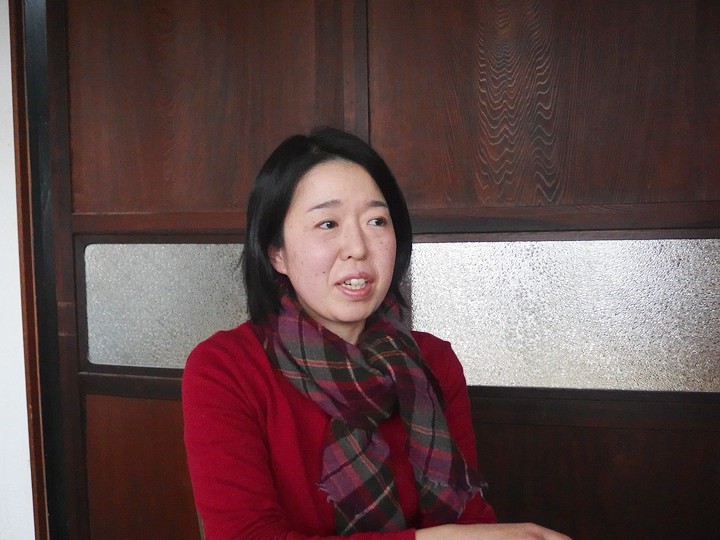
Hanada: There are quite a few molds that could work for either of you.
Maiko Miyaoka: I think it’s interesting.
Hanada: This gourd shape could work too.
Maiko Miyaoka: Celadon would look good on it. Maybe next time we should swap molds.
Mutsuhiko Shimura: The ones you’re not using, though (laughs).
Enjoying Imbalance
Hanada: Next, is this plate also a reinterpretation?
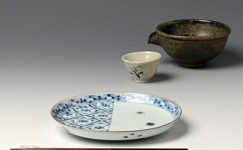
Maiko Miyaoka: Yes. The original is a bit larger. It’s “a Dutch copy of a copy,” really (laughs). Imari copied Delft, and then I copied that. I think the rim pattern is Dutch. The central motif is probably iris, and it feels very Japanese, which makes the combination with the lively Western pattern around it really interesting.
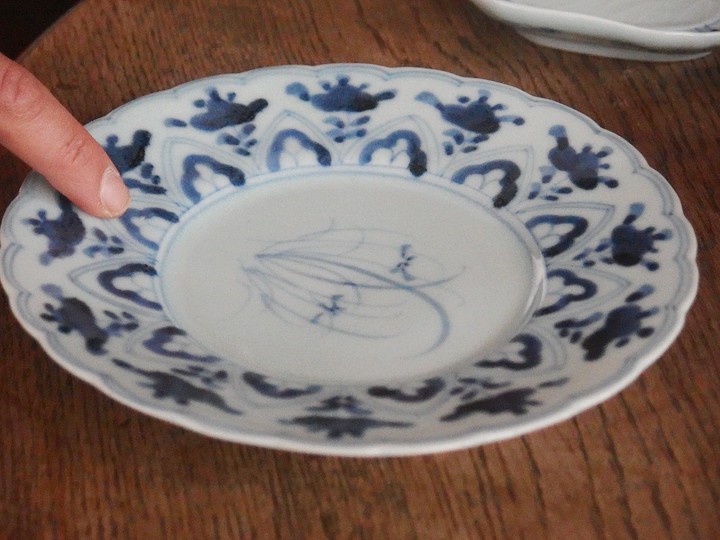
Hanada: It sounds unbalanced, but when you see the finished piece, it feels just right.
Maiko Miyaoka: When I saw it in photographs, I found that imbalance really intriguing.
White Porcelain with Lobed Rim
Hanada: And then there’s this lobed cup. This is Ko-Imari that I brought with me. Thank you very much.
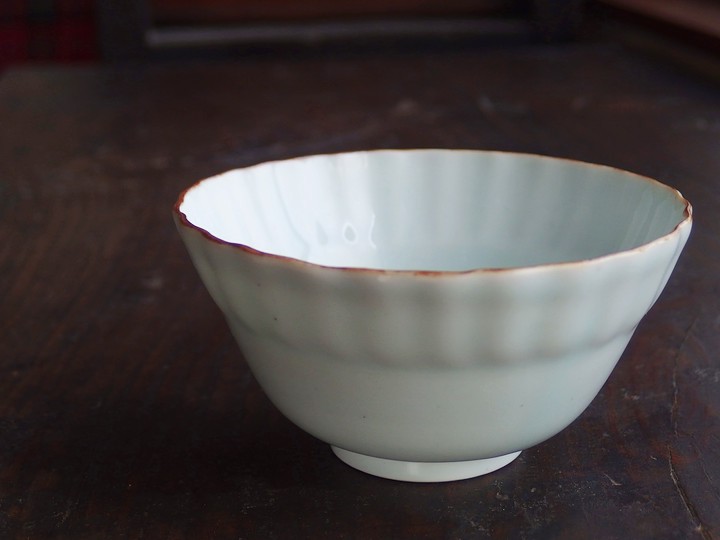
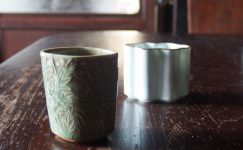
Maiko Miyaoka: I tried it, but when I looked at it later, the shape was slightly different.
Hanada: The original has a slightly softer, puffed-out rim. But it doesn’t bother me at all.
Mutsuhiko Shimura: The original is made extremely thin, isn’t it?
Maiko Miyaoka: Reproducing that with the clay and glaze I use would be impossible.
Hanada: I don’t think it’s necessary to go that far. I wasn’t expecting you to replicate that thinness. The iron tone at the rim came out just right.
Maiko Miyaoka: I think that was just a coincidence…
Hanada: (laughs) I had seen the iron-rimmed white porcelain lobed deep dish you originally made, so I hoped for something like that—and it turned out exactly so. What would you use this for?
Maiko Miyaoka: You can use it for almost anything.
Hanada: How about oysters with vinegar?
Maiko Miyaoka: I’d love that. Desserts would work too.
Mamekan, ice cream…
Hanada: That sounds refreshingly perfect.
Toward the Exhibition
Hanada: Finally, could each of you share a few words as we look ahead to February?
Mutsuhiko Shimura: Please go first.
Maiko Miyaoka: Huh?
Hanada: Pretending to yield while buying time (laughs).
Maiko Miyaoka: Having held several exhibitions at Hanada, I’ve come to recognize more familiar faces among the visitors, and I’m really looking forward to seeing them again. When you do something in the same place multiple times, it gradually becomes more comfortable—and more fun.
Hanada: There will be both new pieces and familiar staples, after all.
Maiko Miyaoka: There are also a few pieces with a charming feel, so I hope people will enjoy seeing them.
Hanada: All right, Mr. Shimura, have you had enough time to think? (laughs)
Mutsuhiko Shimura: This time, I’ve gone for a more subdued direction… though I suppose my work is always subdued (laughs).
Hanada: Even more subdued, then.
Mutsuhiko Shimura: I’ve incorporated original motifs into classical forms, and also made various versions of my standard pieces, so I hope you’ll come and see them.
Hanada: Will there be white porcelain as well?
Mutsuhiko Shimura: Just a little, but I think it will be ready in time.
Hanada: Thank you very much.
≪ END ≫「使える黒」を目指す
花田: 来月の展覧会に向けて、新作についてお話しを伺いたいと思います。
お互い、突っ込み合いながらのやり取りが楽しみです。(以下 花田-)
宮岡: 二人ともボケ役です(笑)。
-: 突っ込み役がいませんね(笑)。
まず、志村さんの黒。
志村: 最近、こういう黒を作っています。文様は筆で白い土をのせてゆきます。
李朝の初期後半から中期前半くらい以降、こういった装飾が出てきます。
-: やってみようと思ったきっかけは何ですか。
志村: 長江(惣吉)さんのところにいた時に、天目を見ていたので、元々黒に惹かれていました。
-: 長江さんが取り組んでいる黒とは違いますが、黒の魅力に気付いたきっかけになったわけですね。
志村: 一方で、北宋などのカチッとしていて緊張感のあるものは自分の仕事ではないな、とも思っていました。
その後、安宅コレクションやソウルの中央博物館で李朝のものを見て「いいな」と思いました。
元々は梅瓶、或いは大きいものが多いのですが、現代でも使える食器も作ってみたかったです。
時間は掛かりましたが、ようやく黒が良い感じに出るようになりました。
-: 「使える黒」の実現は大変でしたか。
志村: 自然の鉄だけでこの黒を出したかったんです。
焼き方のコンビネーションを試行錯誤して、この黒に至っています。
-: もともと、志村さんは素材を大事にされています。
自然の鉄だけで出す黒を目指すことの意味は何なのでしょうか?
志村: 加工されたものを使うと簡単に色々できますが、出来上がったものを見ると何か違うんです。
赤身も白身も
-: 色々、ご自身でも使ってみましたか。
志村: もちろん!赤身なんかは映えます。
-: と言われると、白身も映えそうです。
志村: でも、そば猪口を作ってみましたが、お茶は色が楽しめないし・・・。
真っ黒いもの飲んでいるみたいで「これは合わないな」と。
そばつゆも、よく見えない・・・。
ブラインドテイスティング状態になってしまいます(笑)。
-: 文様のモチーフはどのように選んでいるのですか。
志村: この菊は、初期伊万里あたりから。
こちらは李朝では典型的な如意雲です。
モチーフは、見た目の格好良さや形との相性で選びます。
-: 志村さんの新しい「黒」、宮岡さんから見ていかがですか?
宮岡: え?!
-: 突然質問してスミマセン。
宮岡: 油断していました。
「ああ、そうなんだー」とかボーっと聞いていた(笑)。
-: 最初見た時、どんな印象をもたれましたか。
「いいじゃん」みたいな感じでしょうか。
宮岡: ・・・・・。そうですね。「いいじゃん」って感じです。
志村: あまり見ていないんですよ。多分、興味がない。
-: (笑)
宮岡: そんなことないよー、見ているよー。
志村: 展覧会の会場で「こんなの作っているんだね」って聞かれますもの。
宮岡: そうそう、展覧会で発見することあるよね。
-: 思いっきり、お客さん目線ですね(笑)。
宮岡: 自分のものを必死に作っていることが多いので。
志村も同じだと思いますよ。
志村: そうかもしれないね。
宮岡: それに「なにやっているの?」って、いちいちねえ(笑)。
-: お二人のスタイルなのですね。
うつわの持つリズム
-: この角皿も、格好良いですね。
志村: メザシとか。
-: 掛分を少しずらしているのが目を引きます。
良いバランスですね。
志村: 三島の部分は、ちゃんと整列しているものもあるし、それぞれが跳ねているものもあります。
気をつけるのはそれぞれが、それぞれに成立していること。
言い換えると「リズム」とでも言えましょうか。
-: リズム。
志村: はい。
揃っていても、曲がっていても、それぞれのリズムが感じられると良いなと思います。
美味しかったひつまぶし
-: さて、次はこれです。
志村: これは象嵌です。ひっかいて、黒い土を埋め込んでいます。
李朝初期の中間くらいから出てきたものあたりをベースにしています。
今までは白の象嵌が多かったのですが、黒の象嵌も増やしていきたいと思います。
-: この文様、モチーフは何ですか。
志村: 恐らく牡丹を簡略化したものです。
-: 宮岡さん、これは今初めて見ましたか?
宮岡: これは見たことあります(笑)。
-: これは鉢ですか。大き目の飯碗に見えないこともないですが。
志村: 山盛り食べる人用(笑)。
宮岡: 小丼ぶりですかね。
志村: 煮物でもいいし、ビビンバとか。
宮岡: ミニビビンバだね。
志村: 煮麺とか角煮とか・・・。デザートでも良さそう。
-: あ、角煮いいですね。ブロックの感じで。
ブロックといえばマグロのぶつにトロロかけて盛り付けたらキレイでしょうね。
志村: お茶漬けも良いと思う。
宮岡: ひつまぶし。
志村: あまり家でひつまぶしはしないけどね。
宮岡: 築地でウナギ買ってきて、やってくれた時はとても美味しかったよ。
志村: そんなことあったね。
-: 捌きからですか。
志村: えぇ。
-: 流石ですね。
志村: 実家がてんぷら屋で、実家にいたときは穴子を毎日100はさばいていたので、まあ何となくできるんですよね。
-: 体の構造は一緒ですか。うなぎとあなご。
志村: 骨の断面の形が少し違いますが、基本的な構造は変わらないと思います。
そうそう、最近は白磁もやっているんです。
-: 李朝の白磁なら、宮岡さんの白磁とも違うでしょうし、バリエーションが増えますね。
わざわざ瓢にしておきながら・・・
-: 続いて、宮岡さんの新作にいきましょう。
宮岡: きちゃった、私の番・・・。
-: (笑)。
いかにも人気の出そうな、このひさご。
宮岡: 古伊万里の模しです。瓢の上に、恐らく瓢の葉が重なっています。
-: こうやってモチーフを重ねるの、よくありますよね。
宮岡さんにとってこのうつわの魅力は何ですか。
宮岡: わざわざ瓢にしておきながら、葉で隠してしまうというのが面白くないですか。
変形を作っておきながら、ドドーンと葉っぱを真ん中に乗っけてしまうという・・・。
更に余白を七宝で埋めつぶすのもなかなか。
構成がとても面白い。
-: 後ろにも可愛い絵付けがあって・・・。見どころ沢山です。
志村: 料理屋さんにも喜んでもらえそうだね。
宮岡: 白子なんか合うかな?
-: 白子のつけ焼きなんていいかもしれません。
志村: あぁ、タラのね。
宮岡: 今、ふぐの白子を想像していた?(笑)
志村: うん、ちょっとね。あ、でもタラですね。
-: まあ、どちらでも。僕はタラのつもりでした。
宮岡: (笑)
-: 宮岡さん、変形のお皿は他にもいくつか作られています。
宮岡: 魚型や、棕櫚が2つ重なっているものや・・・。
-: あの棕櫚も素敵でした。菊のものもありましたね。
変形のうつわの魅力って何でしょうか。
宮岡: 好きなのは、モダンさを感じるものです。
-: モダンさ。遊び心のようなものでしょうか。
宮岡: 部分的に染付をしたり・・・。「デザイン」が感じられるもの。
-: 志村さん、何かコメントありますか?
志村: えっ・・・これ?
-: 油断していましたか(笑)。
お二人とも、相手の話だと、リラックスして聞いているのですね。
「取らないで」
-: 仕事をしていて、お互い刺激や影響を受けることはありますか。
宮岡: 私はあります。
志村: 僕もあるよ。
宮岡: 私の作った型を取られそうになることもあります(笑)。
-: (笑)
志村: 「取らないで」って言われます。
宮岡: 「あれ、使ってないからいいでしょ」って言うんですよー(笑)。
まあどこかに持っていかれるわけではないので、いいんですけど。
-: 相互にいけそうな型、結構多いですよね。
宮岡: 面白いと思います。
-: この瓢も、いけそうです。
宮岡: 青磁なんか合いそう。
今度、型いろいろ取替えっこしてみようか。
志村: 使っていないやつね(笑)。
アンバランスを楽しむ
-: 続いて、このお皿も模しですか。
宮岡: はい。本物はもう少し大きいです。
「オランダのうつし+うつし」ですね(笑)。
伊万里がデルフトを模して、それを私が模しました。
リムの文様がオランダなのだと思います。
見込みは恐らく菖蒲ですが、これがすごく日本的な感じで、外の西洋的な賑やかな文様との組み合わせが面白い。
-: アンバランスに聞こえますけど、出来たものを見るとしっくり来ています。
宮岡: 写真で見たときには、そのアンバランスさが面白いなと思いました。
白磁輪花
-: そして、この輪花。僕が持参した古伊万里ですね。
有難うございます。
宮岡: やってみましたが、後から見たら少し形が違いました。
-: 本歌はもう少し縁がフワッと膨らんでいます。
でも、全く気になりません。
志村: 本歌は、作りがすごく薄いですよね。
宮岡: あれを再現するのは、私の使っている土と釉では無理です。
-: あそこまでやる必要はないと思います。
あの薄さを取り込んで欲しいわけではなかったので。
縁の鉄の感じも丁度良く出るものですね。
宮岡: それは偶然かと思います・・・。
-: (笑)。
宮岡さんが元々作っていた縁鉄の白磁の輪花深皿を見ていたので、あんな感じで作ってもらえたらいいなと思っていましたが、その通りになりました。
これは、何に使いましょうか?
宮岡: 何でも使えますね。
-: 酢牡蠣はいかがでしょう。
宮岡: 食べたいですね。デザートもいいですよ。
まめかん、アイスクリーム・・・。
-: 涼しげで良いですね。
展示会に向けて
-: それでは、2月に向けてそれぞれ一言いただけますか。
志村: お先にどうぞ。
宮岡: え?
-: 譲っているフリして、時間稼ぎ(笑)。
宮岡: 花田さんで何回かやっているうちに、お顔が分かるお客様も増えてきたので、お会いできるのを楽しみにしています。
同じところで何回かやっていると、段々居心地よくなってきて、楽しくなってきます。
-: うつわは新しいものも定番もありますものね。
宮岡: 可愛い感じのモノもいくつかありますので、ご覧頂きたいです。
-: さあ、志村さん、考える時間は十分でしたか(笑)。
志村: 今回は渋め系で・・・。まあ、いつも渋いですけど(笑)。
-: 更に渋いと。
志村: 古典にオリジナルの文様をいれたり、今までの定番も色々作ったりしましたので、是非お越し下さい。
-: 白磁も出てきますか?
志村: ほんの少しですが、間に合うと思います。
-: 有難うございました。
≫志村睦彦さんのうつわはこちらから≪
≫宮岡麻衣子さんのうつわはこちらから≪
関連記事はこちら