

English version of the interview here.
The Beginning of My Journey with Knives
Hanada: Could you tell us how you came to start making knives?
Hideyuki Hirabayashi: I originally admired traditional swordsmiths.
When I told my parents, they said, “You’re attending a college-prep school—what are you suddenly talking about?” (laughs)
Hanada: I can see why they felt it was “sudden.”
What initially drew you to swords?
Hideyuki Hirabayashi: I liked archaeology and history, and at the time I was really into the novelist Shotaro Ikenami.
But I didn’t want to worry my parents, so I decided to go to university first.
Hanada: What became of your passion for swords after you started university?
Hideyuki Hirabayashi: I asked various people for advice, but all I heard was, “You can’t make a living,” “It’s dangerous,” “There’s no need for it anymore,” and so on.
While all that was happening, I read an essay about a French train ride where a local female college student casually took a knife and an apple out of her bag, peeled it, and started eating it.
It instantly brought back memories from my own childhood—
using a knife in the nearby hills to make toys out of bamboo or peel nuts and berries.
But looking around me now, all I see is the danger or strangeness associated with blades.
We hear unpleasant news about them too.
I even heard from someone at a pencil company that “most new employees can’t sharpen a pencil with a knife.”
That’s when I began thinking, “A knife, as a tool, should have a much better image than this.”
Hanada: A knife as a tool…
Hideyuki Hirabayashi: During the earthquake disaster, people said that not only could they not make a fire, but they also “couldn’t do many things because they didn’t have a blade.” Even something like opening tough packaging.
In that sense, a knife is something that “makes things possible just by having it.”
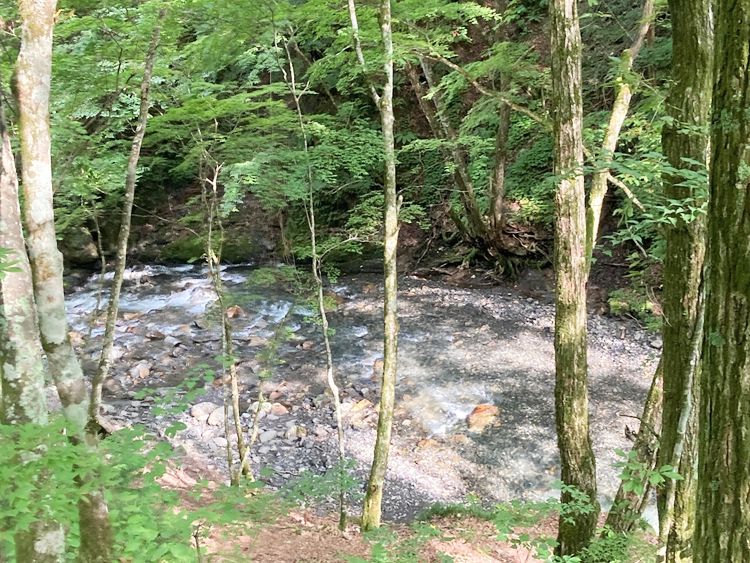
I grew up close to the mountains, so going out without a blade makes me uneasy.
For example, even if I see a sign warning about bears, just having a knife gives me some peace of mind— even though I know I can’t actually fight one (laughs).
A Reliable Companion
Hanada: What does “handcrafting knives” mean to you?
Hideyuki Hirabayashi: Japan has had highly advanced blade-making techniques since long ago. You can see this clearly in forged tools.
We also care deeply about the quality of the materials themselves, such as steel.
This falls under metallurgy—there are many types of steel materials.
Simply put, carbon hardens steel, but you can add chromium for rust resistance and make stainless steel, add rare metals, use lasers, apply pressing methods, use special solutions, or supercool the steel after hardening…
There are countless approaches.
Hanada: What kinds of materials do you personally use most often?
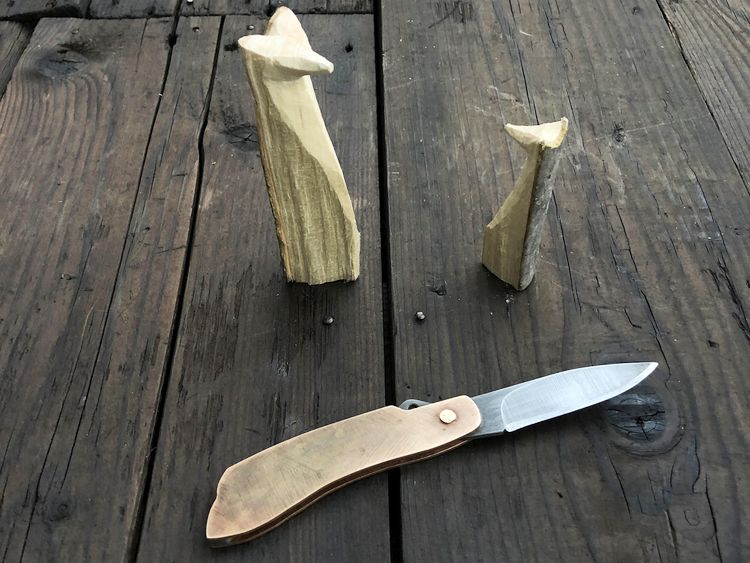
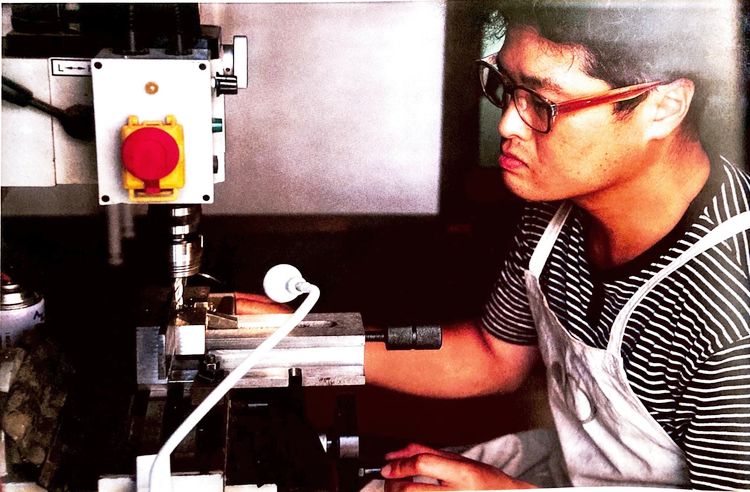
Hideyuki Hirabayashi: I mostly use stainless steel. I cut and shape it all by hand.
Hanada: What do your knives represent for the user?
Hideyuki Hirabayashi: A companion… I suppose. Like a car you keep for years, or a pair of shoes you always end up wearing.
You can use it as a kitchen knife, for mountain work—really for everyday tasks of any kind.
Handmade knives aren’t about being “generally convenient for everyone,” but rather about “matching the specific hands of each user.”
If someone has poor eyesight, I adjust the usability; if they have a unique grip, I adapt to that.
The strength of handmade work is its flexibility—though I can’t mass-produce, I can tailor things.
Chopsticks are similar: the ones that feel best differ from person to person.
Looking Good in the Outdoors
Hanada: How do you think about the overall form of your knives?
Hideyuki Hirabayashi: Besides function, I think appearance and atmosphere—elements that create a sense of “I want to own this”—are also important.
Hanada: There’s certainly a hobby aspect to it.
Hideyuki Hirabayashi: Recently, more people enjoy outdoor activities.
A friend who likes stream fishing once told me, “A good knife is too precious to drop or lose, so I take a box cutter instead.”
Even though he uses really cool clothing and fishing gear (laughs).
From what I’ve seen, many outdoor enthusiasts surprisingly pay little attention to knives, so I want to introduce—even in small ways—knives that look cool in my own style.
Hanada: I understand why some people say your knives are “too precious to take outdoors.” Losing one would be heartbreaking (laughs).
Hideyuki Hirabayashi: It’s flattering, so I don’t know what to say (laughs).
Bringing Knives Closer to Everyday Life
Hanada: Is there anything you’d like to pursue going forward?
Hideyuki Hirabayashi: There are issues I need to overcome, but I’d like to hold workshops someday.
Something like parents and children using folding knives together, with the father teaching the child how to handle them.
Hanada: When knives are familiar from childhood, like in your case, perspectives really change.
Hideyuki Hirabayashi: There’s an elementary school in Nagano where students receive a *Higonokami* knife as an entrance gift. They even keep whetstones at the hallway sinks so kids can maintain the blades themselves.
I’d like to do something like that in a workshop.
Nowadays, kitchen knives and such are inexpensive, so when they become dull, many people simply replace them—almost like swapping out a cutter blade.
If possible, I want people to maintain and care for their knives themselves, and let them grow with use.
Hanada: When it comes to blades—especially knives—people tend to focus on the risks.
Hideyuki Hirabayashi: A knife *can* be used with ill intent, and depending on the design, it might even look aggressive. The image is often “that looks painful.”
But I want people to feel, right after that, “but it’s incredibly useful.”
I want them to enjoy having a tool as a companion—and I plan to keep working toward that.
≪ END ≫
ナイフへのきっかけ
花田:平林さんがナイフを作るようになった経緯を教えていただけますか。(以下花田-)
平林:元々、刀師に憧れていました。
親に話したら「進学校に通いながら、突然何を言い出すんだ」と(笑)。
-:言われたほうは「突然」でしょうね。
なぜ刀に興味を持たれたのですか。
平林:考古学や歴史も好きでしたし、当時池波正太郎にはまっていました。
親に心配もかけたくないし、一旦大学には行くことにしました。
-:刀への思いはどうなったのでしょうか。
平林:色々な人に相談したのですが「食っていけない」とか「危ない」とか「必要ない」とか…
そんな感じでした。
そんな中、あるエッセーで「フランスの電車で、現地の大学生の女性が徐にナイフとリンゴをカバンから出して、皮を向いて食べ始めるのを見た」という話を読んだんです。
自分が子供のころのことがみるみる思い出されてきました。
近くの野山でナイフを使って、竹でおもちゃを作ったり、木の実の皮をむいたり…。
一方で今の自分のまわりを見れば、刃物の危険さや特異さばかりが目立っているなと。
良くないニュースも見聞きしますしね。
「新入社員のほとんどがナイフで鉛筆を削れない」と鉛筆会社の人に聞いたこともありました。
そこから「道具としてのナイフはもっとマシなはずだよな」と思い始めたんです。
-:道具としてのナイフ…。
平林:震災の時にも「火をつけられない」という問題と共に「刃物が無いから色々なことができない」という話がありました。固いものを空けられないとか…。
そういう意味でも「持っていれば何とかなる」というのがナイフなんです。
僕は山が身近にある中で生まれ育ったので、刃物を持って出かけないとなんだか不安です。
例えば、野山に入る時「熊注意」なんていう貼り紙があってもナイフがあると安心感はあります。
実際戦えるわけではないんですけど(笑)。
相棒として
-:平林さんにとってナイフを手作る意味とは何なのでしょうか。
平林:昔から日本は刃物の製造技術が高いです。打ち刃物を見ても分かりますよね。
そして、鉄などの材料そのものの質にもこだわる。
冶金という分野になりますが、様々な鉄鋼材があります。
シンプルに言えば鉄を固くするのは炭素なんですけど、クロムを入れて錆に強くしてステンレスにするとか、レアメタルを入れるとか、レーザー使うとか、プレスするとか、特殊な溶剤に入れるとか、焼き入れ後に超低温冷却するとか…。
もう本当に多種多様です。
-:平林さんはどの辺りの材料を使うことが多いのですか。
平林:材料はステンレスが一番多いです。それを手作業で切り出していきます。
-:平林さんが作るナイフは、使い手にとってどのようなものなのでしょうか。
平林:相棒…ですかね。長く付き合う愛車とか、なぜか履いてしまう靴のような。
包丁として使ったり、山仕事で使ったり…普段の雑用に使ってもらえれば何よりです。
それと、手作りのナイフというのは「多くの人にとって満遍なく便利」というよりは「一人一人の手に合わせていく」というほうに近いと思います。
目が悪い人ならそれなりに使いやすくしたり、独特な手の癖に合わせたりとか。
大量に作れない代わりに、小回りが利くのは手作りの強みです。
箸も似たようなところありますよね。人によって使いやすい箸は違う。
アウトドアでも格好よく
-:全体のかたちについてはいかがですか。
平林:機能に加えて、見た目や雰囲気が魅力的で「所有欲」を感じられるような要素も大切だと思っています。
-:趣味の世界の部分もあります。
平林:最近アウトドアのアクティビティを楽しまれる方、多いですよね。
渓流釣りが好きな人で「いいナイフは落としたり失くしたりするともったいないからカッターを持って行く」と言っている方がいました。
ウエアや釣り道具はすごく格好いいものを使っているのに(笑)。
僕の知る限り、アウトドア派も意外と刃物には無頓着なので、わずかながらでも僕なりに格好いいナイフを広げていきたいです。
-:平林さんのナイフを「もったいないからアウトドアに持って行けない」という人の気持ちも分かります。だって、無くしたらショックですもの(笑)。
平林:嬉しい評価でもあるので、何とも言えないですね(笑)。
身近に感じてほしい
-:これからしていきたいこと、何かありますか。
平林:クリアすべき課題はあるのですが、ワークショップをやってみたいです。
折りたたみナイフを親子で使ってもらって、お父さんが子供に使い方を伝える、みたいな。
-:平林さんのように小さいころから身近に感じておくと、刃物への見方が変わりますね。
平林:長野に肥後守を入学祝いにプレゼントする小学校があるんですが、そこは廊下の手洗い場に砥石が置いてあって、自分たちで手入れするんです。
そういうこともワークショップでやってみたいなと思います。
最近は包丁などは、価格的にも本当に気軽に買えるので、切れなくなると買い替える人が増えているそうです。カッターの刃を取り換えるような感覚で。
出来れば自分で手入れをして自分の刃を作っていってほしいなと思います。
-:刃物の中でも、特にナイフについては、どうしてもリスクに目が行ってしまいます。
平林:ナイフって悪意のある使い方もできてしまいますし、デザインによっては攻撃的に見えてしまうかもしれません。イメージとしては「痛いよね」って。
僕としては、そのあとに「でも便利だよね」って思ってもらいたい。
相棒としての道具との付き合いも楽しんでほしいし、そうなるよう、これからも取り組んでいくつもりです。
≫平林秀幸さんのうつわはこちらから≪
関連記事はこちら