



English version of the interview here.
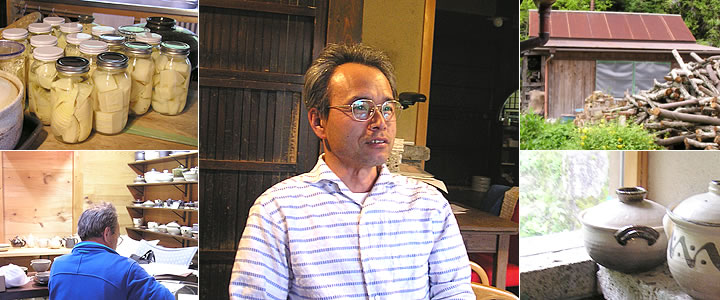
“Front and Center in the Cupboard” — Toshiki Sugimoto
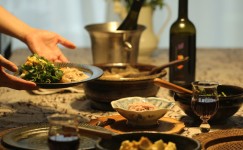
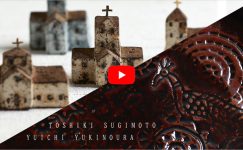
Toshiki Sugimoto’s tableware is rooted in exceptional skill and an innate sense of design. Since his debut at Hanada, his circle of admirers has continued to grow. For the upcoming exhibition in May, he is preparing pieces that reflect his signature approach, subtle personal preferences, and functional warmth.
Hanada: Did you step straight into the world of ceramics after finishing school?
Toshiki Sugimoto : I attended high school in Shigaraki, and right next door was the ceramic research center. After graduating, I spent two years there.
Hanada: Was it an easy decision for you?
Toshiki Sugimoto : Well, it was the only option that came to mind, so there was no reason to hesitate (laughs). Around graduation, everyone was securing jobs, and my homeroom teacher asked, “Sugimoto, what are you going to do?” So I just said, “I’ll go downstairs.”
Hanada: Downstairs?
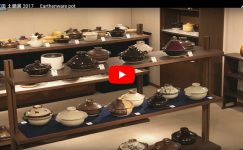
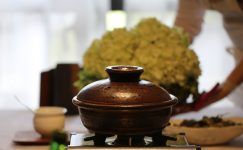
Toshiki Sugimoto : We called it “downstairs” because the research center was at the bottom of the hill from our high school. After finishing my time there, I spent nine years training at a studio in Kyoto, where I also worked on hand-painting. No potter’s wheel work at all—just two straight years of meticulous painting, like Shonzui patterns. After that, I spent seven years at Doraku.
Hanada: So you worked as a painter. I always admired how deftly you painted barley motifs, and now it all makes sense. Still, coming from a painting background, going to Doraku isn’t usually the obvious path.
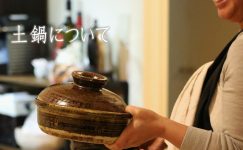
Toshiki Sugimoto : A senior colleague at the Kyoto studio happened to be an alumnus of Doraku and invited me over. To be honest, I hadn’t even heard the name before. I actually asked, “What is Doraku?” When I arrived, I realized, “Ah, this is a place that makes donabe clay pots.” I suppose ignorance is bliss—when you don’t know any better, you can dive into anything (laughs).
Hanada: Sometimes that works out for the best.
Toshiki Sugimoto : Pretending to know everything is the hardest way to live (laughs). Since I already had experience, I sat straight down at the wheel and began throwing. At the time, there were three craftsmen who specialized entirely in clay pots. One of them was truly extraordinary. He had incredible technical mastery. Even around eighty years old, he was throwing large, about 40 cm in diameter clay pots at astonishing speed. You’d set a lump of clay on the wheel, and in less than a minute, a finished clay pot was standing right there. Just looking away for a second, and it was done. It was unbelievable—so fast you couldn’t even process what he was doing. Looking back, his was the first and last wheel work I’ve seen that felt like it had a physical speed and energy to it.
Hanada: You had a great mentor right beside you.
Toshiki Sugimoto : He wasn’t someone you could easily emulate. I could only watch in awe.
Hanada: Did you set him as your goal?
Toshiki Sugimoto : No, that was impossible (laughs). Technical skill aside, that unique presence and style isn’t something you can simply copy. It comes down to an inborn sensibility. Once you see something like that… you can’t go around saying you’re good at the wheel.
Hanada: For you to say that, he must have been truly exceptional. Did you speak with him often about technique?
Toshiki Sugimoto : Not at all (laughs). He wasn’t the type to explain things, and knowing that, I never asked. For him, it was all muscle memory and intuition. But really, he was incredible.
Hanada: Changing the subject a bit, your work is always distinguished by its practical, everyday usability.
Toshiki Sugimoto : I use tableware constantly myself, and as you use pieces, you discover new ways to enjoy them. I simply make what I feel I need in my own daily life. Surprisingly, what I need often isn’t available out there, so I end up having to make it myself (laughs).
Hanada: So your creative process starts with utility—making something because it’s needed, rather than just wanting to create for its own sake.
Toshiki Sugimoto : What brings me the most joy is when a customer says, “This is exactly what I was looking for.” It gives me a sense of relief to know it resonated, because after all, these are items meant to be used.
Hanada: Your pieces have a subtle nuance to them. At first glance they seem simple, yet the shapes are refined and the lines are beautiful. They appear effortless, but everything is carefully considered. Nothing feels intrusive; everything feels natural and welcoming. I imagine that comes from your solid technical foundation.
Toshiki Sugimoto : I’m not used to compliments (laughs).
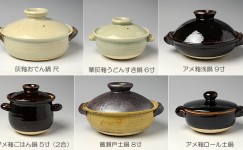
Hanada: Allow me one more (laughs). Your “Roll Donabe” was wonderful as well. It’s certainly not a typical clay pot.
Toshiki Sugimoto : Clay pots with flat bottoms are quite rare. A flat base makes it much easier to simmer ingredients gently with minimal liquid—perfect for dish preparations like cabbage rolls. That is actually where the name “Roll” came from.
Hanada: At first, I wondered what “Roll Donabe” referred to. I even thought it might be about the rolled shape of the handles (laughs).
Toshiki Sugimoto : Truth be told, I hadn’t made cabbage rolls very often before that. But I thought making them in a pot like that would be enjoyable, and that was the starting point. It’s also great for simmering whole fish.
Hanada: Simmered fish is a wonderful match.
Toshiki Sugimoto : In a standard rounded clay pot, the tail often sticks out above the liquid.
Hanada: That’s very true—it’s a small detail, but a noticeable one (laughs). Still, making the base of a clay pot flat must require a lot of care during production.
Toshiki Sugimoto : From a structural perspective, a flat base isn’t ideal for a clay pot because it puts stress on the corners. But that’s a maker’s concern. It would be a shame for someone to compromise or struggle while cooking just because of how the pot is made.
Hanada: That reflects your philosophy so well—starting from practical necessity and designing thoughtful solutions around it.
Toshiki Sugimoto : I kept the bottom flat while rounding the inner corners. Flat-bottomed pots are relatively common in Western cookware, after all.
Hanada: That story illustrates your approach perfectly. Looking back, what would you say is the most important value in your craft?
Toshiki Sugimoto : I want to make tableware that people reach for effortlessly during busy meal preparations.
Hanada: The kind of piece that stays right at the front of the shelf, easy to grab every time.
Toshiki Sugimoto : Exactly. Above all, I want them to be used every day. To achieve that, there are still so many things I want to explore and refine.
Hanada: Are you referring to expanding your range and direction?
Toshiki Sugimoto : Yes, in terms of shapes, firing methods, and glazes. The dining table, along with the food served on it, evolves over time.
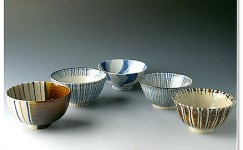
Hanada: Looking ahead to the May exhibition, those flower-shaped (Rinka) bowls are lovely.
Toshiki Sugimoto : (Smiles) I’m glad you like them.
Hanada: What inspired you to present them for May?
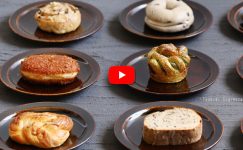
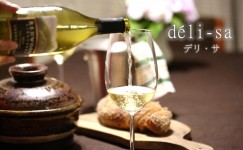
Toshiki Sugimoto : Once I started making them, I couldn’t stop (laughs). I wanted a bowl designed specifically for serving bread.
Hanada: Bread?
Toshiki Sugimoto : I’ve been baking my own sourdough bread recently using natural yeast. So these pieces were inspired by breakfast—bread bowls and individual serving plates. I couldn’t find anything that felt quite right on the market. I also do a lot of smoking in the winter, so they work wonderfully for roasted beef or smoked chicken too. When you make those yourself, they’re delicious.
Hanada: You really enjoy cooking and baking!
Toshiki Sugimoto : I’ll cook just about anything (laughs).
≪ END ≫
「食器棚最前列へ」 杉本寿樹
卓越した技術と天性のセンスが支える杉本寿樹さんのうつわづくり。
花田登場以来、杉本ファンは増える一方です。
5月の企画展に向けては、いつもの杉本さんらしく、
でも少し自身の好みも取り入れたうつわを考えてくれているようです。
花田:杉本さんは学校を出て、そのまま焼き物の世界に入られたのですか?
杉本:信楽の高校に通っていたのですが、そのすぐ隣に窯業試験場があって、卒業後そこに2年いました。
花田:迷わず、ですか?
杉本:それしか思い付かなかったので迷いようもなかったんだけど(笑)。
卒業時、まわりが就職を決め始めていて「杉本、お前どうすんだ」って
担任の先生に聞かれたので「じゃあ、下行きます」って話になって。
花田:下?
杉本: 「下」ってのは、その試験場が高校から坂を下ったところにあったから、そう呼んでいたんです。
試験場を終了した後は、京都の工房で修業をしていました。京都には9年。絵付けの仕事もやっていました。
轆轤はまったく無し。祥瑞等の細かい絵を2年間ひたすら描いていたんです。それから土楽に7年。
花田:絵付けの仕事をしていたのですね。麦藁なんかも器用に描くなあ、と思っていたのですが、それで納得しました。
でも、絵付けの仕事なんかしていたら普通、土楽へ行こうなんて思わないですよね。
杉本:京都の工房の先輩がたまたま土楽出身で、誘われたんですよ。ただ、土楽のことは名前すら知らなかった。
「土楽ってなんですか?」って。で、行ってみたら「あ、土鍋屋さんなんだ、ここ」って。
ま、怖いもの知らずというか、知らないと何でもできますね、人生(笑)。
花田:そっちの方が得です。
杉本:知ったかぶるのは一番つらい(笑)。
さて、僕は経験者だったので、すぐ轆轤台に座って、作り始めました。
で、当時は土鍋ばっかり引いている職人の人たちが3人いたかな。中でも、1人凄い人がいましてね。
抜群にうまいの、轆轤が。当時80歳位で尺三の土鍋をビュンビュンひくんだから。
土の塊を轆轤に据えて1分もしないうちに土鍋がそこにあるんですね。
こっちがちょっとよそ見している隙ですよ。あれは凄い。
速過ぎて何をやっているのか分からない。
今思えば、ビュンビュンって音が聞こえてきそうな轆轤はあの人のが最初で最後でした。
花田:良いお手本が近くにいたのですね。
杉本:お手本になんてならない。ぼーっと見てるだけ。
花田:目標には据えていたのですか?
杉本:いや、あれは無理だ(笑)。
技術的な部分もあるかもしれないが、それ以上にあの独特のスタイルは真似できるもんじゃない。
あれは、持って生まれたセンスなんだと思います。
あれを見てしまうとですね・・・「自分は轆轤が得意」なんて言えない。
花田: 杉本さんがそこまで言うってのはよっぽどですね。その人とはよく轆轤の話をしたのですか?
杉本:全く(笑)。彼はそういうこと説明するような人ではないし。
僕もそう思うから、聞こうともしないし。
彼の場合、体や感覚で覚えているから。いやあ、重ね重ね、あれは凄かった。
花田:さて、話変わりますが、とにかく「使えるうつわ」であるのが杉本さんの仕事です。
杉本:自分自身、うつわを使いまくっているので。使っているうちに用途も広がってきますよね。
毎日暮らしていて、自分に必要なものを作っている、という感覚です。
意外と巷には自分に必要なものがなくて、自分で作らざるを得ない(笑)。
花田:うつわ作りの始まりは「必要」だから。要るからつくる、と。
「作りたいもの」じゃなくて、「必要なもの」なわけです。
杉本:一番うれしいのはお客さんから「こんなの探していた」って言われる時。
「あ、分かってもらえた」と、胸をなで下ろすわけです。所詮、使うものだから。
花田:ちょっとした具合なんですよね、杉本さんのうつわって。
一見平凡だけどかたちがお洒落だったり、ラインがきれいだったりします。
さりげないけど、計算されているんです。
見ていても、どこにも引っかからないんですよ。スーッと入っていく。
ベースに抜群の技術があるからかとは思います。
杉本:褒められるのは嫌だな(笑)
花田:じゃあ、もう一つだけ良いですか(笑)。
ロール土鍋もよかったです。決して普通の土鍋ではありません。
杉本:底が平らな土鍋ってあまりないですから。底が平らだと、ひたひた煮も作りやすいでしょう。
まさしくロールキャベツを作る状態。名前の「ロール」はそのロールです。
花田:最初ロール土鍋って何のこと言っているのかな、って思いました。
取っ手がロールしているからかな、なんて考えてみたり(笑)。
杉本:ロールキャベツもね、実はそれまではあまり作らなかった。
そんな土鍋があったらロールキャベツ作るの楽しいだろうな、って始まった。あと煮魚。
花田:煮魚はいいですね。
杉本:普通の土鍋だと煮汁からしっぽ飛び出たり、はみ出たりするでしょう。
花田:そうそう、意外と気になります、あれ(笑)。でも、土鍋の底を平らにするのは神経使いませんか。
杉本:土鍋の形として、決して好ましい形とは言えないんです。
角に負担がかかってしまうからね。でも、それは作り手側の話。
だからと言って、料理する時にしづらいもので我慢しながら料理するのはつまらない。
花田:杉本さんらしい発言ですね。いつも通り「だって必要でしょう」と。で、工夫が始まります。
杉本: 角を丸くしながら、でも底はフラットにしました。西洋には比較的フラットな底を持つ鍋は多いですけど。
花田:杉本さんの仕事ぶりが良く分かる話ですね。
改めて聞きますが、杉本さんがうつわ作りで大事にしていることはなんでしょうか?
杉本:普段忙しく料理をして食卓に出さなければいけない場面で、つい使ってしまううつわを作りたいですね。
花田:食器棚の最前列、しかも一番上にあるような・・・。
杉本: そうそう。なにより毎日使ってもらいたいんです。そのためには、やるべきこと、やりたいこともまだまだ沢山ありそうだな。
花田:幅、というか広がりの部分でしょうか?
杉本:そうですね形も勿論、焼き方も。釉薬も探していきたいんですよ。
食卓というのは料理も含めて時代とともに変わっていくものだから。
花田:さて、5月の企画展。あの輪花の鉢、素敵ですね。
杉本:ふふふ、いいでしょう。
花田:どうしてまたあれを5月に?
杉本: あれはやり始めたら止まらなくなった(笑)。というか、パンを盛り付ける鉢が欲しかったんです。
花田:パン。
杉本:最近自分でパンを焼くんです。酵母も天然ですよ。
というわけで、あれらは朝食のイメージ。パン鉢に銘々皿に。
でも丁度いいものがなかった。あと、冬場は燻製もよくやるんだけどそれ用にもね。
自分で作ると、ローストビーフもスモークチキンも美味しい。
花田:焼くの、ほんと好きですね。
杉本:なんでも焼きますよ(笑)