



English version of the interview here.
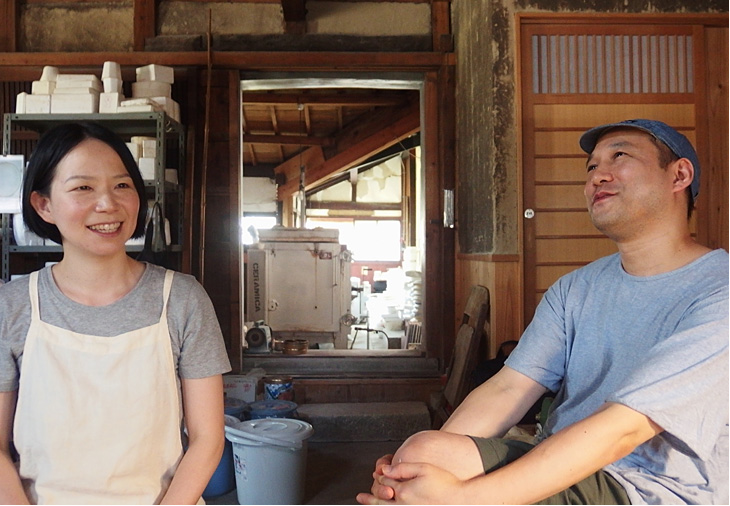
Two of Us Without “Musts”
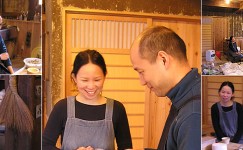
Hanada: How did you come to focus on pottery and tableware within the world of making things?
Arata Anzai: I like eating, and I’ve always been interested in things related to clothing, food, and shelter.
I think it all started with playing with clay as a child.
I would look at old items stored in my mother’s family warehouse, and from around high school, I admired the lifestyle of acquaintances who fired wood kilns.
I also looked at books by Shoji Kamoda and Lucie Rie that we had at home…
All of these gradually converged, and pottery grew into a major area of interest for me.
There was a time I was interested in flashy contemporary art, but tableware, useful tools for daily life, seemed to fit me better.
Atsuko Anzai: Since I was little, I loved moving my hands and watching hands at work.
I would be captivated by the hands of a local pickling shop owner scooping pickles from a barrel, or a baker slipping loaves of bread neatly into just-right-sized bags.
The movements of hands are just beautiful.
Hanada: It’s been quite a while since you two started making things together. From the start, did you share a similar direction?
Arata Anzai: I felt that our tastes were similar.
Atsuko Anzai: There wasn’t anything that was completely different. At first, we were hesitant about working together, but once we started, it went surprisingly smoothly.
Arata Anzai: At the beginning, she seemed a bit more resistant, maybe.
Atsuko Anzai: Haha. But once we started, we shared meals together and naturally talked like, “It would be nice if we had this,” and things progressed.
Of course, we had many failures along the way.
Arata Anzai: There were quite a few, yes (laughs).
Hanada: You trained in Arita and Kyoto. Did you notice any differences?
Arata Anzai: The wheel rotation for trimming the foot is opposite, but now it’s a mix of various styles—basically a combination.
Atsuko Anzai: You’re flexible, Arata (laughs).
Arata Anzai: If you say that nicely, yes, flexible. In reality, rather careless (laughs).
We weren’t born into potter families, so we don’t feel many constraints. But the habits from where we first learned still linger.
Atsuko Anzai: For better or worse, we have no “musts” at all.
Our interests include music, ethnic clothing and textiles, architecture… many things inspire our work.
Hanada: Perhaps that’s the great thing about your work—it doesn’t feel constricted… it’s open.
Atsuko Anzai: I’m glad you say that. Sometimes the pieces might be a bit awkward, maybe because we create without caring about existing rules.
Arata Anzai: She is more sensitive about usability.
Atsuko Anzai: I do use them more often, after all.
Arata Anzai: I tend to pursue form more simply.
Atsuko Anzai: I don’t want pieces that are just practical. I try to find the right balance. If something isn’t usable, people won’t pick it up…
Arata Anzai: But if the form isn’t good, it probably won’t catch the eye either (laughs).
Atsuko Anzai: I also don’t like something that’s just stylish.
Hanada: Something that’s just stylish would seem uncool to you both?
Arata Anzai: Like ethnic clothing that isn’t streamlined. I like a bit of earthiness or imperfection, not just inorganic coolness.
Something that grows on you with use. Catchy things can get boring quickly.
It’s the same with music—I like things that deepen over time.
Also, things that are too cool don’t reflect our way of life. We don’t feel reality in something that’s perfect in every way.

Atsuko Anzai: We also don’t simply imitate old items.
The moment you try to, you get the “correct answer.”
And the more you chase that, the more it feels like you’re moving away from it.
Arata Anzai: We want to capture the essence.
Even if we see old items, the clay is different, the glaze is different, the kilns are different, and we even have electricity—so trying to make the same thing would be odd.
Hanada: You like Joseon dynasty pieces too. Do you try to incorporate the atmosphere you feel from them?
Atsuko Anzai: That kind of broad-minded feeling.
Arata Anzai: Or the feeling of an era, like Art Deco or Brancusi, or the mix of craft and product… I like many things—undisciplined (laughs).
Atsuko Anzai: I’m simply attracted to handwork as well.
Hanada: Do you talk about your work together?
Arata Anzai: Yes, we do.
Sometimes, after spending a long time making something, she’ll say, “The size is off,” and it’s instant critique…
Atsuko Anzai: Or the storage is bad…
Arata Anzai: Yes, but when you are told to limit it to this size, it can actually make it hard to create freely…
Atsuko Anzai: On the other hand, if the maker is told, “Please put this here,” it can feel constricting for the one serving too.
Hanada: (laughs) That must be tough. Do the “instant critiques” happen often?
Arata Anzai: Quite often.
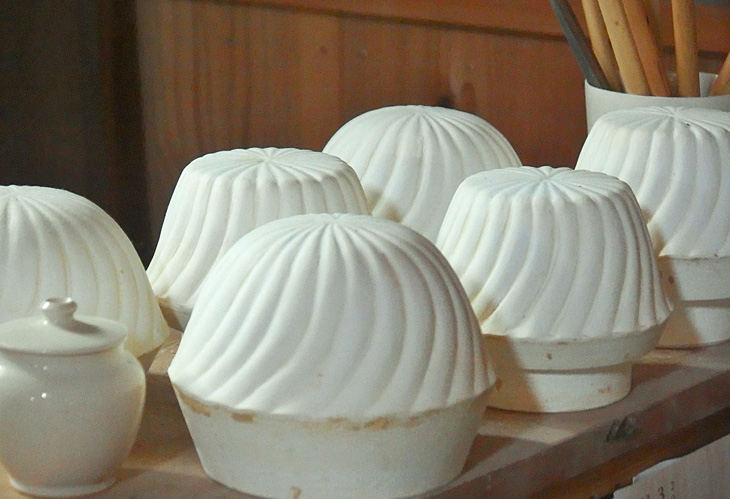
Atsuko Anzai: (laughs) I feel like I’m being really mean. But these things come from very beautiful plaster molds. Arata loves polishing and carving, after all.
Arata Anzai: I’m aware that sometimes the mold itself becomes a work (laughs).
Atsuko Anzai: But a plaster mold is solid, whereas tableware is hollow.
No matter how beautifully the mold is made, that density doesn’t always translate to the ware. Sometimes the mold was just too perfect.
Arata Anzai: Like stone—when you polish it, the form becomes more defined. Strength emerges, in a sense. But sometimes you exhaust yourself on the mold (laughs).
Hanada: Has the precision of your new works improved?
Arata Anzai: Lately, I often make things based on her ideas, so I’m not making things blindly.
For example, when making a bowl: “It should hold soup and simmered dishes, but not too much that it looks clumsy.”
Hanada: Very specific.
Arata Anzai: Sometimes it’s abstract too. She’ll say, “Make it feel soft.”
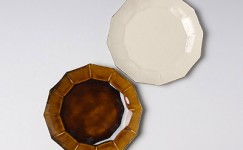
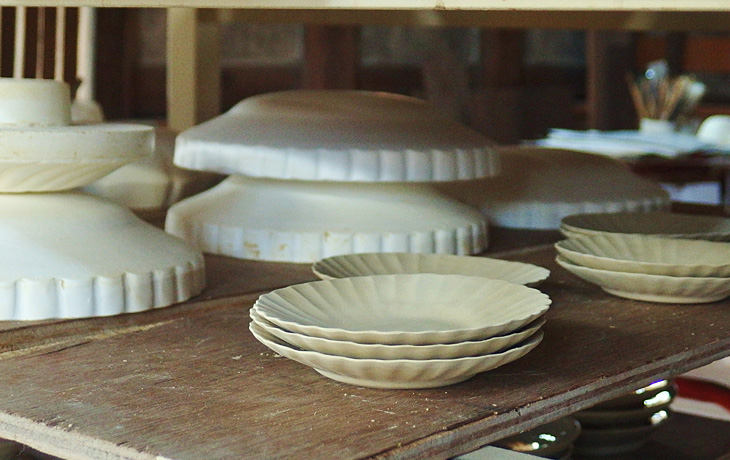
Atsuko Anzai: We also spent a lot of time discussing the edge finish of this namasu plate.
Arata Anzai: While arranging the traditional design, it eventually ended up close to the original.
At first, it was more linear, but it was too flat, so we softened it again…
Atsuko Anzai: I had wanted him to make namasu plates for a long time and kept asking.
Hanada: Don’t you ever make them yourself?
Atsuko Anzai: Namasu plates need a mold, so I need him to make it first (mold making is Arata’s responsibility).
Hanada: So you have a lot of requests.
Arata Anzai: It’s easy for the one making requests (laughs) Also, even if ideas are contradictory, in the mind it doesn’t feel contradictory. It’s like adding “good” to “good” to make it even better. Trying to combine two incompatible “goods”…
Hanada: (laughs)
Arata Anzai: For the one actually doing it, following those instructions can make form-making challenging, revealing contradictions.
Then she’ll say, “That’s not quite right…”
Atsuko Anzai: Mold work has many steps and you can’t go back. Once you’ve gone this far, it’s tough.
Arata Anzai: When someone critiques a finished piece, I now pause and look at it again the next day. Distance helps you approach it with a fresh mindset.
If criticized right after completion, it’s too much to digest (laughs).
Atsuko Anzai: We used to argue a lot over that.
Arata Anzai: “Well, that’s weird,” you think.
Atsuko Anzai: I’d say, “I didn’t say that.”
Arata Anzai: Then I say, “Do you know how many hours that took?”
Atsuko Anzai: And I want to say, “It’s not about the time” (laughs).
Hanada: You get along well. Such dialogue requires trust.
Atsuko Anzai: Recently we’ve calmed down. Usually, the parts criticized are the ones that already bother you.
Arata Anzai: Yes, and internally we probably justify ourselves: “This is fine as it is.”
Hanada: Do you also give input from Arata to Atsuko?
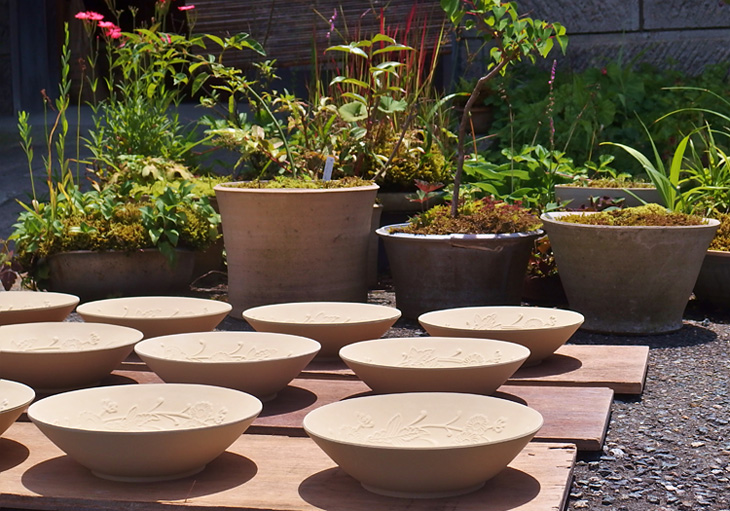
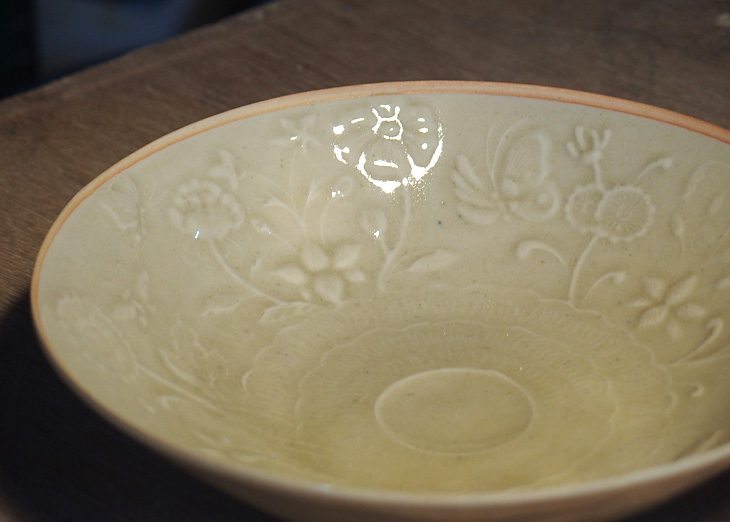
Arata Anzai: Sometimes I give ideas for decoration, like the dandelion motif here.
Atsuko Anzai: The carved motif series references old Chinese items.
Not too Chinese-looking, and with a touch of Western atmosphere—it’s nice.
Hanada: Molds and carved pieces have different atmospheres.
Atsuko Anzai: Carved pieces have beautiful glaze pooling, so darker ash glazes suit them.
Arata Anzai: For relief, lighter or white glazes look better.
Hanada: So you exchange opinions with each other.
Arata Anzai: I think I get told more than I tell, right?
Atsuko Anzai: Really? (laughs)
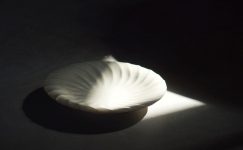
Hanada: Your variations have increased. Initially butterfly-shaped bowls, rimmed plates, simple cups… It’s been almost ten years.
I still remember seeing the butterfly bowl for the first time. Impressive.
Then came twists and carved motifs.
Atsuko Anzai: I think our basic preferences haven’t changed, but we’ve gained more ways to express them.
Hanada: Are there works that left a strong impression on you?
Arata Anzai: The carved motifs, since we originally didn’t know how to make them and had to explore the process, hold special meaning.
Hanada: Did you have a reference for the butterflies?
Arata Anzai: It’s quite different, but inspired by Chinese items.
Atsuko Anzai: I wanted it to have a shape unique to casting.
Arata Anzai: At first, we experimented to explore the possibilities of shaping, but now after enough trials, it feels like we’re returning to orthodox forms.
Hanada: Are there projects you want to do in the future?
Atsuko Anzai: Some items are used continuously, but there are also things we stop using for a while.
Even if they aren’t used for some time, I want to make things that can be enjoyed for many years.
Also, seasonal tableware like New Year pieces.
It’s nice when people remember, “Oh, this comes out in summer,” or “This is for New Year.”
Hanada: Please talk about your upcoming October exhibition.
Arata Anzai: We’re experimenting with various things, so there will be a lot to see.
Atsuko Anzai: The regular items may have a slightly different atmosphere than usual, but I hope people enjoy that too.
Arata Anzai: Even with pieces we’ve made for a long time, we don’t set a “correct answer.”
It’s like football—shooting a ball straight to the goal is boring.
If you set the goal too clearly, the work feels constricted.
We want to keep a sense of freedom, including spontaneous ideas, valuing a relaxed atmosphere.
Hanada: That’s a big part of the charm of handmade work. Doing only “perfect” things would be boring.
Arata Anzai: It’s like adding “good” to “good” doesn’t necessarily make “very good.”
Atsuko Anzai: There are successes and failures, big and small, but that’s part of our approach.
We have many things we want to try, and hope to gradually bring them to form.
Hanada: Thank you very much. Looking forward to October.
≪ END ≫
「あらねばならぬ」のない二人
花田: ものを作る仕事の中でも、焼き物、うつわに至ったのはどういった流れだったのですか。(以下 花田-)
安齋新: 食べることが好きですし、元々衣食住に纏わることが好きなんです。
最初は、子供の頃の粘土遊びから始まった記憶があります。
母親の実家の蔵にあった古いものを見たり、高校生くらいからは薪窯をやっている親の知人の生活スタイルを良いなと思ったり、家にあった加茂田章二やルーシーリーの本を見ていたり・・・
そういったものが段々と収斂していき、焼き物が興味の対象として大きくなっていったのだと思います。
華やかな現代美術などにも興味がある時期もありましたが、身の回りの使える道具であるうつわのほうが、僕にとってはしっくりきたのかもしれません。
安齋厚子: 私は小さい頃から、手を動かすことや働いている手の動きが好きでした。
地元のお漬物屋さんが樽から漬物出している手や、パン屋さんが食パンを丁度のサイズの袋にきれいにシュッと入れるしぐさに見とれちゃうこともありました。
手のしぐさがきれいなんですよね。
-: さて、お二人が一緒にモノ作りをされるようになってから随分経つかと思いますが、最初から、お二人の方向性は大体一緒だったのですか。
安齋新: 好きなものは似ているなっていう印象はありましたね。
安齋厚子: まったく違うってコトはなかった。最初は二人で一緒に仕事をすることに抵抗あったのですが、始めてみたら意外とすんなり出来ました。
安齋新: 最初は彼女のほうが抵抗あったみたいだったかな。
安齋厚子: ハハハ。でも始めてみて、食事も一緒だし
「こういうもの、あったら良いね」
なんて話しながら自然に進みだしたんです。
まあ、失敗も多かったけどね。
安齋新: 多かったかな(笑)。
-: 修行先は有田と京都ですよね。
何か違いを感じることはありましたか。
安齋新: 高台削りのロクロの回転は逆ですけど、今は色々混ざってチャンポンですね。
安齋厚子: 新さんは柔軟だよね(笑)。
安齋新: よく言えば柔軟。実態はいい加減(笑)。
僕らは焼き物屋さんの家に生まれたわけでもないし、自分たちのなかに、しばりはあまり感じないね。ただ、お互い、一番最初に教えてもらったところのクセは抜けない。
安齋厚子: 良くも悪くも私たちには「あらねばならぬ」が全く無いんです。
興味の対象も音楽、民族衣装やテクスタイル、建築・・・色々なものを面白いなと思って、仕事に色々影響を与えています。
-: それが、安齋さんの仕事の良いところなのかもしれません。
窮屈でないというか・・・ひらけていますよね。
安齋厚子: そういってもらえると・・・嬉しいですね。時に使いにくいものもあるかもしれないのは、そういうこともあるのかもしれない。既存のルールを気にしないで作ってしまうこともあるので。
安齋新: 使い勝手については、彼女のほうが敏感です。
安齋厚子: やっぱり使うのは私のほうが多いので。
安齋新: 単純に「かたち」だけを追いかけるのは僕のほうが多いかもね。
安齋厚子: 私も使いやすいだけのものは嫌なんで、ちょうど良い落としどころを見つけたいんです。ただ、使えないと手には取ってもらえないし・・・
安齋新: ただ、「かたち」が良くないと目にもとまらないんじゃない(笑)。
安齋厚子: 格好いいだけでも嫌なんです。
-: 格好いいだけって、お二人にしてみると格好悪いことなんじゃないですか。
安齋新: 民族的な衣装がシュッとしていない時あるじゃないですが。
シュッとしたその無機的な格好良さだけじゃなくて、ちょっとしたアクというか、土着な、そういうものが入っているほうが好きなのかな。
使っている内に愛着がわいてくるようなもの。
あまりキャッチーなものって、飽きるような気がします。
音楽なんかも一緒で、時と共に噛み締められるようなものがいいですね。
それに、格好良すぎるものは、自分たちのあり方とも違うと思うんです。
すべてが格好よく決まっているものに、僕らはあまりリアリティーを感じません。
安齋厚子: 古いものをそのまま模すことも、あまりしないよね。
そうしようとした瞬間、正解ができてしまう。
で、その正解を追おうとすればするほど、それから離れていっちゃうような気がします。
安齋新: エッセンスを取り入れたいんですよね。
昔の古いもの見たとしても、土も違う、薬も違う、窯も違う、そもそも生活で電気使っていること自体違うのに、同じものになるほうがおかしい。
-: 古いもので言えば李朝のものもお好きですよね。
ああいったものから感じる雰囲気を落とし込んでいく感じでしょうか。
安齋厚子: ああいうおおらかな感じ。
安齋新: あるいは、アールデコやブランクーシといった時代の雰囲気とか、工芸とプロダクトのミックスした感じとか・・・いろんなもの好きなので・・・節操ないです(笑)。
安齋厚子: 単に手仕事に惹かれる部分もある。
-: 二人で色々話すこともあるんですか。
安齋新: あります、あります。
すごい時間かけて作ったものを「大きさが違う」と秒殺されたり・・・
安齋厚子: 収納が悪かったり・・・
安齋新: そうだけど、これくらいの大きさでこれ、なんていう風に制限されると逆にノビノビ作れなくなりますよね・・・。
安齋厚子: でも逆に、作った人に「これでここに○○を盛ってください」とか言われると盛るほうも窮屈ですよ。
-: (笑)お互い大変ですね。「秒殺」はしょっちゅうあるのですか。
安齋新: いっぱいありますよ。
安齋厚子: (笑)私、すごい意地悪みたい。
でも、そういうのって、石膏型がすごくキレイなんですよ。
新さん、磨いたり削ったりするの好きだものね。
安齋新: 型自体が作品になっていることがよくある、という自覚はある(笑)。
安齋厚子: ただ、石膏型って塊ですよね、逆にうつわは中が空洞です。
どんなに型をきれいに美しく作っても、うつわに転化すると、その密度ってなかなか出てこないんです。型がやたらときれいなこともあったよね。
安齋新: 石なんかでもどんどん磨いていくと、かたちがグッと出てくることあるじゃないですか。
逆に強さが出てくるって言うか。
で、そんなことをしていると、型で力尽きることもあります(笑)。
-: 新作制作の精度は上がってきましたか。
安齋新: 彼女からイメージを伝えられて作ることが多くなったので、やみくもに作ることは減りました。
例えば鉢を作る際「汁物も、煮付けも入るように。
でも量が入りすぎて、野暮ったくならないように」なんていう風に。
-: 具体的ですね。
安齋新: 抽象的なことも多いよね。「フワッとした感じ」とか言われて。
安齋厚子: このなます皿も縁の仕上げを色々悩んだよね。
安齋新: 本歌をアレンジしながら、結局本歌に近づいていった感じです。
最初直線的にしていたんですが、フラットすぎたので、また柔らかくしたり・・・
安齋厚子: なます皿は昔から作って欲しくて、ずっとお願いしていたんです。
-: それを厚子さんが、ご自身で作ることは無いんですか。
安齋厚子: なます皿は型が必要で、そうすると型をつくってもらわないといけないから(型つくりは新さんの担当です)。
-: 色々リクエストがあるんですね。
安齋新: 言うほうは気楽なんですよ(笑)。
それに、その・・・ノビノビと考えたものって、矛盾していても、頭の中では矛盾を起さないんですよね。
「いいね」に「いいね」を足したら、もっとよくなるはず、みたいな。
両立しない二つの「いいね」を合わせろという・・・
-: (笑)
安齋新: 実際やっているほうは、言われた通りに進めていくと、かたちを作る上で行き詰って、その矛盾に気が付く。
やってみると、彼女も「そうじゃないんだよねー」とか言い出して・・・
安齋厚子: 型の仕事は工程が多いし、後戻りできない。ここまでやったのに、っていうのがあるから難しいよね。
安齋新: 出来たものに色々言われたときには、最近はいったん作業をとめます。
次の日になって、距離を置いてあらためて見れば、またやってみよう、という気分になれる。
完成直後にダメだしされると、もう消化しきれないですよ(笑)。
安齋厚子: 前はそれでよくもめていました。
安齋新: 「そりゃ、おかしいよね」ってなるんです。
安齋厚子: 私は「そんなこと言ってないよ」って。
安齋新: そうすると僕は「何時間掛かったと思ってるんだよ」って。
安齋厚子: そうすると私は「時間の問題じゃないよ」と言いたいです(笑)。
-: 仲、いいんですね。信頼関係が無ければ実現しないやりとりです。
安齋厚子: 最近はお互い冷静になってきたね。ただ指摘される部分って、大体自分でもなんとなく気になっているところなんです。
安齋新: 気になっているし、これはこれでいいよね、って内心、自分でも言い訳しているんだろうね。
-: 新さんから厚子さんへのインプットはないんですか。
安齋新: 例えば、ここにあるタンポポ紋など、時に加飾でアイデアを出すこともありますよ。
安齋厚子: 刻紋シリーズは中国の古いものを参考にしています。
中国っぽすぎないし、洋っぽい雰囲気もあっていいな、って。
-: 型のものと彫ったもの、雰囲気変わりますね。
安齋厚子: 彫ったものは、釉たまりがきれいなので、色の濃い灰釉が合うと思います。
安齋新: 陽刻は、色のうすいものや白の釉薬のほうが、きれいだよね。
-: お互いに意見を交換されているのですね。
安齋新: どっちかっていうと、僕が言われるほうが多くない?
安齋厚子: そう?(笑)
-: 最近はバリエーションも増えました。
最初は蝶形の鉢、リムの皿、シンプルな猪口・・・あれから十年近く経ちますね。
今でも、最初に蝶形の鉢を見せてもらったときのことは覚えています。印象的でした。
そのうち、ねじりや刻文もでてきました。
安齋厚子: 基本的な好みは変わっていないような気はしますが、表現方法が増えてきたんだと思います。
-: 今まで作ってきたものの中で、印象に残っているものってありますか?
安齋新: 刻文なんかは、元々、作り方もわからずに、模索しながら作り上げていったものなので、思い入れがあります。
-: 蝶々なんかは元々ヒントがあったんですか。
安齋新: まったく変わってはいますが、中国のものをヒントにしています。
安齋厚子: 鋳型ならではのかたちにしたいなっていうのはありました。
安齋新: 最初は「成形の可能性を探る」みたいに色々試していたと思いますが、最近は試し尽くしてきて、オーソドックスなものに戻っているような気がします。
-: これからしていきたい仕事、なにかありますか。
安齋厚子: 自分もそうなのですが、ずっと使うものもありますが、いったん使うのをやめているものってありますよね。
そうやって使わないときがあったとしても、長い間使ってもらえるものを作っていきたいなって思います。
あと、毎年お正月に出てくるうつわ、のように季節感を感じられるもの。
あとで思い出したときに「あ、これ夏になると出てきたよね」とか「お正月に出てきたよね」とかって思い出してもえるようなものになると嬉しいです。
-: 10月の企画展に向けてお願いします。
安齋新: 今、色々試してもいるんで、色々見ていただけると思います。
安齋厚子: 定番のものもいつもと雰囲気が少し変わるかもしれませんが、それも楽しんで欲しいです。
安齋新: ずっと作っているものも、別に正解を僕らは設定しているわけではないので。
サッカーでも、ボールをゴールにおきにいくようなシュートじゃつまらないから。
ゴールを明確に設定しすぎると、窮屈な仕事になってしまいそうな気がします。
その場その場での思いつきのようなものも含めながら、伸びやかな雰囲気を大事にしていきたいと思っています。
-: 手仕事の魅力の大きな部分ですし、優等生ばかりでは楽しくないですものね。
安齋新: それこそ「いいね」に「いいね」を足しても「とてもいいね」にならない、みたいな話です。
安齋厚子: 大小失敗もあるんだけど、それも含めての私たちの仕事のやり方なので。
やってみたい事はたくさんあるので、少しづつカタチにしていけたらいいなと思います。
-: 有難うございました。10月よろしくお願いします。
関連記事はこちら