









English version of the interview here.
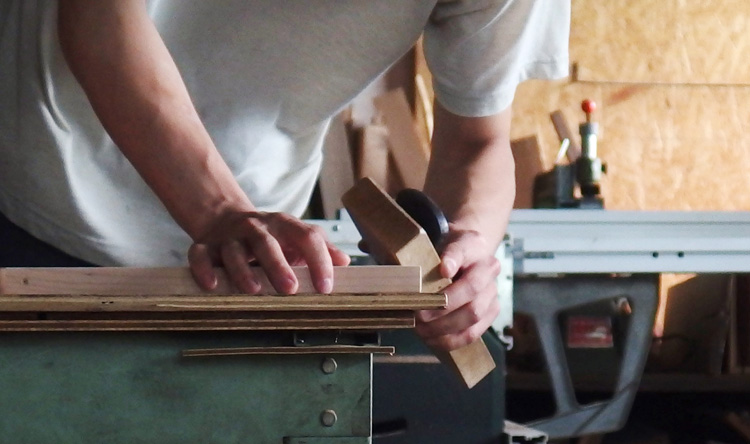
The Power of Wood: Artist Interviews
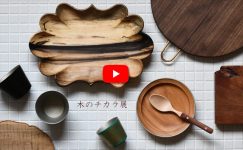
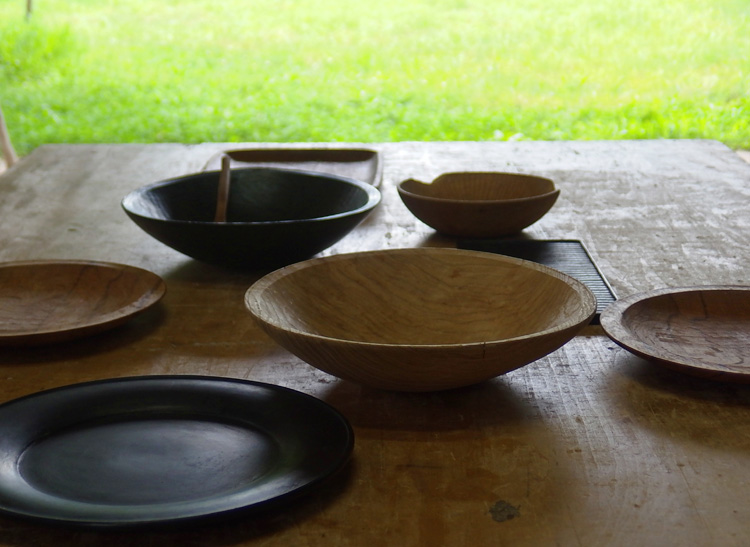
For “The Power of Wood Exhibition,” we asked woodworkers whom we regularly collaborate with to create special pieces.
While ceramics and woodwork differ in materials, production techniques, handling, strengths, and weaknesses, they share many commonalities, such as the makers’ mindset, passion, and the charm of their items as functional tabletop pieces.
To explore “The Power of Wood,” we would like to share the thoughts of these artisans through three distinct themes.
What I love about wood: Why choose the world of woodworking? The reasons for being captivated by wood.
How I use it: A guide to enjoying wooden items in daily life, featuring unique usage tips from the artist who know the material best.
“Thank you” to wood: The gratitude toward wood shared by many woodworkers.
■Question 1: What I love about wood
Tatsuya Okano
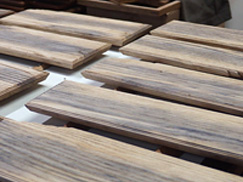
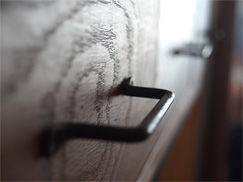
I love how the color of the wood grain changes over the years, and how it gains character through scratches and stains. It feels like the piece grows old together with the person using it.
Takaaki Inui
I entered this world partly due to the influence of my father, who runs a woodworking business. However, it was during my time studying in Germany, when I saw the smooth, worn texture of church handrails and chairs, that I thought, “Wood is absolutely incredible.”
Until then, I had only looked at contemporary woodwork and hadn’t paid much attention to wood that had aged for hundreds or thousands of years.
Iron that has passed a millennium or two also looks amazing—decayed and heavily textured.
Reclaimed wood already has a beautiful patina, but if you take a shelf board, for instance, and repurpose it into the backrest of a chair, it begins to age in a completely different way. I am fascinated by this kind of aging process, where the wood seems to “reclaim its luster,” a trait unique to old timber.
I feel that wood continues to breathe in a very real way even after it is cut, giving it a sort of “main character energy” (laughs).
Then there is the gentleness of wood.
It is neither too hard nor too soft.
Softwoods like cedar have a wonderfully kind nature: if a piece bumps into someone, it dents itself rather than hurting the person (laughs).
It protects others by taking the damage.
And even those dents become part of its charm.
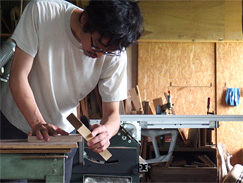
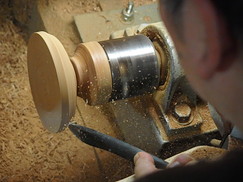
I also love the sounds during production—the rhythmic rasp of a saw or the smooth glide of a hand plane.
They blend beautifully with the music I like to listen to.
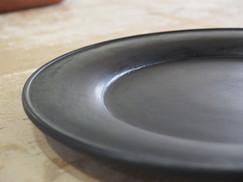
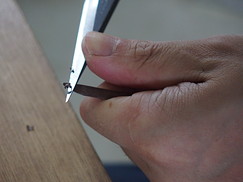
However, if an item is made entirely of wood, it can feel a bit heavy. That is why I always incorporate other materials like metal to keep things light and airy.
Using metal effectively makes a difference. For example, iron is naturally better for reinforcements because it can be kept thin and flexible, whereas wood might snap. I hope to bring out the best qualities of each material together.
Kotaro Ogura
I think wood possesses a certain softness that gently embraces ceramics, such as when used for trays and coasters.
For instance, the sound of ceramic meeting wood is incredibly pleasant.
Furthermore, no two wood grains are identical.
I enjoy framing the grain right in front of me and turning it into a finished piece.
Working with given parameters and finishing a piece based on what nature provided suits my personality better than creating something from absolute zero.
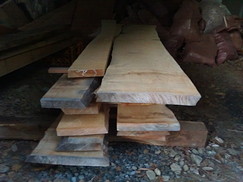
Selecting timber is also crucial, so I buy a lot of wood and keep it stacked.
When I first started out independently, I couldn’t tell good wood from bad, and I made plenty of mistakes at timber auctions. But through repeating that process, I arrived at where I am today.
The timber that everyone else is looking for isn’t necessarily the best choice for me. Sometimes, wood that nobody else glances at is the perfect fit for my specific work.
Encountering the right wood is a truly important moment for me.
Accepting the natural grain as it is given—whether it is cracked or warped—I want to continue working without resisting nature, utilizing its inherent qualities.
Hirotomo Doi
In Wajima, where I did my training, people used to say that a dining table set only with ceramics and glass feels a bit dry.
Introducing wood adds a subtle richness and warmth, bringing life to the table.
Moreover, every single piece of wood is remarkably distinct.
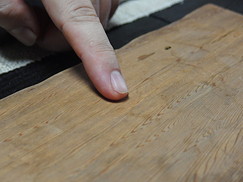
For example, just looking at this Jomon cedar—with its extraordinary density of grain and the lines on this offcut—allows me to imagine the environment where the tree grew and see its history.
Similarly, when you plane wood from the Kamakura period, it comes alive once more.
Those are the moments when I truly feel that wood is a living, organic material.
Hitoshi Fujisaki
I am captivated by the unique character of each piece of wood.
Originally, I worked at a furniture factory where I produced items exactly as directed by architectural firms.
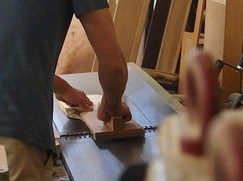
Since starting my own practice, I can use different wood for every project, and I find it highly engaging to figure things out as I go.
Character can manifest in the grain, or in how much the wood warps and shifts.
Some pieces don’t move at all initially but suddenly begin to shift later on.
I particularly like aged timber because the grain becomes tight and dense.
This gives the wood an excellent texture and makes it resistant to warping. Coniferous wood, for instance, develops a remarkably dense grain after about a century.
Koichi Tomiyama
I find that wood is a material that easily evokes a sense of fondness through use.
Every single tree is different, and you can enjoy how it changes over time.
With varying grain patterns, wormholes, and other traits, even the exact same species of wood offers a different weight and tactile feel in the hand.
Features like knots, which are generally considered flaws, can strike me as beautiful depending on the piece. Ultimately, whether something is beautiful or not is for the observer to decide.
Masahiro Hiraoka
The greatest appeal of wood lies in the fact that it is a natural material, possesses a pleasant softness, and exudes a distinct warmth.
Each timber type has its own characteristics in terms of color, grain, and hardness. While these differences can make the material challenging to work with, that complexity is precisely where I find its charm.
■Question 2: How I use it!
Tatsuya Okano
Since many of the wooden plates I make are relatively large, they work wonderfully for serving pasta and salad together as a single-plate meal.
My wife often uses them to serve stir-fried vegetables or mapo tofu in generous, family-style portions.
Recently, customers have mentioned using them outdoors. Being highly resistant to breaking when dropped is a wonderful advantage of wooden plates.
Takaaki Inui
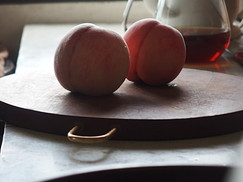
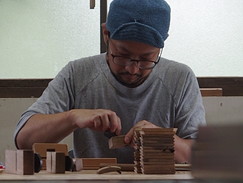
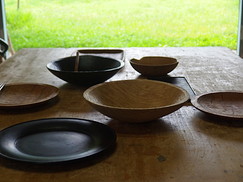
I live my daily life almost as if I am constantly camping, so I am not sure how practical this will be for most people, but I use a large cutting board as a substitute for a standard plate.
I use it as an individual serving platter for myself, or as a trivet for pots.
It is incredibly versatile; you can serve pizza on it, of course, but it is also useful right from the dough-kneading stage.
People might worry about mold or the fact that wood cannot go in the dishwasher, but I prefer that users enjoy it freely without being overly fastidious.
Knife marks may stand out at first, but as they accumulate, they turn into a beautiful texture.
Additionally, wood is peerless for serving bread. It absorbs excess moisture instead of letting it pool, keeping the bread perfectly crisp to the very last bite.
Since you can slice the bread right on the serving piece, it also saves you from washing an extra dish (laughs).
I occasionally use wooden pieces for salads too, but since I also enjoy ceramics, I don’t force myself to use wood exclusively.
Kotaro Ogura
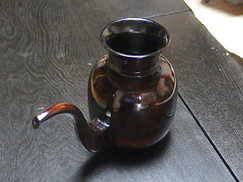
Wooden tabletop items can seem intimidating to care for at first glance, but once you get used to them, they are remarkably easy to live with.
I always tell people, “Please use them heavily without worrying about being precious with them.”
Stains and scratches easily transform into character and depth, and wooden pieces are wonderful to let children use.
I use mine for bread, salads, gyoza, seared bonito, stir-fries, and more.
Lacquerware pieces are also excellent for simmered dishes.
I don’t mind marks left by knives and forks at all. Antique European wooden plates often feature distinct fork and knife scars, which look incredibly handsome.
Introducing even a single wooden item brings a refreshing warmth to the dining table.
They are also wonderfully easy to take outdoors. On pleasant days, I like to carry a table out and have my meals in the garden.

Hirotomo Doi
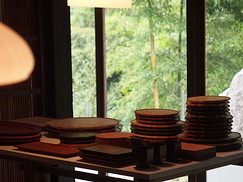
Beyond traditional items like trays and soup bowls where wood is standard, I enjoy crafting tea and coffee utensils from wood.
Since matcha and sencha bowls are typically made of ceramic, my approach might be considered unorthodox or personal rather than mainstream, but creating these items from lacquer and wood holds deep meaning for me.
They are light, unbreakable, and exceptionally easy to carry.
I focus on the fact that you can travel with them while still enjoying an authentic flavor. Therefore, the shapes and sizes of my coffee drippers and tea utensils are designed with outdoor tea gatherings in mind.
Drinking freshly brewed coffee in the great outdoors is an absolute pleasure.
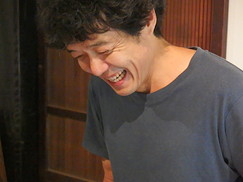
Hitoshi Fujisaki
I first started making wooden plates because I wanted to present French cuisine on them for an event.
As I began studying French tableware, looking closely at the details made me realize that their forms were originally inspired by Chinese designs, which traveled over via the Silk Road.
Naturally, that means they harmonize beautifully with Japanese cuisine as well. Using native woods like zelkova or magnolia gives a distinctly Japanese impression, whereas using imported timbers like walnut or purpleheart creates a Western feel.
Cutting boards are incredibly convenient.
I apply walnut oil to protect the surface from knife scratches. When it starts to look dry, you can simply crush a walnut to extract the oil and rub it in. If that feels like too much trouble, olive oil works perfectly fine too.

Koichi Tomiyama
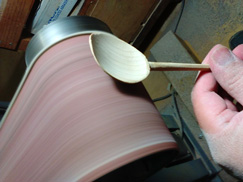
I regularly use a coffee scoop that I originally made for my own personal use.
My chopsticks, cups, cheese boards, cutting boards, and butter knives have all been in constant use for about ten years.
Aside from wood, my tabletop pieces consist mostly of ceramics and enamelware.
Masahiro Hiraoka
Currently, cutlery is the mainstay of my production. Cutlery is an intimate tool that comes into direct contact with your hands and lips.
I would be delighted if people could first experience the wonderful appeal of wood through all five senses by using wooden cutlery!
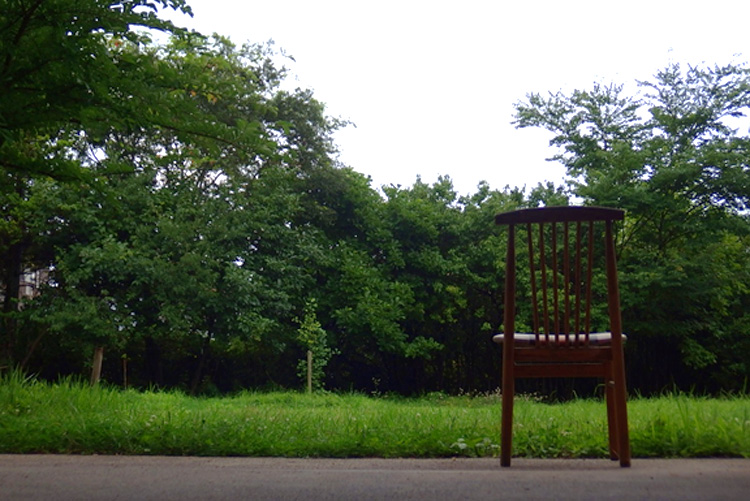
■Question 3: “Thank you” to wood
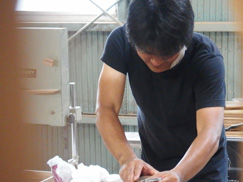
Tatsuya Okano
For woodworkers and wood artisans, timber is an indispensable presence. I always strive to create items that feel wonderful to use and will last a very long time.
Crafting inevitably produces offcuts. Because I want to honor the material and avoid waste, I use those remaining fragments down to the smallest possible size to create small accessories.
I feel that using the timber completely, without waste, is my way of expressing gratitude.
Takaaki Inui
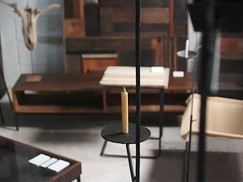
I want to treasure the initial feeling of “That looks amazing!” when I look at a piece of wood.
If that striking beauty is lost in the finished piece, the work loses its meaning. I try to craft in a way that highlights that quality.
I want to ensure the inherent beauty of the wood is never compromised.
It feels a bit embarrassing to put into words, but to me, wood is simply something beautiful and cool, and I am deeply grateful for that aspect of it.
Kotaro Ogura
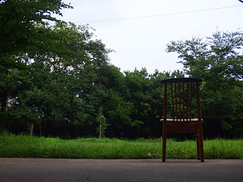
While I love wood as a creative material, I also draw immense energy from living trees.
I feel that trees have a unique power to define a space. For example, in architecture, if a large tree stands tall and casts its canopy like a green roof, the entire atmosphere changes.
Even when I go out into town, I find myself instinctively looking for trees.
A tree naturally enhances the mood of a place. People gather around it, and it makes you want to sit down and read a book.
Trees change continuously with the seasons—growing, leafing out, and turning beautiful colors.
Kudan, where Hanada is located, is a beautiful area filled with greenery, which makes it one of my favorite places.
Hirotomo Doi
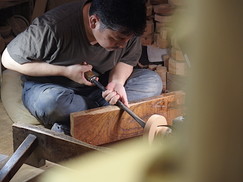
I am deeply grateful for natural lacquer (urushi).
Although my skin is generally sensitive and prone to rashes from various things, for some reason, I have never reacted badly to lacquer.
I can only view it as a beautiful stroke of fate.
Thanks to that, I am able to continue this line of work. I am truly fortunate.

Hitoshi Fujisaki
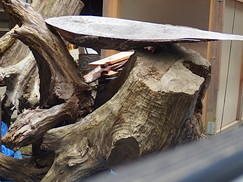
I hope this doesn’t sound bad, but I don’t actually think about it consciously all that much (laughs).
However, though it was unintentional on my part, the amount of timber I store seems to be much larger than average. Visitors to my workshop often remark with surprise, “You really love wood, don’t you?”
Without even realizing it, I accumulated this entire stock over time.
Koichi Tomiyama
I have been working in woodworking for eleven years now. The fact that I make a living today is entirely thanks to wood, so I cannot help but be deeply grateful to it.
Masahiro Hiraoka
While it certainly depends on the specific woodworking technique, I generally find that shaping wood requires a tremendous amount of time and care.
The polishing and lacquering processes after the initial shaping are quiet, meticulous tasks that demand even more dedication.
Furthermore, processes like drying the raw timber can take years.
As someone who started out almost entirely self-taught, wood continues to present me with challenging puzzles. Yet, it is precisely because of these challenges that I have grown, developing patience and resilience. That is something I am genuinely thankful for.
≪ END ≫
木のチカラ 作者インタビュー
「木のチカラ展」では日頃からお付き合いのある木工作者の方々に制作をお願いしました。
やきものと木工では素材、制作方法、取り扱い方法、強み、弱み・・・
異なる部分もありますが、一方で、作り手の姿勢や想い、うつわとしての魅力など、共通点と感じるものも数多く存在します。
今回は、そんな「木のチカラ」を探るべく、3つのテーマにて、作者の想いを届けたい思います。
木のココが好き・・・なぜ木工の世界に?木に魅せられるワケ。
私はこう使う・・・木のうつわを楽しく使うため、木のチカラを知る作者ならではの使い方指南。
木に「ありがとう」・・・多くの木工作家が持つ木への感謝。
■質問1:木のココが好き
岡野達也
木は年月と共に木肌の色が変わり、傷がついたり汚れたりして、味わい深くなっていく、使う者と一緒に年齢を重ねていく感じが好きですね。
乾喬彰
木工業を営む父の影響もありこの世界に入ってきましたが、ドイツ留学時、教会の手すりや椅子のツルツルになった感じを見て「木って、メチャクチャいいな」と思ったんです。
それまでは現代の木工作品は見ていましたが、百年、千年経った木はあまり見ていませんでした。
鉄も千年、二千年経ったものって格好いいんです。
朽ちてボコボコになっているような・・・。
あと、古材は既に経年変化していますが、例えばこの棚板が、椅子の背板になるとまた違った年の取り方をし始めます。
古材ならではの「艶を取り戻す」みたいな経年変化にも惹かれます。
木って、切った後でもリアルに呼吸しているしような気がするし、なんか「主人公感」がするんですよ(笑)。
そして、木の優しさ。
固くもないし、柔らかくもない。
杉みたいに柔らかい木だと「人にぶつかっても、自分がへこむことで相手を傷つけない」という相当な「良い人ぶり」も魅力です(笑)。
「自分が傷ついて人を守る」という・・・。
で、その傷すら、またいい。
作業中の音も好きです。
のこぎりの「ギコギコ」とか、カンナの「シュッシュッ」とか・・・。
僕の好きな音楽との相性もいいんです。
ただ、木だけで作り上げてしまうと重いので、金属などの他素材は必ず使うようにして軽やかにしています。
金属が活きる方法・・・例えば、補強は勿論鉄のほうが細くで出来ますし、しなやかです。
木はポキっていっちゃいますからね。
それぞれの良いところを出し合うことができればいいな、と思っています。
小倉広太郎
お盆や茶托など、焼き物を受け止める柔らかさを持っていると思います。
例えば、焼き物と木があたる音って心地良いですよね。
そして、同じ木目が、一つとして存在しない。
目の前にある木目をトリミングして、作品にしていく。
与えられたものをベースに仕上げていく作業が楽しいんです。
僕の性格的にも何もないところから作り上げるより、前提がある中でやっていくほうがあっている気がします。
木を選ぶのも大事で、木を沢山買ってきて積んであります。
独立当初は、良し悪しも分からないので、市(いち)で失敗もしましたが、それを繰り返して、今に至っています。
多くの人たちが求める木が自分にとって良い木とも限らず、見向きもされない木でも、自分の仕事に合っているものもあります。
木との出会い・・・僕にとっては大切な瞬間です。
与えられた木目を受け入れる。
割れていても歪んでいても、抗えないそういう自然を活かしながら、抵抗せずにこれからもやっていきたいと思っています。
土井宏友
修行していた輪島では陶器やガラスだけだと、食卓がカサカサするっていうんです。
木を入れるとヌルッとする、というか、食卓に潤いが加わります。
そして、木は一つ一つが実に違います。
例えば、この縄文杉、この異常な量の木目、この端切れの木目を見るだけで、木の生えていた状況も想像できて、生い立ちも見えてくる。
或いは、鎌倉時代の木もカンナをかけると、また動き出す。
有機物である、ということを実感する瞬間です。
藤崎均
木それぞれの「個性」に魅了されています。
元々僕は家具工場で働いていて、その頃は設計事務所からの指示通りに作っていました。
自分で仕事をするようになってからは、その都度、違う木を使えるので、その時に色々考えるのが面白い。
個性と言っても木目もあるし、暴れる暴れないもある。
最初は動かないけど、急に動き出すこともあります。
特に、年数が経っている木は好きです。木目が詰まってくる。
そうすると雰囲気も良いし、反りにくい。
針葉樹なんかは100年くらい経ってくると随分木目が詰まってきます。
富山孝一
使っていて、愛着が湧きやすいと思います。
1本1本違うし、変化も楽しめます。
木目や虫食い等々もあるし、同じ木の種類でもそれぞれ手取りが違うんです。
一般的に欠点と言われる節目なども、ものによっては僕は「美しい」と感じます。
それぞれが美しいかどうかは、見る人が決めることですから。
平岡正弘
天然の素材であり、適度な柔らかさもあり、温かみが感じるところが一番の魅力です。
材それぞれによって、色見や木目、硬さ、それぞれに特徴があって難しいところもありますが、そこにも魅力を感じます。
■質問2:私はこう使う!
岡野達也
私の制作する木皿は少し大きめのサイズが多いので、パスタとサラダを一緒に盛ってワンプレートとして使って頂けると良いかもしれません。
妻は野菜炒めドーン!麻婆豆腐ドーンみたいに使っています。
最近はお客様からアウトドアで使っていると聞いています、落としても割れにくいのは木皿の長所です。
乾喬彰
僕は毎日キャンプみたいな生活をしているので、普通の方々の参考になるか分かりませんが、大きなカッティングボードをお皿代わりに使っています。
一人で銘々皿として、鍋敷きとして・・・。
実に万能で、ピザそのものは勿論ですが、生地捏ねの段階から使えます。
木だと食洗機使えないしカビのことが気になるかもしれませんが、あまり神経質にならずに気軽に使って欲しいと思います。
刃跡も最初は目立ちますが、数が増えてくれば景色にもなります。
あと、パン皿には木が一番。
湿気を木が吸ってくれて溜まらないので、パンが最後までサクサク食べられます。
切るのもそれを使うので、洗いものがひとつ減ります(笑)。
たまに、サラダなどにも使いますが、焼き物も好きですので、無理に木を使うことはしていません。
小倉広太郎
一見、扱いにくそうだけど、使い慣れると扱いやすいのが、木のうつわです。
「雑でもよいので、ジャンジャン使ってください」と言っています。
染みや傷が、道具の味や表情になりやすいのが木の道具ですし、子どもにも使わせやすい。
パン、サラダは勿論、餃子、カツオのタタキ、炒めもの・・・僕は色々使っています。
漆のものは煮物なんか目をオススメです。
僕はナイフ、フォークの跡もあまり気にしていません。
昔のヨーロッパの木のうつわにはフォークやナイフの跡が付いていて、またそれが格好いいんです。
食卓に木が一つ入ると潤いも出るのではないでしょうか。
そして、外に気軽に持って行けるのはいいですね。
天気良い日は外に机を持っていって、庭で食事をしています。
土井宏友
お盆や汁椀など木が主流のものも勿論ですが、僕は煎茶やコーヒーの道具も木で作るでしょう。
抹茶茶碗や煎茶碗は焼き物で出来ているものが多いので、亜流というか我流というか、本筋ではないのかもしれませんが、そういう漆や木で作ることにも僕には意味があるんです。
「軽い」「割れない」「携帯が簡単」。
携帯できて、本格的な味が出せることに注目しています。
なので、ドリッパーや煎茶道具は野点などを想定したかたちやサイズ取りになっています。
外でも淹れたてのコーヒー飲んだら美味しいでしょう。
藤崎均
イベントで、木のうつわにフランス料理を盛り付けたくて、お皿を作り始めました。
で、フランスの食器を見始めたのですが、ディテールなんかを見ていくと、元々は中国に倣っていて、それがシルクロードを通じて伝わきてることに気が付きました。
そうなると、もちろん和にも合うわけです。
欅やホウの木を使うと和の印象になるし、ウオルナットやパープルハートなどの外材を使うと、洋の印象になります。
カッテイングボードは便利です。
包丁やナイフで傷がついてもいいように、くるみ油を塗っていますが、乾いてきたら、くるみの実をつぶせば油出てきますし、それが面倒でしたら、オリーブオイルを使っても良いと思います。
富山孝一
自分で使うために作ったコーヒーメジャーは愛用しています。
箸、カップ、チーズボード、カッティングボード、バターナイフはどれも十年くらい使っています。
木以外のうつわだと、焼き物や琺瑯も多いです。
平岡正弘
現在私はカトラリーを主力として作っていますが、カトラリーは「触って」、「口に触れて」と、とても身体に近い道具です。
まずはカトラリーで、木の魅力を五感を通じて感じてもらえると嬉しいです!
■質問3:木に「ありがとう」
岡野達也
木工職人、木工作家にとって、木は無くてはならない存在です。使う人が気持ち良く、長く使えるものを作るように心がけています。
モノ作りはどうしても端材が出てしまいます、木を無駄にしたくないのでその端材を使用できるところまで使って小物制作をしています。
木を最後まで無駄にしないで使うことで感謝を表せればと思っています。
乾喬彰
木を見て僕が持つ「格好いい!」という気持ちは大事にしたいと思っています。
出来上がったときに、その「格好いい!」が崩れてしまっていたら意味がない。
活かすようにしたいと思います。
木の良さが損なわれないように・・・。
あらためて言葉にするのも照れくさいのですが、僕にとって、木は「格好いいもの」で、その部分に感謝しているという感じです。
小倉広太郎
素材としての木も好きですが、生えている木にも力をもらっています。
木には場を作る力があるような気がしていて・・・例えば、建築でも、そこに大きな木が屋根のように茂っていると、雰囲気が変わりますよね。
町に出て行っても、ついつい木を探してしまいます。
木があるからその場の雰囲気がよくなる。
皆が集まってくる。本でも読んでいたくなる。
木って季節に合わせて伸びたり、葉が生い茂ったり、紅葉したり、日々変化していきますよね。
花田さんのある九段も緑が多いので好きな場所です。
土井宏友
漆には感謝しています。
色々とかぶれやすい僕がなぜか漆にだけはかぶれません。
縁としか思えません。
そのおかげで、この仕事をしていられます。
有難い話です。
藤崎均
怒られそうですけど、案外何も思っていないんです(笑)。
ただ、自分では無意識だったんですが、持っている木材の量が普通よりも多いみたいで「本当に、木が好きね」と工房に来られた方に、驚かれます。
意識もしていませんでしたが、こんな量になってしまった。
富山孝一
11年間木工の仕事をしていますが、今生きているのは木のおかげなので感謝せざるを得ません。
平岡正弘
木工の技法にもよると思いますが、一般的に木工は形を成型するのに手間暇がかかると感じています。
形を成型したあとの磨く作業や漆作業は地味で、さらなる手間暇がかかります。
また、材の乾燥など、年単位の時間がかかる事もあります。
このように、ほぼ独学で始めた私に、難問を与えつづけている木ですが、そのおかげで根気強さなど成長させてもらった所もあり、そこは感謝している部分でもあります。