





English version of the interview here.
Making a Living by Making Things…
Hanada: Did you enjoy making things when you were a child, Ms. Takenaka?
Yuki Takenaka : I liked drawing. I used to draw things like manga.
Hanada: How did you discover glass?
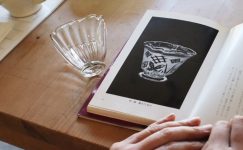
Yuki Takenaka : I happened to see it in a book and found myself drawn to it. Then, after graduating from junior college, I started attending the Tokyo Glass Art Institute.
Hanada: So, you still chose to go to junior college first.
Yuki Takenaka : My father was a civil servant and my mother was a teacher, so I think they had no idea what their daughter was trying to do (laughs). They were like, “What do you mean, ‘making a living by making things’?” (laughs). My decision was partly to respect their wishes. By the way, I chose a junior college that didn’t have English as an exam subject (laughs).
Struggling with Molten Glass
Hanada: How did you find your time at the Tokyo Glass Art Institute?
Yuki Takenaka : At the time, all I could think about was wanting to work with glass. I didn’t even know what kinds of techniques existed, so I had to start from scratch. At the institute, you could learn almost everything except stained glass. Flameworking, pâte de verre, glassblowing, cut glass… I thought I would just learn them all and then choose the one that suited me best. It was also there that I realized I wasn’t cut out for glassblowing.
Hanada: Is that so?
Yuki Takenaka : Oh, that was… (laughs). Working with molten glass just didn’t suit me. With glassblowing, if the glass gets hard, you have to reheat it, and if it’s too soft, you have to adjust its shape. You constantly have to adapt to the glass, don’t you? I just couldn’t do that (laughs).
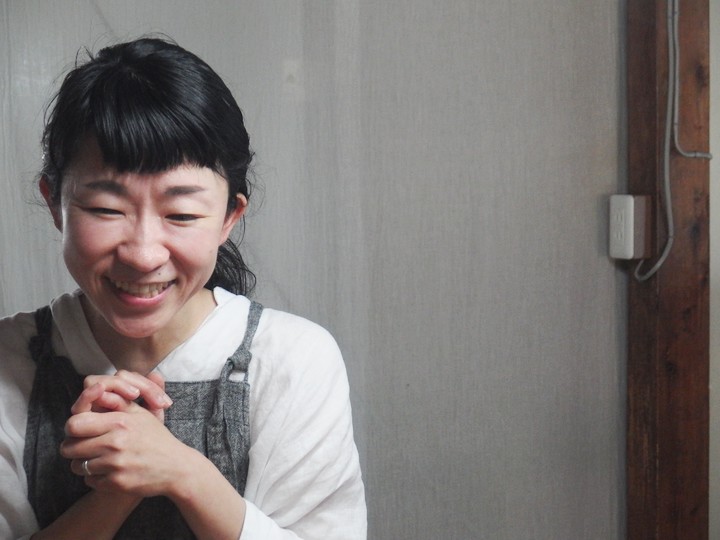
Hanada: You wanted the glass to adapt to you instead (laughs).
Yuki Takenaka : If I had truly loved it, I might have tried harder to adapt. In any case, it just means that molten glass and I weren’t meant to be.
Hanada: If molten glass is out of the question, that narrows down your options considerably (laughs).
Yuki Takenaka : And that is how I arrived at pâte de verre. I loved drawing, and the process of working with my own hands, using my fingertips, and building up detailed work step-by-step at my own pace really suited me.
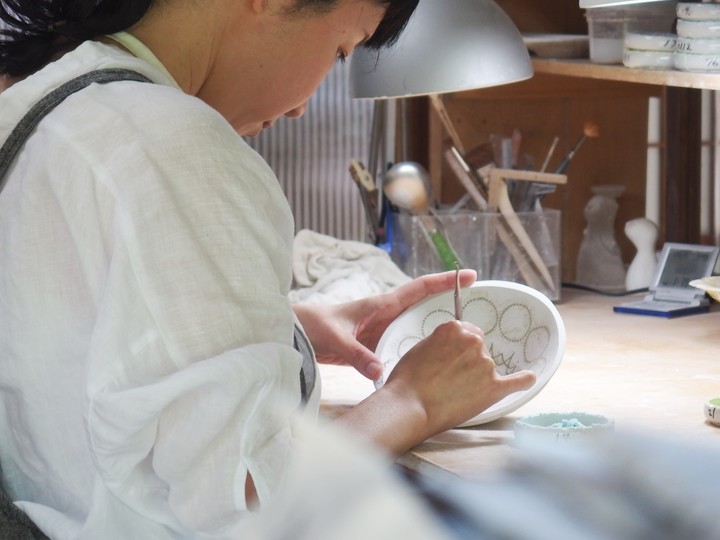
Relying on Impressions
Hanada: Did you start working independently right after graduation?
Yuki Takenaka : No, I worked as an instructor and maker on Notojima Island in Ishikawa Prefecture, did various part-time jobs, and even worked as a school nurse at one point.
Hanada: You have done a wide variety of things.
Yuki Takenaka : Every single job was enjoyable.
Hanada: After a while, you set up your own studio here in Tottori. Have you focused on tableware ever since you started?
Yuki Takenaka : Yes. Pâte de verre is often used to create sculptural objects, but I wanted to make things for everyday use, so right from the beginning, I focused on functional tableware.
Hanada: Is there anything you particularly value when making tableware?
Yuki Takenaka : When I see something and find it beautiful, whether it is an antique or anything else, I try not to do work that merely traces the surface of it. So even if I am inspired by something, I never look at it while making my pieces. I finish them based solely on the impression left in my memory from that moment. Sometimes I look back at the original inspiration later, and I am surprised myself by how completely different my work has turned out.
Hanada: Even if the appearance is different, something must have stayed with you. Do you have any favorite antiques or old things?
Yuki Takenaka : Hmm, what do I like? I am sure there are many, but I can’t think of any right now.
Hanada: So that is how it works for you. Because things come to you as impressions, they aren’t stored in your mind as individual pieces of information.
Yuki Takenaka : That might be true.
My Favorite Lines and Shapes
Hanada: How do you decide on the shapes of your tableware?
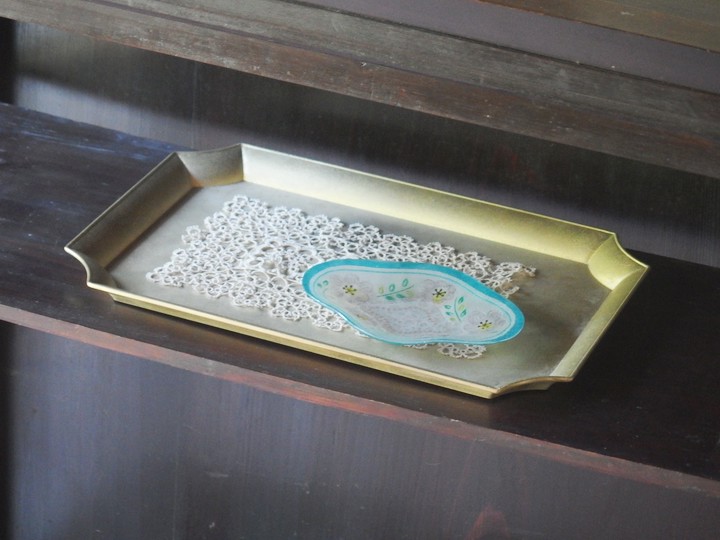
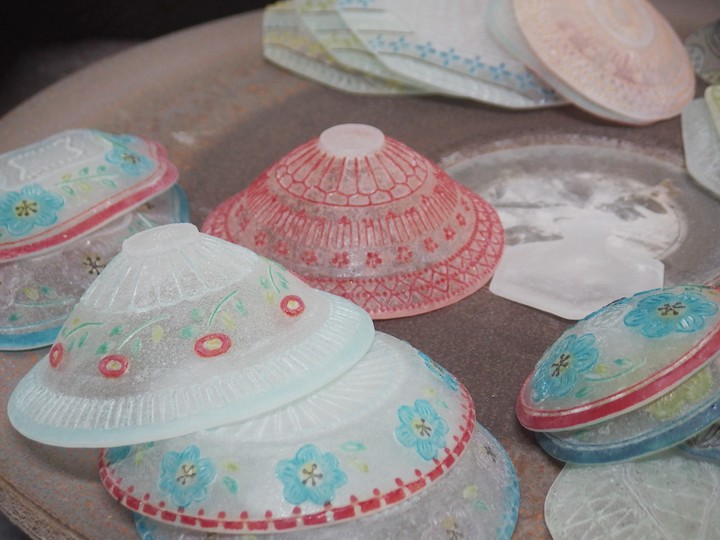
Yuki Takenaka : It begins when I think to myself in daily life, “This shape would be easy to use,” “I want to serve food on this,” or “I wish I had a piece like this.” For example, this piece was originally inspired by a ceramic small plate that I used and liked. In the end, this one also turned out to be a completely different shape from the original ceramic piece (laughs).
Hanada: Did you have a specific food in mind that you wanted to serve on it from the beginning?
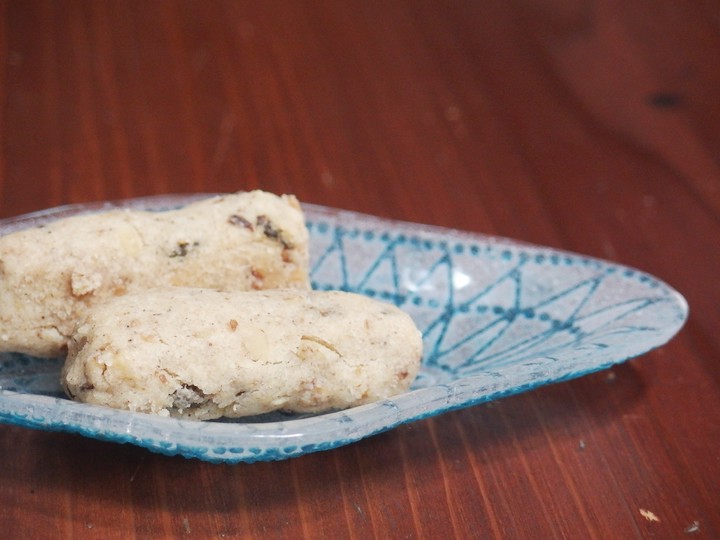
Yuki Takenaka : Cookies. I have a sweet tooth.
Hanada: When making a new item, do you create a prototype out of something first?
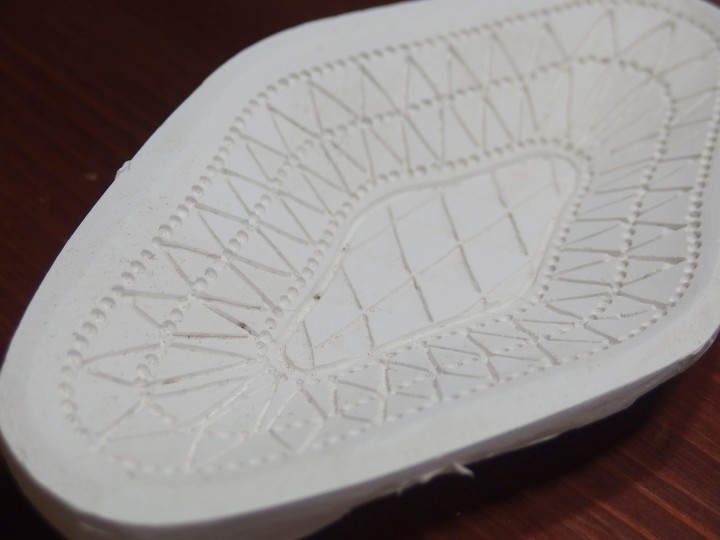
Yuki Takenaka : First, I draw it. I sketch the lines I like over and over to gradually give it form, and when it feels right, I measure how many centimeters it is. Then, I adapt it into a practical, user-friendly size, aligning it with standard dimensions or inches.
Hanada: Can you make a prototype quickly?
Yuki Takenaka : When I’m in a good flow, it takes about half a day.
Hanada: So it depends on your state of mind.
Yuki Takenaka : If I try for about an hour and it doesn’t click, I stop right there and say, “Today is not my day” (laughs).
Hanada: Do you enjoy creating prototypes?
Yuki Takenaka : When you do this repeatedly, your favorite shapes tend to become somewhat defined, don’t they? Sometimes during the process, I discover, “Ah, this is a line I really love.” Bringing that from a flat drawing into a three-dimensional form is very enjoyable.
A Triangle I Wanted to Try
Hanada: Next, you apply the patterns.
Yuki Takenaka : Patterns… it’s fun when ideas come to me, but painful when they don’t (laughs). Sometimes I already have ideas while I am still shaping the piece.
Hanada: So there are times when it is decided right from the start.
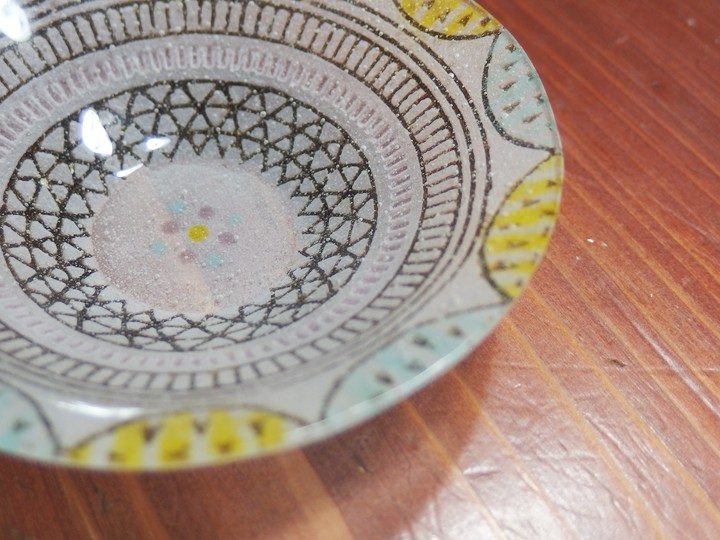
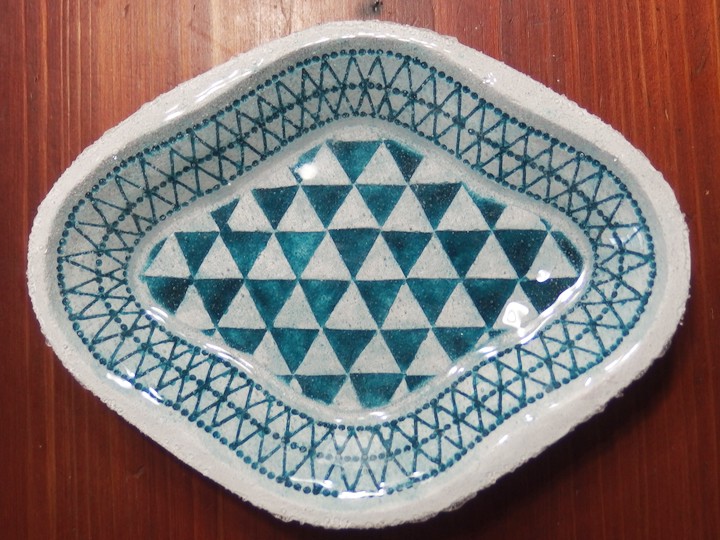
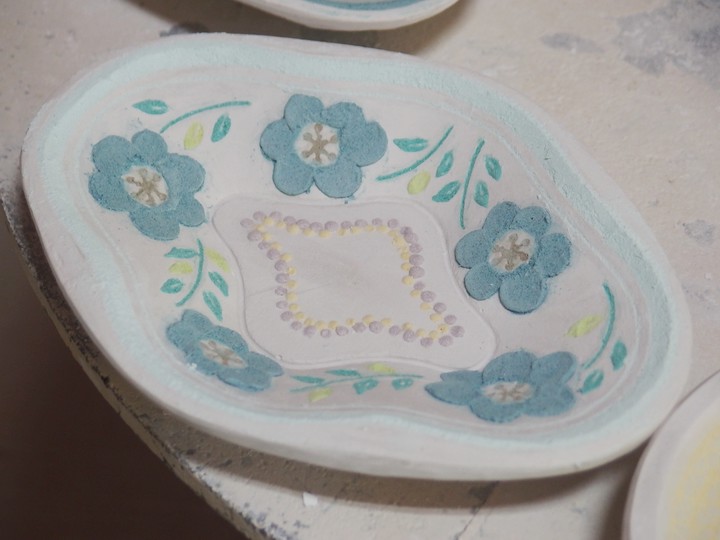
Yuki Takenaka : Yes, but it is rarely fully decided. For example, with this piece, I really wanted to try creating this central triangle. I wanted to show a triangle as a solid shape, rather than just lines.
Hanada: So the shape of the piece and the central triangle were determined first.
Yuki Takenaka : I built the surrounding design to make that central part stand out.
Hanada: Does the surrounding design usually come together smoothly?
Yuki Takenaka : At first, I just try various things. I draw directly onto the plaster mold with a soft 10B pencil, and if it doesn’t look right, I wipe it off and try again, repeating the process. But in the end, you don’t really know how it will turn out until it becomes glass. Some people might be able to visualize it, but I can’t.
Hanada: We might see more variations of this triangle design in the future.
Yuki Takenaka : No, this is the only one. I am already satisfied with it (laughs). I always get satisfied quickly, so I don’t tend to expand into variations.
Hanada: So the idea of trying this on a square plate, for example, doesn’t occur to you.
Yuki Takenaka : No. Even if I tried, other people might not think anything of it, but I would probably feel unsettled. I wish I could be more flexible and free, especially since no one is telling me to stick to one thing.
Hanada: You just don’t like feeling unsettled about your work.
Yuki Takenaka : Exactly. There is no point in going out of my way to make something that leaves me feeling unsatisfied (laughs).
Nine Colors in a Single Piece
Hanada: Once the composition of the pattern is ready, you move on to choosing the colors.
Yuki Takenaka : I have gradually come to understand which colors I like, so it is a matter of combining them. I have more colors to work with now.
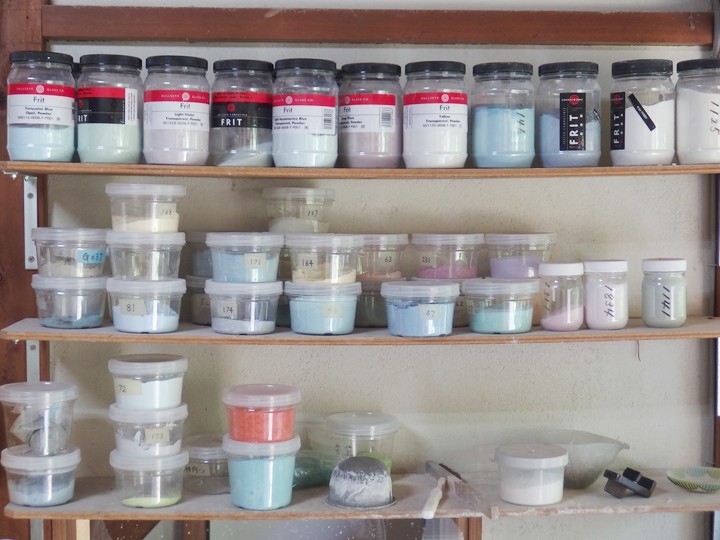
Hanada: Is there anything you are careful about? For instance, trying not to use too many colors?
Yuki Takenaka : As long as it looks cohesive as a whole, I don’t worry about it too much. That is why some pieces use as many as nine colors.
Just to See That Sight…
Hanada: What do you think is the appeal of pâte de verre as tableware?
Yuki Takenaka : I suppose it is the way it sparkles. I think I simply love things that are intricate and require a lot of care. It is hard to explain, but I am drawn to things that are calculated and precise. For example, with clothing or textiles, it is like the difference between a print and embroidery. If it’s embroidery, I think “Wow,” but if it’s a print, it’s more like “Oh, okay” (laughs). It doesn’t matter whether it is made by hand or manufactured by a machine.
Hanada: Perhaps it is the depth found in things that are built up little by little.
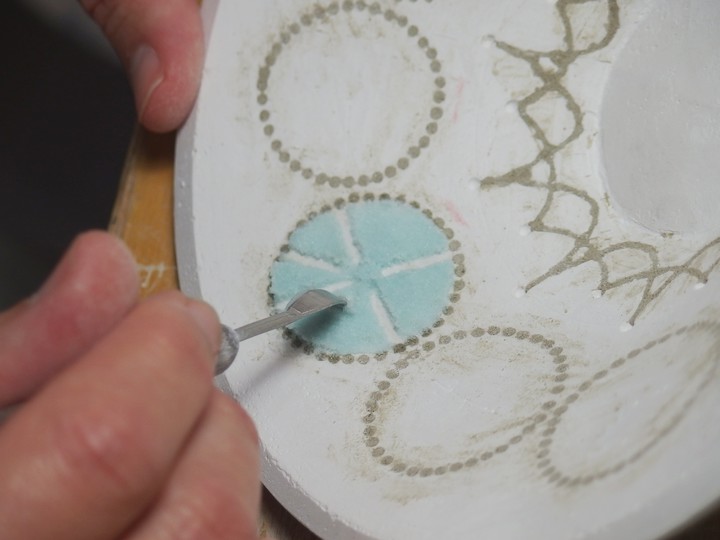
Yuki Takenaka : As a maker, nothing makes me happier than when customers get excited right in front of me, saying “Wow.” For myself, the moment I look forward to most is opening the kiln after the firing is finished.
Hanada: Seeing them all lined up together must be the true climax of the making process.
Yuki Takenaka : Yes. I work hard just to see that sight (laughs). Though even now, there are times when it turns out differently from what I expected, and I wonder what happened.
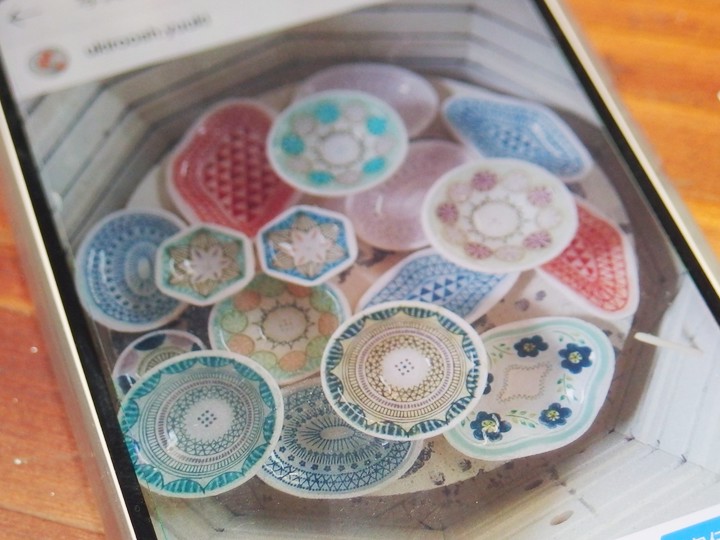
Hanada: The colors are quite different before they go into the kiln, aren’t they?
Yuki Takenaka : I can predict it to some extent, but ultimately you don’t know until it is fired. This isn’t limited to glass, but colors look completely different depending on the colors next to them or what they are paired with.
Looking Ahead…
Hanada: Thank you very much for sharing your story. Please continue to create your unique world through your work.
Yuki Takenaka : Thank you. No matter how fresh or different a new piece feels, it makes me happy when people say, “This is so typical of you.” It makes me feel as though I am genuinely sharing a connection with my customers through the things I love. I hope to keep doing this kind of work in the future.
≪ END ≫
モノを作って食べていく…
花田: 竹中さんは、小さいころからものを作るのは好きだったのですか。
竹中: 絵を描くのは好きでした。 漫画みたいなものを描いたり…。
-:ガラスと出会うのは?
竹中: たまたま本で見て、魅かれていきました。
そして、短大卒業後、東京ガラス工芸研究所に通い始めました。
-:それでも、短大は行かれたのですね。
竹中: 役所勤めの父や、教員の母は、自分の娘がやりたいこと、わけわからなかったと思います(笑)。
「『モノを作って食べていく』って何??」って(笑)。
そういう両親の意向もありました。
ちなみに、短大は英語が受験科目にないところを選びました(笑)。
溶けているガラスに手を焼く
-:東京ガラス工芸研究所はいかがでしたか。
竹中: とにかく、ガラスを扱ってみたいとしか考えていなくて。
技法なんて、何があるのかさえ全く知らないから、まずこそからです。
ガラス工芸研究所ならステンドグラス以外は習えます。
バーナーワーク、パート・ド・ヴェール、吹きガラス、カットガラス…、全部習って、そこから自分に合うものを選べばいいやって思っていました。
自分が吹きガラスに向かないことも、そこで気が付きました。
-:そうでしたか。
竹中: あれはねえ…(笑)。
溶けているガラスが、自分には合わなくて…吹きガラスって、固くなったらもう一回熱してとか、柔らかすぎたら状態を整えてとか、こっちがガラスに寄り沿うじゃないですか。
そういうの、無理なんですよ(笑)。
-:「ガラスからわたしに寄って来てよ」と(笑)。
竹中: 好きだったら、頑張って寄り添おうとしたかもしれません。
いずれにしても、溶けているガラスと私は縁が無かったということです。
-:溶けているガラスがダメだとなると相当選択肢は狭まってきます(笑)。
竹中: そこで、パート・ド・ヴェールです。
絵を描くことが好きだったし、自分の手を動かして、指先を使って、自分のペースで細かい作業を少しずつ積み上げていくという工程が合っていたんだと思います。
印象を頼りに
-:卒業後、すぐ独立されたのですか。
竹中: いえ、石川県の能登島で講師/作り手の仕事をしたり、フリーターをしたり、学校で保健の先生をしていたこともあります。
-:色々されているのですね。
竹中: どの仕事も楽しかったです。
-:しばらくして、この鳥取で独立です。 始めたときからうつわでしたか。
竹中: はい。 パート・ド・ヴェールだとオブジェなどが多いのですが、私は日常で使うものを作りたいと思っていたので、最初から「使える」うつわでした。
-:うつわを作るうえで、大切にされていることはありますか。
竹中: 古いものでも何でも、何かを見て「素敵だな」と思っても、その表面をなぞるような仕事をしないようにしています。
なので、影響を受けてもそれを見ながら作ることはせずに、記憶の中で、自分がその時に受けた印象だけを頼りに仕上げます。
あとからそのヒントになったものを見ることがあるんですけど、全然違うものになっていて自分でも驚きます。
-:外見は違っても、何かしらインプットされているはずです。
古いもので好きなものはありますか。
竹中: うーん、何が好きだろう?色々あるはずだけど、思い出せません。
-:竹中さんは、そういう感じなのですね。
印象で入ってくるから、頭に個々の情報としては蓄積されていないというか…。
竹中: そうなのかもしれません。
自分の好きなラインやかたち
-:うつわのかたちは、どうやって決まってくるのですか。
竹中: 日常の中で「このかたち使いやすいな」とか「これを盛りたいな」とか「この形が欲しいな」とか思ったときが始まりです。
例えば、これも元々、焼き物の小皿使っていて、いいなと思って作ったものです。
結局これも、元の焼き物とは全く違うかたちになりました(笑)。
-:最初から何かを乗せたかったのですか。
竹中: クッキ-です。私、甘いものが好きなので。
-:新作の場合は、何かでまず原型を作るのでしょうか。
竹中: 最初は絵で描きます。
自分の好きな線を何回も描きながらだんだん形にしていって、しっくり来た時にそれが何センチか測ります。
で、一般的な寸やインチの単位にあわせて、使いやすいサイズに落とし込んでいきます。
-:原型はすぐできるものですか。
竹中: 調子がいいときは半日で。
-:調子によるのですね。
竹中: 一時間くらいやってみて、ピンと来ないときは、そこで一旦とめます。
「本日は調子が悪い」と(笑)。
-:原型造りは楽しいですか。
竹中: 何度もやっていると自分の好きなかたちって大体決まってくるじゃないですか。
「あ、これ、わたしの好きなラインだな」って作業の中で見つかることがあって…。
それを平面から立体にしていく作業は楽しいです。
やってみたかった三角
-:次に模様をつけていきます。
竹中: 模様…浮かぶときは楽しいですけど、浮かばないときはつらいです(笑)。
かたちを作っている段階から、既にアイデアが浮かんでいることもあるし。
-:最初から決まっている場合もあるのですね。
竹中: ありますけど、すべて決まっていることはほとんどありません。
例えば、これは、この見込みの三角がやりたかったんです。
線ではなく、面で見せる三角を。
-:うつわのかたちと、模様の三角が決まっていたのですね。
竹中: 周りはそれが引き立つようなものを組み立てていきました。
-:周りはスッキリ決まっていくものですか。
竹中: 最初は適当に色々やっていくんです。
石膏の型に直接10Bの柔らかい鉛筆で描いていって、ダメだなあと思ったら、ふき取って、ってそれを繰り返すんです。
でも結局、ガラスになってみないと分かりません。
分かる人は分かるんでしょうけど、私は分からないです。
-:この三角のバリエーションも増えてくるかもしれませんね。
竹中: いや、これはこれだけです。
もう満足してしまったので(笑)。
いつもすぐ満足してしまうので、バリエーションが広がらないんですよ。
-:じゃあ、これを四角いお皿でやろう、とかそういう発想にはならないわけですね。
竹中: ええ。
やってみても、ほかの人は何も思わないかもしれないけど、私は多分モヤモヤしちゃう。
もっと柔軟に、自由にできればいいんですけど…。
別に固執するように誰かに言われているわけでもないのに。
-:モヤモヤするのが嫌なのですね。
竹中: そうです。 わざわざモヤモヤするようなもの作ってもしかたがないし(笑)。
1つのうつわに9色
-:絵の構図ができて、続いて色を決めていきます。
竹中: だんだん自分の好きな色が分かってきたので、その中での組み合わせです。
今は色も増えてきました。
-:気にしていることはありますか。
あまり色を使い過ぎないように、とか…。
竹中: 全体として、まとまっていればいいので、そんなに気にはしていません。
なので、9色使っているものもあります。
あれを見たくて…
-:竹中さんが考えるパート・ド・ヴェールのうつわとしての魅力は何ですか。
竹中: 「キラキラ」なところ、でしょうか。
私は単純に手が込んでいるものが好きなんだと思います。
うまく説明できないんですが、私は、計算されて緻密なもののほうに、魅かれます。
例えば、洋服や布物でいうと、プリントと刺繍の違いかなと思っていて、刺繍なら「オーー」って思うけど、プリントなら「へーー」となるような…(笑)。
たとえ、それが手仕事であろうと、機械製造であろうと。
-:少しずつ積み上げられたものの奥行の魅力なのかもしれません。
竹中: 作り手としては、何よりも、お客さんが目の前でときめいてくれるときが、うれしいです。
「わー」って感じで。
私自身も焼き終わって、窯を開けるときが一番楽しみですし。
-:あの、ずらっと並んでいる感じですね。
クライマックス…ですね、作る中では。
竹中: はい。
あれを見たくて、がんばってる…(笑)。
いまだに「あれ?」って予想と違うこともありますが。
-:窯に入れる前は少し色、違いますものね。
竹中: ある程度は予測がつきますが、結局は焼けるまで分かりません。
ガラスに限らないけど、色って、隣り合う色や合わせる色で、見え方が大きく変わりますから。
これからも…
-:お話、有難うございました。
これからも、竹中さんの世界を作り続けていってください。
竹中: はい。
どんなに新しい雰囲気で新作を作っても「竹中さんっぽいね」って言ってもらえるのが嬉しいんです。
自分が好きなものに対して、素直にお客さんと共感できているような気がして。
これからも、そういう仕事を続けていきたいと思っています。
関連記事はこちら