



English version of the interview here.
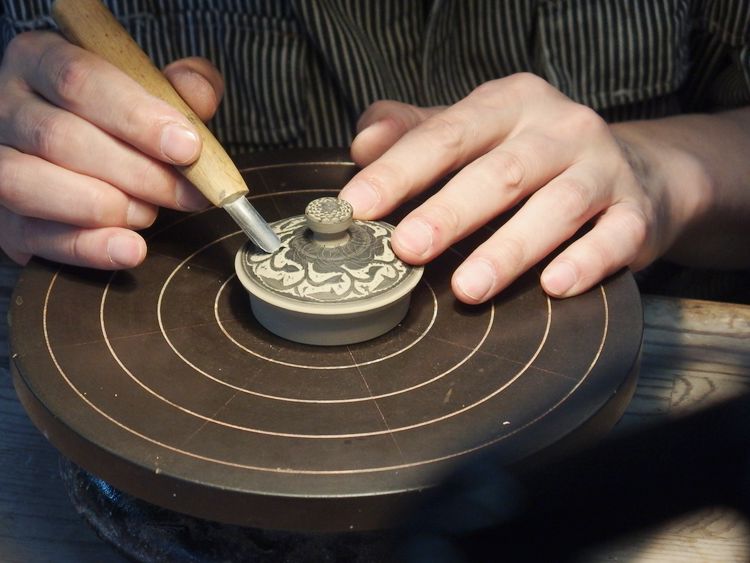
What My Grandfather Left Behind
Hanada: How long has it been since you started carving?
Tokuhiro Masubuchi: About ten years.
I gradually began around 2007, and from about 2010 people were finally able to see my work.
Hanada: Recently, we’ve started seeing works with a different atmosphere as well.
Tokuhiro Masubuchi: Until now, geometric patterns were the main focus, but lately I’ve been trying figurative motifs too.
Hanada: It feels like your work has evolved.
Tokuhiro Masubuchi: Honestly, I’m not sure if it’s evolution or if I’m just wandering… (laughs).
Hanada: For now, let’s try to stay on a serious track (laughs).
So, was there anything in particular that inspired you to begin working with figurative motifs?
Tokuhiro Masubuchi: It was something my grandfather left behind.
Hanada: Your grandfather worked in metal engraving, didn’t he?
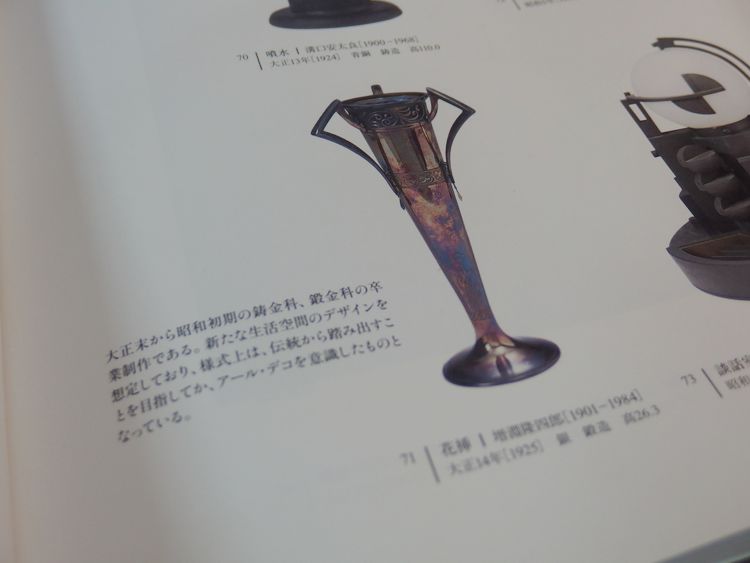
Tokuhiro Masubuchi: Yes, that’s right. He originally majored in metal engraving in art school, but after graduation he worked in wood carving and later became an instructor, teaching various crafts. About twenty years ago, I found some of his materials in the storage shed at my parents’ house. This kind of thing. Well… I just quietly took it with me.
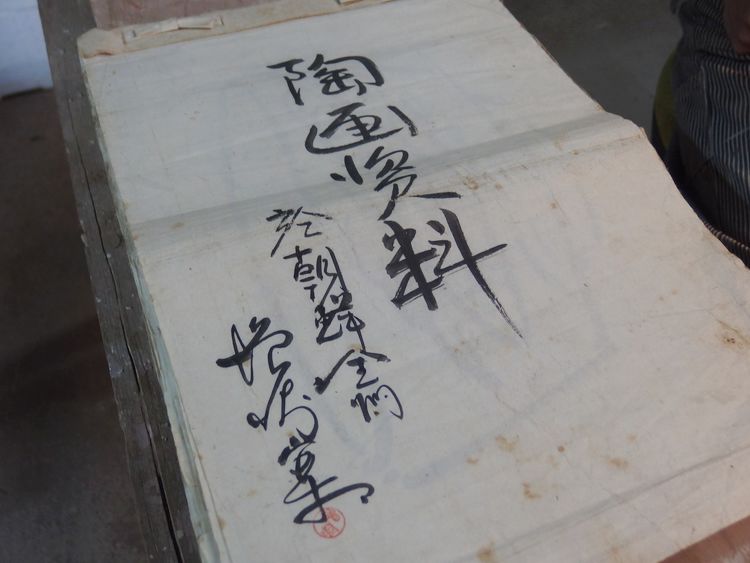
Hanada: The year is 1940…? May I take a photo of the inside?
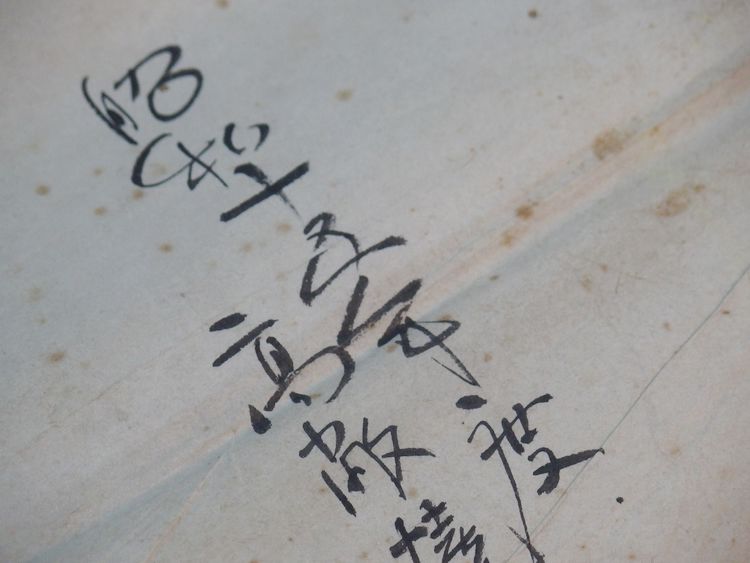
Tokuhiro Masubuchi: Hmm… I wonder what my grandfather would think… I should’ve asked while he was alive (laughs). Please photograph only the cover, if you don’t mind. Sorry.
Hanada: (Looking at the materials) This is pottery, right? Korean?
Tokuhiro Masubuchi: This was before the war. There were wonderful traditional ceramics in Korea at the time, and there was a movement to further develop them as an industry by building on those traditions. My grandfather went there as an instructor, and I think these materials are from that period. He probably showed these to the local artisans saying, “Why don’t you try making something like this?”
Hanada: Just as the people of that time made what they were shown, you’ve ended up making them too.
Tokuhiro Masubuchi: Something like that. I’m just looking at them on my own, though (laughs).
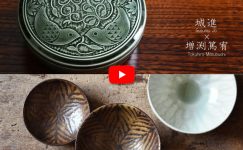
Hanada: Earlier we saw a piece with a fish motif, and you also incorporate fish motifs now. So these materials were the trigger.
Tokuhiro Masubuchi: Yes. But if I simply copied these drawings exactly as they are, it honestly wouldn’t be very interesting.
Hanada: …Well, I can’t exactly agree and say “Yes, it’s not interesting,” about something your grandfather drew (laughs).
Tokuhiro Masubuchi: Hahaha, true. So I give them a more contemporary—well, more “my own”—interpretation.
Hanada: Looking at these materials must have given you moments to imagine your grandfather’s work back then.
Tokuhiro Masubuchi: Yes, I found it fascinating.
Hanada: So you were enjoying it after all… (laughs).
Tokuhiro Masubuchi: There was more than this—among his belongings were bamboo craft pieces decorated with a heated metal stamp, and wood carvings as well. There were also pieces made by the artisans he had instructed back then. Every time something new turned up, I’d go “Whoa…”.
Hanada: What a surprise. Your grandfather did all sorts of things.
Tokuhiro Masubuchi: Although he specialized in metal engraving, as an instructor he apparently had to be proficient in everything.
Starting With Karakusa Patterns…
Hanada: You’d been looking at the materials for a long time, but you only recently began actually making pieces from them.
Tokuhiro Masubuchi: I always thought, “I’ll do it someday,” but the right timing never really came. It would’ve been quicker to just start the moment it crossed my mind, I guess.
Hanada: Having something new you want to try is a wonderful thing. You even showed me the karakusa work you’re doing right now. Do you have any other motifs in mind?
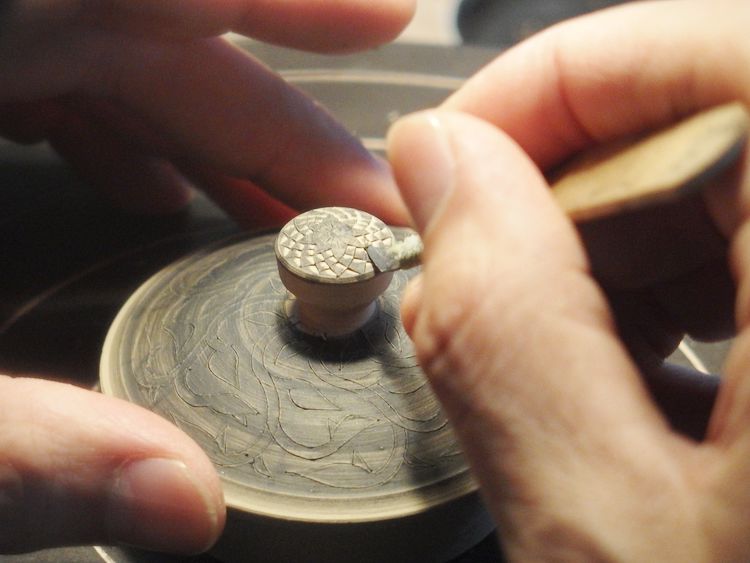
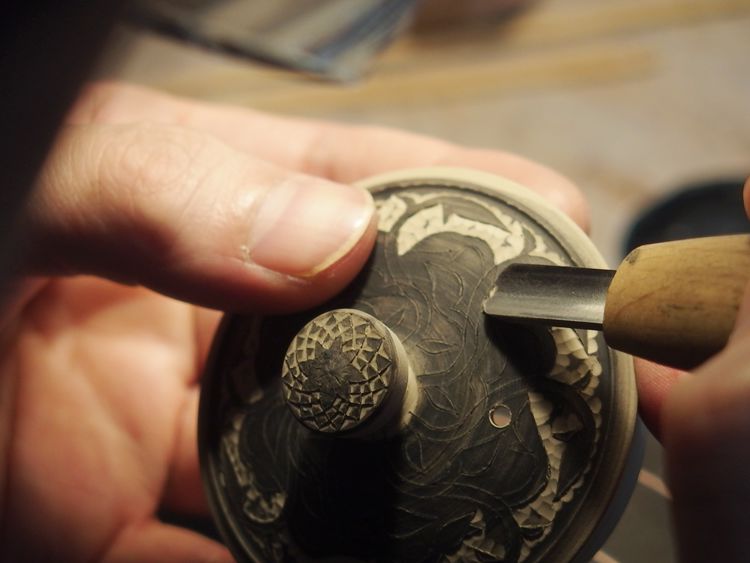
Tokuhiro Masubuchi: At the moment I’m fully occupied with organizing the karakusa patterns, but I do have ideas for the future. I still haven’t found the perfect way to execute them, so please look forward to what comes next.
Hanada: I imagine the overall feel of the finished pieces will also change. How does it feel to make them?
Tokuhiro Masubuchi: It was harder—far harder—than I expected.
Hanada: (laughs) So you mean much harder than you expected.
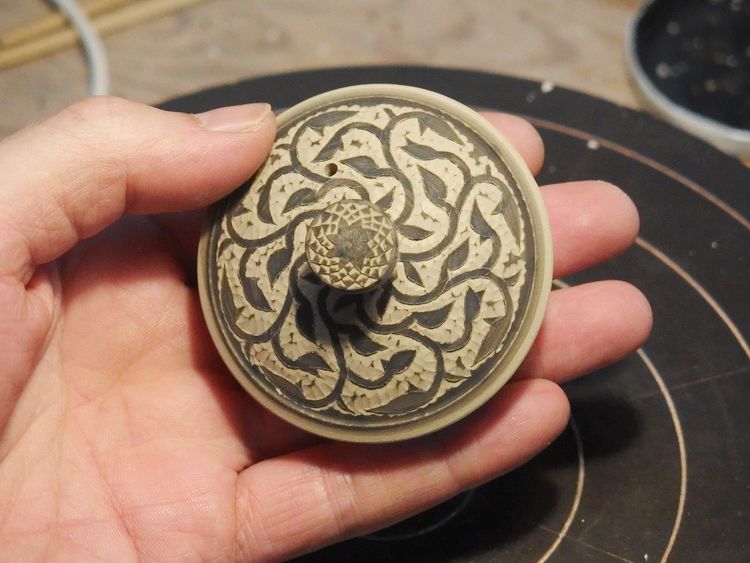
Tokuhiro Masubuchi: I always start from “Okay… so how should I approach this?” so the thinking time before beginning the work itself gets long. I think I’ll get used to it eventually. Also, the difference between how the design looks after the initial sketching and how it looks after carving is huge.
Unlike geometric patterns, you see the motif as an outline at first, but after carving, your eyes focus on the inside of the lines. So even if I think I’ve drawn something big, it ends up looking small. Like, “Huh? It’s tiny… what happened?” and suddenly there’s so much empty space (laughs). Everything looks really small.
Hanada: The fact that you’re explaining this so passionately means it must have ended up really small (laughs).
Tokuhiro Masubuchi: Probably because your eyes are drawn to the carved lines. Anyway—it’s small. And once it’s fired, it gets even smaller, until eventually it just disappears (laughs).
Never Truly Random
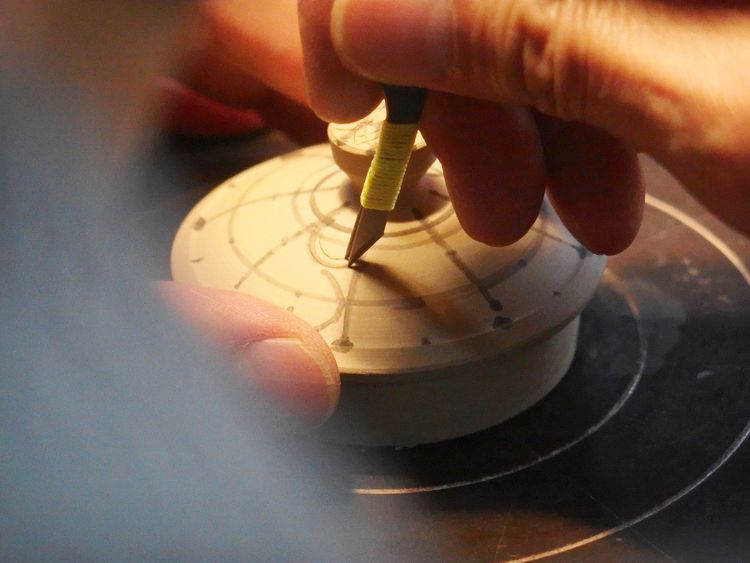
Hanada: How was drawing the lines?
Tokuhiro Masubuchi: It requires moving the blade even more smoothly than with geometric designs.
Hanada: With geometric continuous patterns, rhythm and tempo are important, and they’re essentially combinations and repetitions of fixed movements. But with figurative motifs, are there more random movements?
Tokuhiro Masubuchi: It’s challenging, but it’s not that random. In fact, the increase in curves and other patterns is what enabled me to start working with figurative designs. It’s more complex, but the fundamental principles of the work haven’t changed.
Creating Depth
Hanada: How was the first firing?
Tokuhiro Masubuchi: At first I thought, “Oh no…” (laughs). “It’s hopeless.” It looked flat. Even though I carved it specifically to create depth, it ended up looking flatter than if I had just drawn it with a pencil… (laughs).
Hanada: What happened?
Tokuhiro Masubuchi: I was excited, and I think I put too much of my own feelings into it.
Hanada: That’s wonderful— even after all these years, there’s work that gets you so excited you can’t control yourself.
Tokuhiro Masubuchi: Well… that’s one way to put it (laughs).
Hanada: Did you pay attention to carving “deep” and “shallow” as well?
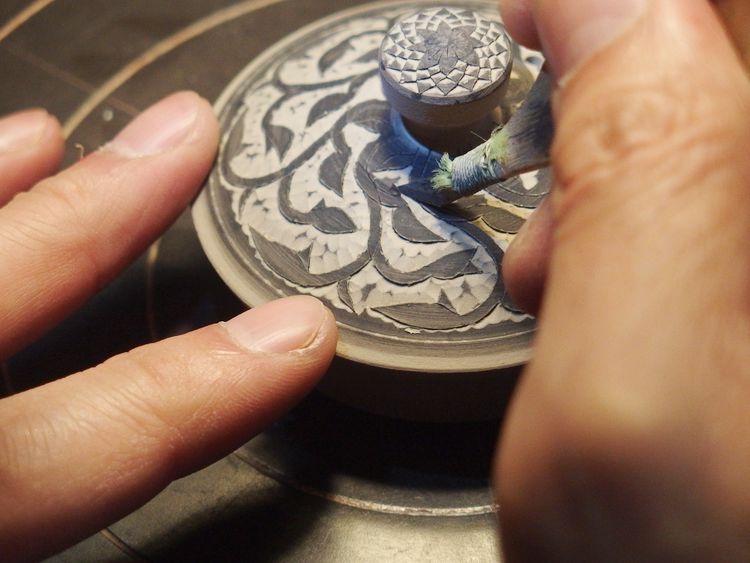
Tokuhiro Masubuchi: As for depth, I can generally predict the gradation, so that wasn’t too much of a problem.
More than that, because the carving direction isn’t consistent, I had to think about how to proceed so I could carve the whole design smoothly, and how to make the carved marks look rhythmic.
Hanada: My impression is that the combination of exquisite technique with newfound freedom and playfulness has made your work even more appealing.
Tokuhiro Masubuchi: I’m happy to hear that.
Continuing This Work
Hanada: As a maker, what do you find interesting about carving? You’ve continued to do work that many other artists don’t attempt.
Tokuhiro Masubuchi: I’ve never really thought about whether I’m suited for it or whether I like it or not, but as I keep doing it, it feels more and more natural in my hands. At the same time, even after all these years, I feel like there are still discoveries waiting to be made. I’m always aware of that. Maybe that duality is part of it.
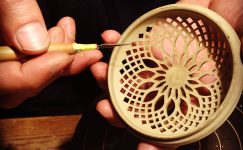
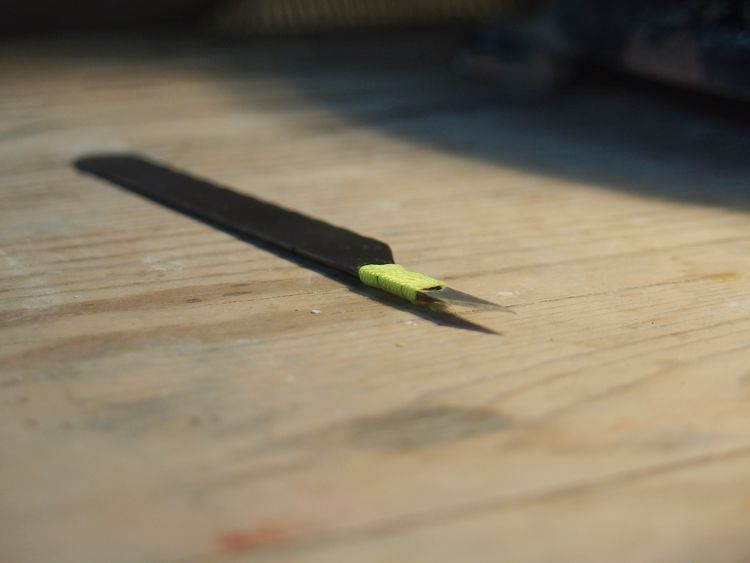
Hanada: Your tools are constantly evolving too. Earlier, you were making a new tool right in the middle of working.
Tokuhiro Masubuchi: I change the number of blades, their orientation, the spacing between them…. As I move forward, I find tools I don’t have yet. And when I need something at that moment, I make it.
The Proper Place for Fire
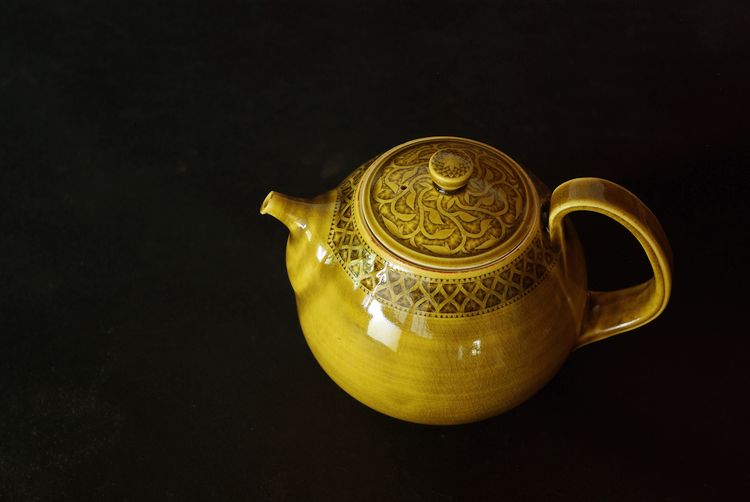
Hanada: Looking ahead to your next exhibition. It seems you’ll also have more color variations.
Tokuhiro Masubuchi: Yes—amber glaze and off-white. I think the cherry blossom pink might just make it in time.
Hanada: Anything you’d like to add? Perhaps something amusing…?
Tokuhiro Masubuchi: Lately my head is full of the fire (* there was a recent fire right next door to his place).
Hanada: So you’ll move forward undeterred by the fire.
Tokuhiro Masubuchi: Yes. Fire should stay where it belongs—inside the kiln.
Hanada: Quite right. Thank you very much.
≪ END ≫
祖父の残したものから
花田: 彫りの仕事を始めてからどれくらい経ちますか。(以下花田-)
増渕:10年くらいです。
2007年くらいから少しづつ始めて、2010年くらいから皆様に見ていただけるようになりました。
-:最近は新たな雰囲気を持つものも出てきています。
増渕:今までは、幾何学パターンが主でしたが、最近は具象にも手を出しています。
-:進化してきました。
増渕:正直言って、進化なのか迷走なのかは自分でもわかりません…(笑)。
-:しばらくは、まじめに話を進めていきたいと思います(笑)。
さて、具象を取り込んだきっかけは何かあったのでしょうか。
増渕:祖父の残したものです。
-:おじい様、彫金の仕事をされていました。
増渕:そうそう、もともと美術学校では彫金を専攻していたのですが、卒業後木彫の仕事を経て技師として工芸全般の指導をしていた時の資料を、20年くらい前に実家の倉庫で見つけたんです。
こういうのがあったんですよ。
まあ、黙って持ってきちゃったんですけど。
-:昭和15年ですか…。
中、写真撮ってもいいですか。
増渕:うーん…、祖父がどう思うか…。生きているうちに断っておけばよかったな(笑)。
とりあえず、表紙だけにしておいてください。スミマセン。
-:(資料を見ながら)これは、やきものですよね。朝鮮ですか。
増渕:当時、戦前ですよね。その中、朝鮮に元々あった焼き物は素晴らしいものでしたが、それを基にさらなる向上を目指し産業としての発展に努めましょうといった動きが、現地であったそうです。
それを指導する立場であっちに行っている時期があって、その時の資料なんだと思います。
「こういうの作ってみたら」って感じで現地の人に見せていたのでしょうね。
-:当時の人が見せられて作ったように、増渕さんも作ることになったわけですね。
増渕:そんなところです。
僕は勝手に見ていますけど(笑)。
-:今、魚の文様のうつわがありましたけど、現在、増渕さんもされていますね。
この資料がきっかけですね。
増渕:ええ。でも、これをこの絵のまま使っても、正直言って、あまり面白くないじゃないですか。
-:…。おじい様が描いたものを僕まで一緒になって「そうですね。面白くないですね」とは言えません(笑)。
増渕:ははは(笑)、確かに。
で、それを、こう今風…というか自分風にして。
-:資料を通じて、当時のおじいさまの仕事に思いを馳せるような時間もあったのでは?
増渕:そうですね。「おもしろいな」と思いました。
-:結局、面白がっているし…(笑)。
増渕:これだけじゃなくて、遺品の中には、焼きゴテで絵付けをした竹工や、木彫のものもありました。
その当時指導していた職人さんたちのものもあったんです。
色々出てくるたびに「うぉー」っていう…。
-:「驚き」ですね。おじい様色々やっていたのですね。
増渕:祖父はもともと専攻が彫金でも、指導員なので一通りできなければいけなかったようです。
まずは唐草から…
-:ずっと前から資料は見ていたけど、実際作るようになったのは最近ですね。
増渕:「いつかはやろう」とずっと思っていたのですが、「いつやろう」というタイミングはなかなか来ませんでした。
思い立ったときにやっちゃうのが、手っ取り早いんでしょうけど。
-:新たにやりたいことがあるのは幸せなことだと思います。
唐草もたった今作業を見せていただきました。
ほかに何かモチーフはありますか。
増渕:今は唐草をまとめるのに手いっぱいですが今後の構想はあります、まだ充分に手が決まってこないので乞うご期待といったところです。
-:出来上がるものの雰囲気も変わってくると思いますが、作っていていかがですか。
増渕:「思ったより難しい」より、難しかったです。
-:(笑)?「思ったより、はるかに難しい」ということでしょうかね。
増渕:「さあ、どうしようか」から始まりますから、作業を始める前の考える時間も長いです。
その内慣れてくるとは思います。
あと、骨書きのあとの、彫りの前後での見え方の違いが大きいです。
幾何学と違って、最初はアウトラインで文様が目に入ってきますが、
彫った後は線の内側で文様が目に入ってきます。
そうなると、実際大きく描いたつもりでも、小さいんですよ。
「あれ、小さい…なんだこれ」っていう。ほとんど余白になっちゃって(笑)。
とにかくすごく小さく見えるんですよ。
-:ここまで力説されるということは、よほど小さくなってしまったのですね(笑)。
増渕:彫ったほうに目線が向くからだと思うんですけど、とにかく、小さいです。
焼いたら、さらに小さくなって、しまいには見えなくなってしまう(笑)。
決してランダムではない
-:線引きはいかがでしたか。
増渕:幾何学以上に、スムーズに刃物を動かす必要があります。
-:幾何学のような連続文様は、リズムとかテンポを大事にしつつ決まった動きのユニットの組み合わせと繰り返しだと思うんですけど、具象だとランダムな動きも増えてくるのでしょうか。
増渕:難しいですが、そこまでランダムにもなりません。
寧ろ、曲線などのパターンが増えてきたので、具象に取り組めるようになった部分もあります。
複雑にはなっていますが、作業の原則が変わったわけではありません。
奥行を出す
-:最初の窯出しはいかがでしたか。
増渕:最初は「やべえな」って思いましたよ(笑)。
「話にならないな」と。平面的なんです。
奥行を出そうと思ってわざわざ彫っているのに、平面に鉛筆なんかで描くより平面的になってしまって…(笑)。
-:どういうことでしょう。
増渕:最初でテンション上がっていたし、多分、自分の気持ちを盛り込みすぎたんだと思います。
-:いいですね。
ここまでキャリア積んでも、自分でコントロールできないくらいテンションが上がる仕事って。
増渕:まあ、そういう言い方もありますかね(笑)。
-:彫りの「深い」「浅い」も気を使われましたか。
増渕:彫りの深い浅いに関しては、大体のグラデーションは予測できるので、そうでもありませんでした。
それより、彫る方向が一定ではなくなるので、どう彫り進めればスムーズに全体を描き切れるかと、彫り跡をリズミカルに見せるにはどうすれば良いかということは考えるようになりました。
-:超絶技巧に自由さや楽しさが加わって、仕事がより魅力的になってきたなというのが僕の感想です。
増渕:それだとうれしいです。
これからもこの仕事を
-:彫りの仕事、作り手として面白く感じていることを教えて下さい。
他の作者の方々がしないことを、増渕さんはこれだけ続けているわけです。
増渕:している仕事について自分の向き不向きや、好き嫌いは、ほとんど考えたことありませんが、やっているうちに自らの手に馴染んできている気はしています。
ただ一方で何年やってもまだ発見がありそうな気がします。
常にそれを感じる。その辺の両面性でしょうか。
-:道具も常に更新されていきます。
先ほども制作中に新たに道具を作られていました。
増渕:刃の枚数を複数にしたり、向きを変えたり、その刃の間の幅を変えたり…
色々進めていくと足りない道具が出てきます。
今使う道具は今欲しいですから、その時作ることも多いです。
火のあるべき場所
-:次の展示会に向けて。
色のバリエーションも増えそうです。
増渕:飴釉と生成りですね。
桜色はギリギリ間に合うかな、って感じです。
-:言い残したことありますか。
そろそろ面白い話とか…。
増渕:最近は火事のことで頭いっぱいだから(最近増渕さんのすぐ隣で火事がありました)。
-:火事にもめげずに突き進むということですね。
増渕:そうですね。 火は窯の中に閉じ込めておきたいものです。
-:おっしゃる通りです。
有難うございました。