

English version of the interview here.
Lidded Pitcher
Hanada: I’d like to ask you about the pieces you’re exhibiting this time.
The lidded pitcher immediately catches the eye, and it seems versatile enough for various occasions.
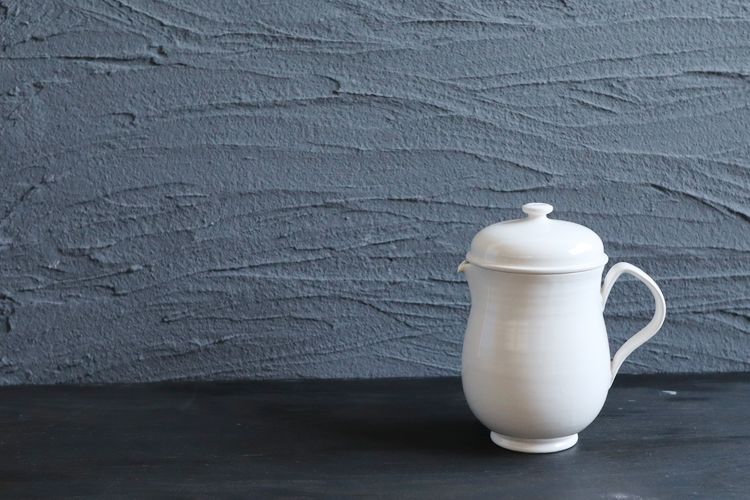
Naoto Okada: Originally, it was just the pitcher without a lid.
I’ve made many pitchers before, but since this one is wheel-thrown, I wanted to make a shape that takes advantage of the natural roundness the wheel can produce.
Hanada: The shape is very well-balanced from top to bottom.
Naoto Okada: I balanced the necessary capacity with the visual appearance.
If you remove the lid, you can place a standard dripper on top. With the lid on, serving guests looks elegant and also adds a sense of ceremony. It should hold about three servings.
While you can’t pour with the lid on, it helps keep the contents warm, so leaving it on the table encourages a relaxed pace.
The opening is wide enough for easy hand washing.
Hanada: The handle also looks easy to hold.
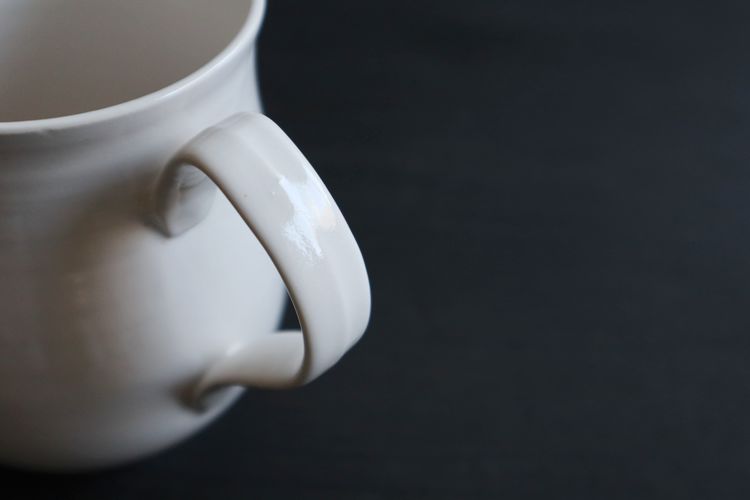
Naoto Okada: Considering practicality, a handle with some weight works best when it is thin and flat. Thin makes it easy to slip your hand in, flat makes it easy to grip.
From there, I decide the form while maintaining visual balance.
Hanada: Did you refer to any existing pieces when creating this pitcher?
Naoto Okada: I think I’ve been unconsciously influenced by lingering impressions of antique glass and ceramics that remain in my mind.
Multi-Purpose Rice Bowl
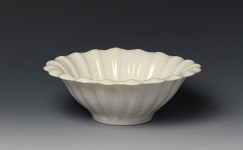
Hanada: Your recent creation, the Dutch Bowl.
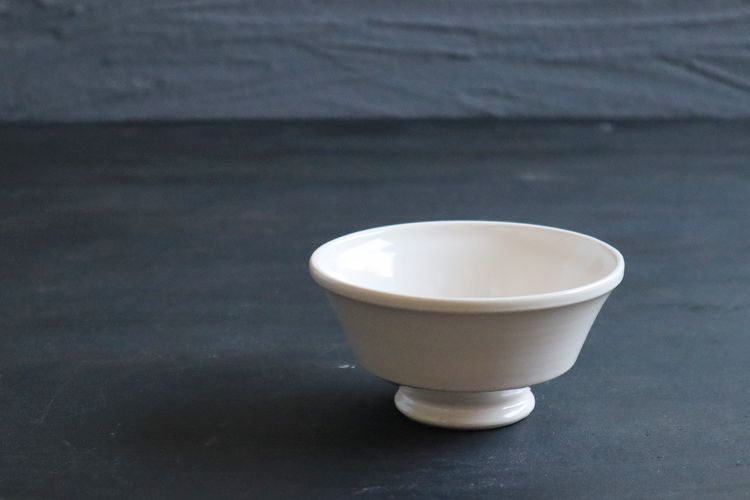
Naoto Okada: People often ask, “Don’t you have a rice bowl?”
I don’t have a fixed definition of a “classic rice bowl,” and everyone has their own image of one.
Even if I made what I personally thought was the ideal rice bowl, it might not feel right for others. So instead, I made something versatile that can be used in various ways.
Hanada: A multi-purpose bowl that works for more than just rice… that’s interesting.
Naoto Okada: I wanted to make something that doesn’t immediately evoke “rice.”
It works for fruit, soup, or anything really.
Hanada: The balance between appearance and functionality is well-achieved.
Naoto Okada: Once you use it, you’ll notice the stepped inner rim fits the lips well, making it easy to eat. I use it myself every morning for rice.
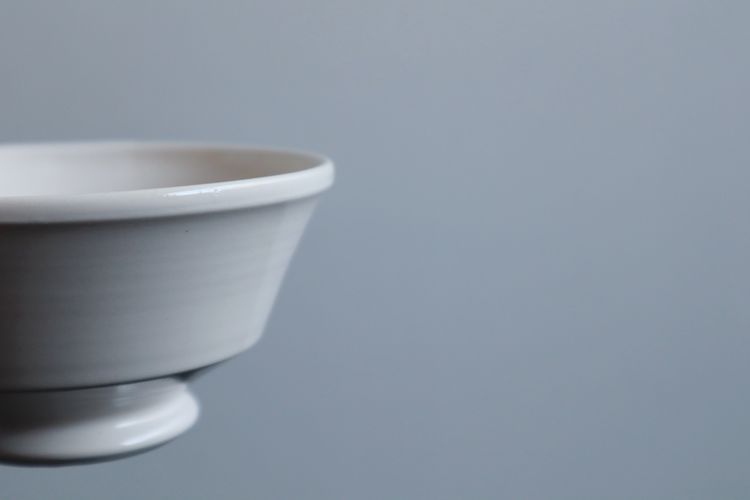
Hanada: The foot of the bowl is also beautiful.
Naoto Okada: The motif was a Dutch drinking cup, but I widened it and adjusted the size.
Initially, it was too deep or too large… I remade it three times until I was satisfied.
Hanada: At first glance, it looks small.
Naoto Okada: Yes, but it holds more than it seems.
All four members of my family use these, even for desserts.
Hanada: It could also be used as a serving bowl for hot pot.
Naoto Okada: Exactly.
Bowl for Soup
Hanada: A one-handed bowl.
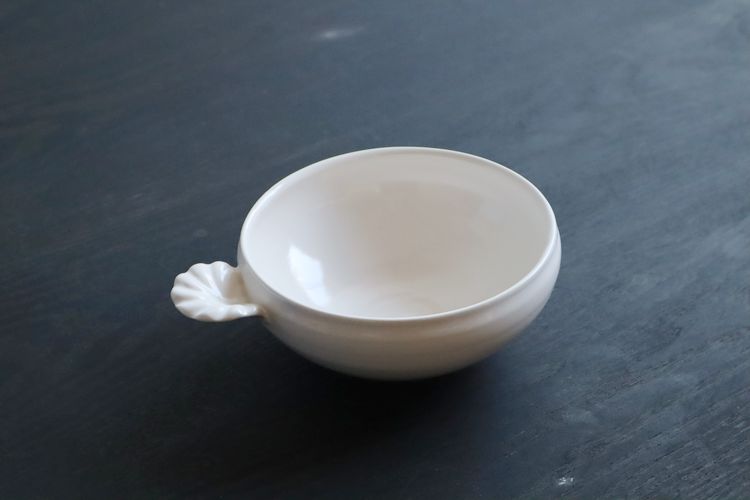
Naoto Okada: I made it for drinking soup.
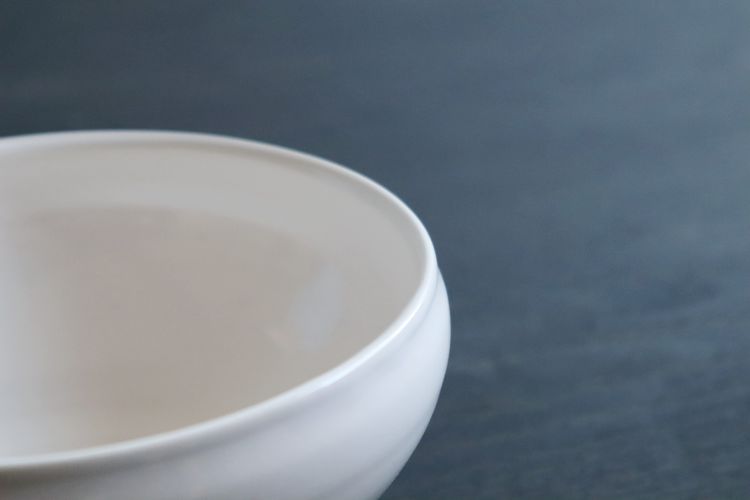
The rim is flared for easy scooping.
Hanada: The handle is also striking.
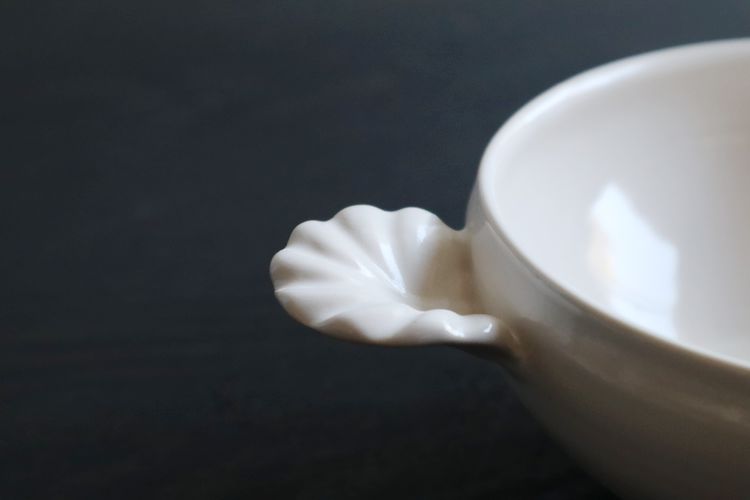
Naoto Okada: The handle is angled so it can be supported with the left hand.
Hanada: So it isn’t horizontal.
Naoto Okada: Correct. There’s also a recess to improve grip.
Hanada: The decoration on the handle is vivid and adds an accent to the bowl.
Naoto Okada: Antique metal molds for sweets inspired it.
Hanada: By the way, what’s your favorite soup?
Naoto Okada: I like simple soups where the taste of vegetables comes through, like pumpkin or carrot potage.
Actually, I also enjoy hearty soups (laughs).
Enjoying Plate Making
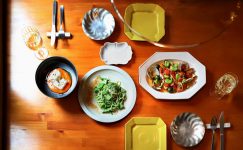
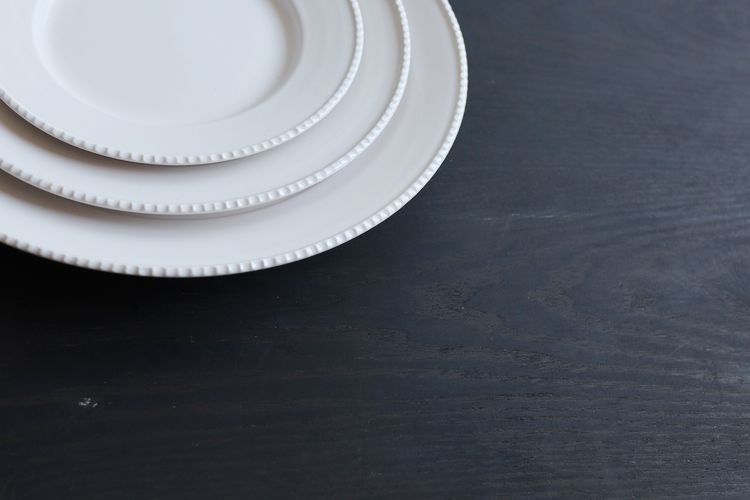
Hanada: The S, M, and L plates with ridged edges.
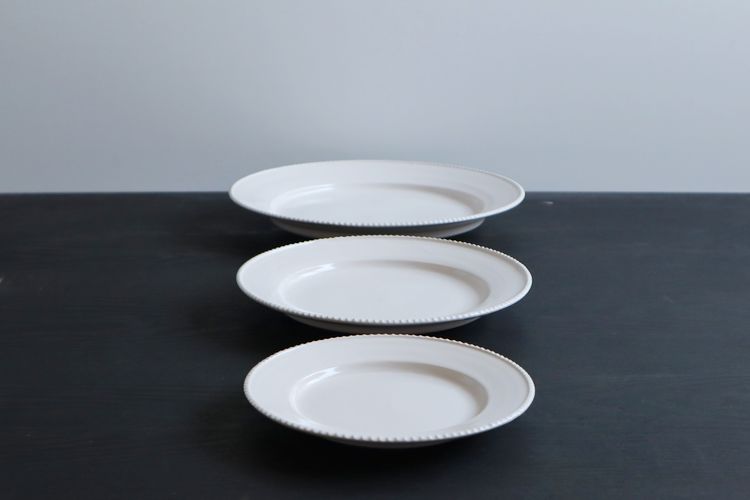
Naoto Okada: I started making these this year.
Recently, I’ve been able to make plates as I envision them, which is enjoyable.
Hanada: What do you mean by “making plates as you envision them”?
Naoto Okada: Until now, it was a constant process of trial and error.
The overall body balance never quite felt right to me.
Lately, it clicks into place. It’s partly a matter of technique, but before, even when it turned out well, I didn’t understand why.
Hanada: So you’ve come to understand that now.
Naoto Okada: It’s about the process. The process is crucial.
It starts with preparing the clay, and obvious points include clay firmness, wheel speed, timing for stretching, resting time, and so on.
For these plates, there are about 30 such points, and carefully following them results in a satisfying plate.
Before, I only noticed fewer points.
Hanada: Knowing that even a simple plate involves 30 decisions changes the perspective.
The edge decoration is beautiful as well.
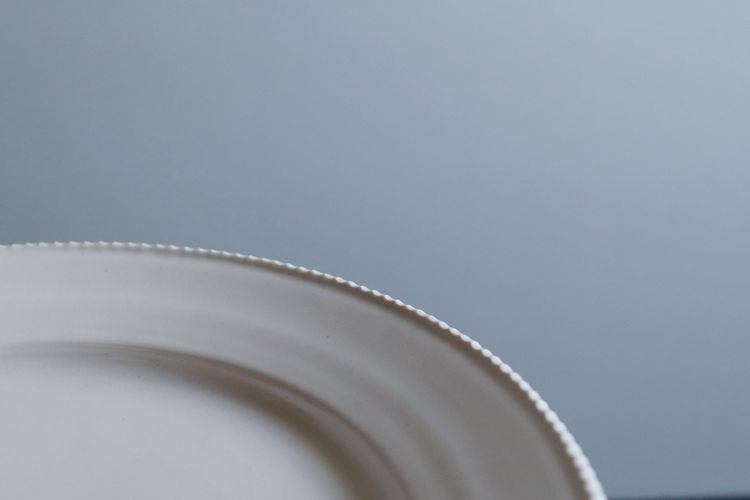
Naoto Okada: Of course it’s decorative, but the ridges make it easy to hold, prevent slipping when washing, and stabilize cutlery when placed on it.
Hanada: The ridges are carefully applied.
Naoto Okada: Each ridge is carved with a chisel.
Hanada: It’s meticulous work.
Naoto Okada: I enjoy this kind of meditative work.
Simply repeating actions without thinking helps me maintain my rhythm.
Hanada: Do you use these plates yourself?
Naoto Okada: Yes. L is for dinner, M for dessert or salad, S as a side plate or for sweets.
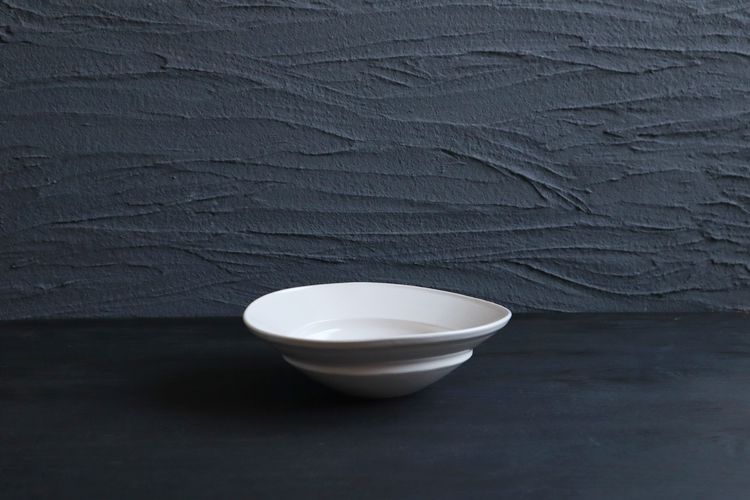
Oval Rim Deep Plate
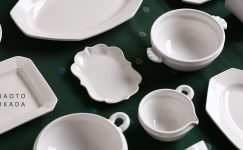
Hanada: A classic oval rim deep plate.
Naoto Okada: Made to work as individual plates or serving dishes. The oval shape fits well on the table.
After throwing a circular form on the wheel, I shape it by hand to create a natural curve, rather than using a mold.
Hanada: This is really easy to use and enhances the food beautifully. The fact that it has been produced continuously speaks for itself.
Naoto Okada: Yes. I’ve been making it for a long time.
A Year Focused on Making
Hanada: So, Mr. Okada, how was 2020 for you?
Naoto Okada: I love the act of making itself. From the outside it might seem repetitive, but through solo exhibitions, I’ve felt gradual growth in myself.
Hanada: In a year like 2020, you probably had more time to focus on making things.
Naoto Okada: Yes. Talking with others is enjoyable and stimulating, but regarding 2020, it was a year I could fully concentrate on making.
Hanada: Any words for the upcoming exhibition?
Naoto Okada: I aim to create work where you can faintly sense the human touch.
I hope people can enjoy that. A subtle human presence… perhaps.
Also, the simpler the piece, the more thought goes into it, so I hope people notice those details.
Hanada: Thank you very much. I’m looking forward to the exhibition.
≪ END ≫
蓋つきピッチャー
花田:今回出品いただくうつわについて、お話を伺いたいと思います。
蓋つきピッチャーはかたちが目を引きますし、色々なシーンで使えそうですね。(以下花田-)
岡田:最初、蓋は無くてピッチャーだけでした。
これまでも色々なピッチャーを作ってきましたが、せっかくロクロを引いて作るので、ロクロならではの丸みを活かせる形にしました。
-:上から下までとてもバランスの良い形です。
岡田:必要な容量と見た目のバランスをとりました。
蓋を外せば市販のドリッパーも置けますし、蓋をして、お客様に出すと、見た目はもちろん、所作としてもさまになるかと思います。
大体3人分は入るのではないでしょうか。
蓋をつけたままでは注げませんが、保温にもなるので、食卓に置いておいて、ゆったりとした時間を過ごせたらいいなと思います。
口径も手をいれて洗いやすいように、広めにとりました。
-:取っ手も持ちやすそうです。
岡田:実用性を考えると、重量がある程度あるものの取っ手は、薄くて、平たいものが一番持ちやすい。薄いと手を入れやすく、平たいと握りやすいんです。
あとは、見た目のバランスをとりながら、形を決めていきます。
-:このピッチャーを作る上で、参考にされたものはありますか。
岡田:ガラスや焼き物のアンティークの残像が色々と頭に残っているので、そういったものから無意識のうちに影響を受けていると思います。
多用な飯碗
-:最近の新作、オランダボウルです。
岡田:よく「ご飯茶碗はないのですか」と聞かれます。
僕自身「ザ・飯碗」の定義を持ってもいませんし、人それぞれの飯碗像がありますよね。
自分が「これぞ飯碗」というものを作っても、他の人にしてみるとしっくりこないようなことも多かったので、逆に、多用に使えるものを作ってみました。
-:ご飯以外にも使える多用途な飯碗…、面白いですね。
岡田:パッと見て「ご飯」のイメージがつかないものを作ろうと。
フルーツでも、スープでも、何でも合う形なんです、これ。
-:見た目と機能が、バランスよく両立していますね。
岡田:実際使っていただくと分かるかと思いますが、内側縁部分の段差が唇との相性が良くて、食べやすいです。僕自身、毎朝これでご飯を食べています。
-:高台もきれいです。
岡田:オランダの飲み物用のカップがモチーフですが、その幅を広げ、大きさを調整しました。
最初は深すぎたり、サイズが大きすぎたり…、納得いくまで3回作り直しました。
-:一見すると小ぶりに見えます。
岡田:はい。でも意外とちゃんと収まります。
我が家では4人家族全員がこれを使っていて、デザートなどにも使っています。
-:鍋の取り鉢にも使えそうです。
岡田:そうですね。
スープのためのボウル
-:片手付ボウルです。
岡田:スープを飲むために作りました。
縁を返して、すくいやすくしています。
-:取っ手も印象的です。
岡田:左手を添えて使えるように取っ手には傾斜をつけています。
-:水平ではないのですね。
岡田:はい。それと、くぼみもつけているので、グリップも利くと思います。
-:取っ手の装飾も華やかで、うつわのアクセントになっています。
岡田:古い金属の菓子型がヒントになりました。
-:ところで、岡田さんの好きなスープは何ですか。
岡田:シンプルで野菜の味が分かりやすいものが好きなので、カボチャやニンジンの単体の野菜のポタージュなどが好きです。
あ、いや、具たくさんのスープも好きですね(笑)。
お皿を作るのが楽しくなってきた
-:縁しのぎプレートのS、M、Lです。
岡田:今年に入ってから作るようになったものです。
最近、お皿が思い通り作れるようになって、楽しいんです。
-:どういうことですか「お皿が思い通り作れるようになって…」って。
岡田:これまでは試行錯誤の連続でした。
全体のボディバランスが自分の中でしっくり来ていなかったんです。
最近はスパッと決まるようになった。
技術の問題もあるのでしょうけど、今までは、なんかこう…、うまく出来ても、なんでうまく出来ているのか分からなかったんです。
-:それが分かるようになってきたのですね。
岡田:手順です。手順が大事なのです。
それは土を用意するところから始まっていて、分かりやすいところで言えば粘土の硬さ、ろくろの速さ、伸ばすタイミング、寝かすタイミング…などなど。
例えば、このお皿だとそういうポイントが30くらいあって、それをきっちりやっていくことが「納得のいくお皿」につながっていくんです。
今まではもっと少ないポイントの存在にしか気づいていませんでした。
-:シンプルなお皿にも30もの判断が含まれているかと思うと、違って見えてきます。
縁の装飾も、きれいですね。
岡田:もちろん装飾でもありますが、しのぎがあることで、持ちやすいし、すべらず洗いやすいし、フォークナイフを置いた時にも、すべってズレていくことなく安定します。
-:丁寧にしのぎが入っていますね。
岡田:一つ一つ彫刻刀でしのぎを入れています。
-:地道な作業です。
岡田:こういう無心で取り組める作業って、好きなんです。
ただ、ひたすら何も考えずに積み上げていく作業は自分のリズムを整えてくれます。
-:このお皿はご自身でも使われていますか。
岡田:はい。Lはディナープレート、Mはデザートやサラダ、Sは取り皿、スイーツにも使います。
楕円リム深皿
-:定番の楕円リム深皿です。
岡田:銘々でも、盛り皿でも使えるように作っています。
楕円は食卓でのおさまりもいいですよね。
正円にロクロで引いた後、たわませますが、型打ちではなく手ですることで自然な雰囲気になったと思います。
-:これ、本当に使いやすいし、料理をとてもよく引き立ててくれます。
長く作られ続けているのが、何よりの証拠ですね。
岡田:そうですね。ずっと作っています。
作ることに集中できた1年
-:さて、岡田さん、2020年はどんな1年でしたか。
岡田:僕は、作る作業そのものが大好きです。
傍から見れば同じことを繰り返しているように見えてしまうかもしれませんが、個展を重ねながら、自分では自身の成長を少しずつ感じることができています。
-:特に2020年のような状況だと、作ることに使える時間も多かったのではありませんか。
岡田:そうですね。
色々な方々と話すことも楽しいし、刺激や学びにもなっていますので、大切ですが、2020年に関しては、作ることに集中できた1年だと思います。
-:個展に向けて、一言いただけますか。
岡田:使っていると、手仕事をかすかに感じられるような仕事を心がけています。
そういうところを楽しんでいただけたらな、と思います。
かすかな人の気配…でしょうか。
それと、シンプルなものほど、色々考えて作っているので、そういう部分が分かってもらえると嬉しいです。
-:ありがとうございました。個展、楽しみにしています。
関連記事はこちら