


English version of the interview here.
Black Inlaid Design
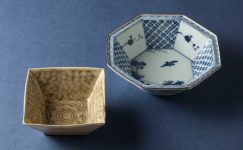
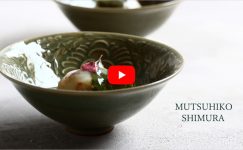
Hanada: To begin, I’d like to ask Mr. Shimura about the tableware you will be exhibiting this time. This is a bowl with a black inlaid arabesque design.
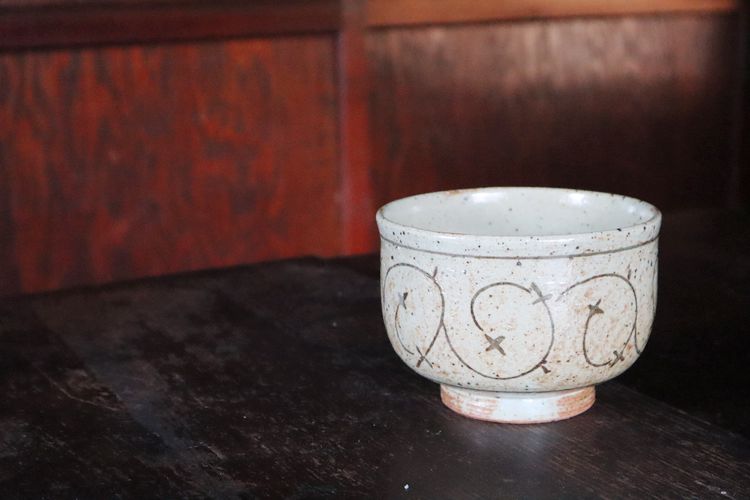
Mutsuhiko Shimura: Until now, I’ve mainly worked with white inlay such as Mishima ware, and I hadn’t done much black inlay.
I had wanted to try it for a long time, but black inlay posed challenges in terms of materials and firing.
Recently, those issues were resolved and I was finally able to achieve a good finish, which is why I decided to include it in this exhibition.
Hanada: This pattern is an arabesque, isn’t it?
Mutsuhiko Shimura: Yes. Depending on the context, it’s sometimes called a “Korean ginseng motif” or simply a “ginseng pattern.”
Maiko Miyaoka: You see similar motifs in iron-painted designs as well.
Mutsuhiko Shimura: For example, on tokkuri(flasks for sake) from Gyeryongsan.
Hanada: What made you decide to use this arabesque motif?
Mutsuhiko Shimura: It’s a classical pattern that I’ve seen often, and I find its rhythm lively and enjoyable. It suits upright forms like bowls very well.
Hanada: It’s simple, yet very eye-catching.
Mutsuhiko Shimura: When drawing it, I was careful not to lose the sense of momentum. And also to make sure the pattern connects properly at the end (laughs).
Hanada: It would be a problem if it didn’t come together in the end.
Mutsuhiko Shimura: If you worry too much about making everything perfectly consistent, the design becomes dull, so I try to strike a balance. That’s why the number of arabesque elements sometimes varies from piece to piece.
Hanada: The shape looks very practical.
Mutsuhiko Shimura: It’s called a bowl, but I think it could also work well as a small donburi. For example, for nyūmen noodles.
Hanada: That sounds perfect for enjoying the broth. Have you already used it yourselves?
Maiko Miyaoka: We had rice topped with salted pork soup.
Hanada: Your salted pork sounds delicious.
Mutsuhiko Shimura: It makes a great soup. We keep the stove on all the time this season. It feels wasteful not to use the heat, so I end up putting something on top… which means we eat a lot more soups (laughs).
Mishima Chrysanthemum Plate
Hanada: Next is the Mishima chrysanthemum plate.
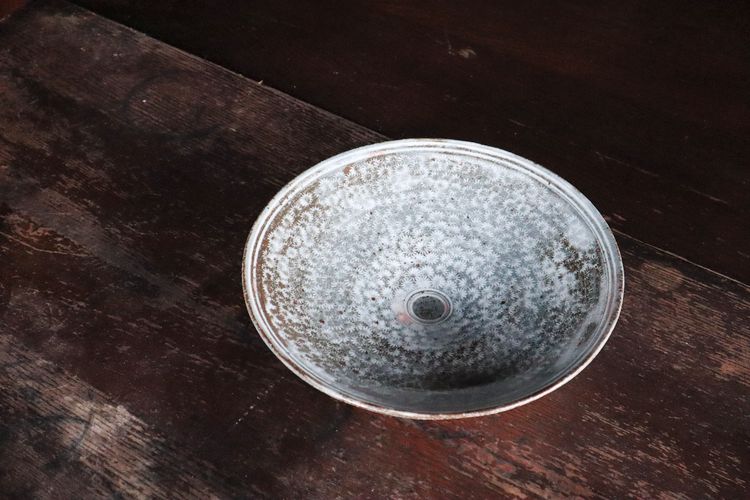
Mutsuhiko Shimura: This is a new piece for this exhibition.
Hanada: The continuity of the pattern is very appealing, and the brushed exterior creates a nice contrast.
Is it that the inside is carefully done one by one, while the outside is finished in one go with brushwork?
Mutsuhiko Shimura: I covered the entire surface with chrysanthemum motifs, so when food is served, it looks as if the pattern gently envelops the dish.
Paired Fish Motif
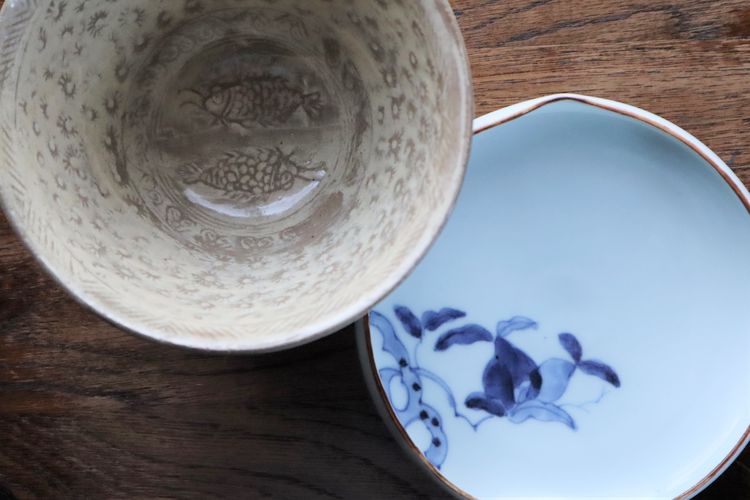
Hanada: How about the Mishima deep bowl with the paired fish motif?
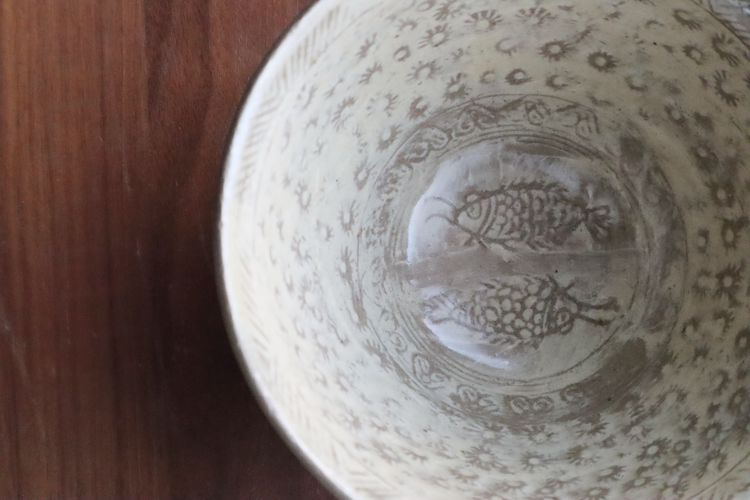
Mutsuhiko Shimura: I originally worked with this motif in celadon, but I hadn’t used it much in Mishima ware.
Hanada: It has a charming, humorous feel. The expressions of the fish are very cute.
Mutsuhiko Shimura: I find it interesting that the relief is reversed between the fish in the center and the surrounding chrysanthemum pattern.
Hanada: What would you use this piece for?
Mutsuhiko Shimura: For simmered dishes, one per person; for dressed dishes, as a serving bowl.
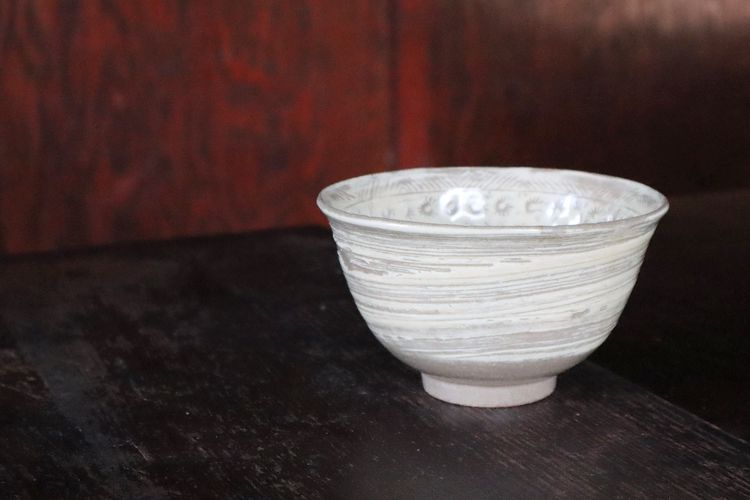
Maiko Miyaoka: At home, we also use it as a small donburi.
Hanada: If used as a small donburi, what would go well with it?
Mutsuhiko Shimura: A three-color rice bowl, bibimbap, Yakitori don…, though we don’t eat that very often at home (laughs). Oden would also be nice.
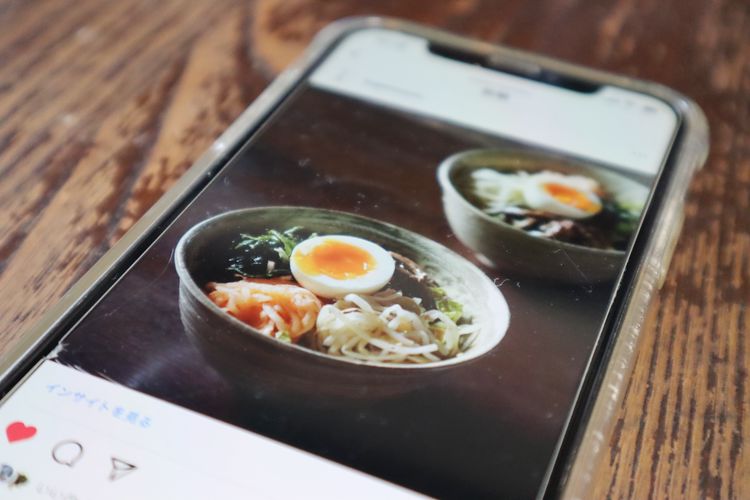
Hanada: Do you often have rice bowls for lunch?
Mutsuhiko Shimura: Yes, quite often. We also eat a lot of noodles, pasta, for example.
Hanada: Pasta sounds great. What kind of pasta do you like?
Maiko Miyaoka: I make it with whatever ingredients we have. Carbonara is pretty common.
Mutsuhiko Shimura: Right—and we use salted pork instead of pancetta.
Hanada: Salted pork really gets a lot of use.
A Peony Bowl After a Long While
Hanada: Next is the six-sun peony bowl.
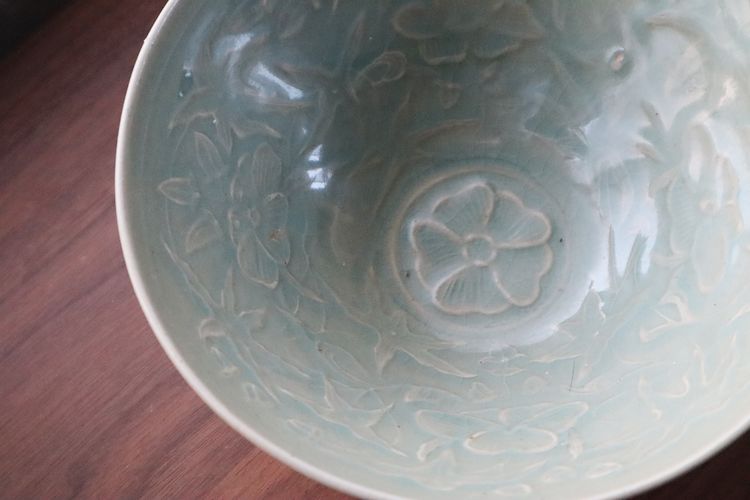
Mutsuhiko Shimura: I made this for the first time in quite a while.
Maiko Miyaoka: We use it often at home.
Mutsuhiko Shimura: It looks very festive when food is served.
Even simple dishes like simmered foods look appealing, and it’s also great for agedashi tofu.
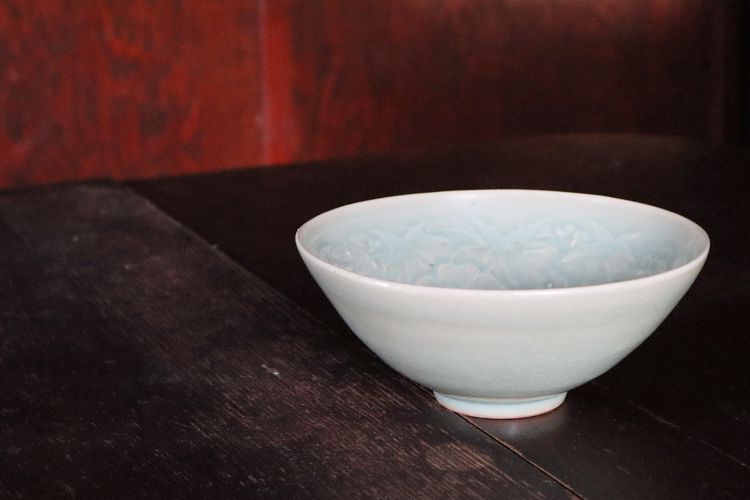
Hanada: Compared to the shallower peony bowl that’s one of your staples, this has a very different feel.
Mutsuhiko Shimura: The shallower one was made with something like a matcha bowl in mind, so it has a celebratory feel. This one is meant for everyday use—something you can use freely without hesitation. There was also an inlaid version, but I think the raised relief feels gentler and is easier to serve food on.
Hanada: Finally, do you have a message for the exhibition?
Mutsuhiko Shimura: In times like these, I think people are cooking at home more than ever. I’d be happy if people could enjoy their home-cooked meals using tableware they truly like.
Winter Scenery Seen Through a Window
Hanada: Ms. Miyaoka, please.
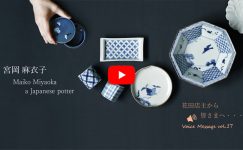
Maiko Miyaoka: I focused on the sense of season—plum blossoms, cherry blossoms, peaches, and the sea.
Hanada: First is the small lidded plum-blossom container. Even the knob is shaped like a plum blossom, and the lower half is finished with an iron glaze.
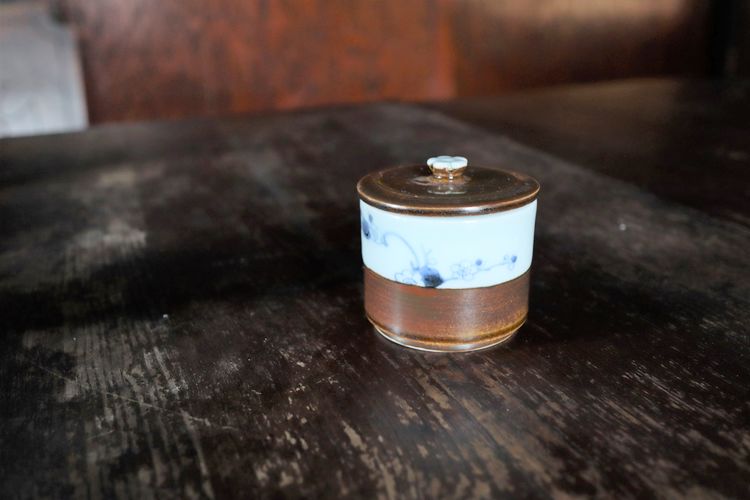
Maiko Miyaoka: I thought of the composition like a window frame, creating it as if you were looking at a scene through a window.
Hanada: It brings to mind the image of viewing plum blossoms from inside the house on a cold winter day.
Maiko Miyaoka: Yes—from a warm room.
Hanada: It makes me want to put konpeitō candy inside.
Maiko Miyaoka: I’d put pickled plums in it.
Mutsuhiko Shimura: For me, curry with fukujinzuke. At New Year’s, yuzu cups with salmon roe.
Hanada: All of those sound wonderful.
Scattered Cherry Blossoms
Hanada: This small bowl with scattered blossoms feels quite fresh for your work, Ms. Miyaoka.
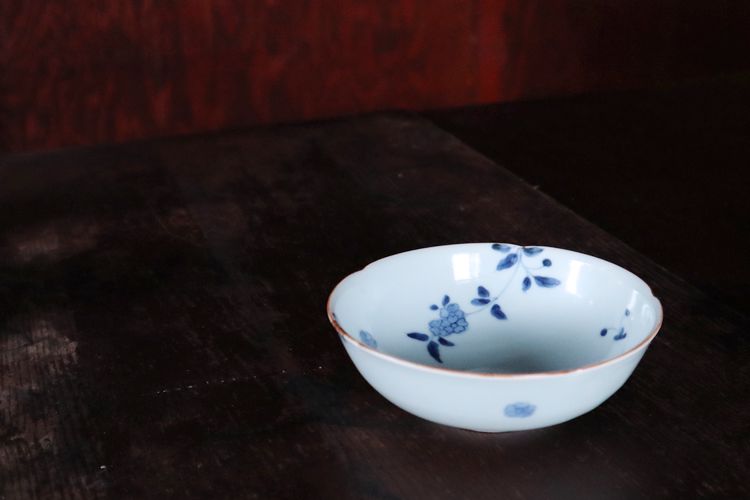
Maiko Miyaoka: It’s a bit… feminine, isn’t it? I suppose I’ve mellowed with age (laughs). I’ve long been aiming toward early Imari ware, and in those early pieces you see many plum motifs, but not so many cherry blossoms. That may be why I didn’t have many chances to paint them. Rather than depicting cherry blossoms in a straightforward way, I wanted the pattern to feel lightly scattered.
Hanada: It feels like cherry blossoms used subtly… They appear in many forms—just flowers, or with branches.
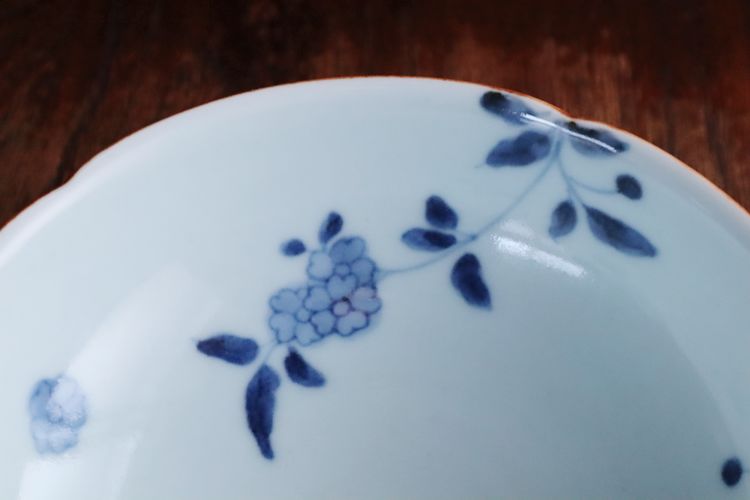
Maiko Miyaoka: There are many kinds of cherry blossoms.
I painted them while imagining the pattern extending beyond the surface of the vessel.
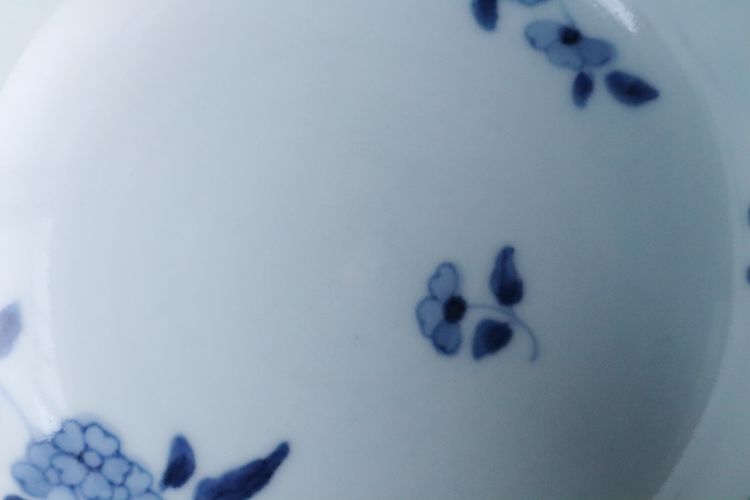
Hanada: The gently restrained fluted rim also keeps the overall balance. The size and shape look very practical. In this season, it would work well as a bowl for hot pot, or for dressed dishes.
Maiko Miyaoka: I designed it to be versatile, like a namasu dish.
I think it could also work for a small soup.
Two-Tiered Box
Hanada: Next is the two-tiered box.
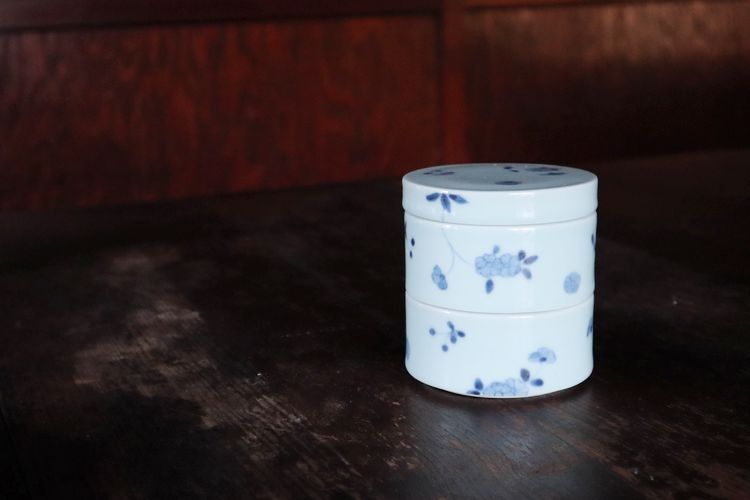
Maiko Miyaoka: I wanted to use a pattern that would work freely for many purposes. I think cute designs make using it more enjoyable. For Hinamatsuri, you could put hina-arare inside; for a cherry-blossom-viewing mood, your favorite sweets…
Mutsuhiko Shimura: At New Year’s—black beans, herring roe…
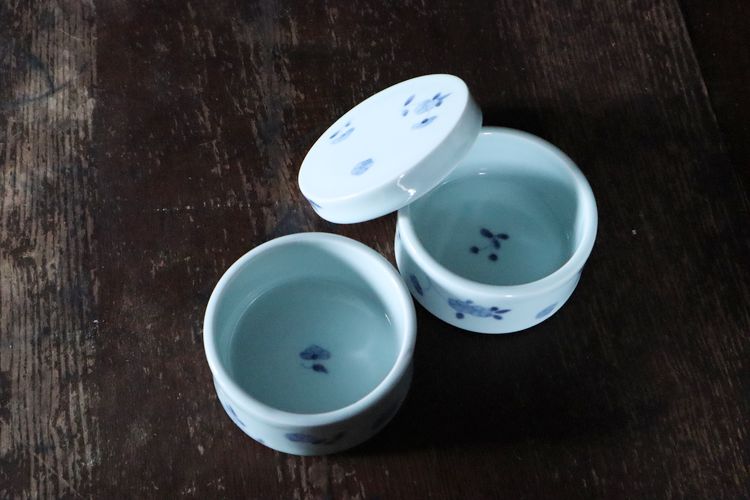
Hanada: That sounds great.
Mutsuhiko Shimura: If it were three tiers, we could add tazukuri too (laughs).
A Much-Loved Peach
Hanada: How about this peach-shaped plate with a peach motif? It feels like something you might find in Ko-Imari.
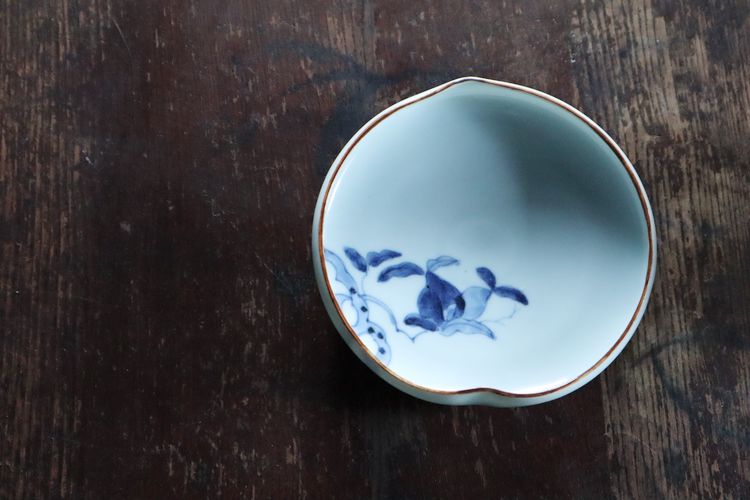
Maiko Miyaoka: Yes. I referenced patterns from early Imari plates. I’ve liked this motif for a long time and had always thought, “Someday, I’d like to paint this on something.”
Hanada: It’s a very stylish pattern.
Maiko Miyaoka: It’s simple, but depending on how you paint it, it can become too rigid, which made it challenging. And also it’s formed on the wheel and by hand, I think it has a softer feel.
Hanada: That explains why it doesn’t have the stiffness of a molded piece, and the softness carries through the entire piece.
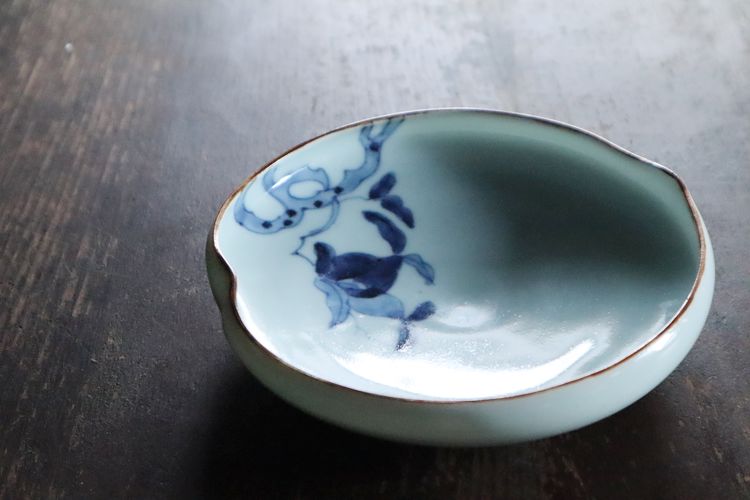
Maiko Miyaoka: Because it’s hand-formed, each piece is slightly different. I think it’s fun to enjoy those differences if you have several.
Mutsuhiko Shimura: You really love peaches.
Hanada: As a fruit?
Maiko Miyaoka: Yes. I love them so much I could live on peaches alone (laughs).
Hanada: Then you’d want to serve peaches on it.
Mutsuhiko Shimura: A peach holding peaches on a peach-shaped peach-patterned plate. That’s a lot of “peach.”
Hanada: (laughs)
Oval Plate
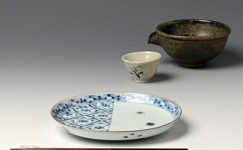
Hanada: Next is this oval plate.
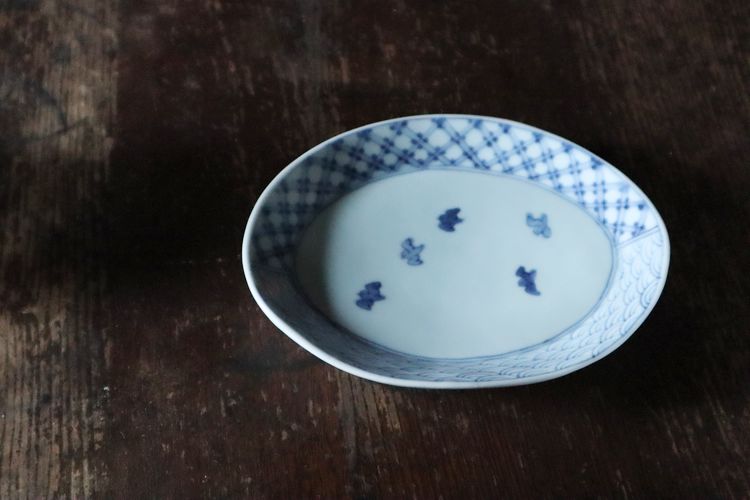
Maiko Miyaoka: The wave-and-plover motif is said to symbolize overcoming rough seas, making it an auspicious design. I also thought the balance of the pattern worked well.
Hanada: The way the rim decoration is subtly divided is lovely.
Maiko Miyaoka: I’d like to use it for Japanese sweets.
Mutsuhiko Shimura: Cake would be nice… mille-feuille for example.
Maiko Miyaoka: Sashimi as well.
Hanada: So many ideas—it really is versatile. Lastly, could you give us a message for the exhibition?
Maiko Miyaoka: This time, many of the pieces feature natural motifs such as cherry blossoms and plum blossoms, so I hope they bring a sense of calm and comfort to everyday life. Thank you very much.
Hanada: Thank you very much.
≪ END ≫
黒の象嵌
花田:今回出展いただくうつわについて、まずは志村さんにお話を伺いたいと思います。
黒象嵌唐草文鉢です。(以下花田-)
志村:これまでは三島手など白い象嵌が主体で、黒の象嵌はあまりしていませんでした。
ずっとやりたかったのですが、黒の象嵌は、材料と焼成に課題がありました。
最近、それが解決してうまく仕上がるようになったので、今回出品することになりました。
-:この文様、唐草なのですね。
志村:はい。場合によっては「朝鮮ニンジン文」とか「ニンジン文」とか名付けられているものもあります。
宮岡:鉄絵でも、こんな感じのありますよね。
志村:鶏龍山の徳利なんかでも。
-:この唐草を描こうと思ったのはなぜですか。
志村:古典文様でよく見ていましたし、リズミカルで楽しいと思いました。
鉢のような立ちものに合っていますよね、この文様。
-:シンプルだけど、目を引きます。
志村:描くときは勢いを失わないようにしました。
あと、最後がちゃんとつながるように(笑)。
-:最後つじつまが合わないと、困りますものね。
志村:つじつま合わせを気にしすぎても、絵がつまらなくなるので、ほどほどに丁寧に。
それなので、たまにこの唐草の数がうつわによって違います。
-:使いやすそうな形ですね。
志村:名前は鉢ですが、小さめの丼としても使えるかなと思います。
にゅう麺とか…。
-:お出汁が楽しみたいですね。
志村さんたちも、もう使われましたか。
宮岡:塩豚スープの汁掛飯をいただきました。
-:志村さんの作る塩豚、美味しそうです。
志村:良いスープが出ます。
今ストーブが、ずっとついていますよね。
そのストーブの熱が勿体ないから、何か上に置きたくなってしまい…、スープ系の食事が増えます(笑)。
三島菊文皿
-:続いて三島菊文皿です。
志村:今回の新作です。
-:文様の連続性が魅力ですし、外は刷毛目になっていて、いいコントラストです。
内側は丁寧に一つひとつ。で、外側は刷毛目で一気にしめる、という感じでしょうか。
志村:全面に菊の模様を入れたので、料理を盛った時に菊文が料理を包み込んでいるように見えるのがいいなと思っています。
双魚文
-:双魚文三島深鉢はいかがですか。
志村:元々青磁でやっていましたが、三島ではあまりやっていませんでした。
-:ユーモラスな感じがいいですね。
目つきが可愛いです。
志村:文様の凹凸が見込みの魚とまわりの菊が逆になっているのが面白いなと思っています。
-:こちらは何に使いましょうか?
志村:煮物なら銘々、和え物なら盛り鉢ですかね。
宮岡:家では小丼としても使っています。
-:小さめの丼だとすると、何が合いますかね。
志村:三色丼とか、ビビンバとか…。
焼鳥丼…は家ではあまり食べませんかね(笑)。
あと、おでんなんかもイイと思います。
-:お昼などは丼ものが多いのですか。
志村:そうですね。あと麺類も多いです。パスタとか…。
-:パスタ、いいですね。
パスタは何がお好みですか。
宮岡:あるもので作ります。
カルボナーラも多いかな。
志村:そうそう、パンチェッタ代わりに塩豚入れて。
-:塩豚、大活躍ですね。
久しぶりの牡丹文6寸鉢
-:続いて、牡丹文6寸鉢です。
志村:久しぶりに作りました。
宮岡:家ではよく使っています。
志村:盛った時、華やかなんです。
煮物のような地味なものでも、盛り映えしますし、揚げ出しなどもいいですね。
-:志村さんの定番でもある、これより浅めの牡丹文鉢とは雰囲気が変わりますね。
志村:あれは抹茶茶碗のような意識もあったので、ハレの感じです。
こっちは普段使いでガンガン使ってほしいイメージです。
あと、これの象嵌のもありましたが、陽刻のほうが優しい感じで盛りやすいかもしれませんね。
-:それでは、展示会に向けて、何か一言お願いします。
志村:こんな時期なので、家での料理も増えていると思います。
気に入ったうつわで家の料理を楽しんでもらえたら嬉しいです。
窓から眺める冬景色
-:宮岡さん、お願いします。
宮岡:季節を意識しました。梅、桜、桃、海。
-:まず、梅文小蓋物です。
取っ手も梅になっていて、下半分は鉄で掛け分けています。
宮岡:構図を窓枠のように考えて、窓から眺める景色のように構成しました。
-:「寒い冬日に、家の中から梅を眺める」光景が浮かびます。
宮岡:はい、暖かい部屋から。
-:金平糖を入れたくなります。
宮岡:私は梅干しで。
志村:僕はカレーに福神漬けかな。
お正月は柚子釜いくら。
-:どれもいいですね。
桜を散らして
-:さてこの花散らし小鉢、宮岡さんの作られたうつわとしては新鮮に見えます。
宮岡:ちょっと…、フェミニンですよね(笑)。
まあ、年と共に丸くなってきたんだと思います(笑)。
あと、ずっと初期伊万里を目指してきていて、その初期の頃のものには、梅は多いんですけど、桜の文様はあまりない気がします。
それなので、描く機会も限られていたのかもしれません。
これも、いわゆる桜の絵を描きましたという感じじゃなくて、文様が散っている感じにしました。
-:さりげなく桜、という感じ…。
桜も色々な姿で登場していますよね。花だけのものもあるし、枝のあるものもあるし。
宮岡:色々な桜があります。
うつわの外にも模様が広がっていくことを想像しながら描きました。
-:出過ぎない感じのこの輪花も、全体のバランスを保っています。
大きさ形も使いやすそうなうつわです。
今の季節なら鍋の取り鉢になりそうだし、和え物にも良さそうです。
宮岡:なます皿のような使い方で、用途の幅が広くなるようにしました。
ちょっとしたスープみたいなものでもいいかなと思います。
二段重
-:次は二段重です。
宮岡:何に使うにしても自由の利く文様をいれようと思いました。
可愛いらしいものだと、使うとき楽しいと思います。
ひな祭りの時なら雛あられ入れたり、お花見気分なら好きなお菓子入れたり…。
志村:お正月なら黒豆、カズノコ…。
-:いいですね。
志村:3段だったら、田作りまでいけたね(笑)。
大好きな桃
-:桃型桃文皿はいかがですか。古伊万里にありそうな感じです。
宮岡:そうですね。文様は初期伊万里のお皿を参考にしました。
前から文様が気に入っていたので「いつか何かに描きたいな」と以前より思っていました。
-:洒落た文様です。
宮岡:単純な模様ですけど、描き方によっては硬い感じになってしまうので、難しかったです。
これ、成形はロクロと手でやっているので柔らかい感じが出たと思います。
-:それだから型物のかたさがなく、うつわ全体に柔らかさが出ているのですね。
宮岡:手での成型なので少しずつ形も違います。 何枚かあればその違いも楽しいと思います。
志村:桃、好きだものね。
-:果物として、ですか?
宮岡:そうです。大好きで、桃だけで生きていけます(笑)。
-:そうしたら、桃を盛りたいですね。
志村:「ももをもったももがたもももん皿」か。 「も」が多いですね。
-:(笑)。
楕円皿
-:続いて、この楕円皿です。
宮岡:波千鳥では「荒波を乗り越える」という意味があって、縁起のいい文様だそうです。
文様としてのバランスも良かったと思います。
-:縁の絵付けを掛け分けるのもさりげなくて、いいですね。
宮岡:私は和菓子で使いたいです。
志村:ケーキもいいですね。ミルフィーユ。
宮岡:お刺身も。
-:色々出てきましたね。万能です。
宮岡さんからも展示会に向けて、一言いただけますか。
宮岡:今回は桜や梅など、自然のものを描いたものが多いので、
日々の癒しになればいいなと思います。
どうぞよろしくお願いします。
-:ありがとうございました。
≫志村睦彦さんのうつわはこちらから≪
≫宮岡麻衣子さんのうつわはこちらから≪
関連記事はこちら