






English version of the interview here.

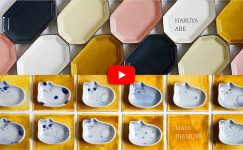
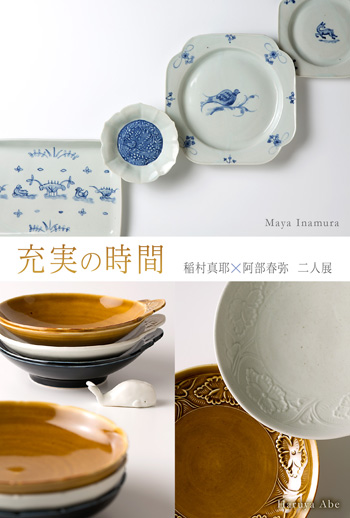
In anticipation of the two-person exhibition beginning on September 23, 2015,
“Time Well Spent: Haruya Abe × Maya Inamura,” we spoke with ceramic artist Maya Inamura.
Two years after her first appearance at Hanada, this marks her first curated exhibition with us.
We asked Ms. Inamura about how she first encountered ceramics, the path she has taken since, and her thoughts and feelings toward making tableware.
Gentle and softly spoken, yet with a quiet strength beneath the surface, her words closely reflect the character of her work itself…
Please relax and enjoy the interview.

Years of Training Under Her Mentor
“When my teacher talked about good food, he always looked so genuinely happy.”
Hanada: What first inspired you to pursue making things, and specifically tableware?
Maya Inamura: Ever since I was young, I knew I wasn’t very good at working cooperatively with others… (laughs).
That said, I do enjoy working. So I thought a job I could mostly complete on my own might suit me better.
At the very least, I knew being an office worker wasn’t for me. (laughs) I decided I wanted to acquire a skill and make my living that way. I grew up in Tokoname, so ceramics naturally came to mind. My uncle worked in ceramics in Seto, so it was familiar to me.
When I was fifteen, during high school career counseling, I declared, “I’m going to the ceramics program!” — and that’s how I entered this world.
Hanada: There are many kinds of craftsmanship, even within ceramics. Why tableware?
Maya Inamura: At first, I wanted to make sculptural objects. But my mentor, Mitsuo Fujitsuka, placed great importance on “eating,” and through him I realized how essential everyday tableware really is.
Hanada: If you were aiming to make objects, it doesn’t sound like you would naturally end up studying under Mr. Fujitsuka. (laughs)
Maya Inamura: That’s true. At the time, more than anything, I wanted to leave home as soon as possible… (laughs). I happened to see a job opening to work under Mr. Fujitsuka. He was based in Kyoto, so I thought, “I can live on my own!”
I figured I could convince my parents, and so I applied and went through the interview process.
Hanada: I’m curious — what kind of questions does Mr. Fujitsuka ask in an interview?
Maya Inamura: I was so nervous that I honestly don’t remember anything…
Hanada: Mr. Fujitsuka is known for taking great care of his apprentices and juniors.
You can really sense that when you meet people who trained with him.
Of course, he teaches them how to make ceramics, but beyond that, it feels like he prepares them to live as ceramic artists — or as makers of tableware.
Maya Inamura: He even helped me find a place to live…
I learned so many things from him. Above all, I learned firsthand about the joy of eating, about good food, and about a joyful table.
“Eating is the foundation of living” — it’s such an obvious thing, but also easy to forget.
Those were truly fulfilling years, learning that lesson through experience.
And whenever my teacher talked about delicious food, he always looked so genuinely happy.
Hanada: What kind of apprentice were you, Ms. Inamura?
Maya Inamura: Honestly, if I had an apprentice like myself, I’d be at a loss. I was quiet, hard to read, and didn’t show what I was thinking.
I’m amazed he was so patient with me. I made plenty of mistakes and caused trouble — and I was late sometimes, too….
Hanada: That would earn a scolding. (laughs)
Maya Inamura: He taught me very carefully about making as well. In particular, he often told me, “Keep throwing, over and over.” That’s something I still keep in mind today.
Hanada: Early Imari ware is an important theme in Mr. Fujitsuka’s work.
Maya Inamura: I love early Imari. There’s a sense of ease to it, and a kind of raw strength before things became overly refined.
The painting isn’t about technical skill so much as the momentum and energy the maker possessed — it’s very distinctive.

“Something I absolutely love, and want to keep forever…”
Hanada: Is there anything you particularly value when making tableware?
Maya Inamura: For me, ceramics are not art in the fine-art sense. I want to make pieces that are easy to use, that play a supporting role at the table, and that quietly enrich everyday life.
Hanada: That’s not an easy goal, but it really comes through in your work. And your painting, in particular, is very appealing.
Maya Inamura: I try to value whether I myself am enjoying the act of painting.
That said, while it’s good to have fun, I need to be careful not to go too far — I tend to get carried away.
Hanada: (laughs) It’s been two or three years since I first met you. Compared to back then, the range of what you make has expanded quite a bit in the last year or two.
Maya Inamura: Yes. I’m particularly fond of my pieces with deep cobalt-blue glaze. I wanted pieces like that for myself, so I’m honestly happy they turned out well.
Hanada: Not just in variety, but the overall atmosphere of your work has broadened too. It feels more open, more free.
Maya Inamura: I think I’ve become more relaxed. Before, I was holding myself back in certain ways.
Hanada: Holding yourself back?
Maya Inamura: I was too concerned about not resembling my mentor.
I avoided motifs he used, worried about looking like I was imitating him.
But when you focus too much on that, you end up becoming similar anyway — it’s strange. (laughs) At some point, I stopped worrying about it.
Hanada: Another artist said something similar just the other day.
The influence of your mentor never truly disappears, which is why the first teacher is so important.
It’s not something you can simply remove. Rather than confronting it head-on, it’s better to think about how to live with it, how to absorb it and make it your own — that’s how you move forward.
Maya Inamura: Yes, I came to realize that. After that, I felt much freer, and ideas began to flow naturally from within.

Hanada: Do you have an ideal piece — a dream vision of what you want to make?
Maya Inamura: I don’t have a concrete image, but it would be a piece that I absolutely love, and want to keep forever.
Hanada: “Absolutely” and “forever”… Those elongated words really convey the feeling of your ideal. It’s a high standard.
Maya Inamura: I always feel I can do better. I constantly think, “I should have done this,” or “That might have been better.”
Hanada: Being able to think that way is one of your strengths, and it shows how full your creative drive is right now.
Maya Inamura: Thank you. I’m having so much fun at the moment. Ideas keep coming — maybe this motif would work, maybe that form…
Hanada: It really feels like ideas are always bubbling up. Every time I visit and see your new work, I think, “She’s moved forward again.”
Maya Inamura: It might stay this way for a while. Perhaps it’s better not to see an end. There are always parts I can grasp and parts I can’t yet see — and I think that itself becomes motivation.

Hanada: Watching how you work, you seem quite bold. Do you ever struggle or worry?
Maya Inamura: Going back to what I said earlier, I do worry about relationships with people. But when it comes to working alone, I rarely have doubts. Working alone gives me freedom. I suppose I’m suited to working independently.
Hanada: Too much freedom can sometimes be a problem, but that doesn’t seem to be a concern in your case. For this exhibition, we looked at many older works as well.
Maya Inamura: Having real pieces close at hand while making things is incredibly educational. There are so many things you can’t understand from museums or photographs alone.
Hanada: In the process of making, you notice many things and feel moments of wonder — and in those moments, it’s always the actual object that responds.
Maya Inamura: Yes, I struggled quite a bit this time as well…
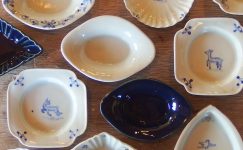
Hanada: The Mokko-shaped plates were fascinating. They turned out exactly as I had hoped you would interpret them.
When you first showed me the samples, I was honestly thrilled — it just clicked.
Maya Inamura: I’m glad to hear that. I feel a distinctly Japanese atmosphere in those plates. That may be why they were easy for me to absorb and work with.
They can be used in a Western-style setting, but I think they’d also suit traditional sweets. I tried many different ideas for the painting, including the motif.
In the end, that deer appeared quite suddenly — and once it was finished, it felt just right.
Personally, it’s one of my favorite new pieces in this exhibition.
Hanada: Not overworking the surface was a good choice too. The sense of space is just right, and it really brings out the beauty of the form.
The octagonal bowls are also striking — those were inspired by Belgian pieces, weren’t they?
Maya Inamura: I was very careful when creating the molds. I wanted them to be clean and precise, but not rigid. Clean, yet soft octagons.
I went through a lot of trial and error aiming for that balance, so I’m relieved it worked out.
Hanada: That seems fundamental to how you think about clay bodies. Your work is made carefully and precisely, yet it never feels stiff.
In any case, it’s a very rich group of new works — from classical to pop, with hints of new directions as well. Choosing pieces for this exhibition was difficult — in fact, we ended up taking almost everything.
Maya Inamura: Yes. This is my final exhibition before taking a break, so I put my heart into it and worked as hard as I could.
I’m also looking forward to exhibiting alongside Haruya Abe’s crisp, refined pieces. I hope visitors will enjoy the show. Thank you very much.
Hanada: I’m very much looking forward to sharing it with everyone. Finally, do you have any thoughts about what lies ahead?
Maya Inamura: I’ll be taking maternity leave for a while, so during that time I’d like to revisit catalogs and old books — materials I’ve collected over the years. Even things I’ve seen before may reveal something new.
I also know an illustrator who found her work became softer and more expressive after giving birth. If raising a child changes how I express myself, I think that could be exciting too.
Balancing pottery and childcare won’t be easy, but I want to continue making tableware for a long time.
Hanada: We look forward to seeing that evolution as well. Thank you very much for your time today.
Maya Inamura: Thank you very much.
≪ END ≫
2015年9月23日からはじまる二人展
「充実の時間」阿部春弥×稲村真耶にむけて、作者の稲村さんにインタビューをしました。
花田初登場より2年、今回企画展初となる稲村さんに、うつわ作りとの出会いから道のり、
うつわに対する稲村さんの想いを伺うことが出来ました。
お話しは、ふんわりとしたやさしい雰囲気ながらもどこかまっすぐな芯を感じる稲村さんのうつわそのもののような内容に・・・
どうぞごゆっくりお楽しみ下さい。
師に学んだ修行時代
「先生が美味しいものの話しをしている時って、本当に楽しそう。」
花田:ものづくり、うつわづくりを志したきっかけは何かあったのですか。(以下花田-)
稲村:ものごころついた時から自分に協調性がないことは自覚していまして・・・(笑) でも、働くことは好き。そうなると、ある程度は自分で完結させることのできる仕事のほうがいいのかな、と。少なくともOLさんは無理だろうと(笑)。で、なにか手に職つけて、生きていこうと考えたわけです。生まれ育った場所が常滑だったし、まず思いついたのが陶芸。叔父が瀬戸で陶芸の仕事をしていて身近だったこともあり、15歳のときの高校進路指導で「セラミック科、行きます!」って宣言して、この世界に入ってきました。
-:ものづくり、やきものにもいろいろあります。なぜ食器だったのでしょうか?
稲村:最初はオブジェを志していました。ところが修行先の藤塚(光男)先生が、”食べること”をとても大切にしている方で、そこで毎日使ううつわの大切さに気づいたのです。
-:オブジェ目指していたら、そもそも藤塚さんのところには行かなそうな気もします(笑)
稲村:その通りです。その当時、とにかく早く家を出たい一心でして・・・(笑)その時目にしたのが、藤塚先生の下での仕事の募集でした。藤塚先生、京都だから、一人暮らしできる!って。これなら親も説得できるだろうって。で、応募、面接と進みました。
-:藤塚さん、面接でどんなこと聞くんでしょう。興味あります。
稲村:緊張していたので、なにも覚えていないです・・・
-:藤塚さんは、お弟子さんや後輩の面倒見、とてもいいですよね。藤塚さんのところにいた方たちと接すると、感じます。焼き物を作れるようになることも勿論だけど、陶芸家、或いはうつわ作者として生きていけるように育てていらっしゃるな、という印象です。
稲村:下宿先まで一緒に探していただいて・・・本当にいろいろ教えていただきました。特に、食べる楽しみ、美味しいものや楽しい食卓に対する思いを身をもって学べたと思います。「生きる基本=食べること」という、当たり前だけど忘れがちな、大切なことを体で覚えた充実した時間だったと思います。また、先生が美味しいものの話しをしている時って、本当に楽しそうなんですよね。
-:稲村さん、どんなお弟子さんだったのでしょう・・・
稲村:正直言って、私、自分みたいな弟子がいたら、本当に困ります。無口で、何考えているか分からないし。よく我慢してくれていたと思いますよ。おまけに、よく失敗もして、迷惑もかけていましたから。あと、遅刻もたまに・・・
-:そりゃ叱られます(笑)
稲村 作ることについても、細かく教えていただきました。特に、轆轤は回数ひけよ、というのはよく言われていて、それは今でも心がけています。
-:藤塚さんの場合、初期伊万里がひとつのテーマになっています。
稲村:初期伊万里は大好きです。力の抜け具合とか、こなれてしまう前の力強さ、みたいな。絵付けも上手さではなく、持っている勢いやエネルギーが独特。
「すごーく気に入って、ずーっと持っていたい・・・」
-:うつわを作る上で大切にしていることありますか。
稲村:私の場合、陶芸をアートとしてはとらえてはいません。使いやすくて、食卓の脇役であって、日常が豊かに感じられるようなうつわが出来たらなと。
-:それ、難しいことですけど、稲村さんの仕事からも目指していることはひしひしと感じます。そして、稲村さんの場合、絵付けが魅力です。
稲村:描いていても自分自身が楽しく感じられることを大切にしています。ただ、楽しむのはいいけど、ふざけすぎないように気をつけないと。調子に乗ってしまいやすいたちなので。
-:(笑) 初めて稲村さんに会ってから2-3年経ちますね。あの頃から比べると、ここ1-2年で作るものの幅も随分広がってきました。
稲村:はい。ルリ釉のうつわも気に入っています。濃い目のルリのうつわが自分でも欲しいと思っていたので、それがうまく出来たことは素直に喜んでいます。
-:あと、種類だけじゃなくて、持っている雰囲気も、広がりを見せるようになったというか。のびのびとしたものが感じられるようになってきました。
稲村:前より気持ちが楽になった、というのはあると思います。以前は、自分を抑えていたようなところがあって。
-:抑えていた、というと?
稲村:師匠に似ちゃいけない、って思い過ぎていて・・・ モチーフは先生が使っているものを使わないようにとか、真似しているように見えないようにとか、そういうことを意識しすぎていました。そういうことばかりしていると、かえって似てきちゃうんですよね、不思議なもので(笑)。ある時から、そういうことを気にしなくなりました。
-:つい先日、別の作者の方も同じようなことを言っていました。師匠のにおいは、結局一生、抜けないし、だからこそ、最初に付く先生は大事なんだと。抜こうと思って抜けるものじゃないんですよね。対峙するより、それとどう付き合っていくか、どう自分のものにして取り込んでいくかを考えたほうが、前進していける、そういうことなのでしょう。
稲村:そう、そんなことに気づいたんです。それから気が楽になって、自分の中からいろいろなものが自然と湧いてくるようになった。
-:稲村さんにとっての、夢のうつわ―作るものの理想像はありますか。
稲村:具体的なイメージを持っているわけではありませんが、自分が、すごーく気に入って、ずーっと持っていたいと思えるうつわです。
-:”すごーく”、”ずーっと”・・・この長音符から稲村さんの理想像の雰囲気が伝わってきます。理想は高く、ですね。
稲村:今は、まだまだ良くできるって、いつも思うんです。ああすればよかった、こうすればよかったって、いつも思ってしまう。
-:ああすればよかった、と色々と思えるのは稲村さんの魅力だし、現在の創作意欲の充実を物語っている気がします。
稲村:有難うございます。今、楽しくてしようがないんです。こういうのを描いてもいいかもとか、あのかたちもいいかも・・・って興味がどんどん湧いてくる。
-:常に何か湧いてくる感じですよね。僕もこちらに伺って新しく作ったものを見せてもらうたびに、あ、また前進しているなって感じます。
稲村:ずっとこの調子かもしれませんね。終わりは見えないほうがいいのかも。いつも、見えていて捉え切れている部分と、見えていない部分があって。それもモチベーションになっている気がします。
-:また、稲村さんの仕事振りを見ていると、度胸あるなって思います。悩むことはありますか。
稲村: 最初の話しに戻ってしまいますが、対人関係は悩みます。でも、一人でする仕事について悩むことはまずありません。一人だと自由なので。一人でやることに向いているんでしょうね。
-:自由すぎると困ってしまう場合もありますが、稲村さんの場合はその辺りの心配はなさそうです。さて、今回の二人展ですが、いろいろ古いものも見てもらいました。
稲村:実物をそばにおいてモノを作るというのは勉強になります。美術館や写真で見るだけだと、分からないことも多いので。
-:作っていく過程の中で、気づくことや、不思議に思うことも多いと思いますし、その時、返事をくれるのはやはり実物ですよね。
稲村:はい、今回もいろいろ手間取りましたが・・・
-:モッコ皿、面白かったですね。稲村さんにこう活かして欲しいなって僕が思い描いていた通りのものができて・・・初めて見本を見せてもらった時は素直に嬉しかったです。はまったー、って。
稲村:それは良かったです。あのお皿には、私、日本っぽい雰囲気も感じます。それなので、より取り込みやすかったのかもしれません。洋食器っぽく使ってもらってもいいし、和菓子も合いそうですよね。絵付けは、モチーフも含めていろいろ考えて試してみたんです。その末、最後にポッとでてきたのが、あの鹿でした。出来あがってきたらとても良くて、個人的にも今回の中で最も気に入っている新作の一つです。
-:あまり、書き込まなかったのも良かったですね。程よい余白のおかげで全体の間がよくて、あのかたちのよさが活きています。そして、八角鉢も目をひきます。あれは、ベルギーのものでした。
稲村:型を起こす時には随分、気を使いました。キレイできちっとした八角にはしたいけど、硬くはならないようにしたい。キレイだけど、柔らかい八角。そういう感じを目指して、試行錯誤しましたが、うまくいってよかったです。
-:稲村さんの作る素地の基本的な考えかもしれません。丁寧にきっちりと作りはするが、あまり硬さは感じません。いずれにしても、充実した新作群です。クラシックなものからポップなものまで。新たな方向性も出てきた感じもします。多くの新作から、今回の企画展用に選ぶの苦労しました、というか、ほとんど全部頂くことになっちゃいました。
稲村:はい、しばらく休みに入る前の最後の展示会でもありますし、気持ちを込めて、精一杯作りました。そして、阿部春弥さんのきりっとしたうつわと並ぶのも楽しみです。お客様に喜んでいただけること、願っています。宜しくお願いします。
-:お客様に見ていただくのが、僕も待ち遠しいです。さて、今後について何か考えていることはありますか。
稲村:これからしばらくは産休に入ってしまうので、その間は図録や古本などの今まで集めて、たまっている資料を読み返していきたいです。過去に見たことがあるものでも、その中から面白いなと感じられるものを再発見できたらいいな、と思っています。あと、知人のイラストレーターで、出産後、絵が柔らかくなってとても意欲的になった方がいるんです。育児を通して、表現が変わっていくことがあるとすれば、それも楽しみです。うつわ作りと育児の両立は大変でしょうけど、うつわ作りはずっと続けていきたいです。
-:その変化も楽しみにしたいと思います。本日は有難うございました。
稲村:有難うございました。
企画展名:充実の時間 稲村真耶×阿部春弥 二人展
開催期間:2015年9月23日(水)~10月3日(土)
開催場所:花田ギャラリースペース(2F)
2名の作者のうつわは【こちら】からご覧ください。
関連記事はこちら