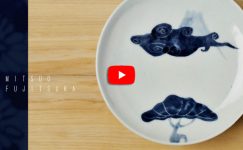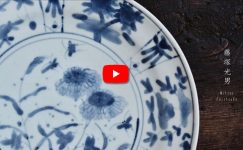




English version of the interview here.
Charming Rinka Plates
Hanada: I would like to ask you about some of the pieces you have chosen from your upcoming solo exhibition. Let us start with this Rinka (flower-shaped) plate.
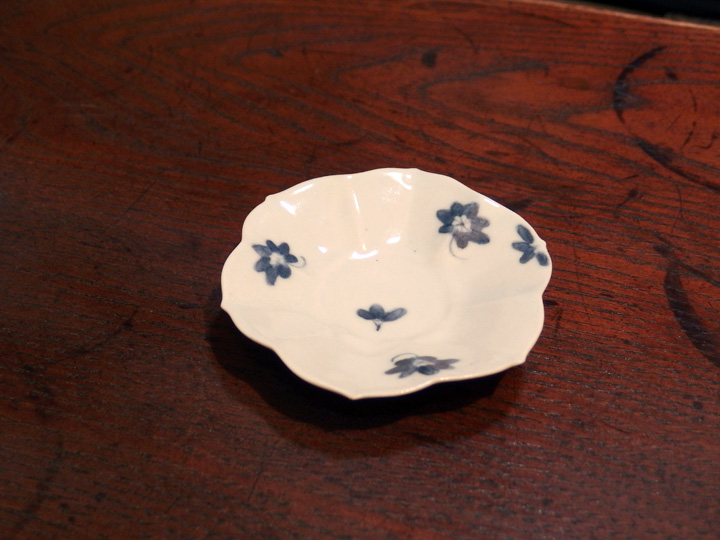
Mitsuo Fujitsuka : The pattern features autumn maple leaves. I replicated a piece of antique Ko-Imari porcelain that an antique dealer showed me. I think it was about four or five years ago when I saw it and thought it was absolutely charming.
Hanada: Is your version made in almost the exact same way?
Mitsuo Fujitsuka : Nearly identical. Though I must say, the brushwork on the original was far superior. (laughs)
Hanada: How did you find the process of making it?
Mitsuo Fujitsuka : Thinner pieces tend to look sharper and more refined, so I paid close attention to the form. The original piece was actually even thinner.
Hanada: That explains why it feels so light and airy, like a leaf fluttering in the wind.
Mitsuo Fujitsuka : It is first thrown on the wheel, then pressed into a mold, and finally the rim is shaved down further. You cannot get it that thin just by throwing it on the wheel.
Hanada: I love the subtle, effortless spacing between the maple leaves.
Mitsuo Fujitsuka : The balance is beautiful, isn’t it? As I was copying it, I couldn’t help but admire how delicate and skilled the artisans of the past were. (laughs)
Hanada: Have you painted maple leaves before?
Mitsuo Fujitsuka : I have done pieces like this one before.
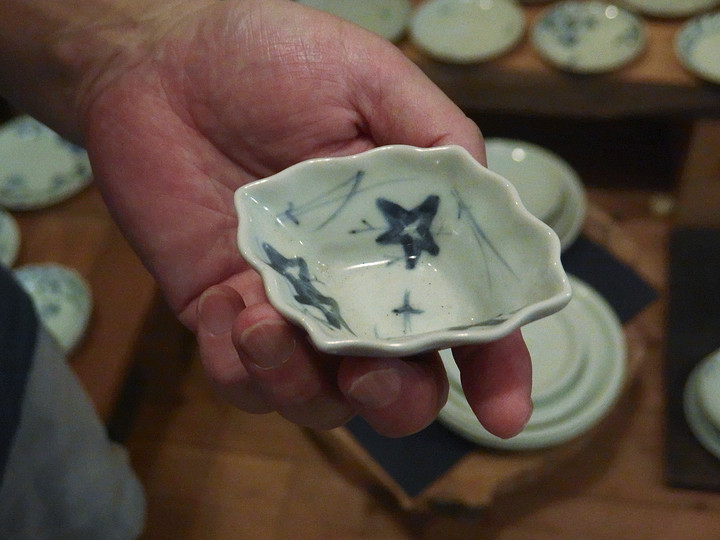
Hanada: We do not see maple patterns very often these days elsewhere.
Mitsuo Fujitsuka : They do exist, but they evoke a specific season a bit too strongly. In the past, people enjoyed collecting tableware for each season, but today, I think most people prefer things they can use all year round.
Katamigawari Rinka Plates
Hanada: Next, let us look at this Rinka plate.
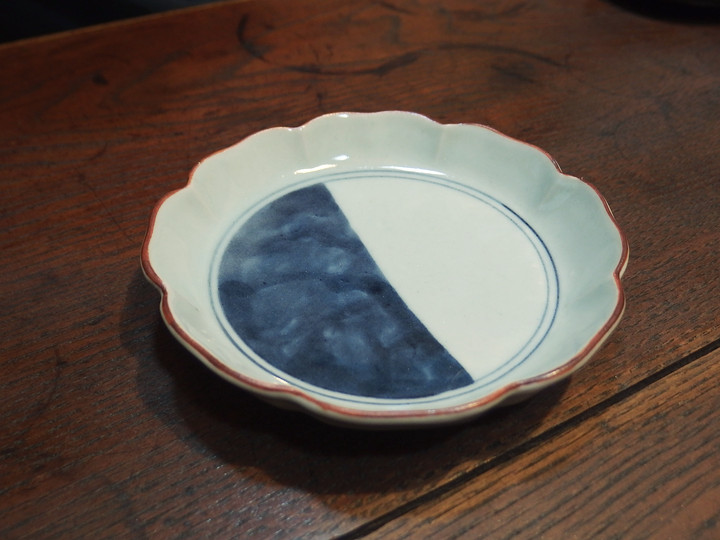
Mitsuo Fujitsuka : The shape itself is quite common, but I decided to try it with a katamigawari (asymmetrical, split-design) composition.
Hanada: This shape can also be found in Chinese ceramics, right?
Mitsuo Fujitsuka : Yes, it can. That is why you see it in Kutani and Ko-Imari ware as well. I tried a few different styles of painting on it, but none of them felt quite right at first.
Hanada: Did the designs not suit the shape?
Mitsuo Fujitsuka : It is not that they did not fit, but rather that they just lacked a certain spark. Something about them felt a bit off.
Hanada: What made you decide to draw two concentric lines around the center?
Mitsuo Fujitsuka : Just one line would be a bit dull, wouldn’t it?
Hanada: That is true. (laughs) Especially since half of it gets covered by the dami wash anyway.
Mitsuo Fujitsuka : I thought introducing a touch of empty space right here would help bring out the beauty of the flower shape.
Hanada: The katamigawari style is quite common in traditional tableware, including lacquerware. What do you find appealing about it?
Mitsuo Fujitsuka : It is simple and timeless. It has a surprisingly modern feel to it.
The Appeal of Dami Blue Wash
Hanada: In katamigawari, the dami wash covers half the surface.
Mitsuo Fujitsuka : The work of master artisans who apply it flawlessly with zero bleeding is truly impressive. However, I find the natural variations and unevenness of this wash to be far more interesting.
Hanada: Do you draw the outline first and then gently apply the brushstrokes?
Mitsuo Fujitsuka : Yes, exactly. I use a standard brush rather than a specialized dami brush. This one over here is a dami brush, but this is the one I prefer to use.
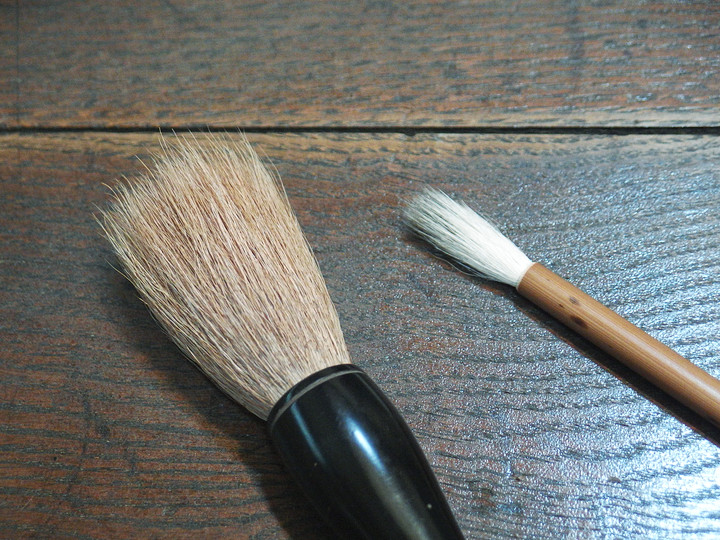
Hanada: Why do you prefer a standard brush over a dami brush?
Mitsuo Fujitsuka : It makes it easier to create delicate gradations of shade. A dami brush might work well if the piece were a bit larger. I prefer a wash with movement, rhythm, and varied intensity.
Hanada: What about this piece?
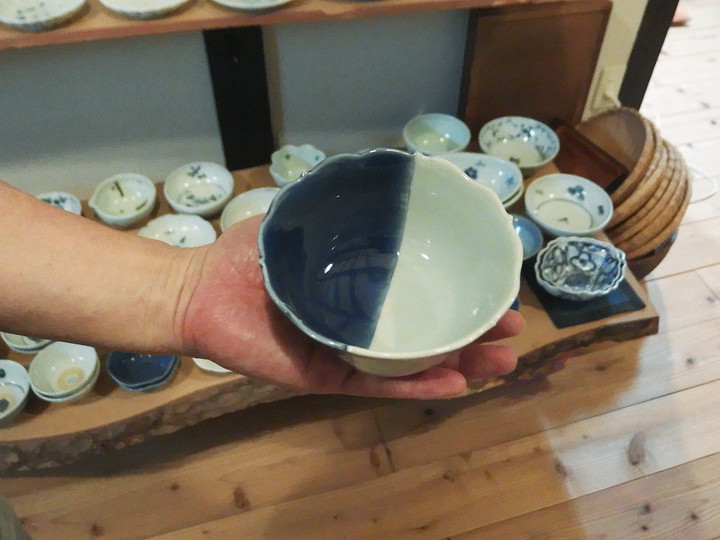
Mitsuo Fujitsuka : This features a split glaze, but personally, I use the plain lapis lazuli glaze version. It has a nice depth, making it very practical for everyday use.
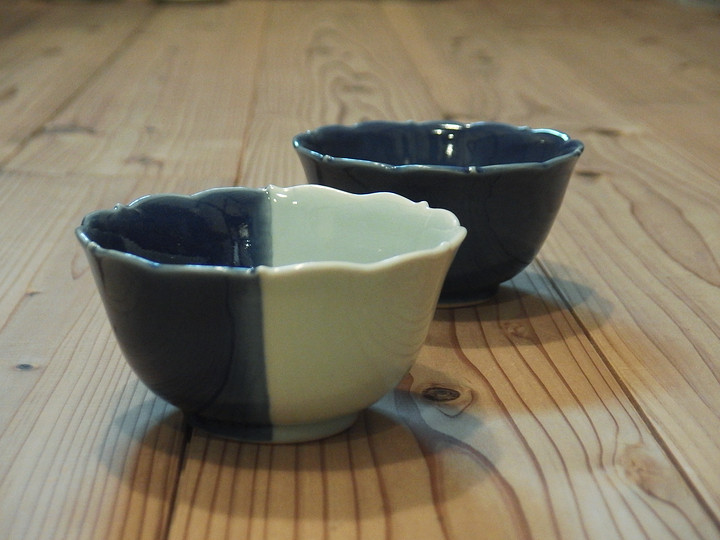
Hanada: It looks like the perfect depth.
Sho-Chiku-Bai (Pine, Bamboo, and Plum)
Hanada: Let us move on to the Sho-Chiku-Bai motifs.
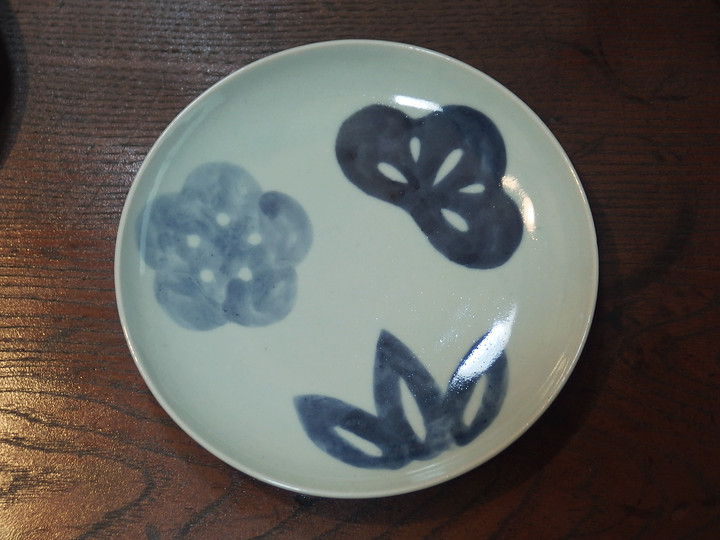
Mitsuo Fujitsuka : It is a very auspicious motif. I thought it would be interesting to keep it minimal, placing the pine, bamboo, and plum elements simply and cleanly across the surface.
Hanada: These would be lovely as individual plates for New Year’s dishes. You have arranged the motifs quite boldly and on a large scale, rather than keeping them small.
Mitsuo Fujitsuka : I felt that if I made them too small and neatly contained, they would lose their visual impact.
Hanada: And how about this Sho-Chiku-Bai design?
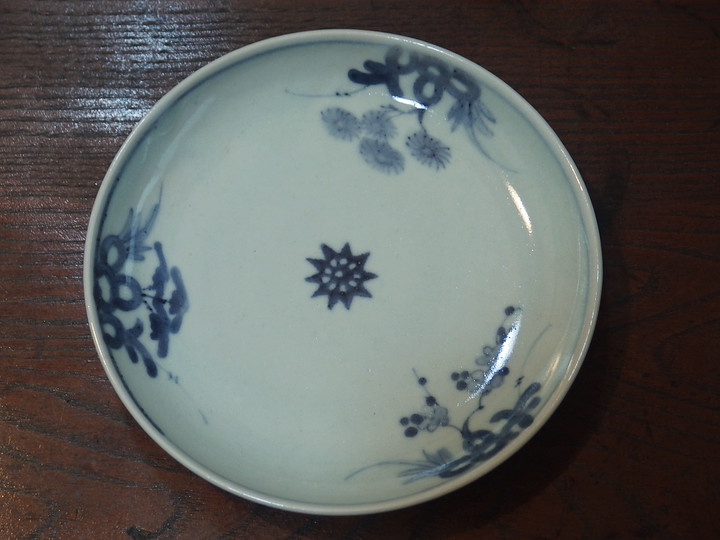
Mitsuo Fujitsuka : This pattern originally comes from an antique Ko-Imari soba choko (buckwheat noodle cup).
Hanada: With this composition, the plate has no top or bottom, which makes it very easy to use at the table.
Mitsuo Fujitsuka : Yes, dividing the design into three symmetrical sections achieves that beautifully.
Hanada: There are so many ways to express Sho-Chiku-Bai.
Mitsuo Fujitsuka : It is a theme that suits any season, and I think it is widely appreciated by everyone.
Celadon and Blue-and-White
Hanada: Next is this celadon piece… is this a plum blossom pattern?
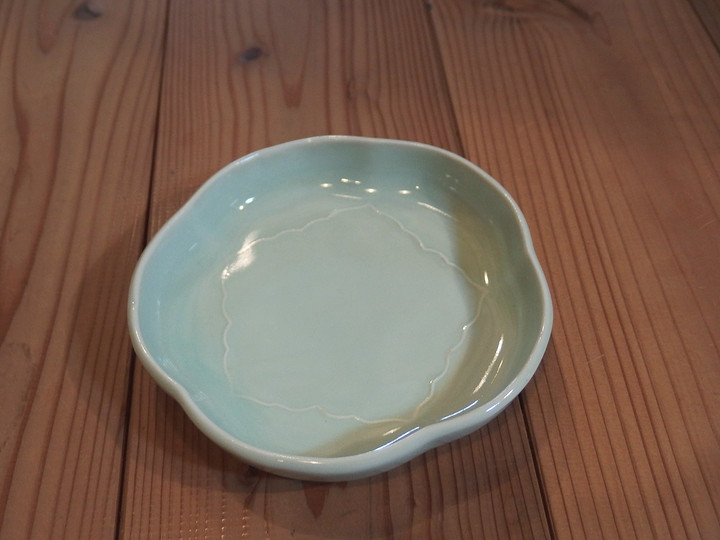
Mitsuo Fujitsuka : Whether it is a plum or something else… it is definitely a flower. (laughs) It was originally done in blue-and-white, but I wanted to see if a celadon glaze would give it a cleaner, crisper look. This version has its own unique charm too.
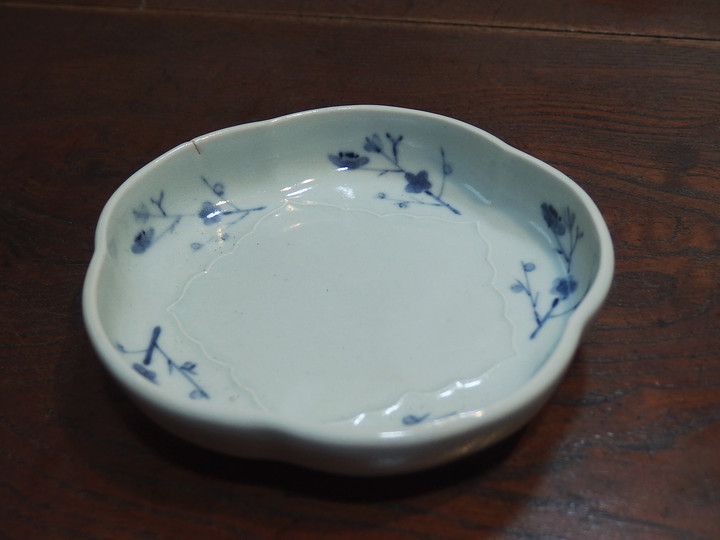
Hanada: This is lovely. Personally, I prefer this blue-and-white one. It feels beautifully cool. Well, actually, they both look refreshing. (laughs)
Mitsuo Fujitsuka : In that case, shall I make both versions?
Hanada: Thank you so much! Since most tableware has an even number of sides, a piece with an odd number of corners really catches the eye.
Mitsuo Fujitsuka : Pentagonal shapes are fascinating. This form wasn’t inspired by any particular piece; I simply wanted to create a shallow bowl. It is a classic shape, after all.
Hanada: The form is truly beautiful.
Bringing Out the Lines…
Hanada: Next up is this three-flower pattern, which is a classic composition.
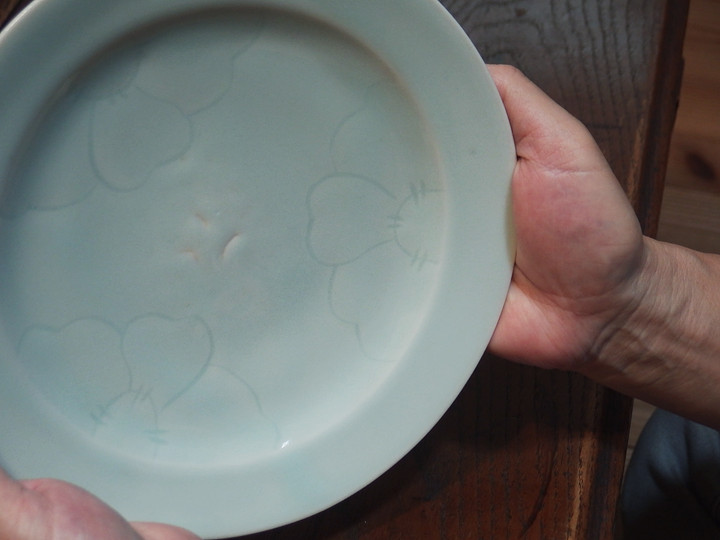
Mitsuo Fujitsuka : I have made this pattern quite often myself. The piece is first thrown on the wheel and then shaped using a mold.
Hanada: Why is that?
Mitsuo Fujitsuka : To bring out this specific line.
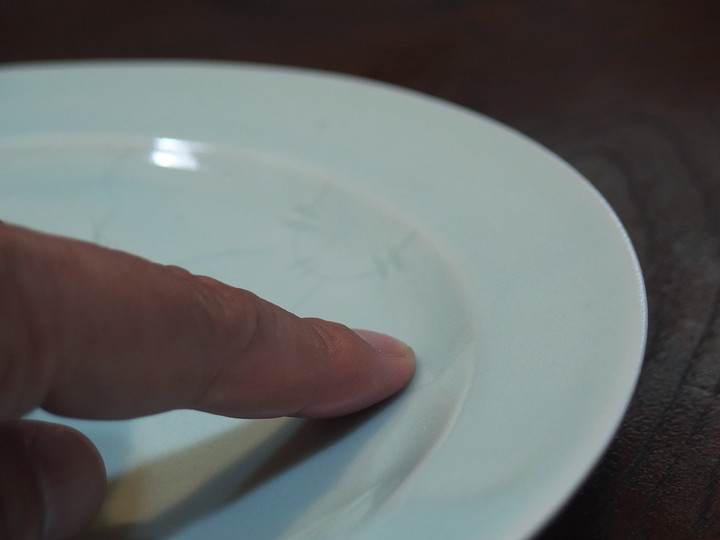
Hanada: It flows smoothly and extends outward. You mentioned earlier that you wanted to refine it a little further.
Mitsuo Fujitsuka : I am thinking of making the incised lines slightly thicker. I initially kept them understated to maintain an elegant look, but they ended up being a bit too faint. I will try it out and see which version feels right.
Ideas, Trial and Error, an Endless Journey…
Hanada: How do you feel about the time spent on this kind of trial and error?
Mitsuo Fujitsuka : I thoroughly enjoy it. I always try to act on an idea as soon as it comes to me. Even if I am working on another piece, I will pause and try the new idea out immediately. If I am away from the studio and cannot work on it right away, I make sure to sketch it. I like to capture ideas the moment they appear because they can fade or change over time.
Hanada: When you get an idea and create something new, does it turn out perfectly on the first try?
Mitsuo Fujitsuka : Only occasionally. (laughs) Usually, I have to redo it at least twice.
Hanada: Do your ideas come from many different places?
Mitsuo Fujitsuka : Yes, sometimes inspiration strikes while looking at something completely unrelated. I will think, “Oh, I could apply that to a piece of tableware.” Having made tableware for over thirty years, my mind naturally operates that way.
Hanada: That must be one of the great joys of this profession. As long as you have the drive, you can bring your ideas to life. In a corporate environment, for instance, even if you think an idea is wonderful, it can get stuck in the planning stages. In your work, you get to make all the final decisions yourself.
Mitsuo Fujitsuka : You can, but things often don’t reach the level you initially envisioned. (laughs)
Hanada: (laughs)
Mitsuo Fujitsuka : It is easy enough to produce something ordinary, but creating something truly exceptional is a different story. For example, if you love Shoki-Imari (early Imari) porcelain, you could spend your entire life trying to create a single piece that approaches its quality. If you manage that, you are incredibly fortunate, but for most, even that remains out of reach. I suppose all you can do is keep working at it, though there is no guarantee of success even if you do. (laughs)
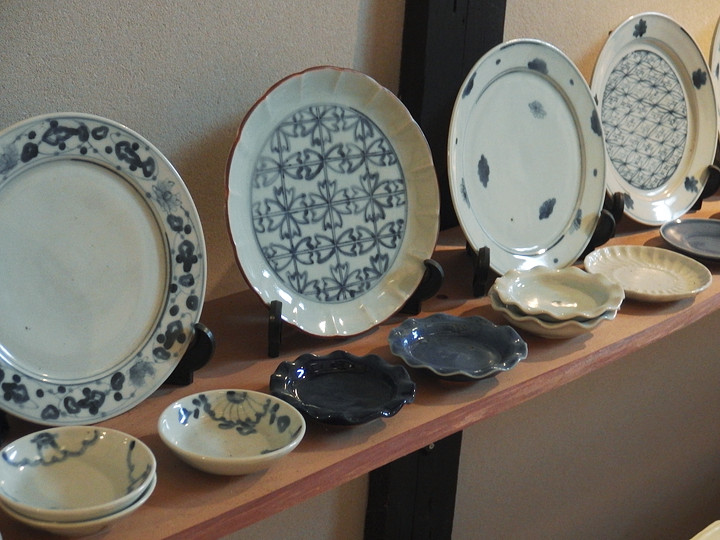
Moments of Reflection
Hanada: You have brought countless ideas to life over the years, and of course, you use many of them yourself at home.
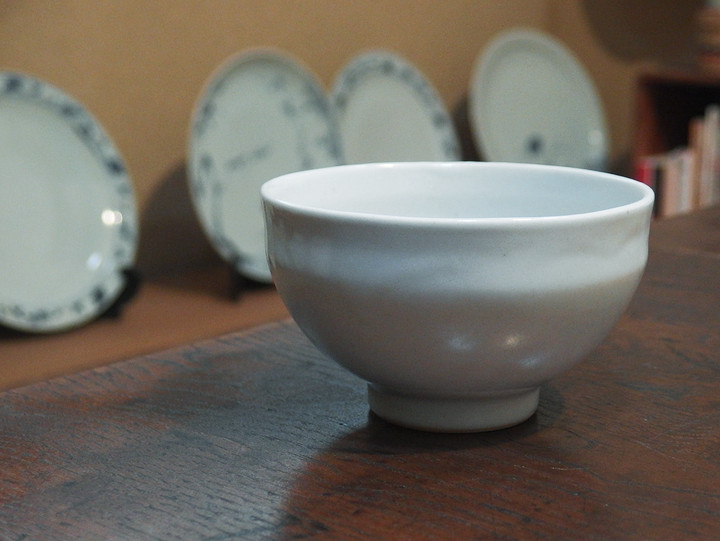
Mitsuo Fujitsuka : Take a simple rice bowl, for example—it is something used every single day. What is fascinating is that occasionally, while eating from it, I will look down and suddenly think, “Oh, this is actually quite nice.”
Hanada: Is that a moment where you are able to view it objectively?
Mitsuo Fujitsuka : Exactly. The thought that “I made this” completely disappears, and I see it with fresh eyes. I just think, “Wow, this is surprisingly good.”
Hanada: You mean this particular rice bowl?
Mitsuo Fujitsuka : Yes. I think, “The shape and balance are just right.” It feels a bit funny saying it about my own work. (laughs) But those moments happen most often with everyday items like rice bowls and teacups.
Hanada: They are pieces whose true qualities reveal themselves over a long period of use.
Mitsuo Fujitsuka : This one, for instance, is just a plain flat plate. Yet, the ones that bring a deep, quiet sense of satisfaction are these completely ordinary, simple plates. In the end, I suppose I just love those understated pieces because you never grow tired of them.
Hanada: Thank you very much. I look forward to the exhibition.
Mitsuo Fujitsuka : Thank you, I look forward to it as well.
≪ END ≫
かわいい輪花皿
花田:今回の個展に出品予定のうつわから、
いくつか選んでいただいてお話しを伺いたいと思います。
まずは、この輪花です。(以下花田-)
藤塚:文様はもみじです。
骨董屋さんで見せてもらった古伊万里を写しました。
見たのは4、5年前かな。
「メチャクチャ可愛いな」と思って。
-:作りはほとんど一緒ですか。
藤塚:ほぼ一緒です。 あっちのほうが絵はずっと上手いと思うけど(笑)。
-:作ってみて、いかがでしたか。
藤塚:薄手のほうがピリッとするので、かたちには気を使いました。
本歌はもっと薄手です。
-:だからこうヒラリとした感じが出るのですね。
藤塚:引き打ちなんですけど、型打ちのあと、縁は更に削り落としていくんです。
引き打ちの段階ではそこまで薄くはできないから。
-:紅葉の葉っぱの間(ま)がさりげなくて好きです。
藤塚:バランスいいよね。
昔の人は繊細で、上手いんだなあって感心しながら写していましたよ(笑)。
-:今までも紅葉は描かれていましたか。
藤塚:こんなのはあった。
-:最近は他でもあまり紅葉の文様見ないんですけど。
藤塚:あることはあるよ。
ただね、季節感が出すぎちゃう。
昔は季節ごとにうつわを揃えて、楽しんでいたけど、今は一年を通して使えるようなものがまず求められるんだと思う。
片身替の輪花皿
-:さて次はこの輪花です。
藤塚:かたちはよくあるんだけど、それを片身代わりでやってみました。
-:かたちは中国のものでもありますよね。
藤塚:ありますよ。
だから、九谷にもあるし、古伊万里にも。
何種類か絵付けもしてみたんだけど、ピンとくるのがなかなかなくてね。
-:かたちと合わないのでしょうか。
藤塚:合わないわけじゃないけど、なんかピンと来ないんですよ。
なんか…ね。
-:この輪線を二本にしたのは?
藤塚:一本じゃつまらないでしょ。
-:そうですね(笑)。
半分、濃で消されてしまいますし。
藤塚:ここに一本、空間を入れることで、輪花も活きてくるかなと思って。
-:うつわでは片身代わり多いですよね。漆器でもあります。
藤塚さんにとって片身代わりの面白さとは?
藤塚:シンプルで古臭くない。モダンな感じがするよね。
濃(ダミ)の面白さ
-:片身代わりは濃が半分を占めます。
藤塚:きれいに塗って、濃はにじみゼロみたいな職人さんの仕事も凄いけど、これはムラがある濃だから、面白い。
-:下書きして、あとはポンポンポンって筆をおいていく感じですか。
藤塚:そうだね。
濃筆ではなく、普通の筆を使っています。
これが濃筆。
で、僕が使っているのはこれ。
-:濃筆ではなく、普通の筆を使うのはなぜですか。
藤塚:こちらのほうが濃淡を出しやすいんです。
うつわがもう少し大きければ濃筆でもいいかもしれないけどね。
リズムを感じさせるような、動きがあって強弱のある濃が好きなので。
-:こちらどうですか。
藤塚:これは掛け分けだけど、自分はルリ釉の無地のものを使っています。
深さもあるから、結構使いやすいです。
-:丁度良い深さですね。
松竹梅
-:松竹梅にいきたいと思います。
藤塚:おめでたいでしょう。
シンプルだから面白いかなと思って。
松竹梅を、ポン、ポン、ポンて。
-:おせちの取り皿なんかにもいいですね。
あまり小さくしないで、大胆に大きく、配置されました。
藤塚:小さくコギレイにまとめると、逆にインパクトがなくなってしまうかなと思った。
-:こちらの松竹梅はいかがでしょうか。
藤塚:元々、古伊万里の蕎麦猪口にあった絵付けです。
-:この構図だとお皿に方向も出ないし、使いやすいですね。
藤塚:そうだね、三つ割にしておくと。
-:松竹梅も色々ですね。
藤塚:松竹梅は、季節も問わないし、皆さんに広く好んでもらえるものかなと思います。
青磁と染付
-:次は青磁の…梅ですかね、これは。
藤塚:梅だか、なんだか…とにかく花です(笑)。
元々は染付でしたが、スッキリするかなと思って青磁でやってみました。
これも面白いけどね。
-:これ、いいですね。
どちらかと言うと、僕はこっち好きですけど。涼しげで。
いや、両方涼しげか(笑)。
藤塚:それなら、両方作りましょうか。
-:ありがとうございます!
食器は偶数角のものが多いから奇数角は目に入ってきますね。
藤塚:五角って面白いよね。
この型はなにかがヒントになったわけでなくで、浅鉢を作りたかったんです。
良くあるかたちじゃないですか。
-:かたちもキレイです。
ラインを出すため…
-:次は、この三つ花。よく見る構図です。
藤塚:僕も結構やっている。
これは陰刻バージョンだね。素地は引き打ちです。
-:なぜですか。
藤塚:このラインを出すため。
-:スーッときて、横に伸び出る感じ。
少し改良したいと先ほど仰っていました。
藤塚:陰刻をもう少し太くしようと思っています。
品良くしようと思って控えめにしたら、分かりづらくなっちゃった。
まあ、やってみて、しっくりするほうにしようと思います。
アイデア、試行錯誤、ずっとやっていく…
-:藤塚さんにとって、そういった試行錯誤の時間はいかがですか。
藤塚:楽しいですよ。
いつも心がけているのはアイデアが出てきたら、すぐにやってみること。
だから、他の絵付けをしていても、思いついたらそっちを止めて、やってみるんです。
外にいて、すぐに出来ないときも、絵などをデッサンしておく。
アイデアって、出てきた時に記録しておきたいんですよ。
時間が経つとぼやけてきたり、変わってきたりしてしまう。
-:アイデアが出て、新しいものを作るとき、一回でうまく決まりますか。
藤塚:たまにはね(笑)。
いつもだと、少なくとも二回はやり直している。
-:アイデアの出方も色々なのですか。
藤塚:全然違うもの見ていてひらめくこともありますよ…
「これ、あのうつわに使えるな」なんていう風に。
30年以上も食器作ってきているから、そういう思考になっているのでしょうね。
-:この仕事の楽しみの一つですね。
自分がその気になりさえすれば具現化できる。
例えば、会社なら、自分でいいなと思っても、企画段階でとまってしまうこともあるわけです。
この仕事の場合は、全部自分で答えを出すことができる。
藤塚:できるけどさ。
でもそれ、自分が思っている次元にいかないことも多いよ(笑)。
-:(笑)
藤塚:低次元ではいくらでも具現化できるかもしれないけど「より良いもの」という意味では変わってくる。
例えば、初期伊万里が好きだったとして、一生かけて一つでも初期伊万里に肉薄できれば御の字で、ほとんどそれすら叶わないわけです。
まあ、ずっとやっていくしかないんでしょうね。
ずっとやっていたからといって、出来るとも限らないけど(笑)。
ふと思うとき
-:藤塚さんはこれまで、出てきたアイデアを数え切れないくらい形にしてきました。
勿論、ご自身でもたくさん使われています。
藤塚:例えばご飯茶碗なんか、日常的に使いますよね。
面白いのは、ご飯食べながら見ていると、ふと「あ、いいな」ってあらためて思うことがあるんです。
-:客観的になる瞬間なのでしょうか。
藤塚:そう、そうなんですよ。
「自分が作ったもの」ということが外れて、ふとそういうことを思うときがある。
「おっ、意外とこれいいな」って。
-:このご飯茶碗ですね。
藤塚:「このかたち、バランス取れているな」って。
自分で言うのもなんだけどさ(笑)。
ただ、そういうことはご飯茶碗や湯呑に多いね。
-:長く付き合って良さを感じるうつわ、ですね。
藤塚:これなんて、単なる平皿じゃないですか。
でも、しみじみ「いいなあ」と思うのは、このなんでもない、他愛もない、単なる平皿なのよ。
まあ結局、そういうさりげないものが飽きなくて好きなんだろうな…。
-:ありがとうございました。
個展、宜しくお願いします。
藤塚:よろしくお願いします。
関連記事はこちら