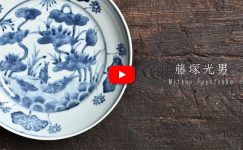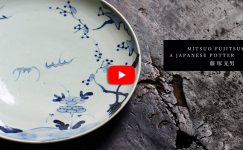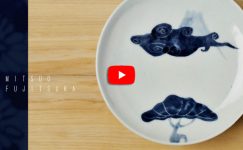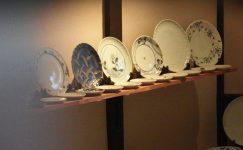




English version of the interview here.
36 Years: Long Yet Short
Hanada: Thank you for your hard work over the past 36 years.
Mitsuo Fujitsuka : It felt long, yet short at the same time. But I suppose it was good, as I was able to make it this far safely. When I first started, the concept of aging never crossed my mind, but naturally, your physical strength declines over time.
Hanada: Making a living out of what you love is not something everyone can do. You have spent your career surrounded by things you truly love.
Mitsuo Fujitsuka : I was just lucky. The timing was great, and I was blessed with wonderful encounters.
Hanada: Encounters…
Mitsuo Fujitsuka : I have truly been supported by so many people. They gave me a lot of inspiration as well.
Hanada: First, your meeting with Hideo Hata became your connection to pottery.
Mitsuo Fujitsuka : Yes, Mr. Hata was the first. Then I went to Kutani Seiyo, met various people in Kanazawa, and they all helped me. Even after returning to Kyoto, so many people supported me. Museums and antique shops showed me many things that I could never have afforded on my own.
Hanada: Your way of interacting with people is very thoughtful, so I imagine it was not just a one-way street where you were only receiving help.
Mitsuo Fujitsuka : A lot has happened, so it is hard to sum it up in a few words.
Hanada: There must have been many memorable moments.
Mitsuo Fujitsuka : When I try to recall them, only the silly things come to mind (laughs). Getting carried away while drinking, acting wild… things like that.
Hanada: Those kinds of memories are exactly what make the past and present so enjoyable.
Mitsuo Fujitsuka : I have plenty of funny stories. Especially from my time at Seiyo, there are countless tales (laughs).
Hanada: Everyone argued, yet you all got along well.
Mitsuo Fujitsuka : Exactly. It was quite an unusual group.
Hanada: Coming from Kyoto, weren’t you surprised?
Mitsuo Fujitsuka : In the beginning, yes. The mindset was completely different from my student days. At Seiyo, everyone acted as if they were the center of the universe (laughs). It was chaotic.
Hanada: That must have built your character.
Mitsuo Fujitsuka : You get used to it after a while (laughs). You figure out how to handle it, and eventually, you find like-minded friends.
Hanada: Kutani Seiyo also deserves recognition for presenting a new form of everyday tableware.
Mitsuo Fujitsuka : I knew nothing about pottery at first, so I learned the basics of tableware at Seiyo. In that sense, Yoichi Hata was also my teacher.
Hanada: You have also valued your relationships with younger artists.
Mitsuo Fujitsuka : It comes down to energy, after all. Even in terms of creativity, they make me feel that I cannot afford to lose to them.
Realizing and Beginning to Accept
Hanada: You have focused on making tableware based on early Imari ware.
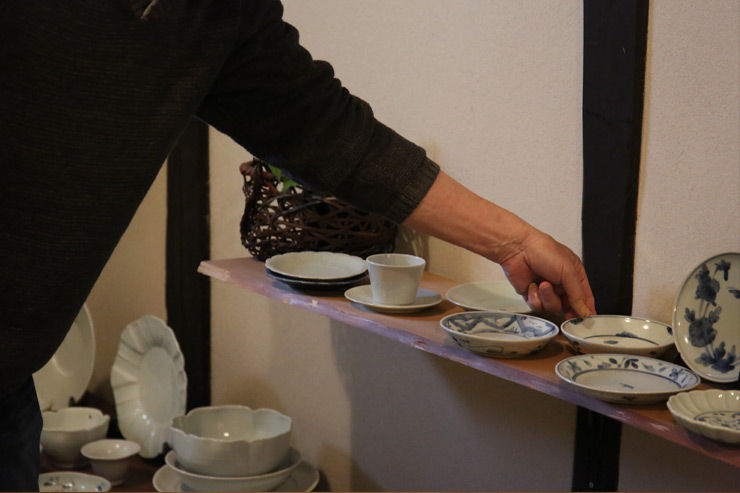
Mitsuo Fujitsuka : When you are young, you try to create things entirely from scratch. You strive to make something that no one else is doing. But in reality, there are very few geniuses capable of that. Most of us are ordinary, and once you realize that, you can honestly begin to accept things outside of yourself. When you make things yourself, your perspective on antiques changes too. It starts with asking yourself, “Why am I so drawn to this piece?” Through that, you come to understand the merits of the piece in your own way, and it begins to take shape in your work.
Mitsuo Fujitsuka : If you try to make something entirely on your own, you might end up going in a completely wrong direction. While that drive is certainly important, from ancient times to the present day, everyone has learned by emulating something, and through that process, their own individuality emerges. Even if you understand this intellectually, it takes time for it to truly sink in.
Continuing to Create
Hanada: Let’s talk about a few of your pieces. What was the very first tableware you made after becoming independent?
Mitsuo Fujitsuka : It was an Inban (transfer-printed) bowl and plate. I recall referencing old Southeast Asian semi-porcelain.
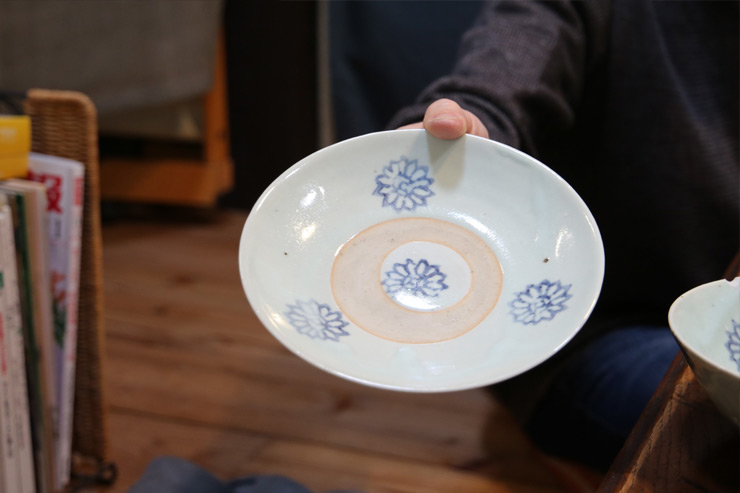
Hanada: It has become an iconic piece for you.
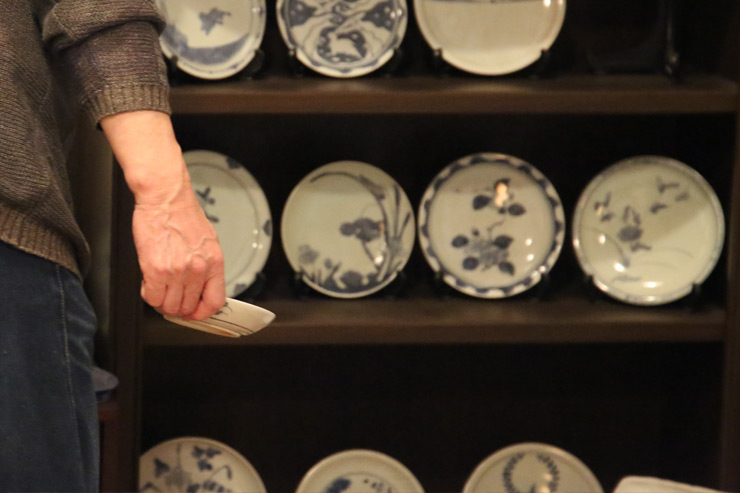
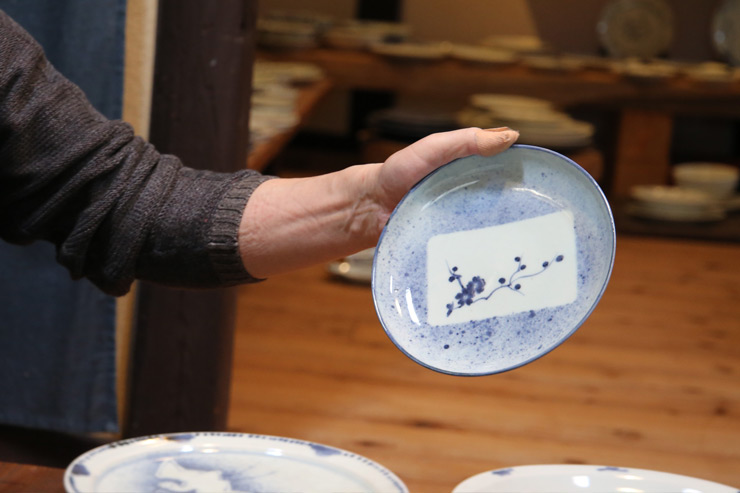
Mitsuo Fujitsuka : This one is also an old design. It is a Namasu plate with a chrysanthemum pattern, and I believe it was mostly a reproduction. When you want to replicate an antique, you cannot afford to buy the actual piece, especially in the beginning. So, I gathered as many books as possible. I frequented secondhand bookstores, and museum catalogs were perfect because the photos were beautiful and the prices were reasonable. Because of that, whenever I held an exhibition in Tokyo, I would always stay for three or four days afterward to visit museums.
Hanada: This is a recent piece. It has a fresh feel to it.
Mitsuo Fujitsuka : I intended for these waves to appear whiter and more defined.
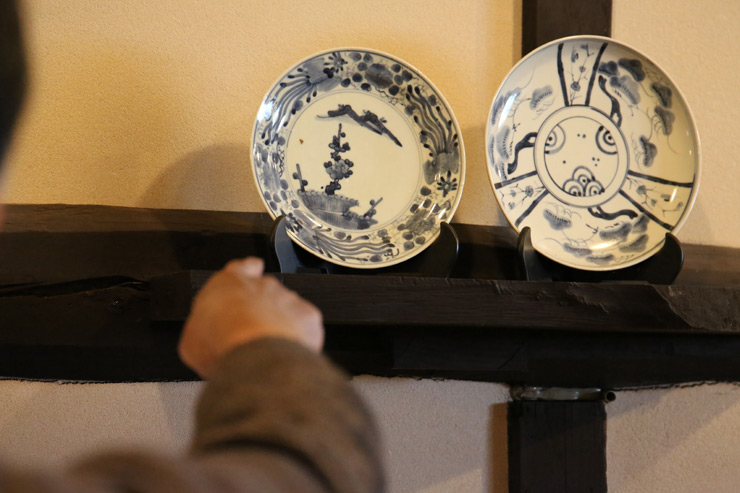
Hanada: The size relationship between the flowers and the bird is interesting. It feels as if a bird is flying in the distance.
Mitsuo Fujitsuka : This is an entirely original creation, but I thought it would be interesting to paint camellias here and add a bird. And this one features a rabbit.
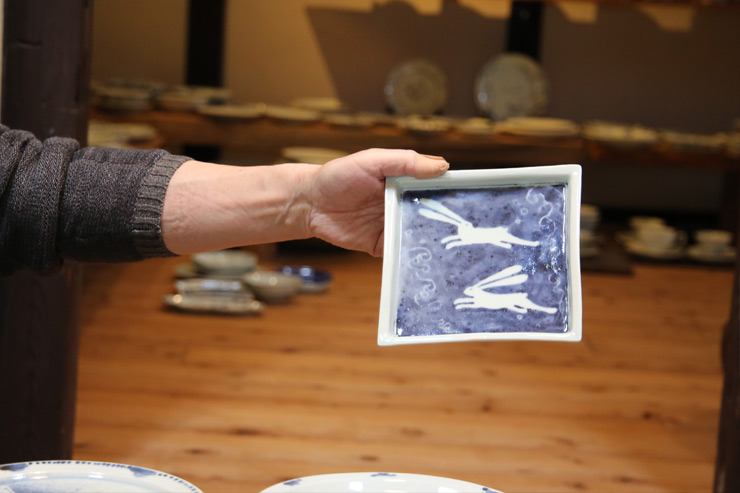
Hanada: Your Dami (wash painting) technique has a soft and gentle feel.
Mitsuo Fujitsuka : Yes, I like to create a soft look with subtle gradations. I do not really like the feeling of making it look too neat and rigid.
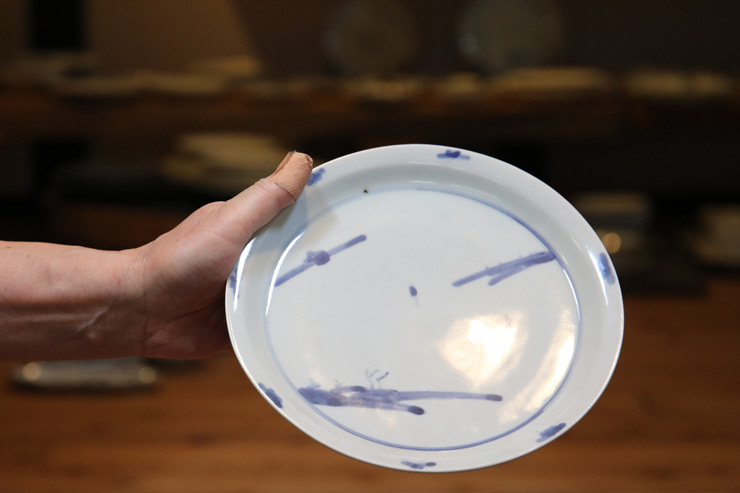
Hanada: Speaking of your work, your white porcelain pieces are also lovely.
Mitsuo Fujitsuka : I also admired Joseon dynasty ware. I also replicated Delft plates. Since Delftware did not seem entirely suited for everyday use as it was, I widened the base.
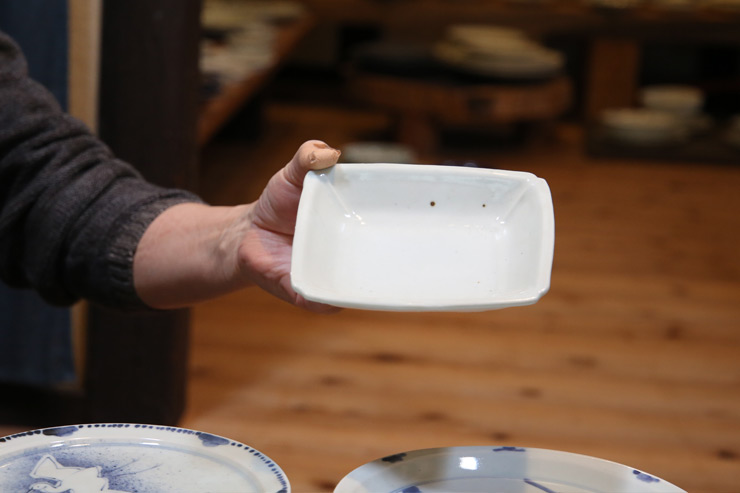
Hanada: This is another timeless classic.
Mitsuo Fujitsuka : This shape originally exists in Nezumi-Shino ware, and I recreated it in white porcelain. I have been making this since around the time I became independent.
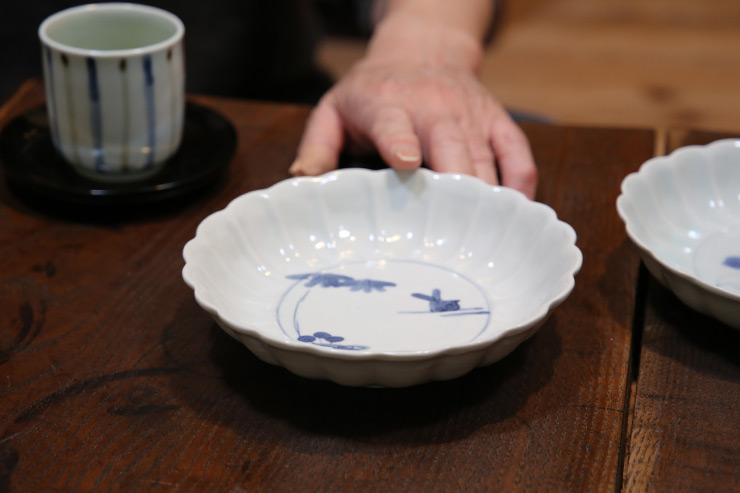
Hanada: We often receive inquiries from customers saying, “I don’t know the artist’s name, but I want that specific piece I saw before,” and it usually turns out to be yours. This shows that while you have many loyal fans, there are also many people who are simply drawn to the tableware itself. This Rinka (flower-shaped) bowl has brought in a particularly high number of inquiries.
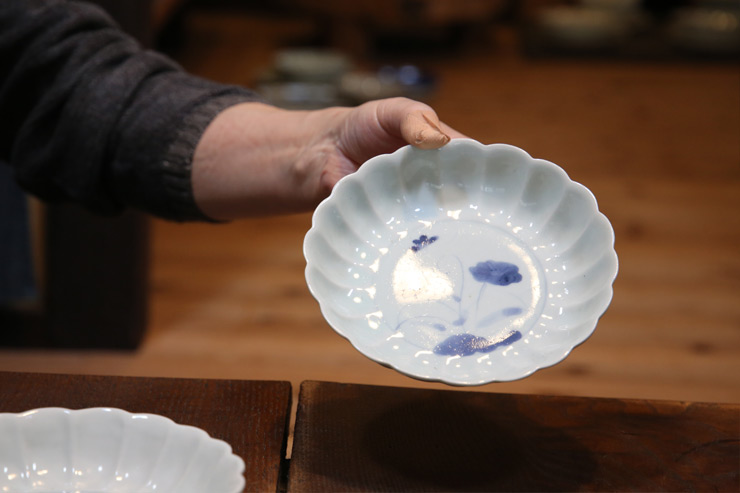
Mitsuo Fujitsuka : I have been making that since my early independent days as well. This design features chrysanthemums, flowing water, and rabbits.
Gratitude and Continuing On
Hanada: Could you share a closing message as you close your kiln? First, to your customers.
Mitsuo Fujitsuka : I have nothing but gratitude. Many have supported me for a very long time, and some have even become like friends. I am deeply grateful to everyone.
Hanada: Do you have any words for those aspiring to do pottery, or for the young artists in their 20s and 30s who are working hard?
Mitsuo Fujitsuka : I cannot say anything grand (laughs). “Continuity is strength,” so continuing is probably the most important thing. I have focused on being a tableware maker, but there are various approaches. I hope people find the style and method that suits them best. Everyone has a different perspective, so I cannot generalize. The main thing is simply to keep going.
Hanada: Your former apprentices are also finding success in their careers. They always speak of your supportive nature and express their gratitude toward you.
Mitsuo Fujitsuka : They are all working hard while showcasing their own unique styles. I think that is truly wonderful. When I see their work on social media, I am often impressed by how much they have improved or by the new things they have started. Sometimes, I even find myself wanting to ask, “How did you manage to do that?” (laughs).
Hanada: Finally, your wife’s support must have been invaluable.
Mitsuo Fujitsuka : Indeed, she has truly stood by me through all of this. I would not have been able to keep going this long without her.
≪ END ≫
長くて短い36年間
花田:36年間、お疲れさまでした。(以下花田-)
藤塚:長かったです。というか・・・、短かった。
まあ、良かったんじゃないですかね。無事にここまでやってこられましたから。
始めた頃は「年を取る」なんていう概念がなかったけど、当然ながら体力は衰えていくものです。
-:「好きなことを仕事に」というのは皆が出来ることではありません。
藤塚さんは、本当に好きなこと、好きなものに関わってこられました。
藤塚:運が良かったんです。タイミングも良かったし、出会いにも恵まれました。
-:出会い・・・。
藤塚:本当に色々な人に助けてきてもらいました。刺激も受けたし。
-:まずは秦秀雄さんの出会いが、焼き物との接点となりました。
藤塚:最初は秦さんですね。で、青窯行って、金沢でも色々な人に出会って、助けてもらった。
京都に戻ってきてからも、沢山。美術館や骨董屋さんに、自分では手に入れられないような物も色々見せてもらいました。
-:藤塚さんの人付き合いの仕方は、とても丁寧ですし、一方的に藤塚さんが与えられていたわけでもないのだろうなと想像します。
藤塚:色々あるから、一言ではなかなか言えませんよね。
-:印象深いことも色々あったのでしょうね。
藤塚:思い出そうとすると、出てくるのは、くだらないことばかりですよ(笑)。酒飲んで羽目外したり無茶したり・・・そんなことばかり。
-: そういう記憶こそが、思い出や現在を楽しくしているのでしょうね。
藤塚:面白い話、いっぱいありますよ。青窯の時なんて、いくらでもある(笑)。
-:みんな喧嘩もするけど、仲もいいのですね。
藤塚:そうそう、なんかね。変な団体でしたよ。
-:京都から来て、驚かれたのではないですか。
藤塚:最初の頃はね。感覚が、学生の時とは全然違うし、青窯の場合は「私が世界の中心です」という人ばかり(笑)。
めちゃくちゃですよ。
-: 鍛えられますね。
藤塚:そのうち慣れてきますから(笑)。対処の仕方も分かってくるし、そのうち気の合う仲間もできてくる。
-:九谷青窯は、普段使いのうつわの新たなかたちを提示した功労者でもあります。
藤塚:焼き物のことは全く知らなかったから、食器に関しての基本的なことは、青窯で学びました。
そういう意味では、秦耀一さんも教師でした。
-:藤塚さんは、若い作家さんとのお付き合いも、大事にされてきました。
藤塚:やっぱりね、エネルギーですよ。創作力にしても「負けたらあかんな」と思わせてくれます。
気付いて、受け入れ始めて
-:藤塚さんは初期伊万里をベースにしたうつわ作りに取り組まれてきました。
藤塚: 若い時って、自分でゼロから生み出そうとしますよね。
何とかして、他人がやらないことを自分で作りだそうとするじゃないですか。
でも所詮、そういうことができる天才なんて、ごく僅かしかいない。
ほとんどの人間が凡才なわけで、それに気がつくと、素直に自分以外のものも受け入れられるようになります。
自分で作っていると、骨董の見え方も違ってきますしね。
「なぜこんなにも、自分はこの器に惹かれるんだろう」という問いかけから、器の良さを自分なりに理解できるようになっていって、形になってくる。
「自分だけで、何か作ってやろう」とすると、全然違う方向に行ってしまっているのでしょうね。
そういう気持ちも確かに大切なのだろうけど、昔から現代に至るまで、みんな「何かを真似ては、そこで勉強して」ということを続けていく中で自分が出てくる・・・みたいなのがあるじゃないですか。
ただ、そういうことは、頭の中では理解しているつもりでも、本当に自分の中でしっくりくるには時間がかかりますよね。
作り続けて
-:いくつか器について。独立して、1番最初に作ったうつわは・・・。
藤塚: 印判の鉢とお皿です。東南アジアの古い半磁器を参考にした記憶があります。
-:アイコンのような存在ですね。
藤塚:これも、古いです。菊花文なます皿で、ほとんど写しだったと思います。
骨董を写そうにも、特に最初は現物を高くて買えないでしょう。だから、とにかく本を集めました。
古本屋さんに通ったし、美術館の図録も、写真が綺麗な上に手頃だから最高です。
それだから、東京で展示会やる時は必ず展示会後3、4日残って、美術館を巡っていました。
-:こちらは最近のものです。新鮮な雰囲気ですね。
藤塚:この波がもっと白くはっきり出るつもりでした。
-:花と鳥の大小関係が面白いです。向こうに鳥が飛んでいるような感じ。
藤塚:これは完全に創作ですが、椿をここに描いて、鳥を入れても面白いかなと思って。これは、うさぎ。
-:藤塚さんのダミはふんわり優しい感じですね。
藤塚:うん、濃淡があって柔らかい感じでやりたいなと思っています。
小ぎれいにやり過ぎてピタっとしちゃう感覚があまり好きじゃなくてね。
-: 藤塚さんと言えば白磁の仕事も魅力でした。
藤塚:李朝のものも好きでしたから。あと、デルフトの皿も模しました。
デルフトは、そのままだと普段使いに向かなそうだったので、高台の幅を広げました。
-:これも定番中の定番ですね。
藤塚:こういう形が鼠志野にあって、それを白磁で作りました。
独立の頃から作っています。
-:「どの作家さんか分からないんだけど・・・あの時見た、あの器が欲しいんです」というお客様からのお問い合わせが多いのも藤塚さんです。
藤塚さんにはフアンの方も多い一方、うつわそのものを熱心に求められている方も多いという表れだと思います。
この輪花5.5寸鉢は特に問い合わせの多いうつわでした。
藤塚:それも独立当時からですね。これは菊花と流水うさぎ文。
感謝、そして続けること
-:閉窯にあたってメッセージをいただけますか。
まずは、お客様へ。
藤塚:感謝しかありません。
昔からずっとの人も多いし、友人のようになった人もいます。
重ね重ね、感謝しかありません。
-:これから焼き物を志す人や、これから頑張ろうという20代や30代 の若手の方々に向けて、何かありますか。
藤塚:大したことは言えませんよ(笑)。
「継続は力なり」で続けることが1番でしょうね。
僕は食器屋を通してきましたが、色々なやり方がありますから。自分に合うものや方法が見つかるといいと思います。
人によって観点も違うし、一概にどうのこうのって言えないですね。
とにかく続けてくださいってことです。
-:巣立っていったお弟子さんたちも、活躍されています。
皆さん、いつも藤塚さんの面倒見の良さと感謝の気持ちをお話しされます。
藤塚:皆がそれぞれ、自分の色を出しながら、頑張り続けていますよね。それはまず、すごいことだと思います。
SNSなんかで、みんなの仕事を見ていても「うまくなったな」とか「こんなことも始めたんだ」とかって感心することもあるし、逆に「これ、どうやってやったんだろう」って聞きたくなる時もある(笑)。
-:そして最後に、奥様のサポートもかけがえのないものでした。
藤塚:いやあ、本当によく、ここまで付き合ってくれました。
妻がいなければ、ここまで続けてこられなかったでしょうね。
関連記事はこちら