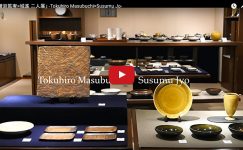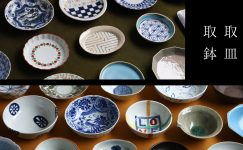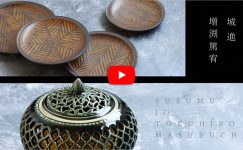






English version of the interview here.
Since the Day of Independence
Hanada: This year marks a milestone for you.
Tokuhiro Masubuchi: It’s my 20th year since becoming independent. And for the record, it’s also my 30th wedding anniversary—both on the same day, April 2.
Hanada: Congratulations. What an incredible coincidence. When you first became independent, did you have even the slightest idea that things would turn out as they have now…? No, probably not.
Tokuhiro Masubuchi: I nearly went under right after going independent. When I came to Miyazaki, I had no money, no credibility. A bank employee told me, “We won’t lend you even a single yen.” I relied on a local pottery studio for a while… I’m still grateful to them.
Eventually, I forced myself into independence anyway. Even though I had plenty of time but no clients lined up, I kept producing at the same pace as when I worked at the kiln—800 to 900 pieces a day. But my inventory kept increasing, my kids kept growing… I thought, “This is bad…” (laughs).
Hints from Many Sources
Hanada: What kind of things did you make at the beginning?
Tokuhiro Masubuchi: Kohiki ware.
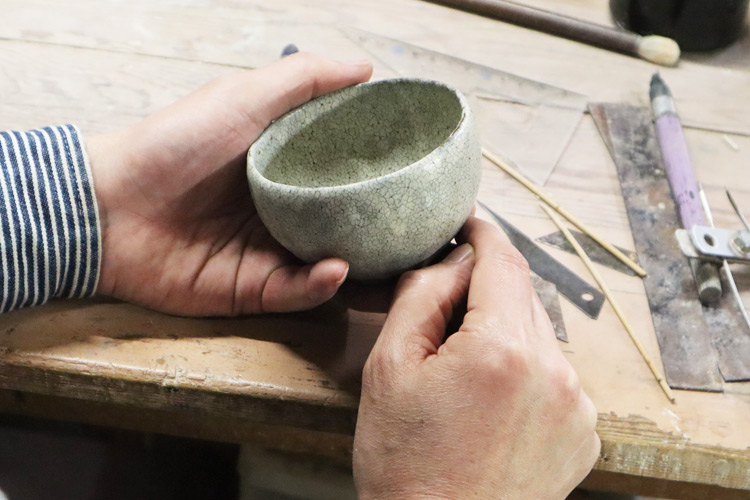
Tokuhiro Masubuchi: Later, inspired by what I learned during my time at a Seto pottery studio, I started shaping those ideas in my own way. From there, I started making small ochazuke bowls and other items at the request of shops.
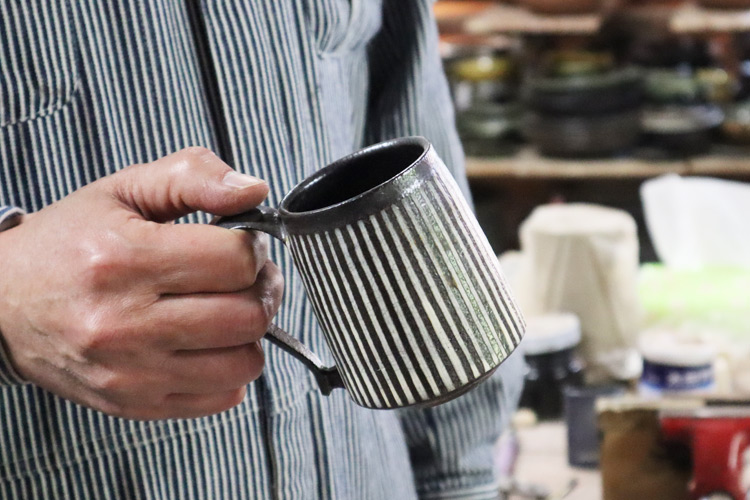
Hanada: Ochazuke bowls—those sound wonderful.
Tokuhiro Masubuchi: I paid close attention to the height and the angle of the bowl’s rise.
If you get those wrong, the bowl becomes incredibly hard to use (laughs).
A food company even used them in a TV commercial.
Hanada: That must have introduced your work to many people.
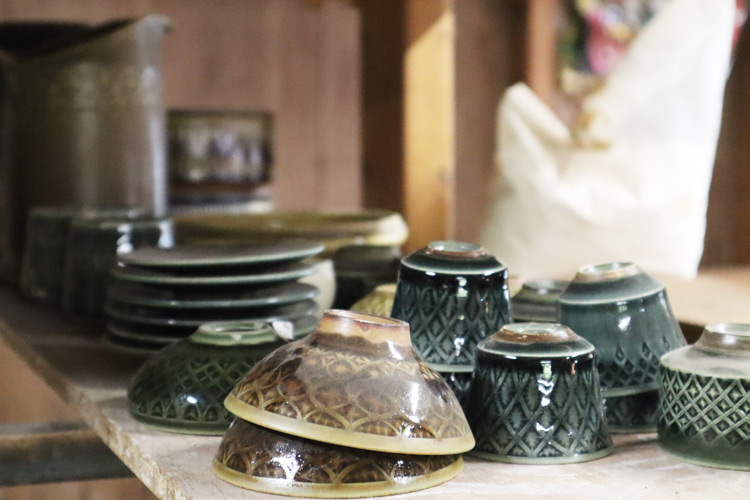
Tokuhiro Masubuchi: I also worked on simple pieces with little decoration.
And here in Kobayashi City, the cultural sphere is close to Satsuma, so I wondered if I could use Satsuma-style ivory glaze for something. But calling it actually “Satsuma ware” would be disrespectful to the original, so I changed the name (laughs).
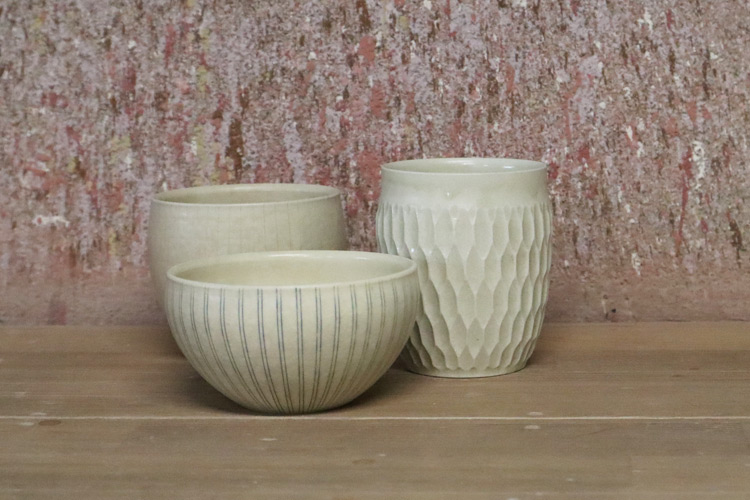
Tokuhiro Masubuchi: From there, I began adding lines, carving patterns, increasing colors.
I also experimented with expressions reminiscent of Kiseto or Oribe, but calling them by those names directly would upset the people who are doing the real thing. So I changed the names and added my own arrangements.
The Birth of Carving Work
Hanada: Even though you aimed for simplicity, you ended up adding more and more decoration, which eventually led to your carved work.
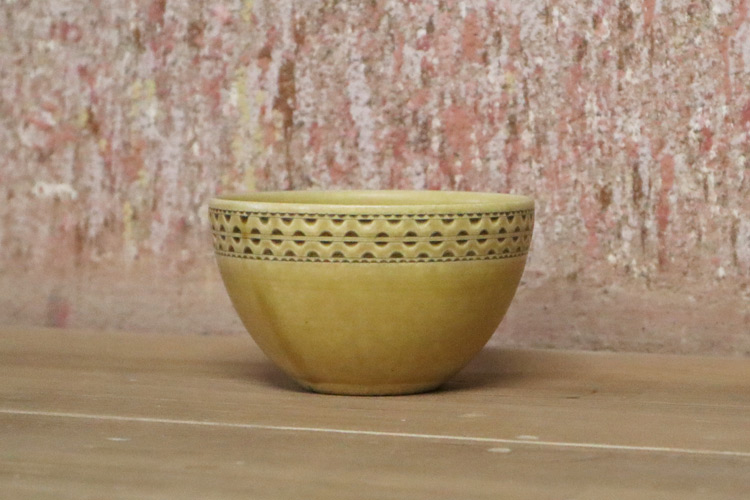
Tokuhiro Masubuchi: Around that time, at an exhibition, I was playing with a customer’s child who had brought a kaleidoscope.
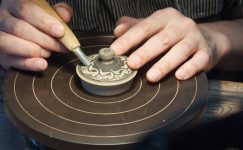
When I looked through it, I was amazed that infinite patterns could emerge from so few pieces. I realized my carving tools were the same.
Even with just a few chisels, combining them expands the range of expression.
By adjusting carving depth and glaze, the process became closer to “painting with carving.”
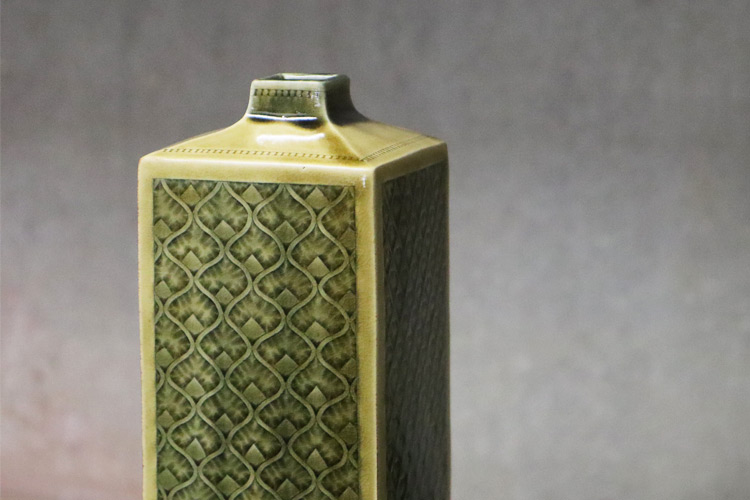
Hanada: So many discoveries layered together.
Tokuhiro Masubuchi: Another reason I started carving was that “painting with a brush” never quite fit me.
Originally, I studied sometsuke at the training school in Seto, and thought I could handle it.
I started teaching my wife, who helps me, acting all high and mighty—but she had a better instinct for it, and within six months she surpassed me.
Hanada: (laughs)
Tokuhiro Masubuchi: So “drawing through carving” felt like a path opening up. I remembered my grandfather’s woodcarving work and thought, “I want to do something like that.” I practiced and ended up where I am today.
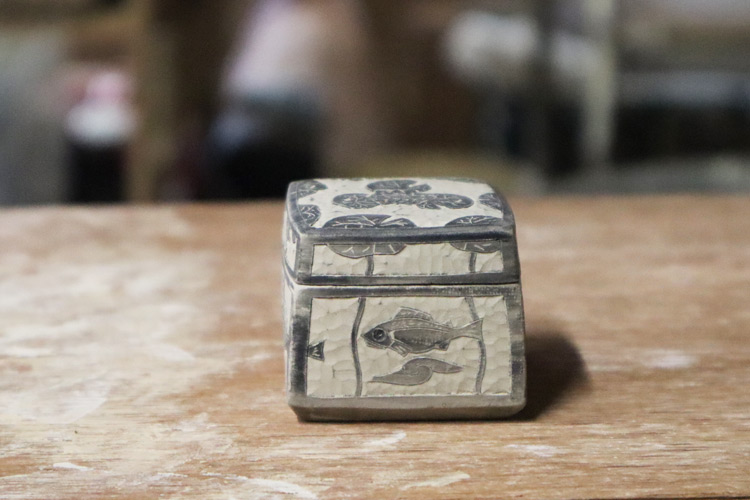
Recent Work
Hanada: Are there things you’ve been thinking about or working on recently?
Tokuhiro Masubuchi: With all the natural disasters and accidents lately, I’ve been exploring motifs that might serve as charms or talismans.
For example, the Four Symbols—Azure Dragon, White Tiger, Vermilion Bird, and Black Tortoise.
To avoid making them too realistic, I turned the Azure Dragon’s scales, the Vermilion Bird’s decorative feathers, and the Black Tortoise’s snake into continuous patterns… But the White Tiger gave me the most trouble—because, well, it’s white. Even when I tried to stylize it, it somehow ended up looking like “an old veteran who’s lost his edge” (laughs). I’ll refine it more.
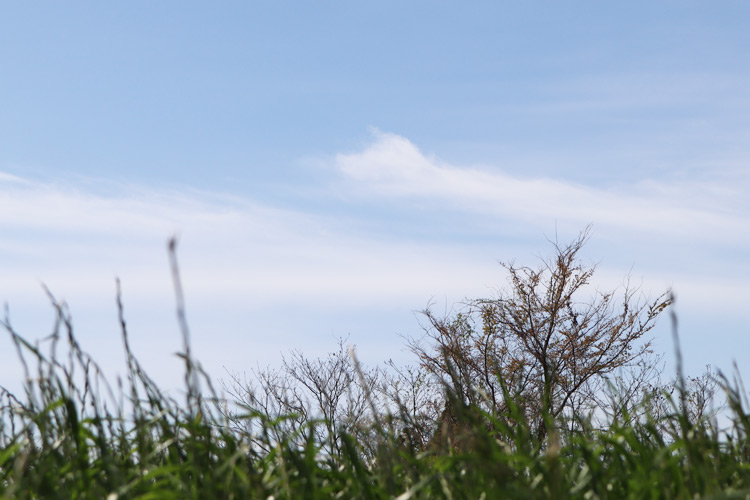
Also, I’ve been increasingly using nearby things as motifs. In winter, Daurian redstarts often visit the garden—they’re adorable—so I used them too. I also want to show something like the breath of craftsmanship, reminiscent of my grandfather’s woodworking—like the marks left by a chisel.
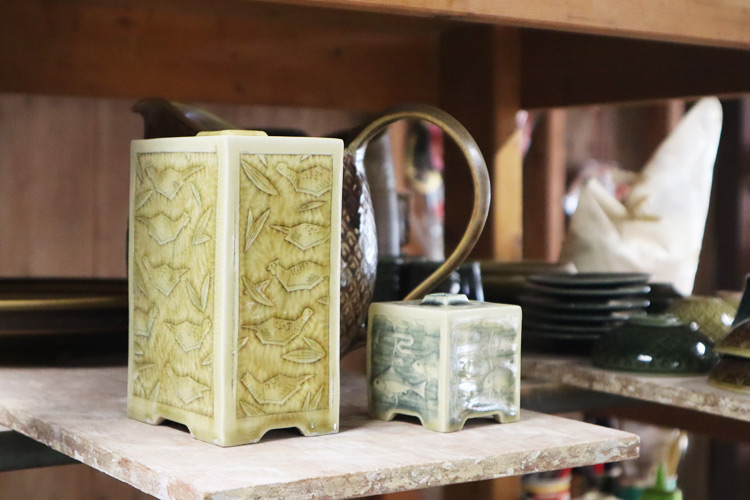
Hanada: Was there a particular trigger for these changes?
Tokuhiro Masubuchi: Maybe it’s age… Also, people like Mr. Fujitsuka (artist Mitsuo Fujitsuka) retiring, or my children becoming independent… A lot of sad changes overlapped.
And only recently have I finally started writing ideas down in a notebook.
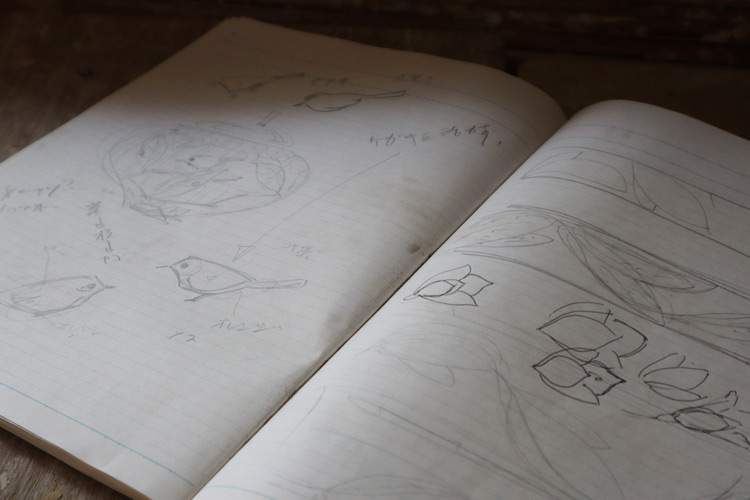
Hanada: Until now…?
Tokuhiro Masubuchi: I used to think it was better *not* to have an idea notebook.
I’m bad at copying classical designs or following examples. Even when I played in a band, I didn’t like being in a cover band—you’d always be compared to the original: “good,” “bad,” “wrong”… So I figured it was faster to just write our own songs. That way, there were no “mistakes.” I’d say things like, “This is just a slightly unusual chord progression.”
Hanada: (laughs)
Tokuhiro Masubuchi: So having an idea notebook felt like having a “model” that would limit how far I could go.
But recently, even ideas I was sure I had vanish when it’s time to create. And while my ideas used to be relatively simple, lately they’ve gotten more complex, and I can’t organize them in my head anymore (laughs).
So when I was looking for a notebook, I found one in my son’s room—a perfect blank one. When I opened it, only the first page had notes, the rest were blank. It was so like him that I had to laugh.
Hanada: He probably never imagined his notebook would be used for that purpose.
Through Objects…
Hanada: Is there anything you hope to work on going forward?
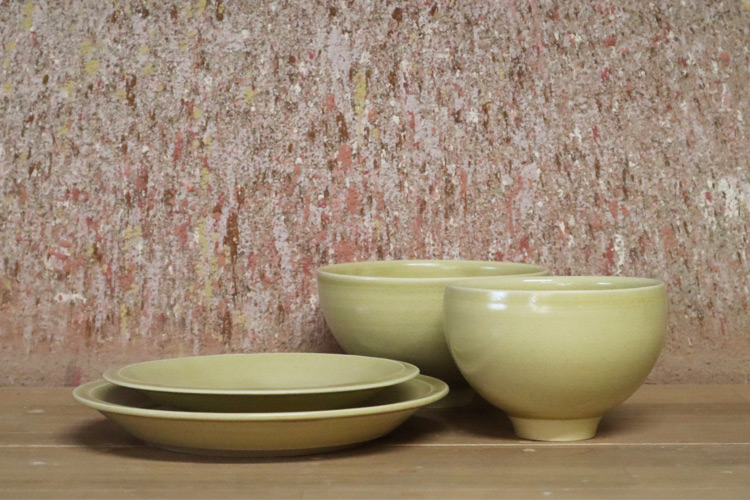
Tokuhiro Masubuchi: I want to make things that people—regardless of generation—who aren’t familiar with tableware can “try taking home.”
At an exhibition once, a customer told her husband, who had just tagged along, “It’s fun when your tableware changes,” and it really struck me. I hope I can convey that kind of joy through my work.
Hanada: You really love “fun,” don’t you. And you always talk about anything—any episode—with such joy.
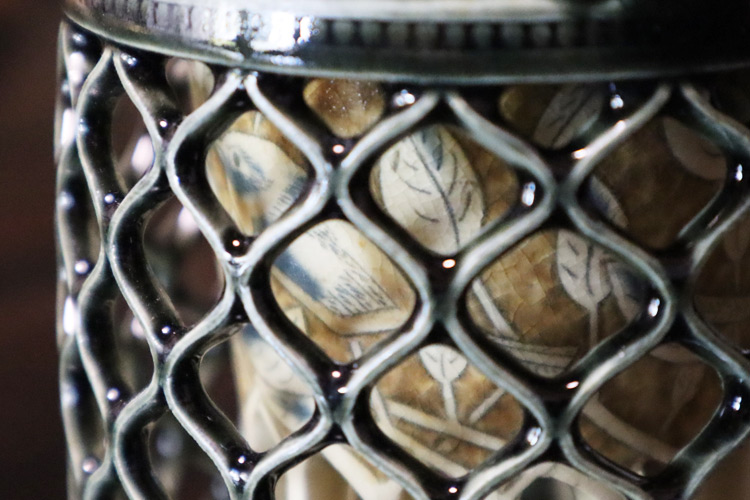
Tokuhiro Masubuchi: For example, even with the openwork pieces I was making at the time—if I said carving them wasn’t physically hard, that’d probably be a lie. But if I let myself think or say “it’s painful,” then that’s the end of it, isn’t it?
It would make even the people who choose to use those pieces feel burdened.
From Here On
Hanada: For 20 years since independence, your wife has always been by your side.
Wife: As the children grow, various things happen, don’t they? Even in all that, he always thinks about the family and really does his best.
Tokuhiro Masubuchi: No, you can tell the truth. Just say it normally (laughs).
Wife: That *is* the truth…
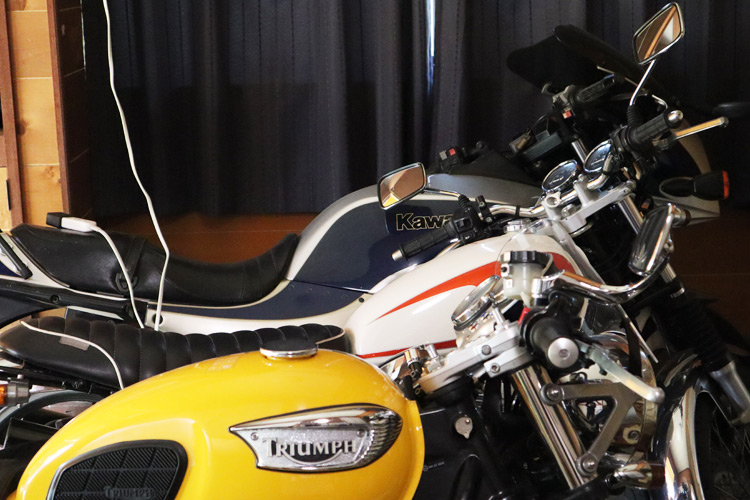
Tokuhiro Masubuchi: My wife is a person of great patience. It may sound strange coming from me, but she really puts up with a lot. Even when I say, “I want to enter a motorcycle race,” she just says, “Okay, have fun.”
Wife: Even if I objected, you’d end up going anyway (laughs).
Hanada: It sounds like there’s a lot to look forward to in the future as well.
Tokuhiro Masubuchi: Well, I know full well I don’t have a head for business. I’ve gotten this far simply because I love pottery—nothing more than that, really. Well, I’ll just keep doing my best as I have been.
≪ END ≫
独立の日から
花田:増渕さん、今年は節目の年ですね。(以下花田-)
増渕:独立20年目です。ちなみに、結婚は30年。それも同じ日の4月2日で。
-:おめでとうございます。
すごい偶然ですね。独立当初、今の状況は多少なりとも想像・・・
いや、できるわけ、ないですよね。
増渕:独立していきなりつぶれかけましたから。宮崎に来た時は、お金も信用もなし。
銀行の人に「一銭も貸さない」と言われました。しばらく地元の窯元でお世話になって・・・。
今でも感謝しています。
そのうち、無理くり独立しちゃいました。
在庫はどんどん増えていく、子供たちはどんどん大きくなっていく・・・。
まずいな・・・って(笑)。
色々なことをヒントに
-:最初はどのような物を作っていたのですか。
増渕:粉引です。
増渕:その後、瀬戸の窯元勤務時代に学んだことからヒントを得て、それを自分なりの形にしていきました。お店からの依頼で小ぶりの茶漬け碗やら・・・。
-:茶漬け碗、いいですね。
増渕:高さと、碗の立ち上がりの角度には気を使いました。
そこを間違うと、とんでもなく使いづらいものになる(笑)。
お茶漬けの会社のテレビCMにも使ってもらえたんです。
-:多くの人々に知ってもらえますね。
増渕:装飾の少ないシンプルなものにも取り組みました。
ここ小林市は薩摩に近い文化圏なので、薩摩焼風のアイボリーを使って何かできないかと。
でも「薩摩焼」と呼ぶのは本家に失礼なので名前は変えて(笑)。
増渕:そこから自分なりに線を引いてみたり、彫ってみたり、色を増やしたり。
黄瀬戸や織部っぽい表現も試しましたが、そのままの名前で呼ぶと、ガチでやっている人たちに怒られちゃうから、やはり呼び名は変えつつ、アレンジを加えていきました。
彫りの仕事の誕生
-:シンプルなものを目指していたのに、結局、装飾が増えてしまいましたが、彫りの仕事がそこで生まれたわけです。
増渕:で、その頃の展示会で、お客さまが連れて来ていたお子さんと遊んでいて、
その子の持っていた万華鏡を覗いたとき、少ないパーツでも無限の模様が生まれることに驚き、自分の彫刻刀も同じだと気づきました。
彫刻刀を数本しか持っていなくても、組み合わせ次第で表現は広がる。
彫りの深さや釉薬も工夫して、絵を描くような感覚に近づいていきました。
-:様々な気づきが重なっていくのですね。
増渕:彫りの仕事を始めたのは「筆で描く絵」にしっくり来ていなかったこともあります。
元々は、瀬戸の訓練校で染付を学んでいて、出来るつもりでした。
で、手伝ってくれる妻に最初は偉そうに教えているんですけど、実は妻のほうが勘が良くて、半年もたたないうちに抜かれてしまう。
-:(笑)
増渕:というわけで「彫りで描く」のは自分にとって、道が拓けた感じでした。祖父の木彫りの仕事なんかを思い出して「ああいうの、やりたいな」って練習して、今に至っています。
最近の仕事
-:最近考えられていることや、取り組んでいることはありますか。
増渕:ここのところ、天災や事故も多いので、魔除けになるようなモチーフを考えました。
例えば、四神の青龍、白虎、朱雀、玄武です。
写実的になりすぎないよう、青龍の鱗、朱雀の飾り羽、玄武の蛇をそれぞれ連続文様化して・・・。
で、白虎が1番困っちゃって・・・。当たり前ですけど、白なんですよ。
それに、いくらパターン化しても、何か「どんくさいベテラン感」が出てしまう(笑)。
もう少しブラッシュアップします。
あと、題材に、身の回りのものが増えてきました。
冬、よく庭に来るジョウビタキが可愛いのでモチーフにしたり・・・。
木工的なニュアンス・・・、祖父のやっていた木工の鑿跡のような「もの作りの息遣い」のようなものも、見せたいと思っています。
-:変化のきっかけは何かあったのですか。
増渕:年齢なのかな・・・。あとは、藤塚さん(作家の藤塚光男さん)が引退するとか、子どもたちが独り立ちするとか・・・、寂しくなることも続きましたし。
それと、ようやく最近、アイデアをノートに書き留めるようになりました。
-:今までは・・・。
増渕:アイデアノートは無いほうがいいと思っていました。
僕は古典の写しやお手本に似せる、というのが苦手で・・・。バンドをやっていた時も、コピーバンドだとオリジナルと比べて「上手い」だ「下手」だ「間違えた」だ言われるから、それなら自分たちの曲を作ってしまったほうが早いと考えていました。
そうすれば「間違え」もなくなる。
「これは、ちょっと変則的なコードなんだよ」という・・・。
-:(笑)
増渕:つまり、アイデアノートなどというお手本を持ってしまうと、それ以上に行けなる気がします。
でも最近、頭にあったはずのアイデアが、いざ作ろうという時に出てこなくなってきました。
ノートは備忘のためと、あとは、以前は思いつくことが割と単純だったのですが、最近、複雑になってきていて、頭の中だけでは整理がつかなくなってきている(笑)。
で、ノートを探していたら、息子の部屋から一冊出てきて「ちょうどいいや」と思って開いたら、1ページ目だけ勉強してあって、あとは真っ白。息子らしくて、笑ってしまいました。
-:ご子息も、まさかそんなきっかけで、ノートを見られているとは思ってもいないでしょうね
モノを通じて…
-:今後、していきたいことは、ありますか。
増渕:世代関係なく、うつわに馴染みのない人が「試しに持ち帰れるもの」を作りたいです。
ある展示会で「器が変わると楽しいよ」と、ついてきていたご主人へのお客様の一言が、すごく腑に落ちて。
そんな楽しさを、モノを通じて伝えていければなと。
-:増渕さん「楽しい」の好きですよね。
そして、どんなことや思い出も、楽しく話してくれます。
増渕:例えば、その頃作っていた総透かしの仕事も、彫っているのが苦しくないと言えば、それは嘘になるかもしれないけど、それを「苦しい」と思ったり、言ったりしてしまったら、それまでじゃないですか。
それを選んで使ってくれようとしている人まで苦しくなってしまいませんか。
これからも
-:独立から20年、奥様はずっと増渕さんの近くにいらっしゃいました。
夫人:子供たちの成長に合わせて、色々なことが起きますよね。
そんな中でも、家族のことを考えて、よくやってくれているなって思います。
増渕:いや、本当のこと言っていいよ。普通に(笑)。
夫人:本当のことだけど・・・。
増渕:妻は忍耐の人です。僕が言うのも変ですけど、本当によく我慢してくれているなと。僕が「バイクのレースに出たい」と言っても「はい。いってらっしゃい」ですもの。
夫人:その時反対しても、結局、いつか行くでしょう(笑)。
-:この先も色々と楽しみですね。
増渕:まあ、自分に商売のセンスがないのは重々わかっています。
焼き物が好きというだけで、本当にたまたま、ここまで来られました。
まあ、この調子で頑張っていきます。
≫増渕篤宥さんのうつわはこちらから≪
関連記事はこちら