







English version of the interview here.
“My pottery and Me” – Yujiro Koga
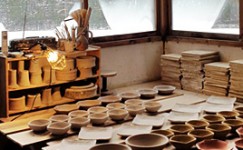
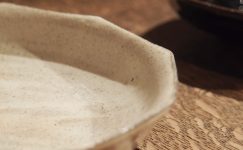
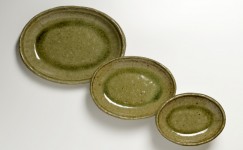
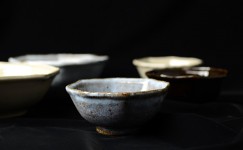
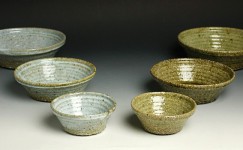
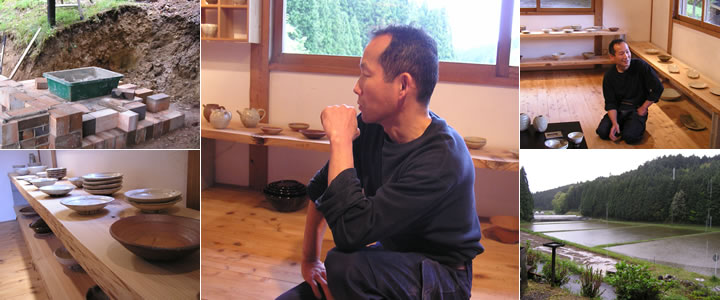
While firmly rooted in traditional earthenware, Yujiro Koga’s work carry a casual, refined charm.
Once you begin using them, you quickly understand how their size, form, and texture are thoughtfully balanced, making them natural staples on the dining table.
What kind of pieces is Mr. Koga creating for the upcoming exhibition in May?
Hanada: When did your relationship with pottery begin?
Yujiro Koga: A friend’s father was a potter. As I kept visiting his house, I gradually became interested… and before I knew it, I dropped out of university, entered a training school in Seto at 20, and became independent at 25.
Hanada: Had you always liked making things?
Yujiro Koga: Yes—especially three-dimensional objects, for some reason.
Hanada: I see.
Yujiro Koga: Ever since I was a kid, I loved building plastic models and watching carpenters at work. I wasn’t good at studying, but I always did well in art and P.E. (laughs).
Hanada: If I remember correctly, you lived in the UK when you were in elementary school.
Yujiro Koga: From fourth to sixth grade, I think. We lived in the suburbs, about an hour’s drive from London. Back then, my days were all about playing football.
Hanada: Was there a Japanese school?
Yujiro Koga: No, so I went to a local school.
Hanada: That must have been tough, not knowing the language.
Yujiro Koga: Actually, I don’t remember struggling at all. After about three months, I think I had already adjusted. I don’t recall studying either… Looking back, kids really do learn fast. For me, it was more about making friends and picking it up naturally while having fun.
Hanada: How did you choose the location for this studio?
Yujiro Koga: Many people who train in Seto become independent in Gifu, but I’ve always liked being near the sea.
Hanada: And you built the house yourself.
Yujiro Koga: Yes. When I first came here, it was just a mountain. I cleared everything, dug a well, and started from scratch. While still living in Seto, I spent about six months building the basics. I wanted to live in a house where you could really feel the presence of wood.
Hanada: You can definitely feel that. Did it take one or two years to complete?
Yujiro Koga: No—I only just finished it recently (laughs). Anything that wasn’t essential kept getting postponed, or I’d change my mind and redo things.
I’m still tweaking the garden, too. That wild cherry tree over there didn’t bloom when I first arrived, but now it blossoms beautifully every spring. Watching those changes is really enjoyable.
Hanada: You’re originally from the Kanto area, right?
Yujiro Koga: I was born in Yokohama, then we moved to Isehara in Kanagawa,
after that to Kansai, and then to the UK.
In the end, I’ve lived here the longest as a potter. My father worked for a trading company, so we moved around a lot when I was young.
Hanada: You’ve lived in many different places. That might be why your pieces don’t feel tied to any particular “local character.”
They’re relaxed, without unnecessary rigidity or odd fixations.
By the way, your main works are kohiki, hakeme, and ash-glazed pieces— how did you arrive at this style?
Yujiro Koga: I didn’t really think about it consciously. As long as it suits me, I’m fine with anything. I’m glad I found what felt right fairly quickly. I did have a vague desire to make things that are genuinely usable. I pay close attention to texture and the quality of the materials.
Hanada: What about form?
Yujiro Koga: Simple and natural. I try not to overthink things intellectually.
Hanada: You mainly use a climbing kiln. When did that start?
Yujiro Koga: More than ten years ago. The first one I built was extremely large. The one I use now is the fourth. And over there—that unfinished one—that’s the fifth. It should be done soon.
Hanada: You can modify everything yourself.
Yujiro Koga: I completely cut off the power for the electric kiln, so from now on, it’s all wood firing.
Hanada: You shut off the electricity?
Yujiro Koga: Yes, the industrial supply. I want to rely entirely on firewood. That means I also need a smaller kiln with more flexibility, so I’m building one now.
The first kiln was enormous, and since I work alone, firing it three times a year was about all I could manage.
Hanada: You source everything yourself.
Yujiro Koga: Firewood and glazes, yes. For the glazes, I was given rice straw during last year’s harvest and fired it in that kiln. I got a lot of good results. Only the clay comes from places like Tokoname and Shigaraki.
Hanada: I see.
Yujiro Koga: When you rely on others, things end up slightly different from what you imagined. Putting an image into words is difficult. Even for me, it exists only as an image, so instead of struggling to explain it, I’d rather just make it myself.
Hanada: But without knowledge and skills, that wouldn’t be possible—especially building a house.
Yujiro Koga: True. I used to visit construction sites and watch craftsmen work from a young age. Though I wasn’t studying them that carefully.
Hanada: That alone?
Yujiro Koga: Yes. You more or less understand the fundamentals, don’t you?
Hanada: I suppose so (laughs). Finally, do you have any goals or dreams for the future?
Yujiro Koga: I want to keep pursuing the direction of my work so far. And not raise prices too much. They always need to be at a price I’d be willing to pay myself.
Hanada: Now, about the May exhibition. You’ll be showing katakuchi, guinomi, and a chilled sake cooler— what does “a tableware made for yourself” mean to you?
Yujiro Koga: Something I’d want to use myself, I guess.
Hanada: So, something for drinking?
Yujiro Koga: Exactly (laughs). People often come over to my workshop, so I want pieces they can enjoy drinking with too.
Hanada: Tableware for hospitality. That sounds wonderful—drinking here, talking about this and that.
Yujiro Koga: Yes. And out here, no matter how loud we get, there are no complaints. I really enjoy inviting people over and letting them have a good time.
*This interview was originally recorded in May 2009 and partially re-edited in April 2019.
≪ END ≫
「うつわとわたし」 古賀雄二郎
オーソドックスなつちものでありながら、カジュアルで洒落た雰囲気の漂う、古賀雄二郎さんのうつわ。
使い始めれば、納得の大きさ、形状、風合いが相性良く構成されていることを実感し、すぐに食卓の定番に。
古賀氏は5月の企画展に向けて、どのようなうつわを作ってくれるのでしょうか。
花田: 古賀さんとうつわの関りはいつ頃からですか?
古賀:友達の父親が陶芸家だったんです。
その友人宅へ遊びに行っているうちに興味持ち始めて・・・で、
その勢いで大学も途中でやめてしまい、20歳で瀬戸の訓練校に入って、25歳の時、独立しました。
花田:もともと、ものを作るのは好きでしたか?
古賀:ええ、なぜか、立体のものが特に。
花田:なるほど。
古賀:プラモデルを作ったり、大工さんの仕事を見たりするのが子供の頃から大好きでした。
勉強は嫌いだったけど、図工と体育だけは成績が良かったです(笑)。
花田:確か、古賀さんは小学生の頃、イギリスにいました。
古賀:小学4年から6年かな。ロンドンから車で1時間くらいの郊外に住んでいました。
当時はサッカーばかりの毎日でした。
花田:日本人学校はあったのですか?
古賀: 無いので、現地学校に行っていました。
花田: 言語も分からず、大変だったでしょう?
古賀:いや、それが苦労したっていう記憶は全くありません。
3ヶ月くらいしたら、慣れてきていたような記憶がある。
勉強した覚えもないし・・・。
今思えば、子供は学習が早いんですね。
僕の場合、友達ができて、ワイワイやっているうちに、覚えていけました。
花田:ところで、今のこの工房の場所はどう選ばれたのですか?
古賀:瀬戸からは岐阜のほうで独立する人が多いのですが、僕は海の近くが好きだったので。
花田:家は自作です。
古賀:そうそう、最初来た時はただの山でした。
全部切り開いて。井戸も掘ったし。
最初は瀬戸にいながら半年位かけて基本的な部分を完成させていきました。
木を感じられる家に住みたかったんです。
花田:確かに、木を感じられる家です。最終完成までには1~2年でしょうか?
古賀:いや、最近やっと完成しました(笑)。そんなに必須でない部分は
ついつい後回しにしていたり、気が変わってしまって作り直したり。
庭もちょいちょい変えているんですよ。
あの山桜も、僕がここへ着た頃は咲かなかったけど、
最近は季節になるときれいに咲くようになってきた。そういう変化は見ていると楽しい。
花田:もともと、地元は関東ですよね?
古賀:生まれたのは横浜だけど、すぐ神奈川の伊勢原に移って、そのあと、関西へ。
で、イギリスですけど、結局今の作手が一番長くなりました。
父親が商社に勤めていたので、小さい頃は転々としていました。
花田:色々な場所で生活されているのですね。
古賀さんのうつわに「―くささ」というものを感じないのはその辺りなのかもしれません。
肩肘張っていないし、変なこだわりもありません。
ところで、古賀さんは粉引、刷毛目、灰釉のものなどが主ですが、どうやってこのスタイルに至ったのですか?
古賀:特に意識もしていないんだけど、自分に合えばなんでもいいかなって。
しっくりくるものが、意外とすぐ見つかったのは良かったです。
ただ、漠然と「使えるもの」を作りたいな、とは思っていました。
質感や材料の質には神経使っています。
花田:かたちはいかがですか?
古賀:シンプルで自然なもの。頭だけで考えすぎないようにして。
花田:古賀さんは登り窯が通常です。いつ頃からでしょうか?
古賀:10年以上前の話になりますが、一番最初はすごく大きなものを作ったんです。
今使っているのは4基目。
ほら、あそこの作りかけのが5基目ですよ。近々完成予定です。
花田:自分で色々改造できますからね、古賀さんは。
古賀:電気窯用の電気は完全に切ったから、これからは薪だけですよ。
花田:電気切ったのですか?
古賀:そう産業用のね。完全に薪にしようと思って。
そうなると小回りの利く、あまり大きくない窯も必要だから、今それを作っています。
最初に作ったのは実に大きくて・・・僕は一人で仕事しているでしょう。
年に3回焚ければいいかな、って感じでした。
花田:なんでも自分で調達ですね。
古賀: 薪も、釉薬も自分で用意しています。
釉薬は去年の稲刈りの時に藁を分けてもらって、あの窯で。いいのが沢山できた。
土だけは常滑、信楽あたりで。
花田:そうなのですね。
古賀:他人に頼むと微妙に違うんですよ、自分のイメージと。
イメージを言葉で伝えるのって難しい。
自分の中でもイメージでしかないから、
言葉に置き換えようとして苦労するより、自分で作ってしまおう、と。
花田:でも、知識や技術がないと無理でしょう。特に家なんて、作ろうと思って作れるものじゃないと思います。
古賀:まあね。工事現場行って、職人の人たちの仕事も小さいころから見ていたし。
と言っても、そんなに注意深く見てたわけじゃないけど。
花田:それだけですか?
古賀:ええ。大体、基本になる部分というのは分かるじゃないですか。
花田:そんなものですかね(笑)。ところで、これからの展望や夢はありますか?
古賀:今までの仕事の路線を追求していきたいです。
値段もあまり上げずにね。常に、自分で買おうって思える値段じゃないと。
花田:さて、5月の企画展。
古賀さんの出品は片口、ぐい呑に冷酒クーラーですが、古賀さんにとって「自分のために作るうつわ」とは?
古賀:自分で使いたい器かな?
花田:ということは、お酒飲みたいと。
古賀:そうそう、そんなところ(笑)。あと、僕の工房は人がよく遊びに来るからその人達も楽しく飲めるように。
花田:もてなしたいうつわ、ですね。
いいですね、この家でああでもない、こうでもないって色々話しながら飲むの楽しそう。
古賀:うん。しかも、ここならどんなに騒いでも苦情が来ない。
人を家に呼んで、楽しんでもらうのは、好きなことです。
※2009年5月収録のインタビューを2019年4月に一部再編集したものです。
関連記事はこちら