








English version of the interview here.
Entering the World of Ceramics
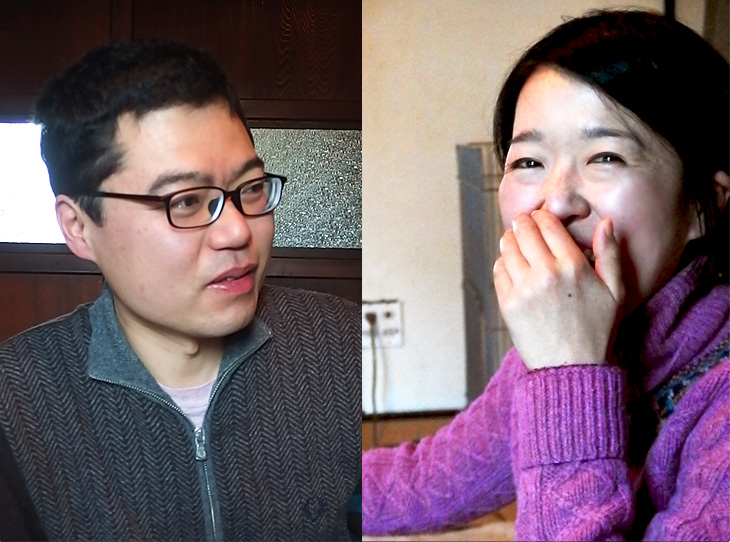
Hanada: I heard during your previous exhibition that you, Mr. Shimura, originally worked in the culinary field, became interested in ceramics, and were drawn into this world through that experience.
How about you, Ms. Miyaoka? What was your path like?
Maiko Miyaoka: I studied oil painting at university, but I never felt that painting was something I would pursue professionally.
Hanada: Did you have any exposure to ceramics while you were at university?
Maiko Miyaoka: Students in the oil painting department don’t normally do ceramics. However, if you were earning a teaching license, you had to choose a craft subject. At that time, I chose metalwork rather than ceramics.
Hanada: So you were getting a teaching license (laughs).
Mutsuhiko Shimura: (laughs)
Maiko Miyaoka: You’re both laughing now… Everyone gets a teaching license, don’t they?
Hanada: Sorry about that. You do seem like you’d make a good teacher, Ms. Miyaoka.
Maiko Miyaoka: Oh no, not at all. I quickly realized it wasn’t for me.
Hanada: And then you graduated.
Maiko Miyaoka: After graduating, I stayed in Turkey for about five months.
Hanada: Were you studying something there?
Maiko Miyaoka: Studying… well… (laughs)
Mutsuhiko Shimura: You were playing an instrument at that time, right?
Maiko Miyaoka: Yes, the saz, a Turkish plucked string instrument.
Hanada: And while playing music, you encountered ceramics.
Maiko Miyaoka: I had always been interested in ceramics, and I also visited Kütahya, a well-known ceramic-producing region in Turkey.
While looking at Kütahya ceramics, I briefly thought that studying ceramics in Turkey might be interesting. But then I reconsidered and thought, “If I’m going to do ceramics, it should be in Japan,” and decided to attend a training school in Seto.
Hanada: Those five months in Turkey must have given you a valuable opportunity to look at Japanese things from the outside.
After that, the two of you met in Seto.
Maiko Miyaoka: Yes. In addition to school, there were shared rental kilns in Seto. We often pooled together with friends, rented a kiln, and fired a whole load together.
Mutsuhiko Shimura: We were experimenting and making all sorts of things.
Maiko Miyaoka: I’m starting to remember now (laughs). We made so many strange things, didn’t we? (laughs)
Didn’t we also try zinc crystalline glazes?
Mutsuhiko Shimura: Well, it was all part of experimenting.
Hanada: After finishing pottery school, Mr. Shimura, you apprenticed under Mr. Nagai (Sokichi), right?
What about you, Ms. Miyaoka?
Maiko Miyaoka: Shimura decided to stay in Seto, so I took a job at a ceramics factory there.
Hanada: In a way, those are quite contrasting career paths.
Maiko Miyaoka: Around that time, we also frequently went together to antique shops in Nagoya.
By seeing so many things, I think we gradually came to understand the contours of what we truly liked.
Hanada: Were your tastes similar?
Maiko Miyaoka: I think the things we both felt were “good” were quite close.
Hanada: Is there a particularly memorable piece?
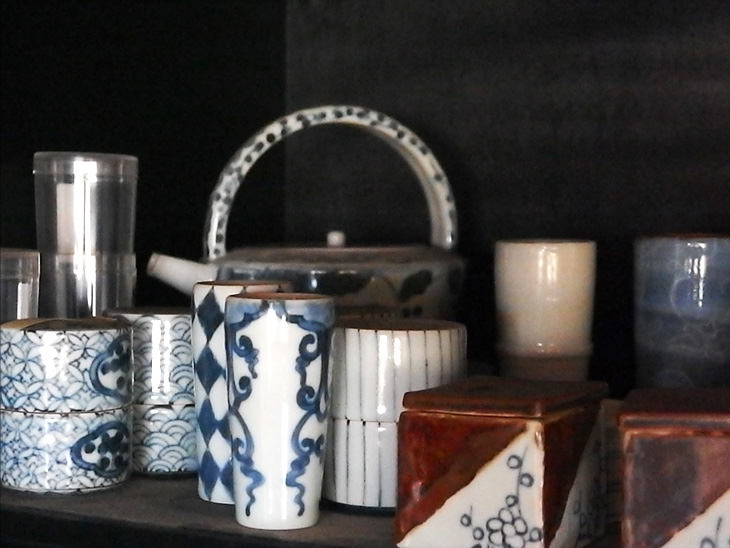
Maiko Miyaoka: Seeing an ko-sometsuke mukōzuke made me realize how free and interesting blue-and-white ware could be.
Until then, I had thought sometsuke meant something precise and refined, but as I looked at antiques, I became drawn to the freedom of sometsuke and the generous quality of everyday wares.
Maiko Miyaoka: Yes, this one—this one. The mukōzuke with the motif.
Mutsuhiko Shimura: That was early on, when we bought that.
Hanada: So it began with ko-sometsuke.
Maiko Miyaoka: Yes. At first, we mainly modeled our work on ko-sometsuke.
Hanada: Were you focusing on something else at the time, Mr. Shimura?
Mutsuhiko Shimura: At that time, we were working on sometsuke together.
Maiko Miyaoka: We started out together, but we lacked cooperation far too much…
Hanada: Which of you lacked cooperation?
Mutsuhiko Shimura: It’s not one or the other—we both just want to do things our own way in the end (laughs).
Maiko Miyaoka: And as we kept trying different things, I came to like the soft feeling of early Imari.
The Beginning of Kagetsuyo
Hanada: Could you tell us the origin of the name Kagetsuyo?
Mutsuhiko Shimura: An antique dealer who has been very kind to us suggested it.
Maiko Miyaoka: We were given several options, and among them, Kagetsuyo felt the simplest and most beautiful.
When we were driving back from Seto to Tokyo, we saw a ramen shop called “Kagetsu,” and I remember thinking, “Oh… ramen shop…” (laughs)
Hanada: That must have been momentarily confusing (laughs). Did you find a workspace in Tokyo easily?
Mutsuhiko Shimura: We were mainly looking for a property with enough space to install a kiln.
Maiko Miyaoka: We chose this house simply because we could put a kiln here (laughs).
Mutsuhiko Shimura: We didn’t really look at the living space at all.
Maiko Miyaoka: After we moved in, we said to each other, “So this is what the house is like.”
Hanada: (laughs) Still, it turned out to be a lovely home and suits you both.
Maiko Miyaoka: It suits us. Living deep in nature would probably be a bit too much for us.
Mutsuhiko Shimura: This somewhat in-between location is just right for us.
Hanada: Close to Tokyo, yet surrounded by a fair amount of nature.
Mutsuhiko Shimura: There was a time when I admired the idea of living deep in the mountains.
Maiko Miyaoka: Like thinking that if you make pottery, you have to live in an old farmhouse in nature.
Hanada: The best place is wherever you feel most comfortable. And so, Kagetsuyo’s work began here in Tokyo.
Mutsuhiko Shimura: At first, we were constantly renovating the house. I was doing carpentry all the time…
Maiko Miyaoka: A neighbor once asked me, “Is that carpenter your husband?” (laughs)
Mutsuhiko Shimura: That did happen.
Ceramics Making That Was Simply There Before We Knew It
Hanada: What do each of you find enjoyable about making ceramics?
Maiko Miyaoka: I enjoy the moment when I first remove a piece from the mold. It’s like, “Oh, there it is!” (laughs).
As for painting, I’ve only recently started to enjoy it.
Or rather, I’ve finally reached a point where I feel satisfied with my own work.
Mutsuhiko Shimura: For me, it’s opening the kiln.
When a firing goes well, that’s a really happy moment.
Maiko Miyaoka: Opening the kiln is fun.
Hanada: Do you open the kiln together?
Mutsuhiko Shimura: No. Whoever has time does it.
Hanada: (laughs) When I previously asked you, Mr. Shimura, about a particularly memorable piece of your own work, you talked about a certain sake flask.
It’s already in someone else’s hands, you don’t even know where it is anymore, but you still think about it from time to time. Ms. Miyaoka, do you have something like that?
Maiko Miyaoka: Perhaps a tiered jubako box I made a few years ago. It was something I felt genuinely confident about.
It was a three-tiered box with plum blossoms and bush warblers reserved in white against a deep blue glaze, and painted in underglaze blue.
Hanada: You’ve made jubako many times—did this one feel especially successful?
Maiko Miyaoka: The construction was quite precise, and the design was something I was truly satisfied with.
Mutsuhiko Shimura: All the paintings connect across the three tiers, right? I wanted it for our New Year’s table (laughs). We still talk about that jubako from time to time.
Maiko Miyaoka: Yes, we do.
A Natural Approach to Ceramics by Two Happy People
Hanada: Do you ever discuss each other’s work?
Mutsuhiko Shimura: After something is finished, we might say, “That’s nice.”
Maiko Miyaoka: Basically, we only say positive things to each other (laughs).
Mutsuhiko Shimura: Because we don’t want to argue (laughs).
Maiko Miyaoka: Sometimes I do say things like, “Hmm, this one’s not quite right” (laughs). But usually, I already know it myself when that happens. I end up telling myself, “Well, it can’t be helped that it turned out this way.”
Hanada: You don’t sit side by side at the wheel, do you?
Mutsuhiko Shimura: We’re positioned at right angles, so we don’t have to face each other.
Hanada: (laughs) Is there something important that you both keep in mind when working?
Maiko Miyaoka: What we share is the idea of valuing a “natural feeling.”
Hanada: Not just in terms of materials, but also not leaning too heavily into technique…
Maiko Miyaoka: Like adding strange little flourishes… we avoid anything that feels contrived (laughs).
Mutsuhiko Shimura: We don’t do preliminary sketches.
Maiko Miyaoka: Somehow, it feels like things turn out better that way.
Hanada: You’re the same, Mr. Shimura—eliminating artificiality.
Mutsuhiko Shimura: With Joseon ceramics, it would be wonderful if we could make them softly, but it’s not easy.
I like that relaxed, unforced feeling, but it doesn’t come naturally.
Hanada: It’s difficult, isn’t it?
Even when we say “natural,” everyone perceives and expresses it differently.
Maiko Miyaoka: It’s like a sense of healthiness, or cleanliness… softness, or generosity.
Hanada: And that’s what you sense in the Joseon and early Imari pieces you admire.
Mutsuhiko Shimura: Later Imari becomes much more rigid and formal. Nabeshima, for example.
Maiko Miyaoka: Though there are Nabeshima pieces I like as well.
Hanada: As they are, they might be difficult to use on today’s dining table, but with arrangement and color choices, I think there’s plenty of potential.
Those bold compositions and ideas are incredibly inspiring.
Mutsuhiko Shimura: As they are, they feel a bit too perfect.
Hanada: Also, when I look at your work, more than anything, I feel the atmosphere of your happy everyday life. It gives the impression that “kind people must be making these.”

Looking Ahead
Hanada: I think the six-sun celadon bowl with relief decoration is one piece that symbolizes your work, Mr. Shimura. Are there any other pieces you feel particularly attached to?
Maiko Miyaoka: Perhaps the small plate with a chrysanthemum motif that I made early on. I’ve been making it continuously ever since.
Hanada: It comes in five different painted designs, right?
Maiko Miyaoka: It started with three designs and later became five.
I’ve kept making it for a long time, and it’s a piece I truly love.
Hanada: Is there anything you’re hoping to pursue in the future? When I spoke with Mr. Shimura recently, he mentioned starting to use cute motifs.
Mutsuhiko Shimura: Something new… hmm… chopstick rests.
Maiko Miyaoka: Your new challenge is chopstick rests…?
Hanada: Chopstick rests are a perfectly valid challenge! (laughs)
Maiko Miyaoka: As for me, I want to keep refining and improving what I’m already doing.
Mutsuhiko Shimura: Lately, it feels like you’ve been making a lot of things in deep blue glaze. That started after Hanada lent you that set of five blue-glazed pieces, didn’t it? That was when you changed the glaze once, right?
Maiko Miyaoka: That blue glaze is soft and airy—it just feels really nice.
Mutsuhiko Shimura: I think that’s when you started making more pieces like that.
Hanada: Sorry about this—this time, Mr. Shimura hasn’t talked as much.
Mutsuhiko Shimura: We just talked recently, so I don’t have much new to say (laughs).
Hanada: Then let’s ask about your goals for this coming February.
Mutsuhiko Shimura: I’m thinking of making simple pieces in celadon.
Hanada: Will you use relief decoration?
Mutsuhiko Shimura: Ah—sorry, I haven’t actually made them yet, so I can’t say for sure (laughs).
Hanada: You just thought of it now, didn’t you? (laughs)
(This interview was conducted in December 2016; he is, of course, working on it now.)
Mutsuhiko Shimura: Maybe something like simple inlay. When a piece is densely decorated, it can look complete at first glance, but when you think about serving food, I feel some blank space is also important.
Hanada: Space that makes you want to fill it with food.
Maiko Miyaoka: I’m thinking of trying pieces where I remove the glaze from areas of deep blue.
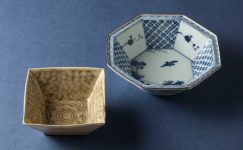
Hanada: The octagonal suisaka-style bowls were wonderful as well. I’m looking forward to seeing your new work.
Maiko Miyaoka: I’d like to make many different things.
Hanada: Finally, could you each say a few words?
Maiko Miyaoka: I hope it will be a joyful exhibition. I’m looking forward to seeing customers we met last time again. Kind of like, “See you soon~~” (laughs).
Mutsuhiko Shimura: From our standard pieces to new works, we plan to present a full range, so we hope you’ll come and see them!
≪ END ≫
うつわの世界へ
花田:
志村さんは元々料理の仕事をしていて、うつわに興味を持ち、ひきつけられこの世界に入ってきた、ということを前回の展示会のときに伺いました。
宮岡さんはどういった感じだったのでしょうか。(以下 花田-)
宮岡: 大学では油絵を勉強していたのですが、絵でやっていくという感じではありませんでした。
-: 大学で陶芸に触れることはなかったのですか。
宮岡: 油絵科はやらないのですが、教職とっていると、工芸を何か選択しなければいけないのですが、その時は陶芸を選ばず、金属を選びました。
-: 教職をとっているのですね(笑)。
志村: (笑)
宮岡: 二人で笑ってる・・・。みんな取るじゃないですか、教職。
-: スミマセン。いい先生になりそうですものね、宮岡さん。
宮岡: いやいや、全然向いていないな、と思いました。
-: そして、卒業。
宮岡: 卒業後トルコに5ヶ月くらいいました。
-: 何かを勉強するためですか。
宮岡: 勉強は・・・(笑)
志村: その時は楽器をやっていたんだよね。
宮岡: サズという、トルコの撥弦楽器です。
-: 楽器をしながら、焼き物に出会ったのですね。
宮岡: もともとうつわには興味があって、キュタフヤ(トルコ、陶器の産地です)へも行きました。
キュタフヤ陶器を見ながら、トルコで焼き物の勉強するもの面白いかなとも思ったのですが、「焼き物なら日本」って思い直して、瀬戸の訓練校に通うことにしました。
-:
トルコでの5ヶ月は、外から日本のものを見る良い機会だったのですね。
そののち、お二人は、瀬戸で出会います。
宮岡: はい。学校の他には瀬戸には貸し窯屋さんがあって、仲間で一緒に借りて一窯、焼くこともよくしていました。
志村: 実験しながら、何でも作っていました。
宮岡: 思い出してきたー(笑)。変なの、いっぱい作っていたよね(笑)。
亜鉛化結晶釉なんかもやっていなかった?
志村: まあ、実験として取り組んでいたということです。
-:
窯業学校を終えて、志村さんは長江(惣吉)さんのところに弟子入りですよね。
宮岡さんはどうされていたのですか?
宮岡: 志村が瀬戸に残ると言うので、私は瀬戸の製陶所に就職しました。
-: ある意味、対照的ともいえる進路先ですね。
宮岡: その頃は名古屋の骨董屋さんにも、しょっちゅう一緒に行っていました。
そうやって色々見ているうちに、自分達の好きなものの輪郭も見えてきたのだと思います。
-: 二人の好みは近かったのですか。
宮岡: 「良いな」って思えるものは近かった気がします。
-: 思い出の”一品”は、なにかありますか。
宮岡: 古染付の向付を見て、染付って自由で面白いなって思いました。
それまでは、精巧なものがいわゆる染付だと思っていましたが、骨董見ているうちに染付の自由さや、雑器の持つ大らかさに惹かれていきました。
宮岡: そうそう、これこれ。ザクロ文様の向付。
志村: 最初の頃だね、これ買ったの。
-: 最初は古染付だったのですね。
宮岡: そうですね。当初は古染付を中心に模していました。
-: 志村さんはその時、別のものに注力していたのですか。
志村: その頃は染付を一緒にやっていたんです。
宮岡: 最初は一緒にやっていましたが、協調性がなさ過ぎて・・・。
-: 協調性が無かったのはどちらのほうで?
志村: どちらというか、二人とも勝手気ままにやりたいんですよ、結局(笑)。
宮岡: そして、色々やっているうちに、初期伊万里の柔らかい感じが好きになってきました。
花月窯の始まり
-: 花月窯の名前の由来を教えていただけますか。
志村: お世話になっている骨董屋さんにつけてもらいました。
宮岡: いくつか候補をいただいたのですが、その中で一番シンプルで綺麗な花月窯にしました。
瀬戸から東京に戻ってくる時、車から「花月」っていうラーメン屋さんが見えて「あ、ラーメンなのか・・・」なんて思ったのを覚えています(笑)
-: それは、一瞬戸惑いそうですね(笑)。 東京での仕事場はすぐ見つかりましたか。
志村: とにかく窯を置くスペースがある物件を探していました。
宮岡: 窯がここに置けるっていうだけで、この家を選んでいますから(笑)。
志村: 住居部分は全然見ていなかった。
宮岡: 住み始めてから「こういう家なんだね」って二人で話したよね。
-: (笑)。まあ、結果として素敵なお家だったし、お二人に合っていますよね。
宮岡: 私たちには向いていました。奥深い自然の中の暮らしとか、ちょっと駄目そうなので。
志村: 中途半端なこの立地、僕らにはこれが向いているんです。
-: 東京に近いし、まあまあ自然に囲まれているし。
志村: 山奥なんかにちょっと憧れた時期はありましたけど。
宮岡: 焼き物作るなら、自然の中の古民家じゃないといけないのかしら、みたいな。
-:
お二人が居心地良く感じる場所がベストですよね。
そうしてここ東京で花月窯の活動が始まります。
志村: 最初は住居の改修ばかりでした。大工仕事ずっとしていて・・
宮岡: 「あの大工さんは旦那さんですか?」って隣の人に聞かれたよね(笑)
志村: そんなこともあったね。
気が付けばそこにあった、うつわ作り
-: それぞれお二人うつわを作っていて、楽しい事ってどんなことですか。
宮岡: 型打ちして最初に外す時は楽しいです。「おっ、出たぜ」みたいな(笑)。
絵付けは、実は最近やっと好きになってきました。
というか、やっと自分で納得できるようになってきたという感じです。
志村: 僕は窯出しのときです。
うまく焼けた時は嬉しい瞬間かな。
宮岡: 窯出しは楽しいね。
-: 窯出しは一緒に行うんですか。
志村: いや。暇なほうが行きます。
-:
(笑) 以前、志村さんに思い出深いご自身のお仕事を聞いたら、
その時はある徳利の話になりました。
それはもうどこかのお客さんの手元にあるので、どこにあるかも分からない、でもたまにその徳利のことを思い出す、なんていう話を聞いたんです。
宮岡さんにもそういうものありますか。
宮岡: 数年前に作ったお重でしょうか。自分でも凄く自信の持てる出来でした。
ルリの梅とうぐいすを色抜きした上に絵付けした3段重でした。
-: お重は何度も作られていますが、その中でも特に良くできたという感触でしょうか。
宮岡: 作りも結構精巧にして、デザインも納得いくものでした。
志村: あれ、すべての絵が3段でつながるんだよね。
うちの正月に欲しかったです(笑)。
今でも、たまにあのお重の話、するよね。
宮岡: そうだね
幸せな二人が自然に取り組むうつわ作り
-: お互いの仕事について、何か話し合うことはありますか。
志村: 出来あがってから「いいね」なんて言うことはあります。
宮岡: 基本的に良いことしか言わないね、お互い(笑)。
志村: もめたくないから(笑)
宮岡: 「これ、ちょっとなあ」みたいなこと、たまには言います(笑)。
ただ、大体自分でも分かっているんです、そういう時って。
「仕方ないよね、こうなっちゃうのは」って自分に言い聞かせていたりもする。
-: お二人、ロクロは並んでいないですよね?
志村: 直角です。顔を合わせないですみます。
-: (笑)
-: 仕事をする上で、お二人が大事にされていること、何かありますか。
宮岡: 共通しているのは「自然な感じ」を大事にしたい、と言うことだと思います。
-: それは原料だけの話だけじゃなくて、技巧に走り過ぎないっていうか・・・
宮岡: 変なクルリつけたり・・・わざとらしいのはやめる(笑)
志村: 下書きはしないよね。
宮岡: そのほうが、いい感じに仕上がる気がします。
-: 志村さんも一緒ですね。わざとらしさ、を排除する。
志村: 李朝は、柔らかく作れたらいいんですけど、なかなか難しいです。
抜けた感じが好きなんですけど、簡単にそうはいかない。
-:
難しいですね。
自然な感じ・・・と言っても、人によって感じ方も表現方法も違います。
宮岡: 健康的な感じというか、清潔感と言うか・・・柔らかさというか大らかさと言うか。
-: お二人は、志向する李朝や初期伊万里にその辺りを感じているわけです。
志村: 伊万里も後半になると随分きっちりしてくる感じがありますし。鍋島とか。
宮岡: 鍋島でも、好きなものありますけど。
-:
あのままだと今食卓では機能しづらいかもしれませんが、アレンジの仕方や、配色で十分、活かし方はあるんじゃないかなって思っています。
あの大胆な構図や発想は大いに参考になります。
志村: あのままだと精巧すぎますよね。
-:
あと僕は、志村さん、宮岡さんのうつわから、
なによりお二人の幸せな毎日の雰囲気を感じます。
なんというか「良い人たちが作っているんだろうなあ」という感じ。
これからのこと
-:
6寸の陽刻の青磁の鉢は、志村さんの仕事を象徴するものの一つだと思います。
他に何か、愛着のあるものはありますか?
宮岡: 最初に作った菊文の小皿かな。
ずっと作っています。
-: 5種類の絵がわりですね。
宮岡: 最初は3種類であとから5種類にしました。
ずっと作っていて、私も大好きなうつわです。
-:
今後やっていこうと思っていることはありますか。
この間志村さんと話した時は可愛いものをモチーフに使い始めているっていうような話も伺いました。
志村: 新しいもの・・・うーん・・・箸置き。
宮岡: 新しい挑戦が箸置き・・・?
-: 箸置も立派な挑戦です!(笑)。
宮岡: 私は、今の仕事をよりよくしていきたいと思っています。
志村: 最近、ルリ釉で色々作っているような気がするんだけど。
以前、花田さんがルリの五枚組貸してくれて以来だよね。
あの時、一回、釉変えたんだよね。
宮岡: あのルリ、柔らかくて、フワッとしていて、なんかいいですよね。
志村: あれから、色々作るようになったんじゃないかな。
-: なんかスミマセン。今回、志村さんの話が少なめですね。
志村: この間話したばかりで新しい話がないです(笑)。
-: 今度の2月に向けての抱負でも聞いておきましょうか。
志村: 青磁でシンプルなものを作ろうかなって思っています。
-: 陽刻を少しは使うんですか。
志村: あ、いや、スミマセン。まだ作っていないのでなんとも(笑)。
-:
今、思いついたんじゃないですか、もー(笑)。
(2016年12月時のインタビューですので、現在はもちろん取り組んでくださっています)
志村: シンプルな象嵌って感じですかね。
びっしり文様が入っていると、一見うつわとしては完成度高く見えますが、料理を盛り付けることを考えると、もう少し余白も必要かなって思うんです。
-: 料理で埋めたくなるような余白。
宮岡: 私はルリで釉抜きにしたものを作ってみようかなって思っています。
-: 八角の吸坂手もよかったですし、新しいものも楽しみですね。
宮岡: 他にも色々作りたいと思います。
-: 最後に何か一言お願いします。
宮岡: 楽しい展覧会にしたいと思います。
前回会ったお客様にまた会えるのを楽しみにしています。
See you soon~~,みたいな(笑)。
志村: 定番から新作まで一通り作りたいと思っていますので、是非ご覧ください!
≫志村睦彦さんのうつわはこちらから≪
≫宮岡麻衣子さんのうつわはこちらから≪
関連記事はこちら