




English version of the interview here.

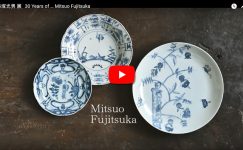
30 Years of…
As Mitsuo Fujitsuka celebrates his 30th year of independence this October, we look back on his three-decade journey through his work. Beyond each piece, the memories of those times, the faces of the people he has met, and his own changing thoughts come vividly to light.
The Joy of the Marumon Circular Motif
Hanada: First, let us start with the plates featuring the marumon (circular motif), which you have been making since you first went independent.
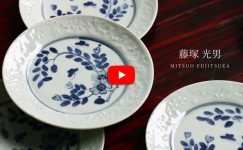
Mitsuo Fujitsuka : I have been creating these continuously for thirty years. I first saw this circular motif on an antique Ko-Imari soba choko (buckwheat noodle cup) and decided to adapt it for a plate. The original design on the cup was divided into four sections. Initially, I tried dividing it into six, but wanting a cleaner look, I settled on five. For a plate of this size, that feels just right in terms of balance.
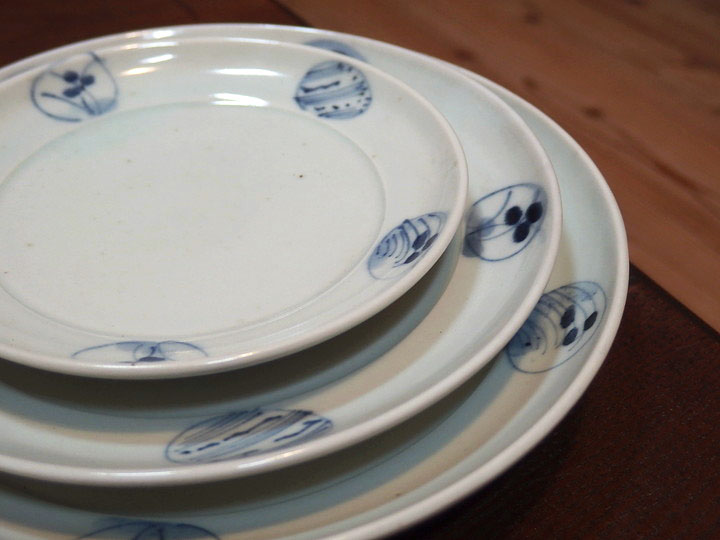
Hanada: I noticed that the rim has been subtly shaved…
Mitsuo Fujitsuka : Yes, just to add a little accent.
Hanada: Is the circular motif difficult to paint?
Mitsuo Fujitsuka : …It’s a breeze. (laughs)
Hanada: By “a breeze,” you mean it is enjoyable, right? (laughs)
Mitsuo Fujitsuka : Yes, exactly. To be serious, early on, I used to paint with the intent of making it look perfectly neat. But when you are too conscious of painting perfectly, the artwork loses its soul. I have come to feel that when you stop worrying about such things, the painting truly comes alive.
Hanada: But that freedom only comes after a stage of painting seriously and meticulously, right?
Mitsuo Fujitsuka : That is true. It is a perspective you only gain after painting thousands of pieces.
Hanada: Do you use these marumon plates at home yourself?
Mitsuo Fujitsuka : We have them in every size lined up in our cupboard. The 4.5-sun (approx. 13.5cm) size works as side plates, and the 7-sun (approx. 21cm) size is perfect for serving main dishes. Originally, I only made the 4.5-sun size, but the variety grew over time to include 6-sun and 7-sun plates in response to customer requests.
Listening to Customers’ Voices
Hanada: So, your customers’ feedback played a big role.
Mitsuo Fujitsuka : When I first started out on my own, I thought I didn’t need to hold exhibitions. My plan was simply to bring samples to shops, take orders, and make them. However, a gallery owner I had a connection with invited me to do a show, and that is how I ended up holding exhibitions.
Hanada: Did this new approach bring any new insights?
Mitsuo Fujitsuka : Yes. Talking directly with customers brought all kinds of feedback, like “Could you make something like this?” or “I really like this aspect.” I realized that connecting directly with the people who use your work is essential for a maker. Hearing directly from those who prepare the food and arrange it on your tableware is an incredible learning experience.
Hanada: So, this plate made you realize the importance of the user’s voice.
Mitsuo Fujitsuka : It is not just this plate; minor adjustments like making something slightly deeper or a little larger can completely change how practical it is to use. It allowed me to refine those fine details and gave me a fresh perspective. For instance, with coffee cups, there are already so many wonderful foreign-made options out there that I thought there was no need to make them by hand. But once I started making them at the suggestion of my customers, they turned out to feel surprisingly right.
A Rinka Style Crafted for 30 Years
Hanada: Next, let us look at this Rinka plate.
Mitsuo Fujitsuka : This is also from my early days and has remained a classic staple. It was the very first chrysanthemum-shaped Rinka form I ever made and painted. When I first created it, I never imagined I would keep making it for thirty years. The shape itself is traditional and timeless. It serves beautifully as a small side bowl or for presenting sashimi elegantly.
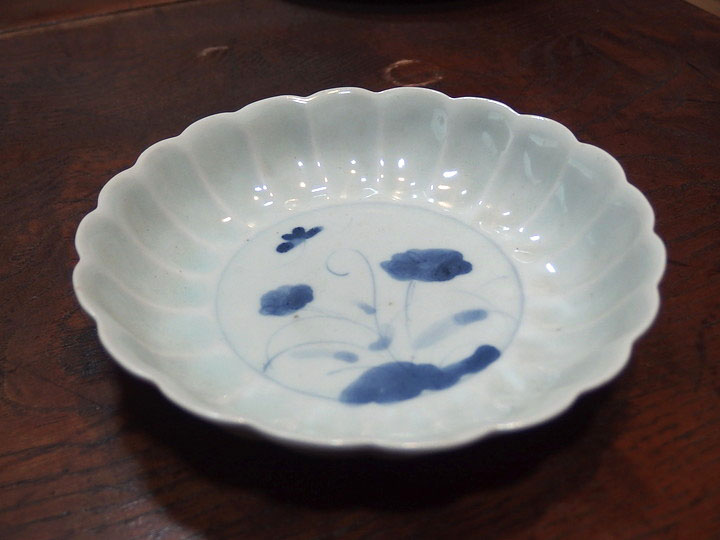
Hanada: The shape is remarkably practical. The depth is just right—neither strictly a plate nor a bowl. Has the central motif remained the same?
Mitsuo Fujitsuka : It started with this chrysanthemum and butterfly pattern. Rather than copying something else, I designed it myself.
Hanada: It sounds like you established the form first and then decided on a design that would suit it perfectly.
Mitsuo Fujitsuka : It was thirty years ago, so I have completely forgotten! (laughs) The plaster molds wear down over time, so I am already on the seventh or eighth generation of molds for this piece. As you repeatedly form the clay over the mold, the sharp ridges of the inner rim gradually wear away. Ah, looking closely at this mold, the ridges are starting to fade. It will soon be time to replace it.
Hanada: Did you pay extra attention to the Rinka shape?
Mitsuo Fujitsuka : This applies to all my work, not just molded pieces, but I always aim for a soft, gentle ambiance rather than a rigid, hard edge.
Hanada: Even so, it must be impossible to count how many of these you have made.
Mitsuo Fujitsuka : I have undoubtedly made two or three thousand, but I really don’t know the exact number. Lately, fewer shops and galleries carry regular inventory, so the size of individual production batches has decreased. There are more exhibition-focused shops now, aren’t there? Before that shift, I remember making them constantly.
Work That Reflects Individuality
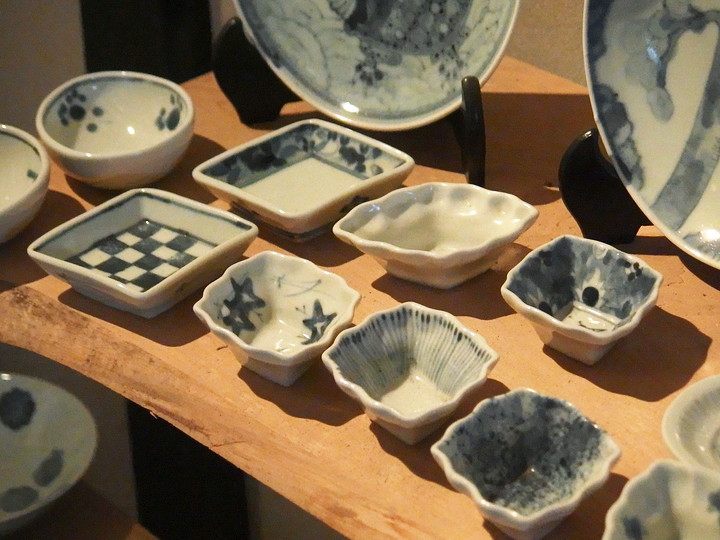
Hanada: We have looked at several painted pieces, but next are the square plates in white porcelain and lapis lazuli glaze. They look exceptionally practical for everyday use.
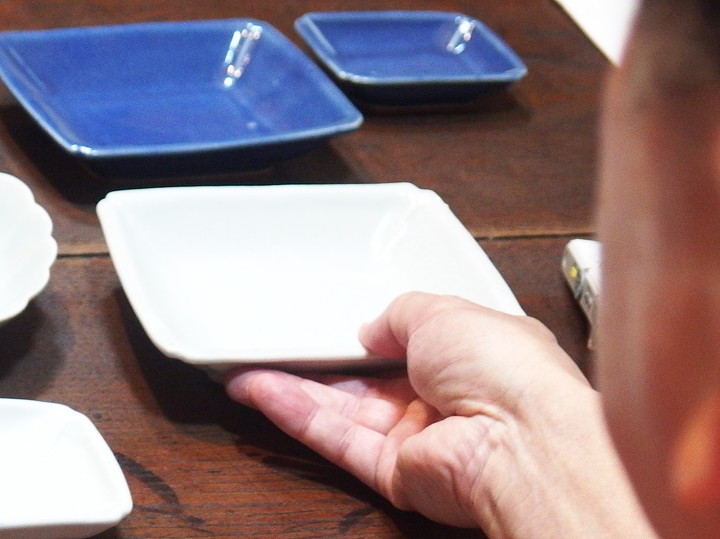
Mitsuo Fujitsuka : I originally spotted the inspiration in a special magazine issue titled “1000 Small and Miniature Plates.”
Hanada: That publication is indeed a wonderful reference.
Mitsuo Fujitsuka : I took a small dish featured there and adapted it into a size suitable for a side bowl, and from there, I went on to create various sizes and shapes.
Hanada: Did you ever consider painting a design on them?
Mitsuo Fujitsuka : I did make some painted versions in the past, but I feel that plain solid glazes are timeless and you never grow tired of them.
Hanada: Was it challenging to create these?
Mitsuo Fujitsuka : No, it was quite straightforward. (laughs) However, since I was developing the form based on a photograph, I believe I made several trial pieces to figure out the right depth and the perfect degree of curvature for the rim. I also avoided making the exterior a strict, rigid square, opting instead for a gentle curve that gives it a slight fullness.
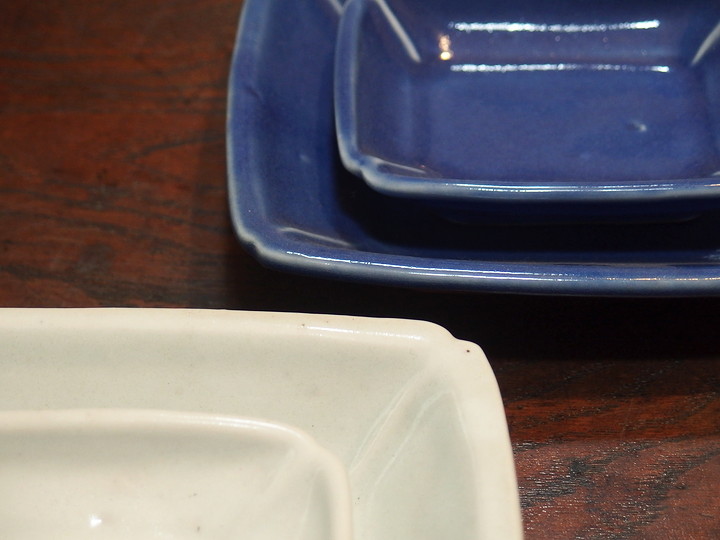
Hanada: That touch makes them feel even more practical to use.
Mitsuo Fujitsuka : I thought it would create a lovely presentation that softly elevates the food. People’s tastes vary; some prefer crisp, geometric lines, while others like a soft, slightly rustic feel, almost like my free-flowing underglaze painting. (laughs)
Hanada: Oh, please, not at all…
Mitsuo Fujitsuka : I originally fell in love with Shoki-Imari (early Imari) porcelain, which is why I got into pottery. Especially in my case, I never formally studied brush technique—everything is completely self-taught. (laughs) I have simply done things my own way, made a vast number of pieces, and followed my own instincts. Yet, that is precisely why people look at a piece and instantly recognize it as my work. Over the years, I have had several apprentices, but I have always done the painting myself. If I didn’t, the character of the work would change entirely.
Hanada: Do you use these plates yourself?
Mitsuo Fujitsuka : We use the smaller ones as soy sauce dishes for sashimi, or for serving little delicacies. Lately, I find myself using the larger ones more often for grilled fish or sashimi plates.
Hanada: Has your dining style changed?
Mitsuo Fujitsuka : We used to host gatherings at home quite frequently. When guests came over, presenting little portions of food on dishes like these looked beautiful.
Hanada: That sounds very sophisticated.
Mitsuo Fujitsuka : Even if you don’t serve anything extravagant, the shape of the dish makes it look wonderful. (laughs)
Crafting a 7-Sun Plate for the First Time in 20 Years
Hanada: Moving on, we have the Fuyode style 7-sun Rinka plate with a bird motif. This is another piece you made often in the past, and you are recreating it for this exhibition for the first time in twenty years.
Mitsuo Fujitsuka : I think I first created this about twenty-five years ago. It has always been a motif I love. The border pattern is a style frequently seen on antique blue-and-white porcelain, but I adapted the central design from Ko-Imari ware.
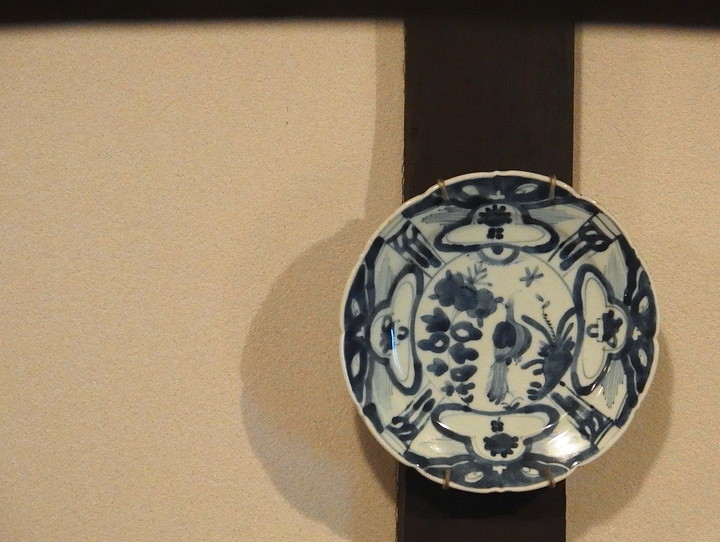
Hanada: It is an arrangement that feels very uniquely yours.
Mitsuo Fujitsuka : When it comes to patterns on tableware, food actually looks best on designs that are either exceptionally minimal or, conversely, densely detailed like this one.
Hanada: So, a halfway approach does not work as well.
Mitsuo Fujitsuka : Exactly. While this piece has a lot of drawing, the border features a dami wash, which frames the food beautifully when served.
Hanada: Sometimes leaving an awkward amount of empty space can actually make the presentation look cluttered.
Mitsuo Fujitsuka : That is why the balance is so important. (Gesturing with his fist over the plate to visualize food) When you arrange food like this, the blue around the edge creates a lovely look. Rather than piling a large stir-fry in the center to share, I envision this being used as an individual main plate.
Hanada: The flower-shaped Rinka edge is subtle, but what made you choose it?
Mitsuo Fujitsuka : Many antique pieces feature Rinka edges. Looking at the plate on its own, one might wonder why go to the trouble, but if it were left completely round, it would look a bit too contained.
Hanada: Too contained…
Mitsuo Fujitsuka : It feels a bit too plain, and you lose that touch of movement. Of course, there are Fuyode styles with perfectly round edges, but personally, I find the Rinka shape more enjoyable.
The Natural Fading of Stamped Inban
Hanada: Next, let us discuss the Inban (stamped) ware. You offer a wonderful variety of Inban designs. What originally inspired you to work with this technique?
Mitsuo Fujitsuka : It started when I found the so-called “konnyaku inban” patterns on antique Ko-Imari ware fascinating.
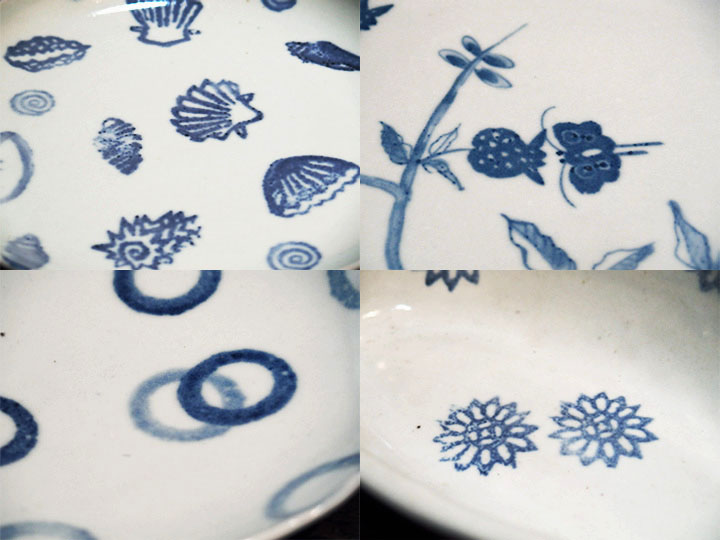
Hanada: While Inban features repeating patterns, there are natural irregularities that make it interesting, right?
Mitsuo Fujitsuka : Yes. Just like with my other work, I dislike stamps that look rigid and perfect. That is why I never use rubber stamps.
Hanada: A rubber stamp would apply the ink too flatly. What do you use instead?
Mitsuo Fujitsuka : Sponges—though not just ordinary ones. I tried so many different things before arriving at this method. People sometimes use potatoes or other root vegetables, but they rot over time. Vegetables don’t work because you have to carve a new one every time you use it. On the other hand, the material needs to have a certain level of absorbency…
Hanada: Where do you get the ideas for your patterns?
Mitsuo Fujitsuka : It varies every time. For the seashell motif, I was inspired by the beautiful, slightly faded texture of a textile dye pattern. I love the soft, blurred look that occurs naturally with Inban stamping.
Hanada: Do you use these at home?
Mitsuo Fujitsuka : We use this oval bowl constantly.
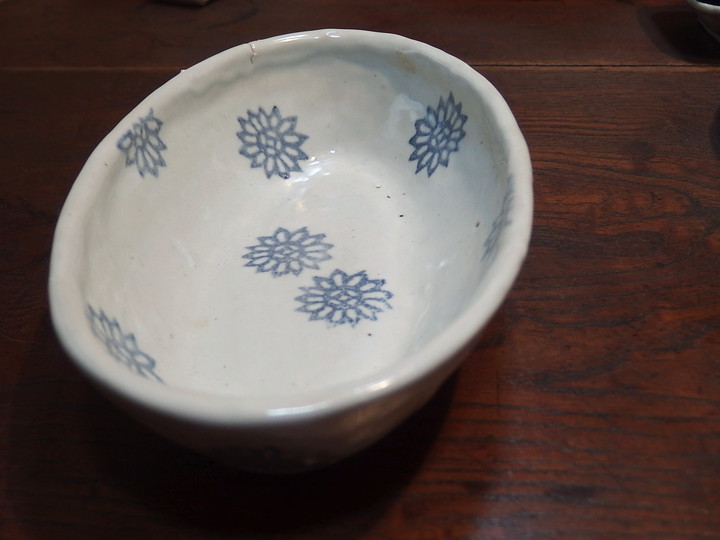
Hanada: Our shop has been very grateful for this piece over the years, even if we occasionally heard you say, “Hanada, you only ever order this one!” (laughs)
Mitsuo Fujitsuka : That is true! (laughs) This piece pairs beautifully with both Japanese and Western cuisine.
Hanada: While oval dishes have become more common recently, this specific depth and size is quite rare to find.
The Charm of Joseon Folk Paintings
Hanada: Next is the large plate with a butterfly and pomegranate motif. This was originally inspired by the Joseon Dynasty…
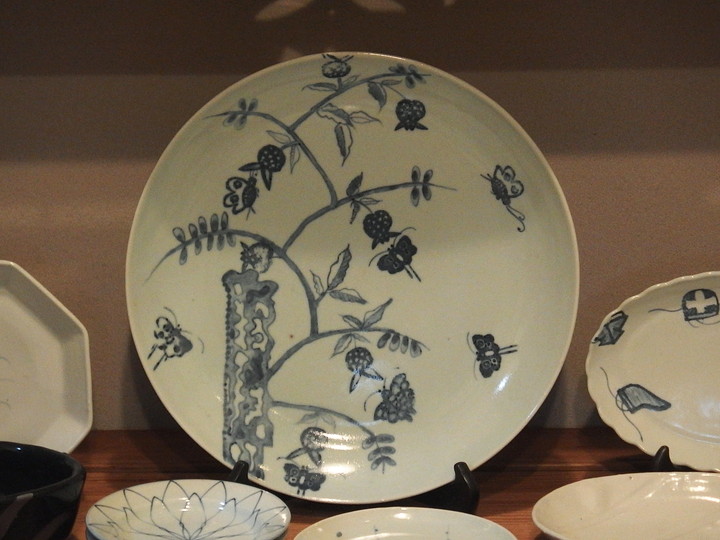
Mitsuo Fujitsuka : Folk paintings. Of course, the original paintings didn’t use stamping, and the placement of the butterflies was slightly different, but the tree was depicted very much like this. The overall composition remains the same. Joseon folk art is fascinating; I love the brushwork, and their depictions of lotus flowers are incredibly captivating.

Hanada: It feels quite different from how a Japanese artist would depict a lotus flower. Even the mountains look different…
Mitsuo Fujitsuka : Yes, they are entirely different.
The Most Enjoyable Part…
Hanada: Next is the 7-sun plate with a floral pattern and linear borders. This is a recent creation. What inspired it?
Mitsuo Fujitsuka : I simply wanted to work on a floral design, and it naturally evolved into this. The idea just came to me out of nowhere. Many of my new pieces happen that way—the concept flashes into my mind while I am busy with other tasks. When that happens, I pause what I am doing and sketch it out before I forget.
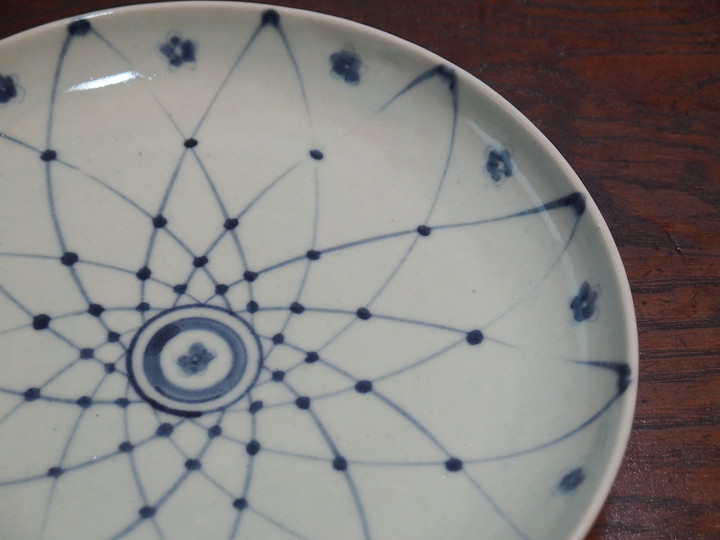
Hanada: While you maintain classics that you have made for decades, you also constantly introduce new designs.
Mitsuo Fujitsuka : Developing new concepts and crafting the first samples one by one is when I am happiest. Seeing that first sample emerge from the kiln is the greatest joy. Sometimes it is disappointing, but other times it turns out even better than expected.
Hanada: When you look at older pieces that you have made for many years, does your view of them change?
Mitsuo Fujitsuka : Occasionally, I will look at an older piece I haven’t made in a while and think to myself, “Wow, this is actually a wonderful piece.” (laughs)
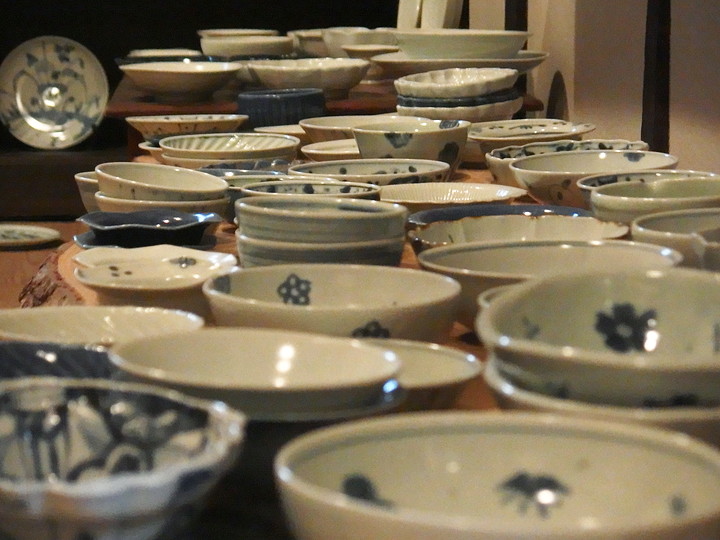
Hanada: Taking a break from a design can bring that kind of appreciation. I see you keep your reference samples beautifully stored.
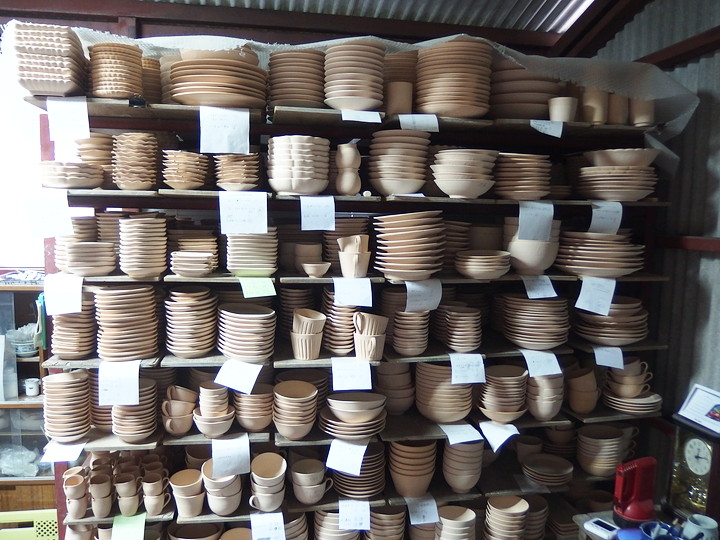
Mitsuo Fujitsuka : They aren’t beautifully stored; they are just lined up on shelves. (laughs)
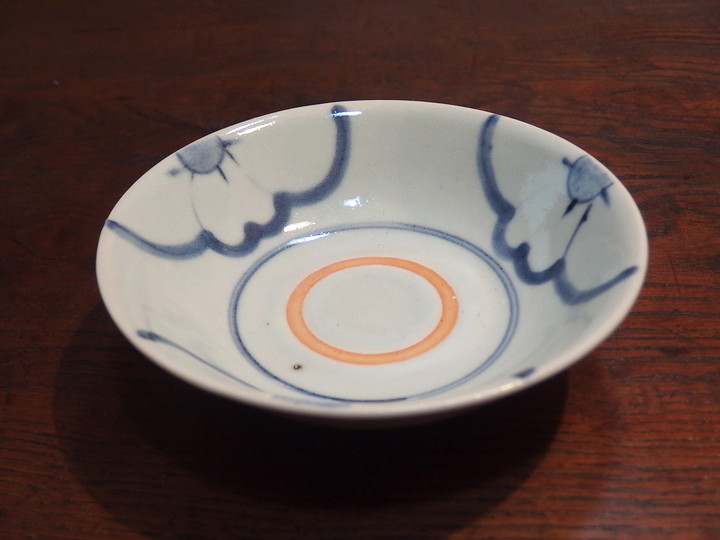
The Petal Partition Pattern
Hanada: Next is the plate with the petal partition pattern. This is a Ko-Imari design. Was the original piece larger?
Mitsuo Fujitsuka : No, it was exactly this size. I saw it in an antique magazine. Flared shapes like this are incredibly practical to use.
Hanada: It must be exciting to create this.
Mitsuo Fujitsuka : Yes, it is. (laughs)
Let us make this in an 8-Sun size this time
Hanada: What can you tell us about this plate with a flowing water, plum blossom, and floral pattern?
Mitsuo Fujitsuka : I have been making this for about three or four years. I won’t be including it in this exhibition, but it is a pattern I am very fond of. It comes from an Imari design that was originally a large platter. This sample is a 7-sun size, but I actually think it might look better as an 8-sun (approx. 24cm) or 9-sun (approx. 27cm) plate.
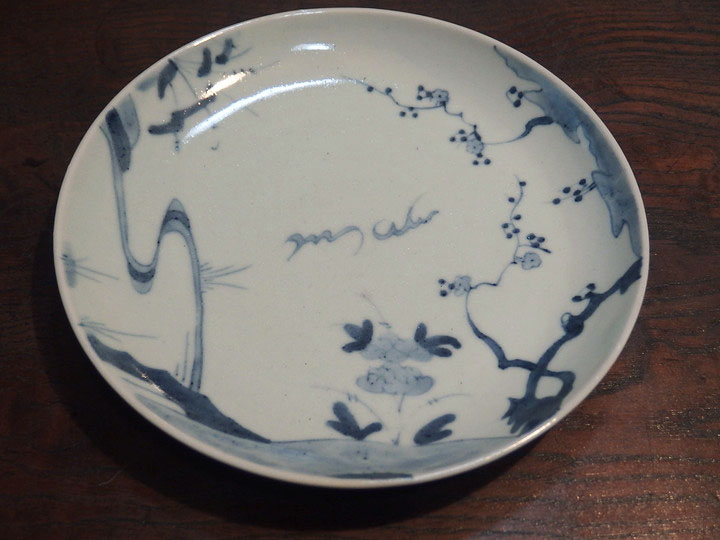
Hanada: That size would probably bring out the beauty of the empty space.
Mitsuo Fujitsuka : Yes, for this particular design, a larger scale is better. At 7-sun, it is difficult to express the spatial composition effectively. I really love the spacious, relaxed atmosphere that the original large platter possessed.
Hanada: Is this element a cloud?
Mitsuo Fujitsuka : Yes. In an 8-sun or 9-sun size, the clouds would have more presence. I think I will try that next time. In fact, why don’t I paint this as an 8-sun plate for the upcoming exhibition?
Hanada: That would be wonderful. Yes, please do!
It is just more interesting. That is all there is to it. (laughs)
Hanada: Next is a 6-sun plate with a floral and bird motif and shinogi (fluted) carving. This is a new piece for the exhibition.
Mitsuo Fujitsuka : The central painting alone existed as a 5-sun plate in antique Ko-Imari ware, but I decided to adapt it into this form. I thought scaling it up to 6-sun and adding the fluted carving would make it interesting.
Hanada: Instead of expanding the painted design to fit the larger size, you chose to introduce the shinogi carving.
Mitsuo Fujitsuka : I felt that if I simply expanded the painting, the composition would end up looking sparse and lose its tension.
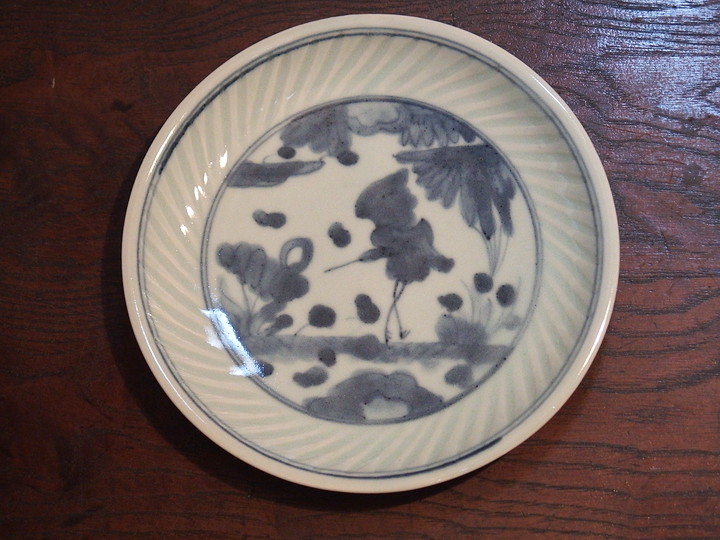
Hanada: There are many different styles of fluted carving. What kind of shinogi appeals to you most? What are your thoughts on this technique?
Mitsuo Fujitsuka : My thoughts on fluted carving? (laughs) I don’t really have any! (laughs)
Hanada: I am sorry, that was a bit of an unfair question. I noticed the fluted lines are carved diagonally rather than vertically.
Mitsuo Fujitsuka : It is just more interesting this way. That is all there is to it. (laughs)
An Unexpected All-Nighter
Hanada: Looking back over thirty years of work, how do you feel?
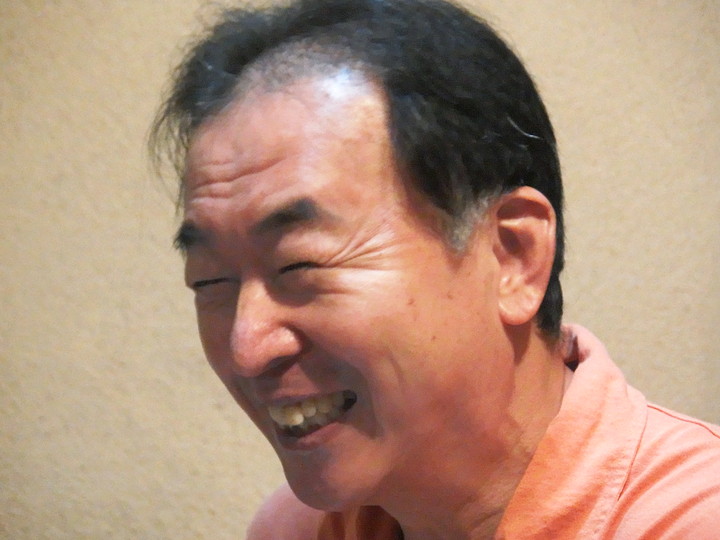
Mitsuo Fujitsuka : While I have forgotten a lot of things from the past, what I remember most vividly from the early days is my very first kiln firing. Back then, I didn’t have any apprentices; it was just my wife and me. Having just gone independent, I was full of enthusiasm, thinking, ‘Alright, it’s finally time to fire the kiln for the first time!’ We planned to finish loading everything into the kiln by around 8 PM. But midnight came, and we still weren’t finished. The work simply wasn’t progressing as quickly as I had originally estimated. Today, we have machines to remove the glaze from the foot of the pieces before firing, but back then, we had to wipe it off entirely by hand. That process takes an incredible amount of time. In the end, we finished at 10 AM the following morning. We pulled a complete all-nighter without a wink of sleep. (laughs) There was nothing left to do but laugh. Before going independent, when I was at Kutani Seiyo, those tasks were divided among different people, so wiping the glaze off one by one with a sponge was a completely new experience for me. I bought a glaze-removal machine immediately after that. I remember that clearly. (laughs)
Hanada: Have your tastes changed over the thirty years?
Mitsuo Fujitsuka : The things I consider truly beautiful haven’t changed much.
Hanada: Is that the same for your wife?
Mitsuo Fujitsuka : Regarding tableware?
Hanada: Yes, of course regarding tableware! (laughs)
Mitsuo Fujitsuka : Yes, it is. After all, my wife is always the first person to use the pieces I create.
The Past and the Future…
Hanada: This exhibition marks a significant thirty-year milestone for you. Thirty years ago, I was still only in elementary or junior high school.
Mitsuo Fujitsuka : The first time I met you at Kutani Seiyo was even before that—I think you hadn’t even started kindergarten yet. It’s funny to think about, now that we are sitting here talking like this.
Hanada: It has been a long relationship. And of course, you will continue your work moving forward.
Mitsuo Fujitsuka : I love making pottery, and I hope to keep going for as long as possible while maintaining a good pace. I am getting up there in years, too. Just the other day, Mansaku-san(Mansaku Nakao) called me and was saying how the summer heat was making the work really tough.
Hanada: Mansaku-san’s solo exhibitions at Hanada are always held in August, aren’t they?
Mitsuo Fujitsuka : He told me, ‘You’re so lucky, October is the absolute best time.’ (laughs) Joking aside, looking back over thirty years, what fills me with the most gratitude is the customers and the shop owners. With so many talented artists throughout Japan, I am deeply grateful that people choose my work. It is entirely thanks to them that I can continue making what I love. I am truly humbled beyond words.
Hanada: And those thirty years were made possible by your wife’s support.
Mitsuo Fujitsuka : A partner is incredibly important, truly.
Hanada: In the pottery business, the presence of a supportive partner is often essential.
Mitsuo Fujitsuka : I leave all the administrative work to her, so I don’t even know where anything is. She often tries to show me where things are, saying, ‘You’ll be in trouble if anything ever happens to me,’ and I always reply, ‘Right, I understand,’ but…
Hanada: Two or three days later, you have completely forgotten. (laughs)
Mitsuo Fujitsuka : I really am trying to remember! (laughs)
Hanada: Thank you very much for sharing your stories. I look forward to the exhibition.
Mitsuo Fujitsuka : Thank you, I look forward to it as well.
≪ END ≫
30 Years of …
この10月で独立30年目を迎えた藤塚光男さんに、
うつわを通して、30年を振り返っていただきました。
うつわの向こうから浮かんでくる、その時どきのこと、関わってきた人々の顔、自らの思い・・・。
丸文が楽しい
花田: まず、独立時から作られている丸文のお皿からお願いします。(以下 花田-)
藤塚: これは30年間ずっと作っています。
古伊万里の蕎麦猪口でこの丸文を見て、それをお皿にしました。
蕎麦猪口は四つ割でした。
最初、六つ割りにしたんだけど、もう少しスッキリさせようと思って、五つ割に。
この大きさだと、それくらいがバランスいい。
-: リムを削ってありますが・・・。
藤塚: アクセントとしてね。
-: 丸文は、描くの難しいですか。
藤塚: ・・・。 楽(笑)。
-: 楽しい、ということですね(笑)。
藤塚: そうそう、そういうこと。
真面目な話をすると、最初の頃はきれいに描こうと思って、描いていたんですが、絵って、きれいに描こうという意識があると死んじゃうんですよ。
そういうことを気にしないほうが、絵が生きてくると言うか・・・。
そんな気がしています。
-: もともと、真面目に丁寧に描いている段階があっての話ですよね。
藤塚: そうだね。 数こなした上での話です。
-: 丸文のお皿はご自身でも使われていますか。
藤塚: 全サイズ、我が家の食器棚に並んでいます。
4.5寸は取り皿、7寸は盛り皿ってね。
元々作ったのは4.5寸。
お客さまからの要望で6寸、7寸・・・と、種類も増えていきました。
声を聞くこと
-: お客様からの声があったのですね。
藤塚: 独立した頃は「展示会はしなくてもいい」と思っていました。
お店にサンプルを持っていって、注文を貰って作っていようと。
ところが、元々お付き合いのあったギャラリーのオーナーさんが声を掛けてくれて、展示会をやることになった。
-: 新しい試みで気が付くこともあったのではないでしょうか。
藤塚: そこで、お客さんと直接会話をすると「こんなものできますか」とか「こういうところがいいですね」とか、色々言われるんです。
使う方々と接することは作り手にとっては必要だなと思いました。
料理を作って、盛る人達の直接の言葉を聞くって言うことはすごく勉強になる。
-: 使い手の声の存在に気が付いたお皿ですね。
藤塚: これに限らず、もうちょっと深めとか、もう少し大き目とか、ちょっとしたことで、使い勝手は大きく変わってくる。
そういう細かい部分の精度を上げることもできたし、新たな目線ももらえました。
例えば、コーヒー碗なんて、外国のもので良いもの沢山あるし、わざわざ、手作りで作る必要はないと思っていたけど、お客さんに言われて作るようになったら、意外としっくりくる。
30年間作り続けている輪花
-: 次にこの輪花です。
藤塚: これも初期からのもので、ずっと定番です。
菊型輪花のカタチを初めて作って、初めて絵付けしたものです。
作った当初は30年作り続けるとは思いませんでした。
カタチそのものは古くからありますよね。
向付にもなるし、お刺身なんかも盛るときれい。
-: 形も使いやすいですね。
お皿とも鉢とも言えない深さが丁度良い。
中の文様も変わりませんか。
藤塚: 最初はこの菊に蝶文からです。
何かを模したわけじゃなくて、自分で作りました。
-: まずかたちがあって、それに合う絵を決めていった感じですね。
藤塚: 30年前のことだから忘れちゃった(笑)。
石膏型も磨り減ってくるから、もう7~8代目ですよ。
この見込みの段のところも、バンバン素地を型にあてている内に、なくなっていく。
あ、この型も段が無くなりつつあるね。
そろそろ型を取り替えないと。
-: 輪花にも気を使われましたか。
藤塚: 型モノだけじゃないけど、僕はカチッとしたものではなく、柔らかい雰囲気に持っていきたいと言う風には思っています。
-: それにしても、どれだけ作っているか分かりませんね。
藤塚: 2-3000は間違いなく、作っていると思うけど、分からないよ。
ただ、最近は在庫を持つお店やギャラリーが減ったから、まとめて作る分は減ったかな。
展示会主体のお店が増えたでしょう。
それまではいつも作っていた覚えがある。
だからこその、仕事
-: 絵付けのものが続きましたが、次は白磁とルリの角皿です。
いかにも普段使いといった、非常に使いやすそうなうつわです。
藤塚: 元々は別冊太陽の「小皿豆皿1000」で見たんですよ。
-: あれは参考になりますよね。
藤塚: それに載っていた小皿を、向付くらいで使えるようにしたのがこれで、それを元に色々な大きさや形を作っていきました。
-: 絵付けすることは考えなかったのですか?
藤塚: 以前は、絵付けしたものもありました。
無地のほうが飽きなくていいかなと思っています。
-: これは作るとき、大変だったりしましたか。
藤塚: 別に普通だよ(笑)。
ただ、あれは写真を見てかたちを起こしたわけだから、どれくらいの深さにして、どれくらいの反り具合にしようかと、何個か試したと思う。
で、外側はパシッと真四角にしないで少しカーブをかけて、ちょっと膨らませています。
-: 使い勝手も、そちらのほうが良さそうです。
藤塚: 料理をフワッと引き立てる感じで雰囲気良くなるかなと。
分かれると思うんです。
カチッとしたものが好きな人もいるだろうし、僕の染付みたいに、フワーッとした下手くそみたいなものを好きな人もいる(笑)。
-: いえいえ、そんな・・・。
藤塚: 元々、そういう初期伊万里が好きで、焼き物やっているわけです。
特に僕なんて、運筆も何も習っていないし、全部独自だから(笑)。
自分なりのやり方で、数こなして、好き勝手にやってきた。
でも、だからこそ、うつわを見てもらったときに「あ、これ藤塚のだな」って気付いてもらえる。
これまで、僕も弟子が何人かいたけど、絵付だけは自分でやってきた。
そうでないと、全然変わってきてしまうから。
-: これは藤塚さんご自身でも使っていますか。
藤塚: 小さいほうはお刺身の醤油皿に使ったりするけど。
あと、珍味をちょこっとね。
最近は、焼魚とか、お刺身とか・・・大きいほうを使うことが多いかな。
-: 食生活が変わってきたのでしょうか。
藤塚: 前はよく家で宴会をやっていたんですよ。
で、人が来たとき、こういうのにちょっとずつ盛り付けて出すと・・・
-: 格好いいですよね。
藤塚: 大したもの盛らなくても、かたちになるじゃないですか(笑)。
20年ぶりに作る7寸皿
-: それでは続いて、この芙蓉手鳥文輪花7寸皿。
これも昔ずっと作っていて、今回20年振りに作って下さいます。
藤塚: 最初に作ったのは25年位前かな。
元々好きな文様でね。
外はよく、古染付にもあるパターンですが、見込みは古伊万里から持ってきたんですよ。
-: 藤塚さんらしいアレンジです。
藤塚: うつわの文様って、簡素なものか、逆にこうやって描きこんでしまったもののほうが、料理が映えるんです。
-: 中途半端は良くないと。
藤塚: そうそう。
これは、結構描いてあるけど、外側もダミしてあるから、盛った時、きれいなんですよ。
-: 中途半端に余白を確保すると、かえってうるさく見えるというのはあるかもしれません。
藤塚: だから、その辺りのバランスは大事です。
(こぶしで料理をイメージしてお皿の上に重ねながら)こうやって料理を盛ったときに、周りの青で、キレイな感じになるでしょう。
これは炒めもの作って、ガバって盛って、中央に出すと言うよりは、これは銘々でメインプレートとして使えるかな、という・・・。
-: 控えめですが、輪花にした理由はありますか。
藤塚: 古いものも、輪花にしているものが多い。
あれだけ見ると、「なんで、わざわざ・・・」なんて思うけど、実はあれが丸いままだと、収まりすぎる、というか・・・。
-: 収まりすぎる・・・。
藤塚: スッとし過ぎるというか、変化がなくなってしまうんですよ。
勿論、輪花になっていない芙蓉手もありますが、個人的には輪花になっているほうが楽しいかな。
印判の掠れ具合
-: で、次は印判手。
藤塚さん、印判のバリエーション豊富です。
印判をやることになったきっかけはあったのですか。
藤塚: 古伊万里なんかの、所謂こんにゃく印判と呼ばれているものを面白いなと思ったのがきっかけです。
-: 印判手は連続文様ではあるけれど、不規則でもあるし、そのあたりが面白いのでしょうか。
藤塚: やはりこれも、カチッとした印判は嫌なんです。
だからゴム印は使わない。
-: ゴム印だと、ベタッとなってしまいます。
何を使っているのですか。
藤塚: スポンジ。普通のスポンジではないけどね。
でも、それに至るまで、本当に色々試しました。
芋なんかでもやるけど、腐るでしょう。
野菜はダメだよ。
使うたびに作らなきゃいけなくなる。
そうかといって、ある程度、吸収性のあるものじゃなきゃいけないし・・・。
-: 文様のアイデアはどこから出てくるのですか?
藤塚: その時その時で違うけど、貝なんかは、染色か何かの掠れた文様の出方が面白くて、作ってみました。
僕は印判の掠れ具合が好きなんです。
-: これは使っていますか。
藤塚: この楕円鉢はしょっちゅう使っている。
-: うちでも随分こちらはお世話になりました。
「花田さん、こればかり頼むねえ(笑)」とか言われながら(笑)。
藤塚: そうだったね(笑)。
コレ、和洋両方いけるんですよ。
-: 最近は楕円の食器も増えてきましたけど、この深さと大きさって、ありそうで無いかもしれません。
李朝の民画は面白い
-: で、蝶に石榴文大皿。 元々李朝の・・・。
藤塚: 民画です。
勿論それは印判を使ってはいないし、蝶々の位置も少し違ったけど、木はこんな感じで描かれていました。
大まかな構図は変わりません。
李朝の民画は面白いですよ。
タッチも好きですし、蓮の絵なんかも魅力的です。
-: 日本人の描く蓮とは違いますね。 山も違う・・・。
藤塚: 違うね。
一番楽しいのは・・・
-: 線に花文7寸皿。
これは最近のものです。
きっかけはなんだったのですか?
藤塚: 花模様をやりたかったんです。
そうしたら、こういうものになりました。
フッとでてきたアイデアです。
他の新作も、他の仕事していて、フッと思いつくこと多いんです。
そうすると、一度その仕事は中断して、忘れないうちに描いておくんですよ。
-: 藤塚さんはずっと作っている定番もありながら、新作もコンスタントに作り出されていますね。
藤塚: 新作を考えながら、サンプルを一枚ずつ作っている時が、一番楽しいね。
最初のサンプルが窯から出てくるのを見るのが、一番の楽しみ。
がっかりすることもあるし、思ったより出来が良い時もある。
-: 長年同じものを作っていると、同じものでも見方は変わってきますか。
藤塚: しばらく作っていない昔のものを見て、我ながら「これ、いいうつわだな」と、あらためて思うことがある(笑)。
-: 時間を空けるとそういうことも起きるのですね。
藤塚さん、見本もきれいに保管してあります。
藤塚: きれいじゃないよ。 ただ、並べてあるだけ(笑)。
花弁割文
-: さて、花弁割文。
古伊万里ですね。
本当はもう少し大きかったのでしょうか。
藤塚: いや、このままの大きさ。 「小さな蕾」か何かに載っていた。 外開きのものって、結構使いやすいんです。
-: 作るの、楽しみですね。
藤塚: そうだね(笑)。
今回、これを8寸で作りましょう
-: 流水梅に草花文皿はいかがでしょうか。
藤塚: 3-4年前くらいから作っています。
今回は出品しないけど、好きな文様です。
伊万里のもので、元々は大皿でした。
これは7寸だけど、実は8寸か9寸のほうが良いんじゃないかと思う。
-: そのほうが、余白が活きそうですね。
藤塚: この図柄なら大きいほうが良いと思います。
7寸くらいだと空間がなかなかうまく表現できない。
本当は、大皿が持っていたゆったりとした雰囲気が好きなんです。
-: これ雲ですか。
藤塚: そうだよ。
8-9寸だと、雲ももう少し活きたかな。
今度はそうしてみようと思う。
あ、それなら、今度の展示会でこれを8寸で描いて出そうか。
-: それは嬉しいですね。 是非、お願いします。
面白いでしょ。それだけの話(笑)。
-: 続いて、草花鳥文しのぎ6寸皿。今回の新作です。
藤塚: これは、中央の絵付けだけの5寸のものが古伊万里にあったんだけど、それをこのカタチにしました。
6寸にして、しのぎを入れてみたら面白いかなと思って。
-: 大きくした分、絵付けを広げようとは考えずに、しのぎにしたのですね。
藤塚: 多分、絵を広げると、間延びすると思った。
-: しのぎにも色々あると思うんですが、藤塚さんの好きなしのぎはどんな感じですか。
藤塚さんがしのぎに思うこと。
藤塚: しのぎに思うこと(笑)?そんなのないよ(笑)。
-: スミマセン。
無理な質問でしたね。
しのぎが垂直じゃなくて、ナナメですね。
藤塚: こっちのほうが、面白いでしょう。 それだけの話(笑)。
なぜか徹夜に
-: あらためて30年間の仕事を振り返ってみて、いかがでしょうか?
藤塚: 結構、昔のことを忘れている中で、初期の頃でよく覚えているのは、初窯のときのことかな。
当時は、弟子もいなくて、かみさんと二人でやっていたんです。
独立して「さあ、いよいよ窯を始めて焚くぞ」って張り切っていて、窯詰めまで夜の8時くらいまでに終わる予定だったんですよ。
それが、夜中になっても終わらない。
というのも、最初に見積もっていた通りに、全くもって作業が進まない。
今は釉はがし機(うつわの高台に掛かっている釉薬を焼く前にはがす機械)があるからいいけど、当時は手作業でふき取っていた。
実は、その作業が、凄い時間掛かるのよ。
で、結局終わったのは翌日の朝10時。
一睡もせず徹夜(笑)。
もう、二人で笑うしかなかったね。
独立前、九谷青窯に居る時は、そういう作業はそもそも分担されていたし、スポンジでひとつずつ剥がしていくというのは、初めてだった。
もう、すぐに釉はがし機買ったよ。
それだけは覚えている(笑)。
-: 30年で、好みは変わってきましたか。
藤塚: 良いなと思うものは変わらないかな。
-: 奥さまも一緒ですか。
藤塚: うつわに関して?
-: もちろんうつわに関してです(笑)。
藤塚: そうだね。 作ったものをまず使ってくれるのも、かみさんだからね。
これまで、これから・・・
-: 藤塚さんは、今回の個展で丁度30年という節目を迎えます。
30年前といったら僕がまだ小学生とか中学生とか、そんな時ですよ。
藤塚: 初めて青窯で松井さんを見たのなんて、もっと前だから、まだ幼稚園にも入っていなかったと思うよ。
可笑しいね、今、こんな風に話しているわけだから。
-: 長いですね。 勿論、これからも仕事は続けられます。
藤塚: 作ることが好きだし、良いペースを保ちながら、できるだけ長く続けていきたいなと、思います。
僕も、いい年だしね。
この間も万さん(中尾万作さん)から電話かかってきてさ「暑くて、キツイ」と言っていた。
-: 万さん、花田での個展がいつも8月なんです。
藤塚: 「お前は、いいな、10月なんて一番いいじゃないかよ」って(笑)。
まあ、冗談はともかく、30年振り返って思うのは、何よりお客さんやお店の人達への感謝ですよ。
日本中、沢山作家さんがいる中で、自分のものを選んでくれていることに感謝です。
僕が好きなものを作り続けられているのも、そのおかげ。
頭が下がるし、言葉になりません。
-: そして、奥様のサポートあっての30年間。
藤塚: 嫁さんは大事ですよ、本当に。
-: 焼き物屋さんの仕事にとって、奥様の存在が重要なことは多いと思います。
藤塚: 事務は全て任せているから、僕はどこに何があるか、分からない。
「私に何かあったら、困るから」って色々場所を教えてくるから「分かった、分かった」と答えてはいるけど・・・
-: 2-3日後には忘れている(笑)。
藤塚: 覚えようとはしているんだよ(笑)。
-: 色々お話、有難うございました。
個展よろしくお願いします。
藤塚: こちらこそ、よろしくお願いします。
≫藤塚光男さんのうつわはこちらから≪
関連記事はこちら