









English version of the interview here.
Ko-Kutani… There’s Something Extraordinary About It
Hanada: How did you first encounter ceramics?
Izumi Nakamachi : It started with a pottery class when I was a university student. And then, when I visited Kanazawa, I saw Ko-Kutani ware and was instantly captivated by it.
Hanada: At the prefectural museum?
Izumi Nakamachi : Yes.
Hanada: Looking at the pheasant pieces as well…
Izumi Nakamachi : Exactly.
Hanada: There are so many remarkable examples of Ko-Kutani there. If I wanted someone to fall in love with Ko-Kutani, I think that’s the first place I’d take them.
Izumi Nakamachi : The world of Ko-Kutani was a shock to me. Especially the Aode style…
Hanada: Even among ceramics, Ko-Kutani is quite unique.
Izumi Nakamachi : I was amazed. I thought, “Ceramics can be decorated like this? And that’s allowed?” While researching pottery schools in Ishikawa Prefecture, I came across the Kutani Pottery Technical Training Institute, so I decided to attend after graduating.
Hanada: You’ve mentioned before that you’re not very comfortable with the internet.Did you look it up in a book or something?
Izumi Nakamachi : Well, even I can manage a simple internet search (laughs).
Joining a Place Known for Being Strict
Hanada: After the training institute…
Izumi Nakamachi : I went to work under Choza Yamamoto at Myosen Pottery Studio.
Hanada: Was it easy to get accepted there?
Izumi Nakamachi : I was turned down many times.
Hanada: The fact that you kept going back is impressive.
Izumi Nakamachi : I thought, “That’s probably how these things work.” I kept asking, kept getting rejected, and eventually managed to get in.
Hanada: Why Myosen Pottery Studio?
Izumi Nakamachi : I loved Mr. Yamamoto’s blue-and-white porcelain work. And the studio was famous for being strict. I figured that if I trained somewhere like that, even someone like me might turn out all right.
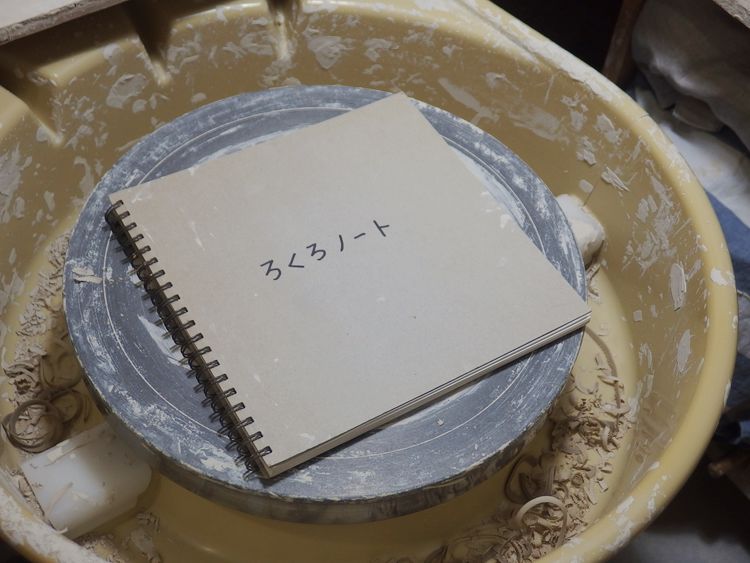
Starting with Grinding Gosu Pigment
Hanada: What was the first thing you did after joining?
Izumi Nakamachi : I started by grinding gosu pigment From morning until night, all day long…
Hanada: How long did that continue?
Izumi Nakamachi : I think it was several weeks after I joined.
Hanada: And occasionally senior artisans would come by and check on you…
Izumi Nakamachi : Yes. They’d say things like, “You’re not supposed to just sit there grinding it” (laughs). They told me to observe the work and conversations of the senior staff while doing it. In other words, it was time to learn how people worked there and how they organized things. While doing a simple task like grinding gosu pigment, I gradually became accustomed to the environment over those few weeks. After that, I moved on to preparing stencil patterns.
“Traffic Jams” and “I’m Sorry!”
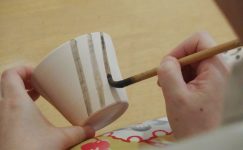
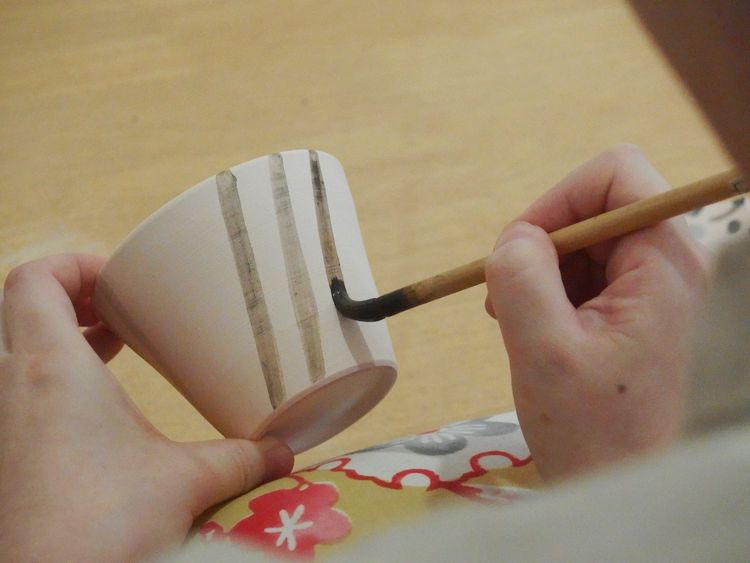
Izumi Nakamachi : After that, they finally let me hold a brush. I started with border lines. Just simple lines around the rims of plates.
Hanada: Did it go well?
Izumi Nakamachi : At first my hand shook so much that the brush trembled, and people would shout things like, “Too slow!” or “Draw faster!” The work was done as an assembly line, so if I was slow, everyone else was affected. People would call out, “Are those border lines done yet?”
The person responsible for the next step was working right beside me, so the bottleneck happened at my station. It was literally a “border-line traffic jam” (laughs). I spent my days drawing border lines while repeatedly saying, “I’m sorry!” Even now, whenever I draw border lines, those scenes sometimes come back to me.
Hanada: About how many craftspeople worked there?
Izumi Nakamachi : I only know what it was like back then, but there were more than ten. One person handled border lines, another the central motifs, another did the shading work, and so on.The border-line person was at the very bottom of the hierarchy (laughs).
Hanada: The shading work sounds difficult.
Izumi Nakamachi : Mr. Yamamoto’s wife handled the shading work. Eventually, though, I was allowed to do it as well. It was difficult.
Hanada: It sounds like a valuable experience.
Izumi Nakamachi : I stayed for three years and learned an enormous amount. I’m very grateful. I was paid a salary while being taught at the same time. They even paid enough for me to live on my own.
I Don’t Sketch First
Hanada: Myosen Pottery Studio also produces work for the Imperial Household. You must have learned a great deal there.
Izumi Nakamachi : One thing that left a strong impression on me was Mr. Yamamoto’s saying: “Don’t make the other party suffer a loss. Don’t do work that causes them a loss. But don’t let yourself suffer a loss either.”
Hanada: He wasn’t talking only about money, of course. It’s also about creating value for both the other party and yourself.
Izumi Nakamachi : Exactly. I’ve tried to follow that principle myself.
Hanada: There must also be many practical lessons from that period that still influence your work today.
Izumi Nakamachi : Most of my production methods and workflow are still based on what I learned there. And I don’t sketch with a pencil first. At most, I make a few guide marks.
Hanada: Not sketching first was one of Mr. Yamamoto’s…
Izumi Nakamachi : …principles. If I even tried to make a preliminary sketch, he’d get very angry.
Hanada: It seems like something you’d want to do at first.
Izumi Nakamachi : Exactly. But sketching takes extra time, and it also makes your brushwork hesitant. Even if it’s imperfect, it’s better to draw naturally without overthinking it and let the image have movement.When you’re tracing pencil lines, that movement disappears.
It’s interesting that each piece ends up slightly different, and eventually your hand becomes accustomed to it, so you stop worrying about not having a sketch underneath.
Hanada: Then I suppose you’re no longer tempted to sketch first.
Izumi Nakamachi : Not at all. Partly because I don’t draw highly detailed images these days, but at most I’ll mark the front or divide the surface into quarters.
My Role
Hanada: Looking back on your apprenticeship as a whole, how was it?
Izumi Nakamachi : I was the one whose role was “getting scolded” (laughs).
Though every workplace always seems to have one person assigned to that role.
Hanada: Well, the people doing the scolding probably understand their role too.
Izumi Nakamachi : They probably thought, “She looks like someone who can handle being yelled at” (laughs).
There was another trainee who started at the same time as me, and that person was the type they encouraged with praise. Meanwhile, I was the one they decided to toughen up.
Hanada: Some people immediately avoid whoever scolds them, but you don’t seem like that type.
Izumi Nakamachi : That’s true. One senior colleague used to tell me, “Nakamachi is always getting scolded, but that’s a good sign. The day they stop paying attention to you is the day you should worry.”
Something I Was Happy to Hear
Hanada: After three years, you moved toward independence.
Izumi Nakamachi : When I left, Mr. Yamamoto said, “You’ve developed real grit.”
I still remember how happy that made me.
Hanada: He had been watching over you all along.
Izumi Nakamachi : He must have thought, “What an incapable trainee we’ve ended up with” (laughs).
And Then, Independence
Hanada: Why did you choose Toyama as the place to establish yourself independently?
Izumi Nakamachi : It’s my husband’s hometown.
Hanada: Was your work already similar to what you make today from the beginning?
Izumi Nakamachi : At first, I was making highly detailed blue-and-white porcelain in the style of Myosen Pottery Studio. I didn’t really know what else to do, and honestly, it was the only thing I knew how to make at the time.
Hanada: So first came the period of exploration.
I Don’t Want Anything Gloomy…
Hanada: Is there something you consider especially important when creating tableware?
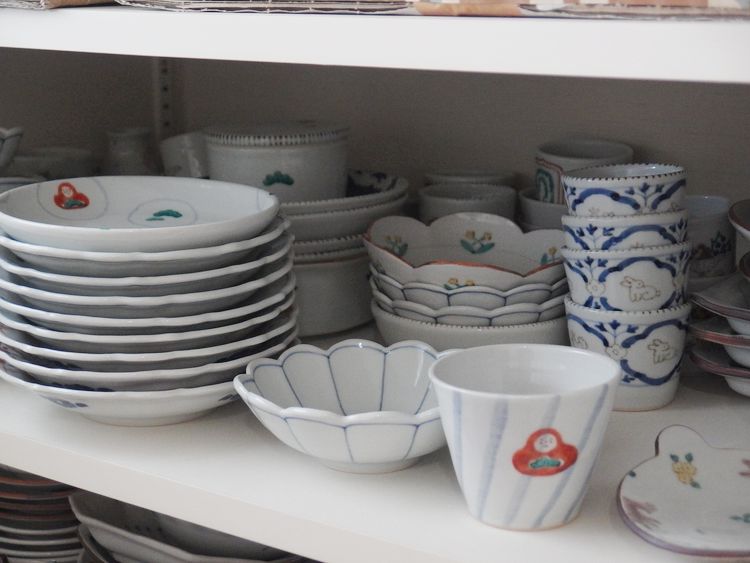
Izumi Nakamachi : Of course it needs to be practical, but I also want to make tableware that feels healthy and uplifting. Something that makes people feel happy, amused, or charmed.
No matter how skillfully made it may be, I don’t like things that leave you feeling gloomy when you use them.
I’d rather create pieces that brighten your mood, bring comfort, and make everyday life feel a little lighter.
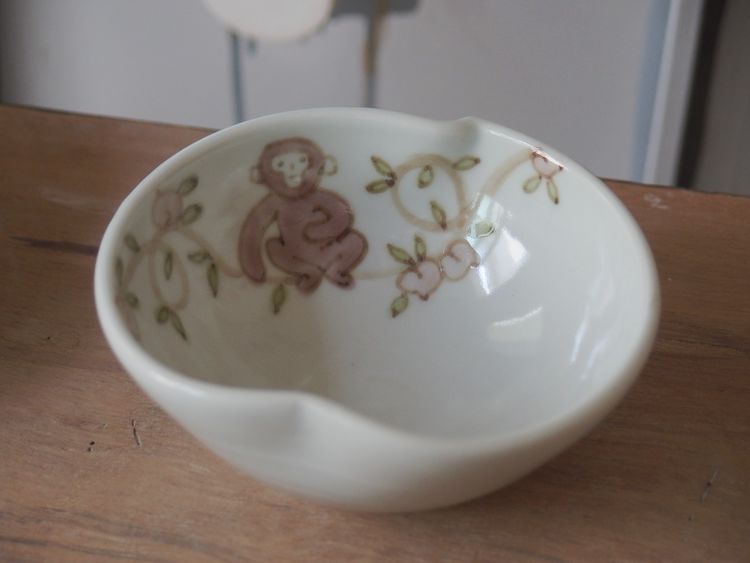
Hanada: Some of your motifs are your own interpretations of traditional decorative themes, while others are subjects that were rarely seen on tableware before—mountain-climbing scenes, for example. Perhaps they could be called a modern version of classical landscape paintings.
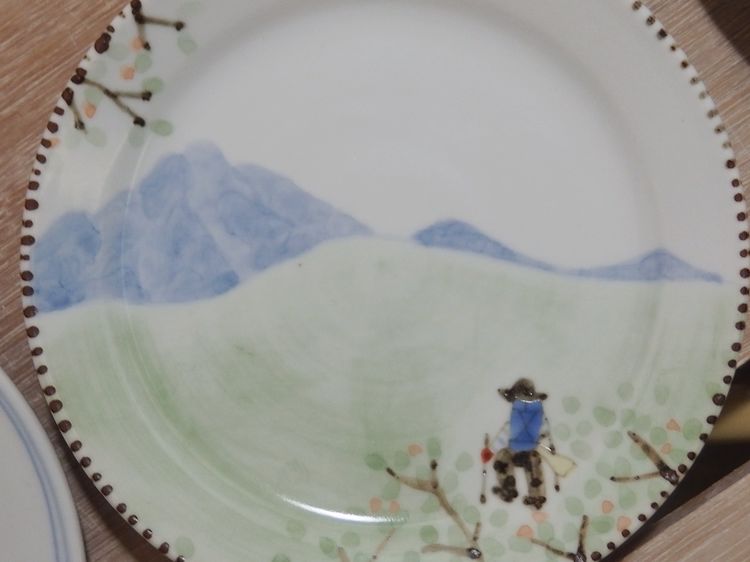
Izumi Nakamachi : At the core, my work is still based on Ko-Kutani. It may not look that way, though (laughs).
The Tiger and Bamboo Go “Raaawr!”
Hanada: When developing decorative patterns, are there particular things you keep in mind?
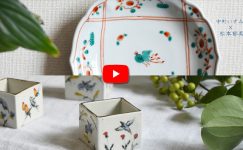
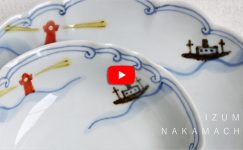
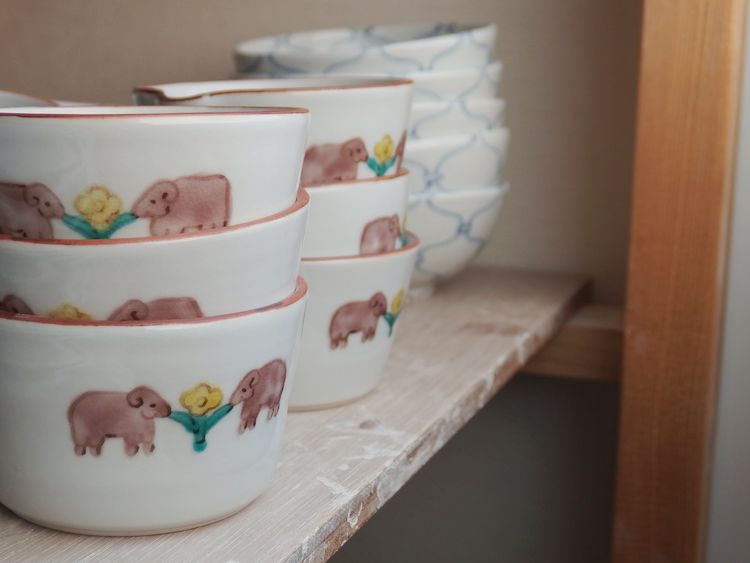
Izumi Nakamachi : I try not to include more than three themes or ideas in a single design. For example, this one contains three elements: a lighthouse, fish, and a boat. If I add anything more, it starts to feel cluttered.
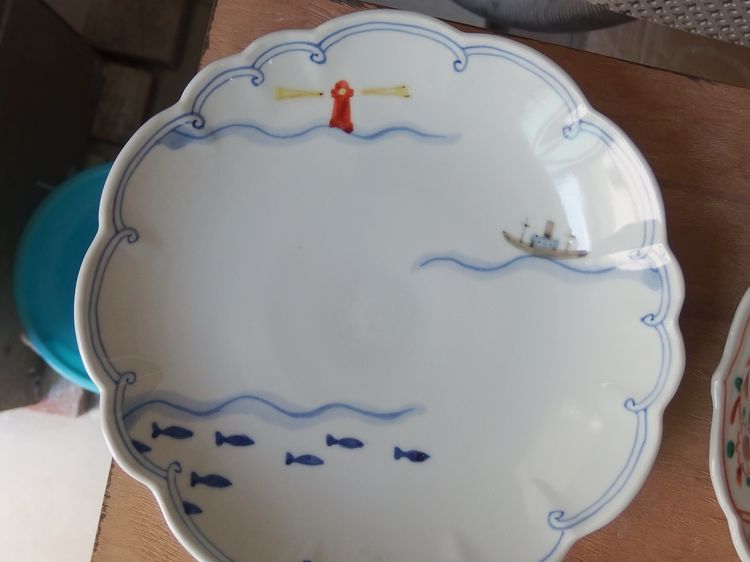
Hanada: Your painted designs often feel as though they tell a story. Sometimes they remind me of picture books.
Izumi Nakamachi : That’s probably because I’ve always loved picture books.
Hanada: Animals appear frequently in your work as well. Tigers, foxes, bears and salmon… What was the first animal you painted?
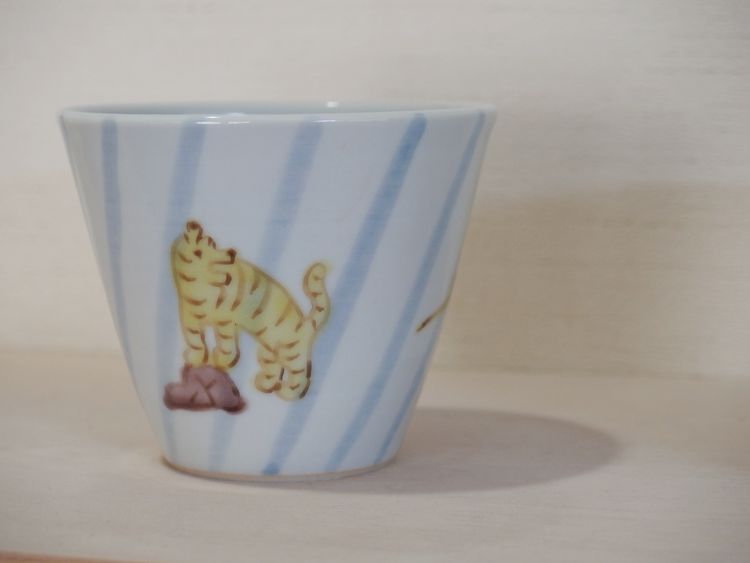
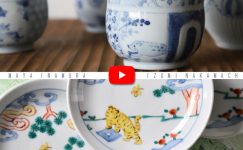
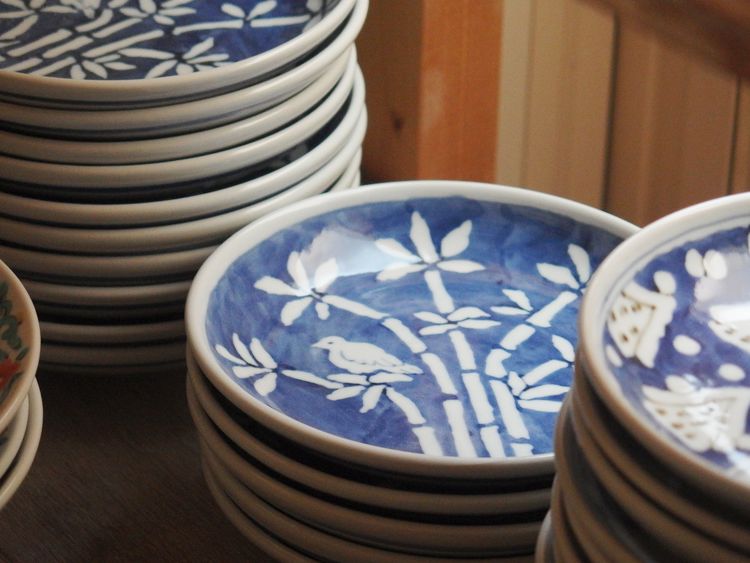
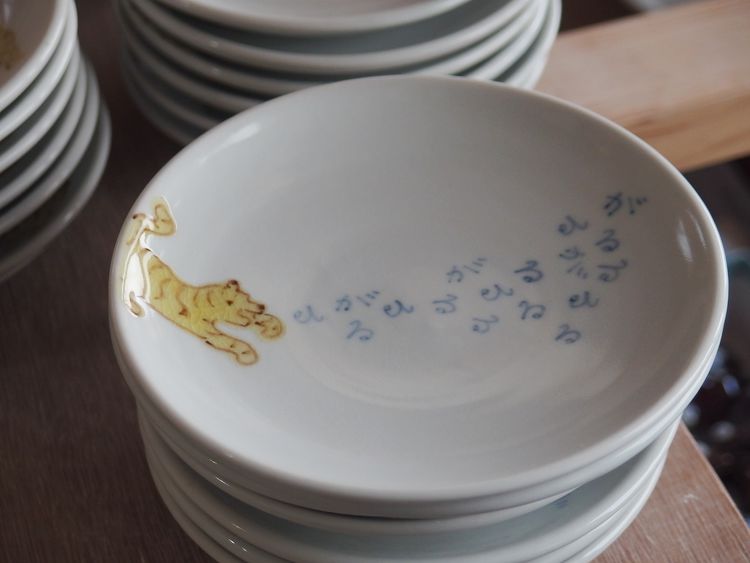
Izumi Nakamachi : The tiger. Tigers appear so dramatically in Ko-Kutani designs, don’t they? The tiger and bamboo going “Raaawr!” and all that (laughs). I loved that imagery and started drawing tigers myself.
Then I thought, “People might mistake this for a cat…” so I started adding little growling sounds like “grrrr…” (laughs).
Not Just a Bear—A Wooden Bear Carving
Hanada: Is there a particular animal you’re especially fond of?
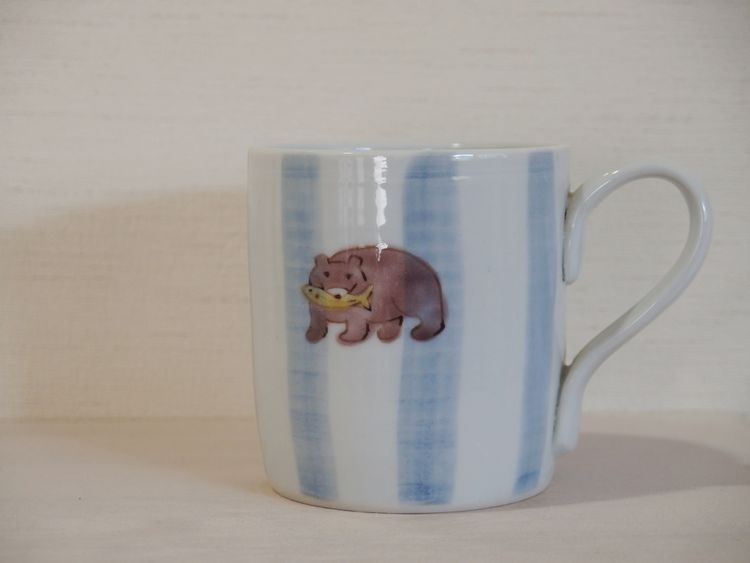
Izumi Nakamachi : Bears.
Hanada: That was immediate (laughs).
Izumi Nakamachi : I love the wooden bear carvings from Hokkaido. Both of my parents are originally from Hokkaido, and our house was full of those carved bears when I was growing up.
As a child I barely paid attention to them, but when I look at them now as an adult, they really resonate with me.
Hanada: So it’s not bears in general—it’s specifically wooden bear carvings that you love (laughs).
Izumi Nakamachi : Exactly. It’s the wooden-carved bears that I love.
Perhaps Too Much…
Hanada: Is there anything you’d like to pursue in the future?
Izumi Nakamachi : I’d like to become healthier than I am now (laughs), and create work that’s even more interesting than what I’m making now.
Hanada: Sounds good. What is your current idea of “something interesting”?
Izumi Nakamachi : Mountains. The famous Hundred Mountains are wonderful, but I also enjoy wandering around the smaller mountains near home.
Hanada: Any recommendations?
Izumi Nakamachi : Mount Tateyama. It’s fantastic. You should definitely climb it.
Hanada: Really? Can you describe what makes Tateyama so special?
Izumi Nakamachi : I love it too much to put it into words.
Hanada: That’s quite a level of devotion.
Izumi Nakamachi : I’m genuinely grateful to the mountains. Because of hiking, I’ve stopped worrying so much about trivial things.
Hanada: That’s true. Worrying about everything doesn’t really help.
Izumi Nakamachi : Exactly. Once I started climbing mountains, dwelling on small concerns began to feel rather foolish. And yet, my love of mountains happened completely by chance.
Hanada: Really?
Izumi Nakamachi : At first my husband practically dragged me along (laughs).
Apparently every Toyama resident is expected to climb Tateyama at some point, and local schools even organize educational climbing trips. So when we got married, he said, “Izumi, you’re a Toyama resident now, too…”
At first I kept saying, “No way, I don’t want to go,” and climbed reluctantly. I’ve always been more of an indoor person, after all (laughs).
Hanada: Then you owe your husband some thanks.
Izumi Nakamachi : These days I’m the one saying, “Let’s go, let’s go!” and pushing for our next hike.
New Works
Hanada: Finally, would you like to say a few words about the exhibition?
Izumi Nakamachi : Some of the pieces I’ve been making ever since becoming independent will be on display, and I’ve also created a variety of new works.
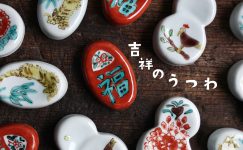
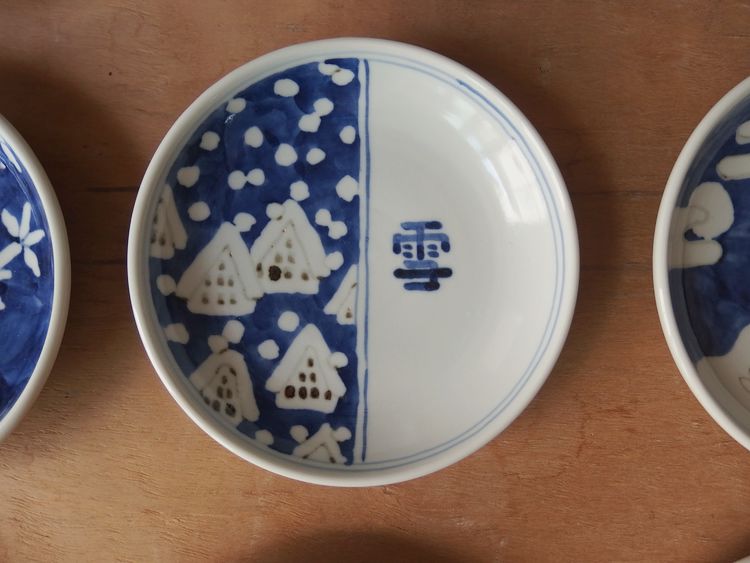
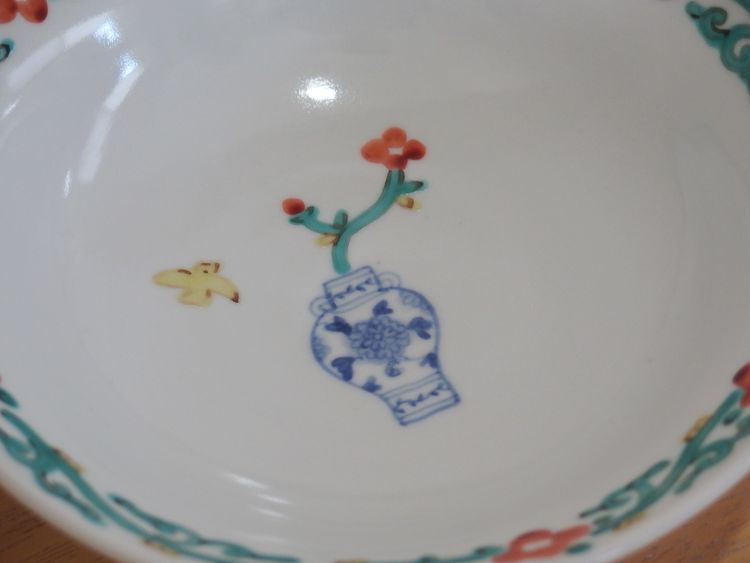
The new “Kanji” series and “Jar” series will make their debut as well, so I hope everyone enjoys them.
Hanada: Thank you very much.
≪ END ≫
古九谷、なんか凄いぞ…
花田:中町さんのやきものとの出会いは?(以下花田-)
中町:大学生の時の陶芸教室です。
あと、旅行で行った金沢で見た古九谷に、一気にひきつけられてしまいました。
-:県立美術館ですか。
中町:そうです。
-:雉も見つつ…
中町:はいはい。
-:あそこには、魅力的な古九谷も沢山で、誰かに古九谷を好きになってもらおうと思ったら、あそこが一番いい気がします。
中町:古九谷の世界は衝撃でした。
青手とか…。
-:古九谷は、やきものの中でも異色の存在ですよね。
中町:「こんな絵付の焼きものがあるんだ…許されるんだ…」という驚きです。
で、石川県の焼き物の学校を調べていたら、九谷焼技術研修所が出てきたので、卒業後そこに行くことにしました。
-:中町さん、インターネット苦手だって仰っていますよね。
本か何かで調べたのですか。
中町:いや、さすがに私でも、検索くらいはできますよ(笑)。
厳しくて有名なところへ
-:研修所のあと…
中町:山本長左先生(妙泉陶房)のところへ。
-:山本長左さんのところ、すんなり入れるのですか。
中町:何度も断られました。
-:何度も行かれるところが素晴らしいですね。
中町:「まあ、そういうものだろう」と思っていましたし…。
頼んでは断られ、の繰り返しで、なんとか入り込んだ感じです。
-:なぜ妙泉陶房だったのですか。
中町:先生の染付が大好きでした。
それと、あそこは厳しくて有名です。
そういう所で鍛えてもらえれば、こんな私でもなんとかなるだろうって。
まずは呉須を磨って
-:入ると、まず何をするのですか。
中町:呉須を磨るところから始まります。
朝から晩まで一日中…。
-:どれくらいやりましたか。
中町:入ってから数週間だったと思います。
-:たまに先輩が見に来たり…。
中町:はい。
で「ただ、磨っているんじゃないよ」みたいな(笑)。
「先輩の仕事や会話などを観察しながらやりなさい」って。
つまり、あそこの仕事の仕方や、段取りの仕方なんかを見ておく時間なんです。
呉須を磨るような仕事をしながら、数週間かけてあの場に馴染ませてくれたのだと思います。
その次は型紙起こしでした。
「渋滞」と「スミマセン!」
中町:そのあと、やっと筆を持たせてもらいます。
まずは枠線でした。
お皿の縁のちょっとした線から始まります。
-:うまくいきましたか。
中町:最初はプルプル筆が震えながら「遅い!」とか「もっと速く描け!」とか言われながら…。
流れ作業なので、自分が遅いと、迷惑をかけてしまいます。
「枠線まだかー?」って煽られるし。
すぐ隣に、私の次を描く人が作業をしているので、私のところで渋滞です。
「枠線渋滞」ですよ(笑)。
「スミマセン!」連呼しながら、枠線を描いていました。
今でも、枠線を描いていると、あの光景がよみがえってくることがあります。
-:職人の方々は何人くらいいるのですか。
中町:当時のことしか分かりませんが、10名以上いました。
枠線の人、見込みの絵の人、濃み(だみ)の人…って感じで。
枠線は下っ端です(笑)。
-:濃み、難しそうです。
中町:濃みは奥さまがやっていました。
でも最後は、やらせてもらえるようになりました。
難しかったですが。
-:いい経験をされたのですね。
中町:3年いましたが、とても勉強になりました。
有難いですよね、お給料をもらって、勉強までさせてもらえる。
一人暮らしできるくらいは用意してくださるのですから。
下書きはしません。
-:妙泉陶房は皇室の仕事もしています。色々学べたかと思います。
中町:印象的だったのは、山本先生の「相手に損をさせちゃいけない、損をさせるような仕事をしちゃいけない、でも自分も損しちゃいけない」というお言葉です。
-:経済的なことだけの話ではないですよね。
で、その相手のため、自分のための価値は自分で作っていくしかないということですね。
中町:そうです。
私もそれは守ろうって。
-:独立後も活きている、具体的な作業上のことも多いのではないですか。
中町:作ることも段取りも、教わった通りにしていることがほとんどです。
あと、鉛筆で下書きはしません。
せいぜいアタリをつけるくらいです。
-:下書きをしないのは山本さんの…
中町:ポリシーです。
ちょっとでも下書きをしようとすると、すごく怒られて。
-:最初はしたくなりそうです。
中町:そうなんです。
でも、下書きの分だけ時間のロスにもなるし、筆に迷いも出ます。
下手でもいから、あまり考えずに自然に描いて、動きがあるほうが良いんです。
鉛筆をなぞると、動きが出ないんですよ。
一個一個微妙に違っても、それが面白いわけだし、手が段々慣れてくるから、そのうち下描きが無いことも気にならなくなります。
-:それなら、今でも下書きへの誘惑にかられることもありませんね。
中町:ないです。
今はあまり細かい絵を描いていないせいもありますが、せいぜい正面のアタリをつけるか、四分割するくらいです。
わたしの係
-:修業時代…通して見ると、いかがでしたか。
中町:私は「叱られる係」だったんです(笑)。
まあ、いつでも必ず「叱られる係」はいるんですけど。
-:まあ、叱るほうも、叱るほうで心得ているのでしょう。
中町:「怒鳴りつけても大丈夫そう」とは思っていたはずです(笑)。
同期が一人いたのですが、その子は「ほめて伸ばす」でした(笑)。
で、中町は「しめよう」みたいな…。
-:叱られると、その人のことすぐ避けようとする人いますけど、中町さんはそうでもなさそうだし…。
中町:そうですね。
「中町はいつも怒られているけど、怒られているうちが華だよ」って言ってくれる先輩もいましたし…。
言われて嬉しかったこと
-:3年経って独立に向かいます。
中町:辞めるとき、山本先生が「根性ついたな」って言ってくれました。
とても嬉しかったのを覚えています。
-:ずっと見守ってくれていたのですね。
中町:「出来の悪いのが来たなあ」と思っていたでしょうし(笑)。
そして、独立
-:独立は、どうして富山だったのですか。
中町:主人の地元です。
-:作るものは、最初からこういう感じだったのですか。
中町:最初は、妙泉チックな細かい染付をやっていました。
最初は何をしていいか分からないし、そもそもそれしかできませんでしたから。
-:まずは模索ですね。
ドンヨリは嫌です…
-:中町さんがうつわを作るうえで大事にしていることはありますか。
中町:実用的なのはもちろんですが、健康的なうつわを目指したいです。
「楽しい」とか「面白い」とか「かわいい」とか…そういう気持ちになれるうつわです。
どんなに上手くても、使って、ドンヨリ気持ちが沈んでいくようなものは嫌です。
元気になれたり和めたり、明るい感じでいきたいと思っています。
-:文様の題材は、クラシックにあるものを中町さん流にアレンジしているものもあるし、従来うつわに使われなかったようなものもあります。登山風景とか…。
まあ、山水図の現代版と言えるのかもしれませんが。
中町:基本的な部分は古九谷をベースにしています。
そう見えないかもしれませんが(笑)。
虎と竹が「シャー!」
-:うつわの文様を組み立てていくときに考えることはありますか。
中町:テーマや意味を3つ以上含めないようにしています。
例えばこれなら「灯台」「魚」「船」の3要素です。
これ以上付け足したら、ゴチャゴチャし始めます。
-:中町さんの絵付けには、物語も感じます。
絵本を見ているような気分になることもあります。
中町:そもそも絵本が好きですから。
-:中町さんのうつわには、動物も多数登場します。
虎、狐、熊&シャケ…最初に描いた動物は何でしたか。
中町:最初は虎です。
古九谷は虎が格好良く登場するじゃないですか。
虎と竹が「シャー!」みたいな(笑)。それが好きで描き始めたんです。
でも「これ、もしかしたら猫と間違えられるかも…」と思って、「がるがるがる…」って書き始めました(笑)。
「熊」じゃなくて「木彫りの熊」
-:動物の中でも特に好きなものはありますか。
中町:熊です。
-:即答ですね(笑)。
中町:北海道の木彫りの熊が好きなんです。
両親が北海道出身で、子供のころ家には木彫りの熊がゴロゴロありました。
子供の頃は気にもしていなかったのですが、大人になってから見ると、なんかグッとくるんです。
-:熊ではなくて、「木彫りの熊」が好きなのですね(笑)。
中町:そうです。
「木彫りの」熊が好きなんです。
好きすぎて…
-:これからやっていきたいことは何かありますか。
中町:今より健康的になって(笑)、今より面白いものを作りたいです。
-:いいですね。
今、中町さんの「面白いこと」は何ですか。
中町:山です。百名山もいいですけど、近所の山をチョロチョロするのが好きです。
-:オススメを教えて下さい。
中町:立山。いいですよー。
ぜひ登ってください。
-:はい!立山の魅力を言葉で表現できますか。
中町:好きすぎて、言葉にできません。
-:すごいですね、好き度が。
中町:私、山には感謝しているんです。
登山のおかげで、いちいち小さいことを気にしなくなりました。
-:色々気にしていても、本当しょうがないですからね。
中町:そうですね。山登っていたら、小さいこと考えるのがバカバカしくなってきたんです。
それにしても、山は本当に偶然でした。
-:そうだったのですか。
中町:最初は旦那に強制的に連れていかれました(笑)。
富山県民は、必ず立山に登るみたいで、小学校でも学習登山があるらしいです。
それなので、結婚した時「いずみも富山県民なんだから―」って言われて。
最初は「えー、行きたくないー」とか言いながら、嫌々登っていました。
もともとインドア系ですし、私(笑)。
-:ご主人に感謝ですね。
中町:今は私のほうが「行こー行こ―」って積極的です。
新作
-:それでは展示会に向けて何か一言お願いします。
中町:独立時からずっと作っていたものもありますし、新作も色々作りました。
「漢字」シリーズや「壺」シリーズも初登場しますので、よろしくお願いします。
-:有難うございました。
関連記事はこちら