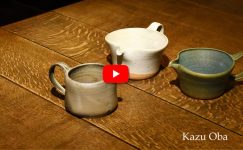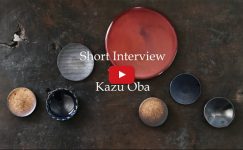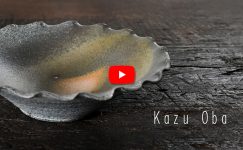



English version of the interview here.

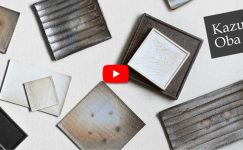
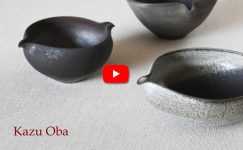
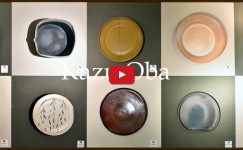
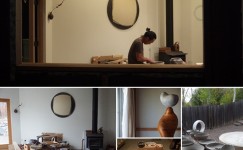
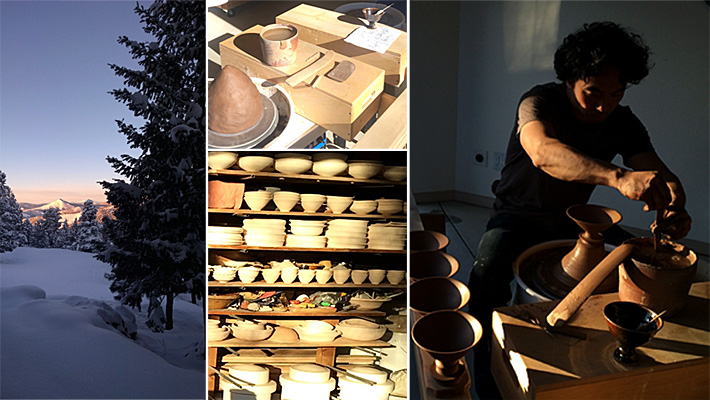
Making his first appearance at Hanada is Kazu Oba. Born in 1971, Kazu moved to the United States at the age of 18 and later studied under Takashi Nakazato. After establishing his independence, he has been dynamically creating pottery around the world, based in Colorado and working in Denmark, Germany, Japan, and beyond. Kazu Oba is known for the grand scale of his work. His philosophy and extraordinary drive offer a glimpse into the future of ceramics. Let’s delve into Kazu’s past, present, and future. Please enjoy the read.
Hanada: You first encountered pottery during your student days in the United States, correct?
Kazu Oba : Since I was a child, I dreamed of becoming a diplomat, so I began studying international relations at the University of Colorado. To be honest, I kept dropping out and re-enrolling, and in the end, I was registered there for eleven years (laughs). Somewhere along the way, I became interested in art. For the last three years before graduation, I was in the fine arts department. I tried everything—printmaking, photography, painting, and pottery—but since I preferred three-dimensional forms, I focused particularly on sculpture. Even now, my perception of objects remains three-dimensional.
Hanada: Perhaps leaving Japan is what awakened your passion for making things.
Kazu Oba : If I hadn’t come to America, I wouldn’t have become a ceramic artist. I don’t have any relatives who are potters, nor did I grow up in an artistic family. I might never have paid attention to my identity as a Japanese person, or to the food culture and tableware traditions that Japanese people cherish.
Hanada: I also spent some time on the East Coast. Living there, I realized that there are certain things you can only see when you actively immerse yourself in another community. I believe there are things you can only discover and learn when you put yourself in a situation where you are the only Japanese person among a group of locals. Eventually, you get used to it. Encountering something different makes your own uniqueness stand out, and it also gives you an opportunity to re-examine your roots.
Kazu Oba : Although there are individual differences, Japan is truly unique. It might sound vague, but the food culture is profoundly deep, standing far out from the rest.
Hanada: A German person once told me that there is up to an eightfold difference between Germany and Japan. Can you guess what that difference is? It is the amount of tableware a single household owns. In Japan, we use different items depending on the ingredients, the season, and the occasion.
Kazu Oba : Thanks to its climate and geography, Japan has an abundance of ingredients unlike anywhere else in the world.
Hanada: Now, it was also in Colorado that you met your mentor, Takashi Nakazato, wasn’t it?
Kazu Oba : Yes, we met in Colorado while I was still at the university. I took a seminar where we visited various artists, painters, and potters. I first met Nakazato-sensei during a field trip for that class at the Anderson Ranch Arts Center.
Hanada: And did you become his apprentice after graduation?
Kazu Oba : At first, I apprenticed under the sculptor Jerry Wingren for four years. During the last two years of that apprenticeship, whenever Nakazato-sensei came to Colorado, I would visit his studio. In the beginning, I was just his drinking companion in America. However, I started getting interested in pottery, and as I tried to do it by imitating what I saw, I became completely absorbed.
Hanada: How was your time with Mr. Nakazato?
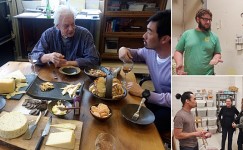
Kazu Oba : There is one thing where I knew I could absolutely never compete with him. It is the amount of energy and time Nakazato-sensei dedicates to pottery and the world surrounding it—namely, food culture. He devotes every single moment to it, except when he is asleep. For instance, he spends an hour and a half on breakfast, an hour and a half to two hours on lunch, and five, six, or seven hours on dinner every single day. A three-hour dinner is considered fast food to him (laughs). Actually, at that rate, he might even be thinking about food while he sleeps (laughs). For me, working alone now, this is practically impossible.
Hanada: What about the actual making of objects?
Kazu Oba : Making what is necessary for myself—that is the foundation of my work. I make whatever I feel I need. Conversely, if I don’t need it, I don’t make it.
Hanada: You have been making pottery not only in North America but also in Denmark and Germany. I heard you are going to South Korea next. You must have many opportunities to see ancient things in each country.
Kazu Oba : I don’t have a specific favorite genre, but I think antique porcelain is wonderful. I also like vintage Royal Copenhagen. Old German pieces are amazing too. Wherever you go, antique objects are remarkable, both technically and aesthetically. The makers weren’t trying to create something magnificent just to be praised or recognized; their primary goal was to make something that was the easiest to use in daily life. That simplicity purely captivates the heart. For example, rather than going to an art museum, I prefer visiting local history museums to see how people lived back then and the items they used in their daily lives. Those objects do not exist for an artist’s self-expression. Of course, I like art pieces too. There are things I find cool or admire. But to be honest, I have never been moved to tears by them. On the other hand, the Sueki ware I saw in Seto recently was at a level that could only be achieved by working twenty hours a day.
Hanada: When we feel lost or troubled in the process of making things, we ultimately have to rely on the classics.
Kazu Oba : Exactly, that is very true.
Hanada: In the items you create, I see various qualities that seem contradictory at first glance. They feel Eastern yet Western, classic yet contemporary, masculine yet feminine. Even when we talk, I sense both a passionate side and a cool, objective side to you. In a way, I think this is because you do not define the boundaries or style of your work in advance. You simply and purely create what you want to make, following your intuition. In a sense, it shows how serious you are with yourself. Because you don’t think too much about “expressing your individuality,” your true unique character naturally shines through. When you make tableware, what do you specifically value?
Kazu Oba : What I value most, or rather, where I focus all my attention, is shaping the rim. I believe the rim of the tableware is everything. Everything else can be adjusted to fit around it (laughs). At the same time, what matters most in ceramics is the service end—that is, the inside. After all, the food is served on the inside (laughs). I believe that if the inside is well-defined, the outside will naturally come together. In the first place, a discrepancy between the inside and the outside is a matter of technique, not a matter of sensibility or form. When I throw on the wheel, I place my dominant hand on the inside. Since I spin it clockwise and keep my right hand inside, people often ask if I am left-handed.
Hanada: That approach is close to the traditional Eastern sensibility of pottery.
Kazu Oba : On the other hand, I feel that people in the West tend to focus their attention on smoothing the outside.
Hanada: Colorado, your base of operations, must be a beautiful place.
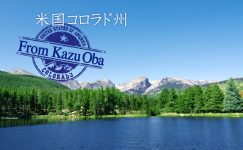
Kazu Oba : Being in Colorado is just a coincidence. I don’t think for a moment that my base absolutely has to be there. Starting sculpture and pottery were both accidental. I didn’t move to Colorado to follow Nakazato-sensei either. On the other hand, the low humidity in Colorado is very suitable for my current making process. So, I do feel a certain sense of mission or destiny to make pottery here, in a way. If I said the location didn’t matter at all, it wouldn’t sound very good, so please let me add that much (laughs). However, there is no single method that is the correct one or the most amazing. There is no such thing as “that anagama kiln is the best” or “that clay is the best.” It is about doing your best work in each specific location. The process of searching for that “best” in each place is also very enjoyable. I believe there is basically no rule saying it has to be done a certain way. Each has its own merit, and believing that keeps me motivated.
Hanada: Regarding your approach to your studio and methodologies, you value them, but you are not attached to them; you maintain an open stance. It feels like looking at a miniature representation of Japanese people who focus on “What” to do, and Westerners who focus on “How” to make it successful. While you value the former, you seem closer to the latter.
Kazu Oba : Some might feel that you can only do your true work if you have your own kiln, but I want to travel and work in various places. My goal is to have people from all over the world come to my studio to work. I want chefs to come too. Right now, I am exploring the idea of a communal living space with friends who are potters and farmers.
Hanada: I really like that sense of scale. On the other hand, I am interested in how you view the current world of Japanese crafts and tableware, or the artists themselves.
Kazu Oba : In the first place, the food is the main character, and the tableware I make is meant for eating, serving, and drinking. It is nothing more and nothing less. Looking at it from that perspective, I feel that everyone decides on their style too much in advance. It is as if the details they worry about are misplaced—sometimes when we talk, I find myself thinking, “Are you really focusing on that?” (laughs). I wish things could be more natural. It often feels like people are making things just for the sake of making them. Well, I am in no position to preach (laughs). Also, rather than focusing on selling, becoming famous, or being talked about, perhaps people could focus more on the act of making itself.
Hanada: Perhaps each individual has become too deeply integrated into the economic structure of the craft market, which isn’t even that large. Many people must have started this job because they wanted to avoid getting stuck in such places and feeling constrained. Furthermore, the artists themselves and their lifestyles have become a significant part of the promotional content nowadays, so they have to be mindful of that as well. Of course, that aspect is important too, but it means you have to prepare a cool response just in case someone asks, “What do you think about when you throw on the wheel?” (laughs).
Kazu Oba : When I throw on the wheel, I am usually only thinking about what to have for dinner that night (laughs). Also, I don’t really have specific desires for how people should use my work, or a wish for them to handle it with extreme care. For me, what truly matters and feels urgent are practical details—like realizing a piece needs to be a bit longer because the grilled saury sticks out, or making a sake flask thin so it holds as much as possible and the user won’t accidentally run out and feel embarrassed. Those are the pressing concerns for me.
Hanada: For instance, do you take extra care knowing that people in America will be using your work?
Kazu Oba : Americans use a tremendous amount of soy sauce (laughs), so I make the dishes shallow so they can’t pour too much, or I shape them like a mortar so that even a small amount looks like a generous serving (laughs).
Hanada: It has been five or six years since I met you. Do you have any plans for the future?
Kazu Oba : I simply love making things. It is not about having dexterous hands or creating exquisite objects; it is about the process of imagining in my head, sketching, throwing on the wheel, or using a chisel. When I do that, the things I want to do and make come up one after another. I don’t want to lose that joy. Many people, including myself, tend to forget this as they grow up. When we were children, everyone enjoyed making things, didn’t they? But as people become adults, they start saying, “I’m not dexterous,” or “I’m not an artist,” and they become controlled by these preconceived notions. They get too caught up in things like the era or country they were born in, or the kind of family they grew up in. I want to immerse myself in making objects so that I don’t end up that way.
Hanada: And finally, your work will be showcased at Hanada. There is the 10-artist exhibition in March, followed by your solo exhibition in June. We are truly looking forward to it.
Kazu Oba : I want to create items that are not like beer.
Hanada: Tableware like beer?
Kazu Oba : I mean items that go well with anything and can be used for everything. In a way, that is wonderful too, but if you aim for that from the very beginning, it usually isn’t what you truly want to make. Multi-functionality is not a bad thing. However, those kinds of items are rarely the absolute best choice for any single purpose. Beer goes well with any dish, but it is different from a pairing where you say, “If you are eating this, it has to be this drink!” Ultimately, sake goes best with sashimi, wine goes best with pasta, and aquavit is the absolute best for pickled herring. Oh, but I do love beer myself.
Hanada: If you aim for multi-purpose use from the start, that is what happens. By first having a specific vision, something excellent is created. If the result turns out to be multi-purpose, that is something to be welcomed. In any case, I look forward to seeing pieces that reflect a thorough pursuit of your vision. I also have various antiques and items I would like you to see.
Kazu Oba : I look forward to that. I intend to give it my all.
It was an interview where English naturally blended in as the conversation grew lively, but talking with Kazu is purely delightful. I sense a grand scale and great potential in him. There are parts where our thoughts align, and parts where they differ. However, even when we disagree, I never feel any sense of rejection from Kazu toward things that are different from his own views. He is broad-minded, yet delicate at times, living each day brightly with full physical and mental energy. Giving your all to something is truly a wonderful thing.
花田初登場、Kazu Obaさんです。
Kazuさんは1971年生まれ、18歳で渡米後、中里隆氏に師事。
そして独立後、コロラドを拠点にデンマーク、ドイツ、日本・・・と世界各地で作陶に励みます。
スケールの大きな仕事が持ち味のKazu Obaさん。
彼の思想、そして並外れた行動力は焼き物の未来を感じさせます。
Kazuさんのこれまで、現在、これから。
ご一読下さい。
花田:陶芸との出会いは学生時代、アメリカですよね。 (以下-)
Kazu:小さい頃から外交官を夢見ていて、アメリカのコロラド大学で国際関係学を勉強し始めました。
実は自分、大学出たり入ったりで、最終的には11年在籍しているんですよ(笑)
その間に、どこでどう転んだか、アートに興味が出てきてしまった。
卒業前3年間は芸術学部に在籍していました。
版画、写真、絵画、陶芸、なんでもやってみましたが、
立体的なものが好きだったので彫刻を特に勉強していました。
今も、物を見る感覚は立体的です。
─ 海外へ出たからこそのモノ作りへの目覚めだったのかもしれません。
Kazu:自分はアメリカに来ていなかったら、陶芸家になっていませんでした。
陶芸家の親戚がいるわけでもないし、元々アートな家庭に育ったわけでもない。
日本人としてのアイデンティティー、日本人が大切にしている食文化、食器文化に
意識を向けることもなかったかもしれません。
─ 僕も東海岸にしばらくいましたが、
そこで生活して、自分から相手のコミュニティーに
突っ込んでいかないと見えないことってありますよね。
10数人の中に、日本人1人で過ごす、という状況にならなきゃ見えないもの、
学べないことってあると思います。
そのうち、そういうことにも慣れてくる。
異質と接することで、自らに与えられた独自性のようなものが際立ってもくるし、
自らのルーツを見直すきっかけにもなります。
Kazu:個人差は勿論存在するとしても、日本は特別。
漠然とした表現になってしまいますが、食文化がね、ダントツに深いですよ。
─ あるドイツ人が言っていました。ドイツと日本で、最大で8倍の差があるだろうって。
何の差だと思います?一つの家庭が所有している食器の量です。
日本では食材、時期、シチュエーションによって食器を使い分けますからね。
Kazu:気候といい、地理的なものといい、日本は世界のどこよりも食材が豊富です。
─ さて、師匠である中里隆さんに会ったのもコロラドですよね。
Kazu:大学にいたころ、コロラドで会いました。
大学で、色々な作家、画家、陶芸家なり、Artistを訪ねるセミナーを取りました。
最初はそのクラスの研修先で隆先生と出会ったんです。Anderson Ranch Arts Centerでした。
─ それで卒業後弟子入り?
Kazu:最初、彫刻家のJerry Wingrenに4年間弟子入りして、その後半二年間、
隆先生がコロラドに来ると仕事場へ遊びに行っていたのがきっかけです。
最初は先生のアメリカでの飲み相手。でも陶芸にも興味を持ち始めて、
見よう見まねでしている内に、のめり込んでいきました。
─ いかがでしたか、中里さんとの時間?
Kazu:これは絶対にかなわん、と思ったことがひとつあります。
隆先生がやきものとそれを取り囲む世界、すなわち食文化にかけているエネルギーと時間です。
寝ているとき以外全てをそれにささげている。
例えば、朝ごはんに1時間半、昼ごはん1時間半から二時間、夜ご飯なんて毎日毎日5、6、7時間。
3時間の夜ご飯じゃファストフード呼ばわりですよ(笑)。
いや、あの調子だと寝ているときも食べることを考えておられるかもしれないな(笑)
これはね、一人で仕事をしている今の自分には現実的にも無理です。
─ 実際のもの作りに関しては?
Kazu:自分に必要なものを作る、ということ。これが自分の仕事の基本にあります。
自分が要ると思うものはなんでも作る。逆に要らないものは作らない。
─ KAZUさんは北米だけでなく、デンマークやドイツでも作陶活動しています。
今度は韓国行くらしいし。それぞれの国で、色々古いもの見る機会も多いでしょう。
Kazu:特に好きなジャンルはないけど、昔の磁器は素晴らしいと思います。
昔のRoyal Copenhagenなんかも好きです。
ドイツの古いものも凄い。どこ行っても、古いものは凄いですよ。技術的にも、感覚的にも。
素晴らしいものをつくって褒められよう、認められよう、じゃなくて、
まずは生活の中で一番使いやすい作りを目指しているから。シンプルで純粋に心を惹かれる。
例えば、自分は美術館に行くよりも地元の博物館や、歴史資料館で
当時の人々の生活やその中で使っていたものを見るほうを選んでしまいます。
そこにあるのはアーティストの表現の為に存在するものじゃない。
勿論そういうものも好きですよ。かっこいいなと思ったり、憧れたりするものはあります。
でも正直言って、涙するような感動を味わった経験は無い。
この間、瀬戸で見た須恵器は毎日20時間も仕事していなければ到達できないようなレベルでした。
─ ものづくりで迷ったり困ったりした時には、やはり古典に頼らざるを得ません。
Kazu:そうそう、その通り。
─ 僕はKazuさんの作るものに、一見相反するような「~的」なものを色々と見ます。
それは東洋的であったり西洋的だったり、古典的だったり現代的だったり、男性的だったり女性的だったり。
或いは、話していても、熱い部分も感じるし、冷めている部分も感じる。
これは逆に言うと、自分の仕事の領域やスタイルみたいなものを
あらかじめ決めていないからこそなのかな、と思います。
とても素直で純粋にやりたいこと、作りたいものを意の向くままに作っているなと。
ある意味、自分自身に対して真剣であればこそです。
「自分らしさを出す」ことを本人があまり考えずに打ち込んでいるからこそ、
本当の「KAZUらしさ」が出ている気がする。
Kazuさんがうつわを作る上で、具体的には何を大切にしていますか。
Kazu:一番大切にしていることというか、自分の全神経を注ぐのは”口づくり”です。
器の縁の部分が全てだと思います。あとの他のことはどうにでも辻褄が合います(笑)。
同時に、やきもので大事なのはサービスエンド、つまり内側。
料理が盛られるのはうつわの内側ですから(笑)。
内側が決まれば、外側は自ずとまとまってくるんだと、そう考えます。
そもそも、内側と外側が違うというのは感性とか造形感覚とかの問題ではなく技術の問題です。
僕は轆轤ひく時、利き手を内側に入れるんですよ。
時計周りで右手を中に入れていると左利きなの?ってよく聞かれます。
─ その辺りは東洋の陶芸感覚に近い。
Kazu: 逆に欧米の人たちは外側を整えることに注意を払っているような気がします。
─ 拠点であるコロラド、いい所でしょう。
Kazu:コロラド・・・たまたまなんですよね。
絶対コロラドに拠点があるべきだ、なんてこれぽっちも思ってはいません。
彫刻を始めたのも陶芸をはじめたのも、たまたま。
隆先生を追ってコロラドに来たわけでもありませんし。
一方で、コロラドの低湿度は、今の僕の製法にはとても向いています。
それなのでここでやきものをやる、という使命というか運命みたいなものは”一応”感じています。
場所なんてどこでもいいです、じゃあ格好付かないからこれくらいのことは付け加えさせておいて下さい(笑)
ただね、どの手法が正しいとか一番凄いってことはないですよ。
あの穴窯最高!とか、あの土最高!とか、そんなのないですよ。
それぞれの場所でベストな仕事をする、ということです。
それぞれの場所でその”ベスト”を探す作業もとても楽しい。
○○じゃないと駄目、みたいなこと、基本的には無いと思っています。
それぞれによさがあるし、そう信じていたほうが、燃えます。
─ 仕事場を初めとして、方法論に対するアプローチ、
大切にはしているけど、執着はない、というか、オープンなスタンスです。
“What(何をするか)”にこだわる日本人、”How(どうやって成功させるか)”
に注力する欧米人の縮図を見ているようです。
KAZUさんは前者を大事にしながらも、やはり後者寄りかな。
Kazu:自分だけの窯を持ってこそ、自分の仕事ができる、ってのもあるかもしれないけど、
僕は色々なところへ行って仕事をしたい。
そして、世界中の人たちが自分のスタジオに仕事をしに来てくれる、というのが目指すところです。
料理人にも来て欲しい。今、焼きもん屋や農家の友人たちとコミューナルな生活の場所を模索中です。
─ 好きですよ、そのスケール感。
一方で、今の日本の工芸や食器の世界、或いは作者の人たちをKazuさんはどう見ているのか興味あります。
Kazu:そもそも料理が主役で、自分の作っている食器は食べるため、盛るため、酒をのむため。
それ以上でもそれ以下でもない。
そういう立場から見て思うのは、みんなスタイルを事前に決めすぎている気がします。
まず気にする部分が違うというか・・・話していても「そこかよ!」って(笑)。
もっと自然でもいいのにな。なんか、作るために作っているような感じもするし。
まあ僕も偉そうなこと言えませんが(笑)。
あと、売れるとか有名になるとか話題になるとか、そんなことより作ることそのことにもっと集中していいのかも。
─ 決して広くもない工芸市場の経済構造に、一人ひとりが組み込まれ過ぎちゃっているんですかね。
そういうところに嵌って窮屈な思いをしたくないから、この仕事始めた人って多いはずなんですけどね、この世界。
あと今、作者自身やそれぞれの生活スタイルもプロモーションのコンテンツとして大きくなり過ぎているので、
その辺にも気を使わなければいけなくなっていて。
勿論その辺も大事なんだけど・・・「轆轤ひく時、何考えてますか」なんて聞かれるときにそなえて、
格好いい返事を用意しておかなければならない(笑)
Kazu:轆轤ひく時なんて、その日の晩飯のことくらいしか考えていませんよ(笑)
あと、どういう風に使って欲しいとか、特に大切に使って欲しいとかってのも、実は僕にはない。
僕にとって大切なことは秋刀魚食べてて、少しはみ出てしまったからもう少し長くないといけないなとか、
少しでもたくさん入るように、空になってても知らずに恥をかかないように徳利は薄くするとか、
自分にとってはそういうことこそ、切羽詰っていて切実なんです。
─ 例えば、アメリカの人たちが使うということで、普通より気を使うことはありますか。
Kazu:アメリカ人は、ほんとに醤油ドボドボ使うから(笑)、
醤油があまり入らないように浅く作ったり、
ちょっとしかいれなくても、まあまあ入っているように見えるように擂鉢状に作ったり(笑)
─ KAZUさんに出会ってからもう5-6年経ちますね。今後のこと、何か考えていますか?
Kazu:自分はただモノを作っていることが好き。
手が器用だとか、素敵なものを作っているとか、そういうことでなくて、
頭の中で妄想したり、デッサンしたり、轆轤をひいたり、のみを使っていたり、そういうことです。
そうしていると、次から次へとやりたいこと、作りたいものが出てくる。
そういう楽しさを失いたくない。
僕も含めて多くの人たちは大人の階段を上るにつれてそれを忘れてしまう。
子供の頃はみんな、楽しそうに何かを作っていたじゃないですか。
それが、みんな大人になってくると「私、器用じゃない」とか「私Artistじゃない」と始まって、
後付された概念に支配されていってしまう。
この時代だとか、この国に生まれたとか、こんな家庭に育ったとかそういうことにとらわれすぎてしまう。
そういう風にならないように、モノ作りに打ち込んでいきたい。
─ そして、いよいよ花田にKAZUさんのうつわが並びます。
3月の10人展、そして6月の個展。楽しみですね。
Kazu:ビールみたいなうつわじゃないものを作っていきたいですね。
─ ビールみたいなうつわ?
Kazu:なんにでも合う、なんにでも使えるうつわ、のことです。
それもそれで、ある意味素晴らしいんだけど、
一番最初にそこを目指すと、作りたいものじゃないんですよ、大体。
多機能は悪いことじゃない。でも、そういうモノってどこ行っても最高じゃないんです。
ビールはどんな料理にも合うでしょ。でも、これを食べるなら、これ!みたいなものとは違う。
やはり、刺身には日本酒が合うし、パスタにはワインが合うし、
ニシンの酢漬けにはアクアビットが最高なんですよ。
あ、でも自分、ビール大好きですよ。
─ 最初から、一器多用を目指すと、そういうことになりますね。
まずは特定のヴィジョンを持つことでいいモノが出来上がる。
結果として一器多様であれば、それは歓迎すべきことでしょう。
いずれにしても、何かを追求しきったものが出来上がることを期待しています。
骨董やら色々見てもらいたいものもあるので。
Kazu:それは楽しみです。一生懸命取り組みたいと思います。
話が盛り上がってくると英語が混ざってしまうインタビューでしたが、KAZUさんと話していると、純粋に楽しい。
大きなスケールと将来性を感じます。 僕と似た考えの部分もあるし、違う部分もある。
がしかし、話していてもKazuさんには、自分と違う物事に対する拒絶感覚をまったく感じません。
おおらかで、ある時は繊細で、日々を身体と気を張って明るく生きている。
一生懸命、ってのは素晴らしいことですね。